
Automated External Defibrillator Chain of Survival Healthy Choices
Automated External Defibrillator
Chain of Survival Healthy Choices p Recognition of the Warning Signs p Early Access to EMS p Early CPR p Early Defibrillation p Early Advanced Care p Early Rehabilitation p 2
Conduction System The heart has it’s own electrical system p Impulses come from Sino-Atrial (SA) Node (natural pacemaker) p Travel to the Atrio-Ventricular (AV) Node p The tissue where the heart attack happens dies p Impulses cannot cross the dead tissue p Electrical impulses are no longer coordinated resulting in abnormal heart rhthyms p 3
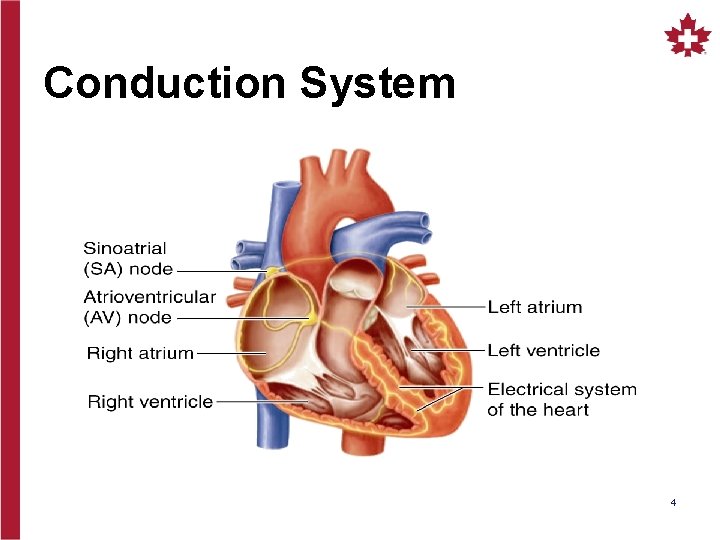
Conduction System 4
What is an AED Analyzes heart rhythm p Generates an electric shock – if required to stop abnormal rhythm in the heart p Blood is not circulating if the heart is in ventricular fibrillation or ventricular tachycardia p Time from collapse to shock is critical p CPR and defibrillation give the best chance of survival p 5
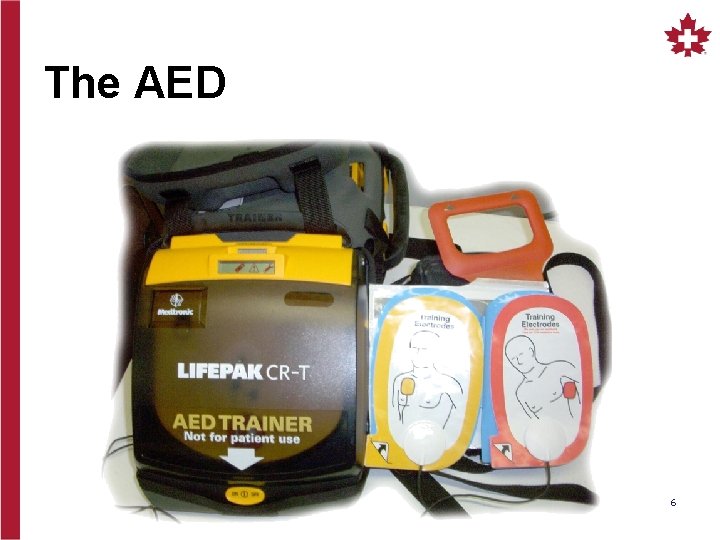
The AED 6

Types of AEDs 7
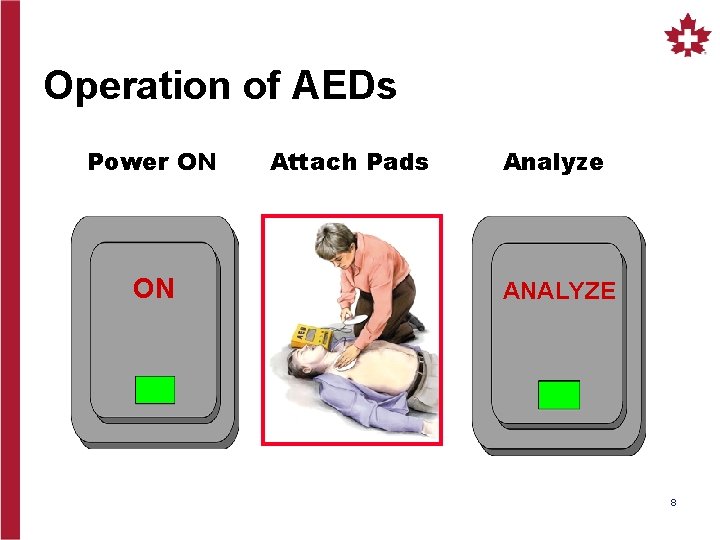
Operation of AEDs Power ON ON Attach Pads Analyze ANALYZE 8
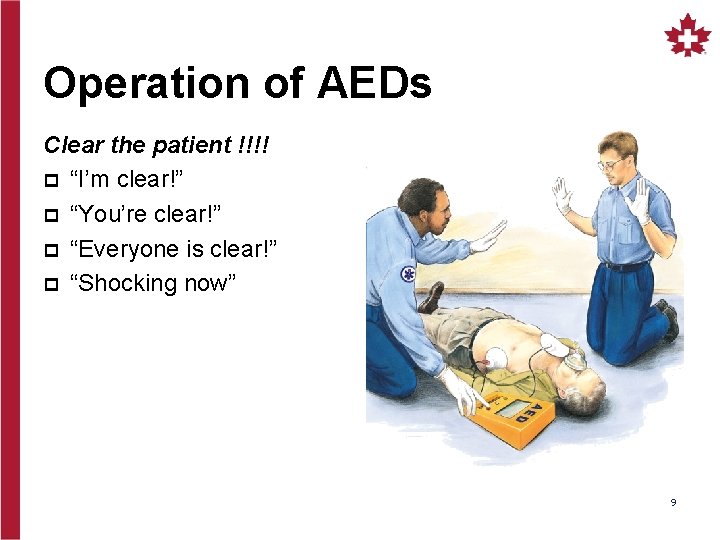
Operation of AEDs Clear the patient !!!! p “I’m clear!” p “You’re clear!” p “Everyone is clear!” p “Shocking now” 9
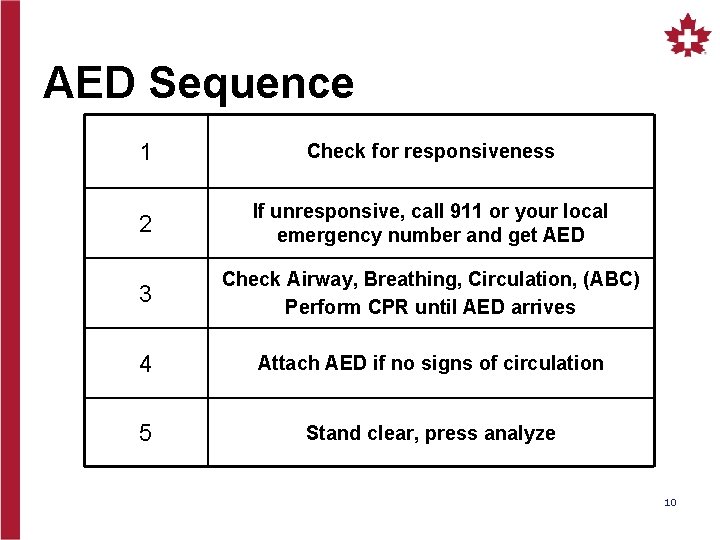
AED Sequence 1 Check for responsiveness 2 If unresponsive, call 911 or your local emergency number and get AED 3 Check Airway, Breathing, Circulation, (ABC) Perform CPR until AED arrives 4 Attach AED if no signs of circulation 5 Stand clear, press analyze 10
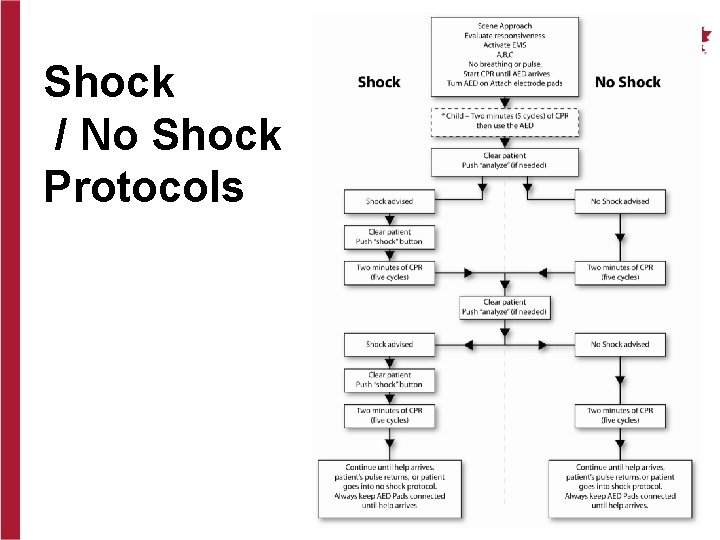
Shock / No Shock Protocols 11
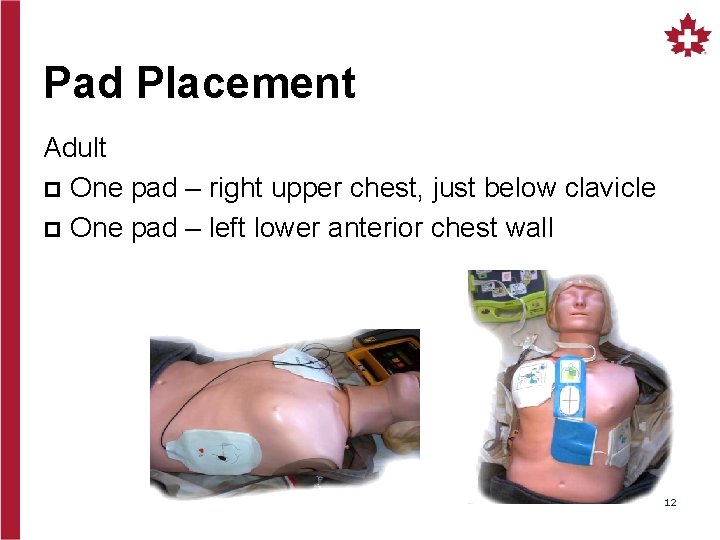
Pad Placement Adult p One pad – right upper chest, just below clavicle p One pad – left lower anterior chest wall 12
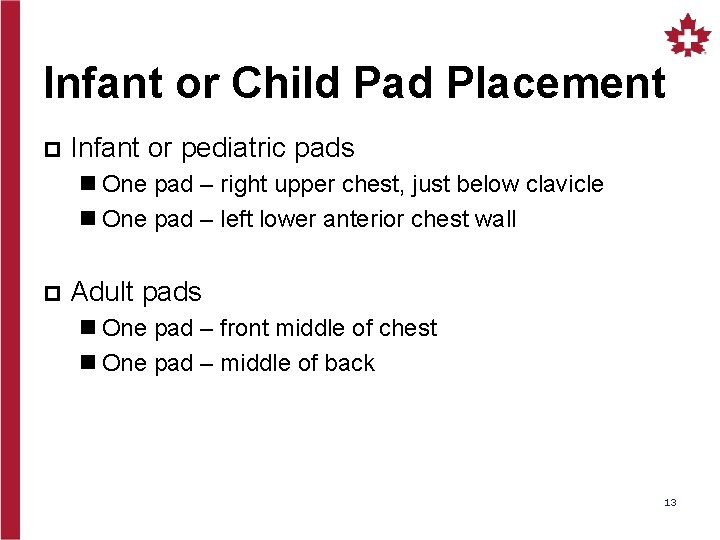
Infant or Child Pad Placement p Infant or pediatric pads n One pad – right upper chest, just below clavicle n One pad – left lower anterior chest wall p Adult pads n One pad – front middle of chest n One pad – middle of back 13
Special Situations Hypothermia- follow the AED prompts, continue with CPR & handle the patient gently. p Water – Wet Environments (do not use) p Moving vehicles or toboggan (must be stopped) p Aircraft or Helicopters (tell aircrew AED in use) p Trauma Patients (not likely to work) p Pregnant Patients (use as normal) p 14
Special Situations Metal surfaces (use as normal) p Patch medications (remove patch if in way) p Pacemakers or implanted defibrillators (if in wayplace pad at least one inch away) p Oxygen (move oxygen one arm length away) p Radio use (do not transmit during analyze and shock) p 15
Who uses AEDs Healthcare providers, emergency workers, or community responders whose job or volunteer work demands that they know how to defibrillate someone p Caregivers, such as family members of people who are under medical supervision due to a high risk of sudden cardiac death p 16
Ceasing AED Sequences The patient has a pulse p Another trained rescuer takes over p EMS arrives p It is unsafe to continue p A medical doctor says to stop p 17
Legal Aspects In some provinces/territories, the use of an AED is considered a medical act p The supervising physician provides certification and medical control p Follow provincial or local regulations p Check with zone or division training officers on the use of AEDs in your area p 18
Documentation Internal event recorders p Patroller should complete a medical report p The AED coordinator is usually responsible for ensuring for passing this information together with the medical report to the receiving hospital. p Annual AED and CPR skill retention/certification p 19
- Slides: 19