
Automated equal area cartograms Algorithmled generation of equal
- Slides: 20
Automated equal area cartograms Algorithm-led generation of equal area cartograms for anywhere, any period, and any scale Bruce Mitchell, ONS Geography George Tzelepis, Dept. of International Trade
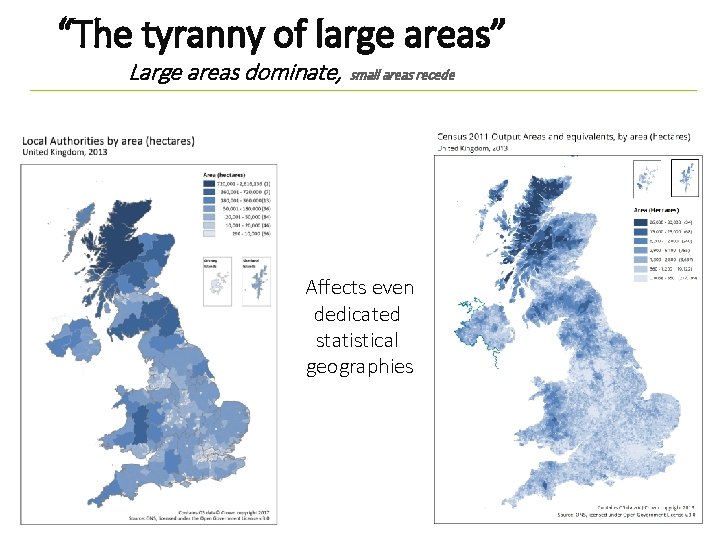
“The tyranny of large areas” Large areas dominate, small areas recede Affects even dedicated statistical geographies
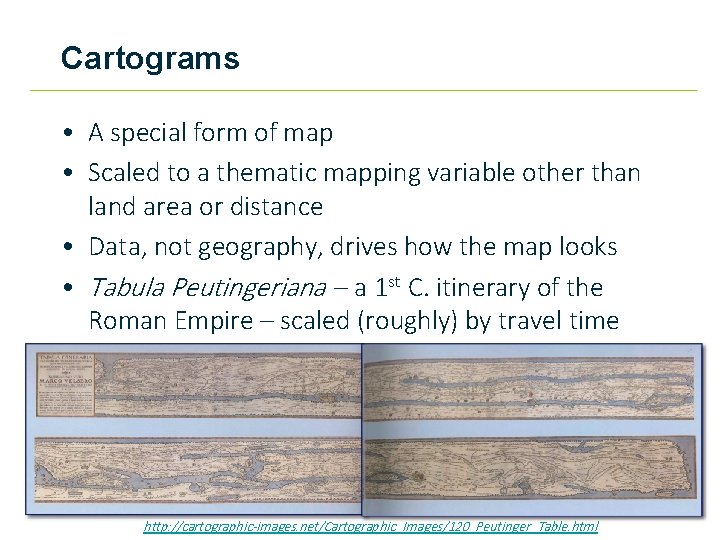
Cartograms • A special form of map • Scaled to a thematic mapping variable other than land area or distance • Data, not geography, drives how the map looks • Tabula Peutingeriana – a 1 st C. itinerary of the Roman Empire – scaled (roughly) by travel time • . http: //cartographic-images. net/Cartographic_Images/120_Peutinger_Table. html
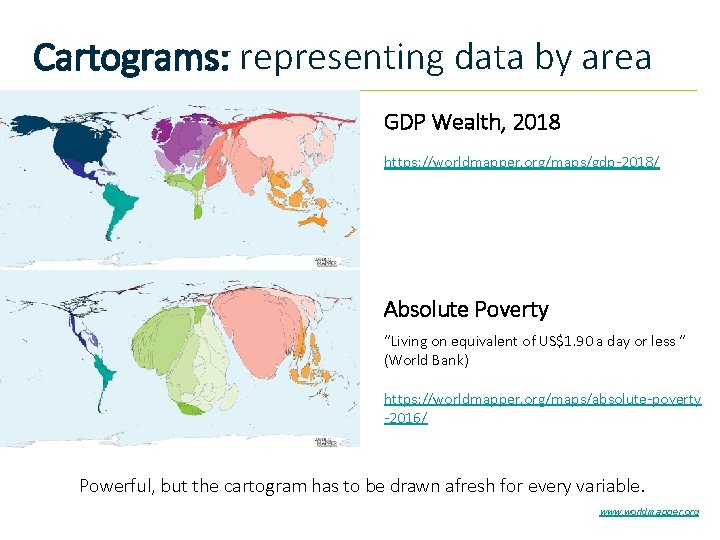
Cartograms: representing data by area GDP Wealth, 2018 https: //worldmapper. org/maps/gdp-2018/ Absolute Poverty “Living on equivalent of US$1. 90 a day or less “ (World Bank) https: //worldmapper. org/maps/absolute-poverty -2016/ Powerful, but the cartogram has to be drawn afresh for every variable. www. worldmapper. org
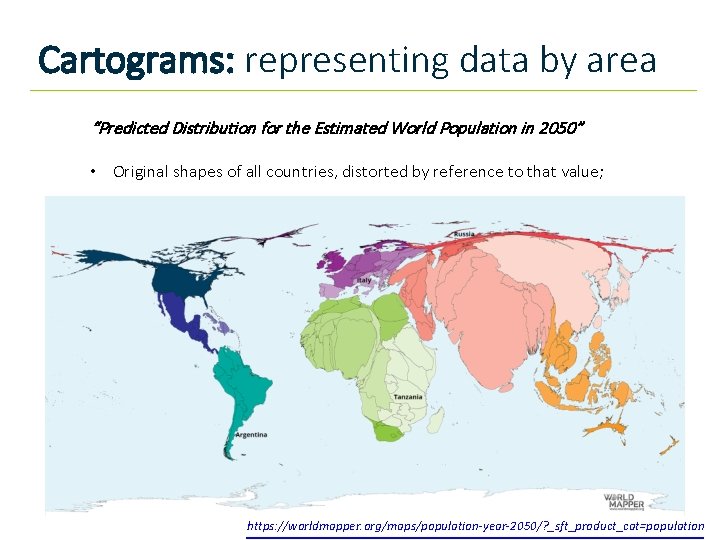
Cartograms: representing data by area “Predicted Distribution for the Estimated World Population in 2050” • Original shapes of all countries, distorted by reference to that value; https: //worldmapper. org/maps/population-year-2050/? _sft_product_cat=population
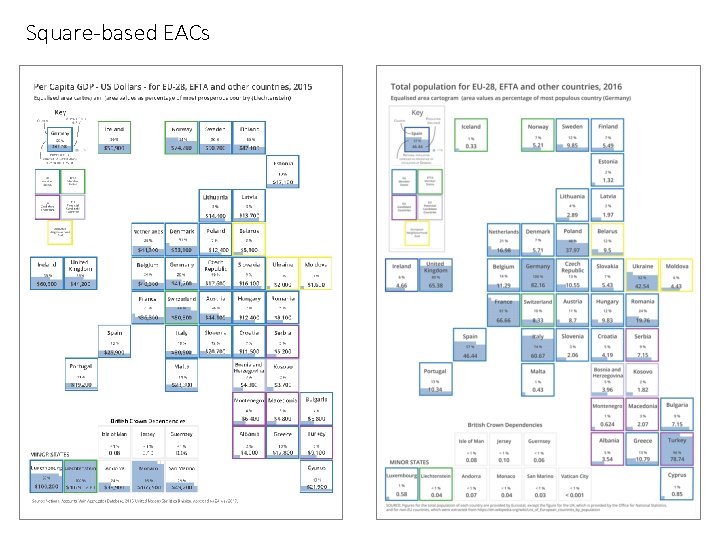
Equal-area cartograms (EACs) Advantages Each area represented by identical symbol, so: • stable representative symbolisation • similar visual impact Challenges Geography is replaced by geometry. • Hexes have a maximum of six neighbours, squares, eight; • Where there are more, symbols have to be shuffled • Navigation
Square-based EACs
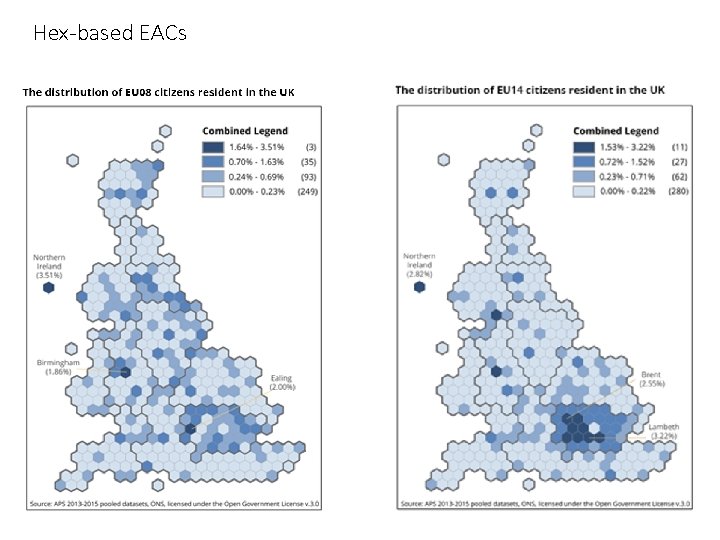
Hex-based EACs
Hexmap automation • The previous EACs were created manually. • Slow and labour-intensive. • An automated method required. • ONS-G’s open source Python-based code generates hexmaps in seconds, not hours. • Boundary file (any format) and a few parameters. • Git. Hub.
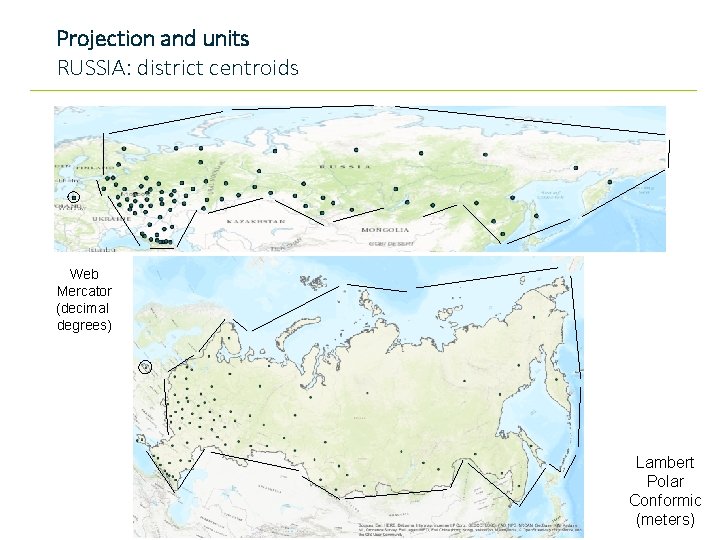
Projection and units RUSSIA: district centroids Web Mercator (decimal degrees) Lambert Polar Conformic (meters)
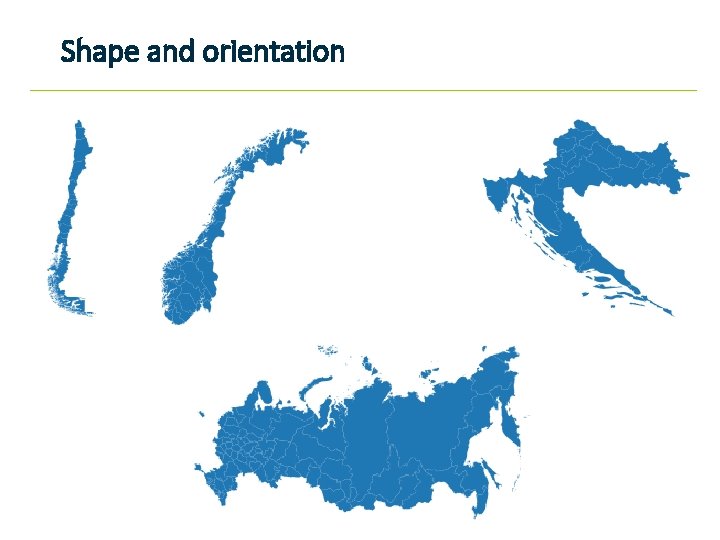
Shape and orientation
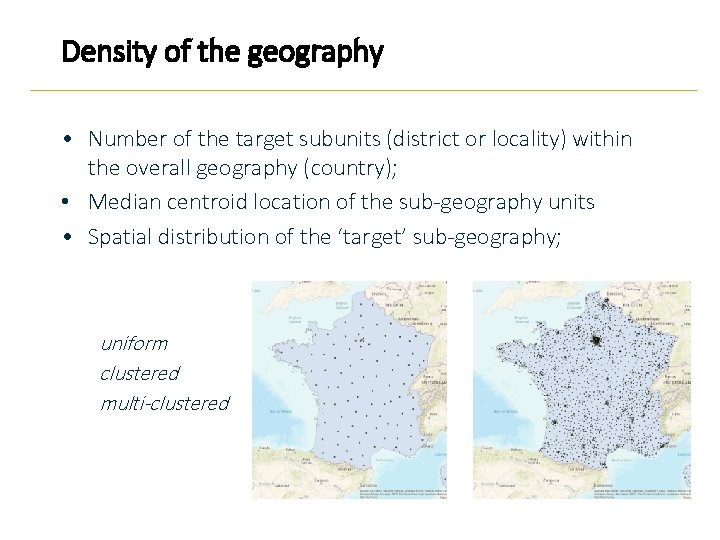
Density of the geography • Number of the target subunits (district or locality) within the overall geography (country); • Median centroid location of the sub-geography units • Spatial distribution of the ‘target’ sub-geography; uniform clustered multi-clustered
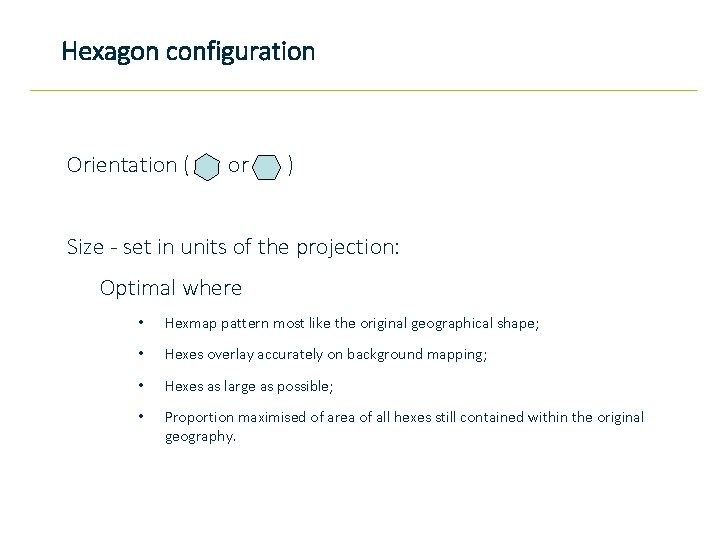
Hexagon configuration Orientation ( or ) Size - set in units of the projection: Optimal where • Hexmap pattern most like the original geographical shape; • Hexes overlay accurately on background mapping; • Hexes as large as possible; • Proportion maximised of area of all hexes still contained within the original geography.
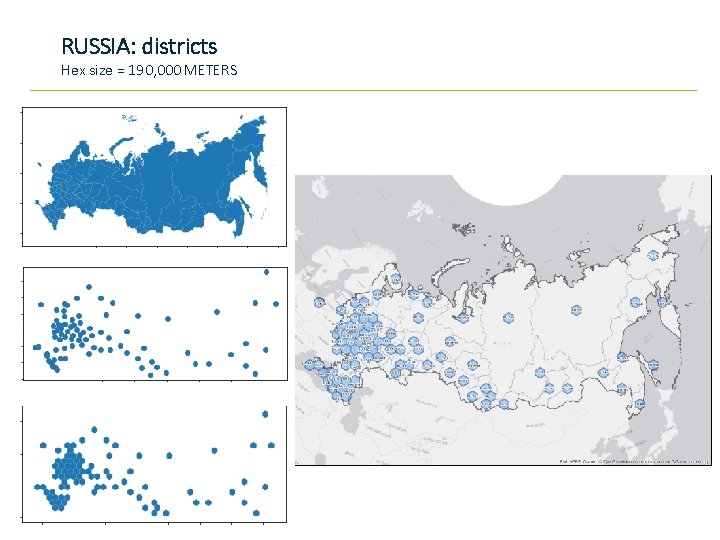
RUSSIA: districts Hex size = 190, 000 METERS
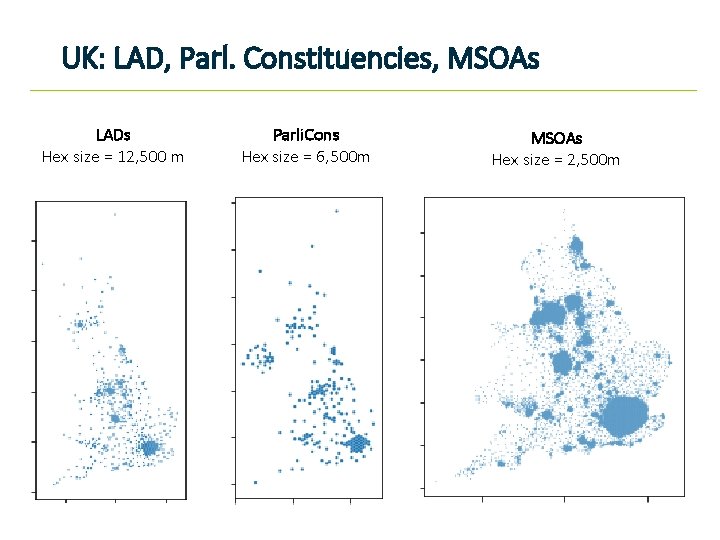
UK: LAD, Parl. Constituencies, MSOAs LADs Hex size = 12, 500 m Parli. Cons Hex size = 6, 500 m MSOAs Hex size = 2, 500 m
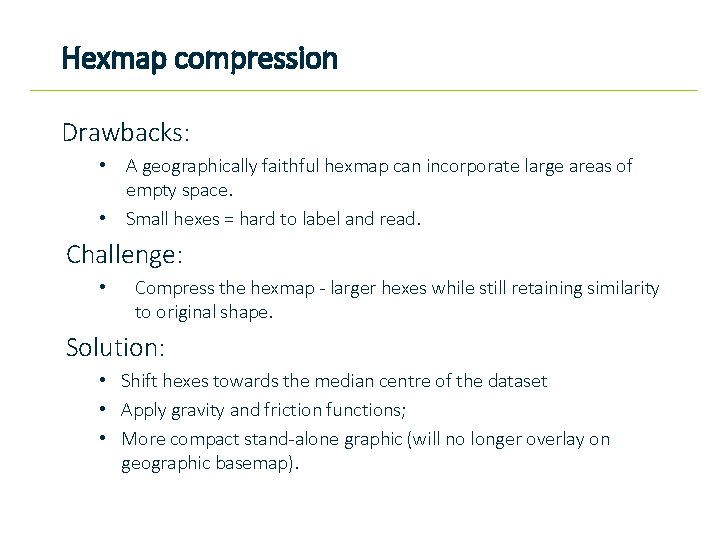
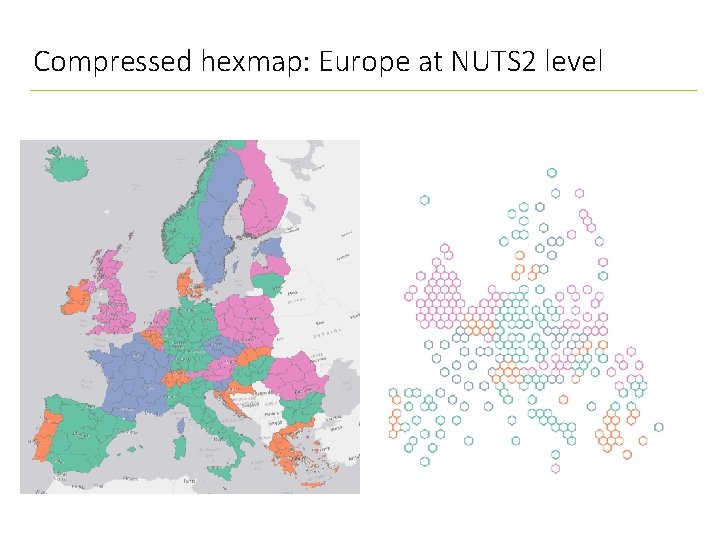
Hexmap compression Drawbacks: • A geographically faithful hexmap can incorporate large areas of empty space. • Small hexes = hard to label and read. Challenge: • Compress the hexmap - larger hexes while still retaining similarity to original shape. Solution: • Shift hexes towards the median centre of the dataset • Apply gravity and friction functions; • More compact stand-alone graphic (will no longer overlay on geographic basemap).
Compressed hexmap: Europe at NUTS 2 level
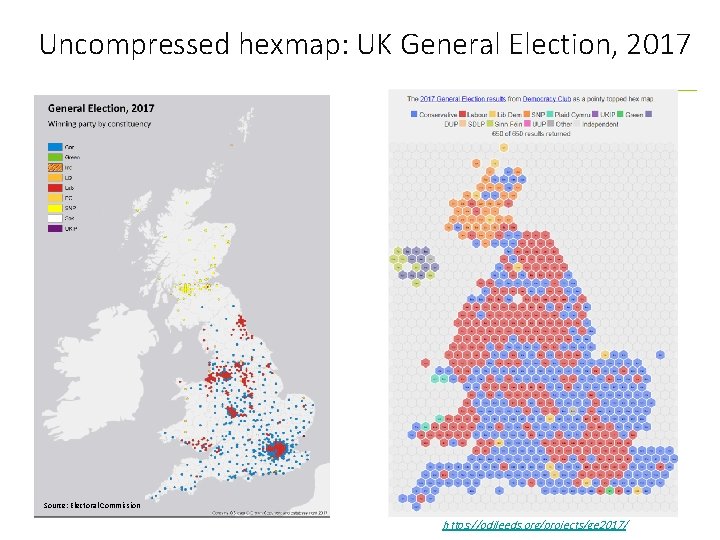
Uncompressed hexmap: UK General Election, 2017 Source: Electoral Commission https: //odileeds. org/projects/ge 2017/
Next steps • Re-engineer the compression code; • Automatic calculation of optimal hex size; • Code refinements (functions); • Identification and processing of clustering patterns; • Creation and distribution to GSS of hexmap templates for common UK geographies. • Publication on Git. Hub
Thank you Bruce Mitchell bruce. mitchell@ons. gov. uk George Tzelepis george. tzelepis@Trade. gov. uk