
Autoimmunity Learning objectives At the end of the

Autoimmunity
Learning objectives At the end of the session, the students will be able to understand: ▰ Immunological Tolerance – central and peripheral ▰ Mechanisms of Autoimmunity ▰ Autoimmune Diseases Essentials of Medical Microbiology 2

Autoimmunity ▰ Condition in which the body’s own immunologically competent cells or antibodies act against its self-antigens resulting in structural or functional damage. ▰ Paul Ehrlich had first introduced the concept of autoimmunity; he termed this condition as “horror autotoxicus”. Essentials of Medical Microbiology 3
Autoimmunity (Cont. . ) ▰ Normally immune system does not react to its own antigens due to a protective mechanism called tolerance. ▰ Any breach in tolerance mechanisms predispose to several autoimmune diseases. Essentials of Medical Microbiology 4
IMMUNOLOGICAL TOLERANCE Essentials of Medical Microbiology 5
IMMUNOLOGICAL TOLERANCE ▰ State in which an individual is incapable of developing an immune response against his own tissue antigens. ▰ Mediated by two broad mechanisms: Ø Central tolerance Ø Peripheral tolerance Essentials of Medical Microbiology 6
Central Tolerance ▰ Refers to the deletion of self-reactive T and B lymphocytes during their maturation in central lymphoid organs (i. e. , in the thymus for T cells and in the bone marrow for B cells). Essentials of Medical Microbiology 7
Central Tolerance (Cont. . ) ▰ In thymus: Ø During the T cell development in thymus any self-antigens are encountered processed and presented by thymic antigen presenting cells (APCs) in association with self-MHC. Ø Any developing T cell that expresses a receptor for such self-antigen is negatively selected (i. e. deleted by apoptosis). Essentials of Medical Microbiology 8
Central Tolerance (Cont. . ) ▰ In bone marrow: Self antigens are eliminated by Ø Receptor editing - process by which many of the B cells reactivate the machinery of antigen receptor gene rearrangement (mainly genes coding for light chains), so that a different (edited) B cell receptor will be produced which no longer recognizes the self-antigen. Ø Negative selection- If receptor editing fails, they undergo apoptosis. Essentials of Medical Microbiology 9
Peripheral Tolerance ▰ Back-up mechanisms that occur in the peripheral tissues to counteract the self -reactive T cells that escape central tolerance. Essentials of Medical Microbiology 10
Peripheral Tolerance Mechanisms ▰ Ignorance- Self-reactive T cells might never encounter the self-antigen which they recognize. Essentials of Medical Microbiology 11
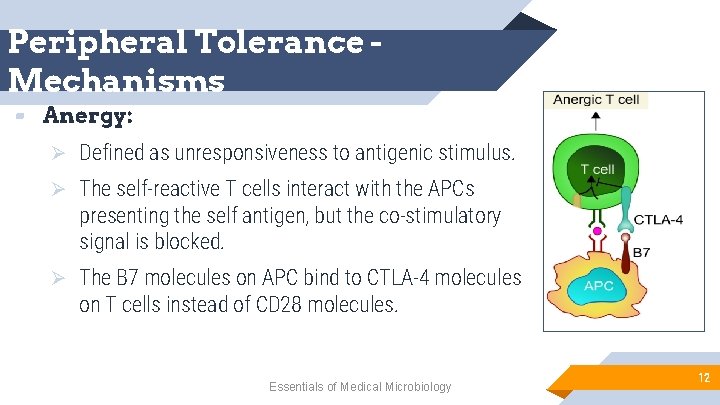
Peripheral Tolerance Mechanisms ▰ Anergy: Ø Defined as unresponsiveness to antigenic stimulus. Ø The self-reactive T cells interact with the APCs presenting the self antigen, but the co-stimulatory signal is blocked. Ø The B 7 molecules on APC bind to CTLA-4 molecules on T cells instead of CD 28 molecules. Essentials of Medical Microbiology 12
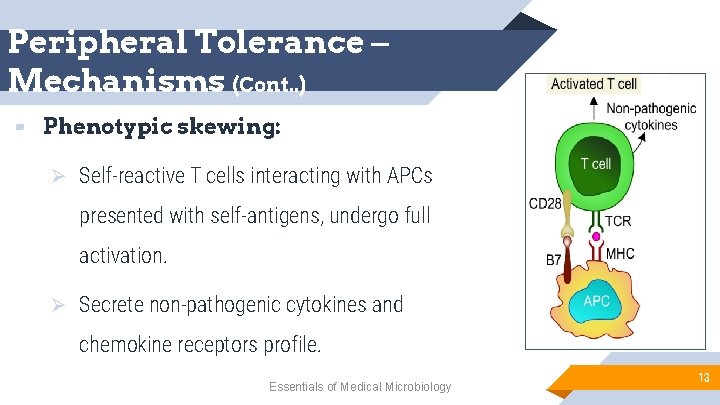
Peripheral Tolerance – Mechanisms (Cont. . ) ▰ Phenotypic skewing: Ø Self-reactive T cells interacting with APCs presented with self-antigens, undergo full activation. Ø Secrete non-pathogenic cytokines and chemokine receptors profile. Essentials of Medical Microbiology 13
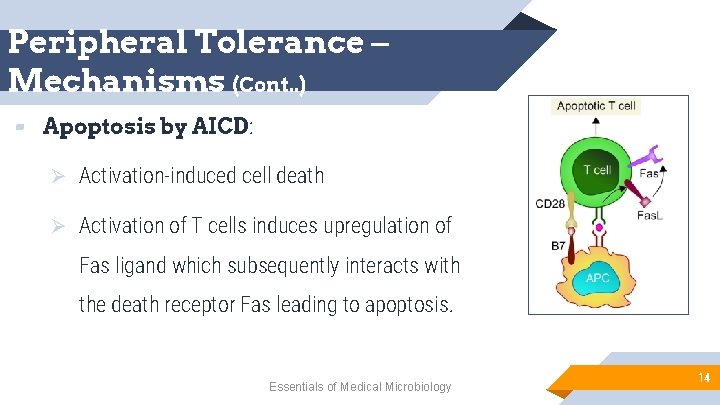
Peripheral Tolerance – Mechanisms (Cont. . ) ▰ Apoptosis by AICD: Ø Activation-induced cell death Ø Activation of T cells induces upregulation of Fas ligand which subsequently interacts with the death receptor Fas leading to apoptosis. Essentials of Medical Microbiology 14
Peripheral Tolerance – Mechanisms (Cont. . ) ▰ Regulatory T cells (Treg cells): Ø Treg cells can down regulate the self-reactive T cells through secreting certain cytokines (e. g. , IL-10 and transforming growth factor β [TGF-β]) or killing by direct cell to cell contact. Essentials of Medical Microbiology 15
Peripheral Tolerance – Mechanisms (Cont. . ) ▰ Dendritic cells (DCs): Ø Immature DCs and tolerogenic DCs capture the self-antigen for processing. Ø Down regulate the expression of molecules of co-stimulatory ligands such as CD 40 and B 7 molecules or act indirectly by induction of regulatory T cells. Essentials of Medical Microbiology 16
Peripheral Tolerance – Mechanisms (Cont. . ) ▰ Sequestration of self-antigen: Certain self-antigens can evade immune recognition by sequestration in immunologically privileged sites, e. g. corneal proteins, testicular antigens and antigens from brain. Essentials of Medical Microbiology 17

MECHANISMS OF AUTOIMMUNITY Essentials of Medical Microbiology 18
MECHANISMS OF AUTOIMMUNITY ▰ Autoimmunity results due to breakdown of one or more of the mechanisms of immunological tolerance. Essentials of Medical Microbiology 19
Breakdown of T Cell Anergy ▰ In the presence of tissue necrosis and local inflammation express co- stimulatory molecules (B 7). Ø Multiple sclerosis, rheumatoid arthritis and psoriasis Essentials of Medical Microbiology 20
Failure of AICD ▰ Failure of the auto reactive activated T cells to undergo activation induced cell death (AICD) Ø SLE (systemic lupus erythematosus) Essentials of Medical Microbiology 21
Loss of Treg cells ▰ Autoimmunity can result following the loss of regulatory T cell-mediated suppression of self-reactive lymphocytes. Essentials of Medical Microbiology 22
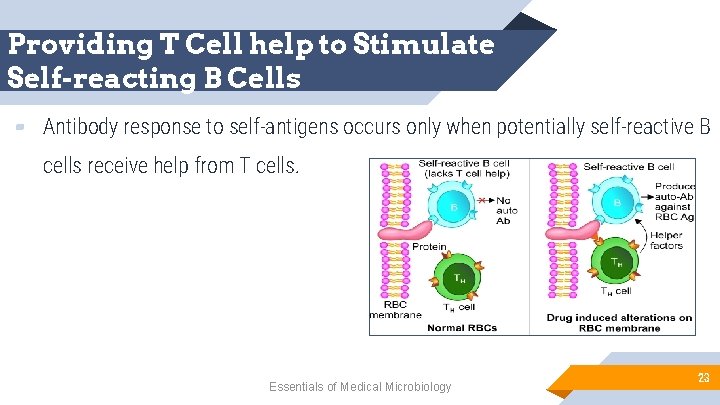
Providing T Cell help to Stimulate Self-reacting B Cells ▰ Antibody response to self-antigens occurs only when potentially self-reactive B cells receive help from T cells. Essentials of Medical Microbiology 23
Release of Sequestered Antigens ▰ Sequestered antigens -never been exposed to the tolerance mechanisms during development of immune system. ▰ Injury to the organs leads to release of such sequestered antigens which are very well capable of mounting an immune response. ▰ Spermatozoa and ocular antigens release can cause post vasectomy orchitis and post-traumatic uveitis. Essentials of Medical Microbiology 24
Molecular Mimicry ▰ Some microorganisms share antigenic determinants (epitopes) with self- antigens. ▰ Immune response against such microbes would produce antibodies that can cross-react with self-antigen. ▰ Example: Acute rheumatic fever and multiple sclerosis (molecular mimicry involving T-cell epitopes). Essentials of Medical Microbiology 25
Polyclonal Lymphocyte Activation ▰ Polyclonal T cell activation - Superantigens released from microbes (e. g. Staphylococcus aureus), polyclonally activate the T cells directly by binding to antigen non-specific Vβ region of T cell receptors. ▰ Polyclonal B cell activation can be induced by products of various microbes such as Epstein Barr virus, HIV, etc. Essentials of Medical Microbiology 26
Exposure of Cryptic Selfepitopes ▰ During development of immune system, not all epitopes of an antigen are effectively processed and presented to T cells. ▰ There are some nondominant cryptic epitopes which remain sequestrated. ▰ Hence, T cell clones reacting against such epitopes are not deleted. Essentials of Medical Microbiology 27
Exposure of Cryptic Selfepitopes (Cont. . ) ▰ Such cryptic self-epitopes can be released secondary to inflammation at a site of tissue injury, which can induce increased protease production and differential processing of released self-epitopes by APCs. Essentials of Medical Microbiology 28
Epitope Spreading ▰ Self-peptides released due to persistent inflammation induce tissue damage (as occurs in chronic microbial infection) and are processed and presented by APCs along with microbial peptides. ▰ There may occur a shift or spread of T cell recognition to self-epitopes presented on APCs rather than recognizing microbial epitope. Essentials of Medical Microbiology 29
Bystander Activation ▰ Nonspecific activation of bystander self-reactive TH 1 cells. ▰ Leads to cytokine influx which causes an increased infiltration of various non- specific T cells at the site of infection. Essentials of Medical Microbiology 30
AUTOIMMUNE DISEASES Essentials of Medical Microbiology 31
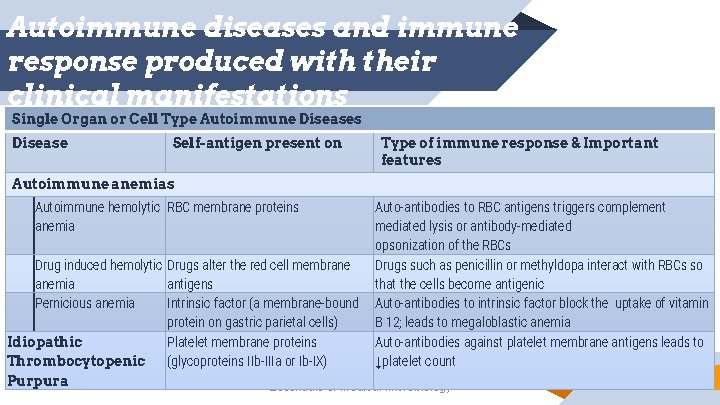
Autoimmune diseases and immune response produced with their clinical manifestations Single Organ or Cell Type Autoimmune Diseases Disease Self-antigen present on Type of immune response & Important features Autoimmune anemias Autoimmune hemolytic RBC membrane proteins anemia Auto-antibodies to RBC antigens triggers complement mediated lysis or antibody-mediated opsonization of the RBCs Drugs such as penicillin or methyldopa interact with RBCs so that the cells become antigenic Auto-antibodies to intrinsic factor block the uptake of vitamin B 12; leads to megaloblastic anemia Auto-antibodies against platelet membrane antigens leads to ↓platelet count Drug induced hemolytic Drugs alter the red cell membrane anemia antigens Pernicious anemia Intrinsic factor (a membrane-bound protein on gastric parietal cells) Platelet membrane proteins Idiopathic (glycoproteins IIb-IIIa or Ib-IX) Thrombocytopenic Purpura Essentials of Medical Microbiology 32
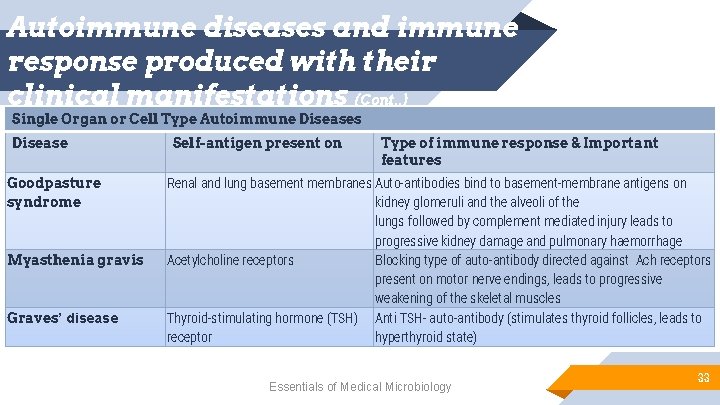
Autoimmune diseases and immune response produced with their clinical manifestations (Cont. . ) Single Organ or Cell Type Autoimmune Diseases Disease Goodpasture syndrome Myasthenia gravis Graves’ disease Self-antigen present on Type of immune response & Important features Renal and lung basement membranes Auto-antibodies bind to basement-membrane antigens on kidney glomeruli and the alveoli of the lungs followed by complement mediated injury leads to progressive kidney damage and pulmonary haemorrhage Acetylcholine receptors Blocking type of auto-antibody directed against Ach receptors present on motor nerve endings, leads to progressive weakening of the skeletal muscles Thyroid-stimulating hormone (TSH) Anti TSH- auto-antibody (stimulates thyroid follicles, leads to receptor hyperthyroid state) Essentials of Medical Microbiology 33
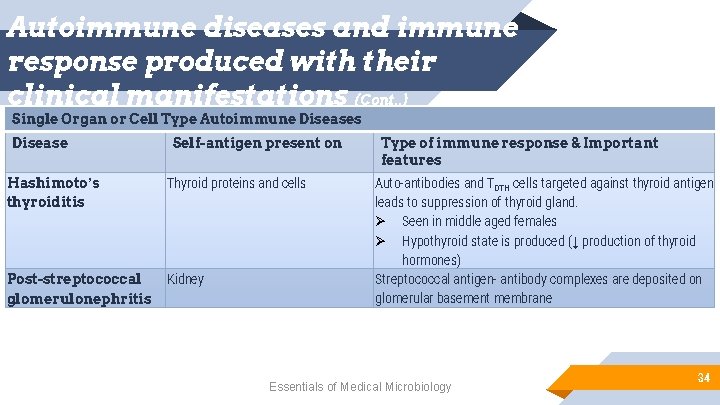
Autoimmune diseases and immune response produced with their clinical manifestations (Cont. . ) Single Organ or Cell Type Autoimmune Diseases Disease Self-antigen present on Hashimoto’s thyroiditis Thyroid proteins and cells Post-streptococcal glomerulonephritis Kidney Type of immune response & Important features Auto-antibodies and TDTH cells targeted against thyroid antigen leads to suppression of thyroid gland. Ø Seen in middle aged females Ø Hypothyroid state is produced (↓ production of thyroid hormones) Streptococcal antigen- antibody complexes are deposited on glomerular basement membrane Essentials of Medical Microbiology 34
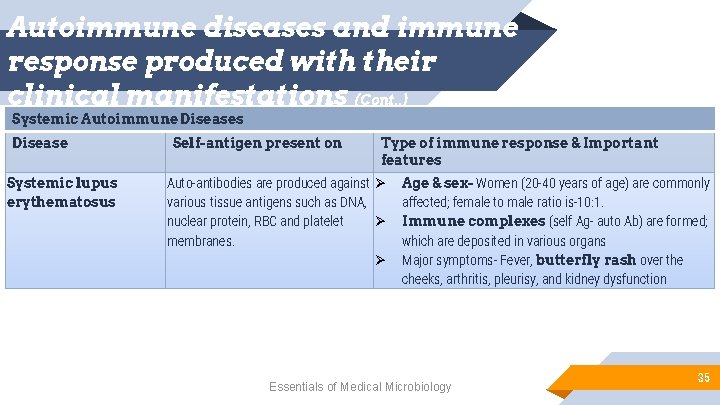
Autoimmune diseases and immune response produced with their clinical manifestations (Cont. . ) Systemic Autoimmune Diseases Disease Systemic lupus erythematosus Self-antigen present on Type of immune response & Important features Auto-antibodies are produced against Ø various tissue antigens such as DNA, nuclear protein, RBC and platelet Ø membranes. Ø Age & sex- Women (20 -40 years of age) are commonly affected; female to male ratio is-10: 1. Immune complexes (self Ag- auto Ab) are formed; which are deposited in various organs Major symptoms- Fever, butterfly rash over the cheeks, arthritis, pleurisy, and kidney dysfunction Essentials of Medical Microbiology 35
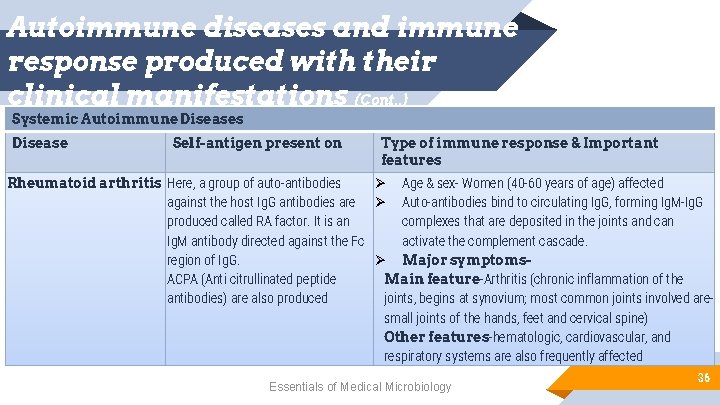
Autoimmune diseases and immune response produced with their clinical manifestations (Cont. . ) Systemic Autoimmune Diseases Disease Self-antigen present on Type of immune response & Important features Ø Age & sex- Women (40 -60 years of age) affected Rheumatoid arthritis Here, a group of auto-antibodies against the host Ig. G antibodies are Ø Auto-antibodies bind to circulating Ig. G, forming Ig. M-Ig. G produced called RA factor. It is an complexes that are deposited in the joints and can Ig. M antibody directed against the Fc activate the complement cascade. region of Ig. G. Ø Major symptoms. ACPA (Anti citrullinated peptide Main feature-Arthritis (chronic inflammation of the antibodies) are also produced joints, begins at synovium; most common joints involved aresmall joints of the hands, feet and cervical spine) Other features-hematologic, cardiovascular, and respiratory systems are also frequently affected Essentials of Medical Microbiology 36
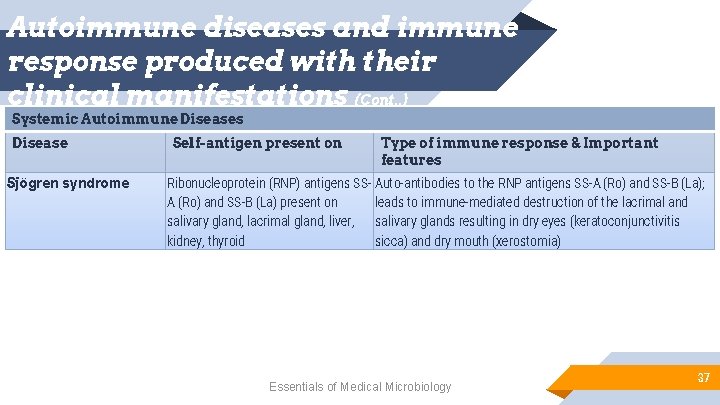
Autoimmune diseases and immune response produced with their clinical manifestations (Cont. . ) Systemic Autoimmune Diseases Disease Sjögren syndrome Self-antigen present on Type of immune response & Important features Ribonucleoprotein (RNP) antigens SS- Auto-antibodies to the RNP antigens SS-A (Ro) and SS-B (La); A (Ro) and SS-B (La) present on leads to immune-mediated destruction of the lacrimal and salivary gland, lacrimal gland, liver, salivary glands resulting in dry eyes (keratoconjunctivitis kidney, thyroid sicca) and dry mouth (xerostomia) Essentials of Medical Microbiology 37
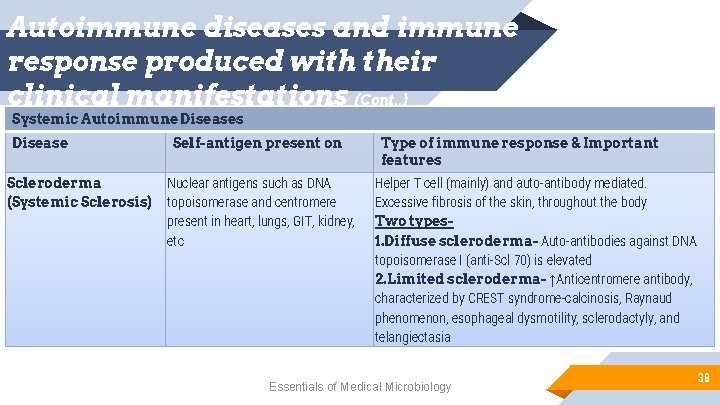
Autoimmune diseases and immune response produced with their clinical manifestations (Cont. . ) Systemic Autoimmune Diseases Disease Scleroderma (Systemic Sclerosis) Self-antigen present on Nuclear antigens such as DNA topoisomerase and centromere present in heart, lungs, GIT, kidney, etc Type of immune response & Important features Helper T cell (mainly) and auto-antibody mediated. Excessive fibrosis of the skin, throughout the body Two types 1. Diffuse scleroderma- Auto-antibodies against DNA topoisomerase I (anti-Scl 70) is elevated 2. Limited scleroderma- ↑Anticentromere antibody, characterized by CREST syndrome-calcinosis, Raynaud phenomenon, esophageal dysmotility, sclerodactyly, and telangiectasia Essentials of Medical Microbiology 38
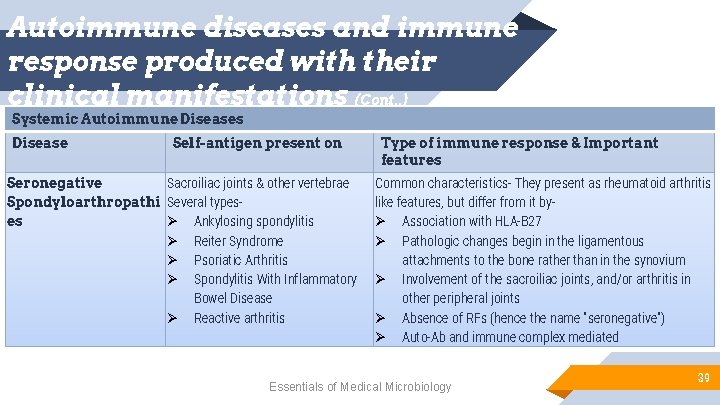
Autoimmune diseases and immune response produced with their clinical manifestations (Cont. . ) Systemic Autoimmune Diseases Disease Self-antigen present on Sacroiliac joints & other vertebrae Seronegative Spondyloarthropathi Several typesØ Ankylosing spondylitis es Ø Reiter Syndrome Ø Psoriatic Arthritis Ø Spondylitis With Inflammatory Bowel Disease Ø Reactive arthritis Type of immune response & Important features Common characteristics- They present as rheumatoid arthritis like features, but differ from it byØ Association with HLA-B 27 Ø Pathologic changes begin in the ligamentous attachments to the bone rather than in the synovium Ø Involvement of the sacroiliac joints, and/or arthritis in other peripheral joints Ø Absence of RFs (hence the name "seronegative") Ø Auto-Ab and immune complex mediated Essentials of Medical Microbiology 39
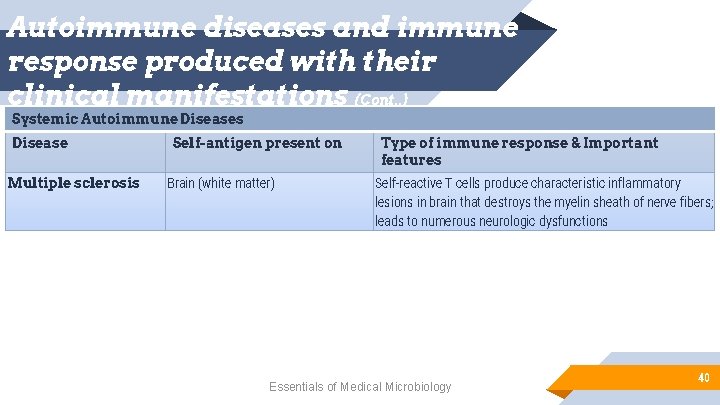
Autoimmune diseases and immune response produced with their clinical manifestations (Cont. . ) Systemic Autoimmune Diseases Disease Multiple sclerosis Self-antigen present on Brain (white matter) Type of immune response & Important features Self-reactive T cells produce characteristic inflammatory lesions in brain that destroys the myelin sheath of nerve fibers; leads to numerous neurologic dysfunctions Essentials of Medical Microbiology 40
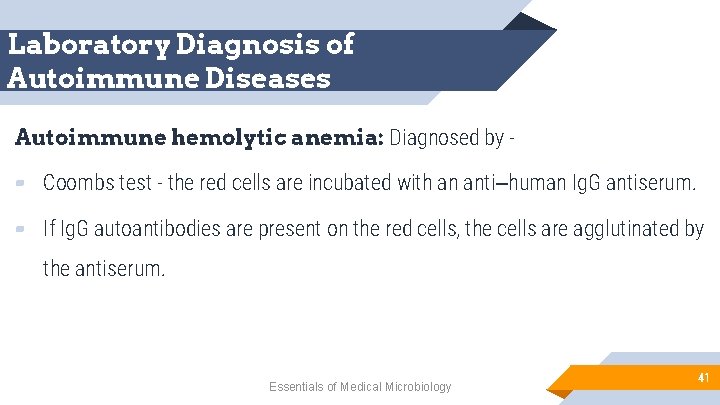
Laboratory Diagnosis of Autoimmune Diseases Autoimmune hemolytic anemia: Diagnosed by ▰ Coombs test - the red cells are incubated with an anti–human Ig. G antiserum. ▰ If Ig. G autoantibodies are present on the red cells, the cells are agglutinated by the antiserum. Essentials of Medical Microbiology 41
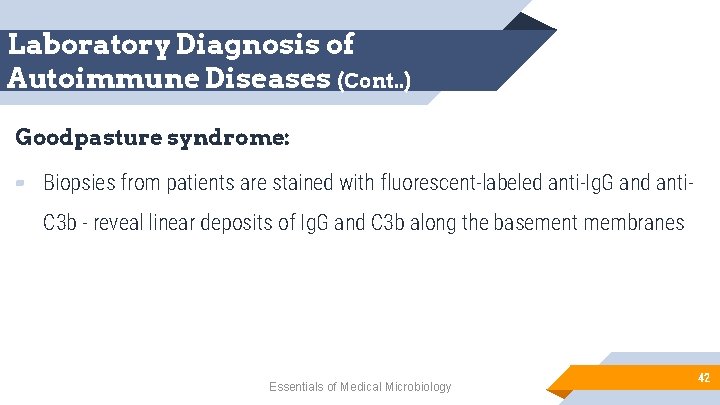
Laboratory Diagnosis of Autoimmune Diseases (Cont. . ) Goodpasture syndrome: ▰ Biopsies from patients are stained with fluorescent-labeled anti-Ig. G and anti- C 3 b - reveal linear deposits of Ig. G and C 3 b along the basement membranes Essentials of Medical Microbiology 42
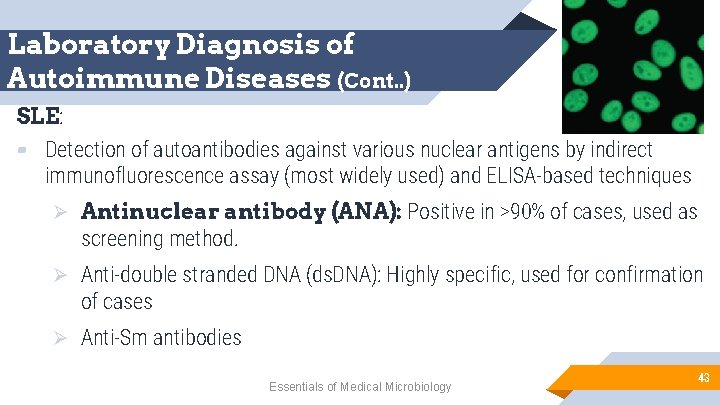
Laboratory Diagnosis of Autoimmune Diseases (Cont. . ) SLE: ▰ Detection of autoantibodies against various nuclear antigens by indirect immunofluorescence assay (most widely used) and ELISA-based techniques Ø Antinuclear antibody (ANA): Positive in >90% of cases, used as screening method. Ø Anti-double stranded DNA (ds. DNA): Highly specific, used for confirmation of cases Ø Anti-Sm antibodies Essentials of Medical Microbiology 43
Laboratory Diagnosis of Autoimmune Diseases (Cont. . ) SLE: (Cont. . ) ▰ Lupus band test- Direct immunofluorescence test - detect deposits of immunoglobulins and complement proteins in the patient's skin. ▰ LE cell test- No longer used because the LE cells are only found in 50– 75% of SLE cases. Essentials of Medical Microbiology 44
Laboratory Diagnosis of Autoimmune Diseases (Cont. . ) ▰ Scleroderma: Anti-Scl 70 antibody is raised, detected by indirect immunofluorescence assay ▰ Sjögren’s syndrome: Diagnosed by detection of SS-A (or anti-Ro) and SS-B (or anti-La) antibodies by indirect immunofluorescence assay Essentials of Medical Microbiology 45
Laboratory Diagnosis of Autoimmune Diseases (Cont. . ) Rheumatoid arthritis: Diagnosed by ▰ RA factor (by latex agglutination test)- RA factor is an Ig. M autoantibody directed against Fc portion of Ig. G, good sensitivity. False positive - seen in other autoimmune diseases. ▰ ACPA (Anti-citrullinated peptide antibodies) is an auto-antibody to citrullin protein. It is positive only in 67% of cases; but is highly specific. ▰ Rose-Waaler test to detect RA factor is of historical importance, no longer used now. Essentials of Medical Microbiology 46
Questions: ▰ Q 1. Autoimmunity can be caused due to all of the following, except: a. Pressure of forbidden clones b. Expression of cryptic antigens c. Negative selection of T- cells in the thymus d. Release of sequestered antigens Essentials of Medical Microbiology 47
Questions: ▰ Q 2. Autoantibodies bind to basement-membrane antigens on kidney glomeruli and the alveoli. This is the hallmark of: a. Goodpasture syndrome b. Myasthenia gravis c. Graves’ disease d. Hashimoto’s thyroiditis Essentials of Medical Microbiology 48
Questions: ▰ Q 3. Anti-citrullinated peptide antibodies (ACPA) are diagnostic for: a. Systemic lupus erythematosus (SLE) b. Rheumatoid arthritis c. Sjögren syndrome d. Scleroderma Essentials of Medical Microbiology 49
- Slides: 49