
Autoimmune Diseases Immunology Unit Department of Pathology College


- Slides: 29
Autoimmune Diseases Immunology Unit Department of Pathology College of Medicine
Reference Kuby Immunology 7 th Edition 2013 Chapter 16 Pages 525 -531
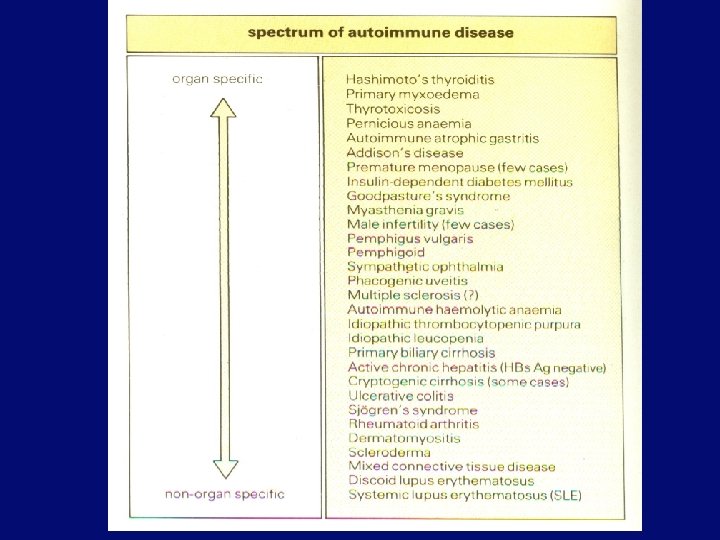
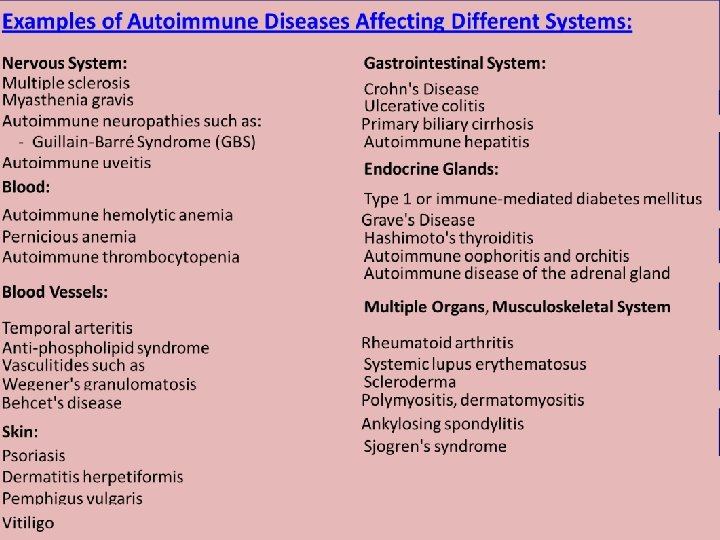
Objectives • To know that the inflammatory processes in auto immune diseases are mediated by hypersensitivity reactions (type II, III and IV) • To know that autoimmune diseases can be either organ specific or may be generalized involving many organs or tissues • To understand that the manifestations of autoimmune diseases depend upon the organ and the degree of damage inflicted on the target tissues
Disease processes and tissue damage are due to Type III and Type IV hypersensitivity reactions
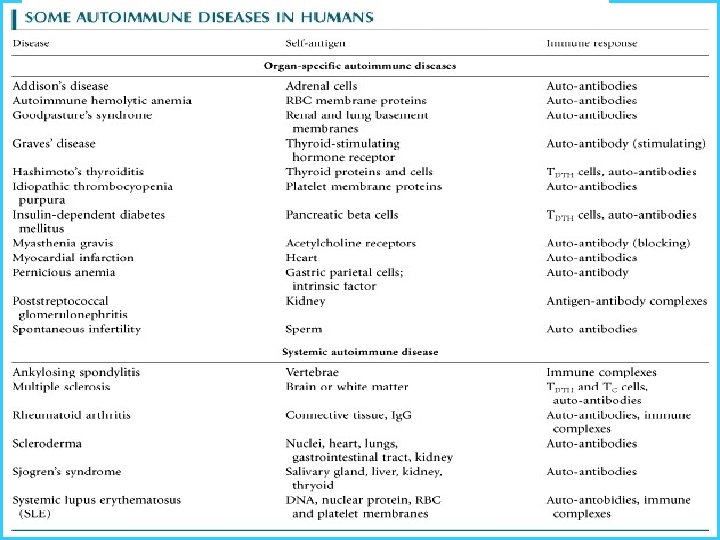
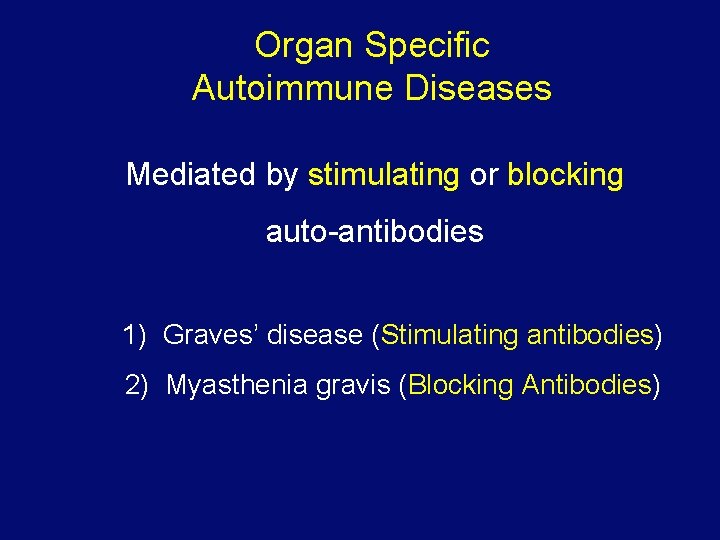
Organ Specific Autoimmune Diseases Mediated by stimulating or blocking auto-antibodies 1) Graves’ disease (Stimulating antibodies) 2) Myasthenia gravis (Blocking Antibodies)
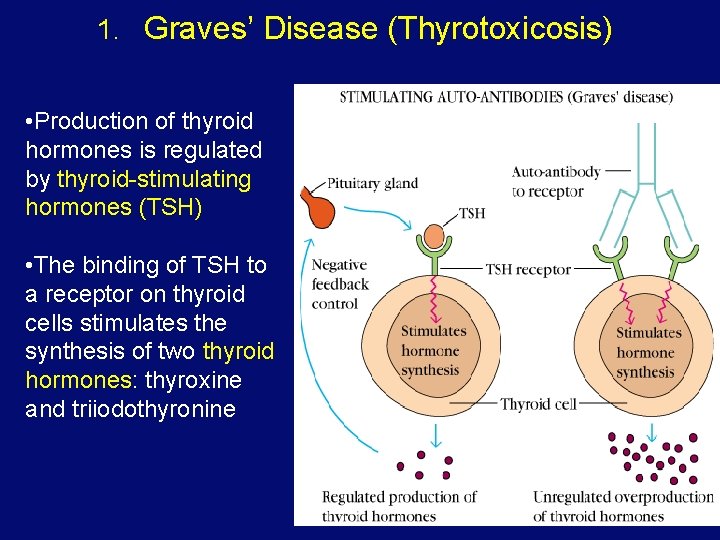
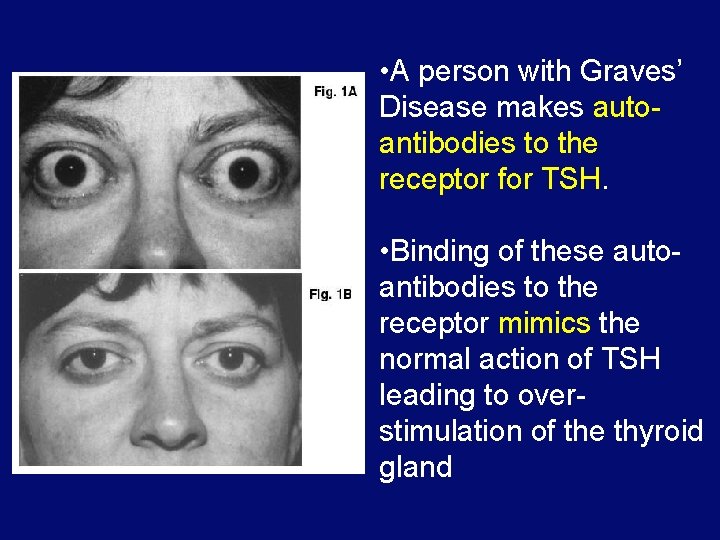
1. Graves’ Disease (Thyrotoxicosis) • Production of thyroid hormones is regulated by thyroid-stimulating hormones (TSH) • The binding of TSH to a receptor on thyroid cells stimulates the synthesis of two thyroid hormones: thyroxine and triiodothyronine
• A person with Graves’ Disease makes autoantibodies to the receptor for TSH. • Binding of these autoantibodies to the receptor mimics the normal action of TSH leading to overstimulation of the thyroid gland
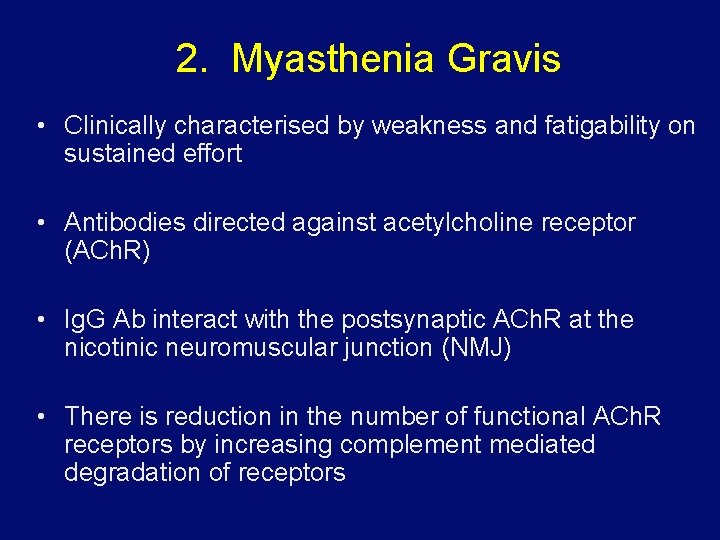
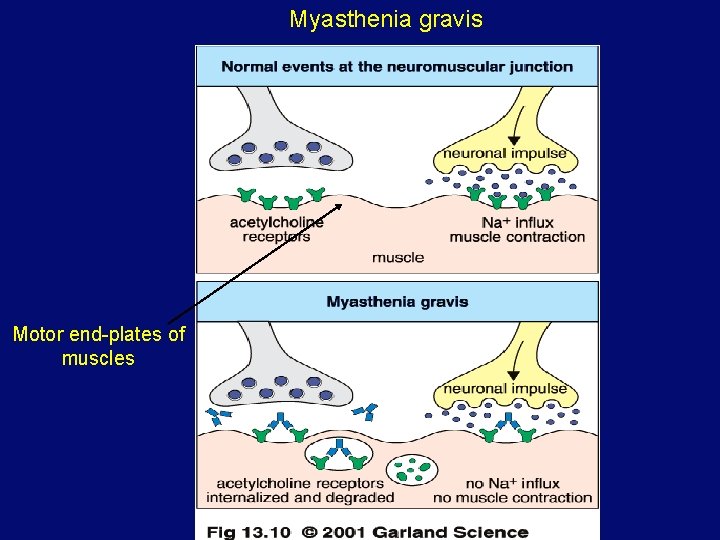
2. Myasthenia Gravis • Clinically characterised by weakness and fatigability on sustained effort • Antibodies directed against acetylcholine receptor (ACh. R) • Ig. G Ab interact with the postsynaptic ACh. R at the nicotinic neuromuscular junction (NMJ) • There is reduction in the number of functional ACh. R receptors by increasing complement mediated degradation of receptors
Myasthenia gravis Motor end-plates of muscles
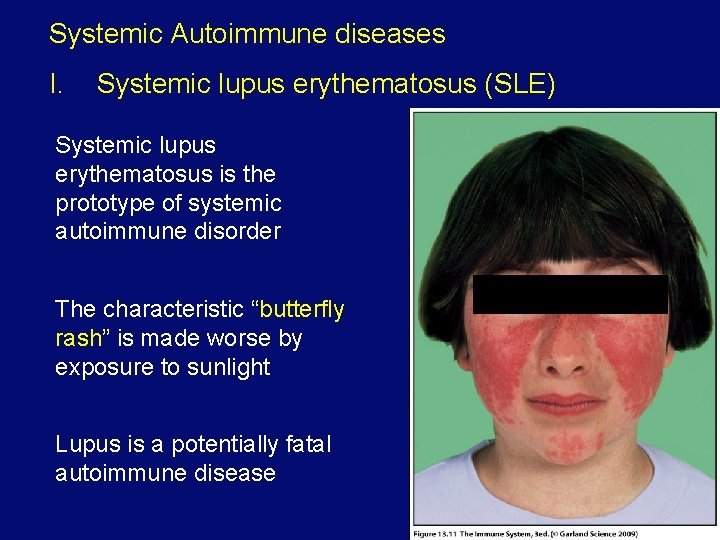
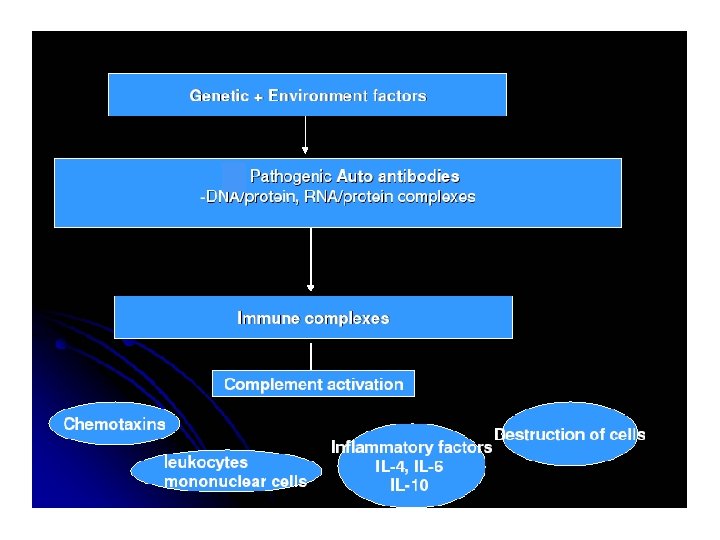
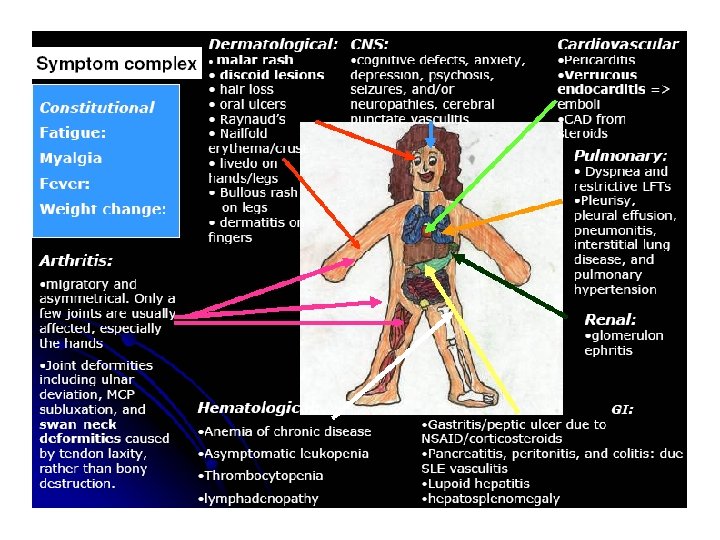
Systemic Autoimmune diseases I. Systemic lupus erythematosus (SLE) Systemic lupus erythematosus is the prototype of systemic autoimmune disorder The characteristic “butterfly rash” is made worse by exposure to sunlight Lupus is a potentially fatal autoimmune disease
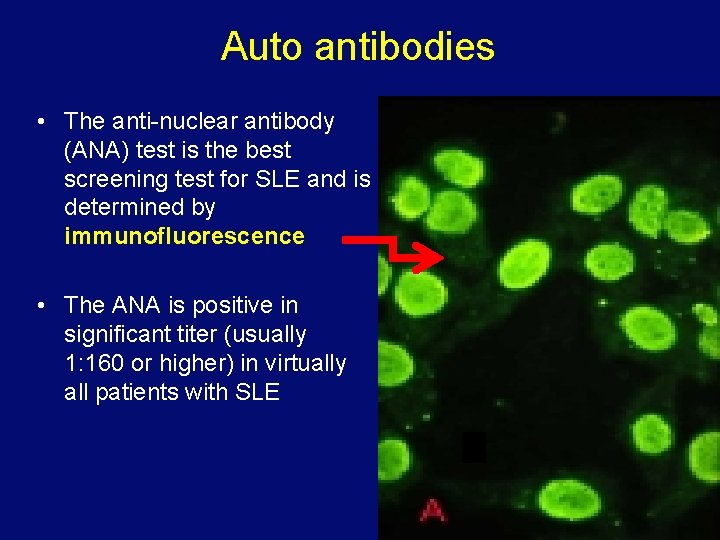
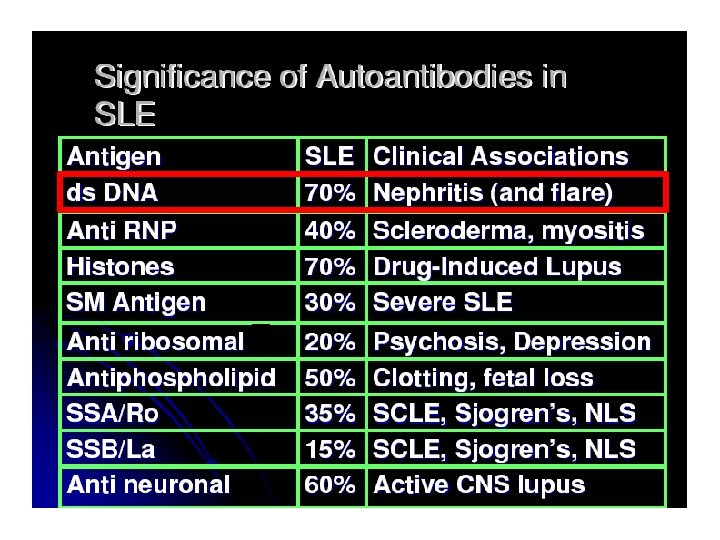
Auto antibodies • The anti-nuclear antibody (ANA) test is the best screening test for SLE and is determined by immunofluorescence • The ANA is positive in significant titer (usually 1: 160 or higher) in virtually all patients with SLE
Other investigations • • • Anti-double-stranded DNA titers Complement Levels (CH 50, C 3, C 4) ESR CRP Complement Split products Decreased complement C 1 q
Treatment NSAIDs (Non-steroidal anti-inflammatory drugs) Antimalarials (Hydroxychloroquine) Immunosuppressive agents
2. Rheumatoid Arthritis • Rheumatoid arthritis is a common autoimmune disease in which the normal immune response is directed against an individual's own tissue, including the : • Joints • Tendons • Bones Resulting in inflammation and destruction of these tissues with progressive disability, systemic complications (cardiovascular, pulmonary. . ) and early death.
Rheumatoid Arthritis (Contd. ) • Both prevalence and incidence are 2 -3 times greater in women than in men. • The cause of rheumatoid arthritis is not known: complex interplay among genotype, environmental triggers. • Genetic factors: HLA-DR B 1 locus alleles that contain a common amino acid motif (QKRAA) in the HLA-DRB 1 region, termed the shared epitope, confer particular susceptibility
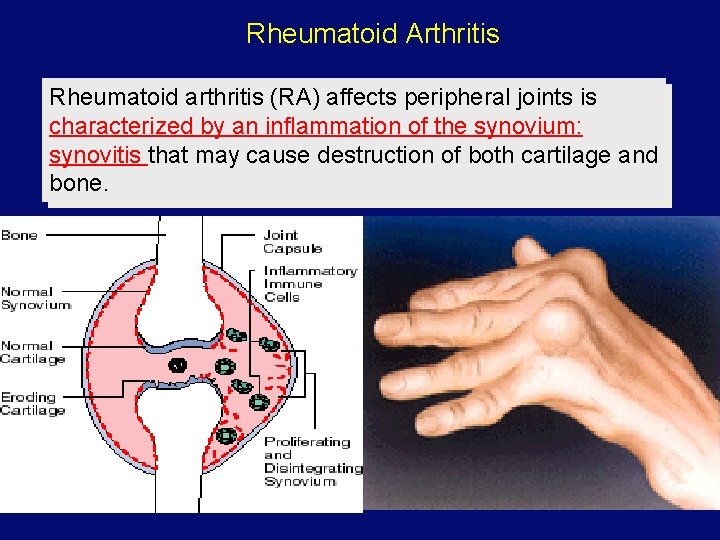
Rheumatoid Arthritis Rheumatoid arthritis (RA) affects peripheral joints is characterized by an inflammation of the synovium: synovitis that may cause destruction of both cartilage and bone.
Pathogenesis (Type III hypersensitivity reaction) Inflammatory cells produce pro inflammatory cytokines/ TNF-α, IL-1 that induce the secretion of metalloproteinases; which are known to cause joint destruction T cell activation due to unknown antigens also contributes to the inflammation in RA There is a lack of tolerance to citrullinated proteins and the appearance of autoantibodies directed against citrullinated proteins
Pathogenesis (Type III hypersensitivity reaction) In rheumatoid arthritis, many individuals produce another group of auto-antibodies known as rheumatoid factor These antibodies react with determinants in the FC region of Ig. G
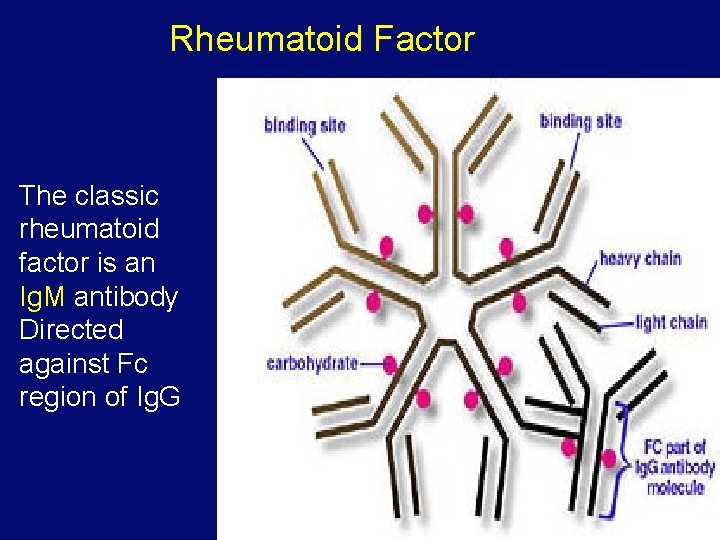
Rheumatoid Factor The classic rheumatoid factor is an Ig. M antibody Directed against Fc region of Ig. G
Pathogenesis (Type III hypersensitivity reaction) Such auto-antibodies bind to normal circulating Ig. G, forming Ig. M-Ig. G complexes which may be deposited in joints. This leads to activation of synovial macrophages The macrophages engulf the immune complexes and then release TNF and other pro-inflammatory cytokines e. g. , IL-1
Diagnosis: • Anti–citrullinated protein/peptides(ACP) antibodies/ anti-CCP : specific markers • Rheumatoid factor Medications • NSAIDS (Non-steroidal anti-inflammatory drugs) • Disease-modifying drugs (eg, gold, hydroxychloroquine, sulfasalazine, penicillamine) • Immunosuppressive therapy: • Corticosteroids • Methotrexate • Surgery • Physical therapy
Take home message • The spectrum of autoimmune disorders is wide ranging from single organ involvement to a systemic disease • The disease process is usually prolonged and is generally associated with significant morbidity and mortality • The mainstay of the treatment is to maintain immunosuppression
Thank you