
AUTOIMMUNE BULLOUS DISORDERS II Neirita Hazarika BULLOUS PEMPHIGOID
AUTOIMMUNE BULLOUS DISORDERS - II Neirita Hazarika
BULLOUS PEMPHIGOID
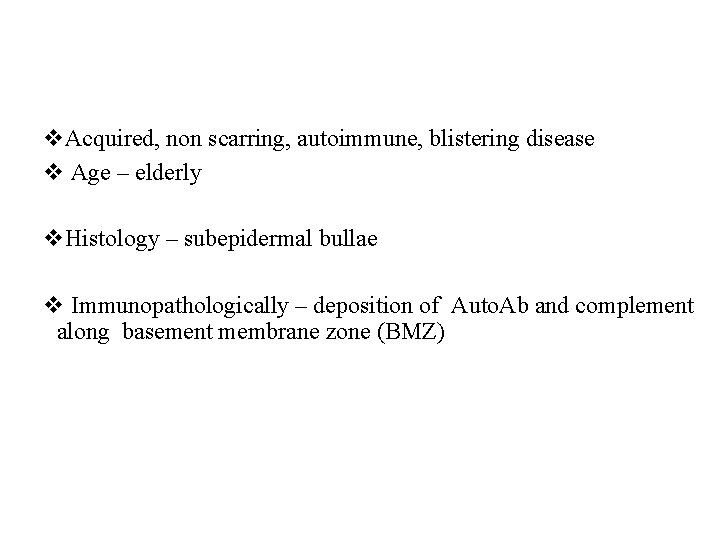
v. Acquired, non scarring, autoimmune, blistering disease v Age – elderly v. Histology – subepidermal bullae v Immunopathologically – deposition of Auto. Ab and complement along basement membrane zone (BMZ)

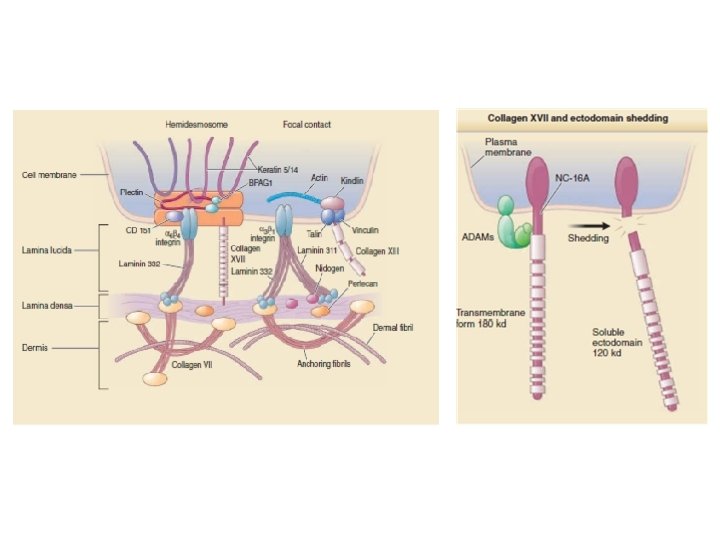
• ANTIGENS - BPAg 1 (230 k. Da) or BP 230 BPAg 2 (180 k. Da) or BP 180

BP 230 v. Intracellular protein synthesized by basal keratinocytes v. Component of cytoplasmic plaque of hemi-desmosome
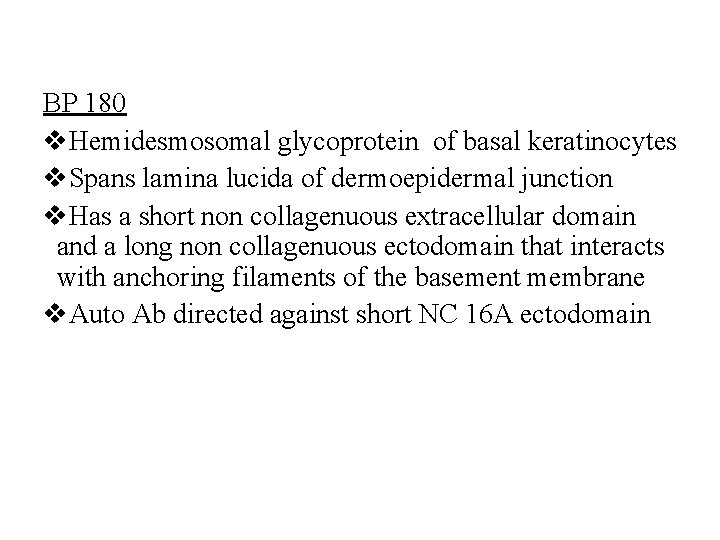
BP 180 v. Hemidesmosomal glycoprotein of basal keratinocytes v. Spans lamina lucida of dermoepidermal junction v. Has a short non collagenuous extracellular domain and a long non collagenuous ectodomain that interacts with anchoring filaments of the basement membrane v. Auto Ab directed against short NC 16 A ectodomain
ANTIBODIES • Anti BMZ antibodies in BP – Ig. G 1 and Ig. G 4 Ig E (occasionally) • Ig. G 4 and Ig. E target BP 180 Ag in Bullous Pemphigoid • Serum levels of Ig. G 4 and Ig. E reflect disease activity

CLINICAL FEATURES • Age- elderly 60 -75 • M>F • Tense vesicles and bullae on urticated base/ normal skin • Containing clear to turbid to haemorrhagic fliud • Roof remain intact for several days as bullae is subepidermal. • Sites – lower abdomen, inner thighs, groin, flexural aspects of limbs • Palms and soles – occasional • Nikolsky’s sign –ve • Asboe Hansen’s sign –ve
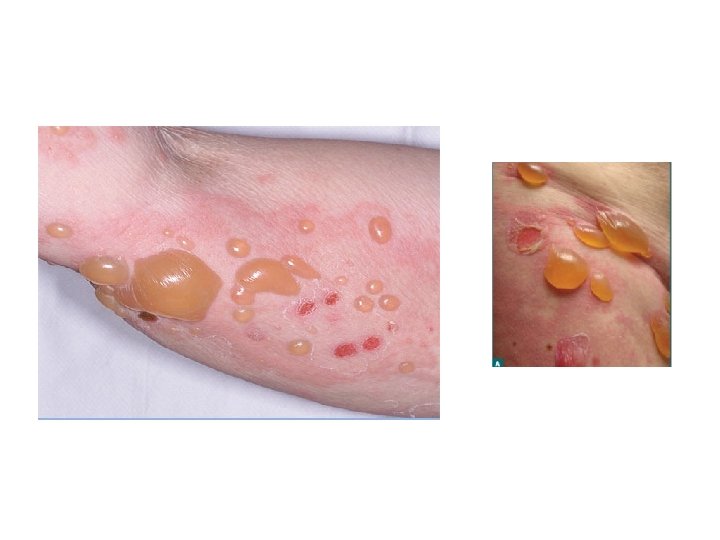
• Blister collapse and re-epithelialize • For blisters that rupture, resulting erosions do not spread • Erosions heal without scarring-post inflammatory pigmentary changes, milia • Musosa- 10 -40% • Pruritus common; may precede several years
CLINICAL VARIANTS 1. 2. 3. 4. 5. 6. Localised Childhood Vesicular Vegetating Nodular Drug induced
• Drug induced pemphigus Oral drugs- penicillin, ampicillin, penicillamine, frusemide, PUVA therapy, anti diabetics, sulfonamides, clonidine, diclofenac, ibuprofen, practolol. Topical – anthralin, 5 -FU, benzoyl benzoate

HISTOLOGY • Subepidermal blister • An intact epidermis as roof of bulla • Blister cavity – neutrophils, eosiniphils, fibrin
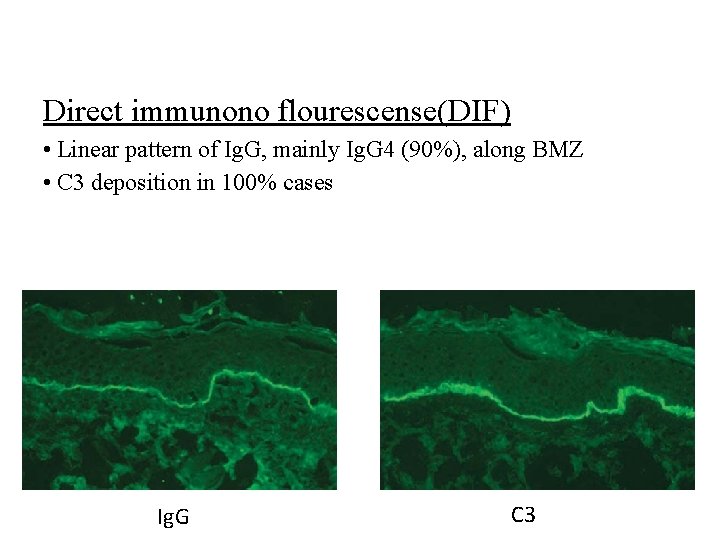
Direct immunono flourescense(DIF) • Linear pattern of Ig. G, mainly Ig. G 4 (90%), along BMZ • C 3 deposition in 100% cases Ig. G C 3
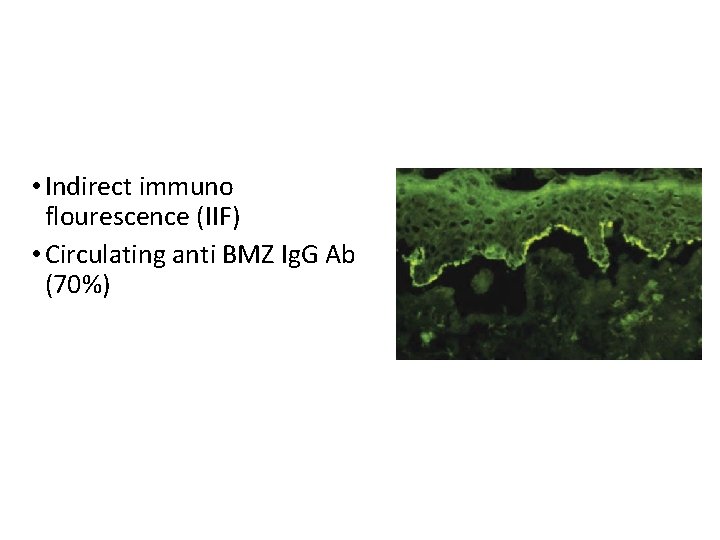
• Indirect immuno flourescence (IIF) • Circulating anti BMZ Ig. G Ab (70%)
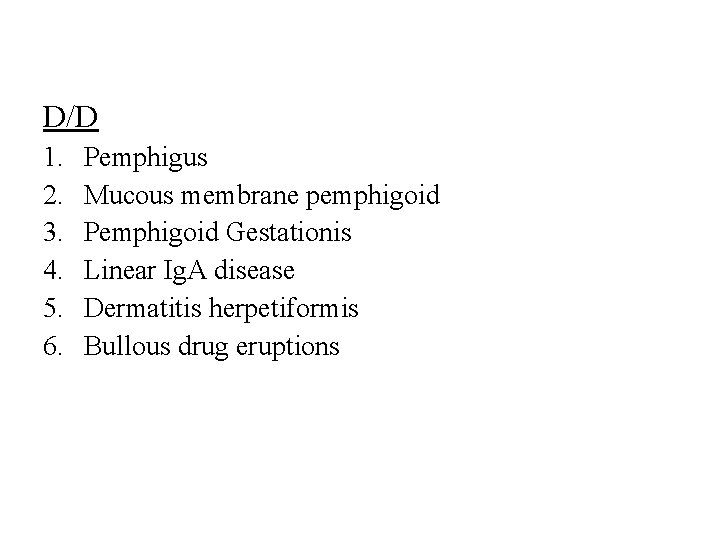
D/D 1. 2. 3. 4. 5. 6. Pemphigus Mucous membrane pemphigoid Pemphigoid Gestationis Linear Ig. A disease Dermatitis herpetiformis Bullous drug eruptions

Bullous pemphigoid vs Pemphigus
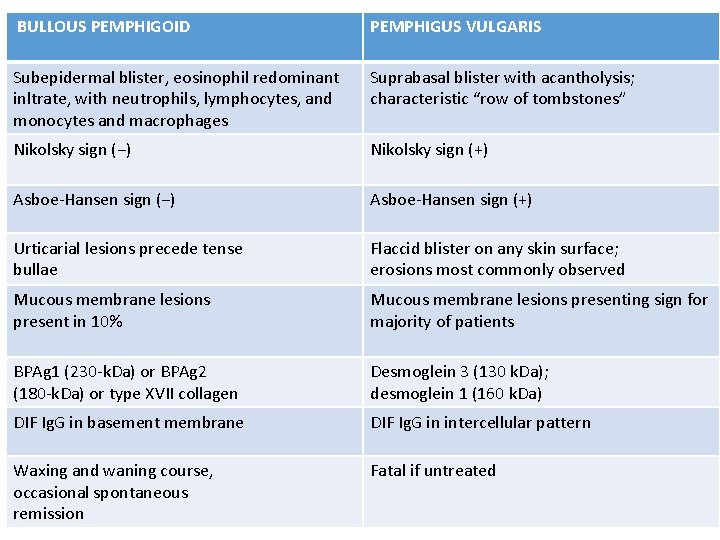
BULLOUS PEMPHIGOID PEMPHIGUS VULGARIS Subepidermal blister, eosinophil redominant inltrate, with neutrophils, lymphocytes, and monocytes and macrophages Suprabasal blister with acantholysis; characteristic “row of tombstones” Nikolsky sign (−) Nikolsky sign (+) Asboe-Hansen sign (−) Asboe-Hansen sign (+) Urticarial lesions precede tense bullae Flaccid blister on any skin surface; erosions most commonly observed Mucous membrane lesions present in 10% Mucous membrane lesions presenting sign for majority of patients BPAg 1 (230 -k. Da) or BPAg 2 (180 -k. Da) or type XVII collagen Desmoglein 3 (130 k. Da); desmoglein 1 (160 k. Da) DIF Ig. G in basement membrane DIF Ig. G in intercellular pattern Waxing and waning course, occasional spontaneous remission Fatal if untreated
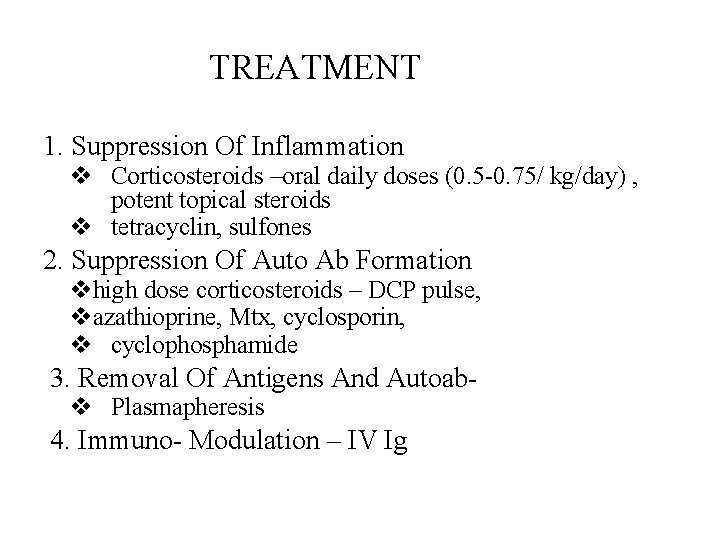
TREATMENT 1. Suppression Of Inflammation v Corticosteroids –oral daily doses (0. 5 -0. 75/ kg/day) , potent topical steroids v tetracyclin, sulfones 2. Suppression Of Auto Ab Formation vhigh dose corticosteroids – DCP pulse, vazathioprine, Mtx, cyclosporin, v cyclophosphamide 3. Removal Of Antigens And Autoabv Plasmapheresis 4. Immuno- Modulation – IV Ig
DERMATITIS HERPETIFORMIS
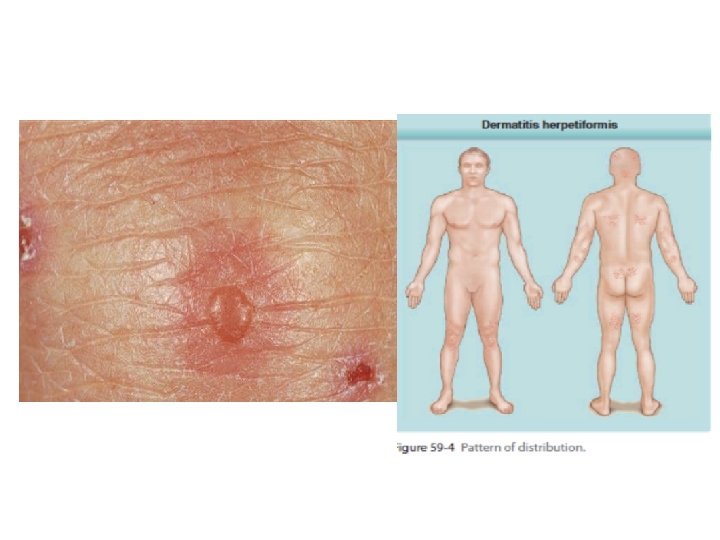
v. Rare chronic blistering disorder v. Intensely pruritic grouped vesicles on an erythematous base v DIF – granular deposits of Ig A in dermal papillae v. Associated with an gluten sensitive mostly asymptomatic enteropathy
PATHOGENESIS v. Predominant autoantigen in DH –epidermal transglutaminase (TGe) v. Predominant antibody in DH – Ig. A v. Pathological processes in skin are initiated when v TGe - Ig. A immune complexes are deposit in papillary dermis and activate complement
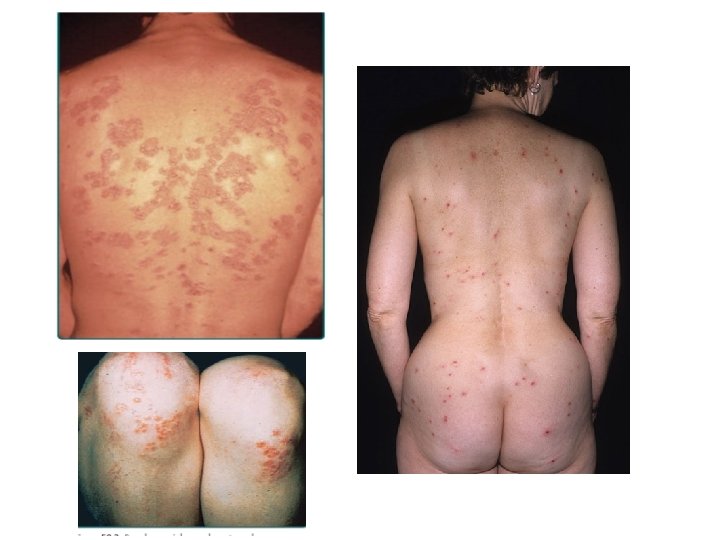
CLINICAL FEATURES v. Age –(2 -3)rd decade v. Classical lesion start as a vesicles on an erythematous, edematous base v later new lesions arrange in groups v intensely itchy v most lesions excoriated; only crusts seen v. Site – elbows, knees, buttocks, sacrum, shoulders, posterior scalp, v. Symmetrical distribution v Occasionally face
ASSOCIATIONS Gluten Sensitive Enteropathy v. Gluten protein present in grasses of species Triticeae, eg. Wheat, rye, barley v. Due to non allergic sensitivity to gliadi fraction of gluten v. Usually asymptomatic v. Diarrhoea, steatorrhoea, abdominal distension, wt. loss
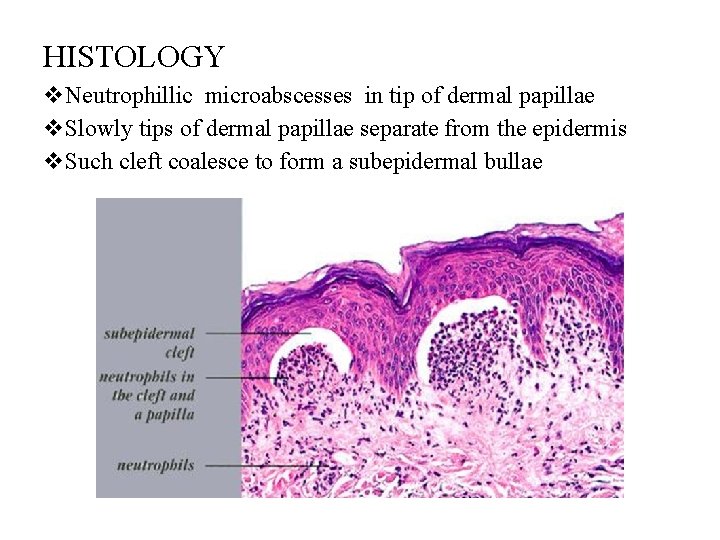
HISTOLOGY v. Neutrophillic microabscesses in tip of dermal papillae v. Slowly tips of dermal papillae separate from the epidermis v. Such cleft coalesce to form a subepidermal bullae
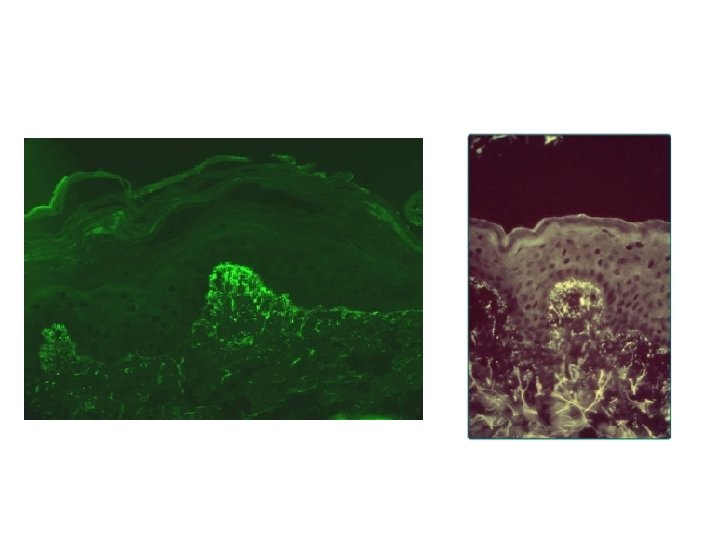
DIF v. Perilesional non involved skin – granular deposits of Ig. A in picket shaped appearance IIFv no circulating anti BMZ antibodies found Immunoelectron Microscopy v. Amorphous grains of Ig. A deposits - DH bodies
D/D v. Papular urticaria v. Scabies v Neurotic excoriations v. Erythema multiforme
TREATMENT v. Gluten free diet life long v. Dapsone 100 -300 mg daily v. Salfaslazine 0. 5 - 2 g per day v. Colchicine 0. 6 mg tid

THANK YOU
- Slides: 34