
Autoclave Training Guide University of Windsor Chemical Control
- Slides: 24
Autoclave Training Guide University of Windsor Chemical Control Centre Health and Safety B 37 Essex Hall. Telephone : 519 -253 -3000 ext 3523 www. uwindsor. ca
Autoclaving Training Outline • • Autoclave Overview Autoclave Hazards What can be Autoclaved How to Autoclave – Cycle selection – Proper containers – Proper loading/unloading • Autoclave Performance Indicators
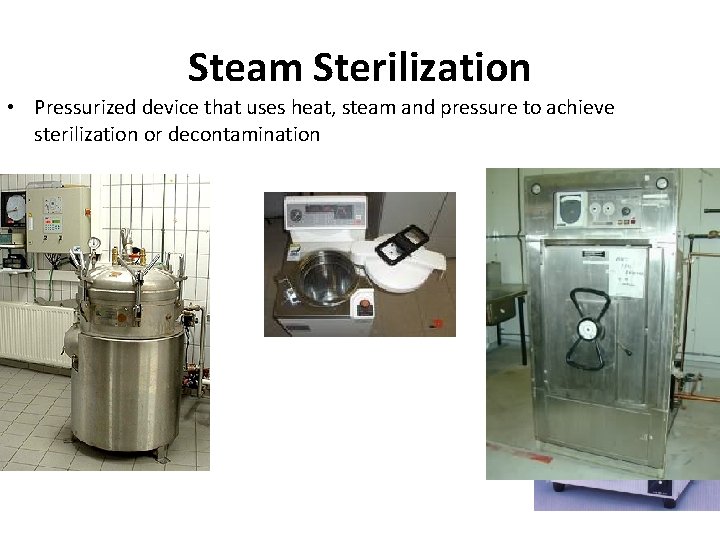
Steam Sterilization • Pressurized device that uses heat, steam and pressure to achieve sterilization or decontamination
Autoclave Overview • Typically operated at 121°C 250°F, 15 psi, for 15 -45 minutes. • Allows the heating of liquids above boiling point. • Uses moist heat (steam) to increase efficiency of sterilization. • Heat is used to coagulate proteins, which destroys microorganisms and any potential biohazard.
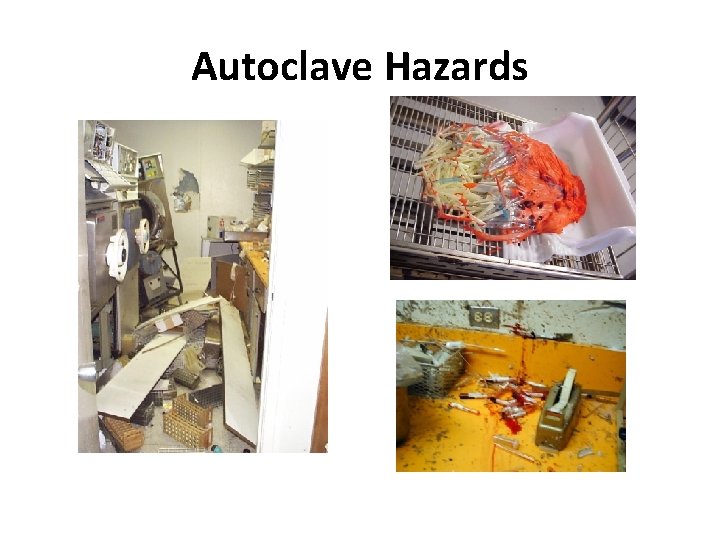
Autoclave Hazards • Tremendous pressure from steam in chamber provides explosive potential. • High temperatures creates potential for burns and scalding. • Potential exposure to hazardous fumes • Inadequate decontamination allows for the potential of biological hazards to contaminate personnel and the environment.
Autoclave Hazards
What you CAN autoclave Biological waste that can be autoclaved: – Microbial stocks and cultures – Items contaminated with such waste: petri dishes, eppendorf tips, pipettes, gloves, paper towel Autoclaving is also used for: – Items for sterilizations such as; glassware media, aqueous solutions
What you CAN’T Autoclave • DO NOT Autoclave: – BIOMEDICAL WASTE • Including human anatomical or blood waste, animal anatomical or blood waste, cytotoxic waste, or any waste in contact with these waste products (including sharps waste). – RADIOACTIVE WASTE – HAZARDOUS CHEMICAL WASTE • This includes anything contaminated with a toxic, volatile, corrosive, or mutagenic chemical • materials containing: solvents, volatile, chlorinated compounds (HCL, bleach) • chemicals (such as: phenol, trichloroacetic acid, ether, chloroform, ethidium bromoide, glutaraldehyde. ) • Check MSDS before hand
What you CAN’T Autoclave • DO NOT Autoclave: – SOME PLASTICS Good Choices: 1. borosilicate glass (Pyrex) has very low thermo expansion property and therefore resistant to breaking due to heating 2. polypropylene (PP) and polycarbonate (PC) are heat resistant plastics 3. stainless steel is a good heat conductor and thus facilitates sterilization Poor Choices: 1. polystyrene (PS), polylethylene (PE) and high density polyethylene (HDPE) do not resist heat well. if there is a risk of material melting ensure they are placed in a secondary container which is resistant to heat.
Autoclaves used to treat biohazardous waste at the University of Windsor • Biology Room 310 • Essex Hall B 35
How to Autoclave 1. 2. 3. 4. 5. Preparing your items for autoclaving Loading the autoclave Choosing the cycle settings Unloading the autoclave Aborting Autoclave
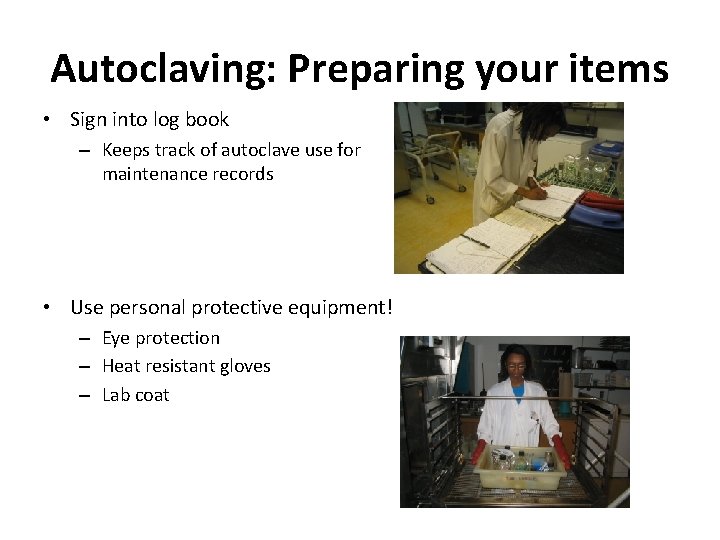
Autoclaving: Preparing your items • Sign into log book – Keeps track of autoclave use for maintenance records • Use personal protective equipment! – Eye protection – Heat resistant gloves – Lab coat
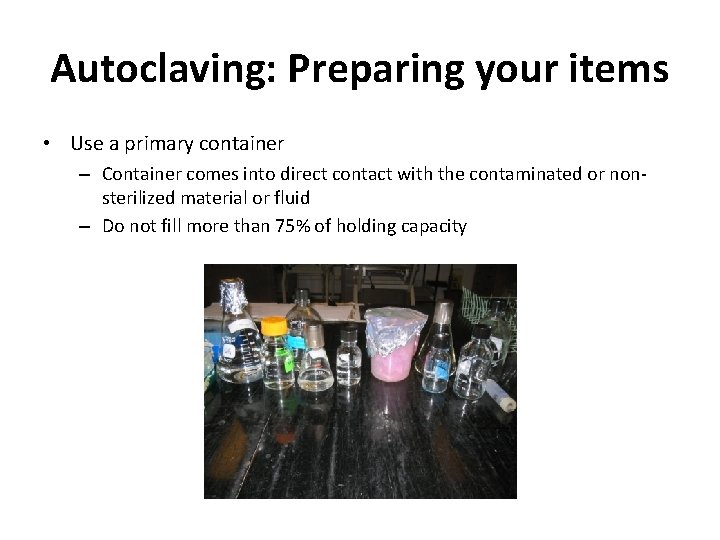
Autoclaving: Preparing your items • Use a primary container – Container comes into direct contact with the contaminated or nonsterilized material or fluid – Do not fill more than 75% of holding capacity
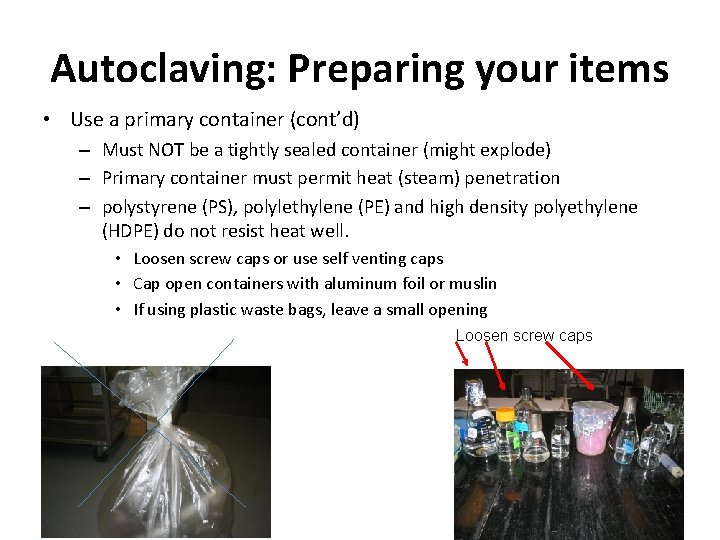
Autoclaving: Preparing your items • Use a primary container (cont’d) – Must NOT be a tightly sealed container (might explode) – Primary container must permit heat (steam) penetration – polystyrene (PS), polylethylene (PE) and high density polyethylene (HDPE) do not resist heat well. • Loosen screw caps or use self venting caps • Cap open containers with aluminum foil or muslin • If using plastic waste bags, leave a small opening Loosen screw caps
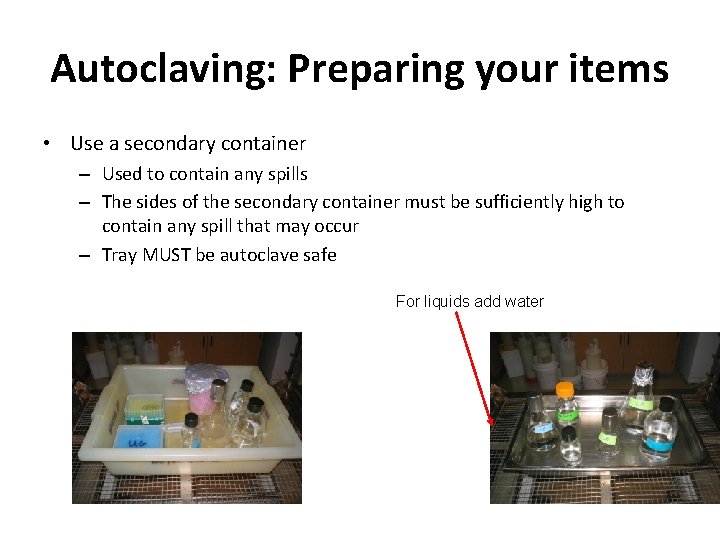
Autoclaving: Preparing your items • Use a secondary container – Used to contain any spills – The sides of the secondary container must be sufficiently high to contain any spill that may occur – Tray MUST be autoclave safe For liquids add water
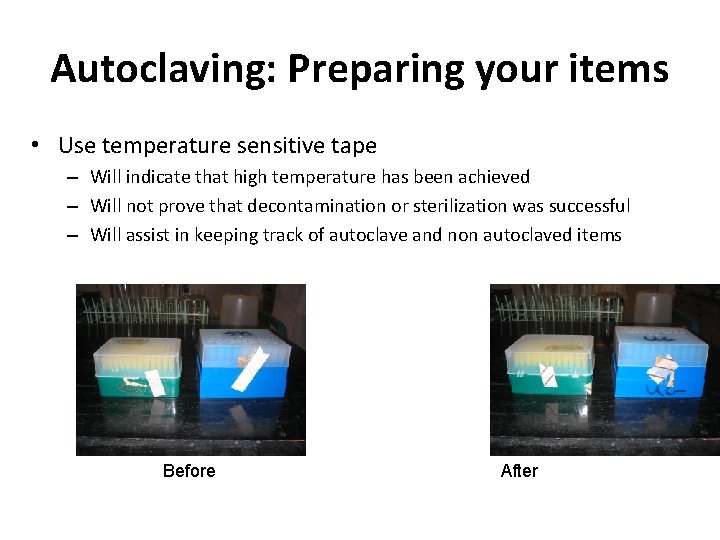
Autoclaving: Preparing your items • Use temperature sensitive tape – Will indicate that high temperature has been achieved – Will not prove that decontamination or sterilization was successful – Will assist in keeping track of autoclave and non autoclaved items Before After
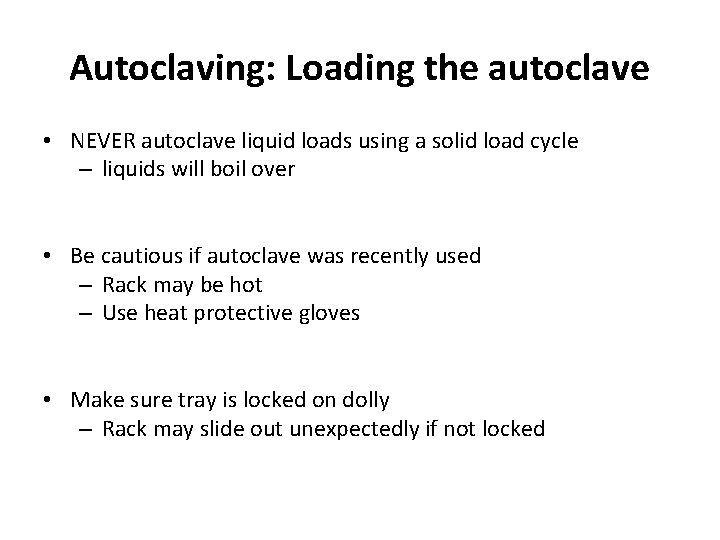
Autoclaving: Loading the autoclave • NEVER autoclave liquid loads using a solid load cycle – liquids will boil over • Be cautious if autoclave was recently used – Rack may be hot – Use heat protective gloves • Make sure tray is locked on dolly – Rack may slide out unexpectedly if not locked
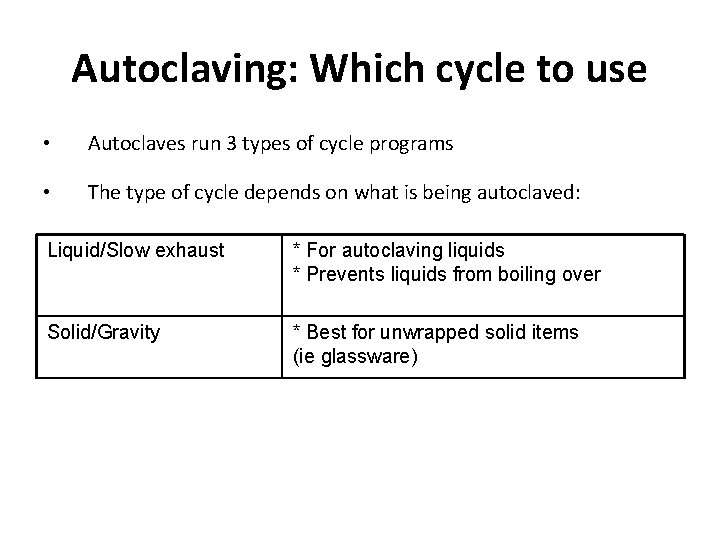
Autoclaving: Which cycle to use • Autoclaves run 3 types of cycle programs • The type of cycle depends on what is being autoclaved: Liquid/Slow exhaust * For autoclaving liquids * Prevents liquids from boiling over Solid/Gravity * Best for unwrapped solid items (ie glassware)
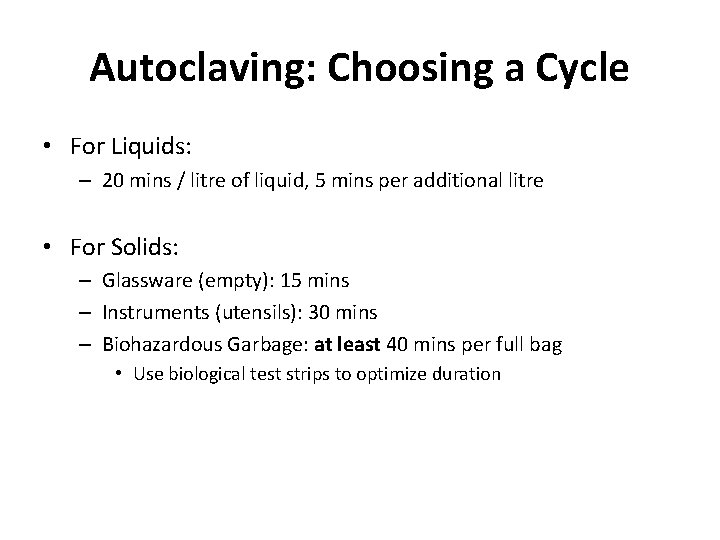
Autoclaving: Choosing a Cycle • For Liquids: – 20 mins / litre of liquid, 5 mins per additional litre • For Solids: – Glassware (empty): 15 mins – Instruments (utensils): 30 mins – Biohazardous Garbage: at least 40 mins per full bag • Use biological test strips to optimize duration
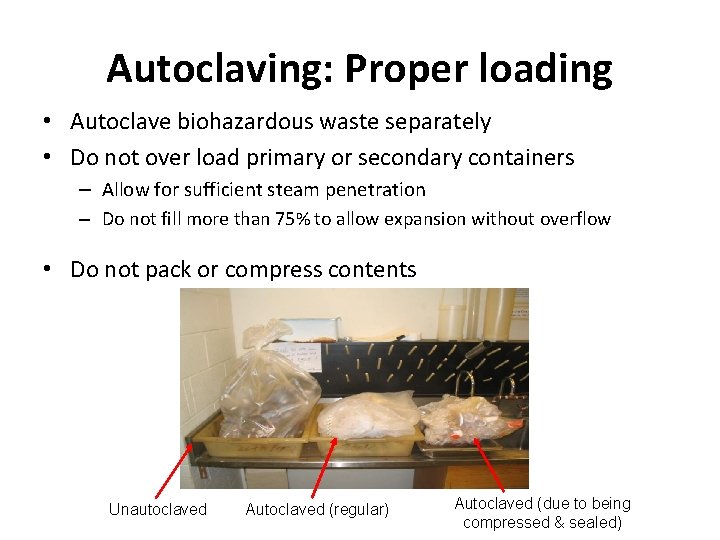
Autoclaving: Proper loading • Autoclave biohazardous waste separately • Do not over load primary or secondary containers – Allow for sufficient steam penetration – Do not fill more than 75% to allow expansion without overflow • Do not pack or compress contents Unautoclaved Autoclaved (regular) Autoclaved (due to being compressed & sealed)
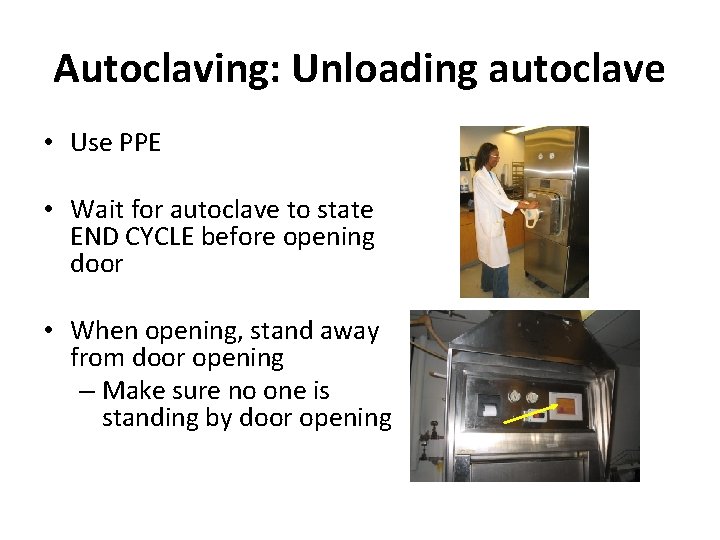
Autoclaving: Unloading autoclave • Use PPE • Wait for autoclave to state END CYCLE before opening door • When opening, stand away from door opening – Make sure no one is standing by door opening
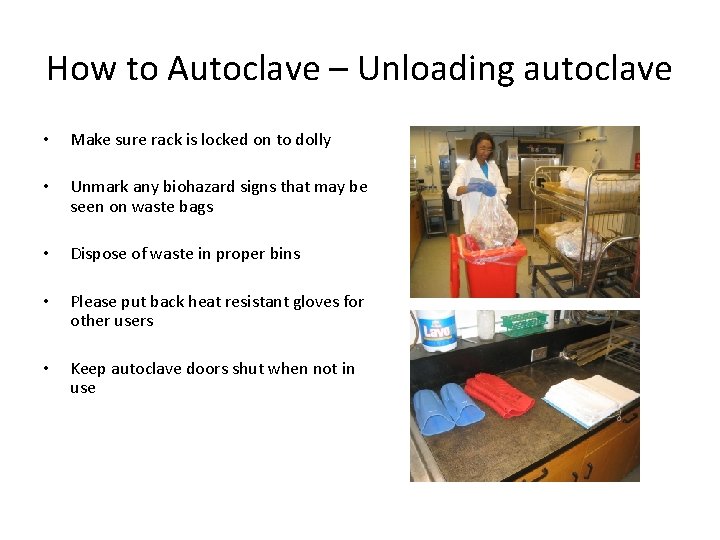
How to Autoclave – Unloading autoclave • Make sure rack is locked on to dolly • Unmark any biohazard signs that may be seen on waste bags • Dispose of waste in proper bins • Please put back heat resistant gloves for other users • Keep autoclave doors shut when not in use
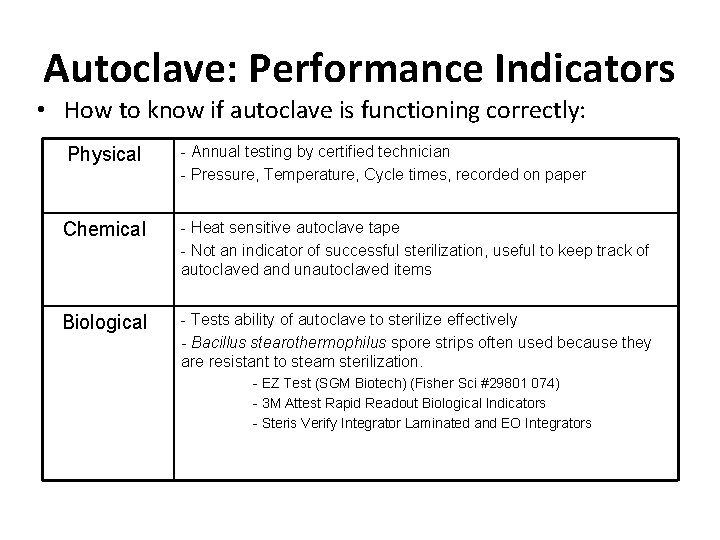
Autoclave: Performance Indicators • How to know if autoclave is functioning correctly: Physical - Annual testing by certified technician - Pressure, Temperature, Cycle times, recorded on paper Chemical - Heat sensitive autoclave tape - Not an indicator of successful sterilization, useful to keep track of autoclaved and unautoclaved items Biological - Tests ability of autoclave to sterilize effectively - Bacillus stearothermophilus spore strips often used because they are resistant to steam sterilization. - EZ Test (SGM Biotech) (Fisher Sci #29801 074) - 3 M Attest Rapid Readout Biological Indicators - Steris Verify Integrator Laminated and EO Integrators
Autoclave Issues/Concerns? Contact: • Your Supervisor Chemical Control Centre: • B-37 Essex Hall, x 3523 Chemistry Coordinator: • Beth Kickham, Chemistry Building, x 3527 Team Leader: • Francis Arnaldo , B 37 C Essex Hall, x 3524