
Autistic Spectrum Disorder DR M FENTON CLINICAL PSYCHOLOGIST
- Slides: 16
Autistic Spectrum Disorder DR M FENTON CLINICAL PSYCHOLOGIST
My background Clinical psychologist, Edenfield Centre, medium secure unit, Prestwich Hospital, seven years Lead psychologist, Recovery First, Widnes Clinical lead for ASD in Specialist Services Network, Greater Manchester Mental Health, NHS FT Research into autism and offending
Outline What is autism? Why is it important to consider? Recommendations for individual work
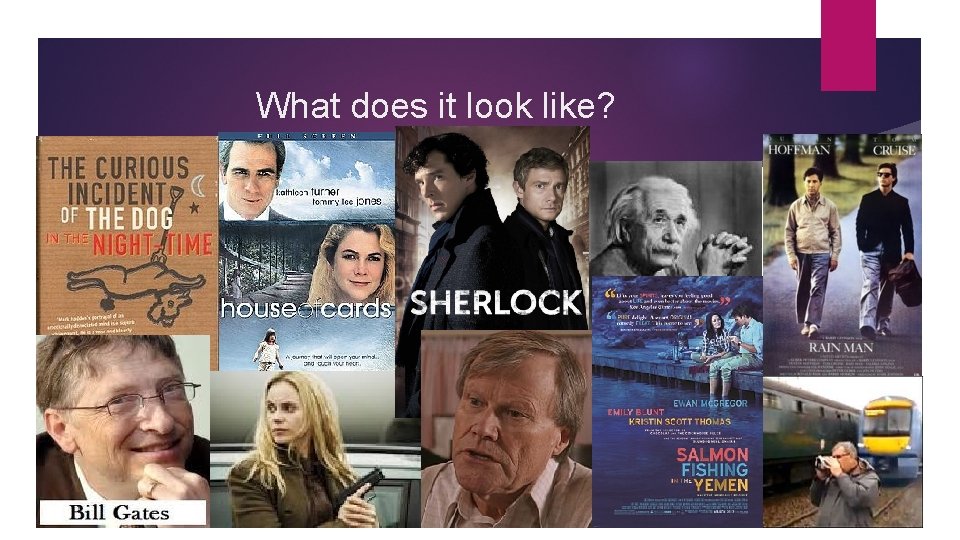
What do we know about autism? ‘Odd’ Socially awkward Poor eye contact Doesn’t ‘get’ humour or sarcasm Can’t ‘just chat’ – needs to have a purpose Doesn’t have friends Likes trains
What does it look like?
Background Leo Kaner (1943) Lorna Wing (1970’s) Asperger (1944) Wing & Gould (1980’s and 1990’s) Rain man Tests developed gave broader access
Why does it matter? Autism Act (2009) Statutory guidance Fulfilling and Rewarding Lives (DOH, 2010); Think Autism (2014) Strategy for adults in England NICE guidance Statutory Guidance (updated, March 2015) Transforming care
What is autism? Autism is a lifelong neurodevelopmental condition It is a social and communication disorder More men are diagnosed than women Around 1% of population – same as dementia ‘Autism’ here refers to ‘autism spectrum disorders’ including: autism, Asperger’s syndrome, and atypical autism Individuals have their own preference for the terminology used e. g. ‘autistic’, ‘ASC’, ‘ASD’, ‘someone with autism’
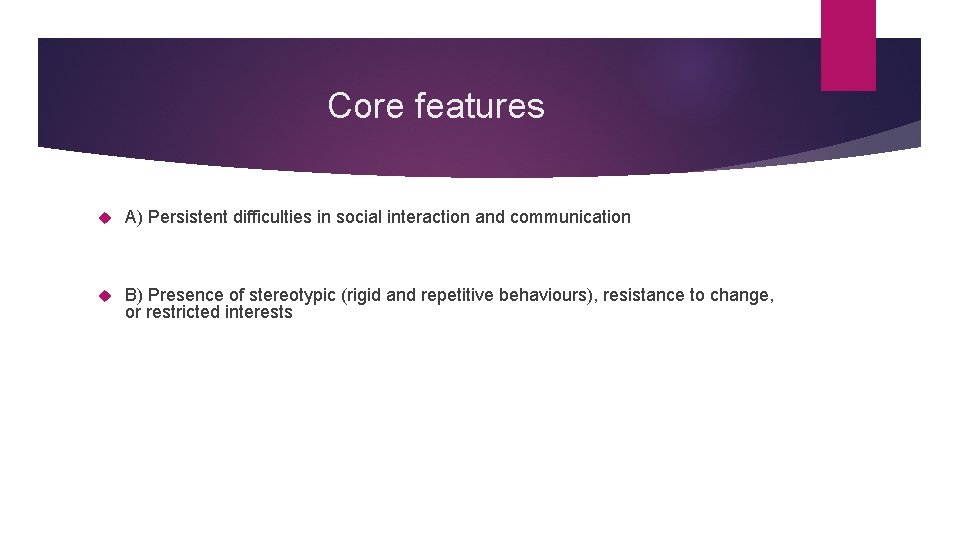
Core features A) Persistent difficulties in social interaction and communication B) Presence of stereotypic (rigid and repetitive behaviours), resistance to change, or restricted interests
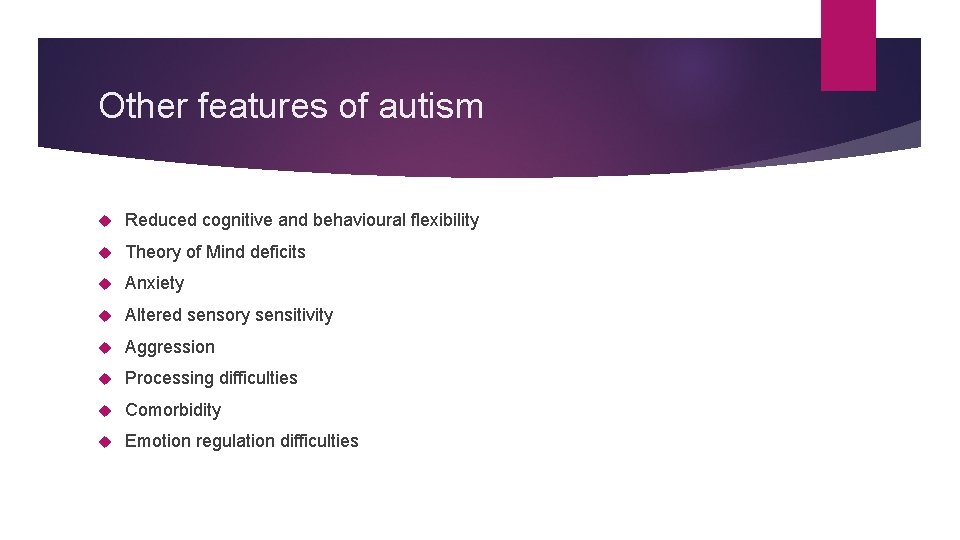
Other features of autism Reduced cognitive and behavioural flexibility Theory of Mind deficits Anxiety Altered sensory sensitivity Aggression Processing difficulties Comorbidity Emotion regulation difficulties
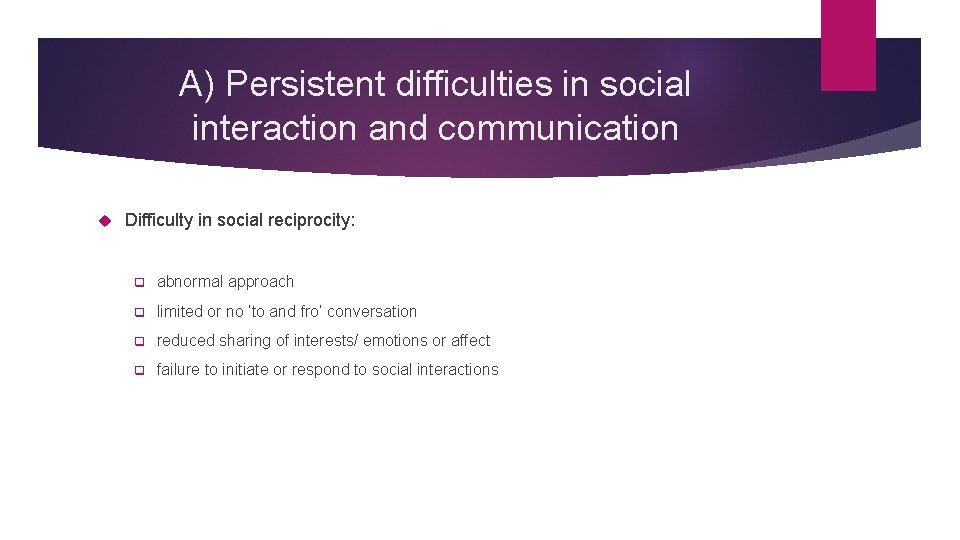
A) Persistent difficulties in social interaction and communication Difficulty in social reciprocity: q abnormal approach q limited or no ‘to and fro’ conversation q reduced sharing of interests/ emotions or affect q failure to initiate or respond to social interactions
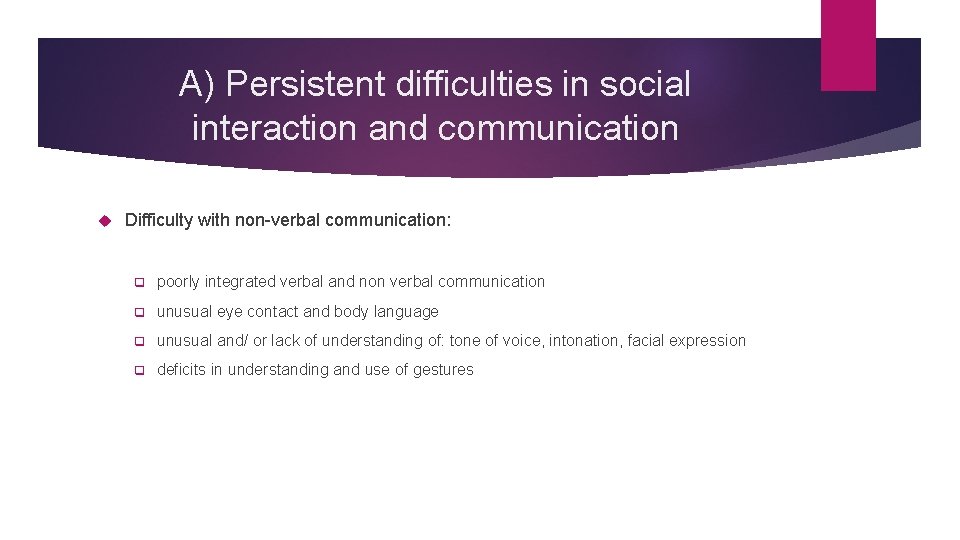
A) Persistent difficulties in social interaction and communication Difficulty with non-verbal communication: q poorly integrated verbal and non verbal communication q unusual eye contact and body language q unusual and/ or lack of understanding of: tone of voice, intonation, facial expression q deficits in understanding and use of gestures
A) Persistent difficulties in social interaction and communication Deficits in developing, maintaining and understanding relationships q difficulty adjusting behaviour to suit context q difficulty in sharing or imaginative play q difficulty making friends q preferring to be alone/ limited interest in peers q the reasons behind the actions or ideas of others is unclear (To. M) q literal interpretation q coming across as argumentative, stubborn, or belligerent in responses
B) Restricted, repetitive patterns Stereotyped/ repetitive movements, use of objects or speech Insistence on sameness, inflexible adherence to routines Highly restricted, fixated interests, abnormal in intensity Hyper or hypo-reactivity to sensory input
Imagination Difficulty in anticipating the future unable to foresee the consequences of actions Difficulty in planning ahead. Wanting to keep things the same
RECOMMENDATIONS Person centred Don’t interview in usual style Communication needs must be taken into account Take sensory needs into account – calm/ low stim environment Structure/ routine/ activity Formulation driven approach Risk assessment/ management – understand how the individual aspects of autism relate