
Autism Treatment Response in Emergency Departments with the
- Slides: 24
Autism Treatment Response in Emergency Departments with the Least Restrictive Approach John J. Mc. Gonigle, Ph. D. Assistant Professor of Psychiatry and Rehabilitation Science and Technology University of Pittsburgh, School of Medicine Director, Western Region ASERT Collaborative Center for Autism and Developmental Disorders Western Psychiatric Institute and Clinic of UPMC
Objectives • Understand the concerns and unwanted experiences of individuals with ASD and their families when seeking services in acute care and clinic settings • Know the types of events and safety concerns that patients with ASD present in the Emergency Department (ED) • Recognize how and why the interfering and challenging behaviors of patients with ASD can occur while waiting for treatment and how they may contribute to adverse events • Identify least restrictive strategies healthcare professionals can use to reduce risk and improve safety for patients with ASD in the acute care setting • Know how to use the instrument to prepare for care of Individuals with ASD in the Emergency Department 2
Introduction • Individuals with autism spectrum disorder (ASD) are presenting at increased rates in behavioral health clinics and hospital emergency departments (ED) with acute agitation, including dangerous behaviors to self, others and property. 3
Need for ED personnel to gain an understanding for presenting concern Additional challenge for clinicians, psychiatric and medical hospital personnel in the acute care settings is to differentiate or tease out the core features of ASD from acute underlying psychiatric and/or medical conditions. 4
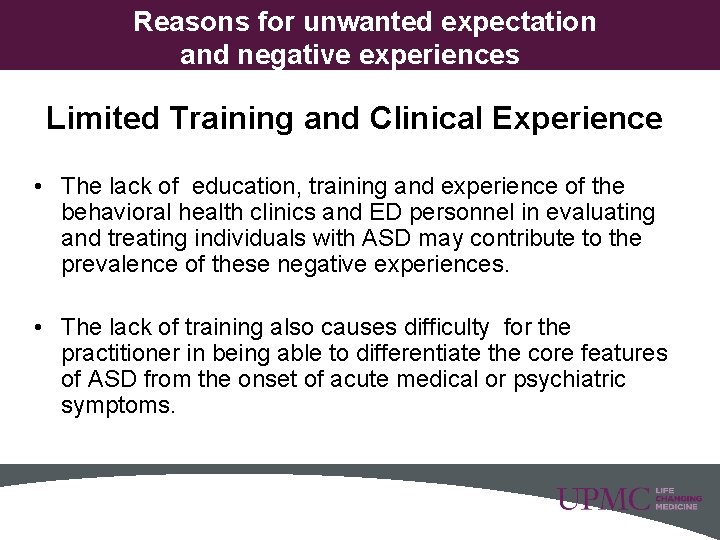
Reasons for unwanted expectation and negative experiences Limited Training and Clinical Experience • The lack of education, training and experience of the behavioral health clinics and ED personnel in evaluating and treating individuals with ASD may contribute to the prevalence of these negative experiences. • The lack of training also causes difficulty for the practitioner in being able to differentiate the core features of ASD from the onset of acute medical or psychiatric symptoms. 5
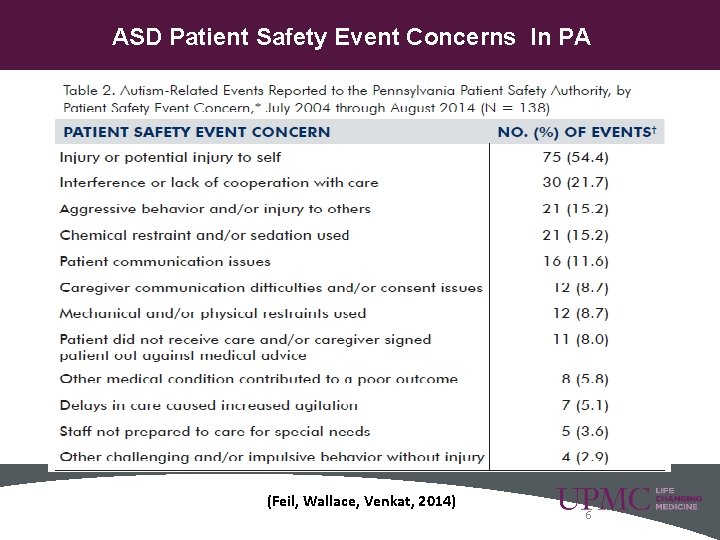
ASD Patient Safety Event Concerns In PA (Feil, Wallace, Venkat, 2014) 6
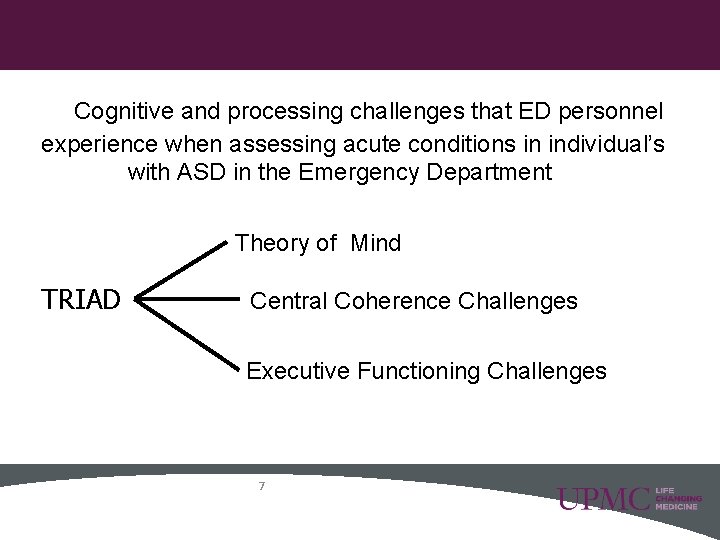
Cognitive and processing challenges that ED personnel experience when assessing acute conditions in individual’s with ASD in the Emergency Department Theory of Mind TRIAD Central Coherence Challenges Executive Functioning Challenges 7
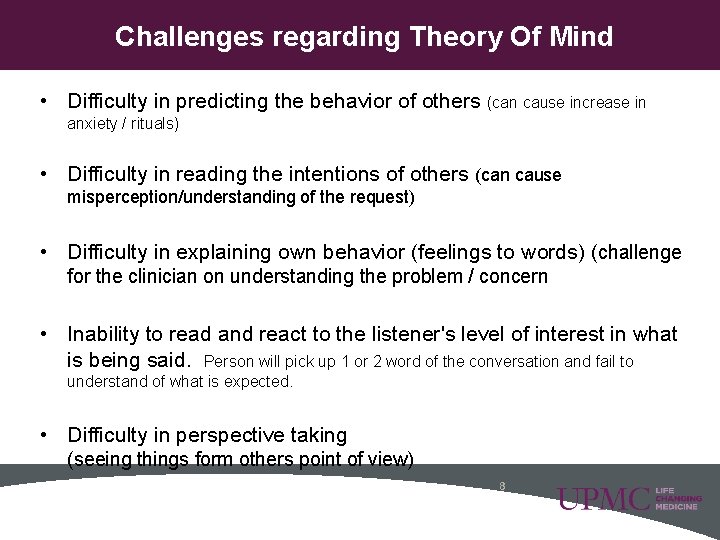
Challenges regarding Theory Of Mind • Difficulty in predicting the behavior of others (can cause increase in anxiety / rituals) • Difficulty in reading the intentions of others (can cause misperception/understanding of the request) • Difficulty in explaining own behavior (feelings to words) (challenge for the clinician on understanding the problem / concern • Inability to read and react to the listener's level of interest in what is being said. Person will pick up 1 or 2 word of the conversation and fail to understand of what is expected. • Difficulty in perspective taking (seeing things form others point of view) 8
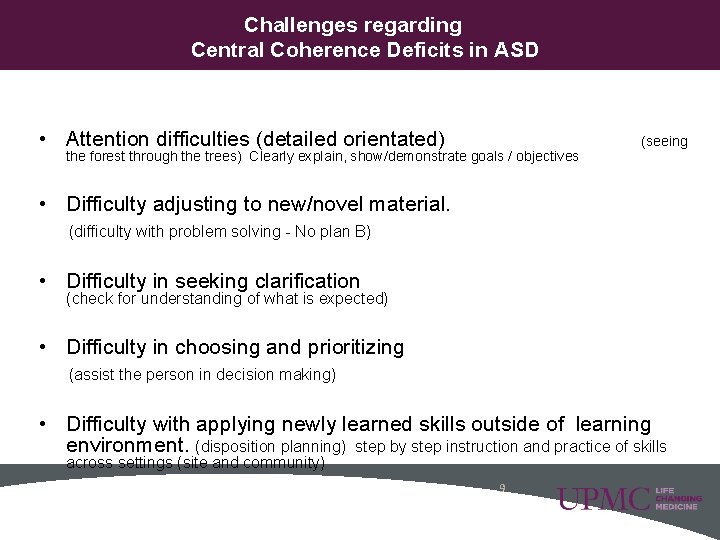
Challenges regarding Central Coherence Deficits in ASD • Attention difficulties (detailed orientated) (seeing the forest through the trees) Clearly explain, show/demonstrate goals / objectives • Difficulty adjusting to new/novel material. (difficulty with problem solving - No plan B) • Difficulty in seeking clarification (check for understanding of what is expected) • Difficulty in choosing and prioritizing (assist the person in decision making) • Difficulty with applying newly learned skills outside of learning environment. (disposition planning) step by step instruction and practice of skills across settings (site and community) 9
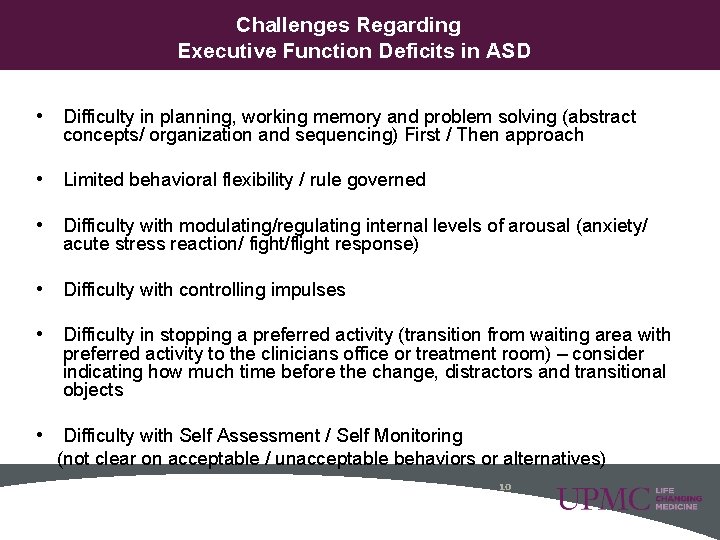
Challenges Regarding Executive Function Deficits in ASD • Difficulty in planning, working memory and problem solving (abstract concepts/ organization and sequencing) First / Then approach • Limited behavioral flexibility / rule governed • Difficulty with modulating/regulating internal levels of arousal (anxiety/ acute stress reaction/ fight/flight response) • Difficulty with controlling impulses • Difficulty in stopping a preferred activity (transition from waiting area with preferred activity to the clinicians office or treatment room) – consider indicating how much time before the change, distractors and transitional objects • Difficulty with Self Assessment / Self Monitoring (not clear on acceptable / unacceptable behaviors or alternatives) 10
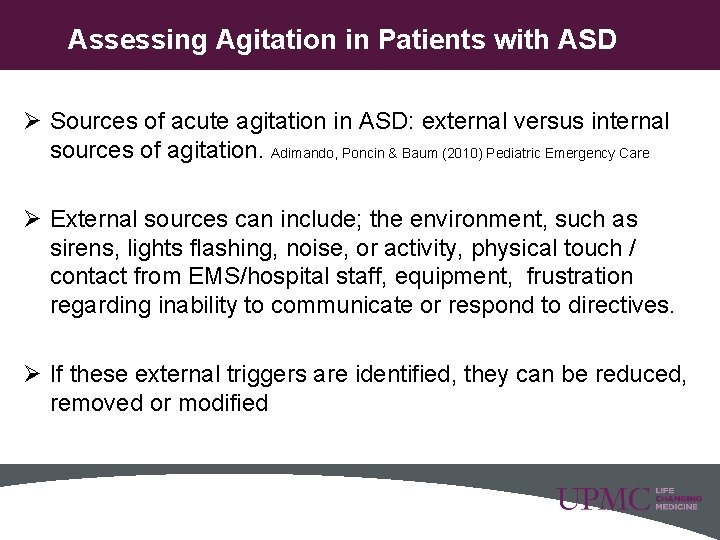
Assessing Agitation in Patients with ASD Ø Sources of acute agitation in ASD: external versus internal sources of agitation. Adimando, Poncin & Baum (2010) Pediatric Emergency Care Ø External sources can include; the environment, such as sirens, lights flashing, noise, or activity, physical touch / contact from EMS/hospital staff, equipment, frustration regarding inability to communicate or respond to directives. Ø If these external triggers are identified, they can be reduced, removed or modified 11
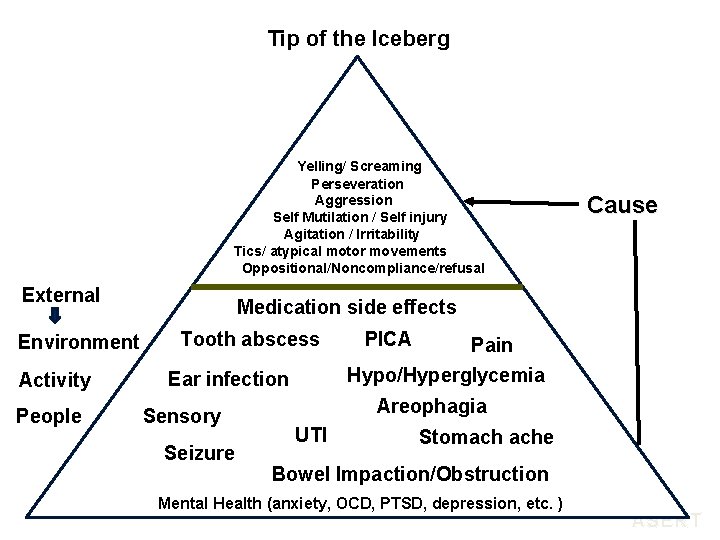
Tip of the Iceberg Yelling/ Screaming Perseveration Aggression Self Mutilation / Self injury Agitation / Irritability Tics/ atypical motor movements Oppositional/Noncompliance/refusal External Environment Activity People Cause Medication side effects Tooth abscess Ear infection Sensory Seizure PICA Pain Hypo/Hyperglycemia Areophagia UTI Stomach ache Bowel Impaction/Obstruction Mental Health (anxiety, OCD, PTSD, depression, etc. ) ASERT
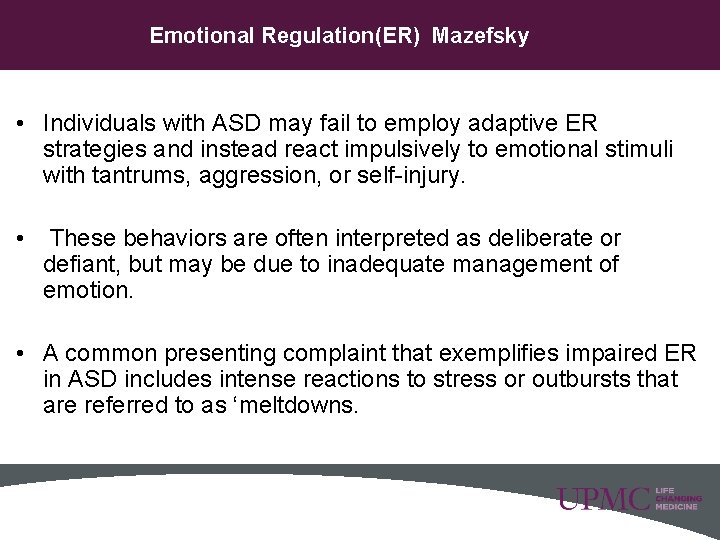
Emotional Regulation(ER) Mazefsky • Individuals with ASD may fail to employ adaptive ER strategies and instead react impulsively to emotional stimuli with tantrums, aggression, or self-injury. • These behaviors are often interpreted as deliberate or defiant, but may be due to inadequate management of emotion. • A common presenting complaint that exemplifies impaired ER in ASD includes intense reactions to stress or outbursts that are referred to as ‘meltdowns. 13
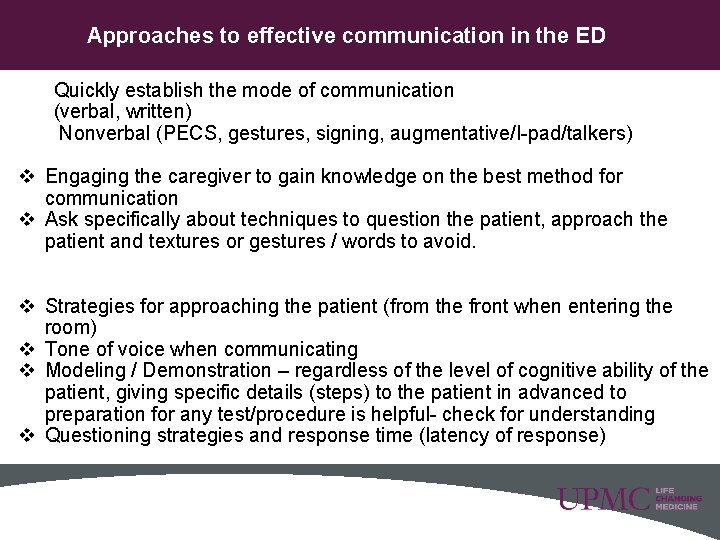
Approaches to effective communication in the ED Quickly establish the mode of communication (verbal, written) Nonverbal (PECS, gestures, signing, augmentative/I-pad/talkers) v Engaging the caregiver to gain knowledge on the best method for communication v Ask specifically about techniques to question the patient, approach the patient and textures or gestures / words to avoid. v Strategies for approaching the patient (from the front when entering the room) v Tone of voice when communicating v Modeling / Demonstration – regardless of the level of cognitive ability of the patient, giving specific details (steps) to the patient in advanced to preparation for any test/procedure is helpful- check for understanding v Questioning strategies and response time (latency of response) 14
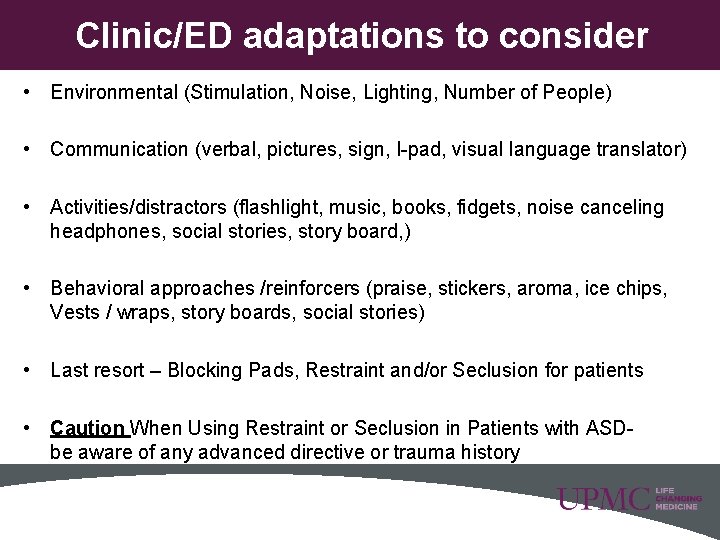
Clinic/ED adaptations to consider • Environmental (Stimulation, Noise, Lighting, Number of People) • Communication (verbal, pictures, sign, I-pad, visual language translator) • Activities/distractors (flashlight, music, books, fidgets, noise canceling headphones, social stories, story board, ) • Behavioral approaches /reinforcers (praise, stickers, aroma, ice chips, Vests / wraps, story boards, social stories) • Last resort – Blocking Pads, Restraint and/or Seclusion for patients • Caution When Using Restraint or Seclusion in Patients with ASD- be aware of any advanced directive or trauma history 15
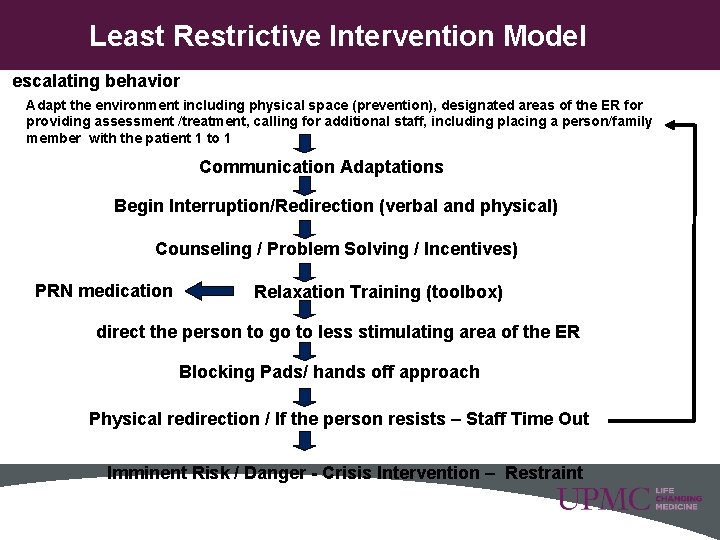
Least Restrictive Intervention Model escalating behavior Adapt the environment including physical space (prevention), designated areas of the ER for providing assessment /treatment, calling for additional staff, including placing a person/family member with the patient 1 to 1 Communication Adaptations Begin Interruption/Redirection (verbal and physical) Counseling / Problem Solving / Incentives) PRN medication Relaxation Training (toolbox) direct the person to go to less stimulating area of the ER Blocking Pads/ hands off approach Physical redirection / If the person resists – Staff Time Out Imminent Risk / Danger - Crisis Intervention – Restraint 16
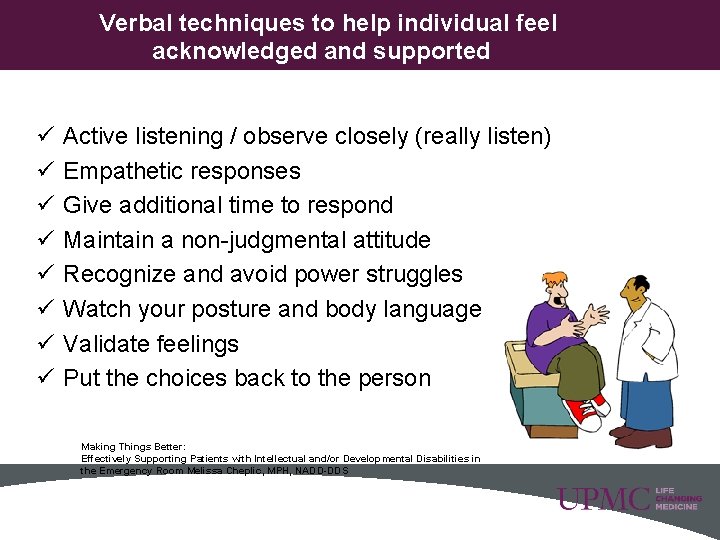
Verbal techniques to help individual feel acknowledged and supported ü ü ü ü Active listening / observe closely (really listen) Empathetic responses Give additional time to respond Maintain a non-judgmental attitude Recognize and avoid power struggles Watch your posture and body language Validate feelings Put the choices back to the person Making Things Better: Effectively Supporting Patients with Intellectual and/or Developmental Disabilities in the Emergency Room Melissa Cheplic, MPH, NADD-DDS 17
Risk Management Considerations • In what areas of the hospital or clinic are individual’s with ASD receiving care? • Is there education and training for staff / clinic personnel who interact with ASD patients? (front desk/registration) • What types of events involving ASD patients are reported internally? • Understanding the relationship between the characteristics of the patient the Emergency Department environment. • Attempt to gather any information related to prior experiences in the emergency department 18
Risk Reduction Strategies • Provide education and training • Design treatment areas • Make every attempt to reduce wait times! – – have person away from busy traffic areas in the waiting room have a variety of preferred activities available avoid fluorescent lighting reduce unnecessary mobile equipment • Work with parents/ caregivers/direct support staff 19
Risk Reduction Strategies (cont’d) • Communication – approach the person calmly and slowly from the front – Introduce yourself – Regardless of the cognitive ability of the person address the person by using their first name – ask yes/no questions- stay away from complex questions with multiple steps – use simple terms- and check for understanding • Develop ER de-escalating protocol • Develop a Least Restrictive Intervention and crisis plan • Convene hospital and professional groups to review incidents and debriefing for any crisis intervention 20
References Allen MH, Currier GW, Carpenter D, et al. Treatment of behavioral emergencies. J Psychiatr Pract 2005; 11(Suppl 1): 4– 112. Autism Society of America (ASA). Tips for first responders. Available at: http: // www. autism-society. org/living-with-autism/howwe-can-help/safe-and- sound/tips for- first-responders. html. Accessed January 8, 2013. Adimando, AJ, Poncin, YB, & Baum, CR. (2010). Pharmacological management of the agitated pediatric patient. Pediatric Emergency Care; 26: 856 -860. Bondy AS, Frost LA. (1994). The picture exchange communication system. Focus Autistic Behavior; 9(3): 1– 19. Chun T. Autism demands attention in the emergency room. ACEP news; 2012. Available at: http: //www. acepnews. com/index. php? id 5495. Accessed January 13, 2013. Eldridge C, Kennedy R. Nonpharmacologic techniques for distress reduction during emergency medical care: a review. Clin Pediatr Emerg Med 2010; 11(4): 244– 50 Feil, M. , Wallace, S. , C. , Venkat, A. (2014). Improving Care for Patients with Autism Spectrum Disorder in the Acute Care Setting. Pennsylvania Patient Safety Authority, 11(4): 141 -148. Finke EH, Light J, Kitko L. A systematic review of the effectiveness of nurse communication with patients with complex communication needs with a focus on the use of augmentative and alternative communication. J Clin Nurs 2008; 17: 2102– 15. 21
References Ghaziuddin M. (2002). Asperger syndrome: associated psychiatric and medical conditions. Focus Autism Other Dev Disabl; 27(3): 138– 44. Giarelli E, Nocera R, Turchi R, Hardie TL, Pagano R, Yuan C. (2014). Sensory stimuli as obstacles to emergency care for children with autism spectrum disorder. Adv Emerg Nurs J, 36(2): 145 -63. Gillis, J. M. , Natof, T. H. , Locksin, S. B. , & Romanczyk, R. G. (2009). Fear of routine physical exams in children with Autism Spectrum Disorders. Focus on Autism and Other Developmental Disabilities, 24, 156168. Hodgetts S, Hodgetts W. (2007). Somatosensory stimulation interventions for children with autism: literature review and clinical considerations. Can J Occup Ther; 74(5): 393– 400. Jordan, J. (2014). Usage of PRN medications in persons with developmental disabilities: chemical restraint vs. therapeutic intervention. NADD Bulletin, Vol. 7(2, ) 28 -31 Kalb LG, Sturat EA, Freeman B, et al. (2012). Psychiatric-related emergency departments visits among children with autism spectrum disorders. Pediatr Emerg Care, 28(12): 1269– 76. King R. , Fay G. & Croghan, W. (2000). Pro re nata: Optimal use of psychotropic p. r. n. medication. Mental Health Aspects of Developmental Disabilities, 3(1), 1 -9. 22
References Lane RD, Schunk JE. (2008). Atomized intranasal midazolam use for minor procedures in the pediatric emergency department. Pediatr Emerg Care, 24: 300– 3. Ljungman G, Kreuger A, Andreasson S, et al. (2000). Midazolam nasal spray reduces procedural anxiety in children. Pediatrics, 105: 73– 8. Lubetsky, M. J. , Handen, B. , & Mc. Gonigle, J. J. (2011). Autism Spectrum Disorders - Pittsburgh Pocket Psychiatry Series; Oxford Press Liu, G. , Pearl, A. , M. , Kong, L. , Douglas, L. , & Murray, M. , J. (2017). A Profile on Emergency Department Utilization in Adolescents and Young Adults with Autism Spectrum Disorders. Journal of Autism and Developmental Disorders, 47(2): 347358. Mazefsky, C. , A. , Herrington, J. , Siegel, M. , Scarpa, A. , Maddox, B. , Scahill, L. , White, S. , W. (2013). The Role of Emotion Regulation in Autism Spectrum Disorder RH: Emotion Regulation in ASD. J Am Acad Child Adolesc Psychiatry, 52(7): 679– 688. Mazefsky, C. , A. , White, S. , W. (2013) Emotion Regulation: Concepts & Practice in Autism Spectrum Disorder. Child and Adolescent Clinic in North America, 23 (1): 15 -24. Mc. Guire, K. , Erickson, C. , Gabriels, R. , Kaplan, D. , Mazefsky, K. , Mc. Gonigle, J. , Meservy, J. , Pedapati, E. , Pierri, J. , Wink, L. , Siegel, M. (2015) Psychiatric Hospitalization of Children with Autism or Intellectual Disability: Consensus Statements on Best Practices. journal of the american academy of child & adolescent psychiatry, 54(12): 969 -971. Mc. Gonigle, J J, Venkat A. , Beresford, C. , Campbell, TP. , & Gabriels. RL. (2014). Management of Agitation in Individuals with Autism Spectrum Disorders in the Emergency Department. Child Adolesc Psychiatric Clin N Am, 23, 83– 95. Mc. Gonigle, J. J. , Migyanka, J. M. , Glor-Scheib, S. J. , Cramer, R. , Fratangeli, J. J. , Hegde, G. G. , et al. (2013). Development and evaluation of educational materials for pre-hospital and emergency department personnel on the care of patients with autism spectrum disorder. Journal of Autism Developmental Disorders, (October). 23
References Nicholas, D. , B. , Zwaigenbaum, L. , Muskat, B. , Craig, W. , R. , Newton, A. , S. , Cohen-Silver, J. , Sharon, R. , F. , Greenblatt, A. , Kilmer, C. (2016). Toward Practice Advancement in Emergency Care for Children With Autism Spectrum Disorder. PEDIATRICS; 1 37, 2, Owley T. , B. (2004). Treatment with individuals with autism spectrum disorders in emergency department: special considerations. Clin Pediatr Emerg Med, 5: 187– 92. Richmond J. , S, Berlin J. , S, Fishkind A. , B, et al. (2011). Verbal de-escalation of the agitated patient: consensus statement of the American Association for Emergency Psychiatry Project Beta De-escalation Workgroup. West J Emerg Med, 13: 17– 25. Scattone D. , Wilczynski S. , M, Edwards R. , P, et al. (2002). Decreasing disruptive behaviors of children with autism using social stories. J Autism Dev Disord, 32: 535– 43. Shah S. , Apuya J. , et al. (2009). Combination of oral ketamine and midazolam as a premedication for a severely autistic and combative patient. J Anesth, 23: 126– 8. Sounders M. , C, Freeman K. , G, De. Paul D. , et al. (2002). Caring for children and adolescents with autism who require challenging procedures. Pediatr Nurs, 28(6): 555– 62. Venkat A. , Jauch E. , Russell W. , S. (2012). Care of the patient with an autism spectrum disorder by the general physician. Postgrad Med J, 88(1042): 472– 81. Venkat, A. , Migyanka, J. , M. , Cramer, R. , & Mc. Gonigle, J. J. (2016). An Instrument to Prepare for Acute Care of the Individual with Autism Spectrum Disorder in the Emergency Department. Journal of Autism and Developmental Disorders, Autism Dev Disord, 46: 2565 -2569. 24