
Autism Spectrum Condition PART 2 Sarah Barratt Educational
Autism Spectrum Condition PART 2 Sarah Barratt Educational Psychologist, PASDA sarahs_karma@yahoo. co. uk
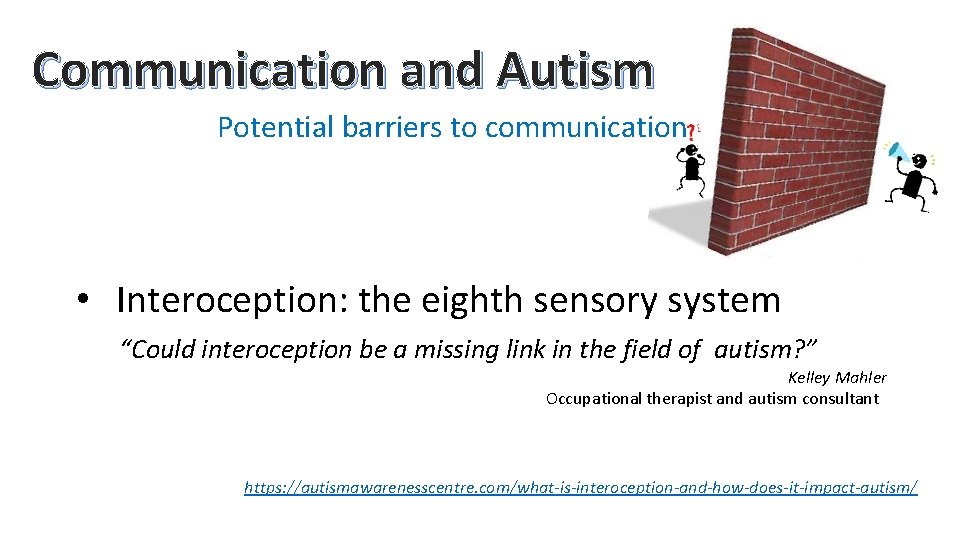
Communication and Autism Potential barriers to communication • Interoception: the eighth sensory system “Could interoception be a missing link in the field of autism? ” Kelley Mahler Occupational therapist and autism consultant https: //autismawarenesscentre. com/what-is-interoception-and-how-does-it-impact-autism/
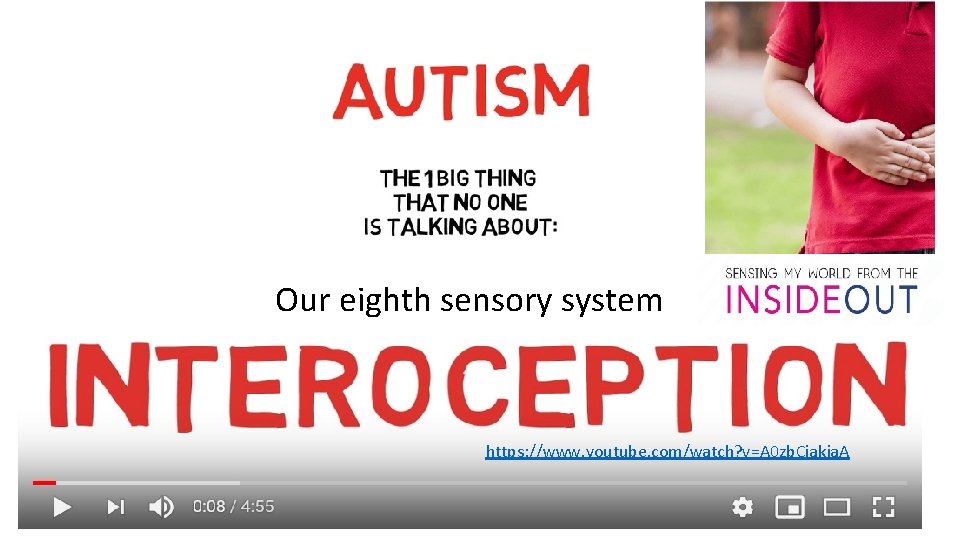
Our eighth sensory system https: //www. youtube. com/watch? v=A 0 zb. Ciakja. A
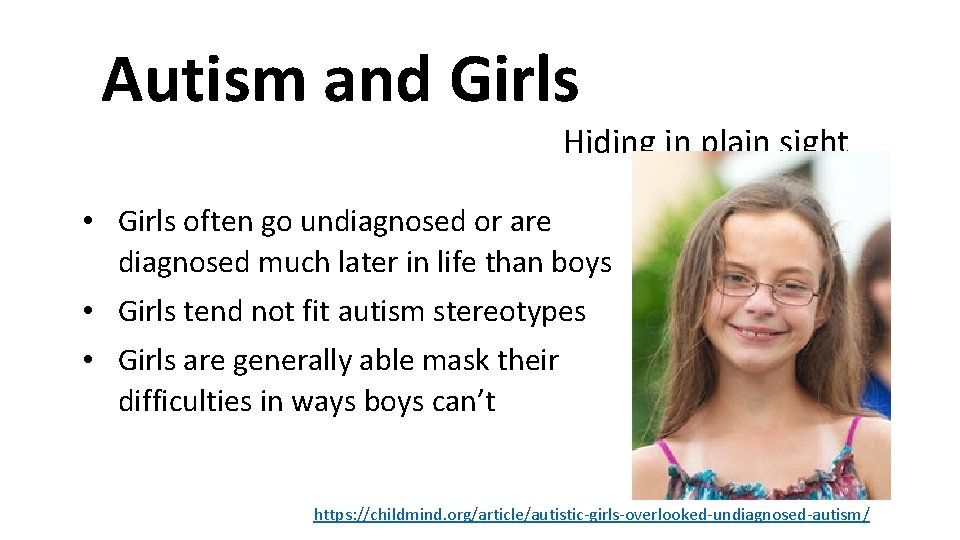
Autism and Girls Hiding in plain sight • Girls often go undiagnosed or are diagnosed much later in life than boys • Girls tend not fit autism stereotypes • Girls are generally able mask their difficulties in ways boys can’t https: //childmind. org/article/autistic-girls-overlooked-undiagnosed-autism/
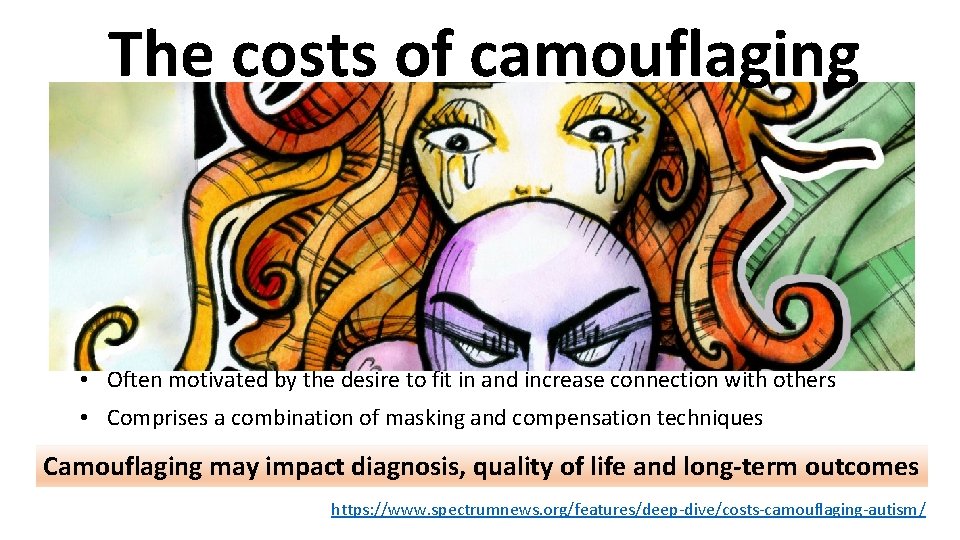
The costs of camouflaging • Often motivated by the desire to fit in and increase connection with others • Comprises a combination of masking and compensation techniques Camouflaging may impact diagnosis, quality of life and long-term outcomes https: //www. spectrumnews. org/features/deep-dive/costs-camouflaging-autism/
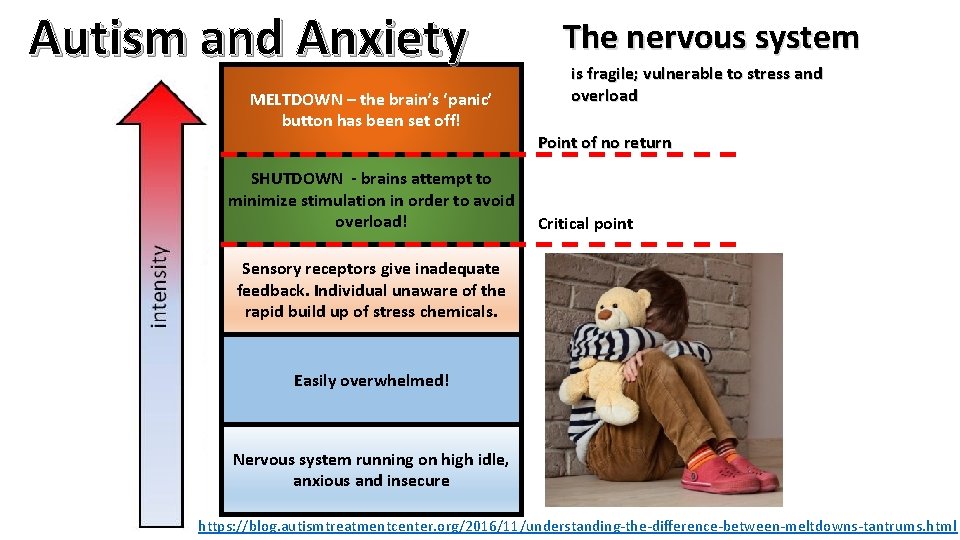
Autism and Anxiety MELTDOWN – the brain’s ‘panic’ button has been set off! The nervous system is fragile; vulnerable to stress and overload Point of no return SHUTDOWN - brains attempt to minimize stimulation in order to avoid overload! Critical point Sensory receptors give inadequate feedback. Individual unaware of the rapid build up of stress chemicals. Easily overwhelmed! Nervous system running on high idle, anxious and insecure https: //blog. autismtreatmentcenter. org/2016/11/understanding-the-difference-between-meltdowns-tantrums. html
https: //www. youtube. com/watch? v=F 18 Fsi. PMFhc
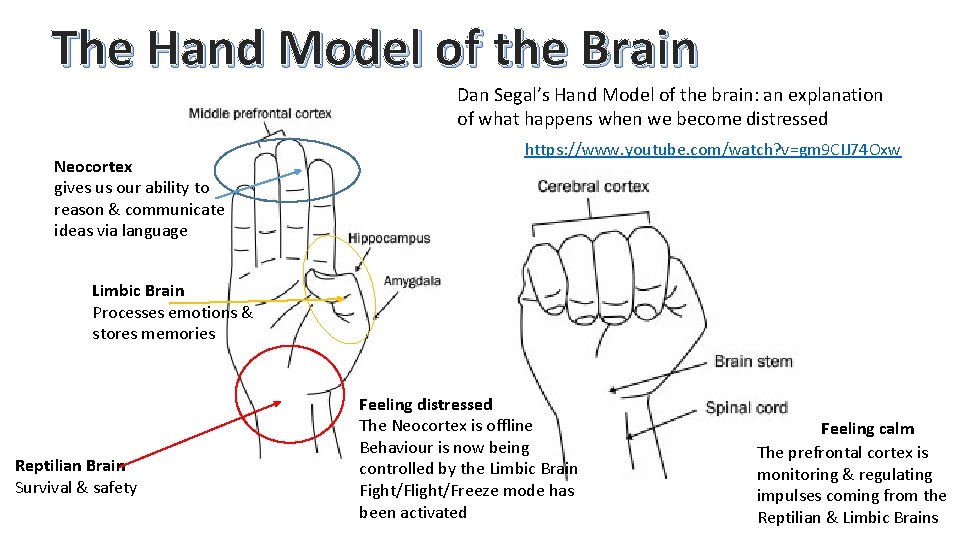
The Hand Model of the Brain Dan Segal’s Hand Model of the brain: an explanation of what happens when we become distressed Neocortex gives us our ability to reason & communicate ideas via language https: //www. youtube. com/watch? v=gm 9 CIJ 74 Oxw Limbic Brain Processes emotions & stores memories Reptilian Brain Survival & safety Feeling distressed The Neocortex is offline Behaviour is now being controlled by the Limbic Brain Fight/Flight/Freeze mode has been activated Feeling calm The prefrontal cortex is monitoring & regulating impulses coming from the Reptilian & Limbic Brains
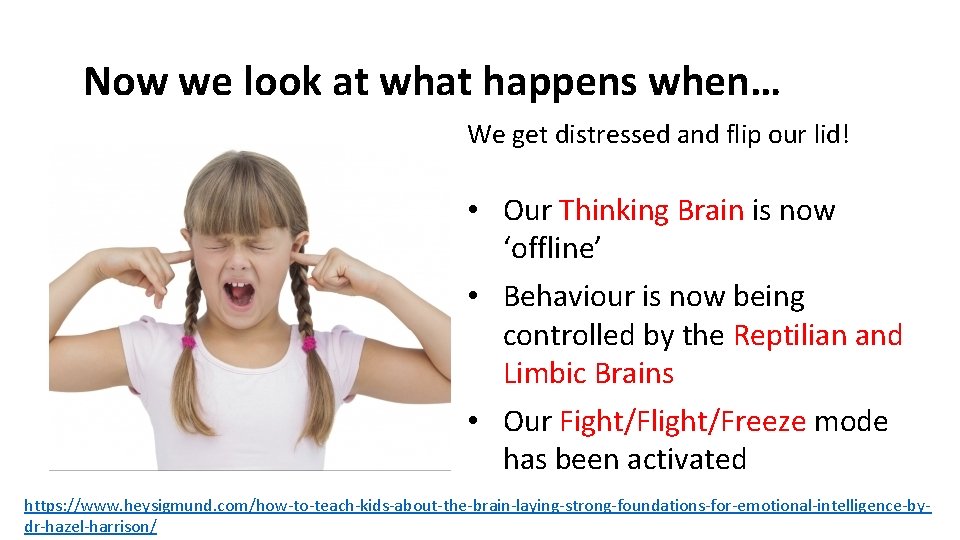
Now we look at what happens when… We get distressed and flip our lid! • Our Thinking Brain is now ‘offline’ • Behaviour is now being controlled by the Reptilian and Limbic Brains • Our Fight/Flight/Freeze mode has been activated https: //www. heysigmund. com/how-to-teach-kids-about-the-brain-laying-strong-foundations-for-emotional-intelligence-bydr-hazel-harrison/
If we flip our lid… … the Reptilian Brain and the Limbic Brain - behaviours - instantaneous, automatic response • Fight • Aggression • Remove threat • Safety through dominance, lashing out • Flight • Remove self! Freeze • Infantilise to attract adult help • Immobility, big eyes, smiles, perhaps incontinence Absence • Safety through concealment • Running away Appeasement • Safety through ‘manipulation’ … SURVIVING not thriving!
https: //www. youtube. com/watch? v=mt. Rrx. NTnyh 8

The arousal cycle Y Axis: Arousal State of distressed behaviour X Axis: Time
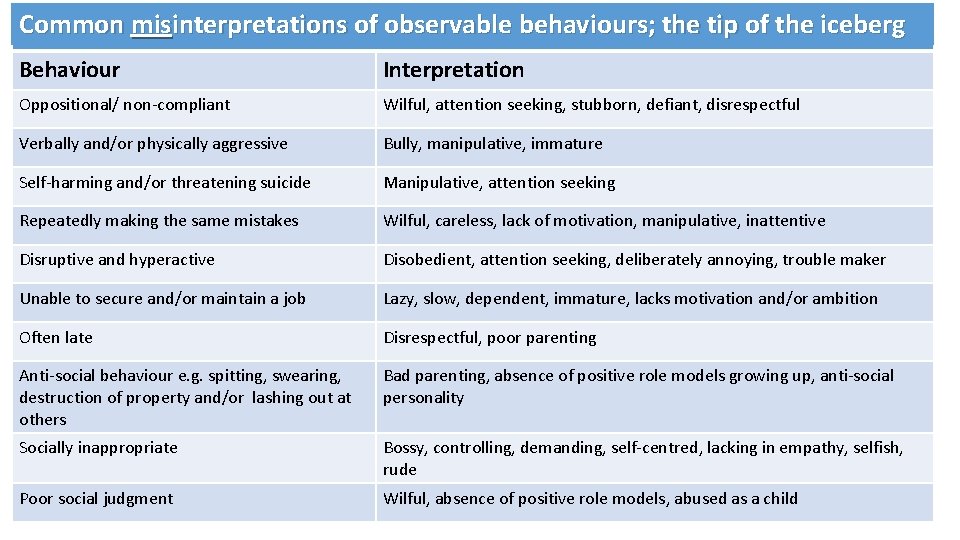
Common misinterpretationsofofobservablebehaviours; the thetip tipof ofthe theiceberg Common Behaviour Interpretation Oppositional/ non-compliant Wilful, attention seeking, stubborn, defiant, disrespectful Verbally and/or physically aggressive Bully, manipulative, immature Self-harming and/or threatening suicide Manipulative, attention seeking Repeatedly making the same mistakes Wilful, careless, lack of motivation, manipulative, inattentive Disruptive and hyperactive Disobedient, attention seeking, deliberately annoying, trouble maker Unable to secure and/or maintain a job Lazy, slow, dependent, immature, lacks motivation and/or ambition Often late Disrespectful, poor parenting Anti-social behaviour e. g. spitting, swearing, destruction of property and/or lashing out at others Bad parenting, absence of positive role models growing up, anti-social personality Socially inappropriate Bossy, controlling, demanding, self-centred, lacking in empathy, selfish, rude Poor social judgment Wilful, absence of positive role models, abused as a child

The Iceberg Analogy
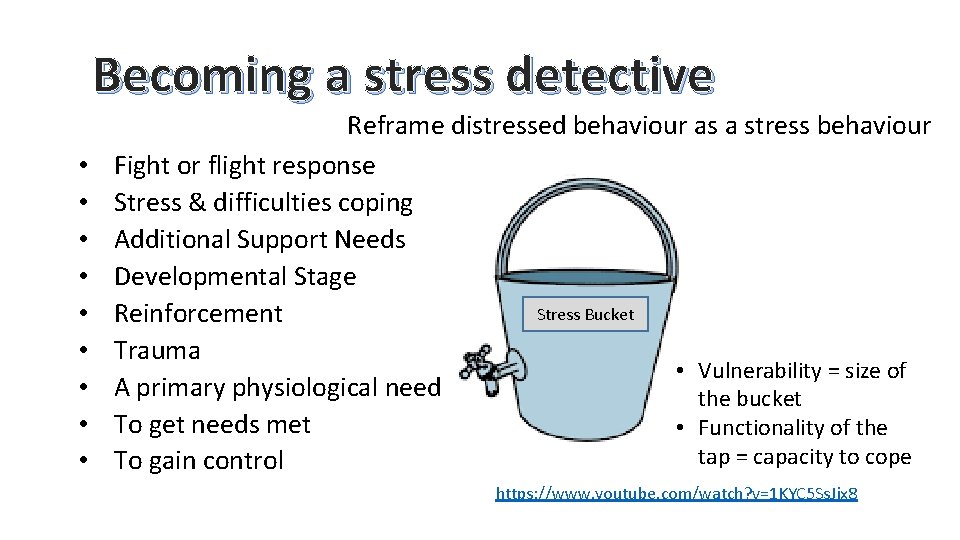
Becoming a stress detective • • • Reframe distressed behaviour as a stress behaviour Fight or flight response Stress & difficulties coping Additional Support Needs Developmental Stage Stress Bucket Reinforcement Trauma • Vulnerability = size of A primary physiological need the bucket To get needs met • Functionality of the tap = capacity to cope To gain control https: //www. youtube. com/watch? v=1 KYC 5 Ss. Jjx 8
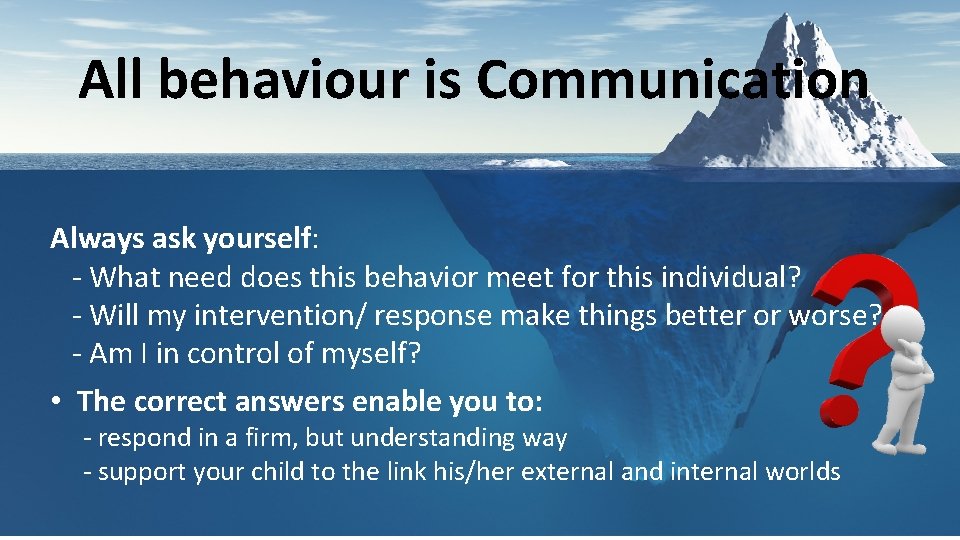
All behaviour is Communication Always ask yourself: - What need does this behavior meet for this individual? - Will my intervention/ response make things better or worse? - Am I in control of myself? • The correct answers enable you to: - respond in a firm, but understanding way - support your child to the link his/her external and internal worlds
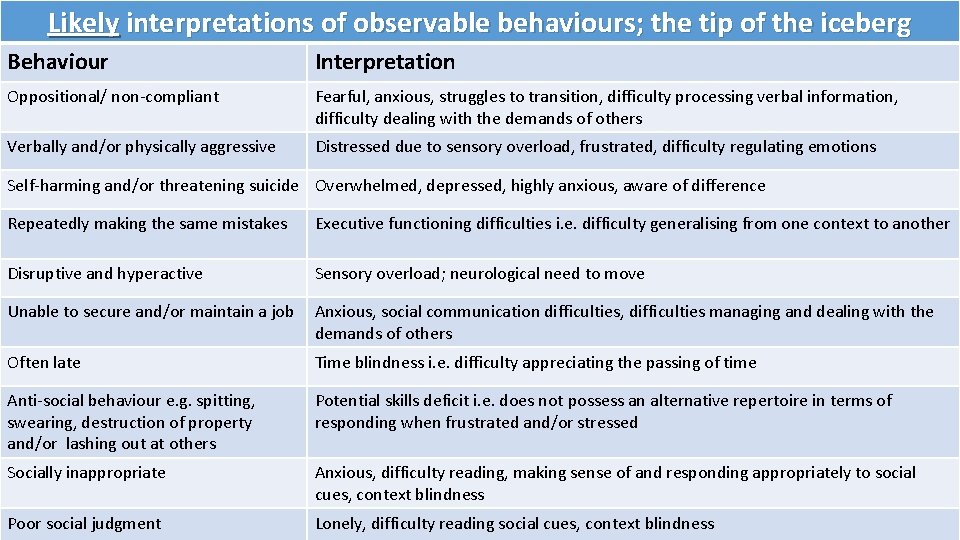
Likely interpretations of observable behaviours; the tip of the iceberg Behaviour Interpretation Oppositional/ non-compliant Fearful, anxious, struggles to transition, difficulty processing verbal information, difficulty dealing with the demands of others Verbally and/or physically aggressive Distressed due to sensory overload, frustrated, difficulty regulating emotions Self-harming and/or threatening suicide Overwhelmed, depressed, highly anxious, aware of difference Repeatedly making the same mistakes Executive functioning difficulties i. e. difficulty generalising from one context to another Disruptive and hyperactive Sensory overload; neurological need to move Unable to secure and/or maintain a job Anxious, social communication difficulties, difficulties managing and dealing with the demands of others Often late Time blindness i. e. difficulty appreciating the passing of time Anti-social behaviour e. g. spitting, swearing, destruction of property and/or lashing out at others Potential skills deficit i. e. does not possess an alternative repertoire in terms of responding when frustrated and/or stressed Socially inappropriate Anxious, difficulty reading, making sense of and responding appropriately to social cues, context blindness Poor social judgment Lonely, difficulty reading social cues, context blindness
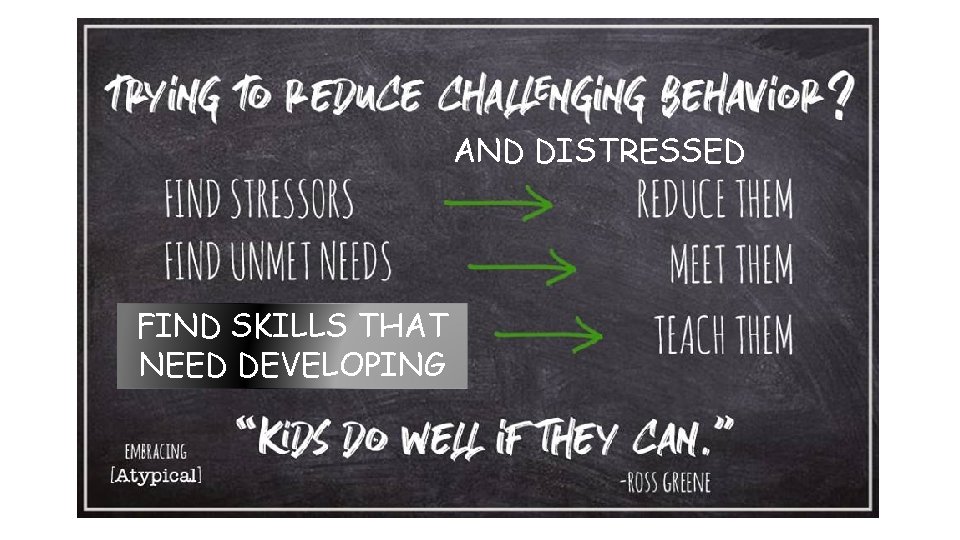
AND DISTRESSED FIND SKILLS THAT NEED DEVELOPING
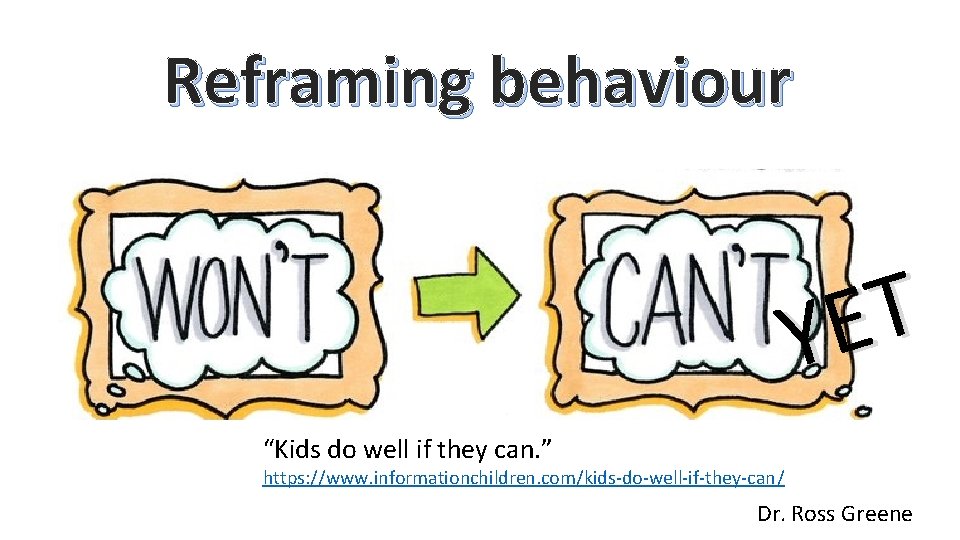
Reframing behaviour T E Y “Kids do well if they can. ” https: //www. informationchildren. com/kids-do-well-if-they-can/ Dr. Ross Greene
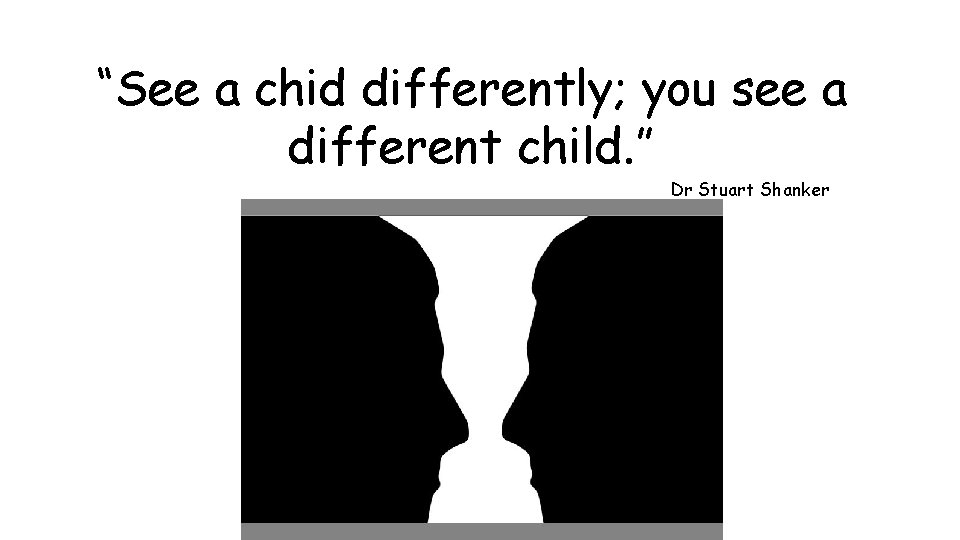
“See a chid differently; you see a different child. ” Dr Stuart Shanker
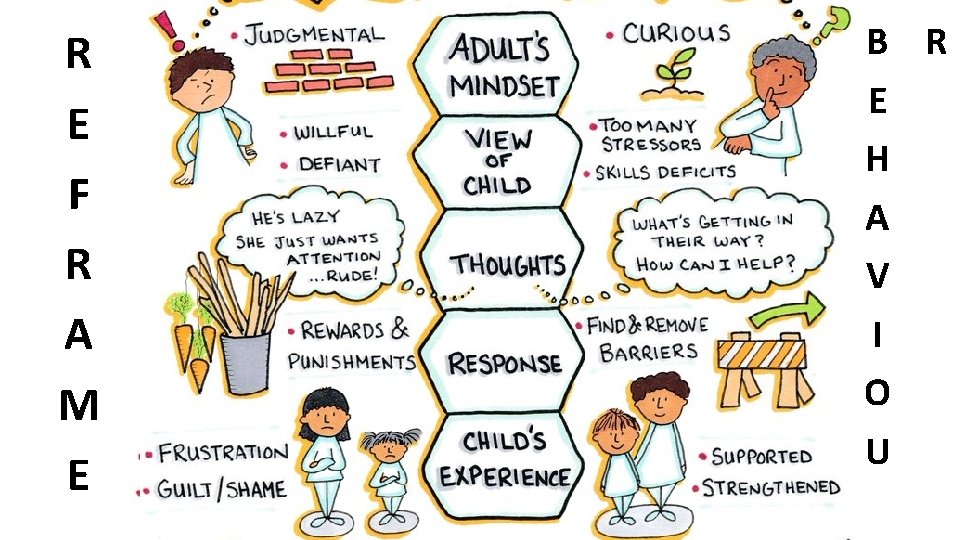
R E F R A M E B R E H A V I O U
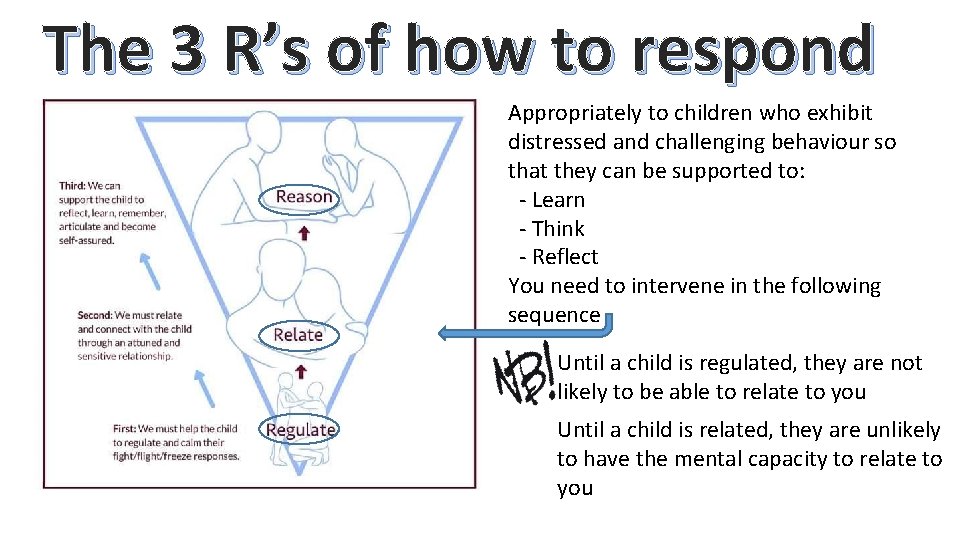
The 3 R’s of how to respond Appropriately to children who exhibit distressed and challenging behaviour so that they can be supported to: - Learn - Think - Reflect You need to intervene in the following sequence Until a child is regulated, they are not likely to be able to relate to you Until a child is related, they are unlikely to have the mental capacity to relate to you
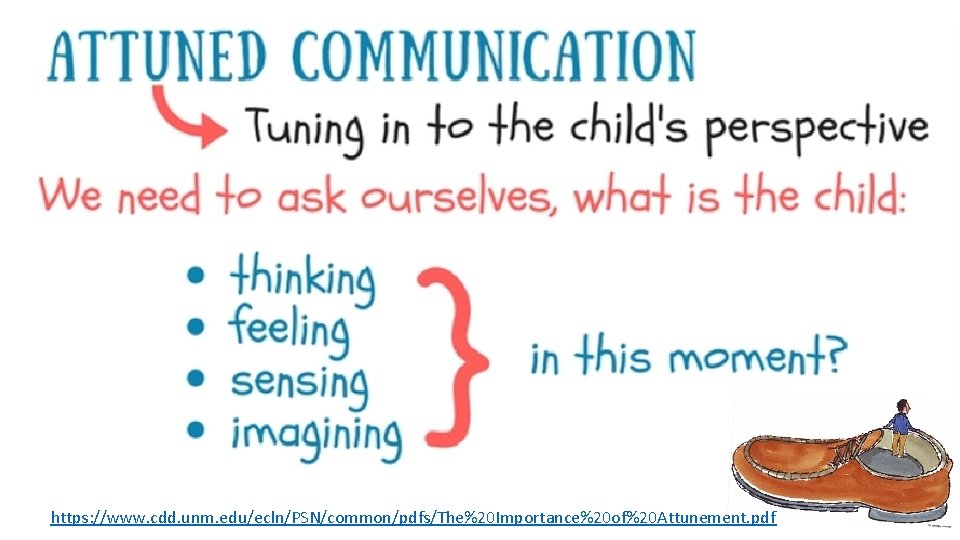
https: //www. cdd. unm. edu/ecln/PSN/common/pdfs/The%20 Importance%20 of%20 Attunement. pdf
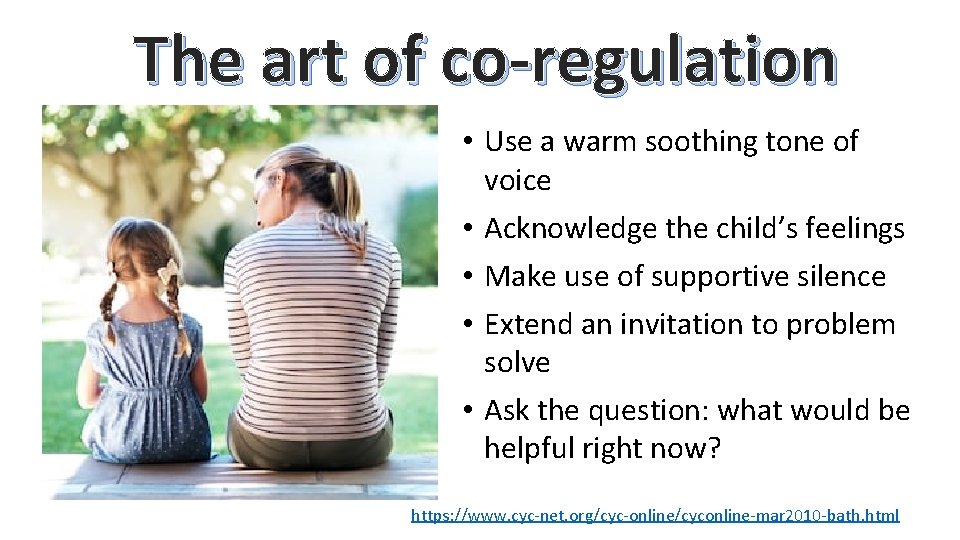
The art of co-regulation • Use a warm soothing tone of voice • Acknowledge the child’s feelings • Make use of supportive silence • Extend an invitation to problem solve • Ask the question: what would be helpful right now? https: //www. cyc-net. org/cyc-online/cyconline-mar 2010 -bath. html
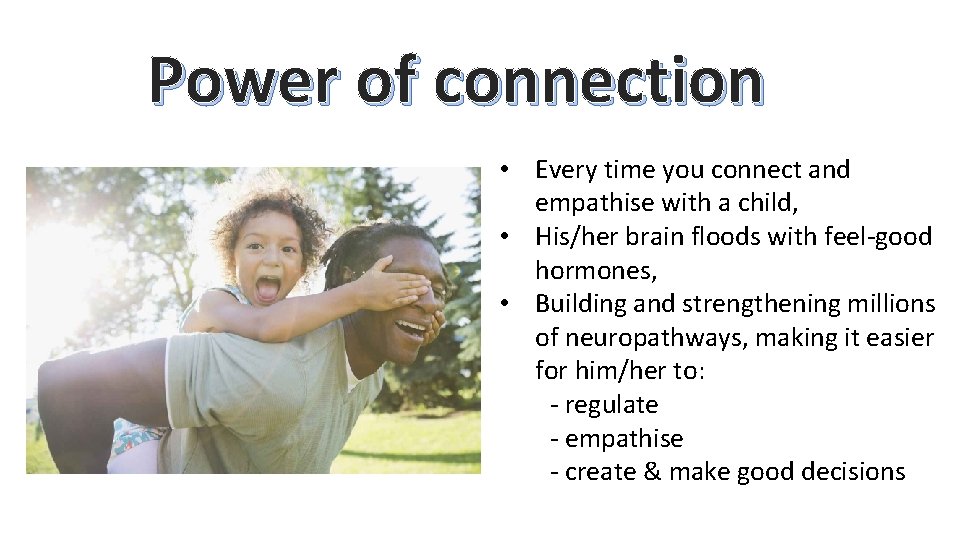
Power of connection • Every time you connect and empathise with a child, • His/her brain floods with feel-good hormones, • Building and strengthening millions of neuropathways, making it easier for him/her to: - regulate - empathise - create & make good decisions
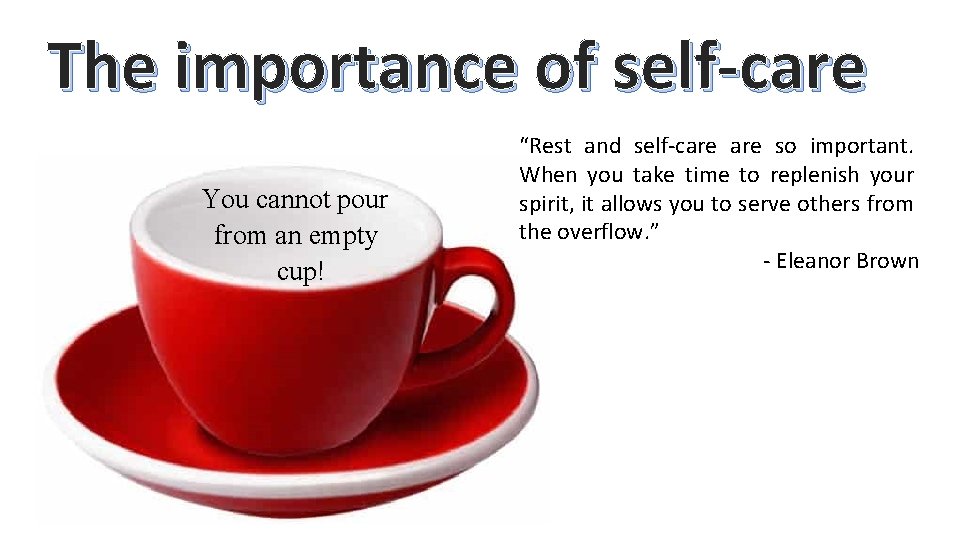
The importance of self-care You cannot pour from an empty cup! “Rest and self-care so important. When you take time to replenish your spirit, it allows you to serve others from the overflow. ” - Eleanor Brown
57 Albion Road, Edinburgh EH 7 5 QY Tel: 0131 475 2416 Email: info@pasda. org. uk Website: www. pasda. org. uk Scottish Charity Number: SC 042678 MAKE A DONATION TO SUPPORT Pasda’s WORK If you have benefitted from this presentation, please consider supporting Pasda's work. You can do this in one of four ways: 1) Donate via Just. Giving on the Pasda website at: https: //www. pasda. org. uk , at the top right of the Home Page. 2) Donate via Just. Giving at: https: //www. justgiving. com/pasdauk 3) Make a bank transfer. To do this, please contact us by phone or email for the account details. 4) Make out a cheque payable to Pasda, and mail it to our office at the address above. Thank you very much.

- Slides: 28