
AUTISM INTRODUCTION WHAT IS AUTISM Disorder of neural

- Slides: 27
AUTISM
INTRODUCTION
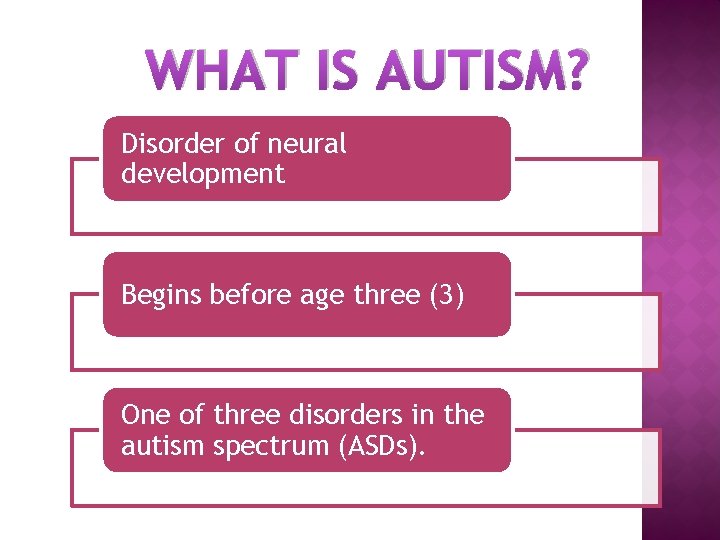
WHAT IS AUTISM? Disorder of neural development Begins before age three (3) One of three disorders in the autism spectrum (ASDs).
There is no known cause of autism. However, it's likely that genetics may be one of the possible causes (although scientists aren't certain).
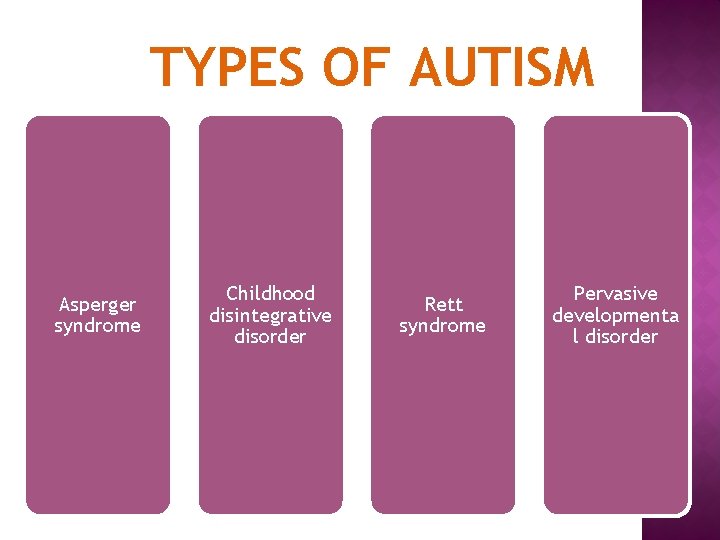
TYPES OF AUTISM Asperger syndrome Childhood disintegrative disorder Rett syndrome Pervasive developmenta l disorder
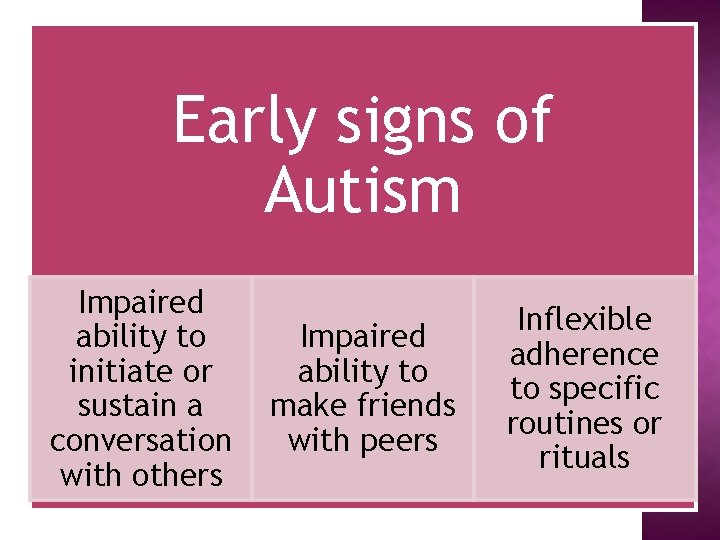
Early signs of Autism Impaired ability to initiate or sustain a conversation with others Impaired ability to make friends with peers Inflexible adherence to specific routines or rituals
SYMPTOMS
AUTISTIC CHILDREN Most parents of autistic children suspect that something is wrong by the time the child is 18 months old and seek help by the time the child is age 2.
PROBLEMS OF AUTISTIC CHILDREN
THE FACE OF AUTISM
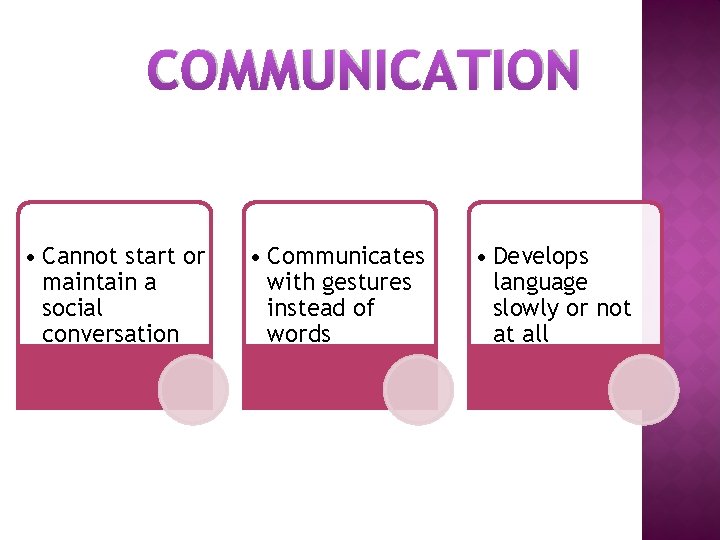
COMMUNICATION • Cannot start or maintain a social conversation • Communicates with gestures instead of words • Develops language slowly or not at all
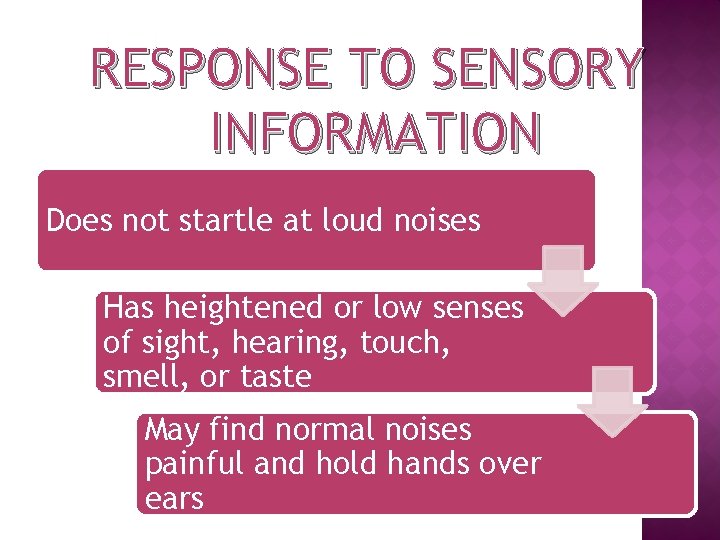
RESPONSE TO SENSORY INFORMATION Does not startle at loud noises Has heightened or low senses of sight, hearing, touch, smell, or taste May find normal noises painful and hold hands over ears
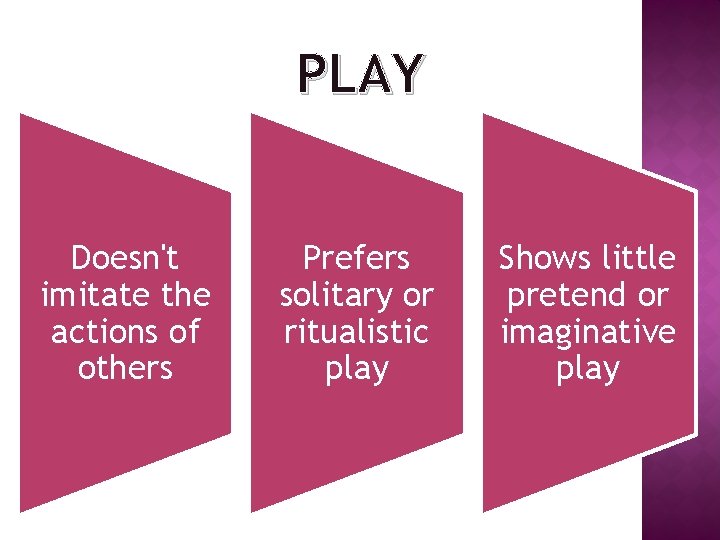
PLAY Doesn't imitate the actions of others Prefers solitary or ritualistic play Shows little pretend or imaginative play
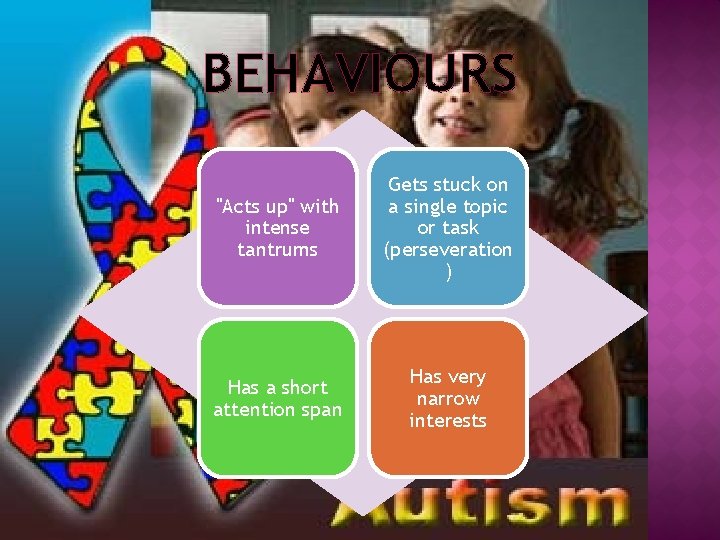
BEHAVIOURS "Acts up" with intense tantrums Gets stuck on a single topic or task (perseveration ) Has a short attention span Has very narrow interests
SOCIAL INTERACTION • Does not make friends • Does not play interactive games • Is withdrawn
It is important for autism treatment to be started once a child's disability has been identified.
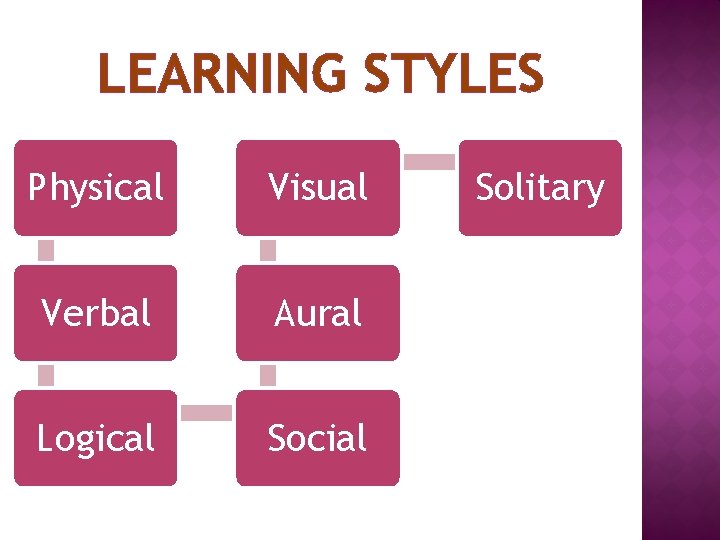
LEARNING STYLES OF AUTISTIC CHILDREN Best ways to help your child with autism to learn various educational, social, behavioural and emotional skills. It is important to understand the particular learning styles.
LEARNING STYLES Physical Visual Verbal Aural Logical Social Solitary
MANAGING STUDENTS WITH AUTISM
MANAGING AUTISTIC STUDENTS Children with autism frequently struggle to learn at the same rate as non-autistic children, and therefore very specific modifications must be made for autism and instruction methods to cater to the autistic children's unique needs.
Autistic children tend to be visual learners.
Stimulation in the classroom
Many autistic children struggle with - or have yet to develop communication skills
Instruction of social skills has typically been among the more challenging aspects of the curriculum.
A high priority should be placed on instruction of literacy.
MANAGING AUTISTIC STUDENTS CONT’D Autism and instruction strategies are exceptionally unique
http: //www. articlesbase. com/disabilitiesarticles/autism-learning-styles-andlifeeducational-skills-attainment http: //Ezine. Articles. com/? expert=Rachel_ Evans http: //www. brighthub. com/education/sp ecial/articles/21132. aspx#ixzz 1 E 62 g 6 K 9 v