
Autism Equality in the Workplace removing barriers and
Autism Equality in the Workplace: removing barriers and challenging discrimination Janine Booth www. janinebooth. com
Autistic people in and out of work
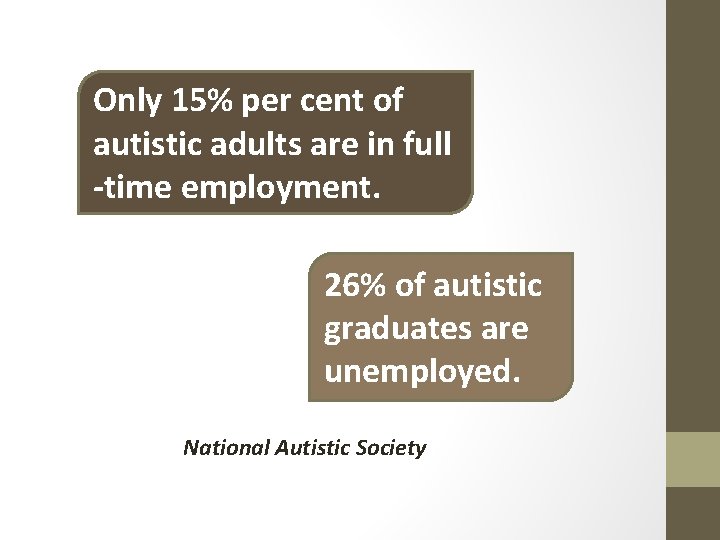
Only 15% per cent of autistic adults are in full -time employment. 26% of autistic graduates are unemployed. National Autistic Society
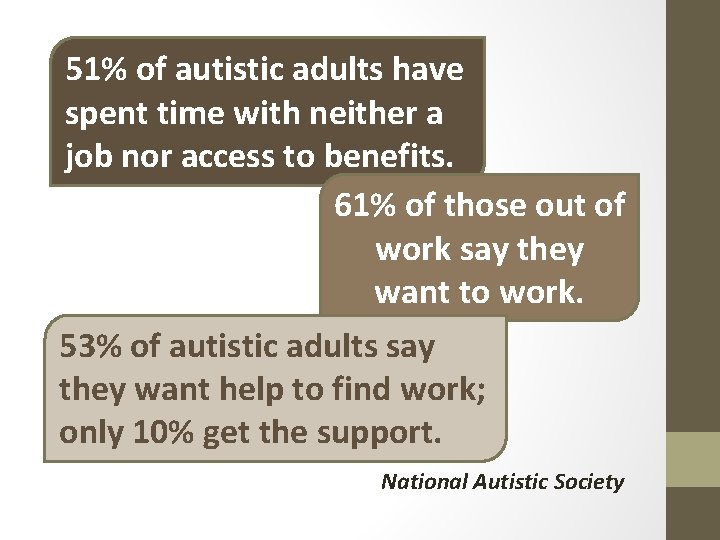
51% of autistic adults have spent time with neither a job nor access to benefits. 61% of those out of work say they want to work. 53% of autistic adults say they want help to find work; only 10% get the support. National Autistic Society
Only 11% of carers who have autistic children work full-time, … … 70% say the lack of appropriate care facilities stops them working. Ambitious About Autism
Do we have to change to fit in at work? Or can work change so that we can take part?
The medical/individual model and the social model
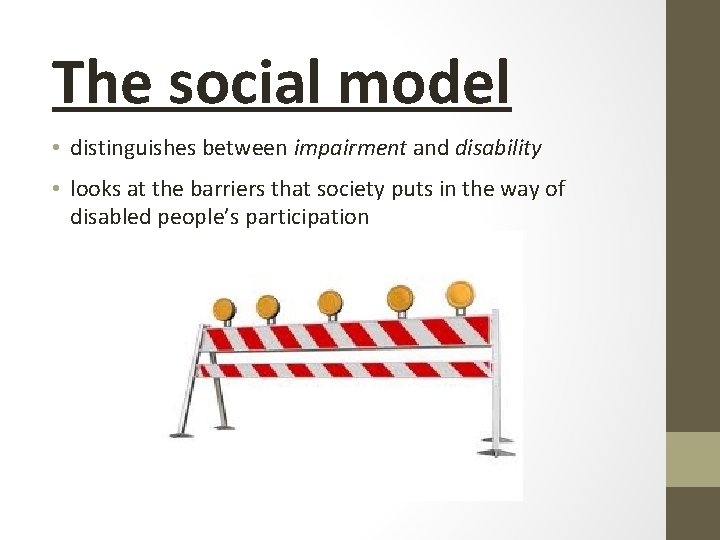
The social model • distinguishes between impairment and disability • looks at the barriers that society puts in the way of disabled people’s participation
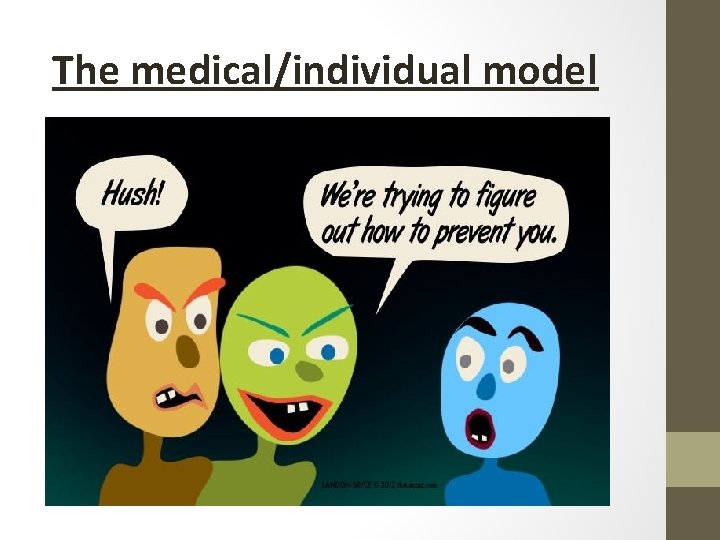
The medical/individual model • sees the impairment as the cause of disabled people’s disadvantage • dominates political and legal decision-making
Ten ways in which workplaces disable autistic workers
1. Getting A Job • ‘starting behind the starting line’ • lack of help in finding the right job • jobs not advertised • job adverts • interviews
2. Getting On With A Job • induction • training • overlooking autistic strengths • promotion
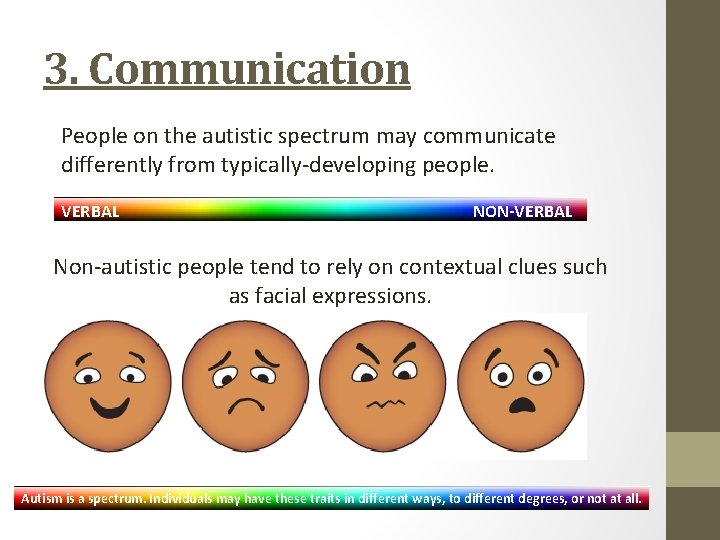
3. Communication People on the autistic spectrum may communicate differently from typically-developing people. VERBAL NON-VERBAL Non-autistic people tend to rely on contextual clues such as facial expressions. Autism is a spectrum. Individuals may have these traits in different ways, to different degrees, or not at all.
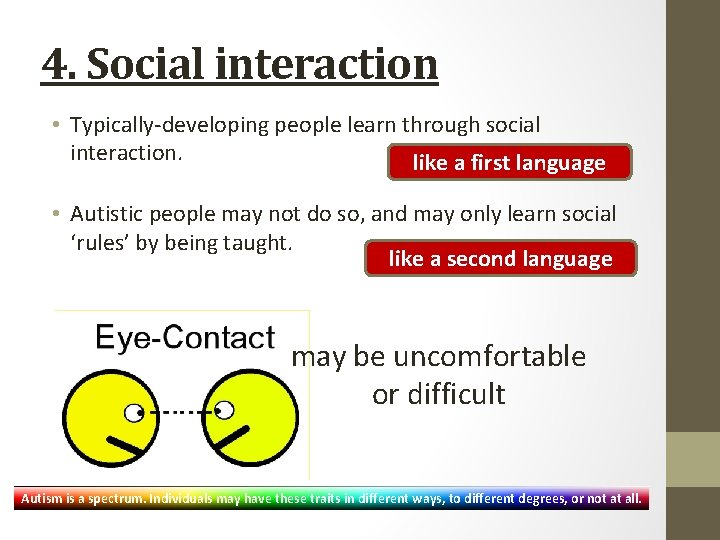
4. Social interaction • Typically-developing people learn through social interaction. like a first language • Autistic people may not do so, and may only learn social ‘rules’ by being taught. like a second language may be uncomfortable or difficult Autism is a spectrum. Individuals may have these traits in different ways, to different degrees, or not at all.
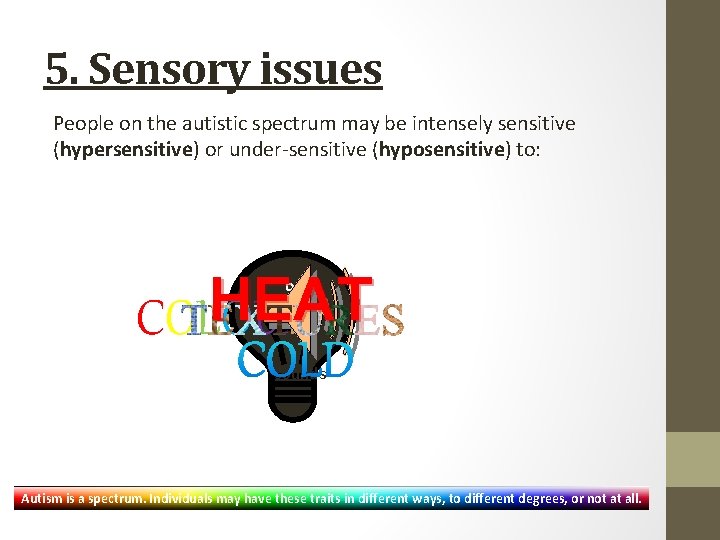
5. Sensory issues People on the autistic spectrum may be intensely sensitive (hypersensitive) or under-sensitive (hyposensitive) to: HEAT COLOUR or bright darkness light sounds Autism is a spectrum. Individuals may have these traits in different ways, to different degrees, or not at all.
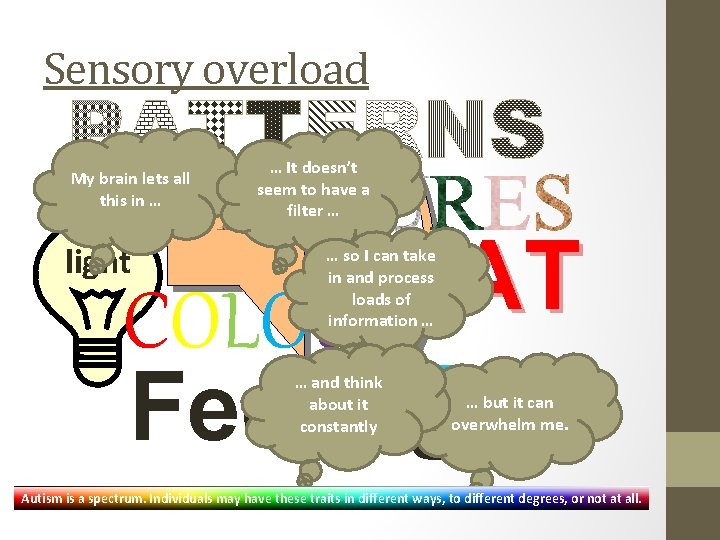
Sensory overload My brain lets all this in … … It doesn’t seem to have a filter … HEAT COLOUR Feelings light … so I can take in and process loads of information … … and think about it constantly … but it can overwhelm me. Autism is a spectrum. Individuals may have these traits in different ways, to different degrees, or not at all.
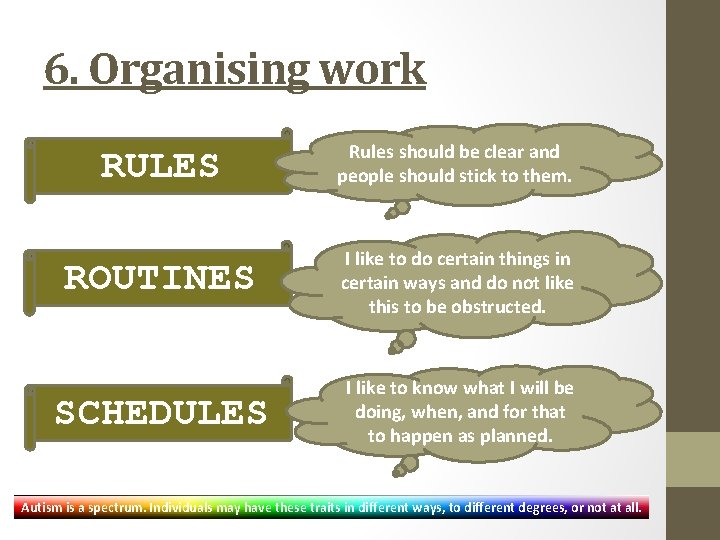
6. Organising work RULES Rules should be clear and people should stick to them. ROUTINES I like to do certain things in certain ways and do not like this to be obstructed. SCHEDULES I like to know what I will be doing, when, and for that to happen as planned. Autism is a spectrum. Individuals may have these traits in different ways, to different degrees, or not at all.
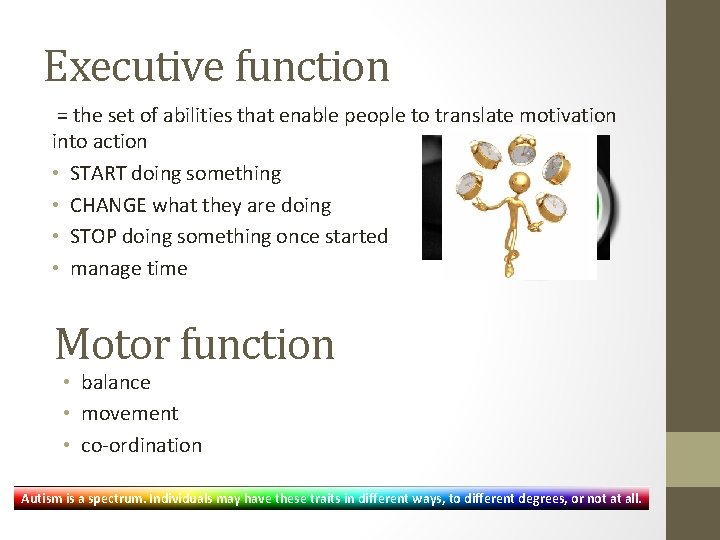
Executive function = the set of abilities that enable people to translate motivation into action • START doing something • CHANGE what they are doing • STOP doing something once started • manage time Motor function • balance • movement • co-ordination Autism is a spectrum. Individuals may have these traits in different ways, to different degrees, or not at all.
7. The trouble with managers • lack of knowledge • favouritism • disruptive supervision • bossiness! • managing performance • managing attendance • the autistic manager?
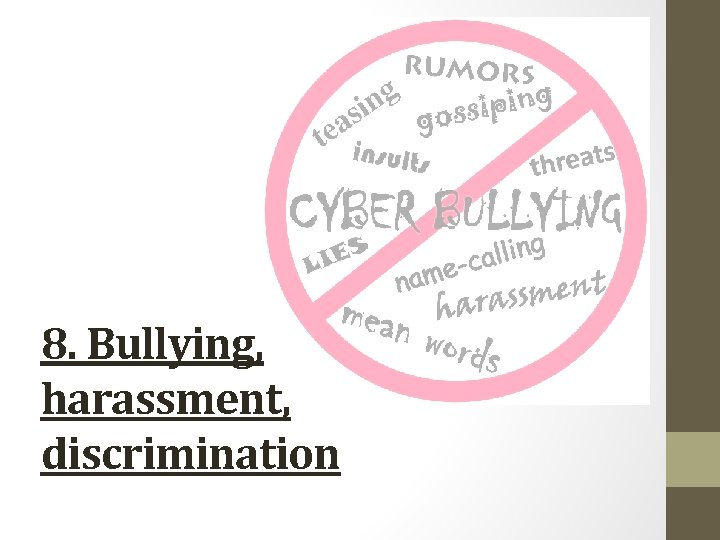
8. Bullying, harassment, discrimination
9. All change!
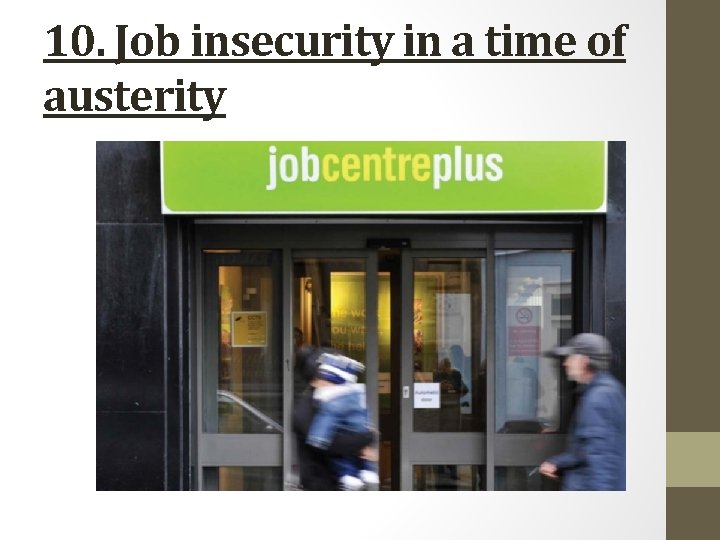
10. Job insecurity in a time of austerity
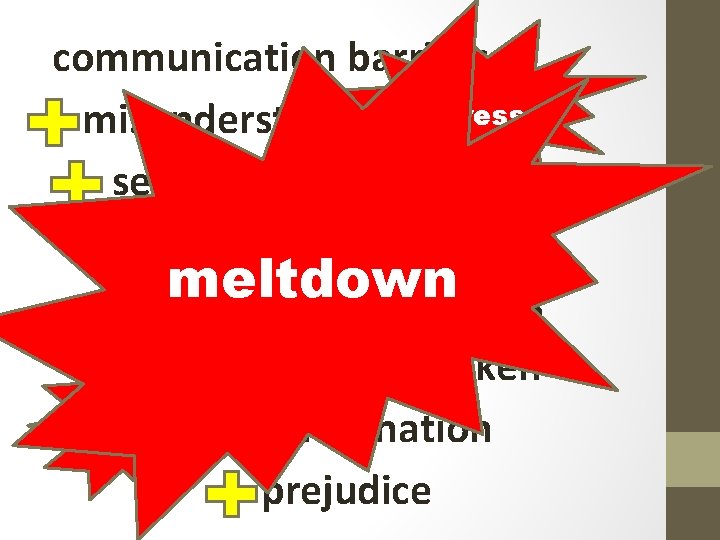
communication barriers distress misunderstandings sensory sensitivity sensory overload meltdown unexpected changes rules being broken anxiety discrimination prejudice
Making the workplace more autismfriendly
Remove those barriers
Fighting back through trade unions
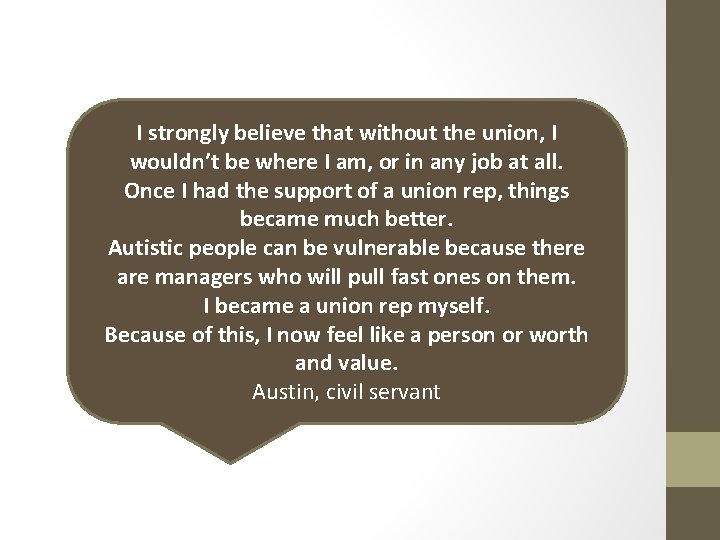
I strongly believe that without the union, I wouldn’t be where I am, or in any job at all. Once I had the support of a union rep, things became much better. Autistic people can be vulnerable because there are managers who will pull fast ones on them. I became a union rep myself. Because of this, I now feel like a person or worth and value. Austin, civil servant
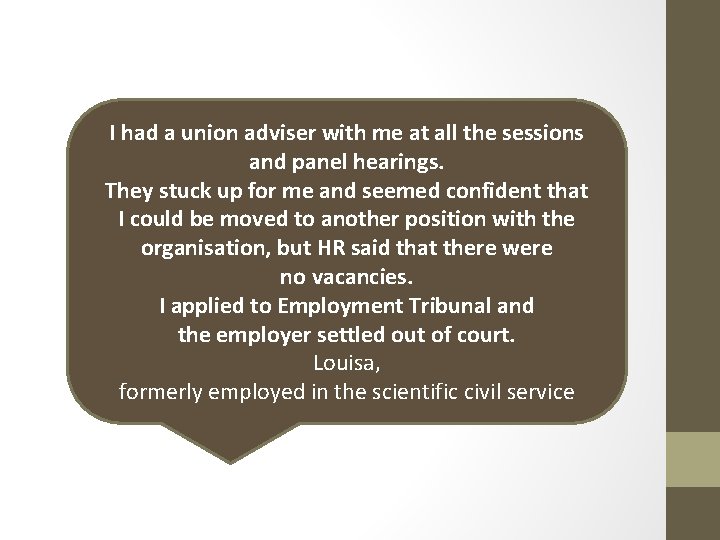
I had a union adviser with me at all the sessions and panel hearings. They stuck up for me and seemed confident that I could be moved to another position with the organisation, but HR said that there were no vacancies. I applied to Employment Tribunal and the employer settled out of court. Louisa, formerly employed in the scientific civil service
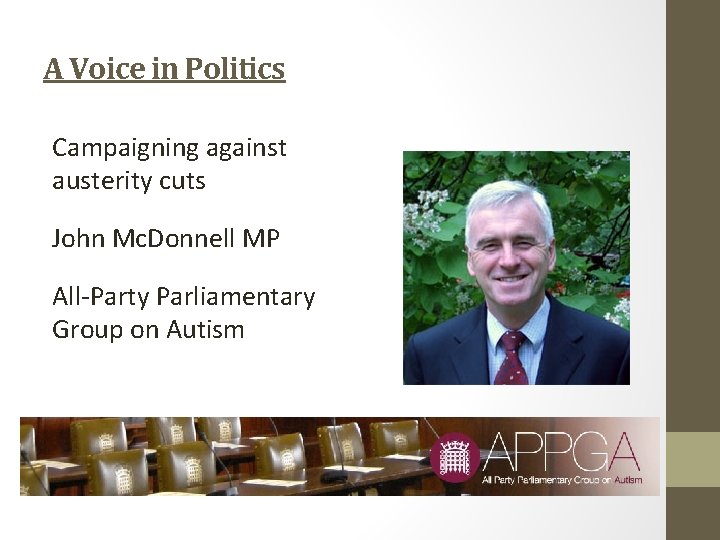
A Voice in Politics Campaigning against austerity cuts John Mc. Donnell MP All-Party Parliamentary Group on Autism
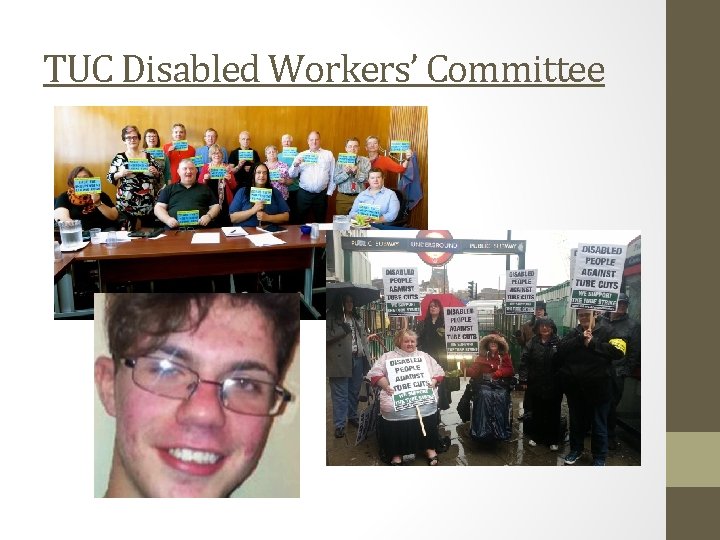
TUC Disabled Workers’ Committee
TUC handbook Download from www. tuc. org. uk
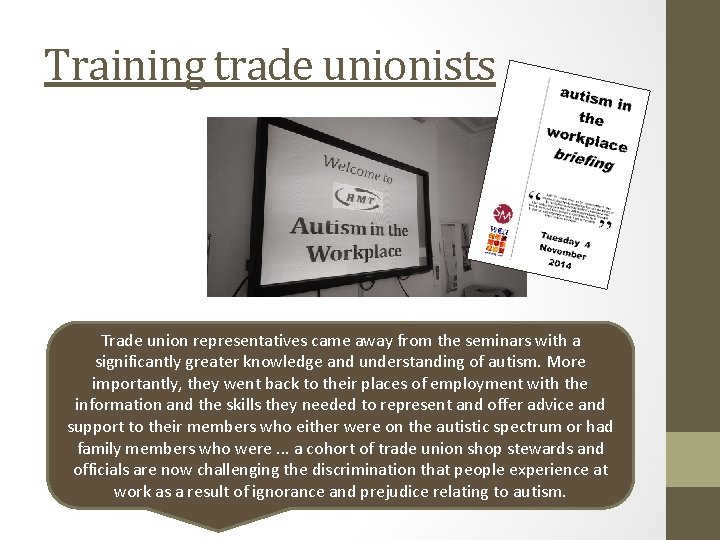
Training trade unionists Trade union representatives came away from the seminars with a significantly greater knowledge and understanding of autism. More importantly, they went back to their places of employment with the information and the skills they needed to represent and offer advice and support to their members who either were on the autistic spectrum or had family members who were. . . a cohort of trade union shop stewards and officials are now challenging the discrimination that people experience at work as a result of ignorance and prejudice relating to autism.
Thanks for listening! Contact me for more information or further training. Janine Booth janine. booth@btopenworld. com
- Slides: 33