
Autism and Trauma The Intersection Stephanie Monaghan Blout
Autism and Trauma: The Intersection Stephanie Monaghan Blout, Psy. D and Nancy Roosa, Psy. D NESCA: Neuropsychology and Education Services for Children and Adolescents 55 Chapel St, Newton MA. 617 -658 -9800 March 19, 2020
Welcome! • We are: • One Trauma Specialist: Stephanie Monaghan Blout, Psy. D. and • One Autism Specialist: Nancy Roosa, Psy. D. • We work across the hall from each other and increasingly, our specialties collide.
Introduction to the Problem: Autism
One Case: Autism emerges after Trauma • 7 year old boy. Reportedly traumatized in 1 st grade. • Becomes afraid of school, regression in skills, hitting himself in head • Particularly afraid of one therapist, who saw him individually. • Refuses to do anything that reminds him of school: even things he loved like singing. • Won’t play with peers or even leave the house • No prior diagnosis of Autism.
Severe Autism • Presents now as classic and severe autism • This boy met every symptom on ADOS, a test for ASD symptoms • • • No eye contact or social interest – ignores me Can’t get his attention to focus on any activities Ignores toys, but picks up a plastic fork and taps his thigh with it repeatedly Utters some repetitive phrases that I can’t understand Prefers to be in corner of the room, talking and tapping Sensory sensitivities, puts hands over ears when he hears a “loud” noise
How to Understand a NEW case of Autism at age 7 • So Nancy wanders over to Stef’s office to talk about this case of “Trauma causing Autism” at age 7. • Stef reminds me: Autism is a neurodevelopmental disorder, presumed to be neurologically based. You don’t “catch it” at age 7.
ASD diagnosis • Two Main Criteria • Persistent deficits in social communication and social interaction across multiple contexts • Restricted, repetitive patterns of behavior, interest or activities. AND Must have been present to some degree in early developmental period Must cause clinically significant impairments in important areas of functioning
Trauma exacerbates Autism • Deep dive into the boy’s history. • Both Trauma and Autism contribute to his current presentation. He WAS more outgoing and talkative in preschool AND he did have some symptoms of ASD at that time. Presumed trauma increased the severity of his symptoms of autism.

Trauma Exacerbates Autism • This 7 year old started life with an emerging Autism Spectrum disorder but was functioning reasonably well and making developmental progress. • Trauma from an impatient therapist exacerbated the behavioral, social and learning problems he already had. • Post-trauma: he looks MORE Autistic.
The Problem • Too easy to see one condition or the other. • Mental health professionals are silo-ed. • Rarely do we consider BOTH, or how they interact and affect each other. • In this 7 year old’s case, without understanding the history, it would be easy to just see him as having severe autism. • Leaving the trauma unrecognized and untreated.
The Problem: Trauma
Stephanie’s case- Trauma can look like Autism • An 8 -year old boy whose behavior is very concerning to parents and teachers • Talks to self • “Stimming” ( humming, rocking) • Avoids eye contact • Play is very rigid • Preoccupied with clocks • Has no friends
History matters • Important to get a good history. Typical early years- met all developmental milestones including friendships. Behavior changed after attending a summer day camp Began to have nightmares, acting out at home, refusing to be left alone Started playing alone at recess, acting out the same war game Other kids started teasing him about being weird
History Matters • Started seeing counselor at school to help with social problems and behaviors in class • He disclosed that he had been molested at camp by a junior counselor, who told him that if he ever said anything, he would kill his parents • The abuse occurred at the same time every day (nap/rest time). • In his “war game” play, the hero rescued a family and killed the bad guys with a huge gun that he had invented.
Differential Diagnosis Can Be Hard • Behavioral symptoms of Trauma/Abuse can mimic symptoms of autism. Both affect: • Social relationships: ability to trust and read others accurately • Emotional regulation: emotional distress/outbursts due to PTSD or ASD? • Sensory regulation: hypersensitivity of ASD vs hyperarousal of traumatized individual? • Perseverative thinking: rumination vs repetitive thinking?
Differential Diagnosis • How to distinguish? • A thorough evaluation by a well-rounded professional who integrates all the information, including history. • Coventry Grid. Developed by British clinicians to identify subtle differences in presentation of ASD and attachment disorders.
Historical Context of Trauma
Trauma: A Historical Review • Concept of psychological trauma emerged from the impact of war and its terrors on the human psyche. The concept of “shell shock” from WWI was refined in the Vietnam war to Post-Traumatic Stress Disorder (PTSD) and was thought be quite rare • DSM I – traumatic event defined as “outside the range of usual human experience” usually involving threat to life or bodily integrity. These are events that “overwhelm the ordinary adaptations to life”. • Common denominator? “feelings of intense fear, helplessness, loss of control, and threat of annihilation (Herman, 1992, Trauma and Recovery)
What Constitutes Trauma? History Women’s movement brought to light the occurrence of experiences that may or may not be life-threatening but still induce terror, feelings of helplessness, and loss of control AND are very common; rape, physical, sexual, and emotional abuse. Investigation of children whose early development occurred in extreme, pervasive, and chronically unsafe, deprived, and/or abusive conditions revealed impairments across all domains- physical, cognitive, social, and emotional.
What Constitutes Trauma 1. Witnessing domestic violence or community violence 2. Abuse: physical, sexual, or psychological, especially that occurring within the context of relationship 3. Neglect of physical, social, or emotional needs
Stress/Trauma Continuum • Big T trauma – Life threatening events such as war, rape, torture. • Little T trauma – Stressful events that affect our physiology and neurology, such as bullying, neglect, exposure to violence.
We used to think Trauma was rare • Adverse Childhood Experience (ACE) study. • Population based study by Kaiser Permanente of 17, 000 of their HMO members. • Survey of how many people experienced any of about 10 different Adverse childhood experiences, or ACEs, which are potentially traumatic events that occur in childhood (0 -17 years).
ACEs • • Experiencing violence or abuse Witnessing violence in the home or community Having a family member attempt or die by suicide Growing up in a household where there is: • substance abuse • mental health problems • parental separation • household members being in jail or prison
ACEs are Common • Follow up studies. About 61% of adults surveyed across 25 states reported that they had experienced at least one type of ACE. • Nearly 1 in 6 reported they had experienced four or more types of ACEs. • Four or more ACEs dramatically increases your chances of chronic health problems, mental illness, and substance misuse in adulthood. • These “emotional” problems have “physical” impacts.
Differential Impact of Trauma: Why Kids Are So Vulnerable Developmental Vulnerability -Helplessness of young children: what is lifethreatening to young children is not the same as for adults -Trauma to growing brains alters the trajectory of development
The Neurobiology of Stress and Trauma
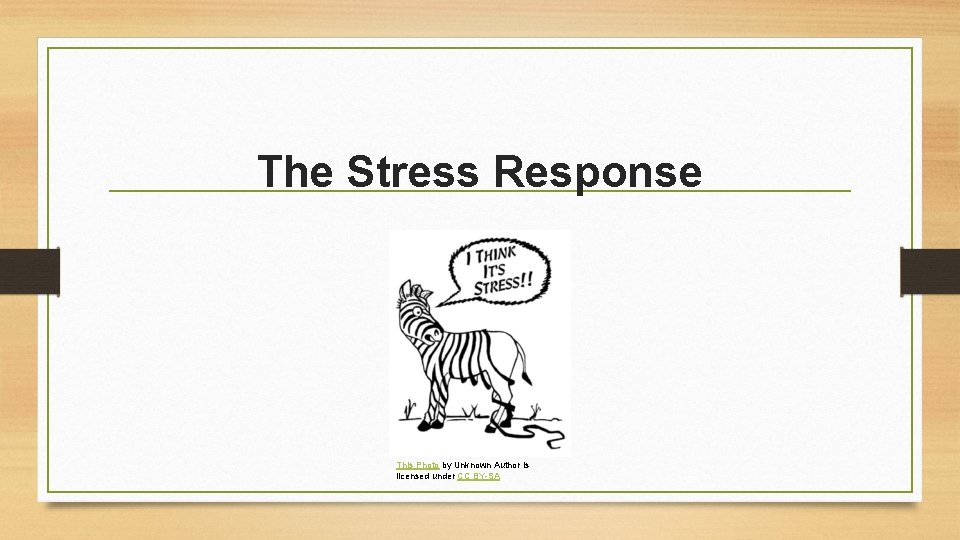
The Stress Response This Photo by Unknown Author is licensed under CC BY-SA
The Stress Response • The Body’s Alarm System- Enable us to gear up to respond to threat • Response- The Hypothalamic-Pituitary. Adrenal Circuit (HPA)
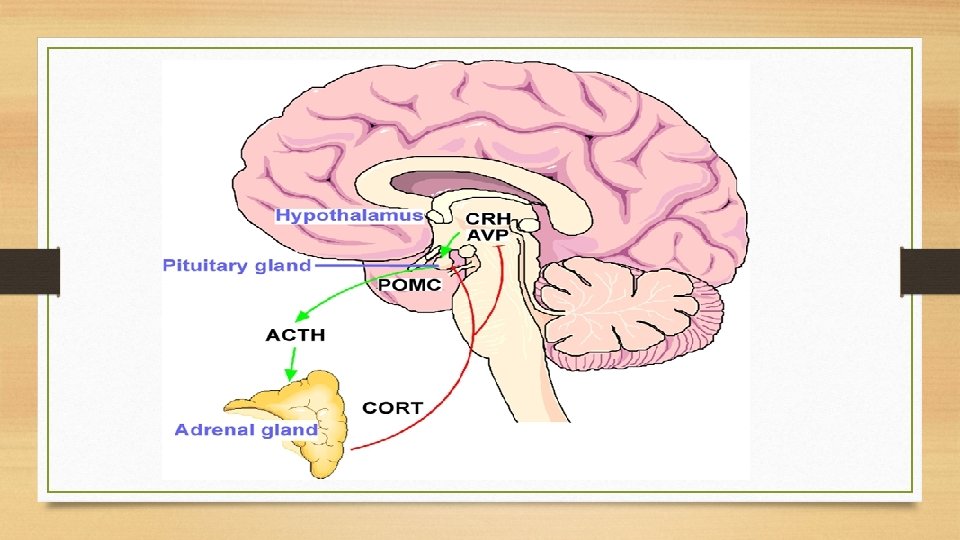
Impact of Hormones • Switch on systems needed to respond to threat- sympathetic nervous system (Fight or Flight) • Switch off systems not essential to crisis response – parasympathetic nervous system (Rest and Digest)- included digestive system, reproductive hormones, growth hormones • Stimulates the release of sugar (glucose) to power muscles and brain to respond to the danger (Cortisol) • Once danger is passed, Cortisol exerts a feedback loop to shut the production of CRH by the hypothalamus.
Chronic Exposure to Stress: What if the Loop doesn’t shut down? • Significant, ongoing stress in early childhood can cause the HPA feedback loop to become stronger, and with each reiteration, the loop becomes stronger, leading to a very sensitive stress response. Which this hypervigilance may be adaptive in highly dangerous environments, the “life or death” response to minor irritants results in adjustment problems in other settings
Impact of Trauma • Attentional system is geared to be on the lookout for signs of danger (triggers) • Arousal “set-points” are fixed (too much, too little) • Distorts perceptions of people and events • Drastically limits capacity for flexible thinking and creative problem solving • Creates conditions of physical discomfort
Behavioral Presentation in the Classroom • • Attention and EF problems (can look like ADHD) Diminished Language Competency Behavioral Dysregulation Anxiety, Depression, Self-Injurious Behaviors Learning Issues Weak Social Skills Substance Abuse
Who’s Most Vulnerable to Trauma • Any marginalized or powerless population: • Women • Children • Racial/ethnic minorities • Impoverished individuals • Individuals with disabilities or differences All of these groups have been found to be more likely to have experienced traumatic events, large and small. What do they have in common? Lack of power.
The Problem: ASD = Vulnerability to Stress/Trauma
People with autism experience more trauma • People with autism have a higher risk of adverse childhood experiences, such as financial hardship, mental illness or substance abuse in their families or parent separation or divorce. • A diagnosis of ASD is significantly associated with a higher probability of one or more ACEs. • The number of children with ASD who were exposed to four or more ACEs was twice as high as neurotypical peers. • Berg et al. (2016)
Children with autism experience more trauma • Another population study compared patterns of abuse and neglect for nearly 5, 000 children born in Virginia from 1992 to 1998. • Nearly one in five autistic children in the state, and one in three with both autism and intellectual disability, had been reported to be maltreated. • Even after adjusting for factors such as low family income and limited parental education, children with autism remain up to three times as likely as their neurotypical peers to experience maltreatment. • Christina Mc. Donnell, assistant professor of clinical psychology at Virginia Polytechnic Institute and State University in Blacksburg.
But do we take it seriously enough? • In Tennessee, researchers analyzed data from an autism monitoring site run by the U. S. Centers for Disease Control and Prevention. More than 24, 000 children born in 2006. • Having autism more than doubles a child’s chances of referral to child protective services. 17 percent of the 387 autistic children had been the subject of calls to the state’s child abuse hotline, compared with 7 percent of the others. • Despite the higher number of reports, however, child protection professionals investigated the caregivers of only 62 percent of the autistic children, compared with 92 percent of typical children.
Children with ASD are bullied • A 2018 review of studies found that children with autism are bullied three to four times as often as those without disabilities, including their own siblings: • 40 to 90 percent of children with autism are bullied, compared with 10 to 40 percent of typical children. • Daniel Hoover, a child and adolescent psychologist at the Kennedy Krieger Institute in Baltimore, Maryland.
The Experience of Autism • In speaking with people with ASD about traumatic experiences, Dr. Kerns, has heard “everything from sexual abuse, emotional abuse and horrendous bullying, to much broader concepts, like what it’s like to go around your whole life in a world where you have 50 percent less input than everyone else because you have social deficits. Or feeling constantly overwhelmed by sensory experience — feeling marginalized in our society because you’re somebody with differences. ”
Important note • This is NOT blaming the victim. • Individuals with Autism are more likely to experience traumatic events because of our culture’s intolerance of diversity-not some innate problem. • We have made some progress in some areas, say not blaming victims of rape for being raped. • BUT we’ve made less progress accepting neurodiversity, so that neurodiverse individuals are truly valued in a school, work or community setting. • We give lip service to no bullying, but we accept a quirky child not having friends
Autism increases risk of trauma • Bullying from peers • Parents who don’t understand their child • Negating messages from teachers, society, professional treaters • Harsh discipline to manage behaviors • just a few examples from recent cases….
School-Induced Trauma • 5 th grader in special education school for children with learning disabilities. • He is well behaved, intelligent and hard working. • BUT when stressed, he engages in stereotyped behaviors, probably to self sooth. • Teachers develop a behavior plan to extinguish the behavior. • two warnings then misses recess. • The presence of the plan further stresses him and he engages in more self soothing behavior.
Stress exacerbates symptoms • Gets to the point that this boy just quickly engages in behavior first thing in the morning, so as to get the consequence. This releases his tension and he doesn’t have to worry about it for the rest of the day. • Teachers just see him as being “more autistic” not “more stressed. ” • He is soon counseled out of the school due to his autistic behaviors.
Parenting Mis-steps • A mother confessed that until her child was diagnosed with Autism at age 8, she would get angry at his behaviors and perseverative interests. • He would stroke her hair repeatedly and talk too much about trains. • On advice of therapist, she tried to extinguish these behaviors by ignoring him. • She often lost patience and yelled, hit, or sent him to his room.
Peer Induced Trauma • 16 year old in public school. Extremely smart. • But naïve. Classmates set him up for social failure. • “That girl likes you. Ask her out. ” • “Today vaping is OK at school. You can vape in the front lobby. ” To the point that he got in trouble and was suspended from his public school and went to a collaborative, which was academically less advanced.
Situation is worse for Adults • Most adults today grew up before Autism was known or diagnosed. • Most adults today grew up when the effects of trauma were not known • Have lived with years of traumatic experiences due to others’ lack of understanding and lack of good treatment
Trauma and Autism may be similar on a neurobiological level • Prolonged trauma related experiences can cause alterations in early brain development, leading to difficulties that can be similar to ASD. • It may be that trauma disorders and ASD stem from a common disruption in underlying brain architecture and/or function – one that is presumably inherited in the case of ASD and acquired in the case of trauma. • - Scoyoc, AV, Marquardt, MB and Phelps, RA. • Trauma, Autism and Neurodevelopmental Disorders, eds Fogler, JM and Phelps RA, Springer 2018.
The Problem: Treating Trauma
Treating Trauma • Knowing that many individuals with ASD have experienced trauma, what can we learn from the field of trauma therapy? • Treatment for trauma is researched and established… • -- albeit not always implemented well in our current social-political landscape First principle is creating safety and trust. No one can connect socially, learn effectively or manage emotions when they are distressed.
Two Key Factors Mitigating Impact of Trauma Resiliency related to: • Psychosocial support, including the caregiver’s response to the traumatized individual but also the community (ecological fit). • Individual’s sense of mastery
National Child Traumatic Stress Network Complex Trauma Task Force ARC model: • Building secure Attachments between child and caregivers • Enhancing Self-Regulatory capacities • Increasing Competencies across multiple domains
Keys to Developing Effective Strategies in the School Setting • Knowledge of Child’s learning profile (Attention/Learning/Social Challenges? ) • Sensitivity to Child’s temperamental style (is this a fight, flight or freeze kind of kid? ) • Direct Approach to Stress response (“Don’t worry” isn’t going to help. Validation and modifications can make a huge difference) • Remember that when these children are triggered, they go into survival mode and do not have access to many of their higher level skills, including language. Learning to identify their emotional state and self-advocate should be goals, not expectations. • Teach skills that are lacking (e. g. Academic, Executive Function (breaking down a problem), Social Behaviors AND Emotional (coping and self-soothing)
Ecological Fit • “The quality and helpfulness of the relationship existing between the individual and his/her social context” • “Interventions that achieve ecological fit are those that enhance the environment-person relationships- i. e. those that reduce isolation, foster social competence, support positive coping, and promote belongingness in relevant social contexts” • Harvey 2007
Ecological Fit • “Even highly effective interventions will rely for lasting impact in their becoming embedded in and familiar to more enduring social settings and community contexts. Attention to the possibilities for ensuring lasting impact and enduring change are important features of intervention design and conduct” (Harvey 2007).
Ecological Fit at School • Many school environments offer special education services but no ecological fit. EX: A child gets social skills training in pullout sessions BUT teachers and other children don’t get training on acceptance of neurodiversity. SO the child is isolated and has no friends at the school to practice social skills or simply enjoy a friendship.
Ecological Fit at Work AANE survey found ASD adults need support in soft skills: • Negotiating around job demands or for advancement • Interacting with co-workers or the public BUT employers need support too. • An individual is hired for a job that suits his/her skills but the company has no commitment to neurodiversity. • The new hire doesn’t fit in with the social culture
Trauma Sensitive Schools Initiative • Massachusetts Advocated for Children and Harvard Law School Joint Project- Trauma Learning Policy Initiative (TLPI) • First Publication: Helping Traumatized Children Learn: A report and Policy Agenda (the Purple Book) 2005 • Second Publication: Helping Traumatized Children Learn; Creating and Advocating for Trauma-Sensitive Schools
TLPI Trauma Sensitive Schools • “A School’s Journey Toward Trauma Sensitivity” The George Elementary School, Brockton • https: //massadvocates. org/a-schools-journey-toward-traumasensitivity-new-video/
What About Autism and Treatment?
Therapeutic principles apply to ASD First, safety and emotional regulation. • Learning, attention, behavior depend on emotional regulation • Need consistency, reliability, predictability in the environment. • Needs to build trusting relationships. Individuals with ASD don’t always need the same quality or quantity of relationships, but all individuals with ASD need relationships. Connect with one person at a time. • Only if s/he feels connected and safe will s/he be able to develop
Profile of ASD makes therapy harder • Different way of processing emotional experience • Less robust support networks of friends or therapists. • Therapy is typically geared for neurotypicals. • Make eye contact. • Trust therapist and open up • Express emotions in language
The field is Silo-ed • Behavior programs with an emphasis on overt behaviors, without understanding emotional experience, can be further traumatizing. • Some still rely on restraints or seclusion. • Anyone who has sensory issues, or who has experienced sexual trauma or violence, can find this triggering. • Therapeutic programs typically don’t know how to handle unusual behaviors. • Effective Therapies need to be tailored to an individual’s cognitive and social profiles.
Modify Traditional Therapies You have to modify therapy for almost anyone on the Autism Spectrum. “You can’t just talk and wait for them to develop insight. I am much more clear and direct and do a lot of psychoeducation. ” -- Eva Mendes, local therapist who specializes in treating adults and couples with autism.
ASD may involve Vulnerable Physiology • Many persons with ASD exhibit marked stress responses in otherwise benign social situations. The hyper-responsivity may contribute to increased anxiety or even chronic stress. • Children with ASD may not only experience more stress than neurotypical children in response to certain situations, but their body’s stress response may be longer lasting. • Taylor and Corbett (2014)
Adapting Therapy Approaches • A typical therapeutic intervention for Anxiety is Exposure Response Prevention, i. e. exposure to the feared stimuli is sustained under safe conditions and the physiological stress response gradually wanes. • In some children with Autism who have hypersensitive physiology, this waning of the stress response may not happen or may occur at a glacial pace. • So this therapy may be more harmful than helpful.
Treatment: Wrong Reaction to Trauma • The 5 th grader mentioned before, the behavioral plan meant to reduce or extinguish unwanted behaviors. Backfired. Increased stress. Emotionally driven behaviors are usually not amenable to simplistic behavior plans. “If you do X, you’ll get time on your i. Pad. ” But when X is as terrifying as jumping off a skyscaper, that time on the ipad just doesn’t compete.
Therapeutic vs Behavioral approaches • 13 year old girl with ASD, language disorder and anxiety • When stressed, she reacts with inappropriate compulsive behaviors. • Flashes. We suspect she is re-enacting sexual trauma that she doesn’t have words for • But at therapeutic placement, she can’t access therapeutic groups. Language and content too sophisticated. • So placed in behavioral program. Behavior plan includes seclusion when she acts out. She regressed quickly.
CBT doesn’t stick • Many children with autism may not benefit from traditional forms of CBT. • They have trouble generalizing lessons learned in therapy to other parts of their lives. • They do not always maintain any gains. • The findings suggest that children with autism need therapy for longer, and with more follow-up, than their typical peers — “a critical difference in the treatment approach, ” he says. • Eric Storch, professor of psychology at the University of South Florida in Tampa
Modified CBT • A modified version of CBT, called the Behavioral Interventions for Children with Autism, has been developed and being studied by a team at the University of California, Los Angeles. • Example of modifications: • Doctors and parents provide extra coaching and support to help a child to master appropriate social behaviors before putting the child in a feared social situation. • Therapists work with schools to give these children peers who can guide them through social situations.
DBT? • Dialectical Behavior Therapy focuses on emotional regulation but can be inaccessible to individuals with autism due to complex language and concepts. • “I went to a DBT group and didn’t understand anything they said, ” • Intelligent adult with ASD, as told to Nancy.
Modified DBT • Julie Brown has modified the DBT approach for cognitively challenged individuals (“Emotional Regulation System for Cognitively Challenged Clients; A DBT-Informed Approach”) • Concepts made less abstract and language heavy. Can be used for other groups such as persons with ASD or younger children. • “Clinicians learn how to teach core emotion regulation and adaptive coping skills in a framework that promotes motivation and mastery for all learners, and that helps clients apply what they have learned in daily life. ”
Take -Aways: Treatment Create a treatment plan for the whole person, using what we know about trauma informed therapy, AND behavioral therapy • Many individuals with autism require trauma-informed treatment • Many individuals with trauma histories benefit from consistency and structure of behavioral approaches
Strength of Neurodiversity • Promote, don’t extinguish, special interests as they provide pleasure, increase engagement, lead to productive vocations and contribute to the greater good. • Ex. Jack loves sports facts and was asked to be the announcer for the high school football team. • Colby loves weather and is now studying meteorology in college. • Greta Thunberg… inspiration to us all. • Special interests can provide the impetus to transcend challenges.
Diversity is Valuable • If it weren’t for folks with Autism, all you neurotypicals would still be sitting around the cave telling jokes by candlelight. • -- Temple Grandin
Stay in Touch! • Stephanie Monaghan Blout, Psy. D. Smonaghan@nescanewton. com • Nancy Roosa, Psy. D. Nroosa@nesca-newton. com
Scientific References • Berg KL, Shiu CS, Acharya K, Stolbach BC, Msall ME. Disparities in adversity among children with autism spectrum disorder: A population based study. Developmental Medicine & Child Neurology. 2016; 58: 1124– 1131. • Fogler, JM, Phelps, RA. Trauma, Autism and Neurodevelopmental Disorders: Integrating Research, Practice and Policy. Springer. 2018. • Gravitz, Lauren. At the Intersection of Autism and Trauma. Spectrum News. September 2018. • Harvey, M. Towards an ecological understanding of resilience in trauma survivors; Implications for Theory, Research, and Practice. Harvey & Tummala-Nara (eds) Sources and Expressions of Resilience in Trauma Survivors: Ecological Theory, Multicultural Practice. Journal of Aggression, Maltreatment, and Trauma 2007, 14 (1) • Kerns CM, Newschaffer CJ, Berkowitz SJ. Traumatic childhood events and autism spectrum disorder. Journal of Autism and Developmental Disorders. 2015; 45(11): 3475– 3486. • Taylor JL, Gotham KO. Cumulative life events, traumatic experiences, and psychiatric symptomatology in transition-aged youth with autism spectrum disorder. Journal of Neurodevelopmental Disorders. 2016; 8(1): 28.
Resources • Massachusetts Advocates for Children and Harvard Law School Joint Project- Trauma Learning Policy Initiative (TLPI) • First Publication: Helping Traumatized Children Learn: A Report and Policy Agenda (the Purple Book) 2005 • Second Publication: Helping Traumatized Children Learn; Creating and Advocating for Trauma-Sensitive Schools • Julie F Brown, The Emotion Regulation Skills System for Cognitively Challenged Clients: A DBT-Informed Approach. Guilford Press. 2015. • Asperger/Autism Network (AANE) will provide referrals to therapists. info@aane. org
- Slides: 78