
Authoring Collective Training Demonstrations in GIFT Elyse Burmester
Authoring Collective Training Demonstrations in GIFT Elyse Burmester Research Assistant GIFTSym 8 – May 2020 5/29/20 1
Agenda • Authoring Tool Timeline • Components of the DKF • Recommendations • DKF Authoring Demonstration 5/29/20 2
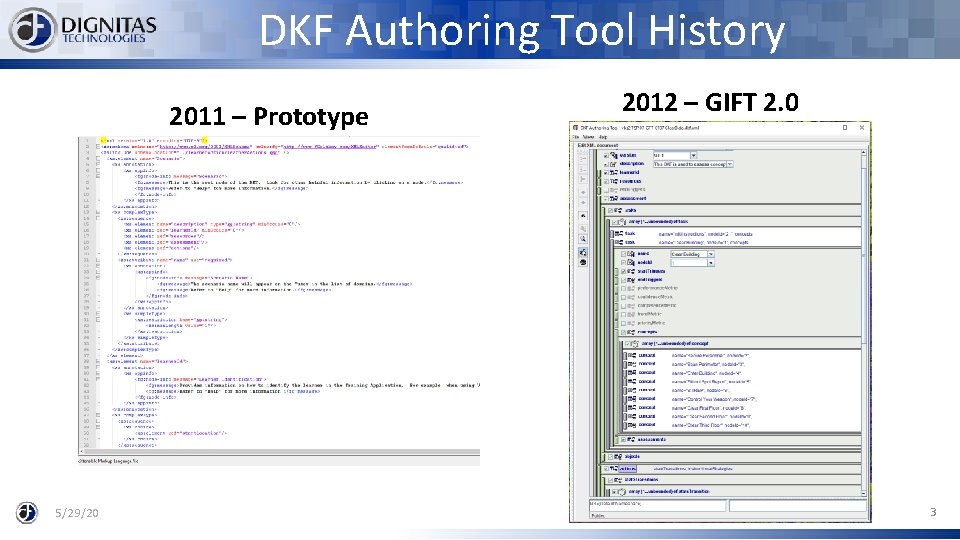
DKF Authoring Tool History 2011 – Prototype 5/29/20 2012 – GIFT 2. 0 3
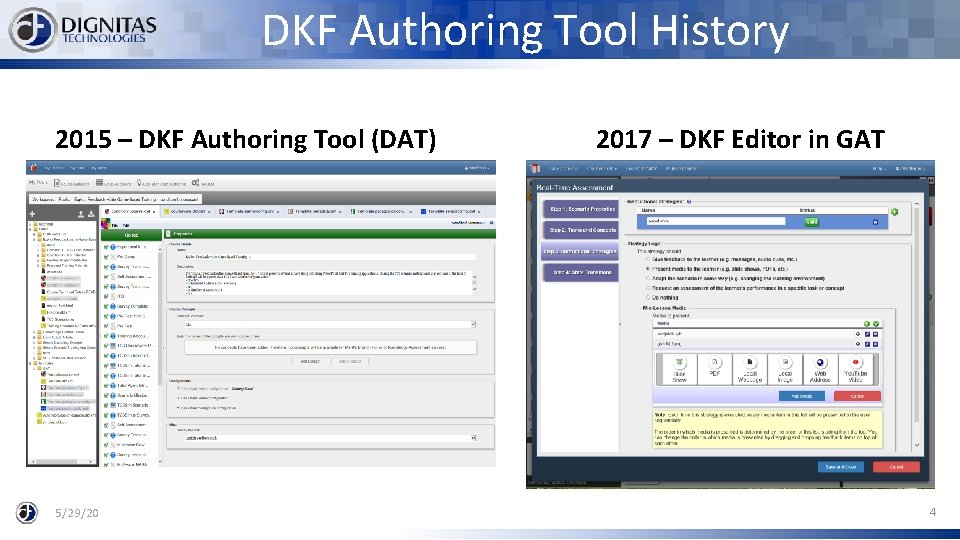
DKF Authoring Tool History 2015 – DKF Authoring Tool (DAT) 5/29/20 2017 – DKF Editor in GAT 4
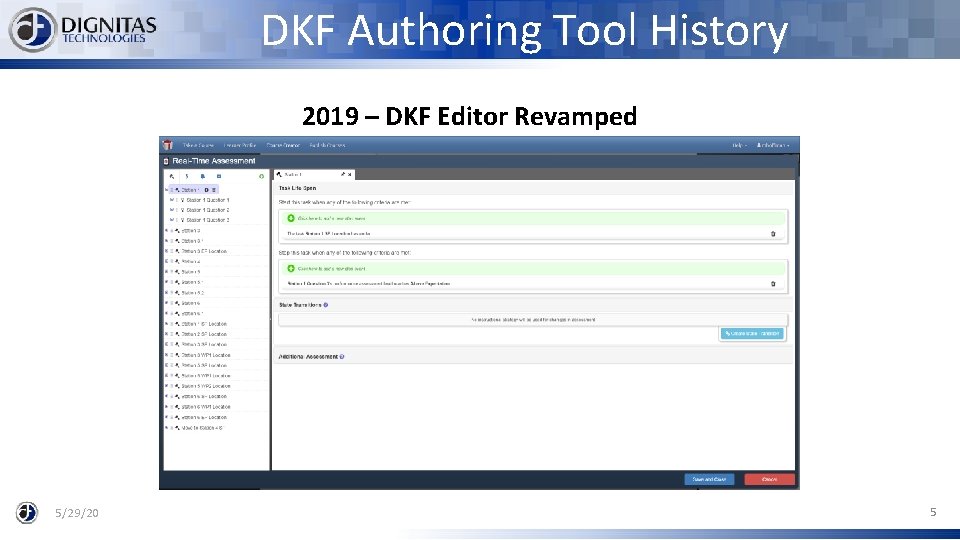
DKF Authoring Tool History 2019 – DKF Editor Revamped 5/29/20 5
Overview • Domain Knowledge File (DKF) – XML file which contains the information needed to execute on a single lesson – Configures the assessment logic for a domain – Authored using the DKF Authoring Tool (DAT) – Training Applications • • Unity VR Forces Mobile Application Virtual Battlespace (VBS) • Documentation provided at https: //gifttutoring. org 5/29/20 6
Authoring Tool Components • • Tasks Strategies State Transitions Assessment Properties 5/01/20 7
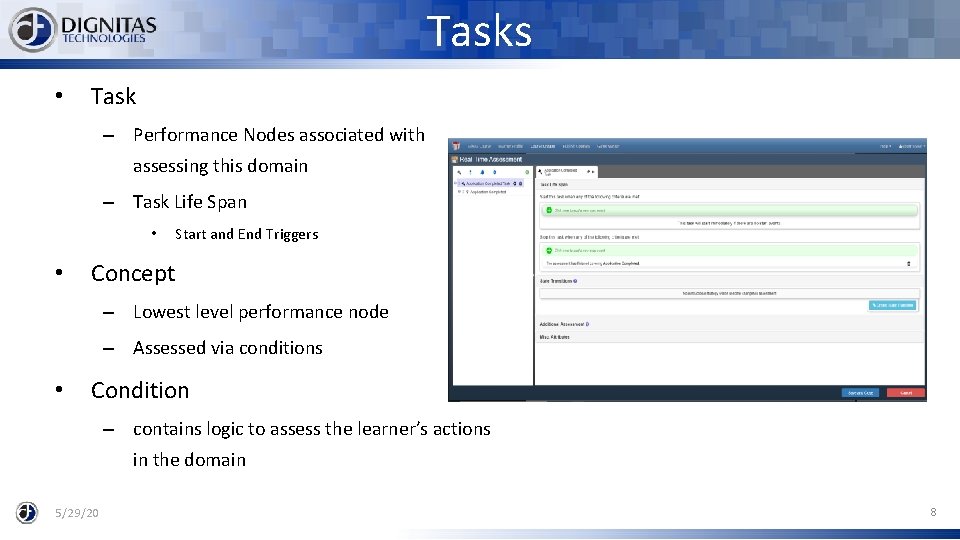
Tasks • Task – Performance Nodes associated with assessing this domain – Task Life Span • • Start and End Triggers Concept – Lowest level performance node – Assessed via conditions • Condition – contains logic to assess the learner’s actions in the domain 5/29/20 8
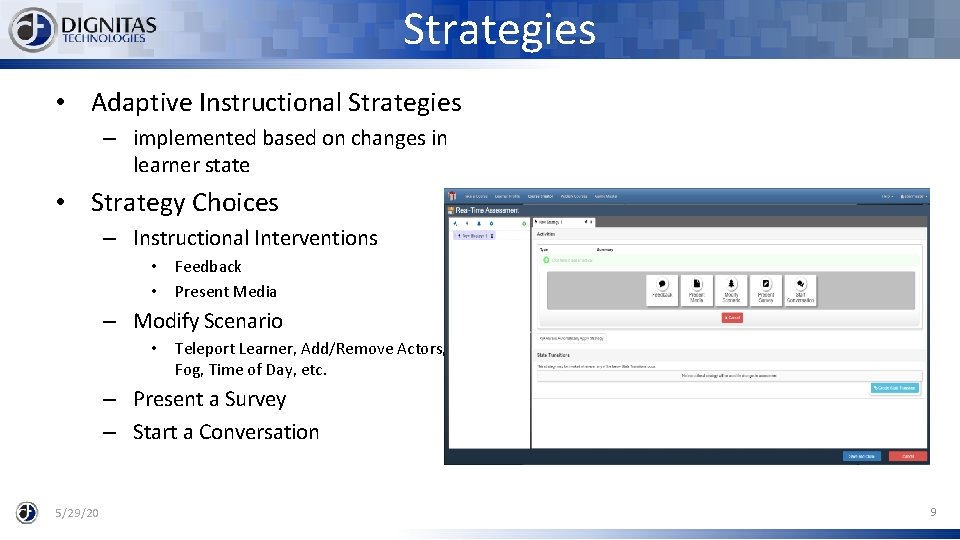
Strategies • Adaptive Instructional Strategies – implemented based on changes in learner state • Strategy Choices – Instructional Interventions • Feedback • Present Media – Modify Scenario • Teleport Learner, Add/Remove Actors, Fog, Time of Day, etc. – Present a Survey – Start a Conversation 5/29/20 9
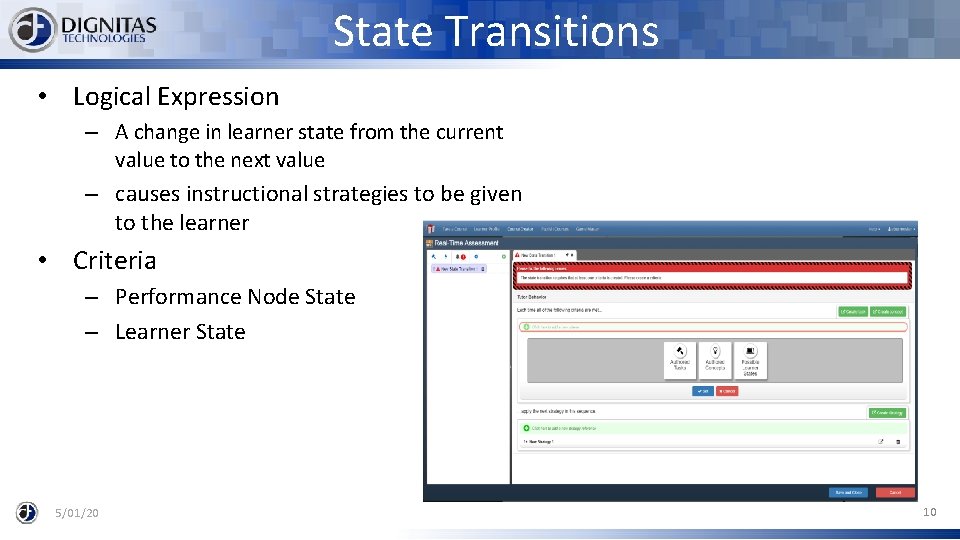
State Transitions • Logical Expression – A change in learner state from the current value to the next value – causes instructional strategies to be given to the learner • Criteria – Performance Node State – Learner State 5/01/20 10
Assessment Properties • End Triggers • Learner Actions • Places of Interest* • Team Organization* • Miscellaneous 5/29/20 11
Before you begin… 1. Task/Concept Outline • • What tasks will the learner(s) be responsible for completing during the training exercise? What concept is being assessed within each task? What is the intended learning outcome/goal for each task? What are thresholds for measuring a learners’ performance for each task? 2. Strategy Handling Considerations • • 5/29/20 What actions taken by the learner would be considered good performance for each task? What actions taken by the learner would be considered bad performance for each task? What instructional intervention would best correct each poor performance? What reinforcements, if any, should be applied when good performance occurs? 12
Demonstration of DKF Authoring in GIFT 5/29/20 13
Questions? 5/29/20 14
- Slides: 14