
Authentication and Authorisation for Research and Collaboration Mechanisms
Authentication and Authorisation for Research and Collaboration Mechanisms of Interfederation Alessandra Scicchitano AARC NA 2 WP Leader, GEANT PDO Taipei - Taiwan 13 th March 2016 https: //aarc-project. eu
Outline • Federated Identity Management • Interfederation • Edu. GAIN • Example of use of edu. GAIN • Conclusions https: //aarc-project. eu 2
Federated Identity Management Federated identity management (FIM) enables identity information to be developed and shared among several entities and across trust domains. Tools and standards permit identity attributes to be transferred from one trusted identifying and authenticating entity to another for authentication, authorization and other purposes. The difference between Single Sign On (SSO) and federated identity is subtle: • SSO unifies access management for disparate systems within an organization. • Federated identity does the same, but across different organizations. https: //aarc-project. eu 3
FIM Components There 3 main parties in Federated Identity Management: • User: Each user is associated with a person. A user is characterized by an identity. A collection of attributes that represent properties about that specific person. • Identity Provider (Id. P): asserts authentication and identity information about the user. • Service Provider (SP): receives and checks the information to grant authorization to the user to access the service. https: //aarc-project. eu 4
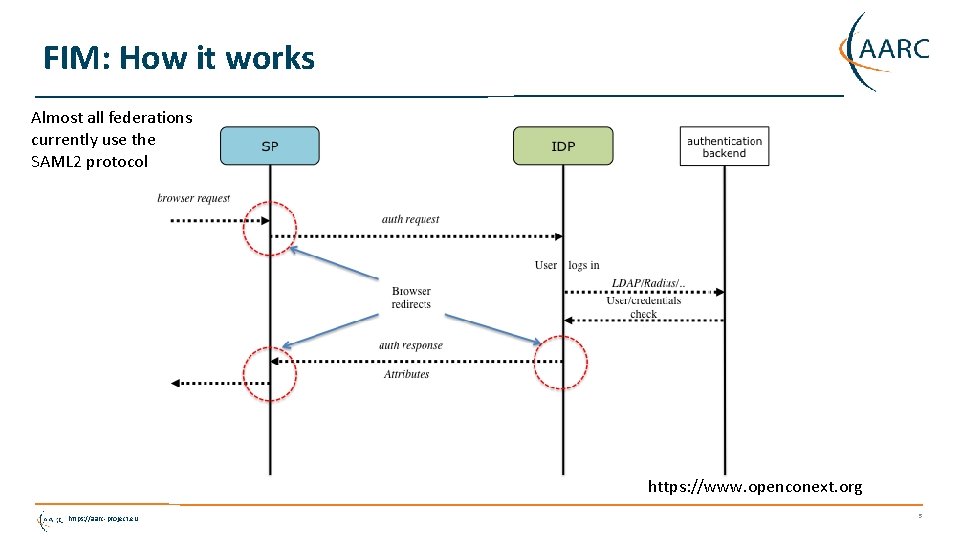
FIM: How it works Almost all federations currently use the SAML 2 protocol https: //www. openconext. org https: //aarc-project. eu 5
Federation Identity Management • SPs and Id. Ps have to trust each other for this approach to work. Typically this trust is made explicit by signing policies and contracts that describe the requirements and responsibilities of the Id. Ps and SPs. An Identity Federation is a collection of Id. Ps and SPs that have agreed to work together and trust each other. • An organization may belong to more than one federation at a time • Id. Ps and SPs "know" nothing about the federations. They deal with metadata. https: //aarc-project. eu 6
Federation Metadata • An XML document that describes every federation entity • Contains • Unique identifier for each entity known as the entity. ID • Endpoints where each entity can be contacted • Certificates used for signing and encrypting data • May contain • Organization and person contact information • Information about which attributes an SP wants/needs • Metadata is usually distributed by a public HTTP URL • The metadata should be digitally signed • Metadata must be kept up to date so that • New entities can work with existing ones • Old, or revoked, entities are blocked Credit to Lukas Hammerle - SWITCH for this slide https: //aarc-project. eu 7
Federation Architectures A federation can be built according to the mesh and/or the hub-andspoke principle: • Mesh federation: each entity is responsible for its connections to other entities. • Hub-and-spoke federation: all entities connect to the hub and the hub manages connections between entities on a central location. https: //aarc-project. eu 8
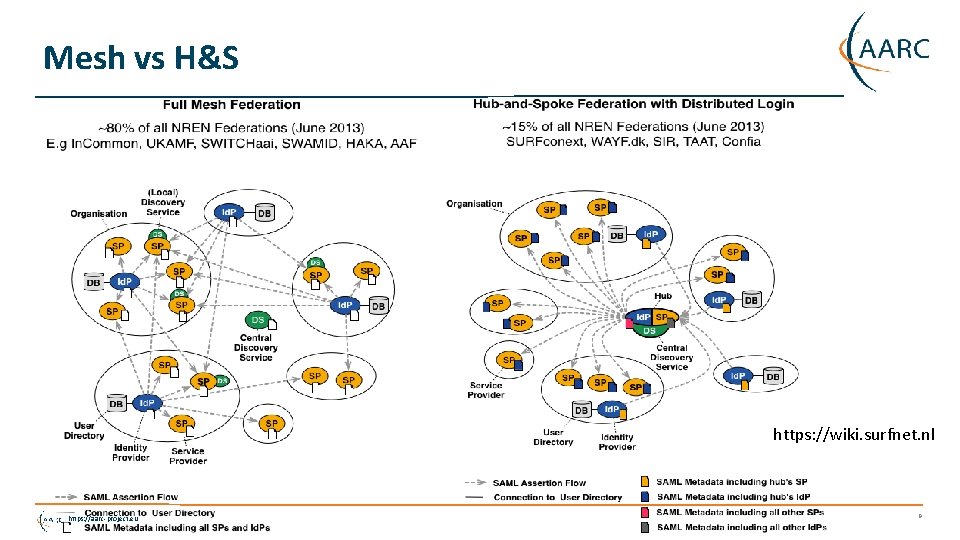
Mesh vs H&S https: //wiki. surfnet. nl https: //aarc-project. eu 9
Interfederation Identity Federations are mostly of national scope but: • research projects are international • content publishers’ customers are international • audience of research wikis and blogs is international Interconnecting national federations → Interfederation • Interfederation service facilitates international research collaboration • Content publishers can offer their services without concluding contracts with each single federation https: //aarc-project. eu 10
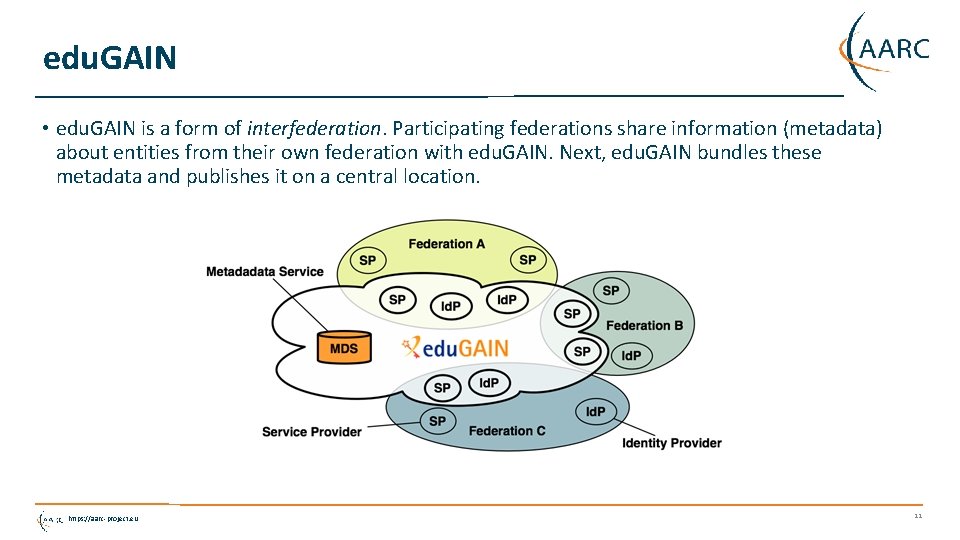
edu. GAIN • edu. GAIN is a form of interfederation. Participating federations share information (metadata) about entities from their own federation with edu. GAIN. Next, edu. GAIN bundles these metadata and publishes it on a central location. https: //aarc-project. eu 11
Some benefits • Enables trustworthy exchange of information between federations without many bilateral agreements • Reduces the costs of developing and operating services • Improves the security and end-user experience of services • Enables service providers to greatly expand their user base • Enables identity providers to increase the number of services available to their users https: //aarc-project. eu 12
Some issues • Federated incident handling: Concerns of major science service providers that if they go the federated route, they need to be notified by Id. P’s of compromised accounts relevant to the service provider. • Attribute release is proving very problematic. • Metadata is increasing in size and complexity. https: //aarc-project. eu 13
Example: TCS Trusted Certificate Service (TCS): • Since July 2015 with a new Supplier: Digicert • And two portals: Cert. Central and the SAML portal • The SAML consumes the edu. GAIN metadata https: //aarc-project. eu 14
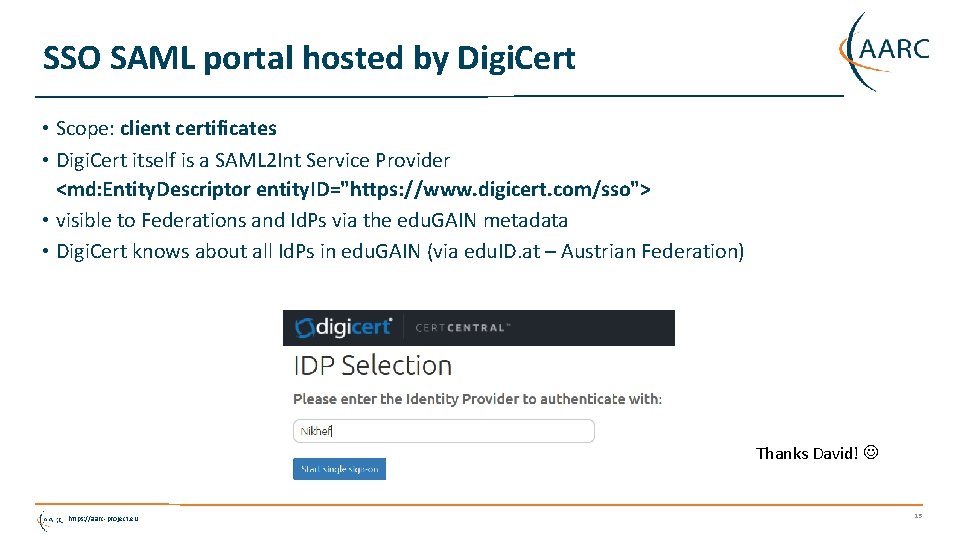
SSO SAML portal hosted by Digi. Cert • Scope: client certificates • Digi. Cert itself is a SAML 2 Int Service Provider <md: Entity. Descriptor entity. ID="https: //www. digicert. com/sso"> • visible to Federations and Id. Ps via the edu. GAIN metadata • Digi. Cert knows about all Id. Ps in edu. GAIN (via edu. ID. at – Austrian Federation) Thanks David! https: //aarc-project. eu 15
Conclusions • FIM makes life easier getting ready of too many usernames and passwords; • It protects user information; • Interfederation enables local federations to talk to each other; • Edu. GAIN is a form of interfederation that is well known and established since years; • There are clear examples of how interfederation enables international collaboration; FIM is cool!! https: //aarc-project. eu 16
Thank you Any Questions? Alessandra. Scicchitano@geant. org https: //aarc-project. eu © GÉANT on behalf of the AARC project. The work leading to these results has received funding from the European Union’s Horizon 2020 research and innovation programme under Grant Agreement No. 653965 (AARC). https: //aarc-project. eu
- Slides: 17