
Authentic assessment of game performance Combined approaches leading
Authentic assessment of game performance: Combined approaches leading to self-assessment Tim Hopper PE 352 1
How do we get students actively involved in their learning? • What does it look like? • How does assessment affect student learning? • What are alternative methods of assessment? 2
Context of example in presentation Aim of physical education is to encourage students to pursue an active lifestyle Specific examples drawn from University performance and analysis classes in tennis (PE 117 and PE 461) 3
In both PE 117 and PE 461 the assessment procedures culminate in a university grade. Consider… • How can these examples be transferred into other contexts? 4
Overview of presentation 1. 2. 3. 4. 5. Four frames of assessment Game performance and the 4 Rs Practical Examples Student responses Why do we assess? 5
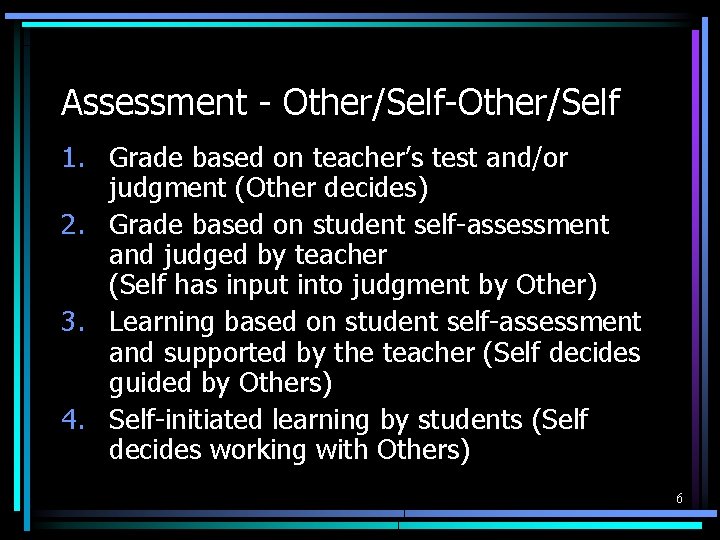
Assessment - Other/Self-Other/Self 1. Grade based on teacher’s test and/or judgment (Other decides) 2. Grade based on student self-assessment and judged by teacher (Self has input into judgment by Other) 3. Learning based on student self-assessment and supported by the teacher (Self decides guided by Others) 4. Self-initiated learning by students (Self decides working with Others) 6
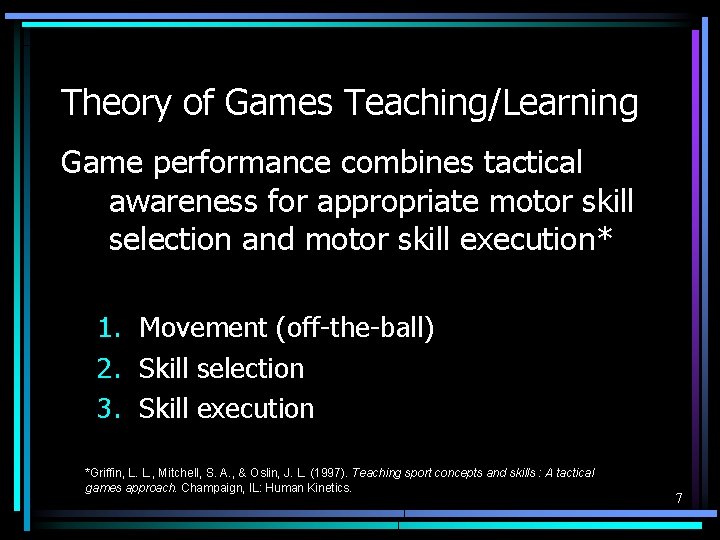
Theory of Games Teaching/Learning Game performance combines tactical awareness for appropriate motor skill selection and motor skill execution* 1. Movement (off-the-ball) 2. Skill selection 3. Skill execution *Griffin, L. L. , Mitchell, S. A. , & Oslin, J. L. (1997). Teaching sport concepts and skills : A tactical games approach. Champaign, IL: Human Kinetics. 7
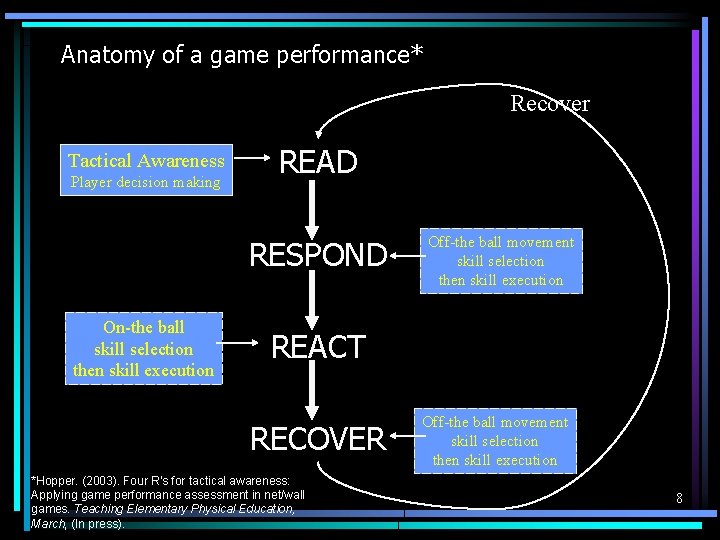
Anatomy of a game performance* Recover Tactical Awareness Player decision making READ RESPOND On-the ball skill selection then skill execution Off-the ball movement skill selection then skill execution REACT RECOVER *Hopper. (2003). Four R's for tactical awareness: Applying game performance assessment in net/wall games. Teaching Elementary Physical Education, March, (In press). Off-the ball movement skill selection then skill execution 8
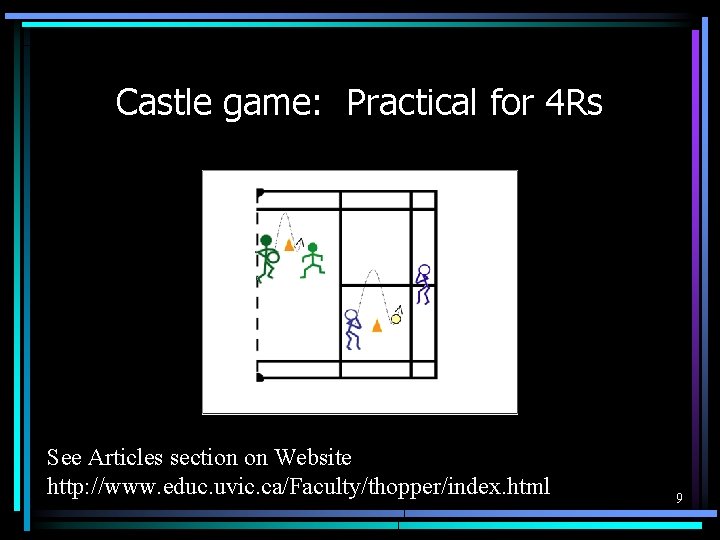
Castle game: Practical for 4 Rs See Articles section on Website http: //www. educ. uvic. ca/Faculty/thopper/index. html 9
“Other” decides (teacher) • Officiating rules exam* (graded) (Closed) • Stroke analysis assignment* (graded) (Structured teacher but Open-ended solution) • Course log* (pass/fail) (Structured teacher but very open solutions) [*http: //www. educ. uvic. ca/Faculty/thopper/Web/PE 117/index. html] 10
Reflection • Teacher knowledge valued • Student focused on finding our what teacher values • Course log started to shift the way content was organized - based on student program (teacher prep, kinesiology, leisure admin. ) the detail and focus varied. 11
“Self” has input into judgment by “Other” (teacher then peers, graded) • Rubric assessment criteria • Drives For more examples link to http: //www. educ. uvic. ca/Faculty/thopper/Web/PE 117/index. html • “Other” as teacher then “Other” as peer 12
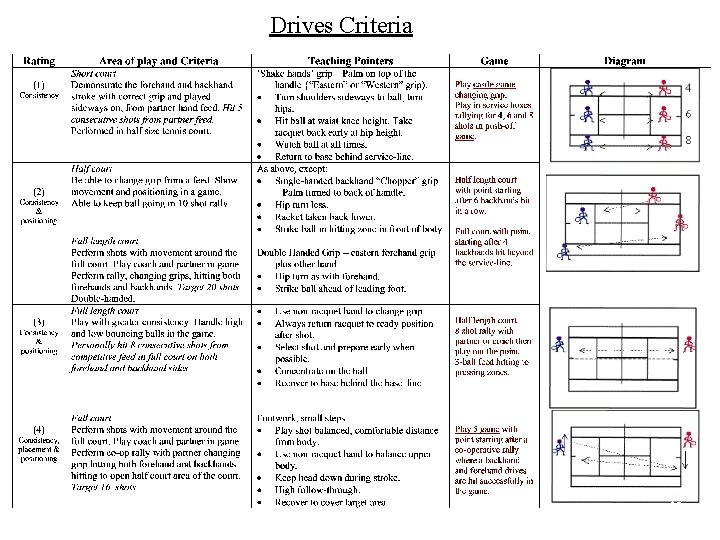
Drives Criteria 13
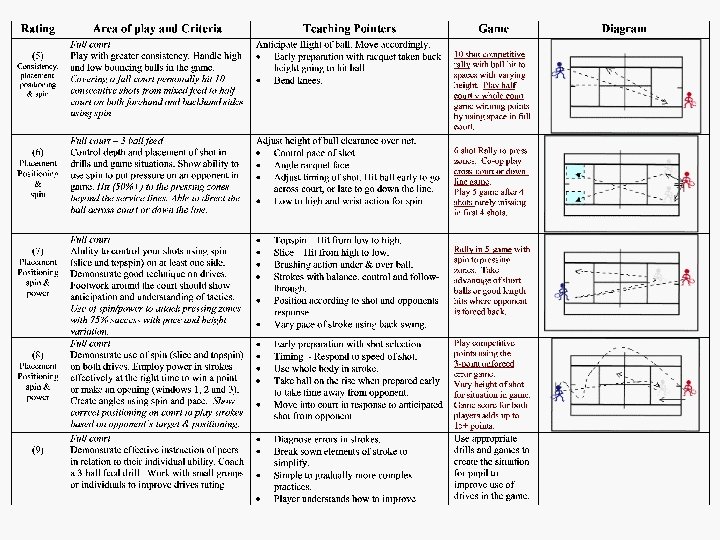
14
Reflection • Criteria set a progression for improvement • The path to success was broken down and encouraged goal setting by students • Students helped each other improve with highest level grade in a skill category achieved for coaching peers up one level. 15
“Self” decides guided by “Others” (peers) • Adapted game performance assessment instrument (GPAI)* - uses criteria based on how you play the game • Modeled Authentic assessment improved student performance in a game • “In-process” assessment based on tactical awareness and skill execution in game play. *Griffin, L. L. , Mitchell, S. A. , & Oslin, J. L. (1997). Teaching sport concepts and skills : A tactical games approach. Champaign, IL: Human Kinetics. 16
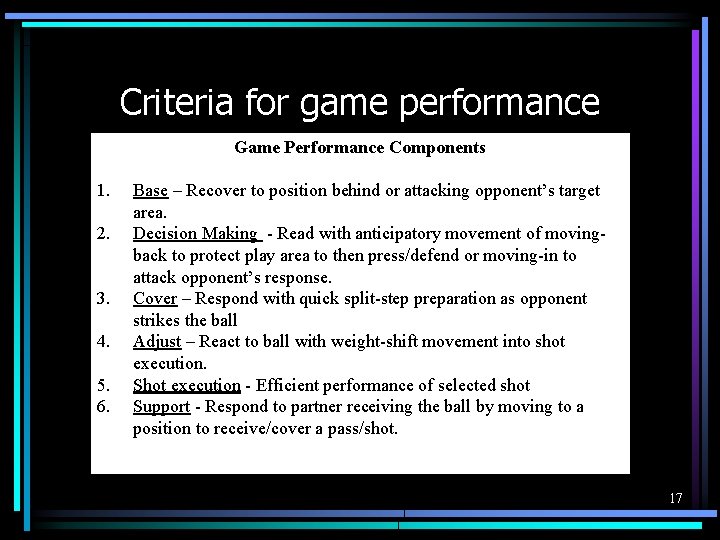
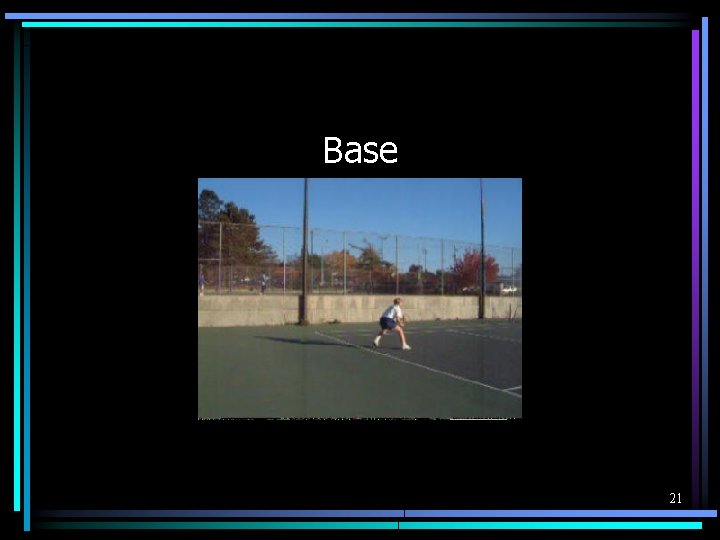
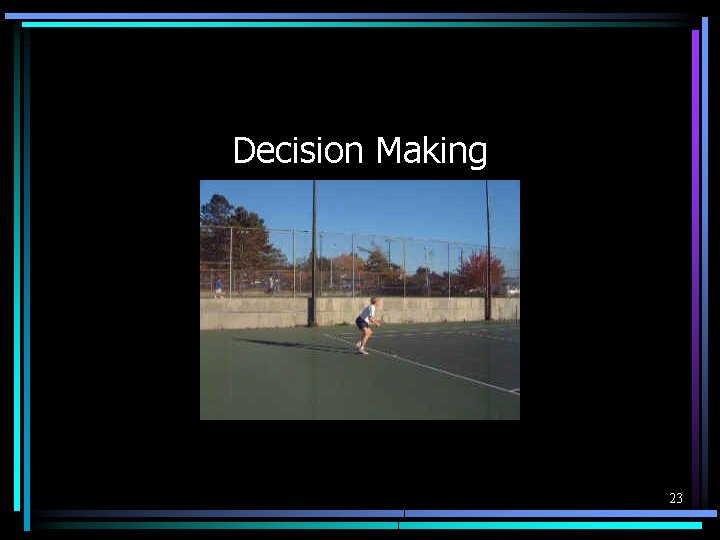
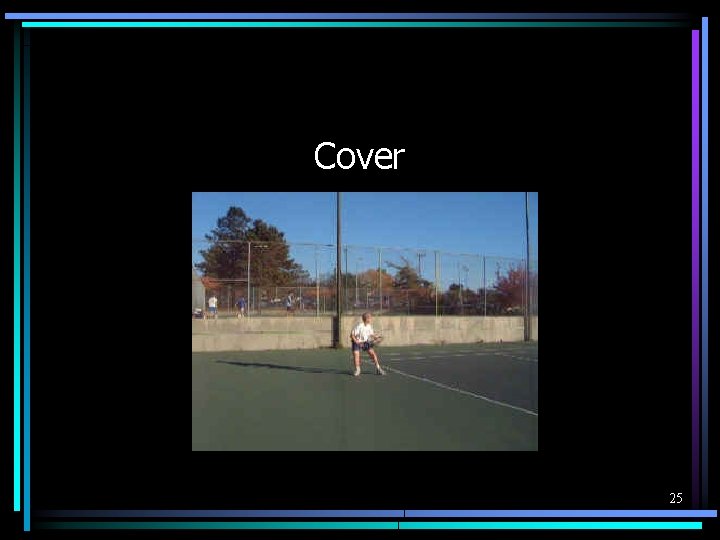
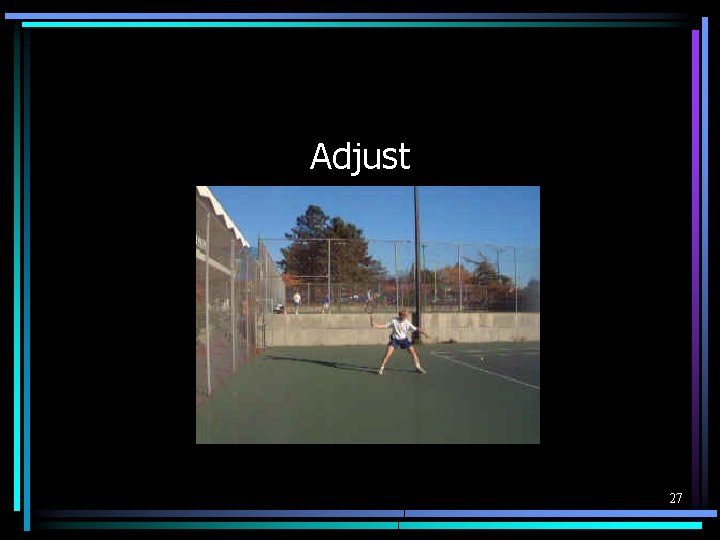
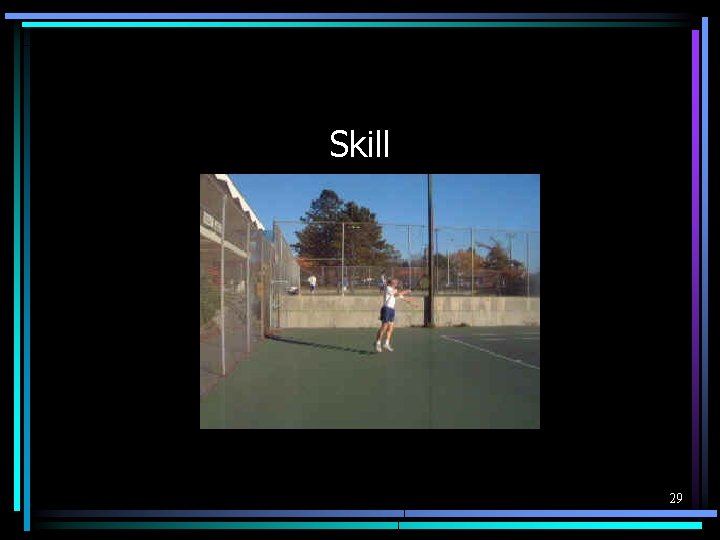
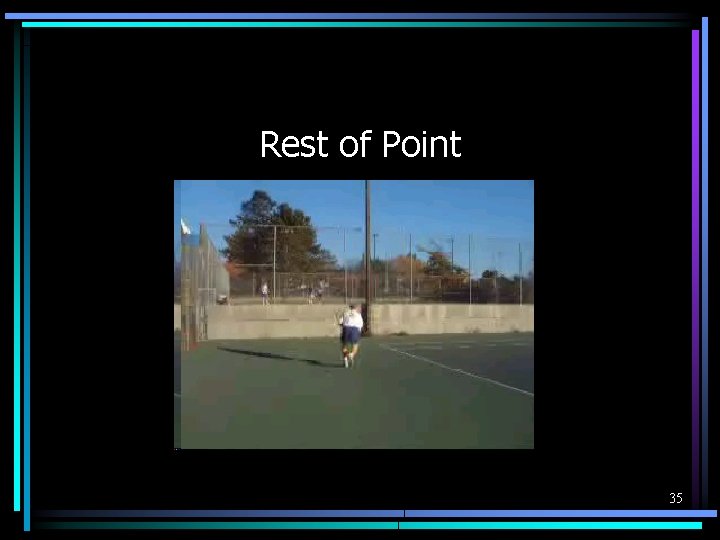
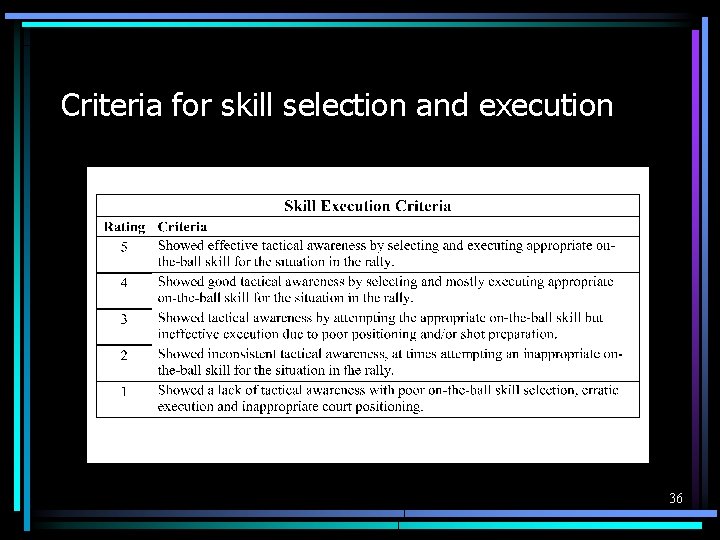
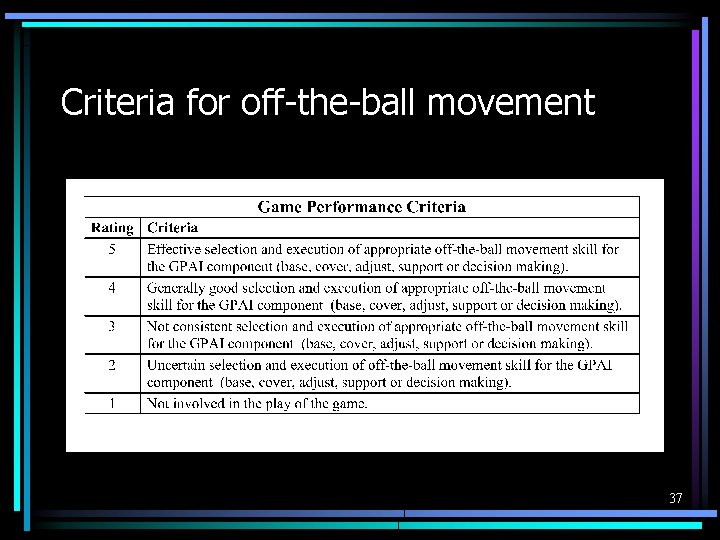
Criteria for game performance Game Performance Components 1. 2. 3. 4. 5. 6. Base – Recover to position behind or attacking opponent’s target area. Decision Making - Read with anticipatory movement of movingback to protect play area to then press/defend or moving-in to attack opponent’s response. Cover – Respond with quick split-step preparation as opponent strikes the ball Adjust – React to ball with weight-shift movement into shot execution. Shot execution - Efficient performance of selected shot Support - Respond to partner receiving the ball by moving to a position to receive/cover a pass/shot. 17
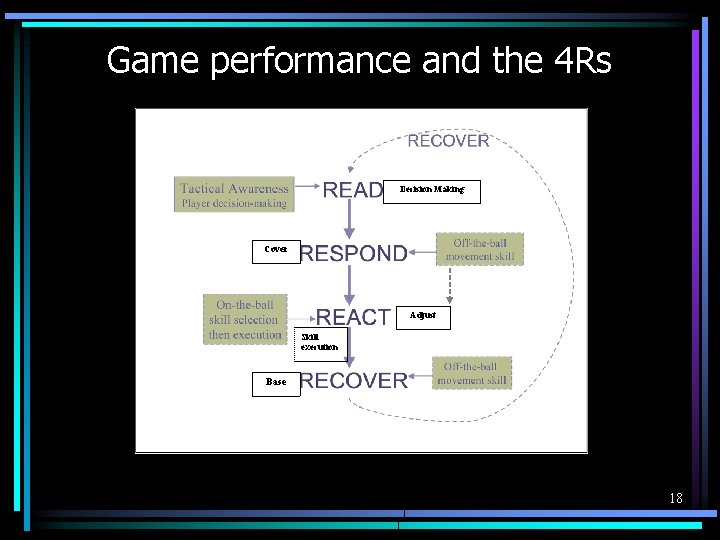
Game performance and the 4 Rs Decision Making Cover Adjust Skill execution Base 18
A Point… 19
Skill 20
Base 21
Base 22
Decision Making 23
Decision Making 24
Cover 25
Cover 26
Adjust 27
Adjust 28
Skill 29
Skill 30
Base 31
Decision Making 32

Cover 33
Adjust 34
Rest of Point 35
Criteria for skill selection and execution 36
Criteria for off-the-ball movement 37
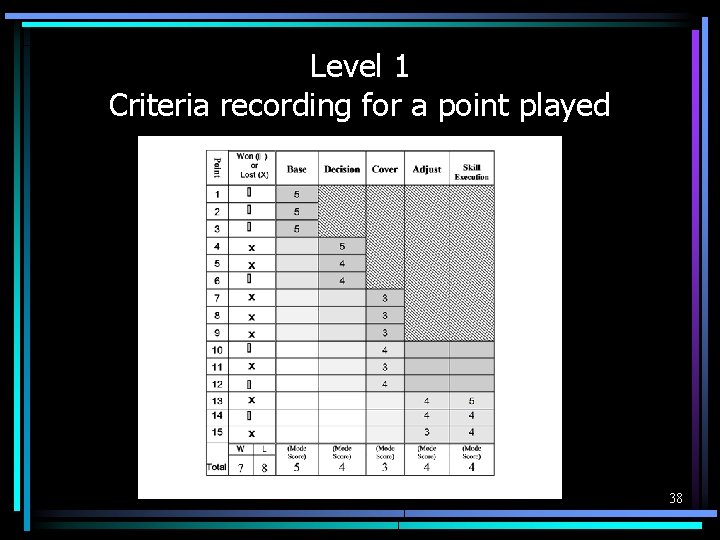
Level 1 Criteria recording for a point played 38
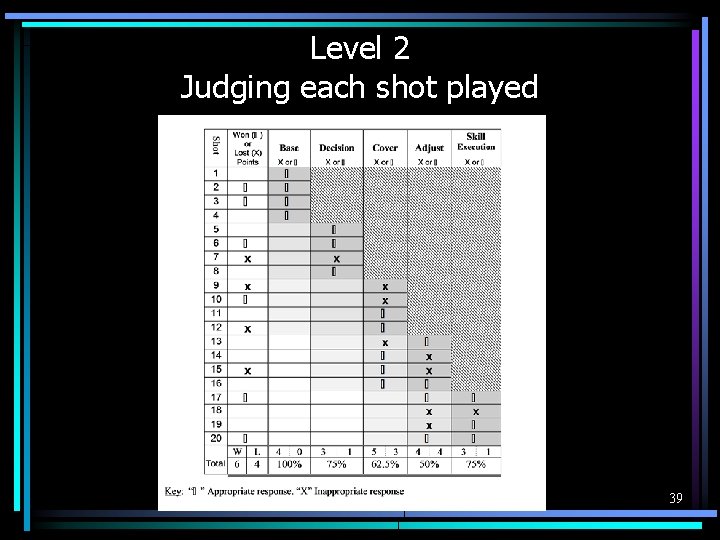
Level 2 Judging each shot played 39
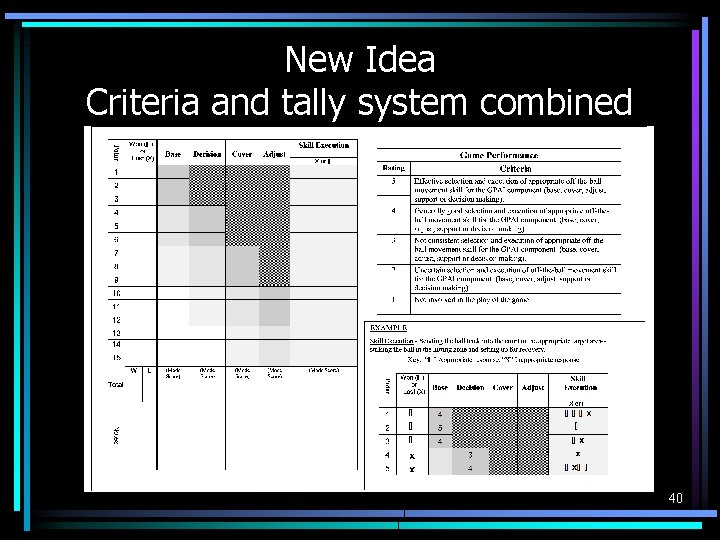
New Idea Criteria and tally system combined 40
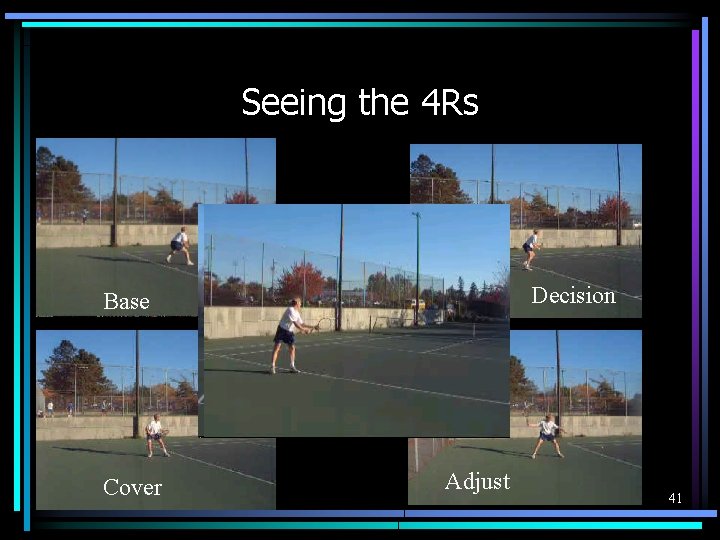
Seeing the 4 Rs Decision Base Cover Adjust 41
Reflection • Students valued each other’s efforts • Students learned to observe game performance as they realized how to READ game play • READing led to the 4 R’s cycle becoming more meaningful and automatic 42
Comments from students • After course grade was completed students were asked to comment on the game performance assessment instrument (GPAI) process. This is what they said… 43
About GPAI assessment process • “It’s a learning environment for both the player and coder, it also prepares you to become a better coach or teacher. ” • “Students realise that they are evaluated not in comparison to others, but rather in terms of individual improvement and not just skill performance. ” 44
Learning about Base • “As a beginner I was unaware of my poor base. As soon as Kevin pointed it out there was an immediate improvement. ” 45
Learning Decisions Making • “Before this class I never read the opponent’s response to my hit; I would just react. By figuring out whether the opponent is hitting forward or on their back foot I can stay at the baseline or move forward. This is making the game a lot easier and I’m winning a lot more points. ” 46
Learning to Cover and Adjust • “Reviewing my GPAI form I was relieved to see that my base and decisionmaking were excellent…my game falls apart in the cover, adjust and skill execution portions. The reason is due to ‘split-stepping’ being a new idea to me. ” 47
Finally - Space for practicing “Self” decides working with “Others” Attendance and participation: Worth 12 marks equal to 12% of course marks. Failure to attend class will result in marks not be earned. Full attendance and participation will result in 10/12 of marks (approximate ½ mark for each class attended). Evidence of practice outside of class will make up the remaining 2/12 of marks for participation (approximate ½ mark for each practice session). Additional practice outside of class will be considered as make up for any absences from class. Students are required to register class attendance and practices before the class begins (RECORD OF PARTICIPATION). 48
Reflection • Participation assessment valued and made it an expectation that students practiced outside of class • Students felt they were treated like an adult - “make up if miss class. ” • Students saw it as a win/win situation - if they practiced it was acknowledged and would lead to better practical performance • Recreational habit forming - Class of 24 (2001) only 2 practiced less than 4 times outside class with 8 practicing more than 8 times. • Problem to find time with work commitments and course workload 49
Conclusion Progressive assessment techniques that shift responsibility from teacher to students. The GPAI values and diagnoses tactical play, it helps students read game play cues which in turn helps them enjoy playing more. Reading creates a reason for skill practice. In my experience students become more focused on improving skills when they can play a game, can appreciate the play of a game. I suggest that the combination of assessment tasks moved students towards becoming self-initiated learners of tennis. 50
Why do we assess? • Help students to learn • Not discourage students from trying • Recognize how student improving Combined Assessment methods • Teacher to students assessment approaches led students of all ability levels to self-assess and take responsibility for their own development 51
Discussion Can this example be transferred to other activities? 52
- Slides: 52