
Australian plasmafusion research The and effect of core
- Slides: 45
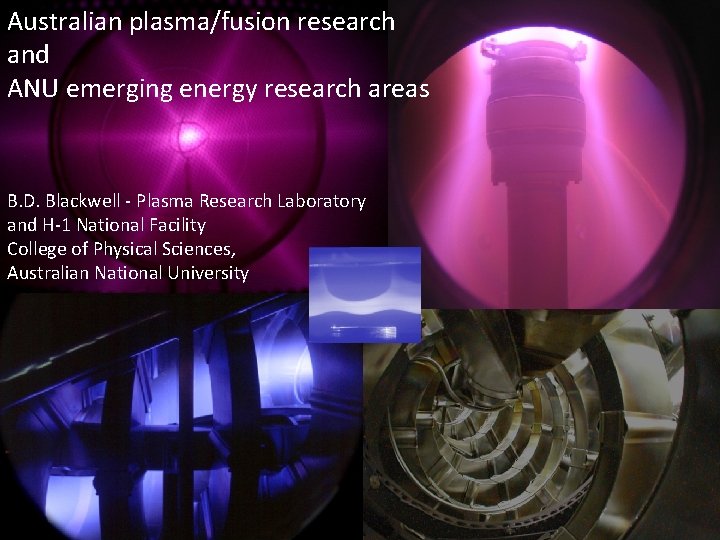
Australian plasma/fusion research The and effect of core magnetic ANU emerging energy research areas on H-1 plasma B. D. Blackwell - Plasma Research Laboratory and H-1 National Facility College of Physical Sciences, Australian National University islands
Outline • Plasma/fusion research in Australia Brief history Main Themes Examples IEC, Dust in Fusion Plasma, Atomic Cross-sections, Theory, Materials, Diagnostics, Collaborations, H-1 NF Future – Energy Politics, the Australian ITER Forum • The Australian National University Emerging Energy Initiative (Fusion Research) Solar – High/Low Temp Thermal, PV, Sliver Cells Bio and Chemical Energy Fuel Cell – Plasma nano fabrication Artificial Photosynthesis/Bio Solar
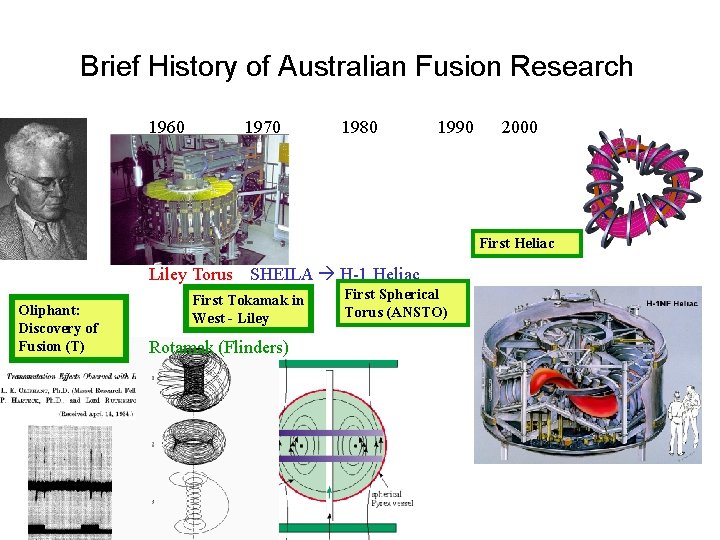
Brief History of Australian Fusion Research 1960 1970 1980 1990 2000 First Heliac Liley Torus SHEILA H-1 Heliac Oliphant: Discovery of Fusion (T) First Tokamak in West - Liley Rotamak (Flinders) First Spherical Torus (ANSTO)
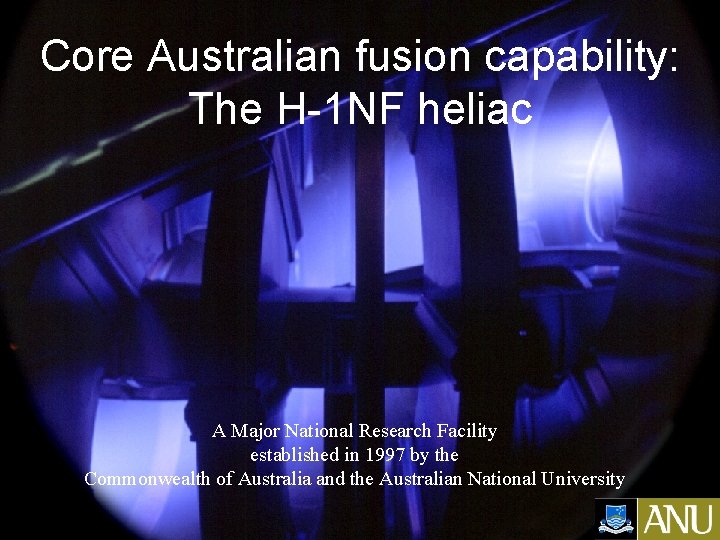
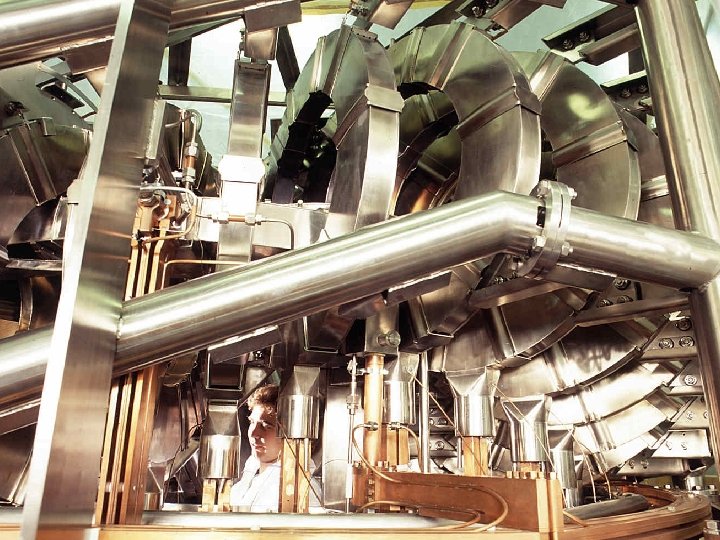
Core Australian fusion capability: The H-1 NF heliac A Major National Research Facility established in 1997 by the Commonwealth of Australia and the Australian National University
H-1 NF Photo
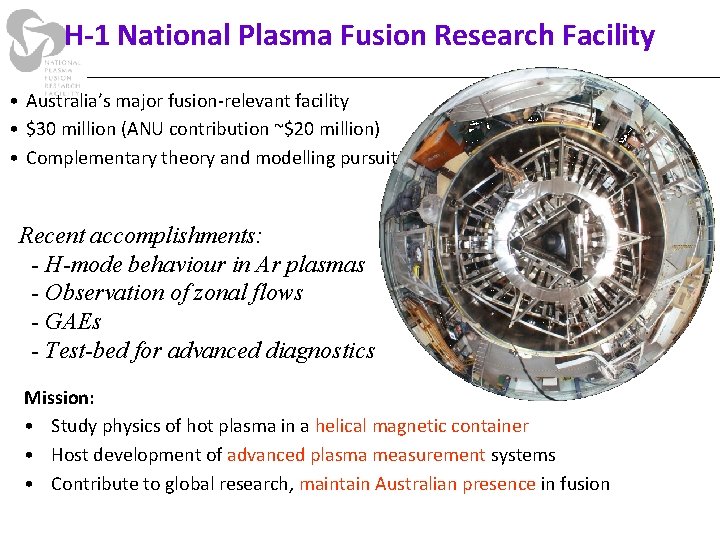
H-1 National Plasma Fusion Research Facility • Australia’s major fusion-relevant facility • $30 million (ANU contribution ~$20 million) • Complementary theory and modelling pursuit Recent accomplishments: - H-mode behaviour in Ar plasmas - Observation of zonal flows - GAEs - Test-bed for advanced diagnostics Mission: • Study physics of hot plasma in a helical magnetic container • Host development of advanced plasma measurement systems • Contribute to global research, maintain Australian presence in fusion
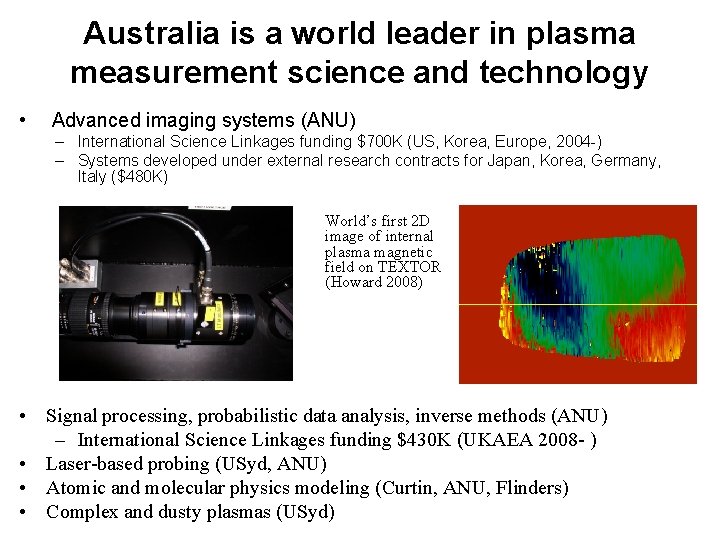
Australia is a world leader in plasma measurement science and technology • Advanced imaging systems (ANU) – International Science Linkages funding $700 K (US, Korea, Europe, 2004 -) – Systems developed under external research contracts for Japan, Korea, Germany, Italy ($480 K) World’s first 2 D image of internal plasma magnetic field on TEXTOR (Howard 2008) • Signal processing, probabilistic data analysis, inverse methods (ANU) – International Science Linkages funding $430 K (UKAEA 2008 - ) • Laser-based probing (USyd, ANU) • Atomic and molecular physics modeling (Curtin, ANU, Flinders) • Complex and dusty plasmas (USyd)
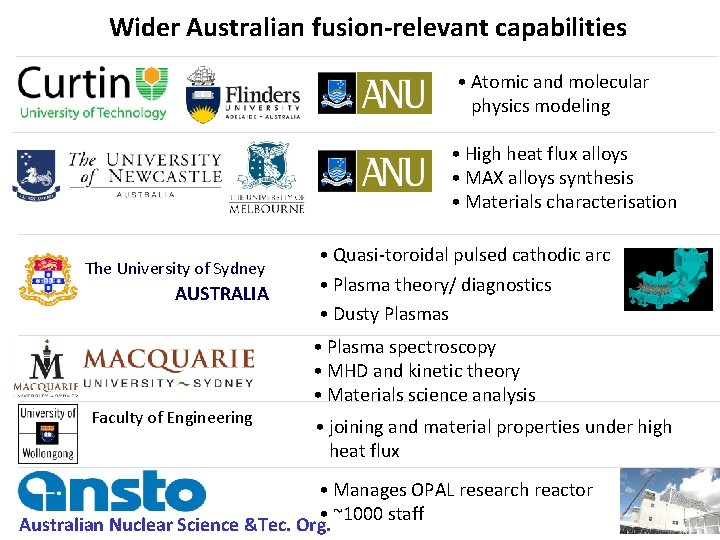
Wider Australian fusion-relevant capabilities • Atomic and molecular physics modeling • High heat flux alloys • MAX alloys synthesis • Materials characterisation The University of Sydney AUSTRALIA Faculty of Engineering • Quasi-toroidal pulsed cathodic arc • Plasma theory/ diagnostics • Dusty Plasmas • Plasma spectroscopy • MHD and kinetic theory • Materials science analysis • joining and material properties under high heat flux • Manages OPAL research reactor • ~1000 staff Australian Nuclear Science &Tec. Org.
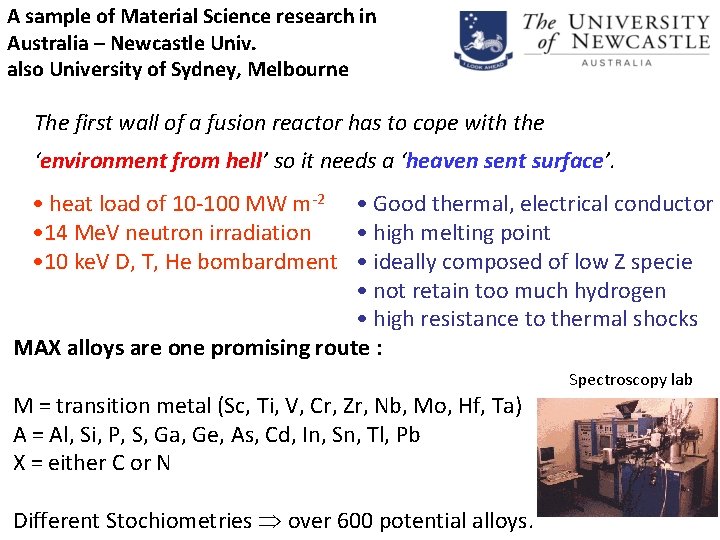
A sample of Material Science research in Australia – Newcastle Univ. also University of Sydney, Melbourne The first wall of a fusion reactor has to cope with the ‘environment from hell’ so it needs a ‘heaven sent surface’. • heat load of 10 -100 MW m-2 • Good thermal, electrical conductor • 14 Me. V neutron irradiation • high melting point • 10 ke. V D, T, He bombardment • ideally composed of low Z specie • not retain too much hydrogen • high resistance to thermal shocks MAX alloys are one promising route : M = transition metal (Sc, Ti, V, Cr, Zr, Nb, Mo, Hf, Ta) A = Al, Si, P, S, Ga, Ge, As, Cd, In, Sn, Tl, Pb X = either C or N Different Stochiometries over 600 potential alloys. Spectroscopy lab
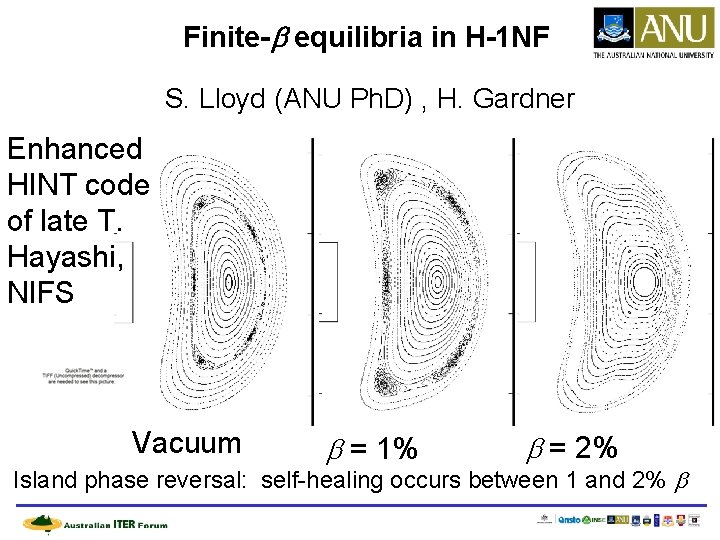
Finite-b equilibria in H-1 NF S. Lloyd (ANU Ph. D) , H. Gardner Enhanced HINT code of late T. Hayashi, NIFS Vacuum b = 1% b = 2% Island phase reversal: self-healing occurs between 1 and 2% b
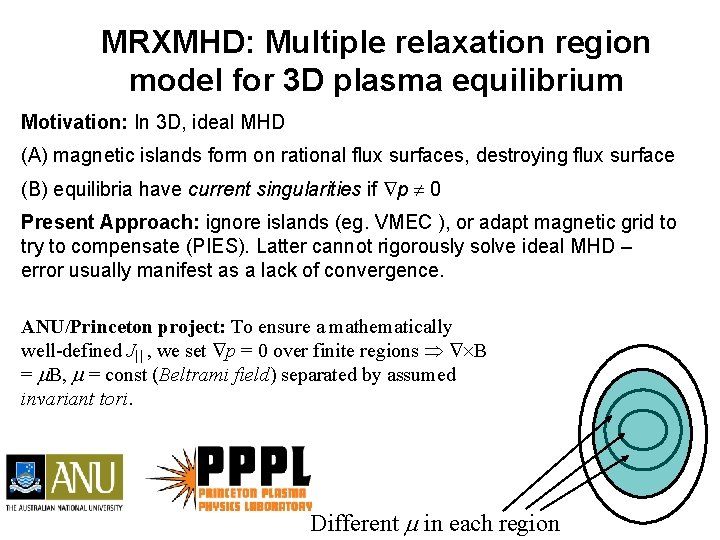
MRXMHD: Multiple relaxation region model for 3 D plasma equilibrium Motivation: In 3 D, ideal MHD (A) magnetic islands form on rational flux surfaces, destroying flux surface (B) equilibria have current singularities if p 0 Present Approach: ignore islands (eg. VMEC ), or adapt magnetic grid to try to compensate (PIES). Latter cannot rigorously solve ideal MHD – error usually manifest as a lack of convergence. ANU/Princeton project: To ensure a mathematically well-defined J , we set p = 0 over finite regions B = B, = const (Beltrami field) separated by assumed invariant tori. Different in each region
Prof. I. Bray: Curtin University Presentation to IAEA 2009
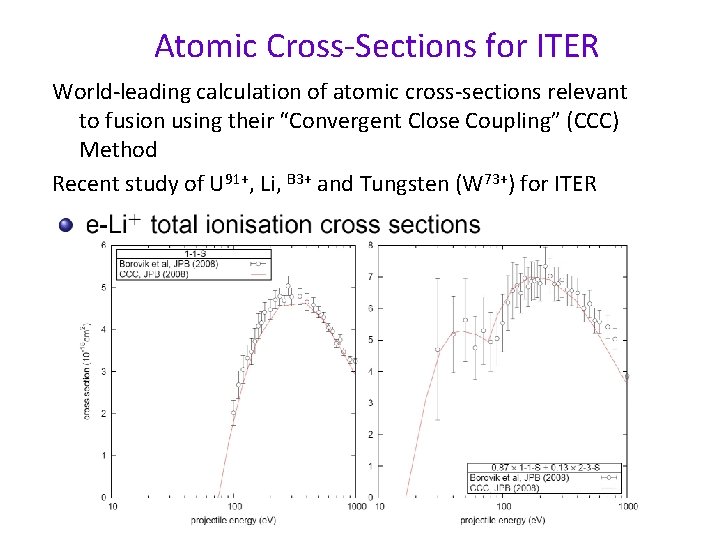
Atomic Cross-Sections for ITER World-leading calculation of atomic cross-sections relevant to fusion using their “Convergent Close Coupling” (CCC) Method Recent study of U 91+, Li, B 3+ and Tungsten (W 73+) for ITER
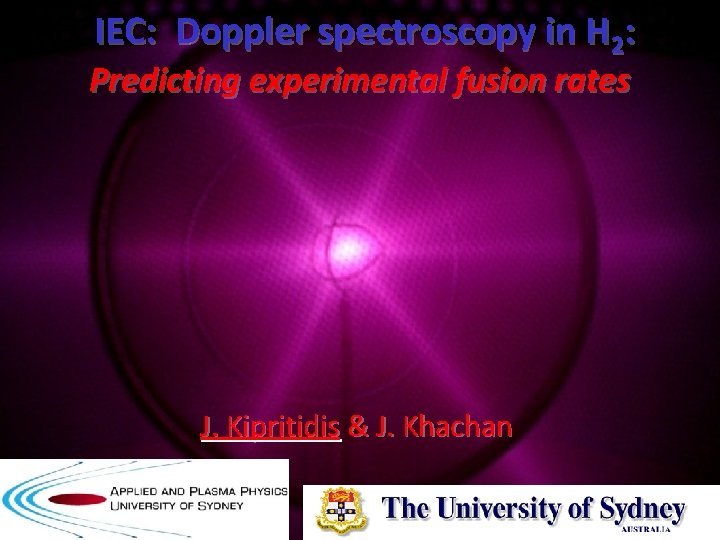
IEC: Doppler spectroscopy in H 2: Predicting experimental fusion rates J. Kipritidis & J. Khachan 14
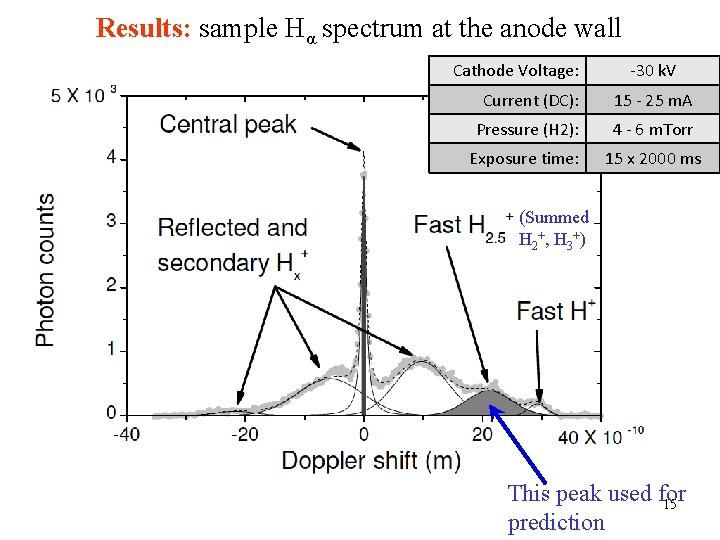
Results: sample Hα spectrum at the anode wall Cathode Voltage: -30 k. V Current (DC): 15 - 25 m. A Pressure (H 2): 4 - 6 m. Torr Exposure time: 15 x 2000 ms (Summed H 2 + , H 3 + ) This peak used for 15 prediction
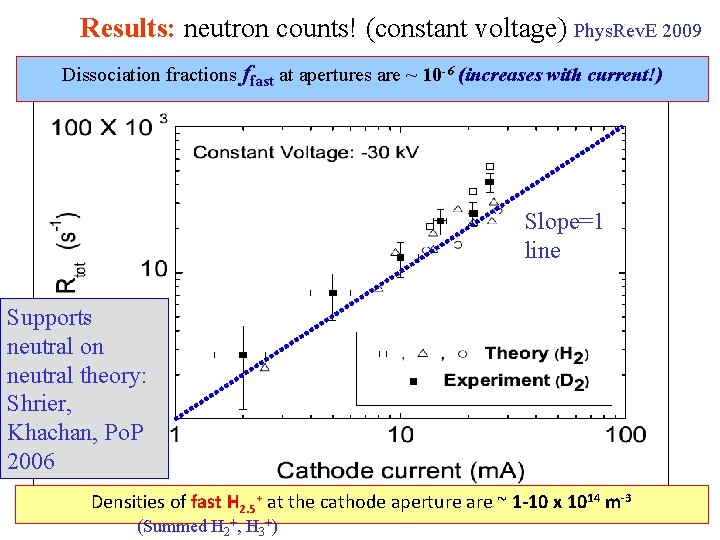
Results: neutron counts! (constant voltage) Phys. Rev. E 2009 Dissociation fractions ffast at apertures are ~ 10 -6 (increases with current!) Slope=1 line Supports neutral on neutral theory: Shrier, Khachan, Po. P 2006 Densities of fast H 2. 5+ at the cathode aperture are ~ 1 -10 x 1014 m-3 (Summed H 2+, H 3+) 16
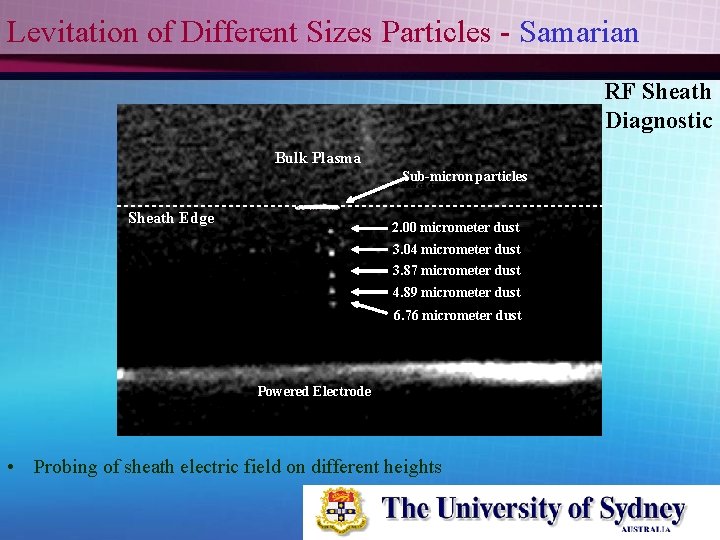
Levitation of Different Sizes Particles - Samarian RF Sheath Diagnostic Bulk Plasma Sub-micron particles Sub-micron dust cloud Sheath Edge 2. 00 micrometer dust 3. 04 micrometer dust 3. 87 micrometer dust 4. 89 micrometer dust Levitation Height 6. 76 micrometer dust Powered Electrode • Probing of sheath electric field on different heights
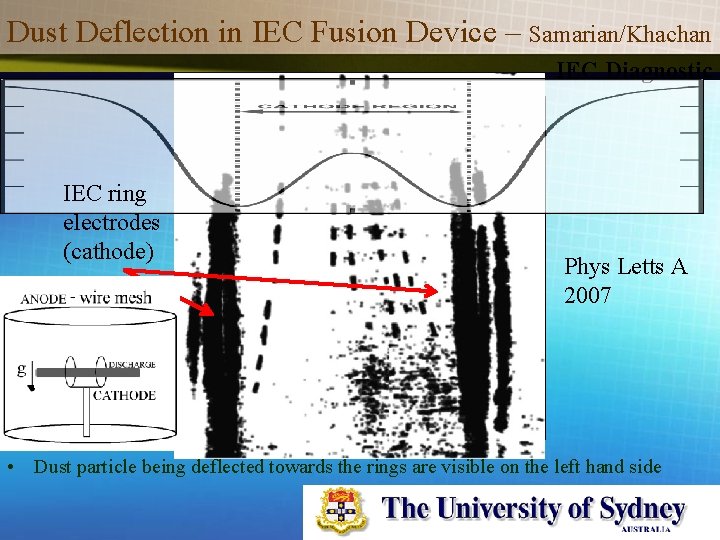
Dust Deflection in IEC Fusion Device – Samarian/Khachan IEC Diagnostic IEC ring electrodes (cathode) Phys Letts A 2007 • Dust particle being deflected towards the rings are visible on the left hand side
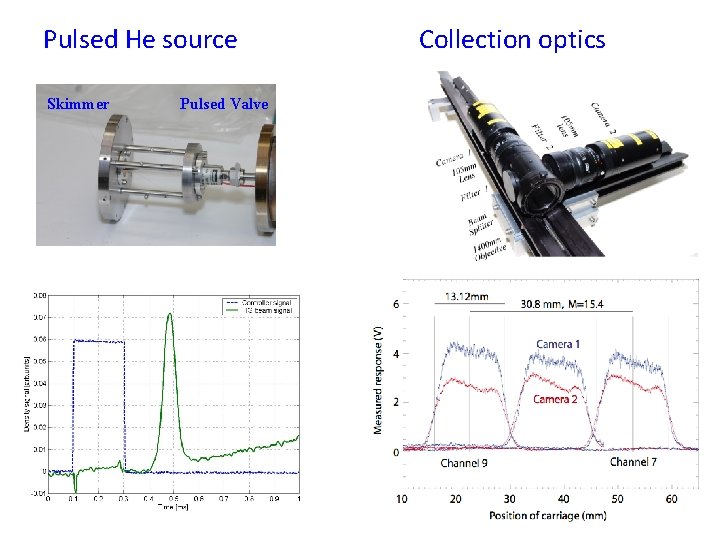
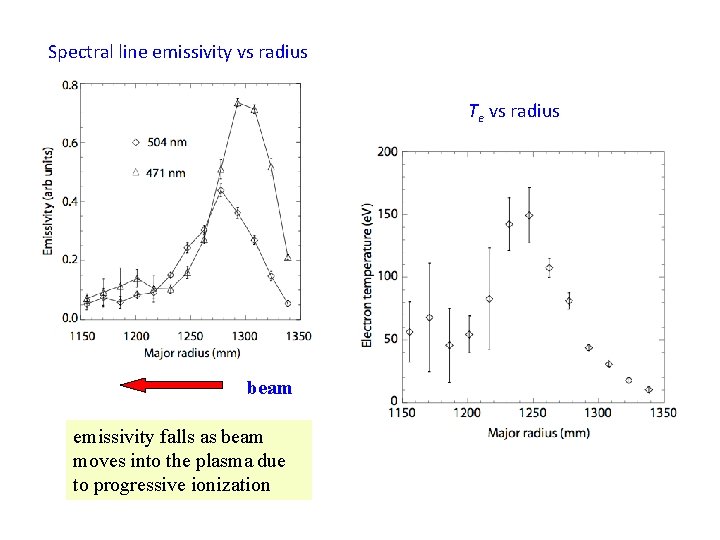
ANU - University of Sydney collaboration Brian James Daniel Andruczyk John Howard Scott Collis Robert Dall • Development of a He pulsed diagnostics beam • Te profiles measured in H-1 NF, from He line intensity ratios, with aid of collisional radiative model
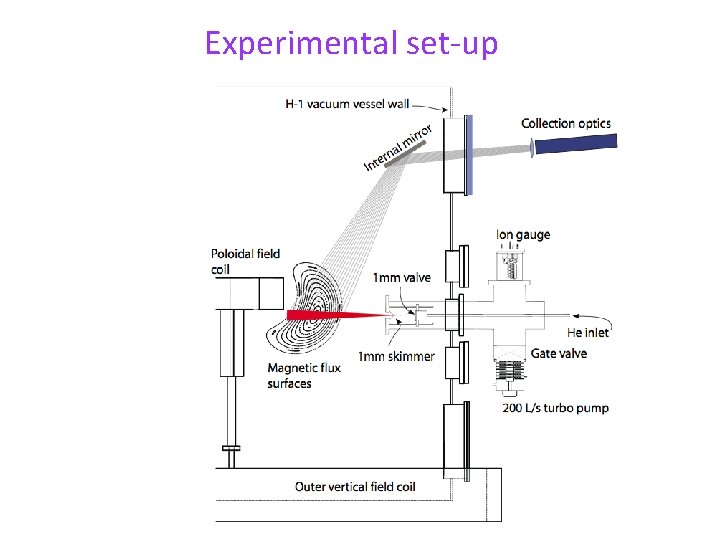
Experimental set-up
Pulsed He source Skimmer Pulsed Valve Collection optics
Spectral line emissivity vs radius Te vs radius beam emissivity falls as beam moves into the plasma due to progressive ionization
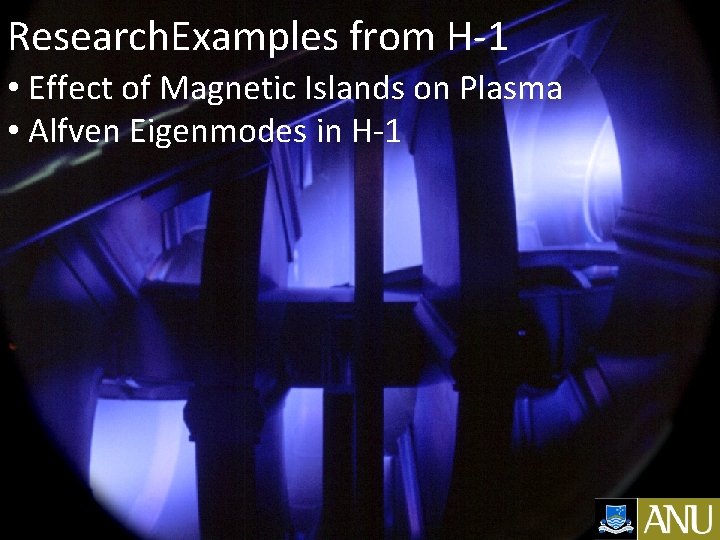
Research. Examples from H-1 • Effect of Magnetic Islands on Plasma • Alfven Eigenmodes in H-1
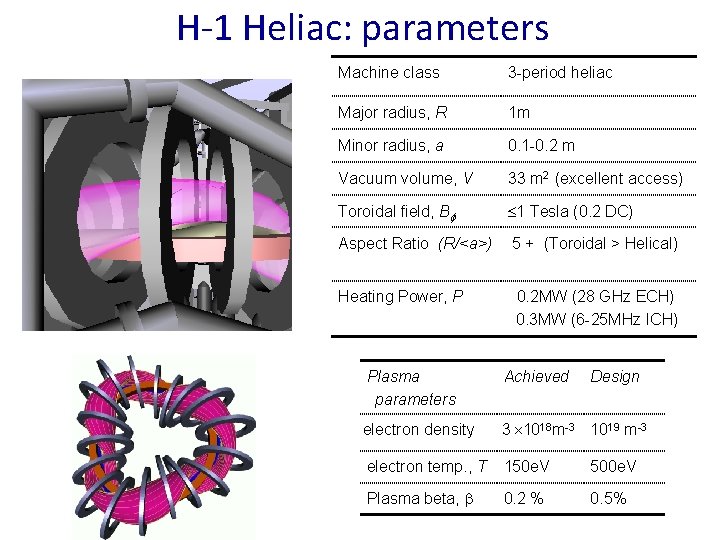
H-1 Heliac: parameters Machine class 3 -period heliac Major radius, R 1 m Minor radius, a 0. 1 -0. 2 m Vacuum volume, V 33 m 2 (excellent access) Toroidal field, B 1 Tesla (0. 2 DC) Aspect Ratio (R/<a>) 5 + (Toroidal > Helical) Heating Power, P 0. 2 MW (28 GHz ECH) 0. 3 MW (6 -25 MHz ICH) Plasma parameters Achieved Design electron density 3 1018 m-3 1019 m-3 electron temp. , T 150 e. V 500 e. V Plasma beta, 0. 2 % 0. 5%
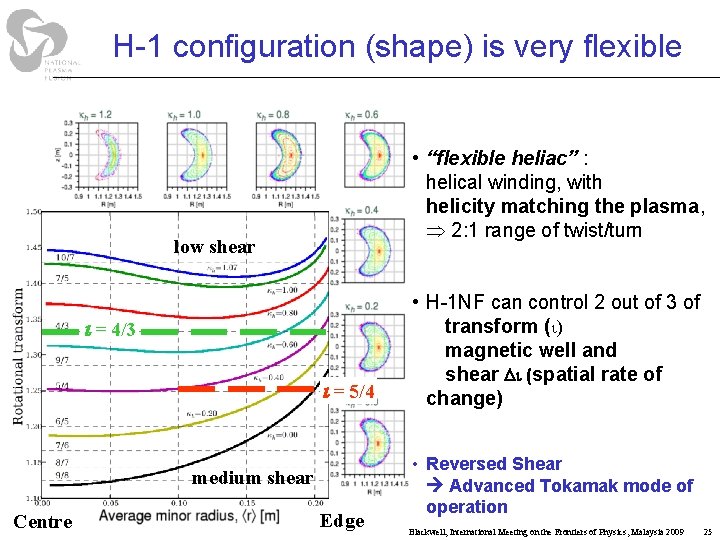
H-1 configuration (shape) is very flexible • “flexible heliac” : helical winding, with helicity matching the plasma, 2: 1 range of twist/turn low shear = 4/3 = 5/4 medium shear Centre Edge • H-1 NF can control 2 out of 3 of transform ( ) magnetic well and shear (spatial rate of change) • Reversed Shear Advanced Tokamak mode of operation Blackwell, International Meeting on the Frontiers of Physics, Malaysia 2009 25
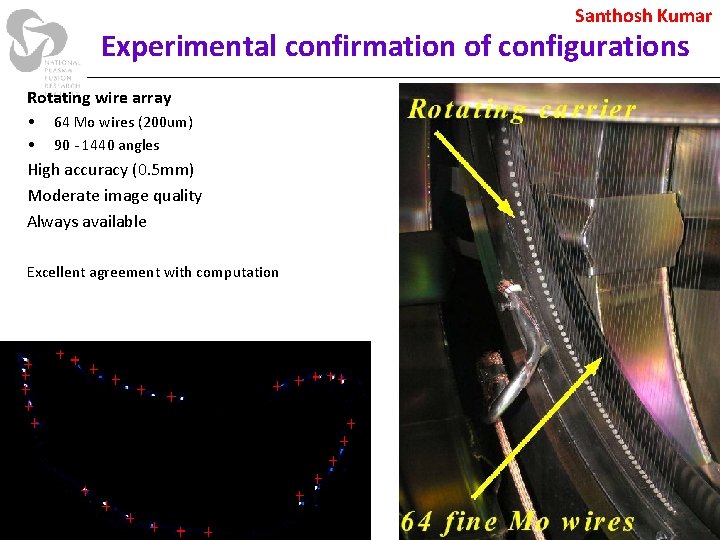
Santhosh Kumar Experimental confirmation of configurations Rotating wire array • • 64 Mo wires (200 um) 90 - 1440 angles High accuracy (0. 5 mm) Moderate image quality Always available Excellent agreement with computation Blackwell, ISHW/Toki Conference 10/2007
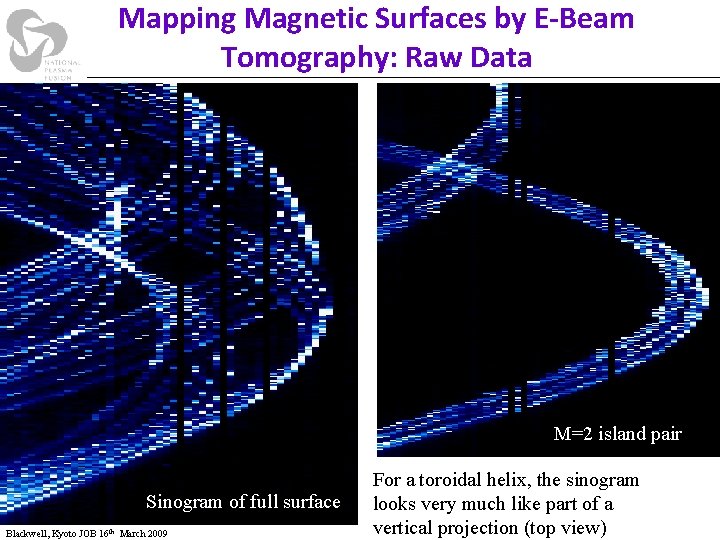
Mapping Magnetic Surfaces by E-Beam Tomography: Raw Data M=2 island pair Sinogram of full surface Blackwell, Kyoto JOB 16 th March 2009 For a toroidal helix, the sinogram looks very much like part of a vertical projection (top view)
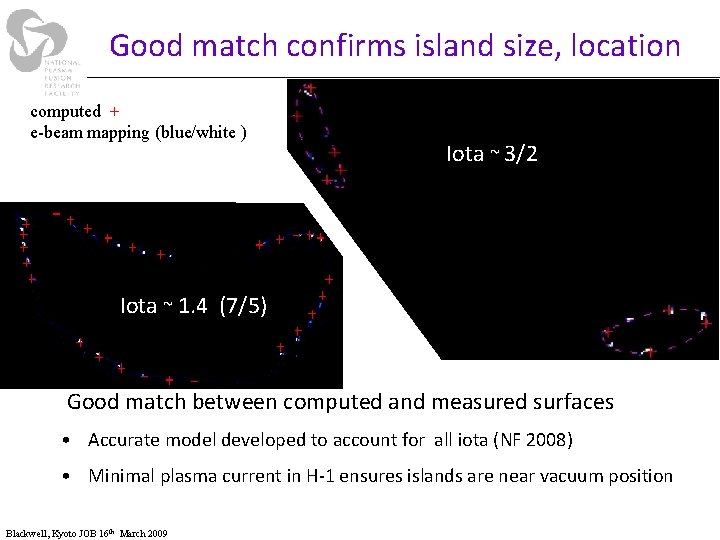
Good match confirms island size, location computed + e-beam mapping (blue/white ) Iota ~ 3/2 Iota ~ 1. 4 (7/5) Good match between computed and measured surfaces • Accurate model developed to account for all iota (NF 2008) • Minimal plasma current in H-1 ensures islands are near vacuum position Blackwell, Kyoto JOB 16 th March 2009
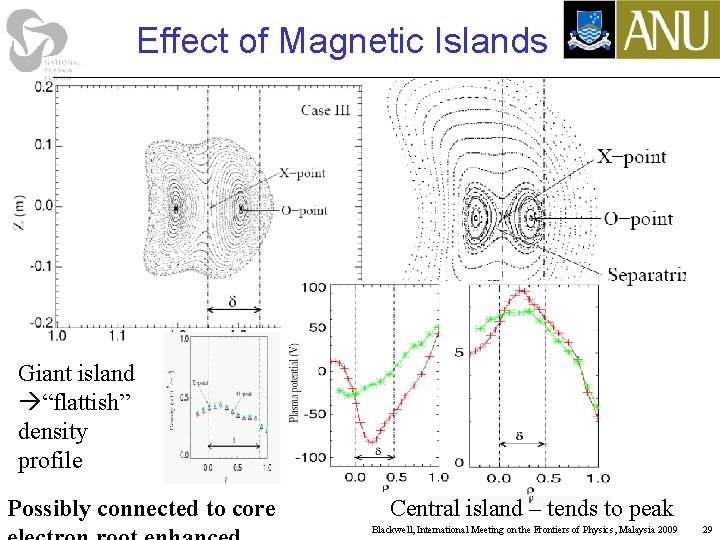
Effect of Magnetic Islands Giant island “flattish” density profile Possibly connected to core Central island – tends to peak Blackwell, International Meeting on the Frontiers of Physics, Malaysia 2009 29
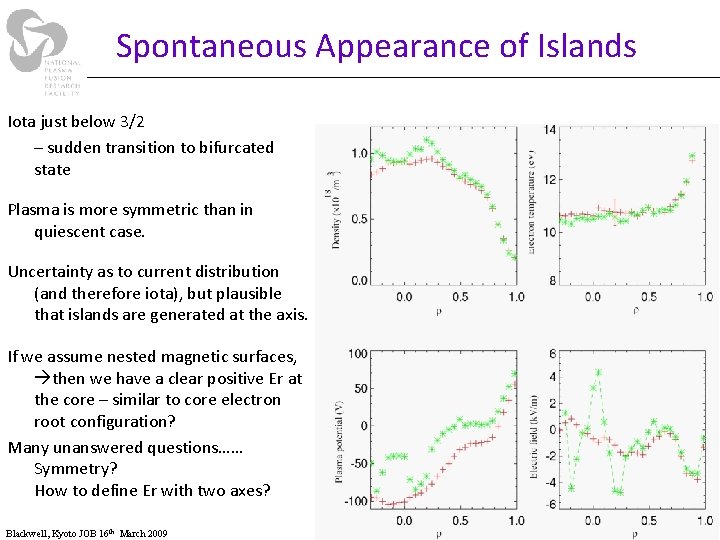
Spontaneous Appearance of Islands Iota just below 3/2 – sudden transition to bifurcated state Plasma is more symmetric than in quiescent case. Uncertainty as to current distribution (and therefore iota), but plausible that islands are generated at the axis. If we assume nested magnetic surfaces, then we have a clear positive Er at the core – similar to core electron root configuration? Many unanswered questions…… Symmetry? How to define Er with two axes? Blackwell, Kyoto JOB 16 th March 2009
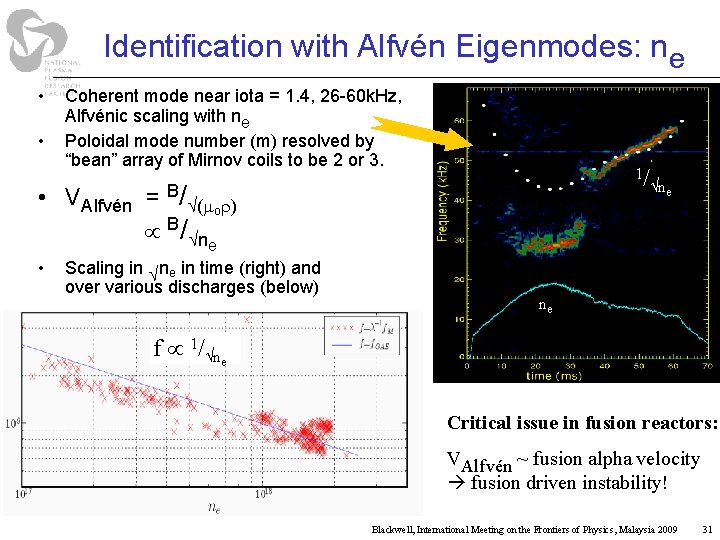
Identification with Alfvén Eigenmodes: ne • • Coherent mode near iota = 1. 4, 26 -60 k. Hz, Alfvénic scaling with ne Poloidal mode number (m) resolved by “bean” array of Mirnov coils to be 2 or 3. phase 1/ • VAlfvén = B/ ( o ) B / ne • Scaling in ne in time (right) and over various discharges (below) ne ne f 1/ ne Critical issue in fusion reactors: VAlfvén ~ fusion alpha velocity fusion driven instability! Blackwell, International Meeting on the Frontiers of Physics, Malaysia 2009 31
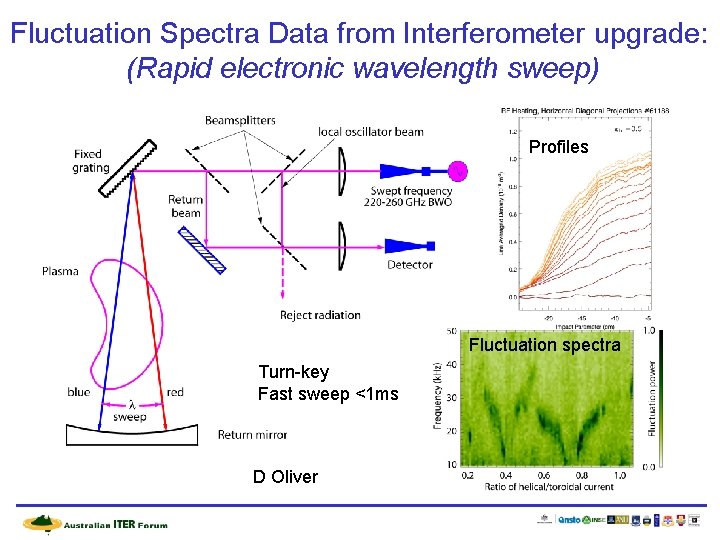
Fluctuation Spectra Data from Interferometer upgrade: (Rapid electronic wavelength sweep) Profiles Fluctuation spectra Turn-key Fast sweep <1 ms D Oliver
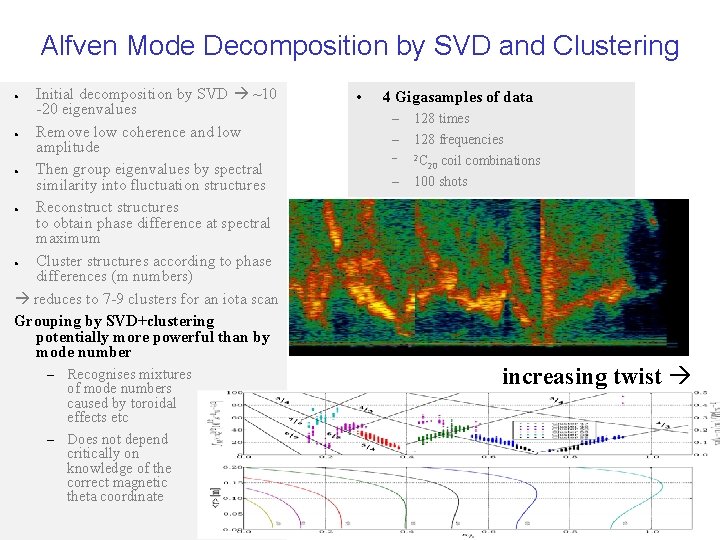
Alfven Mode Decomposition by SVD and Clustering Initial decomposition by SVD ~10 -20 eigenvalues ● Remove low coherence and low amplitude ● Then group eigenvalues by spectral similarity into fluctuation structures ● Reconstructures to obtain phase difference at spectral maximum ● Cluster structures according to phase differences (m numbers) reduces to 7 -9 clusters for an iota scan Grouping by SVD+clustering potentially more powerful than by mode number ● – – Recognises mixtures of mode numbers caused by toroidal effects etc Does not depend critically on knowledge of the correct magnetic theta coordinate • 4 Gigasamples of data – – 128 times 128 frequencies 2 C coil combinations 20 100 shots increasing twist
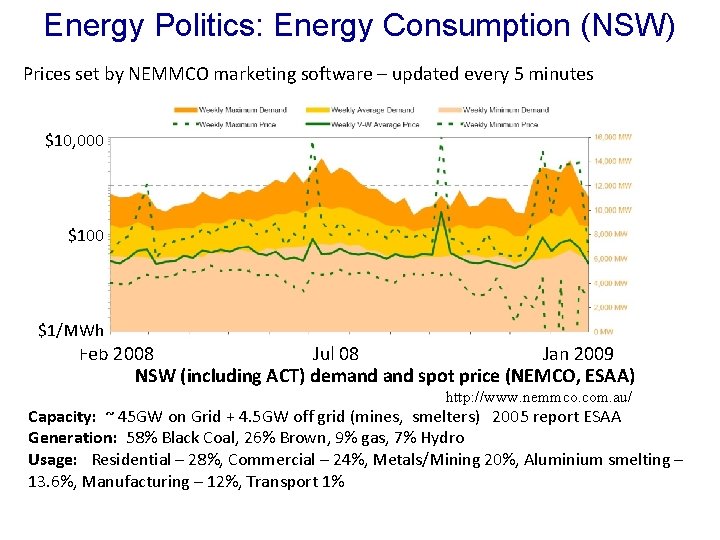
Energy Politics: Energy Consumption (NSW) Prices set by NEMMCO marketing software – updated every 5 minutes $10, 000 $1/MWh Feb 2008 Jul 08 Jan 2009 NSW (including ACT) demand spot price (NEMCO, ESAA) http: //www. nemmco. com. au/ Capacity: ~ 45 GW on Grid + 4. 5 GW off grid (mines, smelters) 2005 report ESAA Generation: 58% Black Coal, 26% Brown, 9% gas, 7% Hydro Usage: Residential – 28%, Commercial – 24%, Metals/Mining 20%, Aluminium smelting – 13. 6%, Manufacturing – 12%, Transport 1%
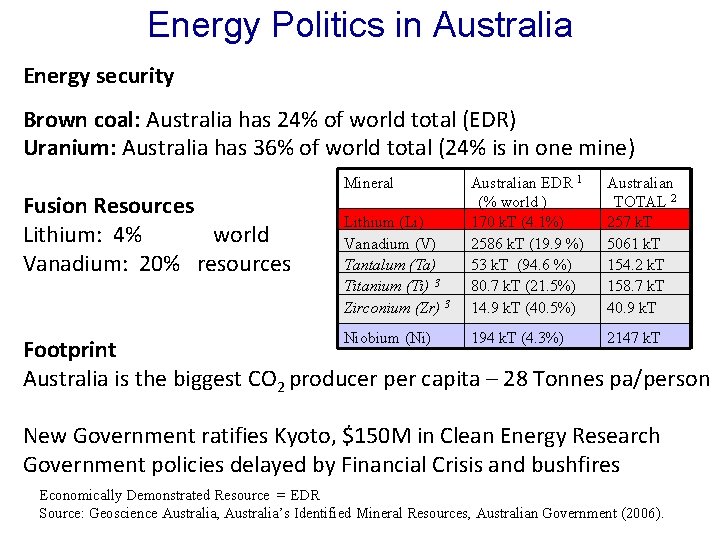
Energy Politics in Australia Energy security Brown coal: Australia has 24% of world total (EDR) Uranium: Australia has 36% of world total (24% is in one mine) Fusion Resources Lithium: 4% world Vanadium: 20% resources Mineral Lithium (Li) Vanadium (V) Tantalum (Ta) Titanium (Ti) 3 Zirconium (Zr) 3 Australian EDR 1 (% world ) 170 k. T (4. 1%) 2586 k. T (19. 9 %) 53 k. T (94. 6 %) 80. 7 k. T (21. 5%) 14. 9 k. T (40. 5%) Australian TOTAL 2 257 k. T 5061 k. T 154. 2 k. T 158. 7 k. T 40. 9 k. T Niobium (Ni) 194 k. T (4. 3%) 2147 k. T Footprint Australia is the biggest CO 2 producer per capita – 28 Tonnes pa/person New Government ratifies Kyoto, $150 M in Clean Energy Research Government policies delayed by Financial Crisis and bushfires Economically Demonstrated Resource = EDR Source: Geoscience Australia, Australia’s Identified Mineral Resources, Australian Government (2006).
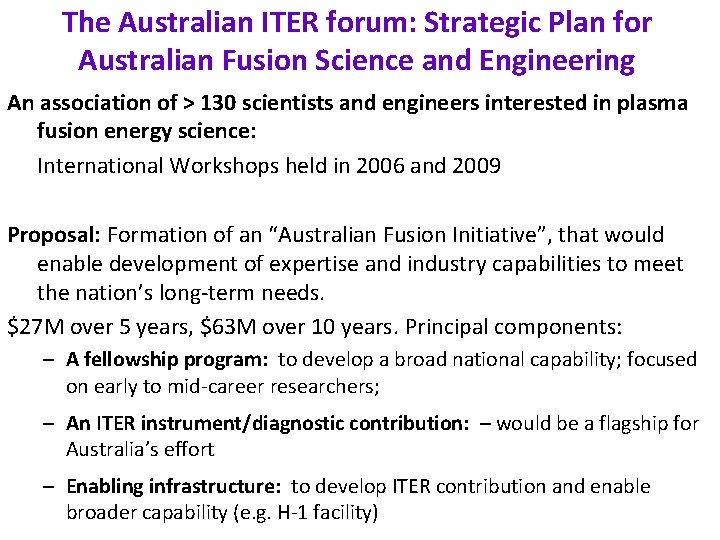
The Australian ITER forum: Strategic Plan for Australian Fusion Science and Engineering An association of > 130 scientists and engineers interested in plasma fusion energy science: International Workshops held in 2006 and 2009 Proposal: Formation of an “Australian Fusion Initiative”, that would enable development of expertise and industry capabilities to meet the nation’s long-term needs. $27 M over 5 years, $63 M over 10 years. Principal components: – A fellowship program: to develop a broad national capability; focused on early to mid-career researchers; – An ITER instrument/diagnostic contribution: – would be a flagship for Australia’s effort – Enabling infrastructure: to develop ITER contribution and enable broader capability (e. g. H-1 facility)
ITER Forum Strategic Plan has wide support Letters of support from: • Australian National University, • University of Sydney, • University of Newcastle, • University of Wollongong, • Curtin University, • Flinders University • Macquarie University, • Australian Nuclear Science and Technology Organisation, • Australian Institute of Nuclear Science and Engineering, • H 1 Major National Research Facility, • The Australia Institute • Australian Institute of Physics • Australian Institute of Energy, • Australian Academy of Technological Sciences and Engineering • The ITER organization • The Hon. Martin Ferguson, Minister for Resources, Energy and Tourism and endorsement from a Parliamentary Standing Committee on non-fossil fuel energy (Prosser Report, 2007)
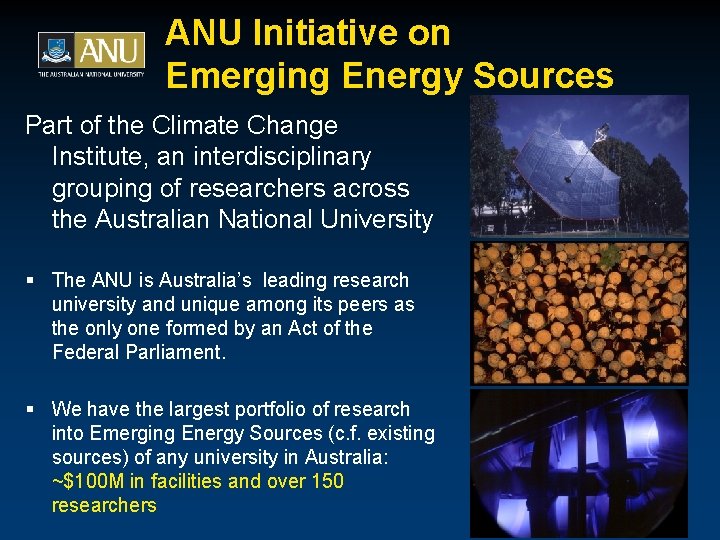
ANU Initiative on Emerging Energy Sources Part of the Climate Change Institute, an interdisciplinary grouping of researchers across the Australian National University § The ANU is Australia’s leading research university and unique among its peers as the only one formed by an Act of the Federal Parliament. § We have the largest portfolio of research into Emerging Energy Sources (c. f. existing sources) of any university in Australia: ~$100 M in facilities and over 150 researchers
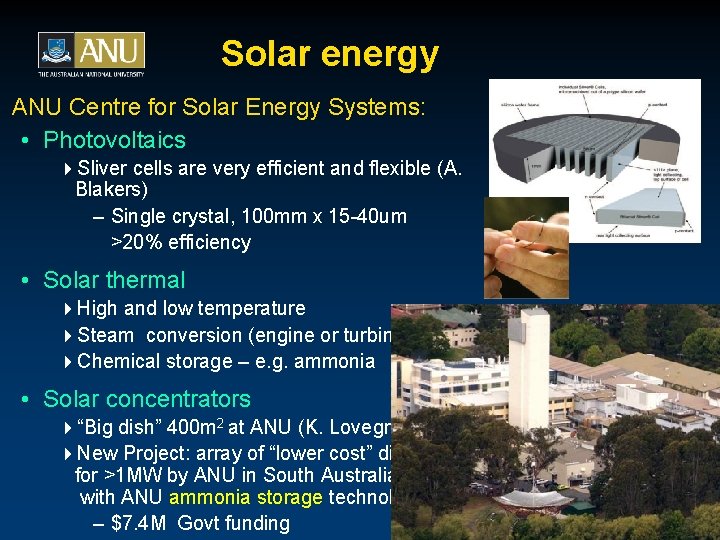
Solar energy ANU Centre for Solar Energy Systems: • Photovoltaics 4 Sliver cells are very efficient and flexible (A. Blakers) – Single crystal, 100 mm x 15 -40 um >20% efficiency • Solar thermal 4 High and low temperature 4 Steam conversion (engine or turbine) 4 Chemical storage – e. g. ammonia • Solar concentrators 4“Big dish” 400 m 2 at ANU (K. Lovegrove) 4 New Project: array of “lower cost” dishes for >1 MW by ANU in South Australia with ANU ammonia storage technology – $7. 4 M Govt funding
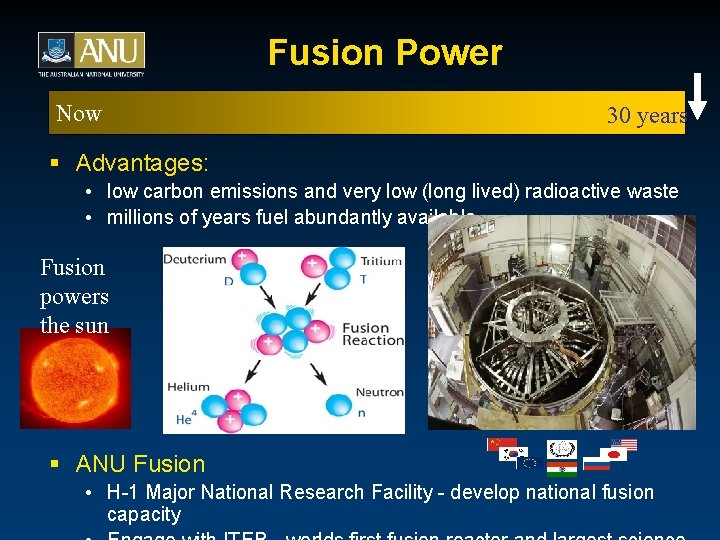
Fusion Power Now 30 years § Advantages: • low carbon emissions and very low (long lived) radioactive waste • millions of years fuel abundantly available Fusion powers the sun § ANU Fusion • H-1 Major National Research Facility - develop national fusion capacity
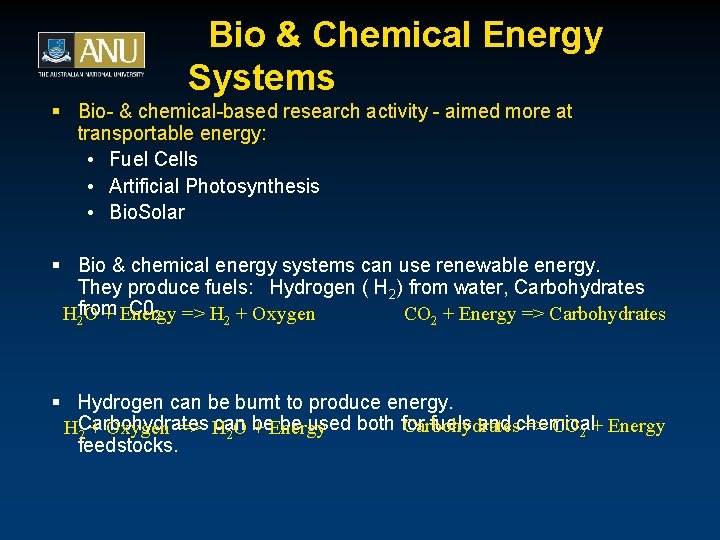
Bio & Chemical Energy Systems § Bio- & chemical-based research activity - aimed more at transportable energy: • Fuel Cells • Artificial Photosynthesis • Bio. Solar § Bio & chemical energy systems can use renewable energy. They produce fuels: Hydrogen ( H 2) from water, Carbohydrates C 02 => H + Oxygen CO 2 + Energy => Carbohydrates H 2 from O + Energy 2 § Hydrogen can be burnt to produce energy. can be be used both for fuels and chemical Carbohydrates => CO 2 + Energy HCarbohydrates 2 + Oxygen => H 2 O + Energy feedstocks.
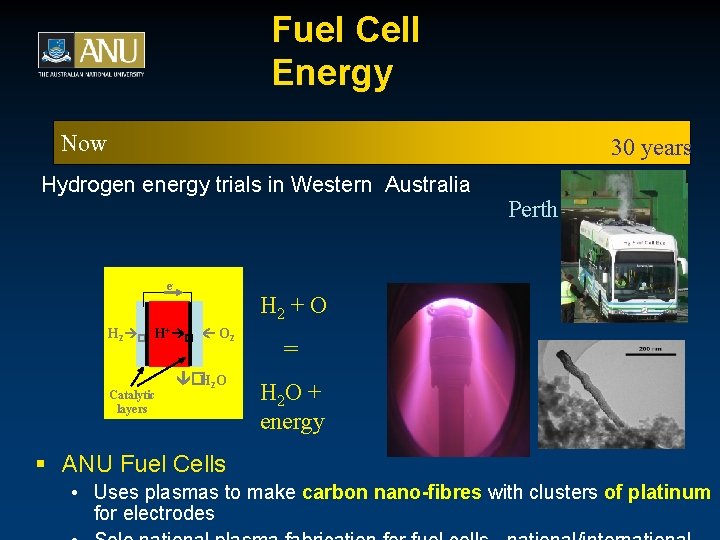
Fuel Cell Energy Now 30 years Hydrogen energy trials in Western Australia e- H 2 + O H 2 � H+ � O 2 Catalytic layers Perth �H 2 O = H 2 O + energy § ANU Fuel Cells • Uses plasmas to make carbon nano-fibres with clusters of platinum for electrodes
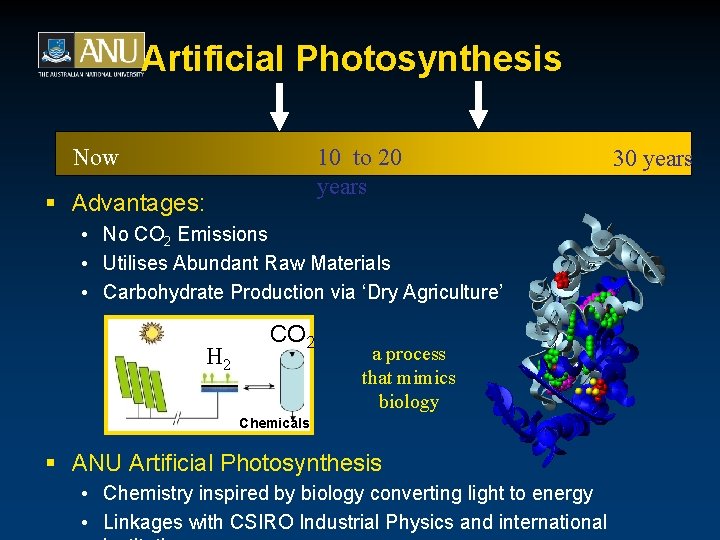
Artificial Photosynthesis 10 to 20 years Now § Advantages: • No CO 2 Emissions • Utilises Abundant Raw Materials • Carbohydrate Production via ‘Dry Agriculture’ H 2 CO 2 Chemicals a process that mimics biology § ANU Artificial Photosynthesis • Chemistry inspired by biology converting light to energy • Linkages with CSIRO Industrial Physics and international 30 years
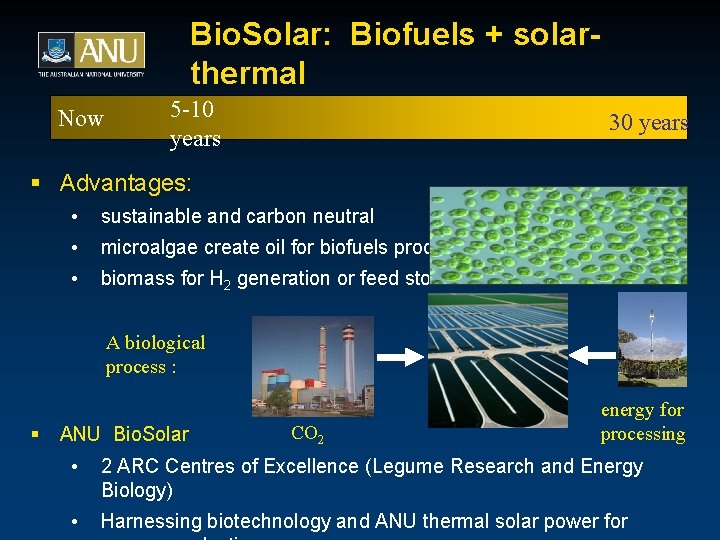
Bio. Solar: Biofuels + solarthermal Now 5 -10 years 30 years § Advantages: • sustainable and carbon neutral • microalgae create oil for biofuels production • biomass for H 2 generation or feed stocks A biological process : § ANU Bio. Solar CO 2 energy for processing • 2 ARC Centres of Excellence (Legume Research and Energy Biology) • Harnessing biotechnology and ANU thermal solar power for
Closing Thoughts § Australian plasma fusion research has had a very strong record § Future of fusion research is linked to ITER and Energy § New Government show promise • Increased internationalization of research • Clean energy initiatives • Dicussion of support of “full cost” of research but financial crisis and bushfires have delayed white papers, policies Solar energy is the biggest project, but many others. .