
Australia The Pacific Realm and Antarctica Physical Geography



- Slides: 15
Australia, The Pacific Realm, and Antarctica
Physical Geography • Title: Physical Geography • Main Idea: The vast region in the Pacific Ocean is physically isolated from other parts of the world. • The “Australia” passage tells how Australia is a country and a continent and has a dry climate and large area of desert.
Physical Geography • The “Pacific Realm and Antarctica” passage describes how the Pacific Realm is made up of thousands of small islands, atolls, and coral reefs. New Zealand is part of the realm. Antarctica is centered on the South Pole and is covered by ice. • One map shows the precipitation of Australia; the other shows the physical geography of the entire region, especially its many islands. • One photo shows what an atoll in French Polynesia looks like; the other shows part of a coral reef near Australia.
Indigenous Plants and Animals • Plants: • Eucalyptus Trees – oil in the leaves is used in medicine; can reach 300 feet tall, leaves are the only things koala bears eat. • Wildflowers • Shrubs • Acacia trees – 700 varieties in Australia • Brightly colored flowers
Indigenous Plants and Animals • Animals: • • Marsupials: kangaroo, koala, wallaby, wombat Platypus and echidna – only mammals that lay eggs and have beaks Flightless birds – kiwi, kakapo, cassowary, emu Kookaburra – call that sounds like laughter
Biological Hitchhikers • Original Cause: • Invasive species arrive by accident • First Effect: • Invasive species disturb native habitats. • Second Effect: • Some native plants and animals become extinct.
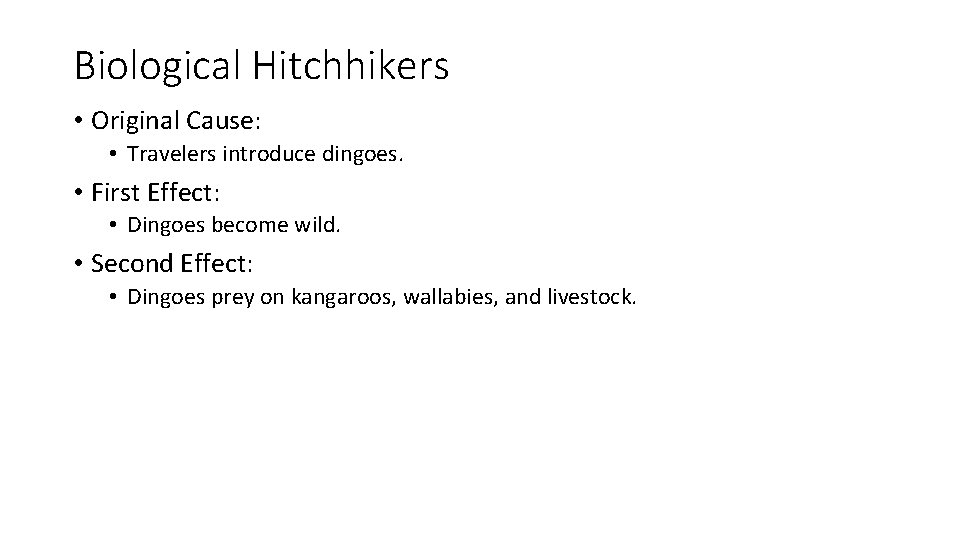
Biological Hitchhikers • Original Cause: • Travelers introduce dingoes. • First Effect: • Dingoes become wild. • Second Effect: • Dingoes prey on kangaroos, wallabies, and livestock.
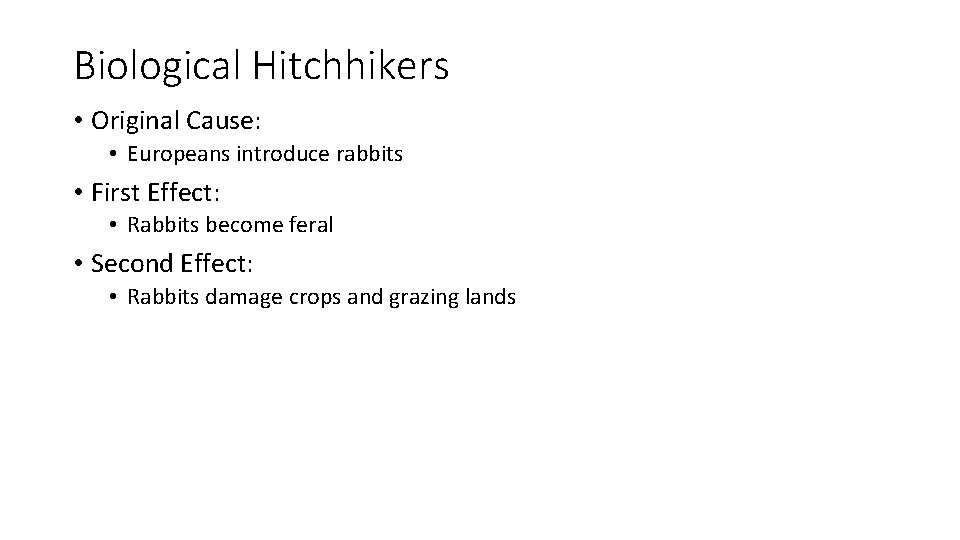
Biological Hitchhikers • Original Cause: • Europeans introduce rabbits • First Effect: • Rabbits become feral • Second Effect: • Rabbits damage crops and grazing lands
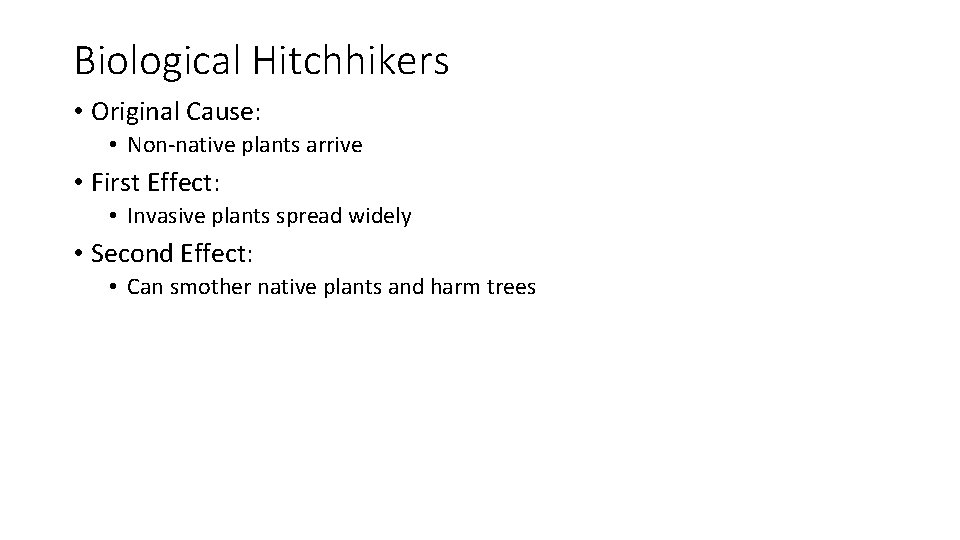
Biological Hitchhikers • Original Cause: • Non-native plants arrive • First Effect: • Invasive plants spread widely • Second Effect: • Can smother native plants and harm trees
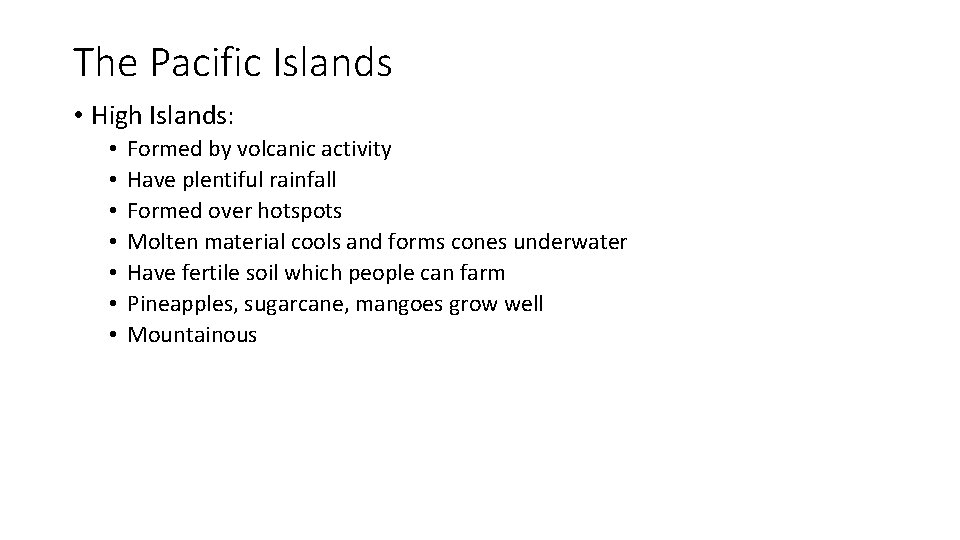
The Pacific Islands • High Islands: • • Formed by volcanic activity Have plentiful rainfall Formed over hotspots Molten material cools and forms cones underwater Have fertile soil which people can farm Pineapples, sugarcane, mangoes grow well Mountainous
The Pacific Islands • Low Islands • • • Are coral islands and often sit on coral reefs Formed by skeletons of tiny marine animals May form around the base of a volcano Can be atolls Have less rainfall Drought is common Smaller than high islands Rise just above sea level People living there depend on fishing
The Pacific Islands • Similarities: • Both formed over long periods of time • Both have tropical warm climate with wet and dry seasons
Indigenous Populations • The Aborigines were Australia’s first developed culture – 30, 000 BC • Considered the oldest continuous human culture in the world • Culture and language developed apart from other human groups • Due to isolation • Were nomadic hunter-gatherers • 1788 – Europeans arrived; between 500, 000 and 1 million aborigines • Conflicts and disease killed many off • Today, is roughly 3% of population
Seagoing Societies • Over centuries, islanders (seafarers) became experts at navigation and sailed the region • Used stars and bird flight patterns, and made stick charts to map out • Different cultures blended and developed • 1700 s, encountered Europeans
From Convicts to Colonists • 17 years after first being explored, British ships sailed out for Australia • To ease overcrowding in British prisons, convicts were sent to colonies, including Australia • Those who were married brought their families • Convicts’ skills were used to build and farm the colony • 1831 Britain helped migrate its citizens there • Population more than doubled in ten years • 1890, Australia began to consider independence, 1901 became a commonwealth of Britain