
Austin Energys Renewable Energy and Demand Side Management
Austin Energy’s Renewable Energy and Demand Side Management Reza Alaghehband, P. E. Power System Consulting Engineer, Austin Energy EMS Users Conference September 9, 2008 Atlanta, GA

Austin Energy • Municipally Owned Electric Utility • 9 th Largest Public Power • Serves > 388, 000 Customers (population of 900, 000) • Area > 437 sq. miles • Serving COA (Travis Co. and portion of Williamson Co) Austin
Austin Energy • No increase in base rates since 1994 • Generation 2, 760 MW • Peak Load ~2, 500 MW • ERCOT Member Austin
Generation Capacity Ratio • • Coal (2 units) – 23% Gas (12 units) – 52% Nuclear (2 units) – 15% Renewable – 10% Austin
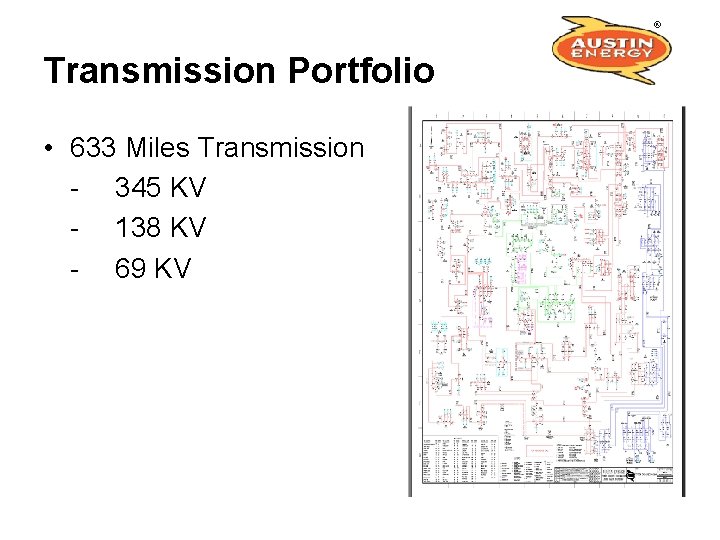
Transmission Portfolio • 633 Miles Transmission - 345 KV - 138 KV - 69 KV
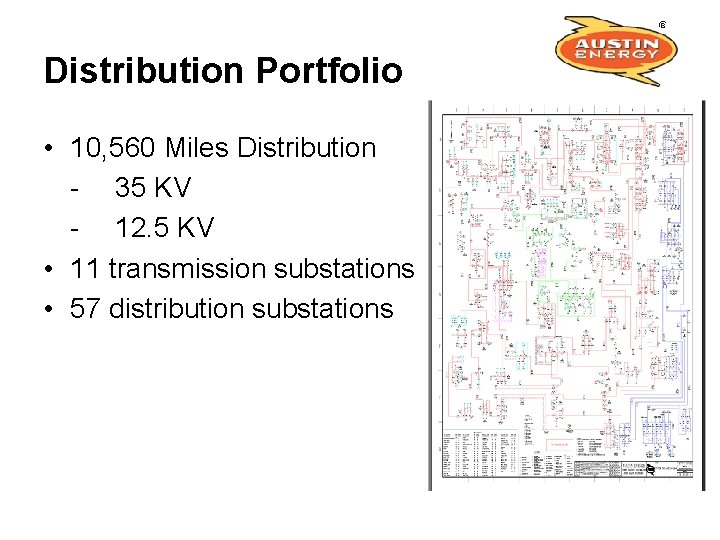
Distribution Portfolio • 10, 560 Miles Distribution - 35 KV - 12. 5 KV • 11 transmission substations • 57 distribution substations
ERCOT Market • Non-Opt-In Entity (NOIE) – NO part in retail Market • Qualified Scheduling Entity (QSE) – Submit bids, dynamic/static gen schedules, settle retail/wholesale gen resources with ERCOT according to EPS meters at tielines and gen. terminals • Power Generation Entity (PGE) • Transmission and Distribution Service Provider (TDSP)
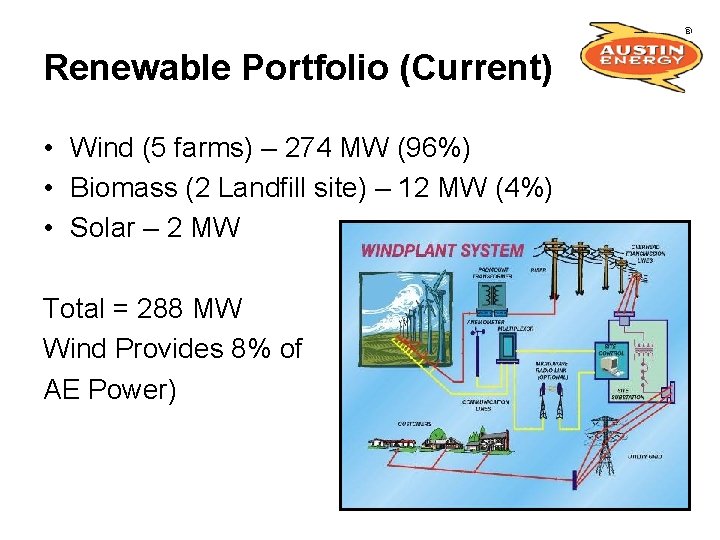
Renewable Portfolio (Current) • Wind (5 farms) – 274 MW (96%) • Biomass (2 Landfill site) – 12 MW (4%) • Solar – 2 MW Total = 288 MW Wind Provides 8% of AE Power)
ERCOT New Generation Capacity

Austin Climate Protection Plan Will make Austin the national leader among cities in the fight against global warming.
Austin Climate Protection Plan • Municipal Plan - Makes all COA facilities/fleets carbon neutral • Homes and Buildings Plan - Makes Austin building codes most EE in nation • “Go Neutral” Plan - Mechanisms for business to reduce carbon footprint to zero • Community Plan – Develop complete plan for reducing GHG emissions from sources community-wide • Utility (Austin Energy) Plan
Utility (Austin Energy) Plan • 30% renewables by 2020 • 700 MW of energy savings by 2020 • CO 2 cap and reduction plan • New generation carbon-neutral • Enhance building codes for zero energycapable homes by 2015
Load Forecast & Conservation
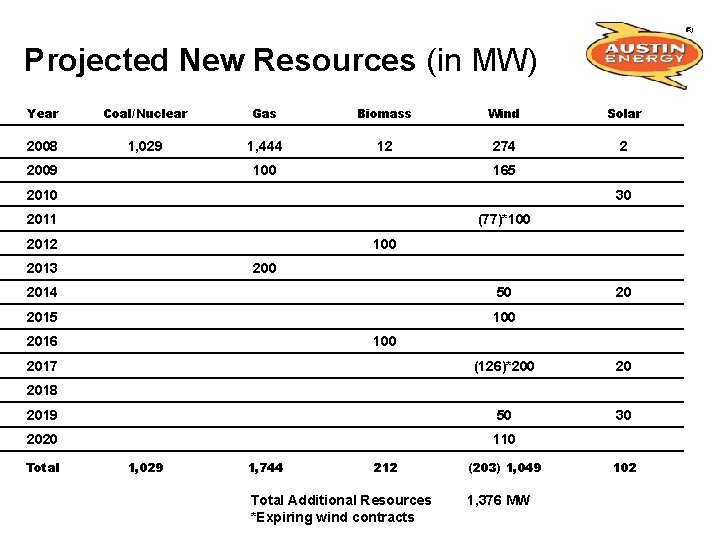
Projected New Resources (in MW) Year Coal/Nuclear Gas Biomass Wind Solar 2008 1, 029 1, 444 12 274 2 2009 100 165 2010 30 2011 (77)*100 2012 100 2013 200 2014 50 2015 100 2016 20 100 2017 (126)*200 20 2019 50 30 2020 110 2018 Total 1, 029 1, 744 212 Total Additional Resources *Expiring wind contracts (203) 1, 049 1, 376 MW 102
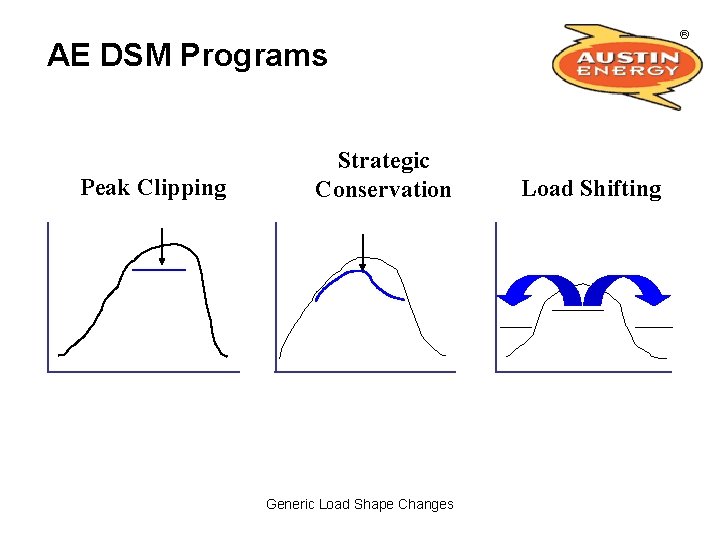
AE DSM Programs Peak Clipping Strategic Conservation Generic Load Shape Changes Load Shifting
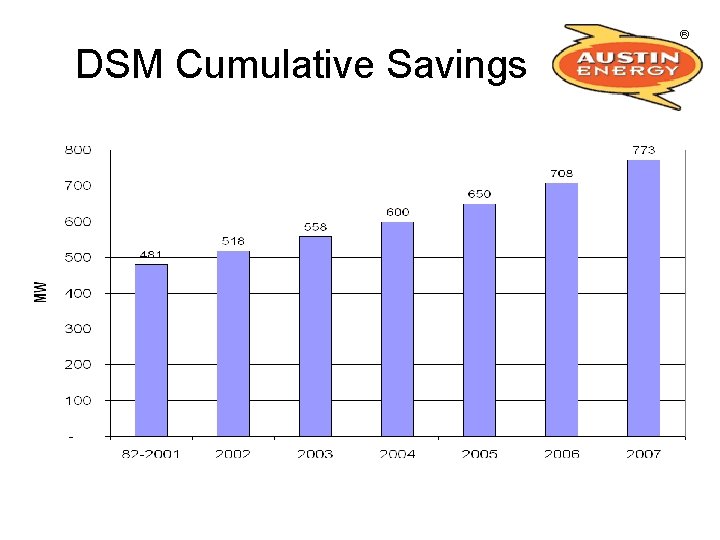
DSM Cumulative Savings
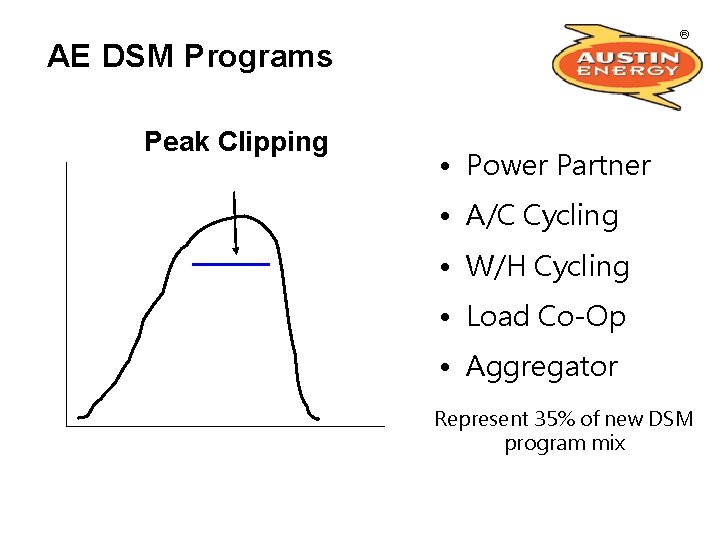
AE DSM Programs Peak Clipping • Power Partner • A/C Cycling • W/H Cycling • Load Co-Op • Aggregator Represent 35% of new DSM program mix
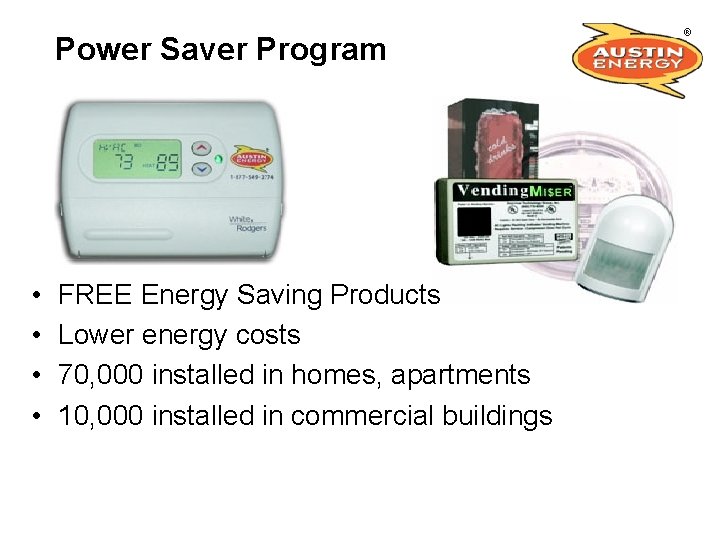
Power Saver Program • • FREE Energy Saving Products Lower energy costs 70, 000 installed in homes, apartments 10, 000 installed in commercial buildings
Cycling A/C Thermostats Cycling Session, June 15, 2005
Demand Response Program Customer Type and Strategy • Residential A/C – Super. Stat®; 33% & 50% Cycling Strategy • Multi-Family A/C – Super. Stat; 33% Cycling Strategy • Multi-Family Water Heating – Vaughn; 100% (digital timer) • Commercial A/C – Super. Stat®; 33% Cycling Strategy • Municipal & Government A/C – Super. Stat®; 33% Cycling Strategy & Set Point Limits
DR Program Implementation • Power Partner - Automatic AC cycling by radio controlled thermostats. Participant AC’s are cycled for a 10 minute block per half hour. Total continuous MW reduction with full deployment ranges from 20 -54 MW depending on temperature. Availability: June through September, Non-Holiday, weekdays from 1600 – 2000 with a target of 15 events per season
DR Program Implementation • Load Coop - ~2. 5 – 3 MW of load response. Load Coop customers are paid a capacity availability charge of $1. 25/k. W month and a curtailed energy charge of $0. 15/k. W based on deployment Availability: June through September, between 1200 – 2000 limit for a fixed block of 3 hours per day, up to 15 days or 45 total hours per season with no more than 3 consecutive activations
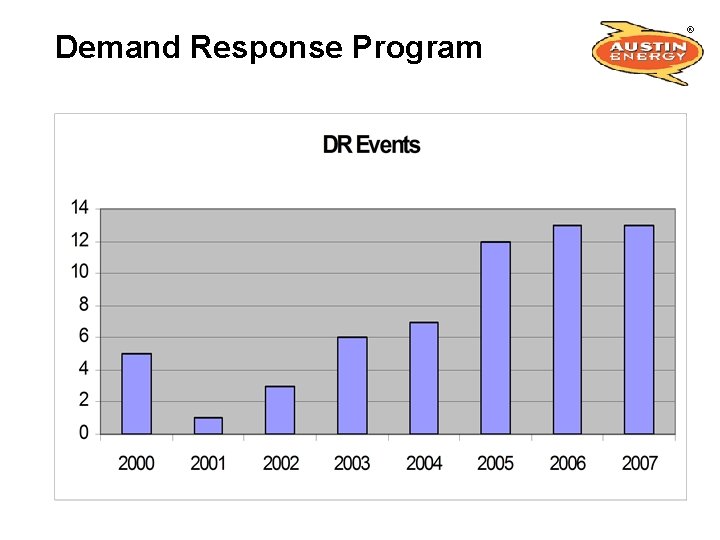
Demand Response Program
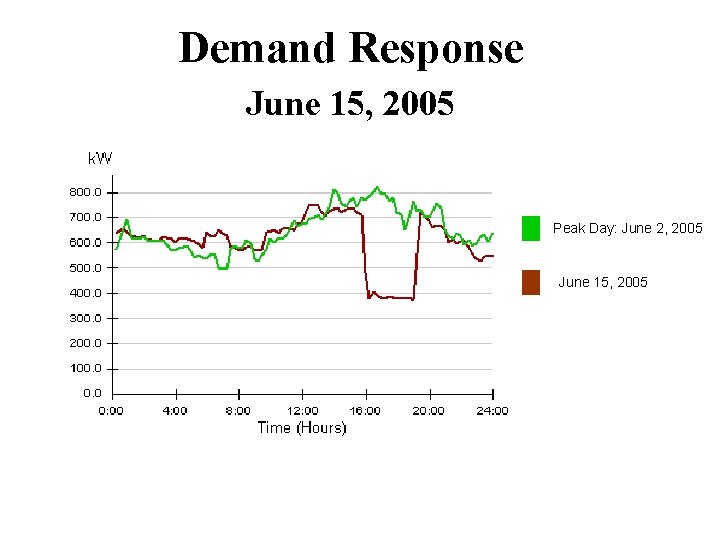
Demand Response June 15, 2005 Peak Day: June 2, 2005 June 15, 2005
Demand Response Program Impact on AE System Load
Demand Response Program Impact on AE System Load
Demand Response Program Impact on AE System Load

Aggregator Program Types of Participants • Energy management companies • Large chain stores – central energy management systems • Minimum 3 sites bundled – 10 k. W per site minimum – Self-aggregator 30 k. W minimum
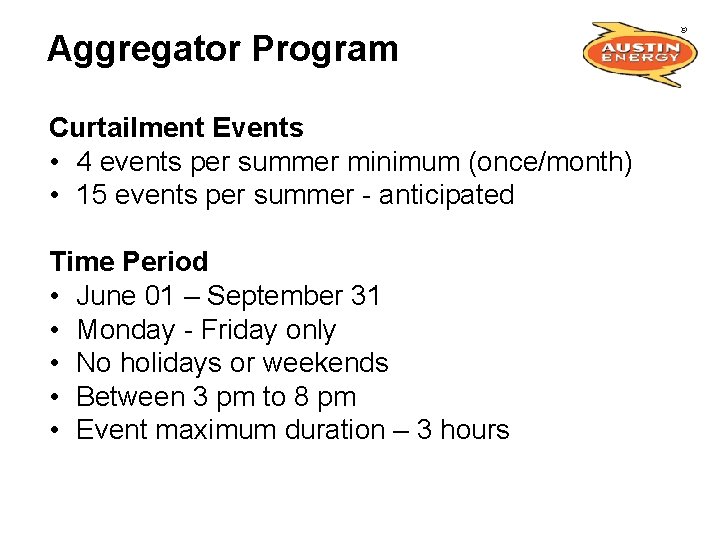
Aggregator Program Curtailment Events • 4 events per summer minimum (once/month) • 15 events per summer - anticipated Time Period • June 01 – September 31 • Monday - Friday only • No holidays or weekends • Between 3 pm to 8 pm • Event maximum duration – 3 hours
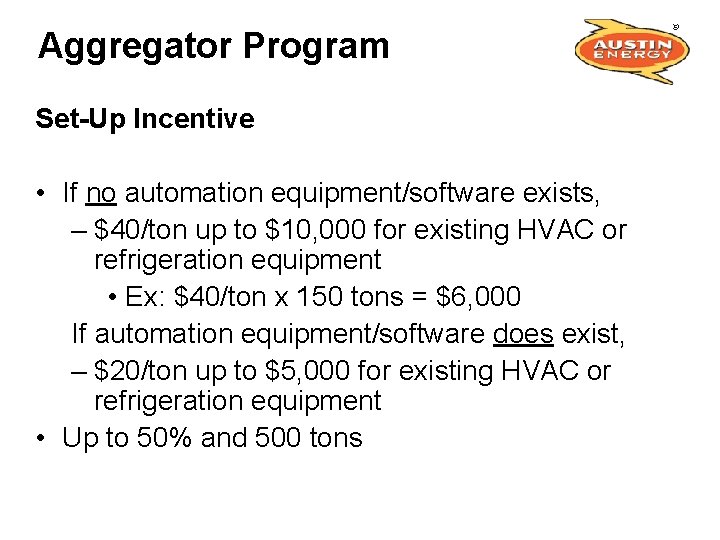
Aggregator Program Set-Up Incentive • If no automation equipment/software exists, – $40/ton up to $10, 000 for existing HVAC or refrigeration equipment • Ex: $40/ton x 150 tons = $6, 000 If automation equipment/software does exist, – $20/ton up to $5, 000 for existing HVAC or refrigeration equipment • Up to 50% and 500 tons
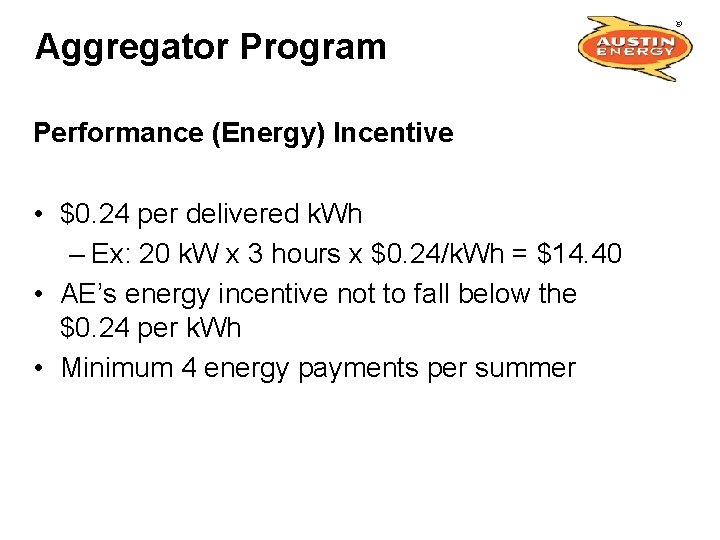
Aggregator Program Performance (Energy) Incentive • $0. 24 per delivered k. Wh – Ex: 20 k. W x 3 hours x $0. 24/k. Wh = $14. 40 • AE’s energy incentive not to fall below the $0. 24 per k. Wh • Minimum 4 energy payments per summer
Demand Side Management (DSM)
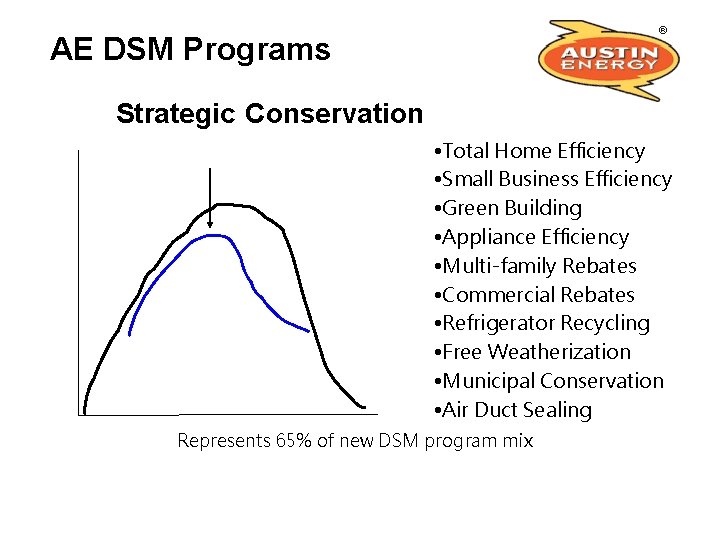
AE DSM Programs Strategic Conservation • Total Home Efficiency • Small Business Efficiency • Green Building • Appliance Efficiency • Multi-family Rebates • Commercial Rebates • Refrigerator Recycling • Free Weatherization • Municipal Conservation • Air Duct Sealing Represents 65% of new DSM program mix
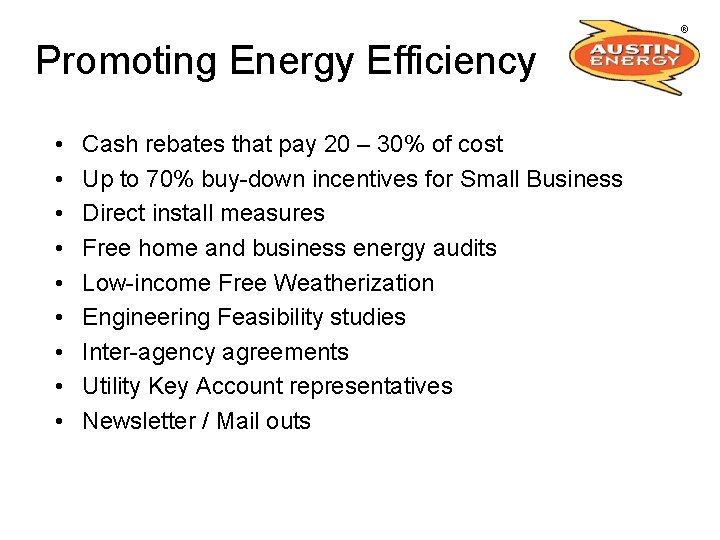
Promoting Energy Efficiency • • • Cash rebates that pay 20 – 30% of cost Up to 70% buy-down incentives for Small Business Direct install measures Free home and business energy audits Low-income Free Weatherization Engineering Feasibility studies Inter-agency agreements Utility Key Account representatives Newsletter / Mail outs
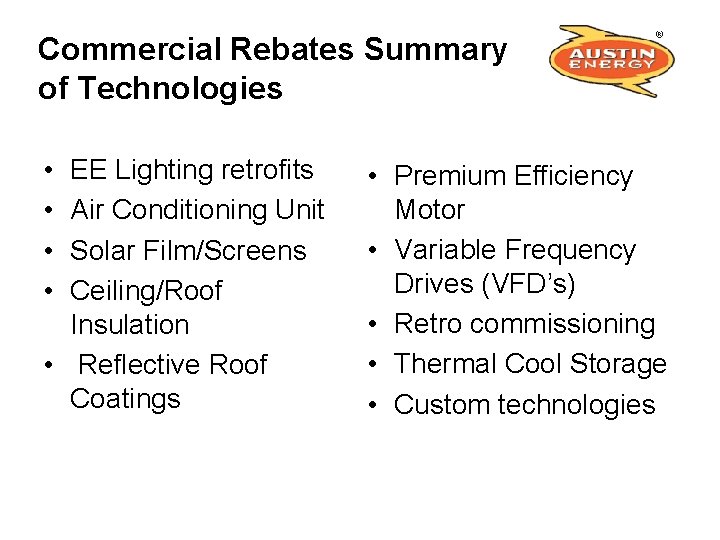
Commercial Rebates Summary of Technologies • • EE Lighting retrofits Air Conditioning Unit Solar Film/Screens Ceiling/Roof Insulation • Reflective Roof Coatings • Premium Efficiency Motor • Variable Frequency Drives (VFD’s) • Retro commissioning • Thermal Cool Storage • Custom technologies
Commercial Rebates Summary of Lighting Technologies • • T-8 & T-5 High Efficiency Lighting Systems Compact Fluorescent Lamps (CFL’s) LED (Light Emitting Diode) Exit Signs Incandescent to Fluorescent Conversions New building designs Re-lamping & Re-ballasting of Existing Fluorescent Fixtures High-Bay Fluorescent Systems Lighting Controls (occupancy sensors)
Electronically Commutated Motors (ECM) • Emerging Technology for Refrigeration Fans – Replaces Shaded Pole and Permanent Split Capacitor • Reduced energy consumption to 60% • Relatively Simple Retrofit • Typical Paybacks Range from 2 to 3 years
Large Grocery Chain Retrofit currently under way – 22 Locations in Austin area – Fans per location store ~ 200 fan/motors – Energy Cost Savings ~$10, 000 /location/yr
High Bay Fluorescent Retrofit Manufacturing Facility Converted (514) 400 -watt HID lamps to 4 -lamp 240 -watt T 5 HO Fluorescents Annual Cost Savings: $43, 812 Project Cost: $122, 800 Utility rebate: $33, 153 (27% of job cost) Payback was 2 years
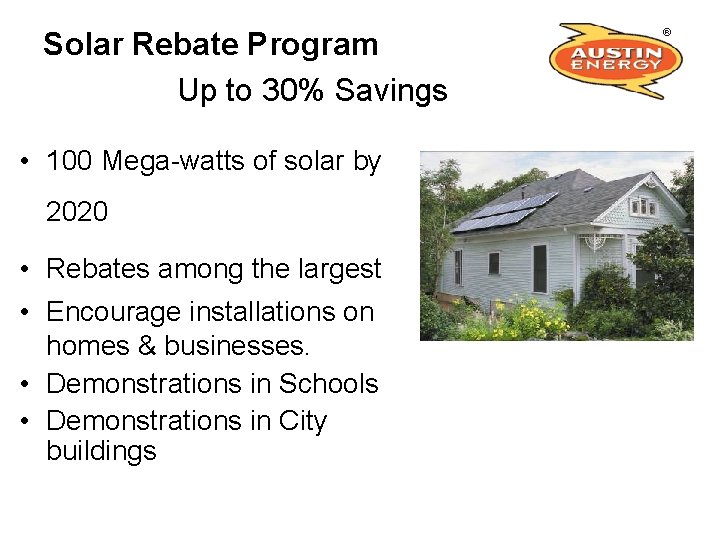
Solar Rebate Program Up to 30% Savings • 100 Mega-watts of solar by 2020 • Rebates among the largest • Encourage installations on homes & businesses. • Demonstrations in Schools • Demonstrations in City buildings
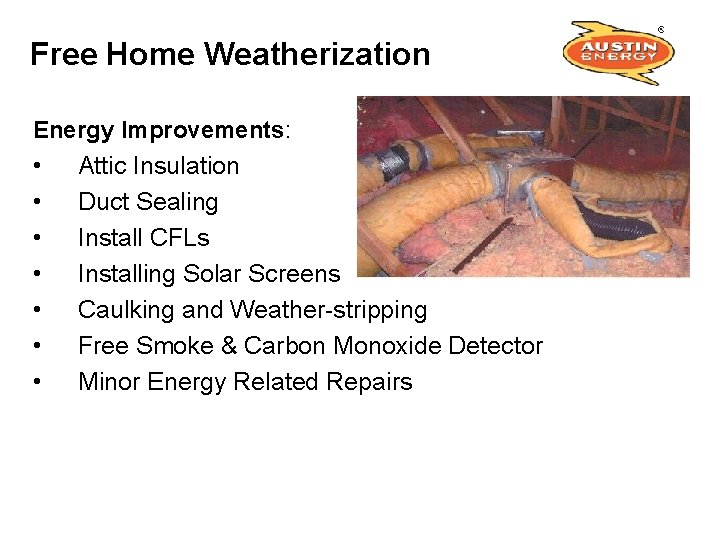
Free Home Weatherization Energy Improvements: • Attic Insulation • • • Duct Sealing Install CFLs Installing Solar Screens Caulking and Weather-stripping Free Smoke & Carbon Monoxide Detector Minor Energy Related Repairs
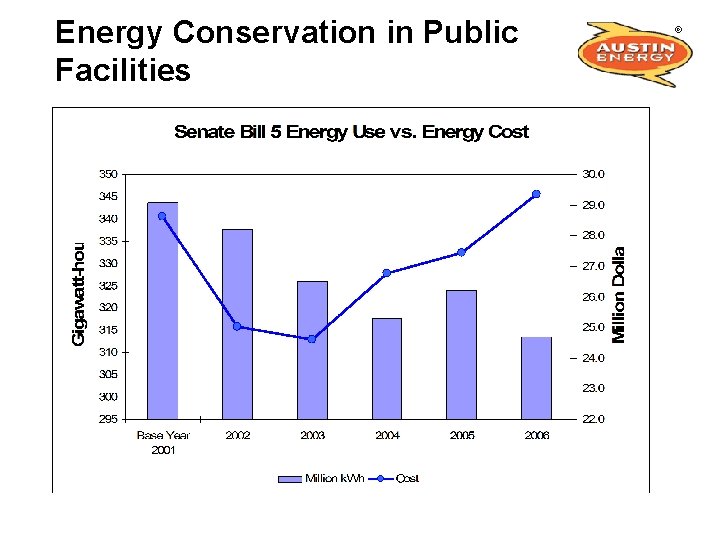
Energy Conservation in Public Facilities
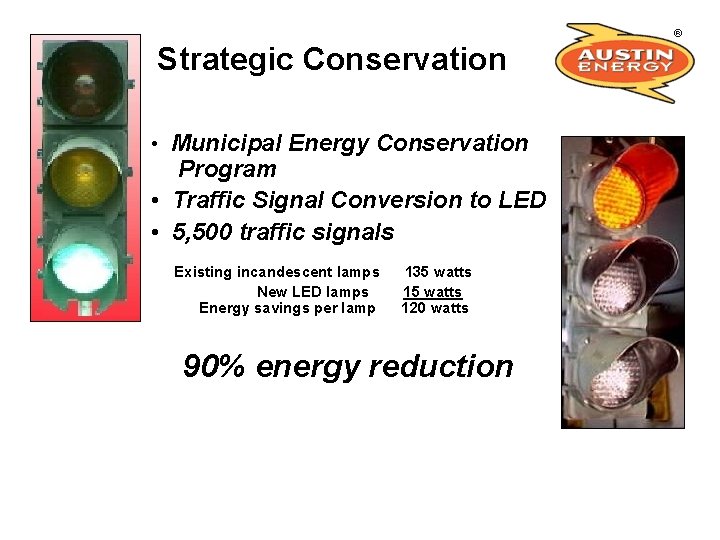
Strategic Conservation • Municipal Energy Conservation Program • Traffic Signal Conversion to LED • 5, 500 traffic signals Existing incandescent lamps New LED lamps Energy savings per lamp 135 watts 120 watts 90% energy reduction
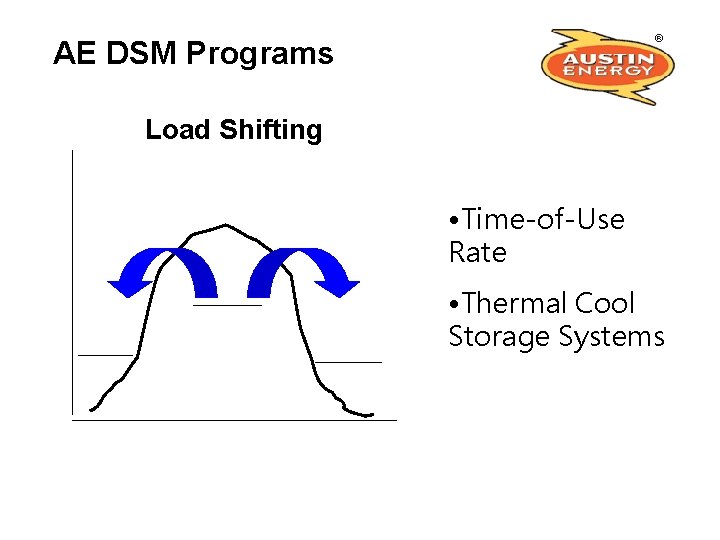
AE DSM Programs Load Shifting • Time-of-Use Rate • Thermal Cool Storage Systems
Load Shifting - Thermal Storage Austin-Bergstrom International Airport - July 1999
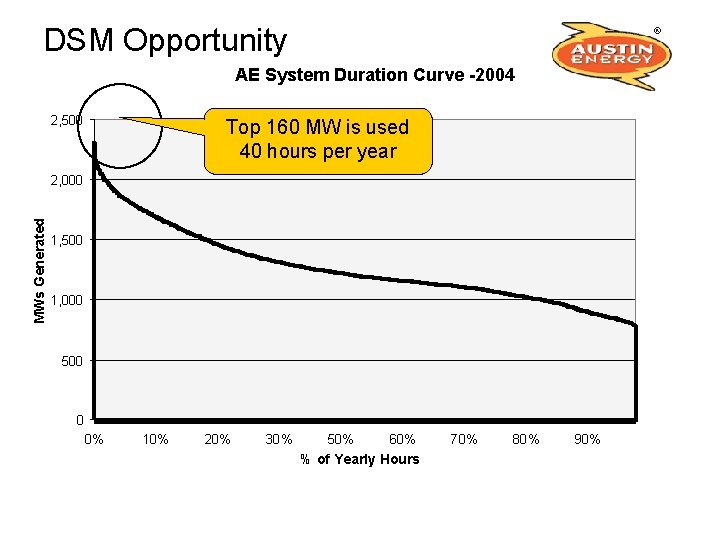
DSM Opportunity AE System Duration Curve -2004 2, 500 Top 160 MW is used 40 hours per year MWs Generated 2, 000 1, 500 1, 000 500 0 0% 10% 20% 30% 50% 60% % of Yearly Hours 70% 80% 90%
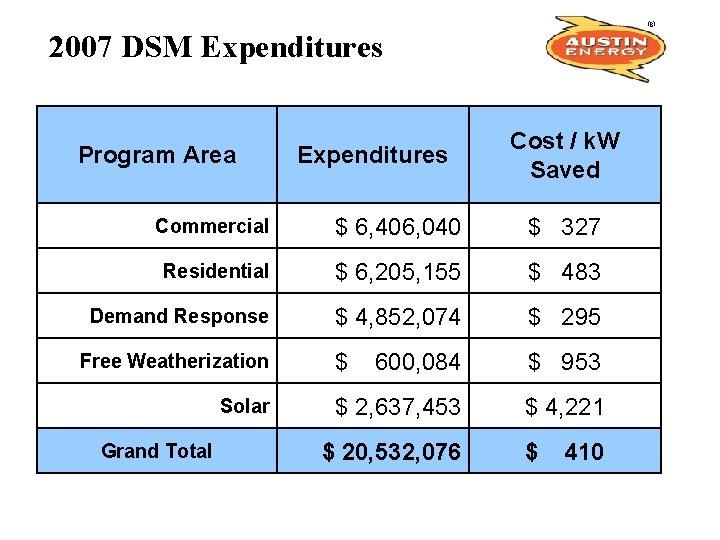
2007 DSM Expenditures Program Area Expenditures Cost / k. W Saved Commercial $ 6, 406, 040 $ 327 Residential $ 6, 205, 155 $ 483 Demand Response $ 4, 852, 074 $ 295 $ 600, 084 $ 953 $ 2, 637, 453 $ 4, 221 Free Weatherization Solar Grand Total $ 20, 532, 076 $ 410
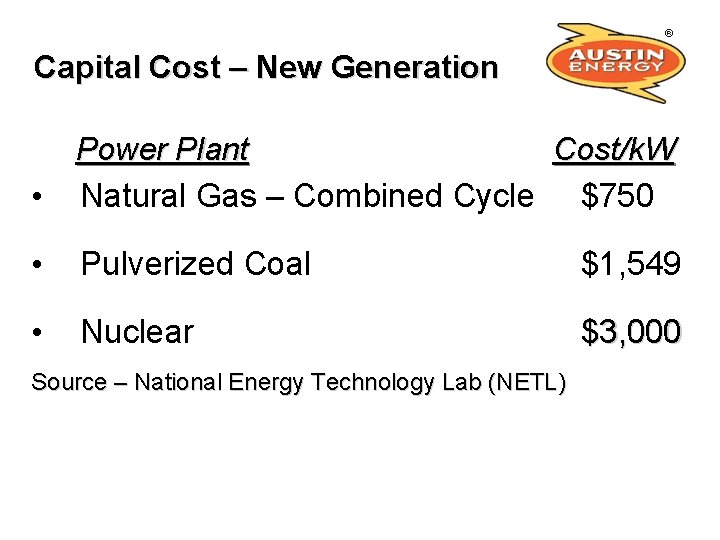
Capital Cost – New Generation • Power Plant Cost/k. W Natural Gas – Combined Cycle $750 • Pulverized Coal $1, 549 • Nuclear $3, 000 Source – National Energy Technology Lab (NETL)
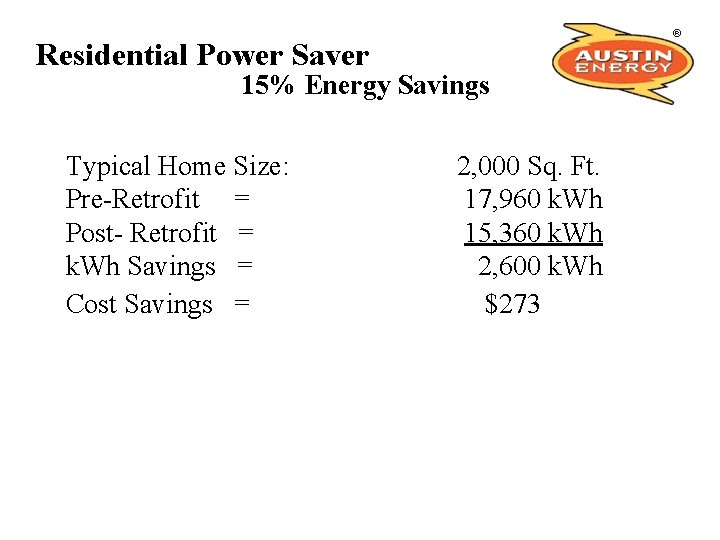
Residential Power Saver 15% Energy Savings Typical Home Size: Pre-Retrofit = Post- Retrofit = k. Wh Savings = Cost Savings = 2, 000 Sq. Ft. 17, 960 k. Wh 15, 360 k. Wh 2, 600 k. Wh $273
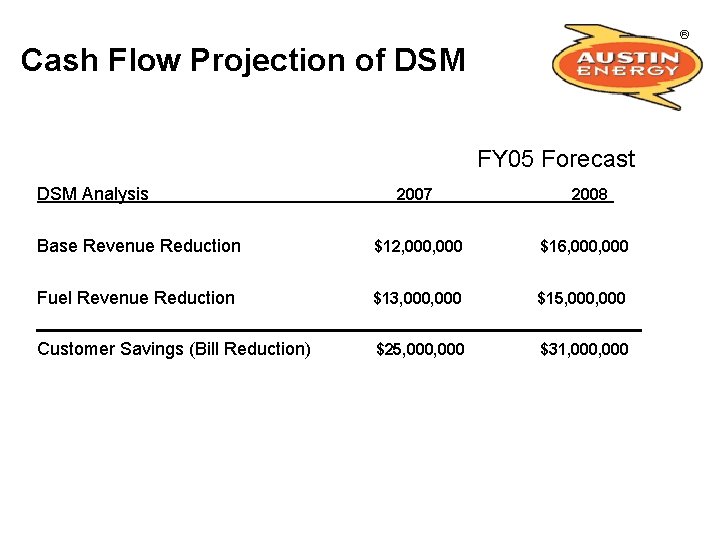
Cash Flow Projection of DSM FY 05 Forecast DSM Analysis 2007 2008 Base Revenue Reduction $12, 000 $16, 000 Fuel Revenue Reduction $13, 000 $15, 000 Customer Savings (Bill Reduction) $25, 000 $31, 000
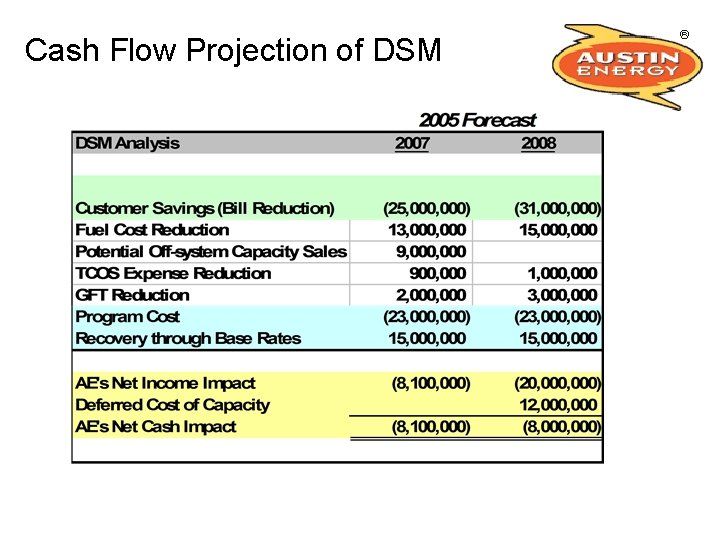
Cash Flow Projection of DSM
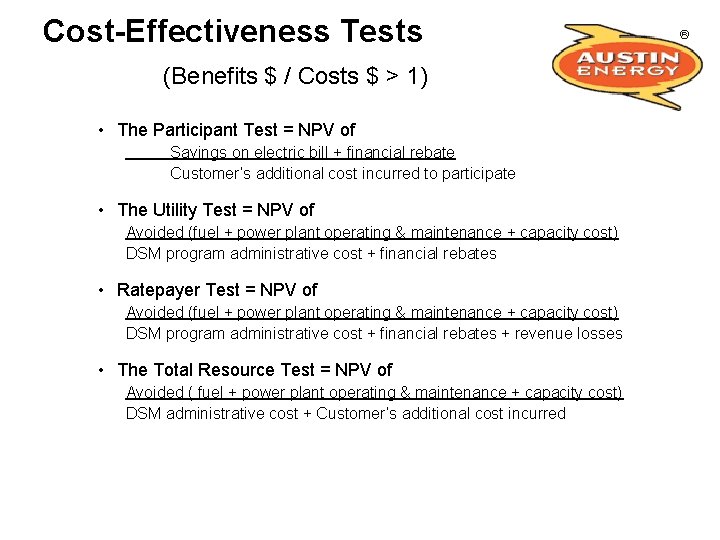
Cost-Effectiveness Tests (Benefits $ / Costs $ > 1) • The Participant Test = NPV of Savings on electric bill + financial rebate Customer’s additional cost incurred to participate • The Utility Test = NPV of Avoided (fuel + power plant operating & maintenance + capacity cost) DSM program administrative cost + financial rebates • Ratepayer Test = NPV of Avoided (fuel + power plant operating & maintenance + capacity cost) DSM program administrative cost + financial rebates + revenue losses • The Total Resource Test = NPV of Avoided ( fuel + power plant operating & maintenance + capacity cost) DSM administrative cost + Customer’s additional cost incurred

Thank You!!!
- Slides: 53