
AUGUSTEDOMINIQUE INGRES 1780 1867 Summarizing Neoclassical Principles History

- Slides: 22
AUGUSTE-DOMINIQUE INGRES (1780 -1867) Summarizing Neoclassical Principles History of Western Art BFA-II (Visual Arts) Course Incharge: Ms. Farah Khan Institute of Design & Visual Arts (LCWU)
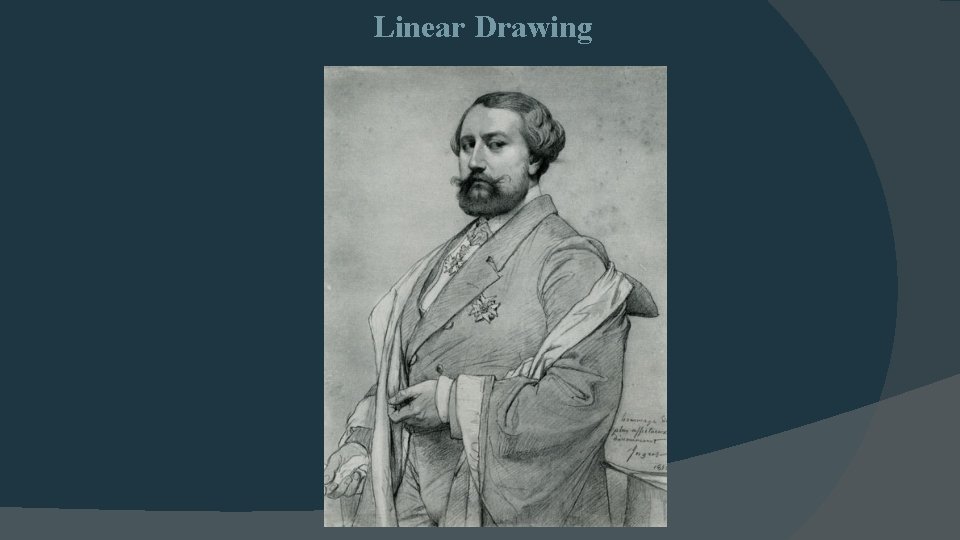
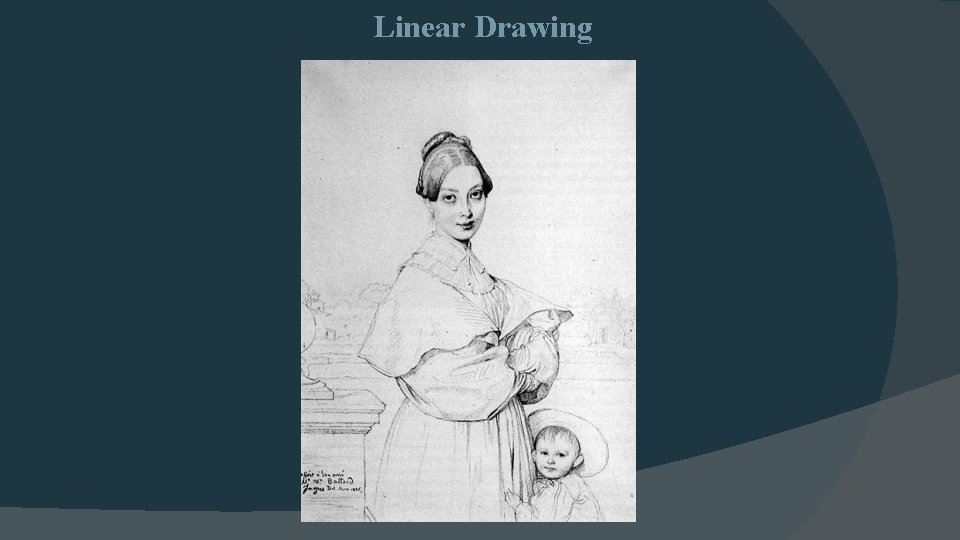
“Drawing is the probity of art. To draw does not mean simply to reproduce contours; drawing does not consist merely of line: drawing is also expression, the inner form, the plane, the modeling. See what remains after that” -Auguste Dominique Ingres
AUGUSTE-DOMINIQUE INGRES The eldest child of the sculptor, painter, and musician Jean-Marie-Joseph Ingres, Jean-Auguste. Dominique was born in 1780 in Montauban, a small town in southern France. Under his father's tutelage, he showed a talent for violin and a proclivity for drawing at a young age; his earliest-known signed drawing dates to 1789. � In 1791, Ingres’s father sent him to nearby Toulouse, enrolling him in the Académie Royale de Peinture, Sculpture et Architecture where he studied with the painters Guillaume-Joseph Roques and Jean Briant and the sculptor Jean-Pierre Vigan. He also continued his interest in music, performing second violin with the Orchestre du Capitole de Toulouse from 1794 to 1796. � Following the typical progression for ambitious young artists, Ingres left Toulouse for Paris in August 1797; his father had secured him a place in the studio of the illustrious Neoclassical master, Jacques. Louis David. Here he would benefit from not only the instruction of David, but also the vibrant Parisian art world. He remained in his studio for a short span of time and soon broke with him on the matters of his style. � One of the most talented students in the studio of Jacques Louis David, Ingres found early success, winning the desired Prix de Rome on only his second attempt. Yet while Ingres would always reflect the classical style associated with David, he complicated his master’s legacy by distorting his figures and in choosing narratives that broke with the moral exemplars of his teacher. �
AUGUSTE-DOMINIQUE INGRES With a daring blend of traditional technique and experimental sensuality, Jean-Auguste-Dominique Ingres reimagined Classical and Renaissance sources for 19 th century tastes. A talented draftsman known for his serpentine line and impeccably rendered, illusionistic textures. � In pursuit of more beautiful forms and harmonious line, Ingres pushed the abstraction of the body beyond the idealism of the Neoclassical. He abstracted his figures, even departing from the plausible construction of the body, to emphasize graceful contours and a pleasant visual effect. This new level of freedom would encourage other artists to take liberties with the human form, from Renoir (who was reportedly infatuated with Ingres) to the 20 th century Surrealists. � Despite his transgressions, when compared to the painterly brushwork and brilliant palettes of the Romantics, such as Eugène Delacroix, Ingres was undoubtedly connected to the classical tradition and academic style. In the mid-19 th century, he came to represent the Poussinistes, who believed that the cerebral quality of the drawn line was more critical to a painting, opposed to the Rubenistes, who favored the emotional impact of color. As the defender of tradition, Ingres updated Renaissance ideals for the modern era, in particular working after the model of Raphael. �
AUGUSTE-DOMINIQUE INGRES � � � � � In the late 18 th century, he arrived at the studio of David, but he soon broke with him on the matters of his style His difference of opinion involved Ingres’s adoption of what he believed to be a truer and purer GREEK STYLE. He adopted flat and linear forms similar to those found in GREEK Vase painting. In much of his works, the figure is placed in the foreground, much like a piece of low-relief sculpture. His work presents Ideal forms and Neo-classical taste. As Ingres developed as an artist, he turned more and more to Raphael, perceiving in his art the essence of classicism. Both Classical and Exotic elements were combined to form a piece of art. Despite careful compositional structure and commitment to ideal form he also produced works like contemporaries as a departure from Neoclassicism The combination of precise classical forms and Romantic themes -----DEVELOPS HIS TASTE FOR THE IDEAL despite his innovative.
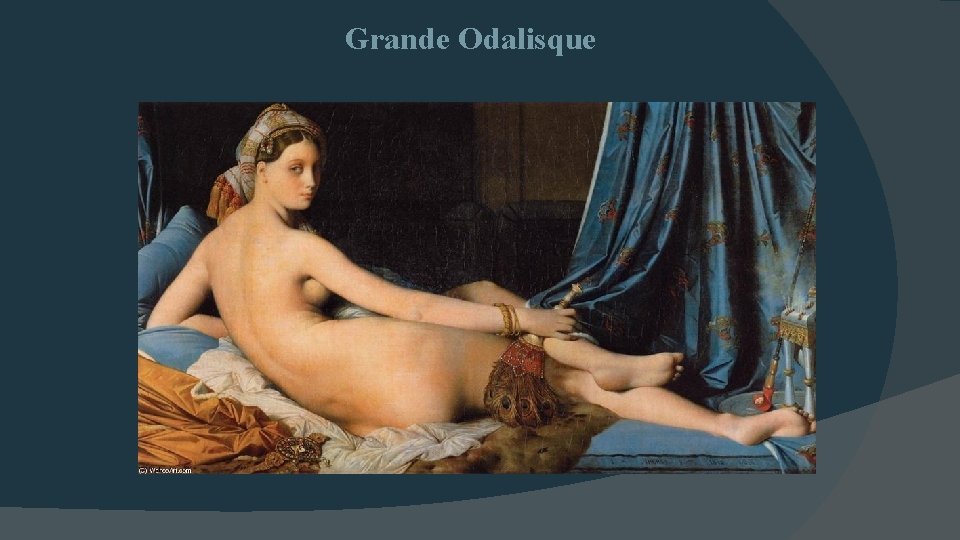
Grande Odalisque
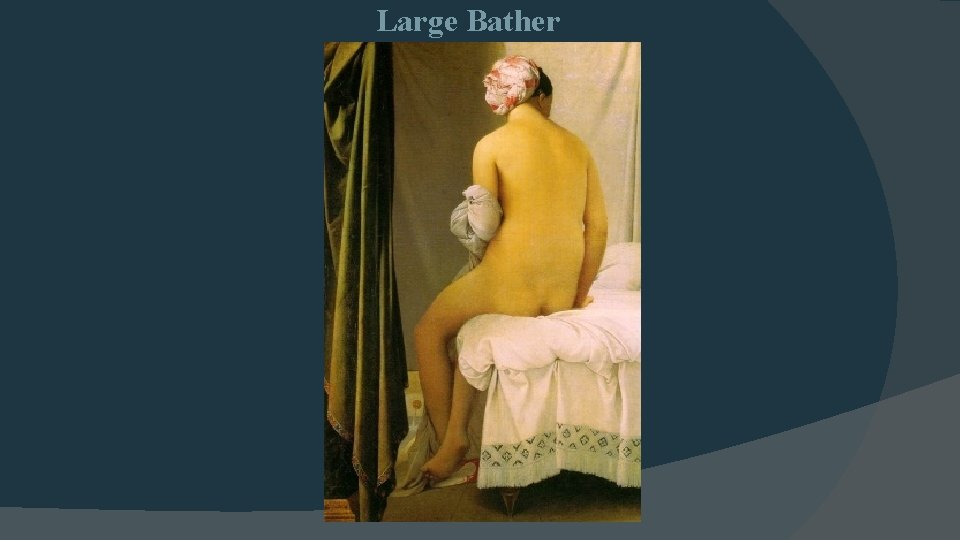
Large Bather
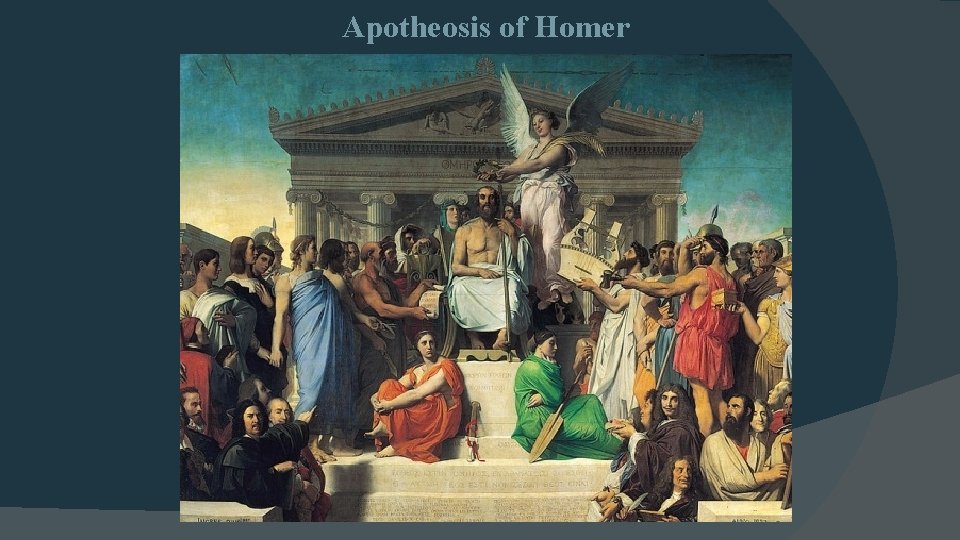
Apotheosis of Homer
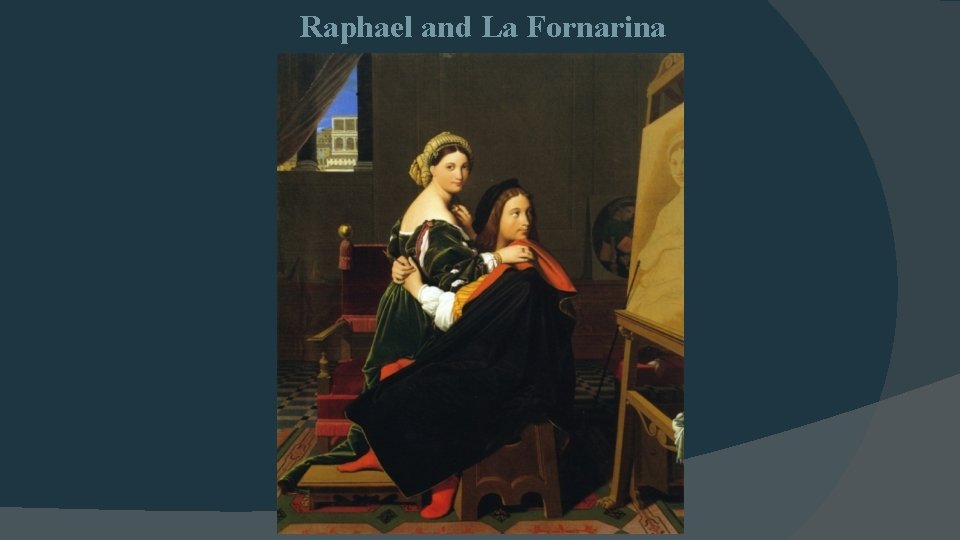
Raphael and La Fornarina
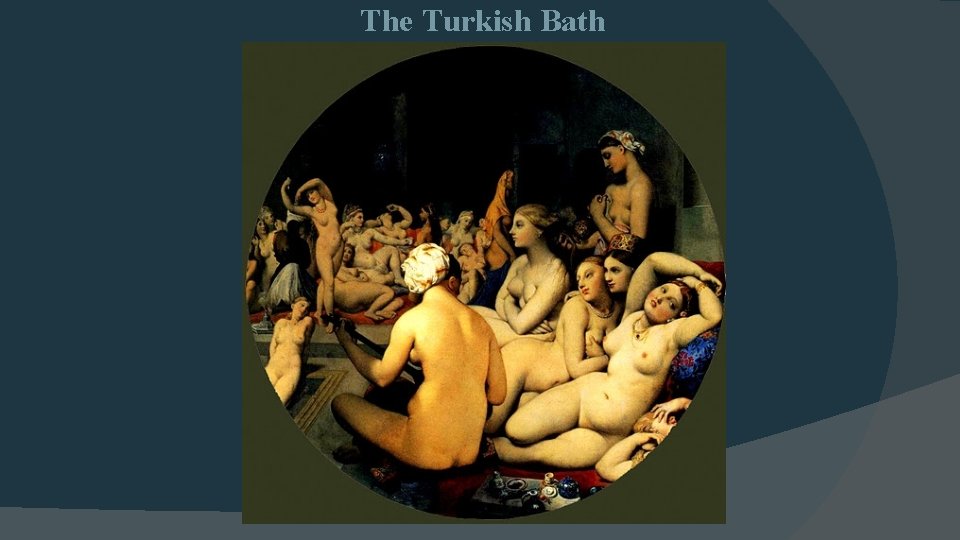
The Turkish Bath
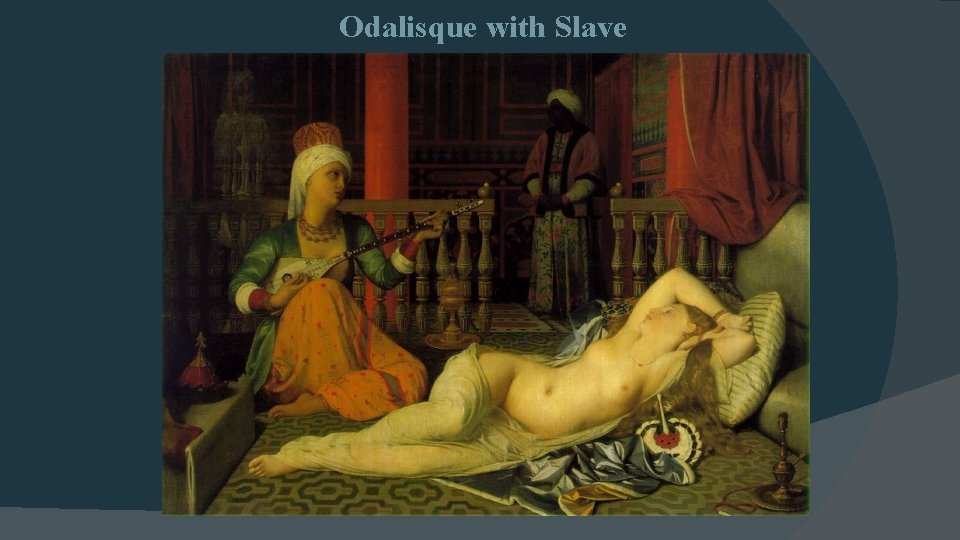
Odalisque with Slave
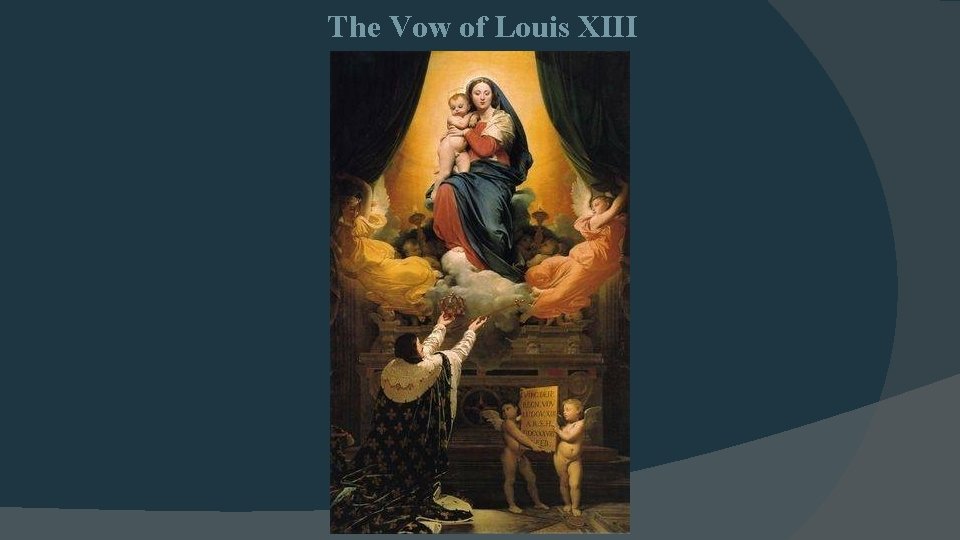
The Vow of Louis XIII
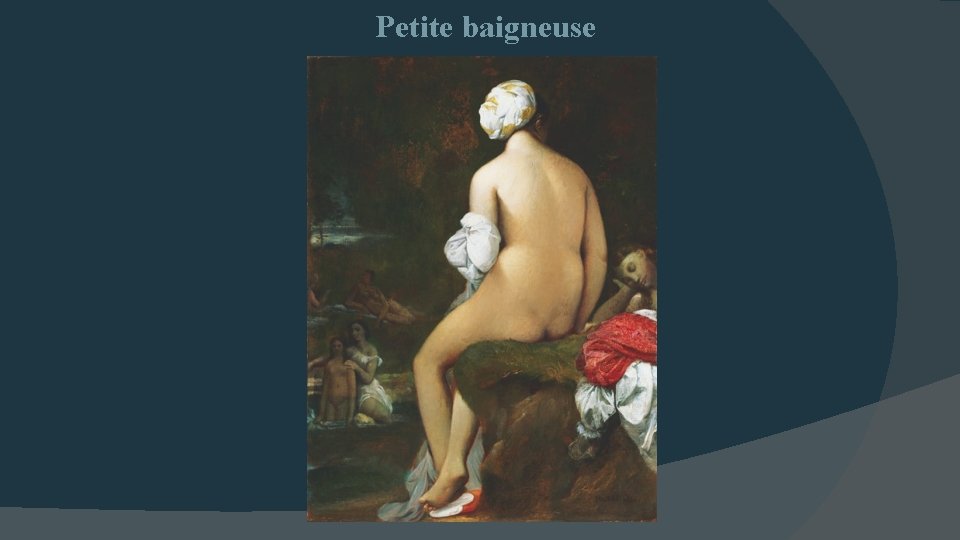
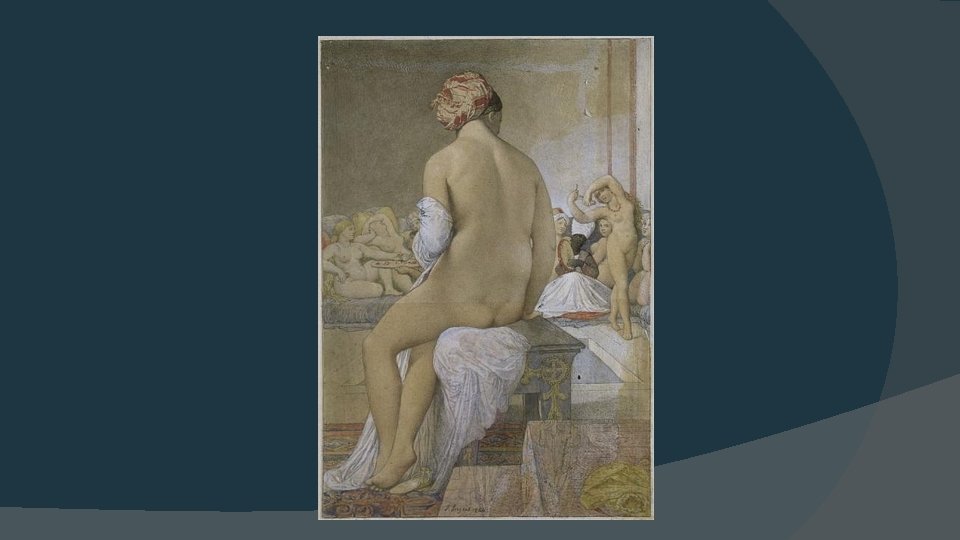
Petite baigneuse
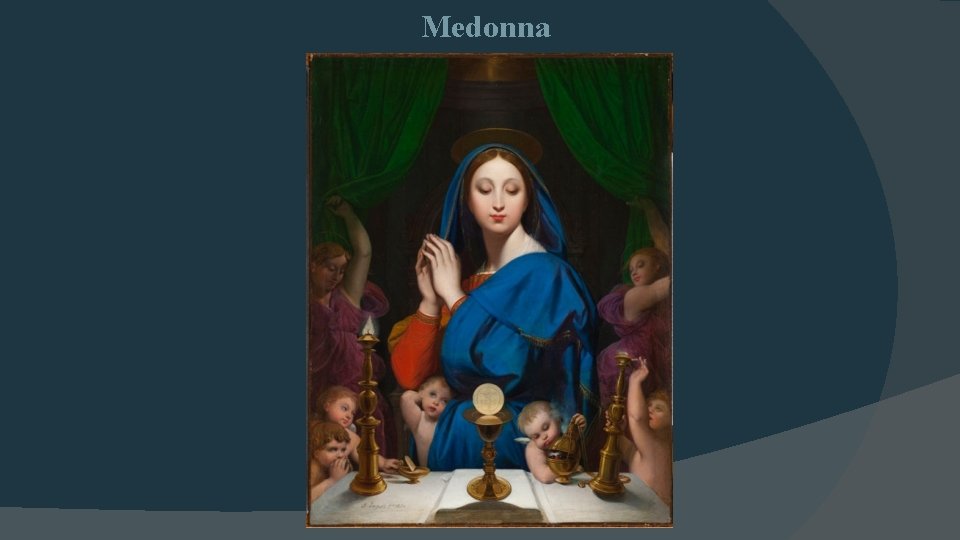
Medonna
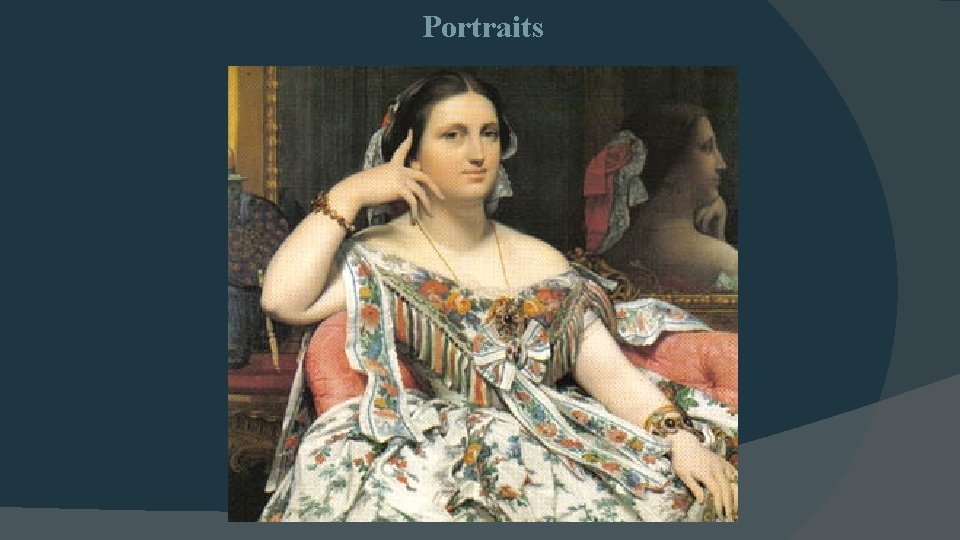
Portraits
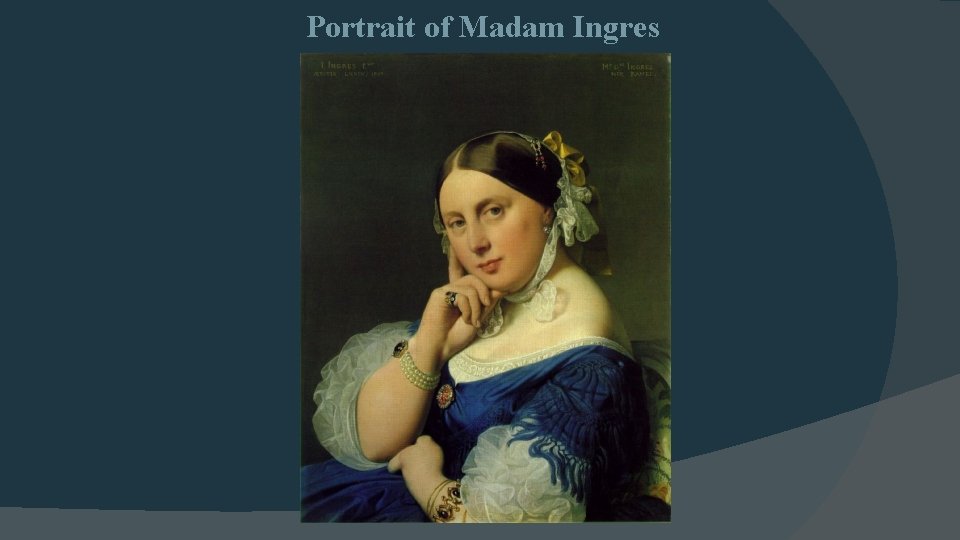
Portrait of Madam Ingres
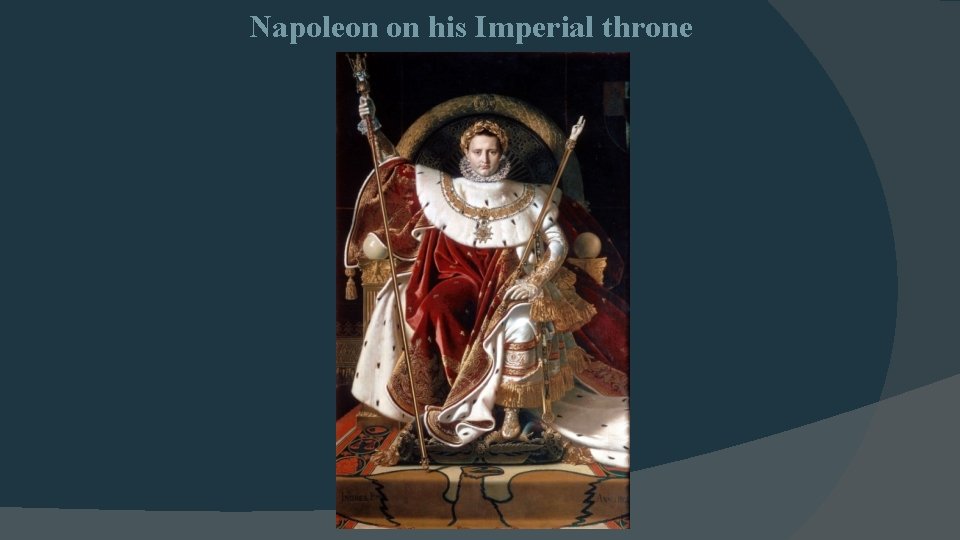
Napoleon on his Imperial throne
Linear Drawing
Linear Drawing
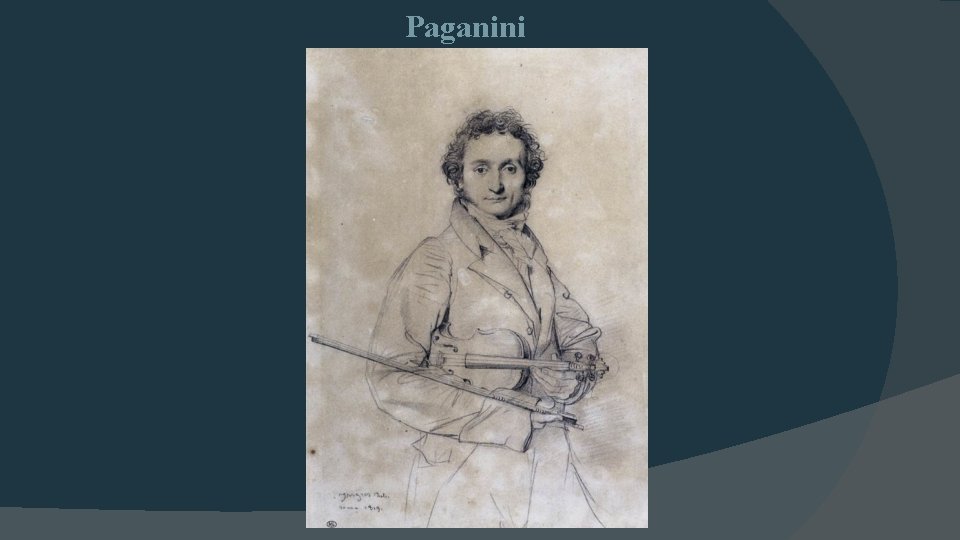
Paganini
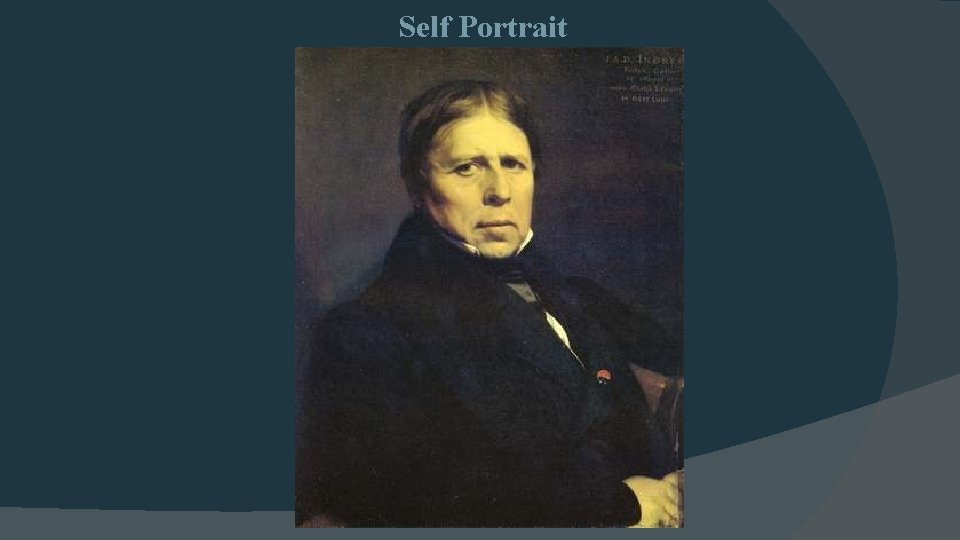
Self Portrait