
Auditory System Objectives Review the anatomy of ears

Auditory System
Objectives Review the anatomy of ears Correctly order the steps of inner ear response Explain the brain mechanism for sound localization Draw the central auditory pathway Understand the common audiometric/special hearing tests

Process of hearing 1. Sound waves strike the tympanic membrane 2. Then the sound waves are transmitted through middle ear and cochlear fluid in inner ear 3. The cochlear hair cells are activated and send the signal through CN VIII to brainstem 4. The signals go through several synapses before reaching thalamus, and then finally A 1 cortex
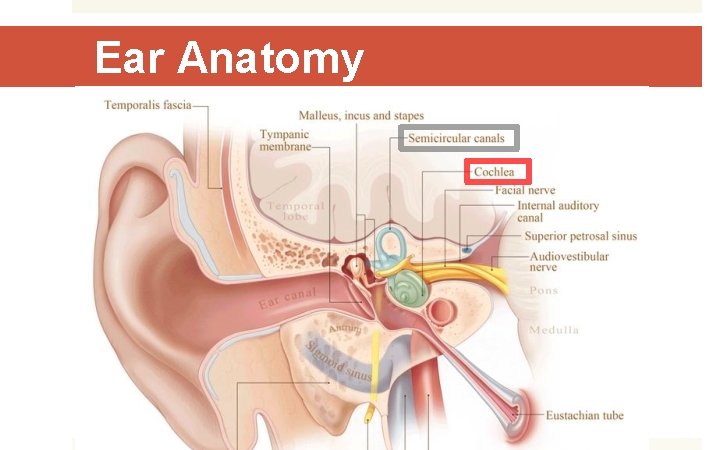
Ear Anatomy
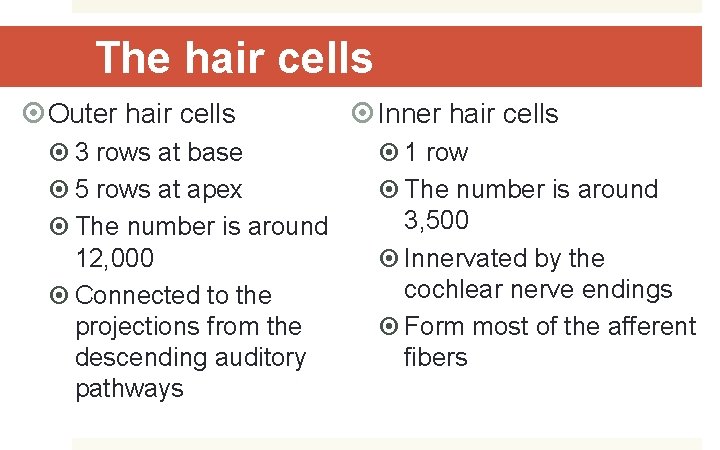
The hair cells Outer hair cells 3 rows at base 5 rows at apex The number is around 12, 000 Connected to the projections from the descending auditory pathways Inner hair cells 1 row The number is around 3, 500 Innervated by the cochlear nerve endings Form most of the afferent fibers
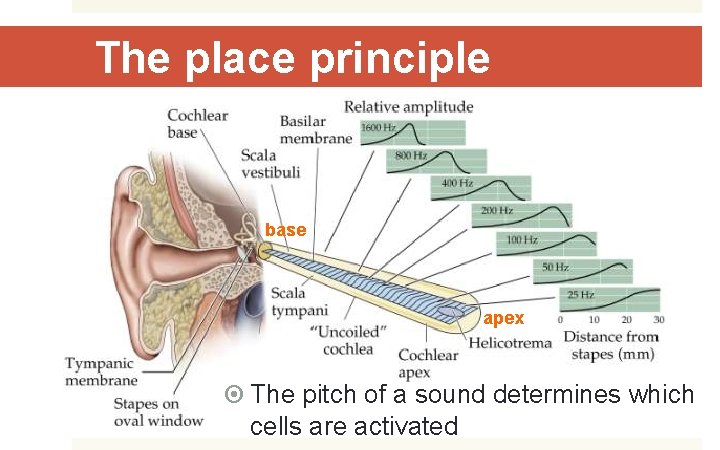
The place principle base apex The pitch of a sound determines which cells are activated
Video How sound is converted into electric signal https: //www. youtube. com/watch? v=1 JE 8 Wdu. JKV 4 From 1: 29, or 3: 31

Useful website Journal into the world of hearing http: //www. cochlea. eu/en/ear
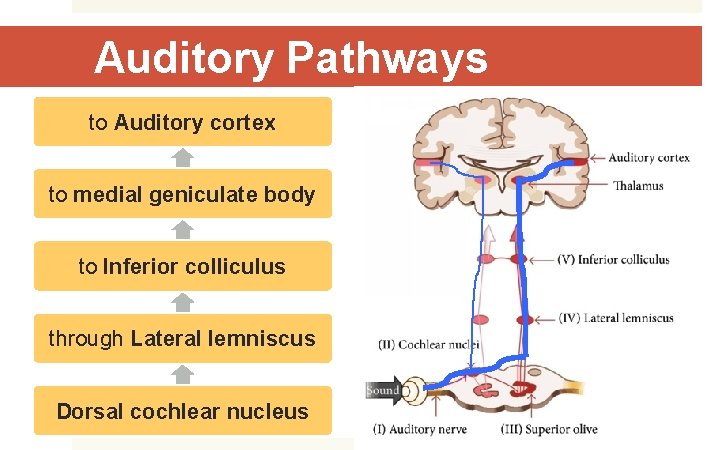
Auditory Pathways to Auditory cortex to medial geniculate body to Inferior colliculus through Lateral lemniscus Dorsal cochlear nucleus
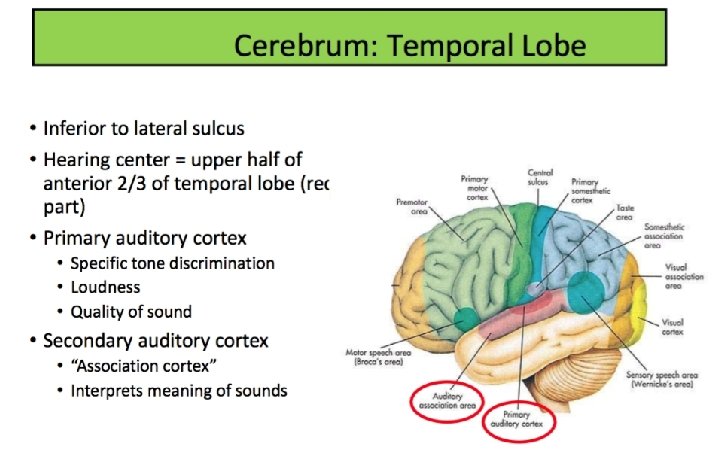
Thalamus: the relay center for most of the sensory inputs Receive tonotopic input from the ipsilateral inferior colliculus Send information to the ipsilateral temporal lobe (the gyri of Heschl in the superior temporal lobe)
Hearing impairment Conductive hearing loss Sensorineural hearing loss Mixed hearing loss Central auditory impairment
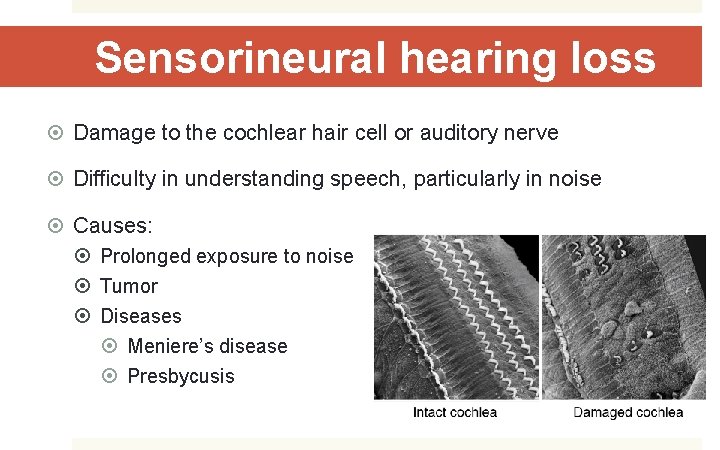
Sensorineural hearing loss Damage to the cochlear hair cell or auditory nerve Difficulty in understanding speech, particularly in noise Causes: Prolonged exposure to noise Tumor Diseases Meniere’s disease Presbycusis
Central auditory impairment Lower brainstem Superior olivary nucleus: minimal effect on hearing sensitivity, but troubles in localizing sound source and processing temporal information Lateral lemniscus: no severe hearing impairment, but subtle symptoms like impaired processing of speech in noise Upper brainstem Inferior colliculus: impaired auditory reflex and sound integration Medial geniculate body: difficulties in sound integration and attending to sound Cortical involvement Near-normal-hearing threshold, but impaired speech processing
Evaluations of Hearing impairment Tuning fork tests Pure tone audiometry Tympanometry Otoacoustic emission Auditory brainstem response audiometry

Pure tone audiometry Establish the threshold of hearing across frequency Most reliable test for evaluating hearing sensitivity
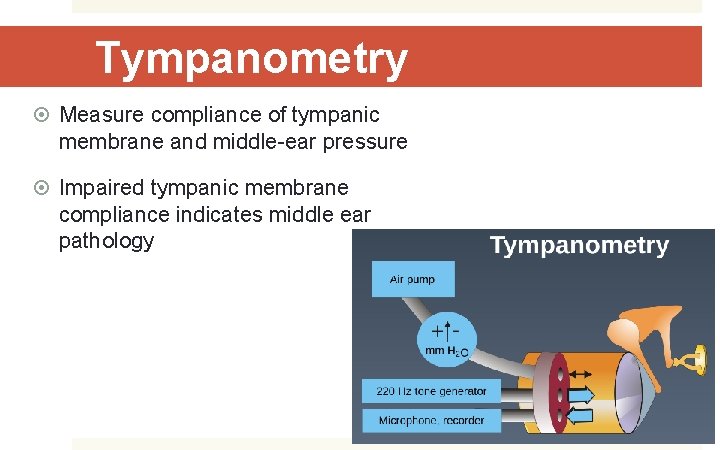
Tympanometry Measure compliance of tympanic membrane and middle-ear pressure Impaired tympanic membrane compliance indicates middle ear pathology
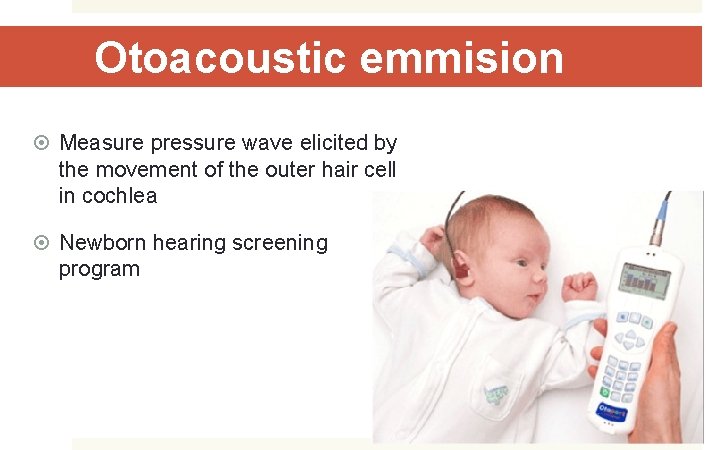
Otoacoustic emmision Measure pressure wave elicited by the movement of the outer hair cell in cochlea Newborn hearing screening program
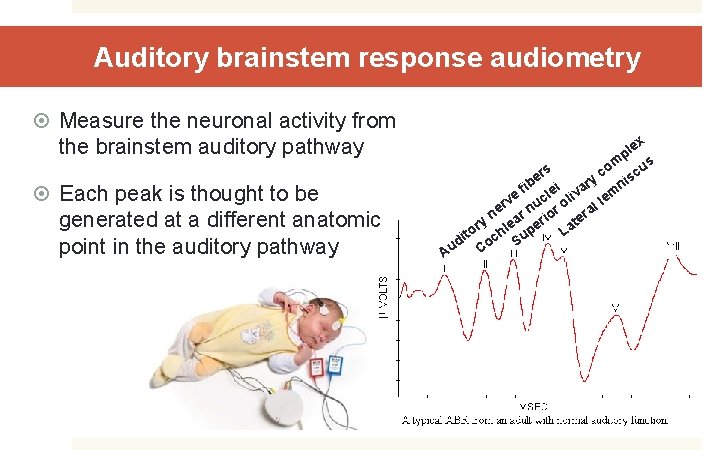
Auditory brainstem response audiometry Measure the neuronal activity from the brainstem auditory pathway Each peak is thought to be generated at a different anatomic point in the auditory pathway ex pl om cus s c r e is y fib lei var mn i e rv nuc r ol al le e r n o y lear eri ate r L ito och Sup d C Au
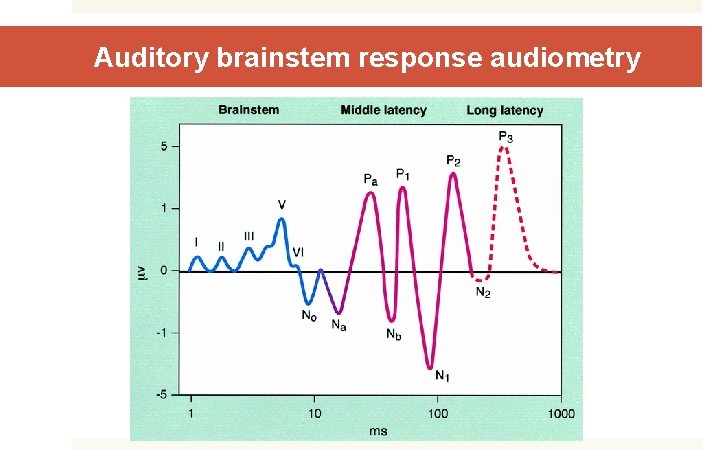
Auditory brainstem response audiometry

Vestibular System
Objectives The anatomy of vestibular system Vestibular pathway Vestibular projections and some of their functions Examples of vestibular dysfunction
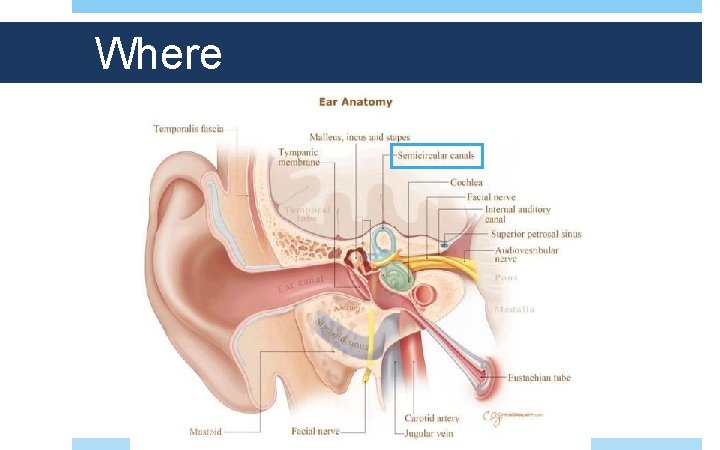
Where
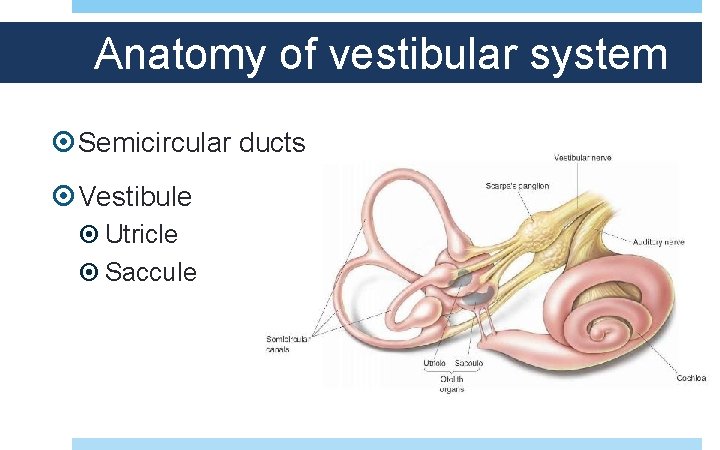
Anatomy of vestibular system Semicircular ducts Vestibule Utricle Saccule
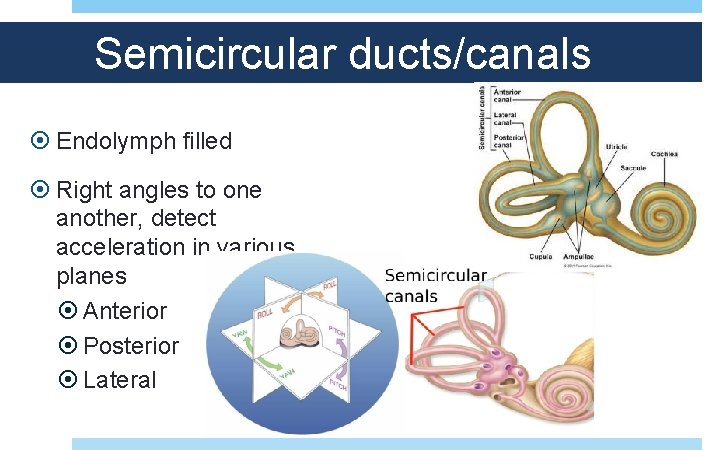
Semicircular ducts/canals Endolymph filled Right angles to one another, detect acceleration in various planes Anterior Posterior Lateral
Video https: //www. youtube. com/watch? v=YMIMv. Ba 8 XGs How the three semicircular ducts detect the head motion Start from 0: 20
Projections to Cerebellum Most of the projections from vestibular nuclei Form bidirectional projections Constant and updated vestibular feedback Monitoring body and head position Regulate muscular adjustment Maintenance of body equilibrium
Projections to Spinal cord A descending projection Enter the ventral column of the spinal cord Terminate at different spinal levels Maintain the muscle tone to counteract the gravity
Projections to some CNs Through medial longitudinal fasiculus to Oculomotor CN III Trochlear CN IV Abducens CN VI Spinal accessory nerve CN XI Coordinate eye and head movements
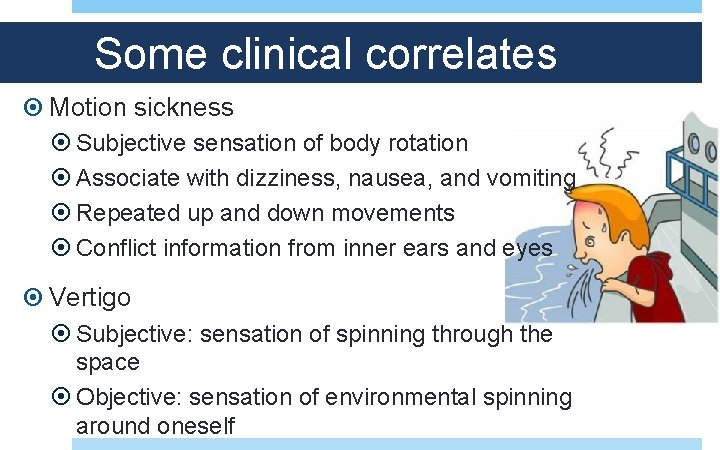
Some clinical correlates Motion sickness Subjective sensation of body rotation Associate with dizziness, nausea, and vomiting Repeated up and down movements Conflict information from inner ears and eyes Vertigo Subjective: sensation of spinning through the space Objective: sensation of environmental spinning around oneself
- Slides: 29