
Audit of the Inventory and Warehousing Cycle Chapter


- Slides: 39
Audit of the Inventory and Warehousing Cycle Chapter 21 © 2006 Prentice Hall Business Publishing, Auditing 11/e, Arens/Beasley/Elder 21 - 1
Learning Objective 1 Describe the business functions and the related documents and records in the inventory and warehousing cycle. © 2006 Prentice Hall Business Publishing, Auditing 11/e, Arens/Beasley/Elder 21 - 2
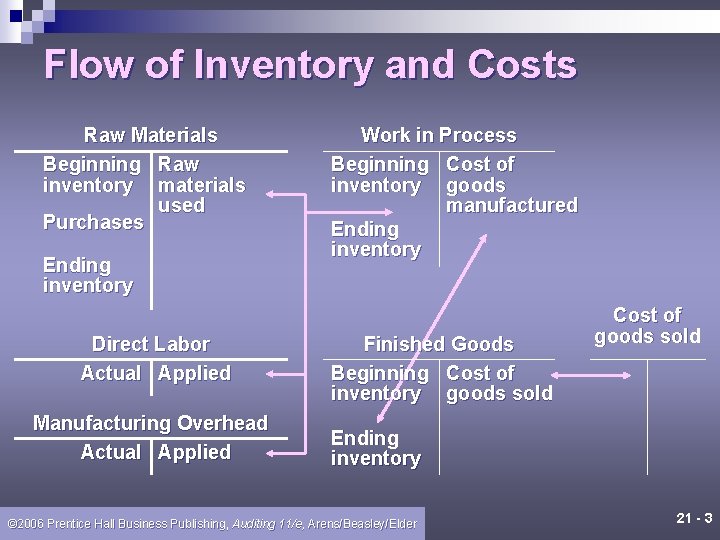
Flow of Inventory and Costs Raw Materials Beginning Raw inventory materials used Purchases Ending inventory Direct Labor Actual Applied Manufacturing Overhead Actual Applied Work in Process Beginning Cost of inventory goods manufactured Ending inventory Finished Goods Beginning Cost of inventory goods sold Cost of goods sold Ending inventory © 2006 Prentice Hall Business Publishing, Auditing 11/e, Arens/Beasley/Elder 21 - 3
Functions in the Inventory and Warehousing Cycle Process Receive purchase raw orders materials Store raw materials Process the goods Store finished goods Ship finished goods Flow of Put materials in storage Put materials in production Put completed goods in storage Ship finished goods Receive raw inventory materials © 2006 Prentice Hall Business Publishing, Auditing 11/e, Arens/Beasley/Elder 21 - 4
Learning Objective 2 Describe how e-commerce affects inventory management. © 2006 Prentice Hall Business Publishing, Auditing 11/e, Arens/Beasley/Elder 21 - 5
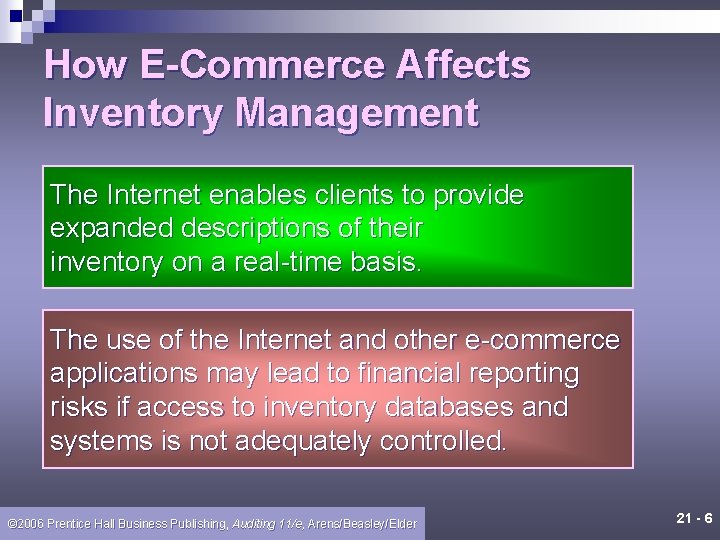
How E-Commerce Affects Inventory Management The Internet enables clients to provide expanded descriptions of their inventory on a real-time basis. The use of the Internet and other e-commerce applications may lead to financial reporting risks if access to inventory databases and systems is not adequately controlled. © 2006 Prentice Hall Business Publishing, Auditing 11/e, Arens/Beasley/Elder 21 - 6
Learning Objective 3 Explain the five parts of the audit of the inventory and warehousing cycle. © 2006 Prentice Hall Business Publishing, Auditing 11/e, Arens/Beasley/Elder 21 - 7
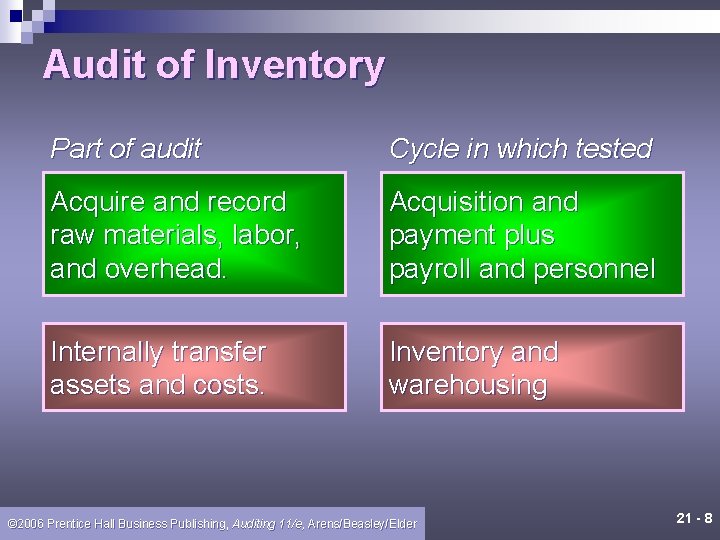
Audit of Inventory Part of audit Cycle in which tested Acquire and record raw materials, labor, and overhead. Acquisition and payment plus payroll and personnel Internally transfer assets and costs. Inventory and warehousing © 2006 Prentice Hall Business Publishing, Auditing 11/e, Arens/Beasley/Elder 21 - 8
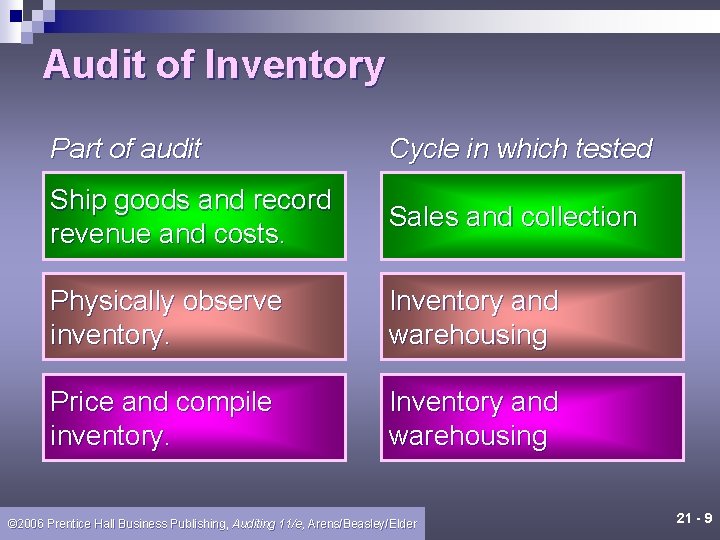
Audit of Inventory Part of audit Cycle in which tested Ship goods and record revenue and costs. Sales and collection Physically observe inventory. Inventory and warehousing Price and compile inventory. Inventory and warehousing © 2006 Prentice Hall Business Publishing, Auditing 11/e, Arens/Beasley/Elder 21 - 9
Learning Objective 4 Design and perform audit tests of cost accounting. © 2006 Prentice Hall Business Publishing, Auditing 11/e, Arens/Beasley/Elder 21 - 10
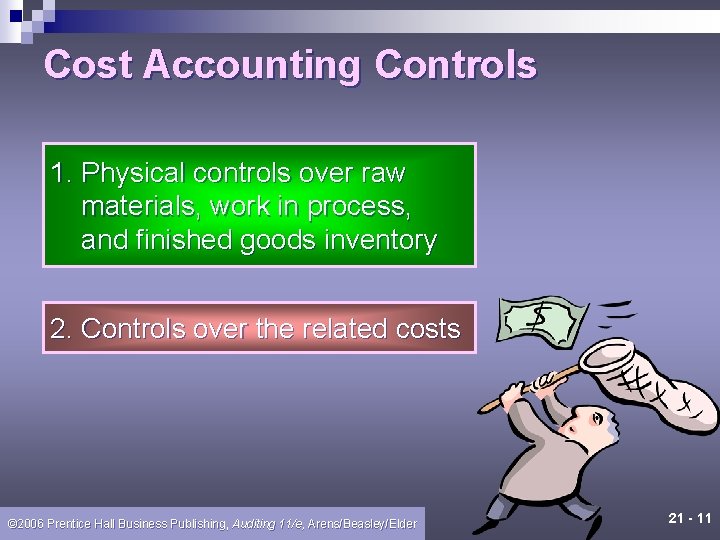
Cost Accounting Controls 1. Physical controls over raw materials, work in process, and finished goods inventory 2. Controls over the related costs © 2006 Prentice Hall Business Publishing, Auditing 11/e, Arens/Beasley/Elder 21 - 11
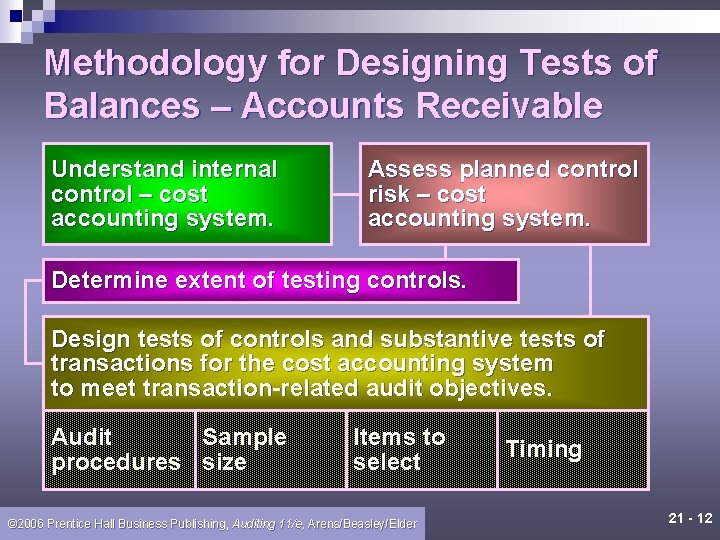
Methodology for Designing Tests of Balances – Accounts Receivable Understand internal control – cost accounting system. Assess planned control risk – cost accounting system. Determine extent of testing controls. Design tests of controls and substantive tests of transactions for the cost accounting system to meet transaction-related audit objectives. Audit Sample procedures size Items to select © 2006 Prentice Hall Business Publishing, Auditing 11/e, Arens/Beasley/Elder Timing 21 - 12
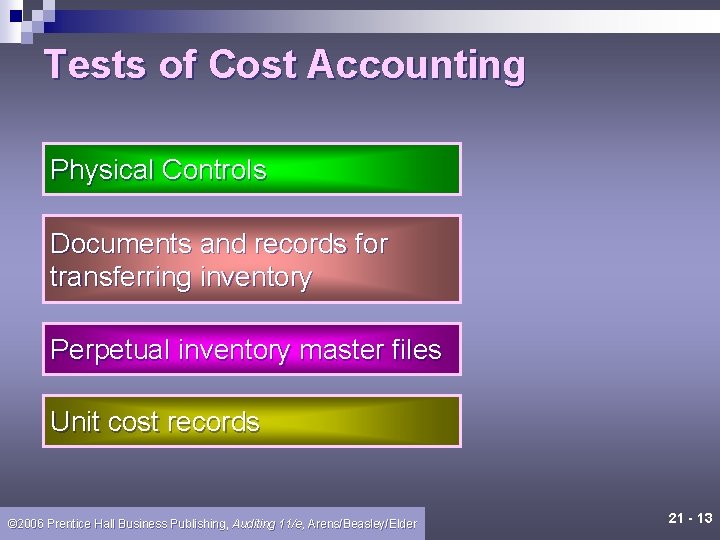
Tests of Cost Accounting Physical Controls Documents and records for transferring inventory Perpetual inventory master files Unit cost records © 2006 Prentice Hall Business Publishing, Auditing 11/e, Arens/Beasley/Elder 21 - 13
Learning Objective 5 Apply analytical procedures to the accounts in the inventory and warehousing cycle. © 2006 Prentice Hall Business Publishing, Auditing 11/e, Arens/Beasley/Elder 21 - 14
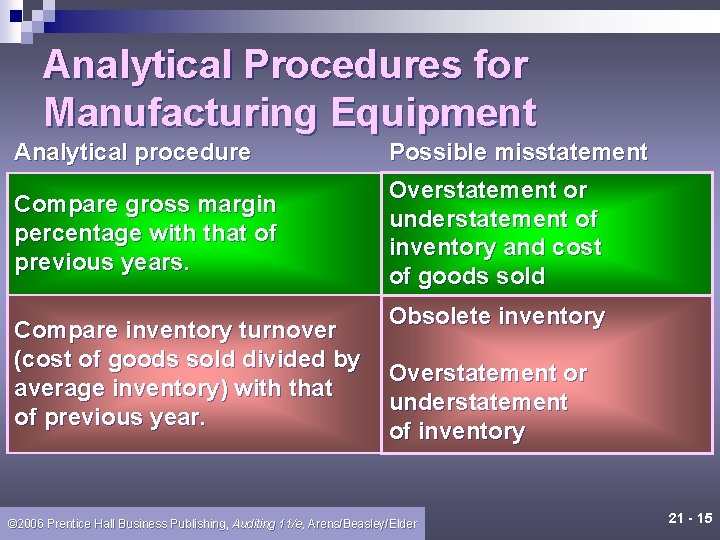
Analytical Procedures for Manufacturing Equipment Analytical procedure Possible misstatement Compare gross margin percentage with that of previous years. Overstatement or understatement of inventory and cost of goods sold Compare inventory turnover (cost of goods sold divided by average inventory) with that of previous year. Obsolete inventory Overstatement or understatement of inventory © 2006 Prentice Hall Business Publishing, Auditing 11/e, Arens/Beasley/Elder 21 - 15
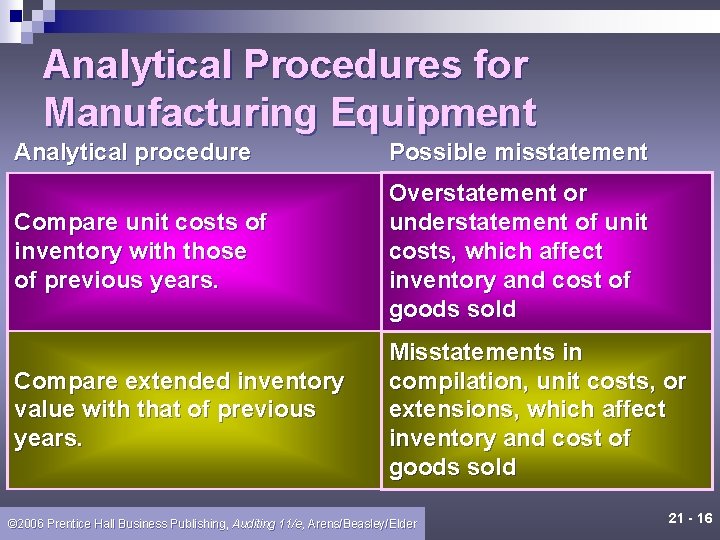
Analytical Procedures for Manufacturing Equipment Analytical procedure Possible misstatement Compare unit costs of inventory with those of previous years. Overstatement or understatement of unit costs, which affect inventory and cost of goods sold Compare extended inventory value with that of previous years. Misstatements in compilation, unit costs, or extensions, which affect inventory and cost of goods sold © 2006 Prentice Hall Business Publishing, Auditing 11/e, Arens/Beasley/Elder 21 - 16
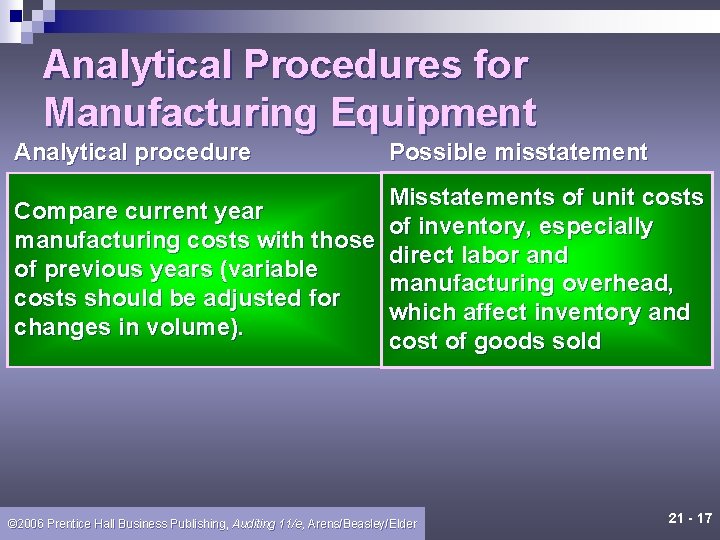
Analytical Procedures for Manufacturing Equipment Analytical procedure Possible misstatement Compare current year manufacturing costs with those of previous years (variable costs should be adjusted for changes in volume). Misstatements of unit costs of inventory, especially direct labor and manufacturing overhead, which affect inventory and cost of goods sold © 2006 Prentice Hall Business Publishing, Auditing 11/e, Arens/Beasley/Elder 21 - 17
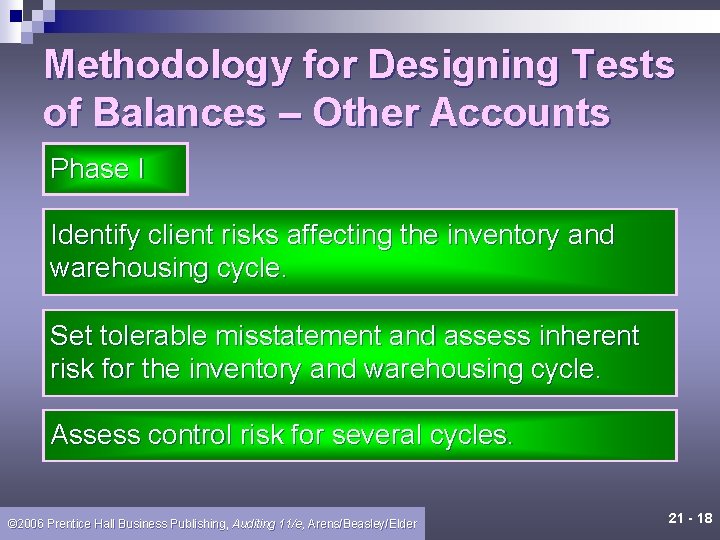
Methodology for Designing Tests of Balances – Other Accounts Phase I Identify client risks affecting the inventory and warehousing cycle. Set tolerable misstatement and assess inherent risk for the inventory and warehousing cycle. Assess control risk for several cycles. © 2006 Prentice Hall Business Publishing, Auditing 11/e, Arens/Beasley/Elder 21 - 18
Methodology for Designing Tests of Balances – Other Accounts Phase II Design and perform tests of controls and substantive tests of transactions for several cycles. © 2006 Prentice Hall Business Publishing, Auditing 11/e, Arens/Beasley/Elder 21 - 19
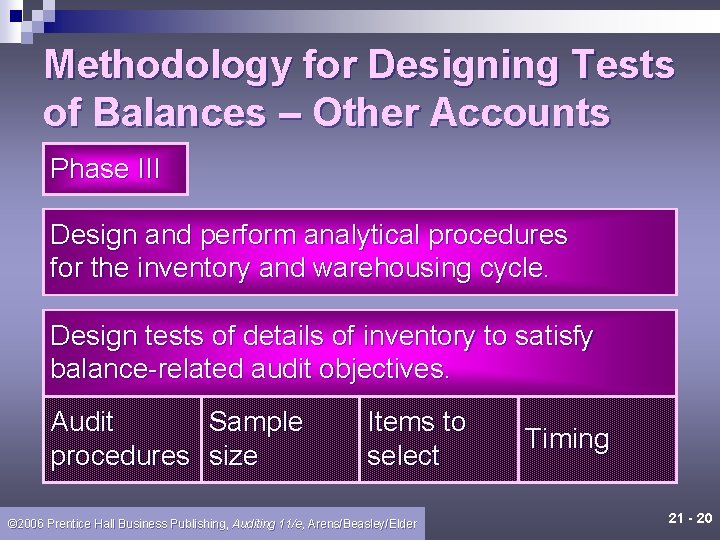
Methodology for Designing Tests of Balances – Other Accounts Phase III Design and perform analytical procedures for the inventory and warehousing cycle. Design tests of details of inventory to satisfy balance-related audit objectives. Audit Sample procedures size Items to select © 2006 Prentice Hall Business Publishing, Auditing 11/e, Arens/Beasley/Elder Timing 21 - 20
Learning Objective 6 Design and perform physical observation audit tests for inventory. © 2006 Prentice Hall Business Publishing, Auditing 11/e, Arens/Beasley/Elder 21 - 21
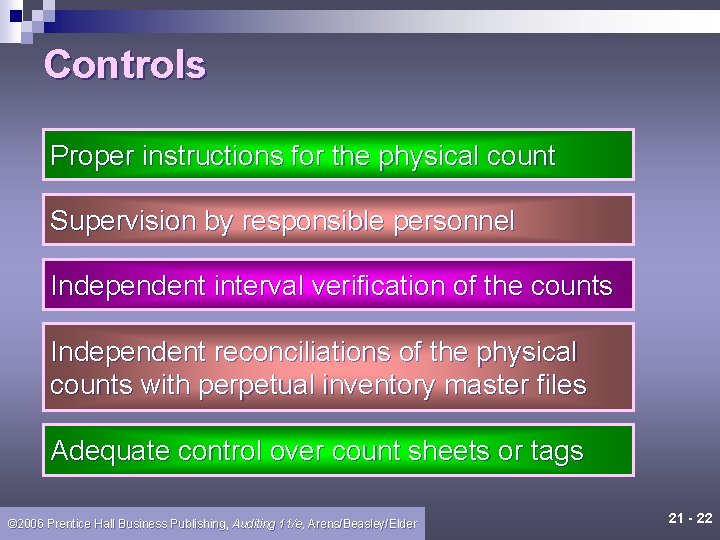
Controls Proper instructions for the physical count Supervision by responsible personnel Independent interval verification of the counts Independent reconciliations of the physical counts with perpetual inventory master files Adequate control over count sheets or tags © 2006 Prentice Hall Business Publishing, Auditing 11/e, Arens/Beasley/Elder 21 - 22
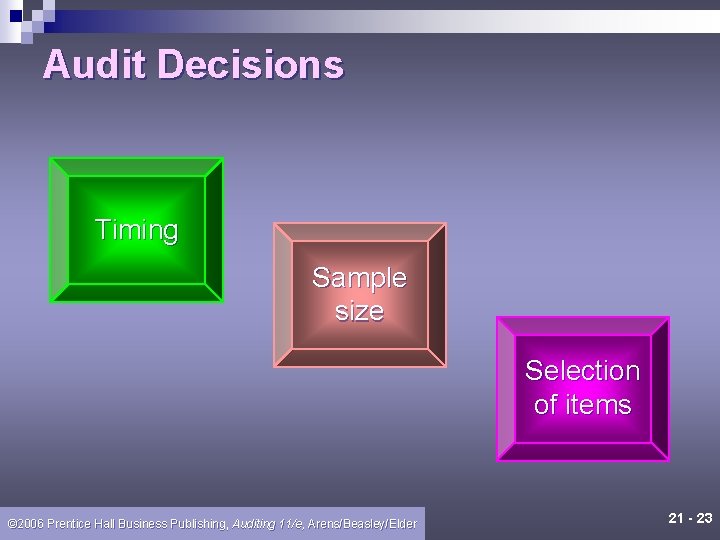
Audit Decisions Timing Sample size Selection of items © 2006 Prentice Hall Business Publishing, Auditing 11/e, Arens/Beasley/Elder 21 - 23
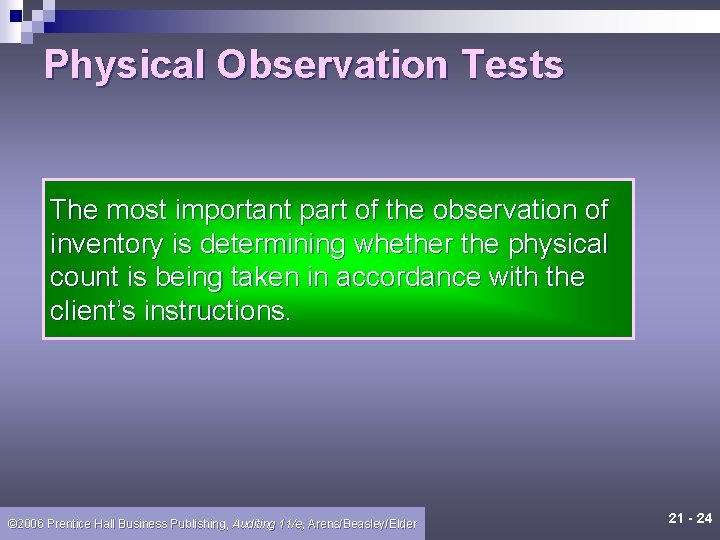
Physical Observation Tests The most important part of the observation of inventory is determining whether the physical count is being taken in accordance with the client’s instructions. © 2006 Prentice Hall Business Publishing, Auditing 11/e, Arens/Beasley/Elder 21 - 24
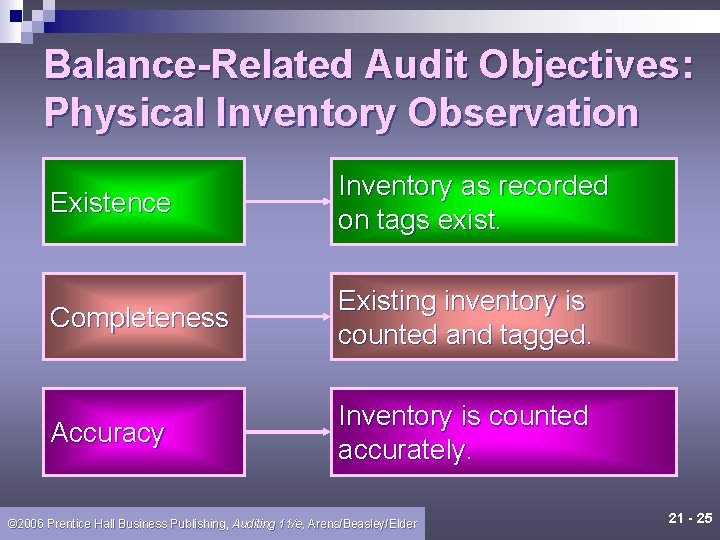
Balance-Related Audit Objectives: Physical Inventory Observation Existence Inventory as recorded on tags exist. Completeness Existing inventory is counted and tagged. Accuracy Inventory is counted accurately. © 2006 Prentice Hall Business Publishing, Auditing 11/e, Arens/Beasley/Elder 21 - 25
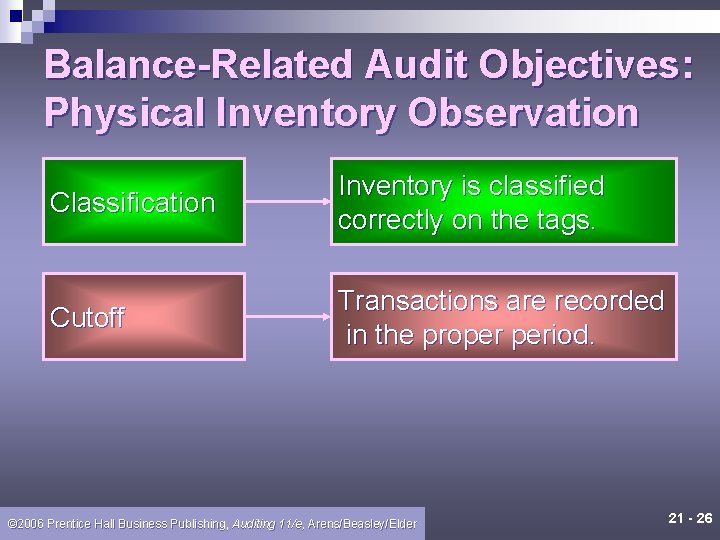
Balance-Related Audit Objectives: Physical Inventory Observation Classification Inventory is classified correctly on the tags. Cutoff Transactions are recorded in the proper period. © 2006 Prentice Hall Business Publishing, Auditing 11/e, Arens/Beasley/Elder 21 - 26
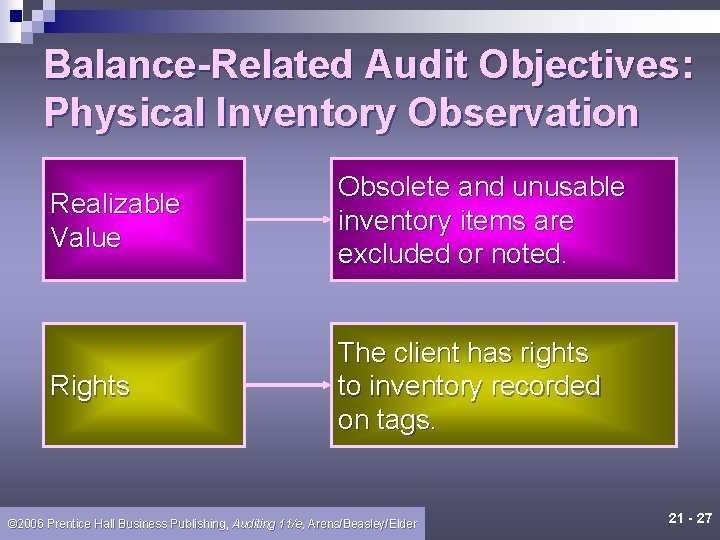
Balance-Related Audit Objectives: Physical Inventory Observation Realizable Value Obsolete and unusable inventory items are excluded or noted. Rights The client has rights to inventory recorded on tags. © 2006 Prentice Hall Business Publishing, Auditing 11/e, Arens/Beasley/Elder 21 - 27
Learning Objective 7 Design and perform audit tests of pricing and compilation for inventory. © 2006 Prentice Hall Business Publishing, Auditing 11/e, Arens/Beasley/Elder 21 - 28
Audit of Pricing and Compilation Inventory price tests Inventory compilation tests © 2006 Prentice Hall Business Publishing, Auditing 11/e, Arens/Beasley/Elder 21 - 29
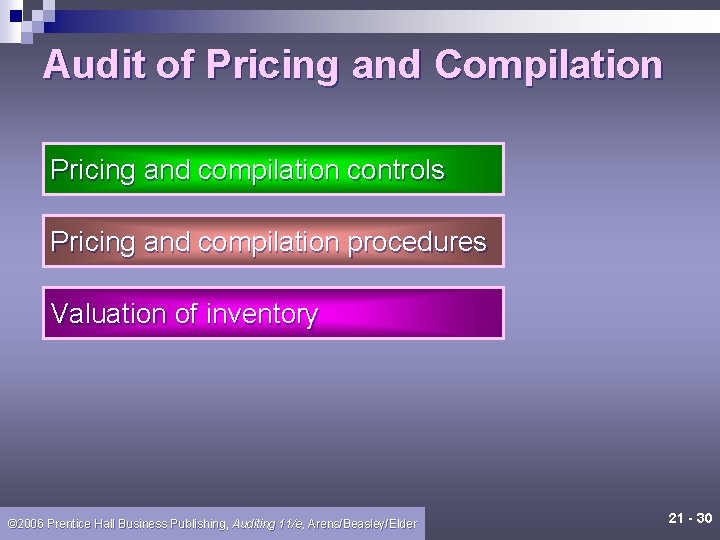
Audit of Pricing and Compilation Pricing and compilation controls Pricing and compilation procedures Valuation of inventory © 2006 Prentice Hall Business Publishing, Auditing 11/e, Arens/Beasley/Elder 21 - 30
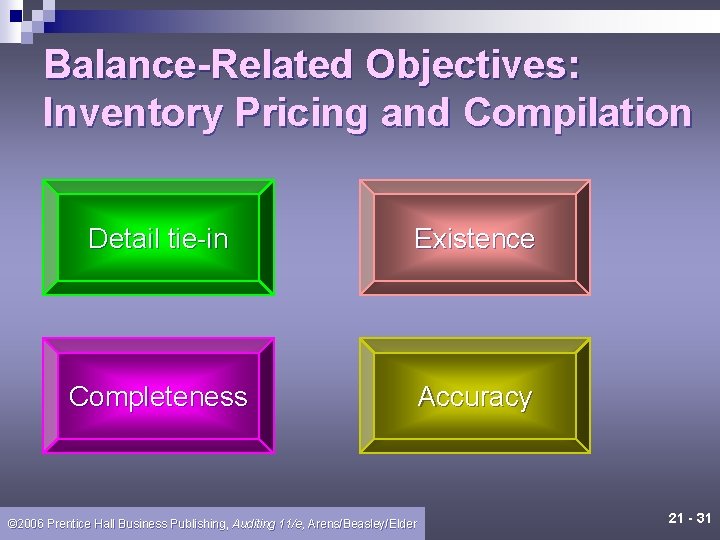
Balance-Related Objectives: Inventory Pricing and Compilation Detail tie-in Existence Completeness Accuracy © 2006 Prentice Hall Business Publishing, Auditing 11/e, Arens/Beasley/Elder 21 - 31
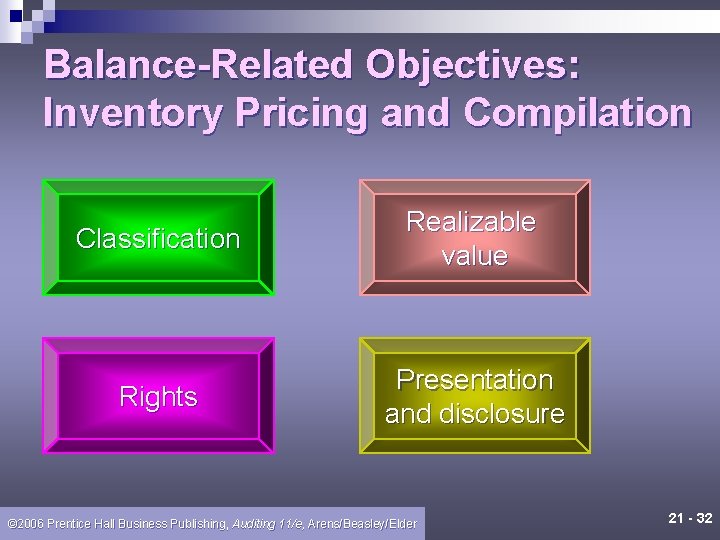
Balance-Related Objectives: Inventory Pricing and Compilation Classification Realizable value Rights Presentation and disclosure © 2006 Prentice Hall Business Publishing, Auditing 11/e, Arens/Beasley/Elder 21 - 32
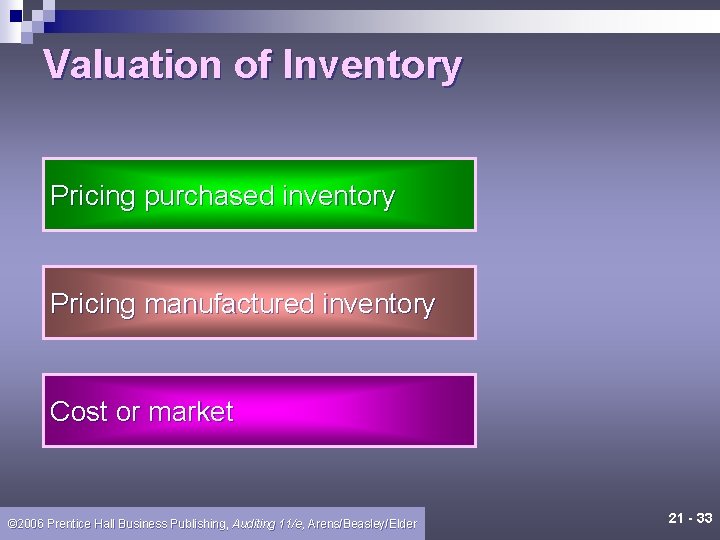
Valuation of Inventory Pricing purchased inventory Pricing manufactured inventory Cost or market © 2006 Prentice Hall Business Publishing, Auditing 11/e, Arens/Beasley/Elder 21 - 33
Learning Objective 8 Integrate the various parts of the audit of the inventory and warehousing cycle. © 2006 Prentice Hall Business Publishing, Auditing 11/e, Arens/Beasley/Elder 21 - 34
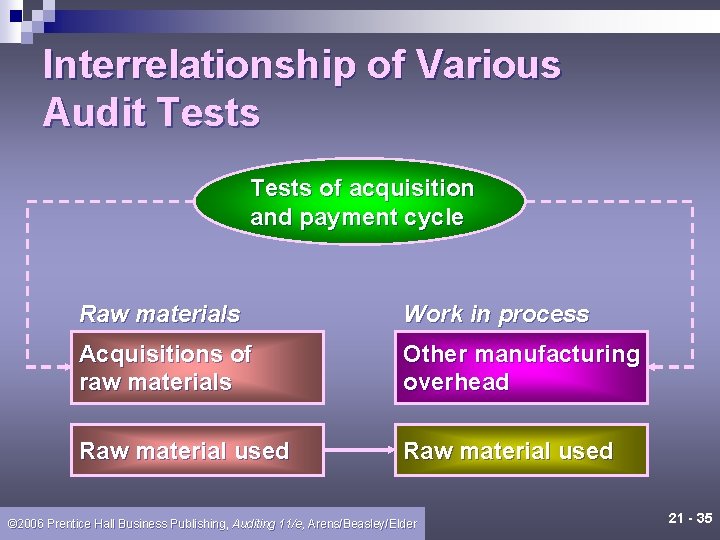
Interrelationship of Various Audit Tests of acquisition and payment cycle Raw materials Work in process Acquisitions of raw materials Other manufacturing overhead Raw material used © 2006 Prentice Hall Business Publishing, Auditing 11/e, Arens/Beasley/Elder 21 - 35
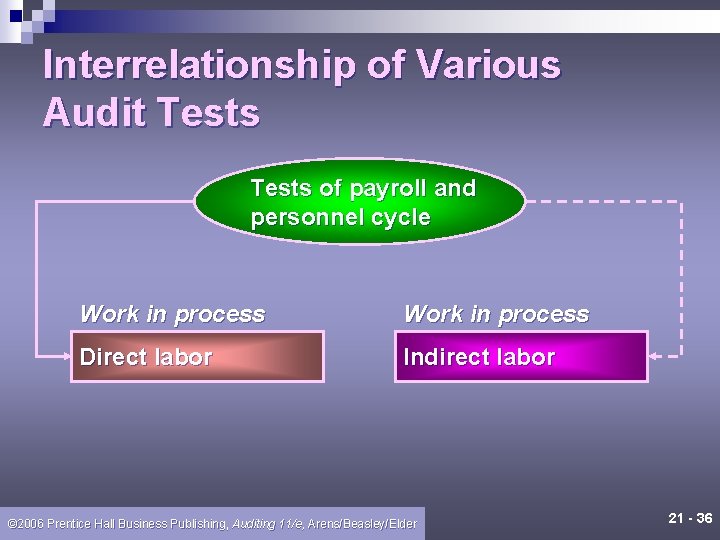
Interrelationship of Various Audit Tests of payroll and personnel cycle Work in process Direct labor Indirect labor © 2006 Prentice Hall Business Publishing, Auditing 11/e, Arens/Beasley/Elder 21 - 36
Interrelationship of Various Audit Tests Inventory tests • Tests of cost accounting records • Tests of physical inventory observation • Tests of pricing and compilation Raw materials Work in process Ending inventory Finished goods Ending inventory © 2006 Prentice Hall Business Publishing, Auditing 11/e, Arens/Beasley/Elder 21 - 37
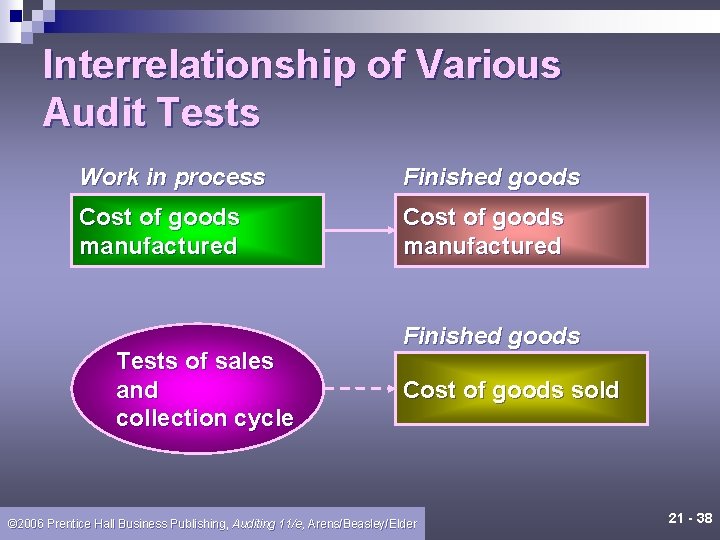
Interrelationship of Various Audit Tests Work in process Finished goods Cost of goods manufactured Tests of sales and collection cycle Finished goods Cost of goods sold © 2006 Prentice Hall Business Publishing, Auditing 11/e, Arens/Beasley/Elder 21 - 38
End of Chapter 21 © 2006 Prentice Hall Business Publishing, Auditing 11/e, Arens/Beasley/Elder 21 - 39