
Audiology Advocacy Audiologists responsibility to EHDI Mary Beth
Audiology Advocacy Audiologists responsibility to EHDI Mary Beth Brinson, Au. D. Stephanie Disney, M. S. CCC-A
Presentation Points w Historical Perspective Survey comparisons Audiological services comparison w Pediatric Audiology Crisis Professional Organizations and Plans Au. D. solutions w Case Studies w Problem solving and discussion
Historical Perspective w In 2000, Kentucky audiologists were surveyed about pediatric audiology protocols, equipment availability, training needs and resources, and community collaboration w 54% of those surveyed responded (41/75)
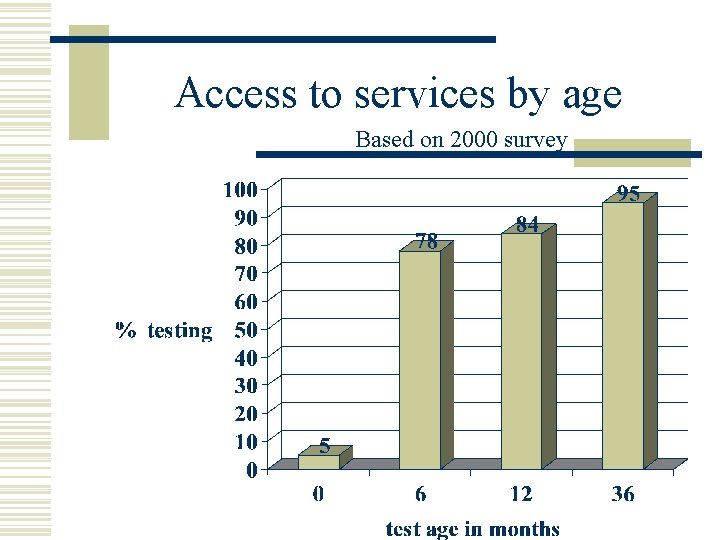
Access to services by age Based on 2000 survey
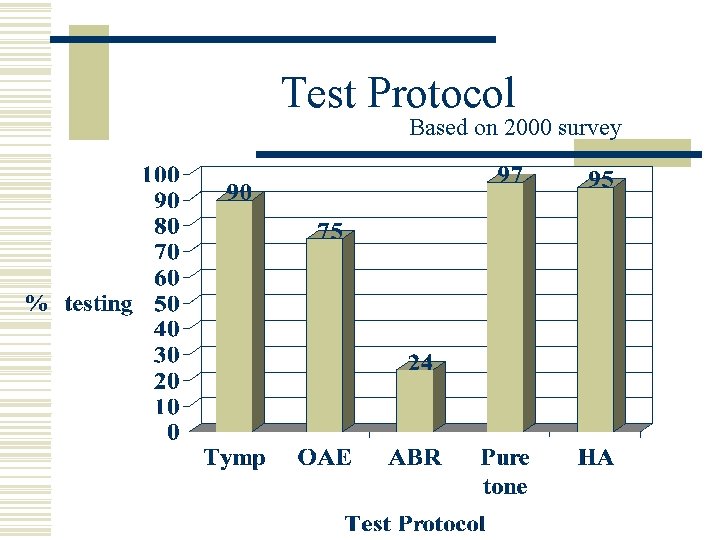
Test Protocol Based on 2000 survey
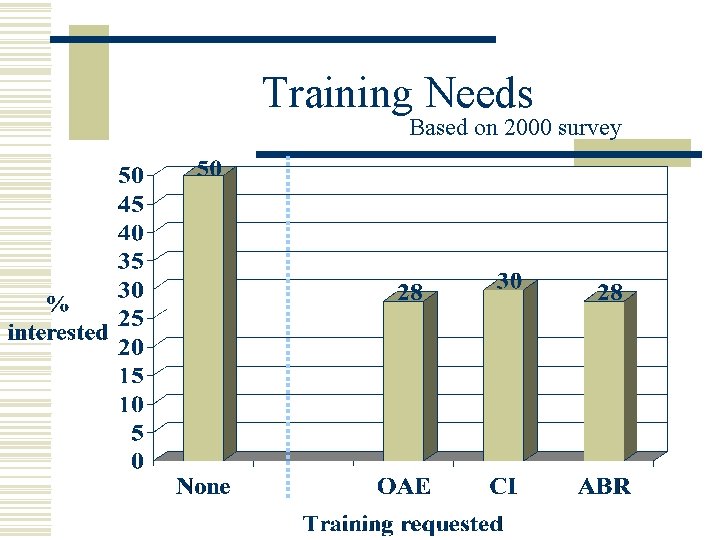
Training Needs Based on 2000 survey
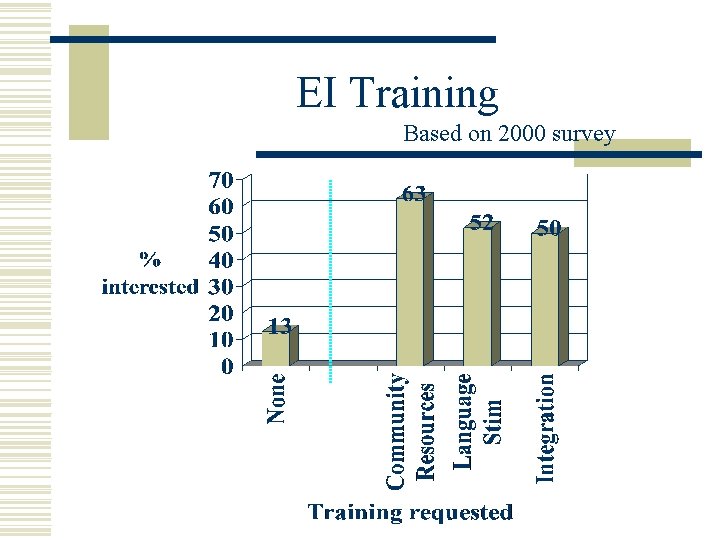
EI Training Based on 2000 survey
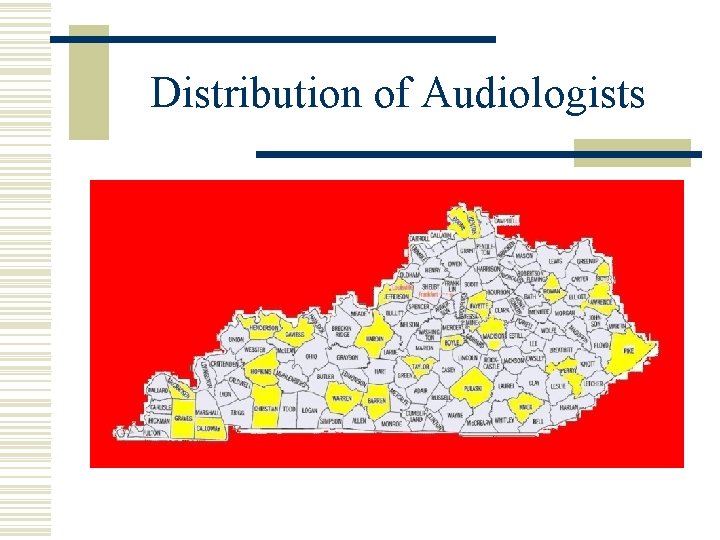
Distribution of Audiologists
Pediatric Audiology Crisis w Paradise and Bess (1994) article: Predicted inability to provide quality follow-up from UNHS due to high numbers w Speculated that there were not enough qualified professionals
High Risk Registry vs. UNHS w High risk registry: misses estimated 50% of permanent childhood hearing loss w Crisis is that theoretically we have doubled the babies entering the system w Where are the additional qualified providers?
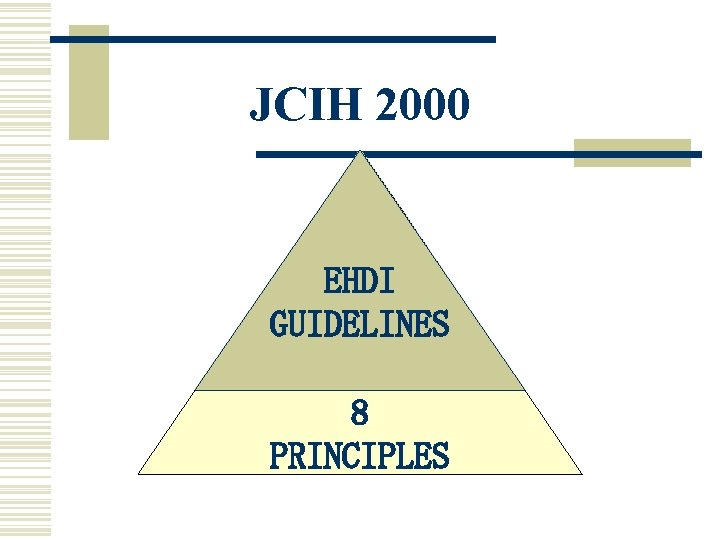
JCIH 2000 EHDI GUIDELINES 8 PRINCIPLES
Audiology Test Battery Ø Includes physiological measures Ø Includes developmental appropriate behavioral techniques Ø Measures that assess integrity of the auditory system Ø Estimate for each ear type, degree and configuration of hearing loss
JCIH Guidelines (6 through 36 months) n n n Family and child history Behavioral Response Audiometry (CPA, VRA)* Otoacoustic emissions Acoustic emittance measures Speech detection and recognition measures* Electrophysiologic (ABR) testing: at least once* *requires special adaptations for pediatrics
JCIH Guidelines (0 through 6 months) w Family and child history* w Frequency specific electrophysiological test (ABR or ASSR)/Bone conduction* w Otoacoustic emissions w Middle ear function test/ ART* w Behavioral Observation Audiometry* *Requires special adaptations for pediatrics
“Adequate confirmation of an infant’s hearing status cannot be obtained from a single test measure. A battery crosschecks findings of both physiological and behavioral measures. ” JCIH
Confirmation of Hearing Loss: Benchmarks Ø Comprehensive services coordinated between the medical home, family and related professionals with expertise in hearing loss. Ø Audiologic and medical evaluations before 3 months of age or 3 months after discharge for NICU infants Ø Infants with diagnosed hearing loss receive and otologic evaluation Ø The medical and audiologic evaluation process perceived as positive and supportive

Clinical Doctorate?
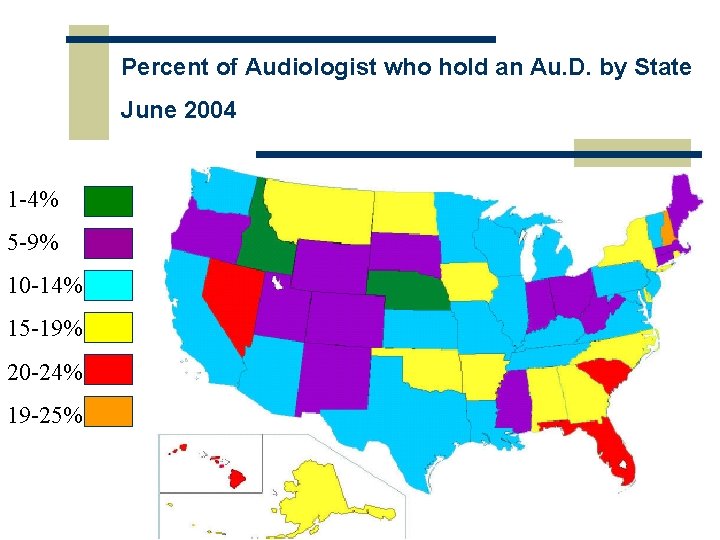
Percent of Audiologist who hold an Au. D. by State June 2004 1 -4% 5 -9% 10 -14% 15 -19% 20 -24% 19 -25%
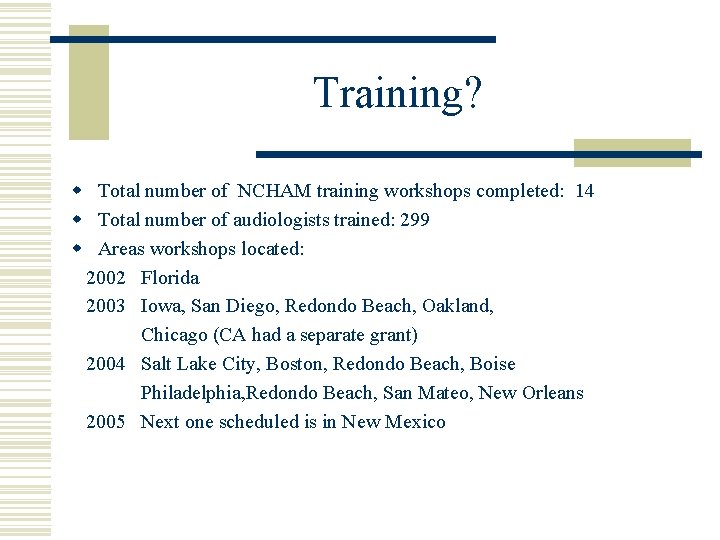
Training? w Total number of NCHAM training workshops completed: 14 w Total number of audiologists trained: 299 w Areas workshops located: 2002 Florida 2003 Iowa, San Diego, Redondo Beach, Oakland, Chicago (CA had a separate grant) 2004 Salt Lake City, Boston, Redondo Beach, Boise Philadelphia, Redondo Beach, San Mateo, New Orleans 2005 Next one scheduled is in New Mexico
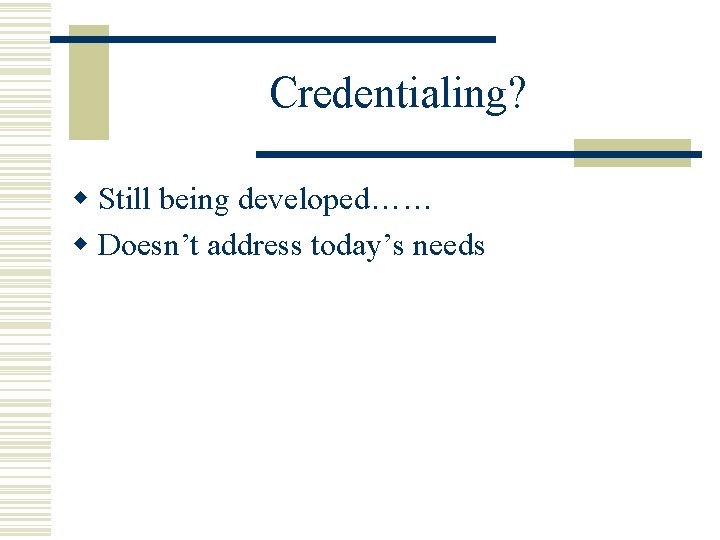
Credentialing? w Still being developed…… w Doesn’t address today’s needs
Case Studies Case Study 1
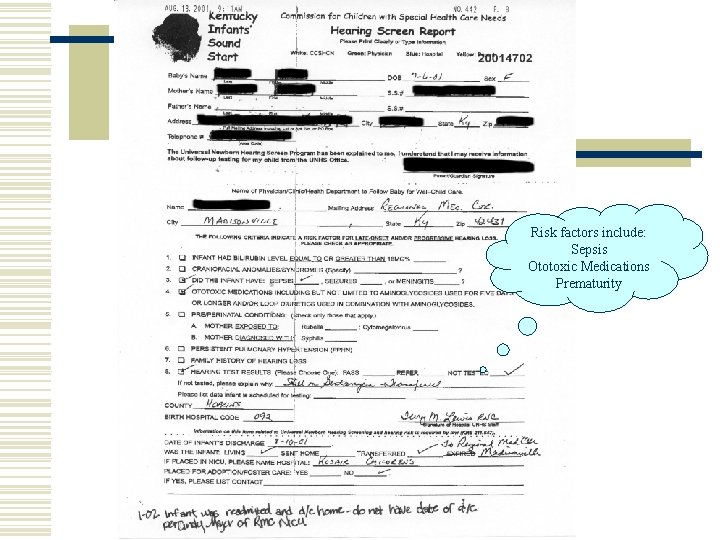
Risk factors include: Sepsis Ototoxic Medications Prematurity
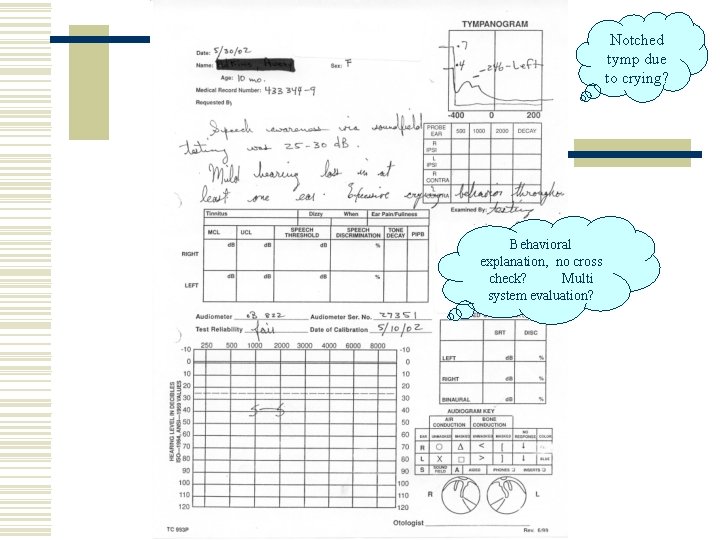
Notched tymp due to crying? Behavioral explanation, no cross check? Multi system evaluation?
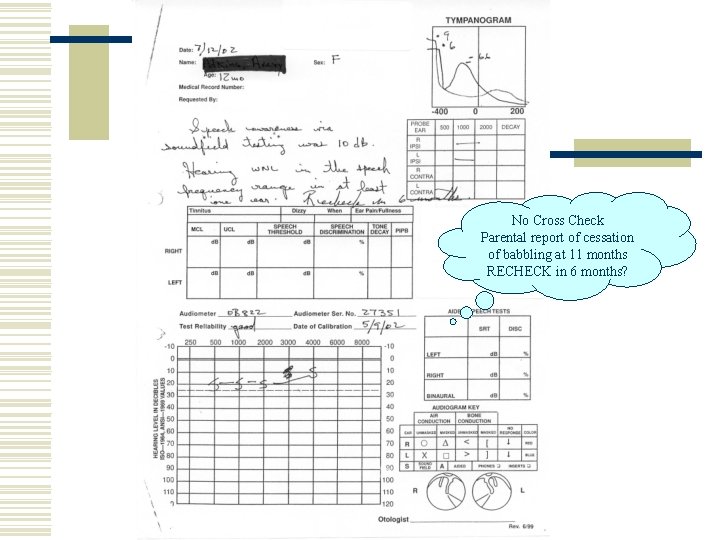
No Cross Check Parental report of cessation of babbling at 11 months RECHECK in 6 months?
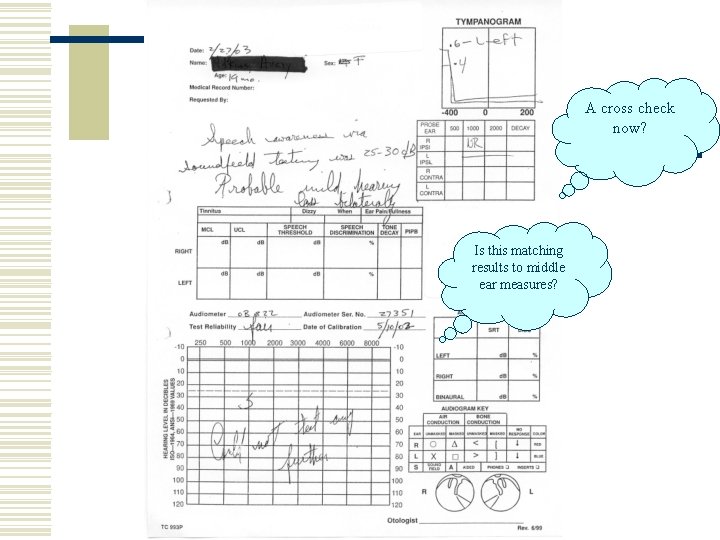
A cross check now? Is this matching results to middle ear measures?
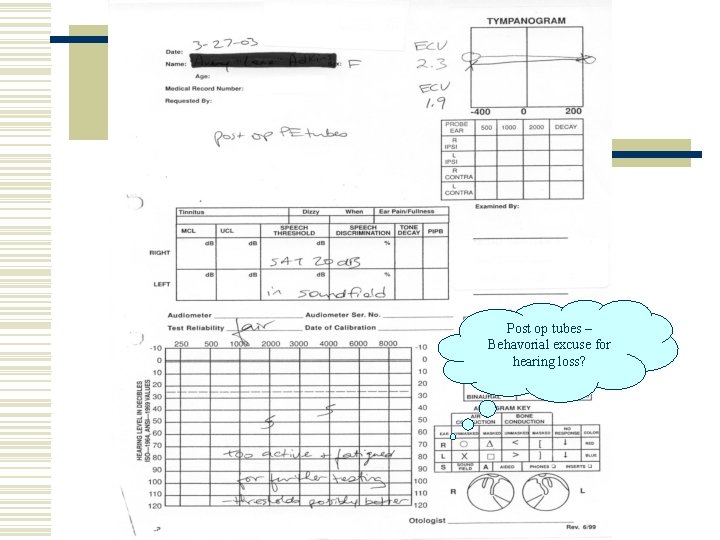
Post op tubes – Behavorial excuse for hearing loss?
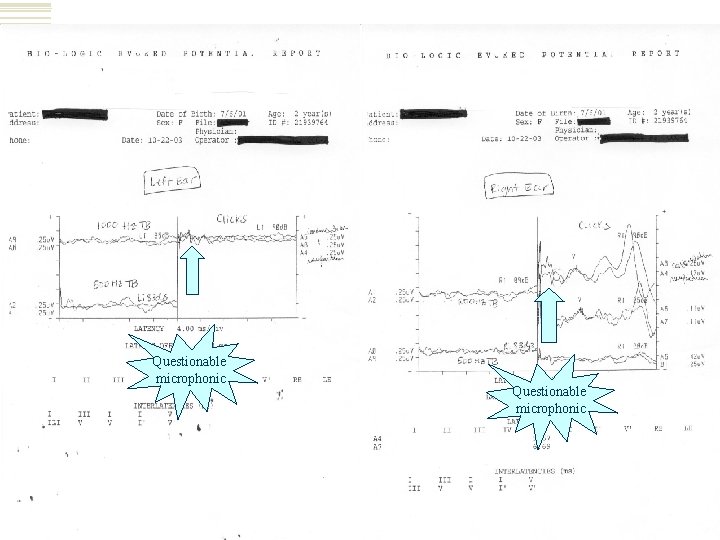
Questionable microphonic
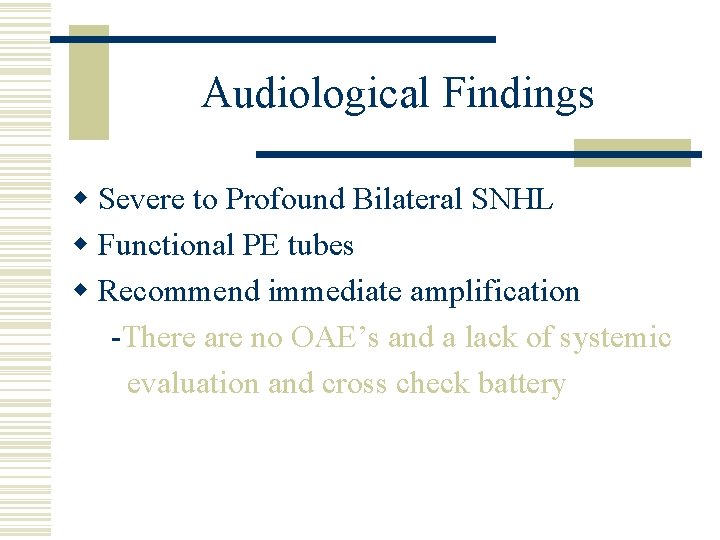
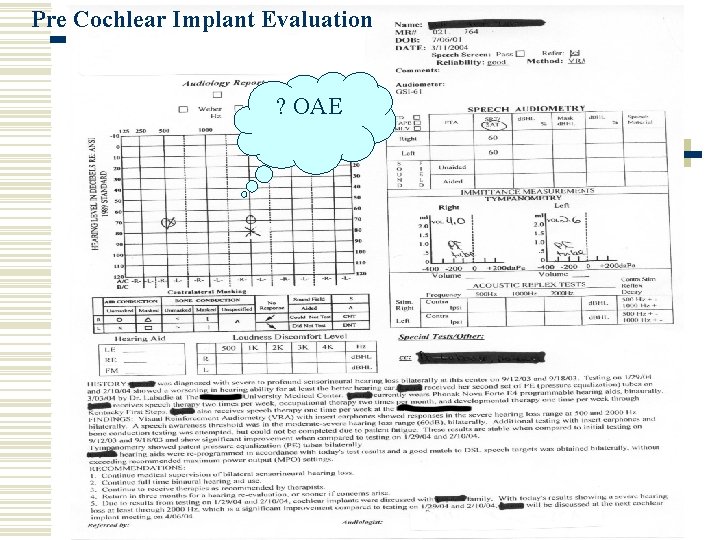
Audiological Findings w Severe to Profound Bilateral SNHL w Functional PE tubes w Recommend immediate amplification -There are no OAE’s and a lack of systemic evaluation and cross check battery
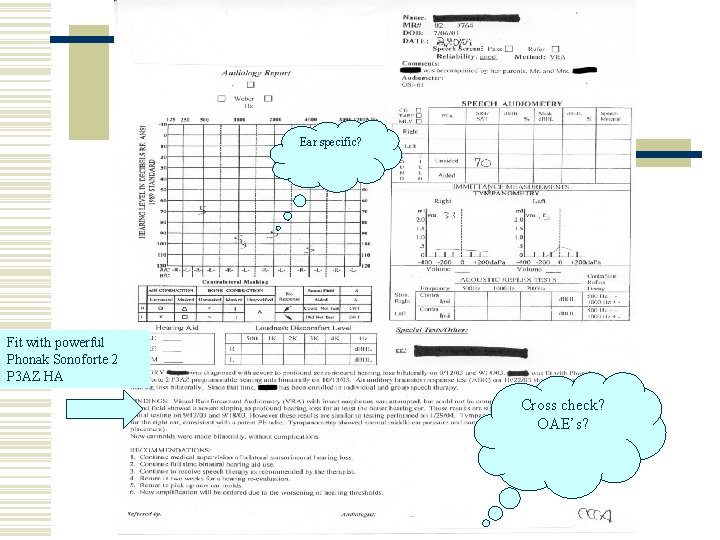
Ear specific? Fit with powerful Phonak Sonoforte 2 P 3 AZ HA Cross check? OAE’s?
Pre Cochlear Implant Evaluation ? OAE
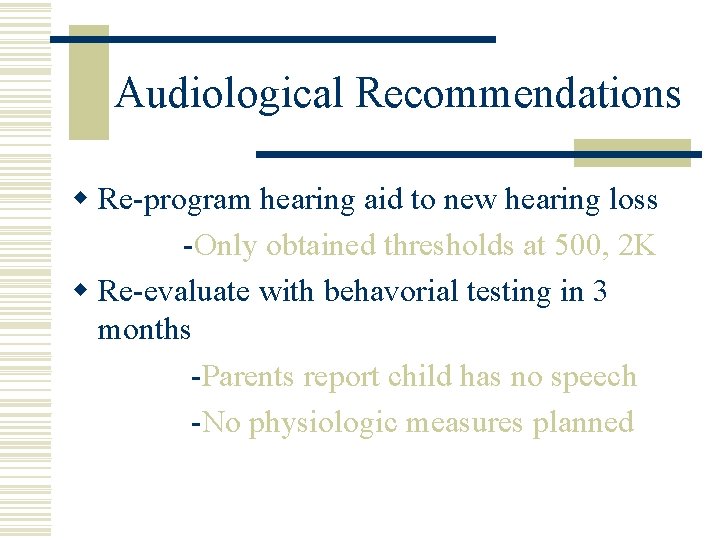
Audiological Recommendations w Re-program hearing aid to new hearing loss -Only obtained thresholds at 500, 2 K w Re-evaluate with behavorial testing in 3 months -Parents report child has no speech -No physiologic measures planned
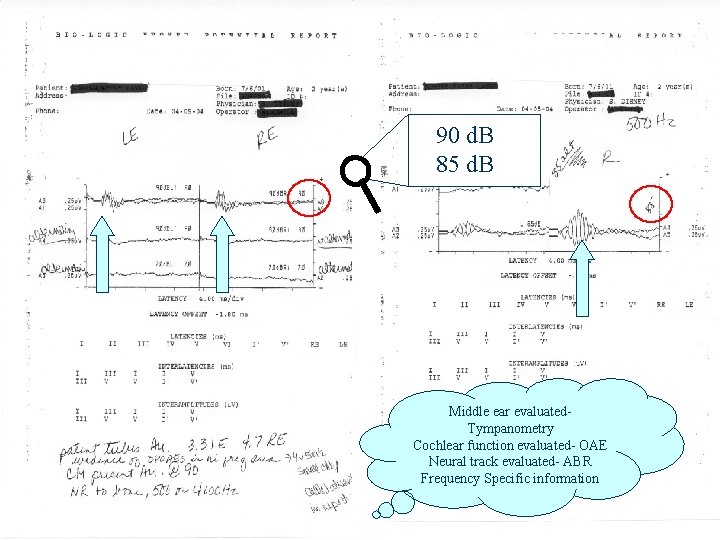
90 d. B 85 d. B Middle ear evaluated. Tympanometry Cochlear function evaluated- OAE Neural track evaluated- ABR Frequency Specific information
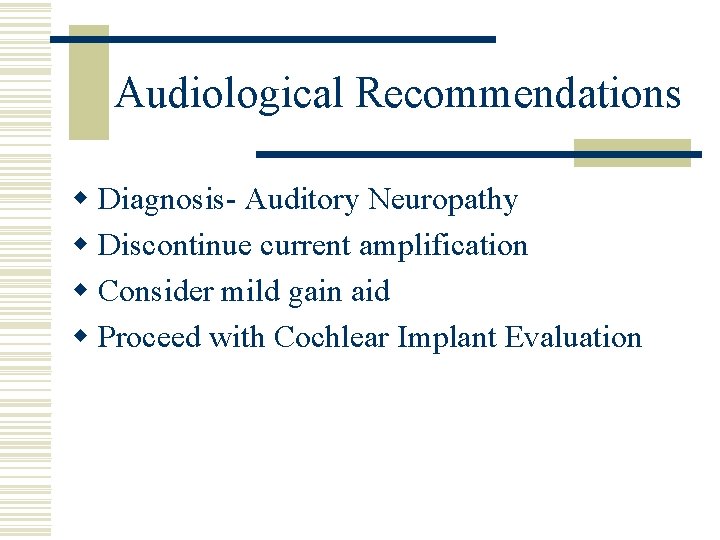
Audiological Recommendations w Diagnosis- Auditory Neuropathy w Discontinue current amplification w Consider mild gain aid w Proceed with Cochlear Implant Evaluation
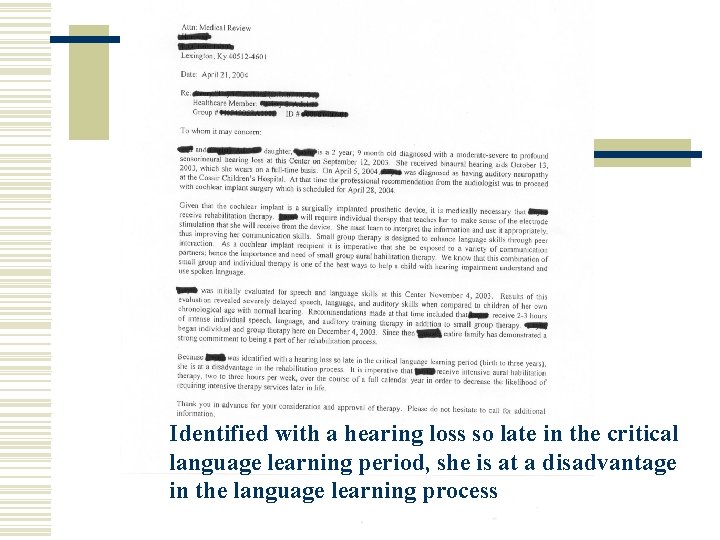
Identified with a hearing loss so late in the critical language learning period, she is at a disadvantage in the language learning process
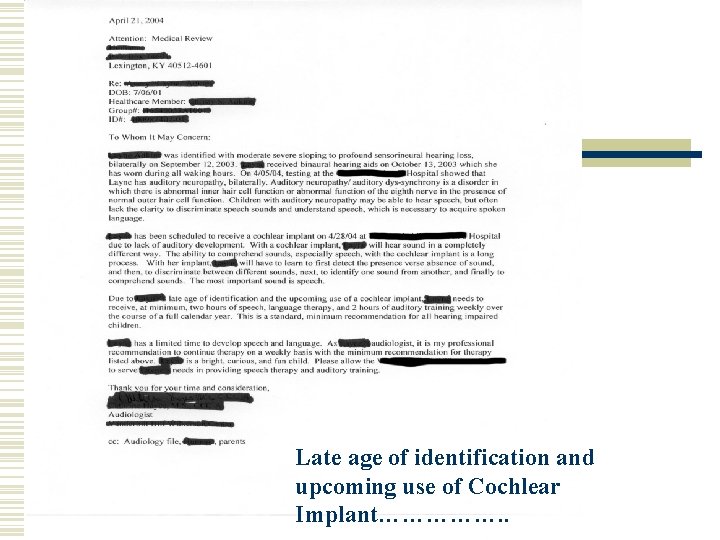
Late age of identification and upcoming use of Cochlear Implant……………. .
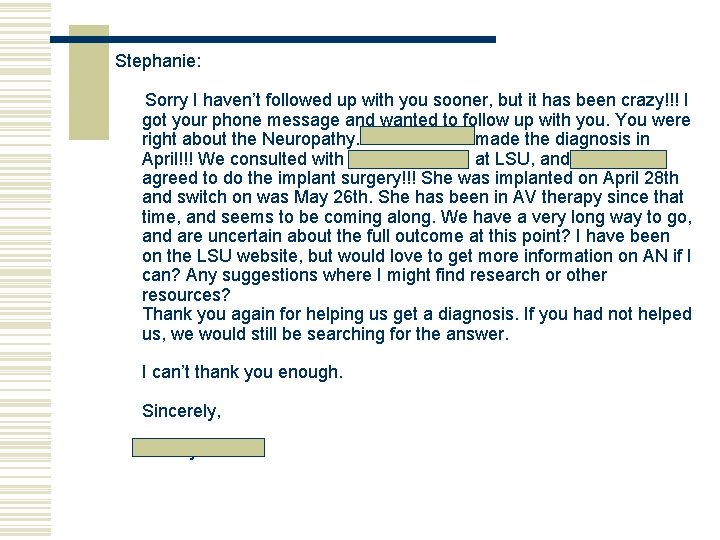
Stephanie: Sorry I haven’t followed up with you sooner, but it has been crazy!!! I got your phone message and wanted to follow up with you. You were right about the Neuropathy. Sue Windmill made the diagnosis in April!!! We consulted with Dr. Linda Hood at LSU, and Vanderbilt agreed to do the implant surgery!!! She was implanted on April 28 th and switch on was May 26 th. She has been in AV therapy since that time, and seems to be coming along. We have a very long way to go, and are uncertain about the full outcome at this point? I have been on the LSU website, but would love to get more information on AN if I can? Any suggestions where I might find research or other resources? Thank you again for helping us get a diagnosis. If you had not helped us, we would still be searching for the answer. I can’t thank you enough. Sincerely, Christy Adkins
A different take on 1 -3 -6 w 6 Audiologists w 3 Centers in 2 states w 1 Late Diagnosis
Case Studies Case Study 2
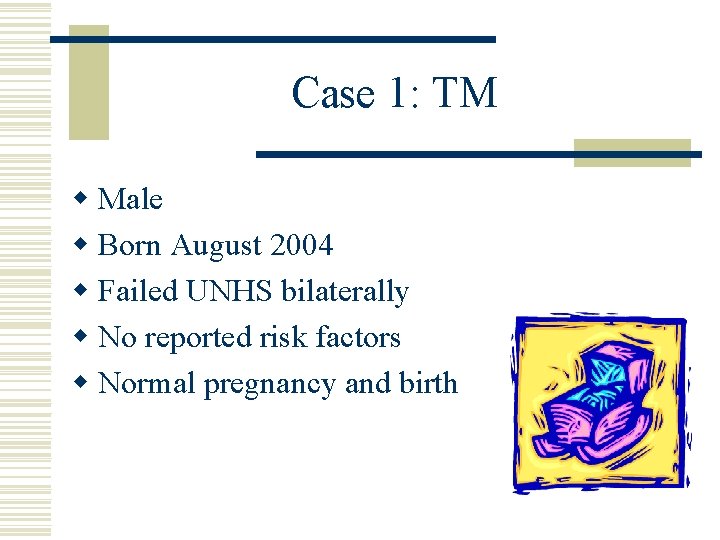
Case 1: TM w Male w Born August 2004 w Failed UNHS bilaterally w No reported risk factors w Normal pregnancy and birth
Case 1: T. M. w UNHS follow-up 8/21/04 w ABR w Results…
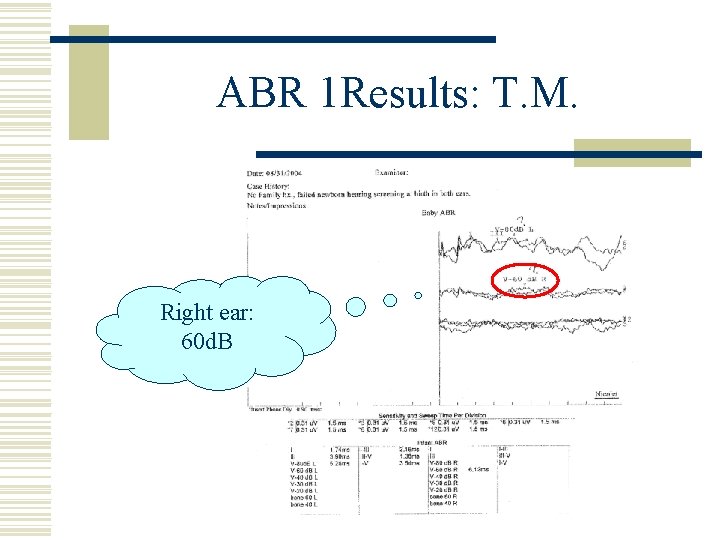
ABR 1 Results: T. M. Right ear: 60 d. B
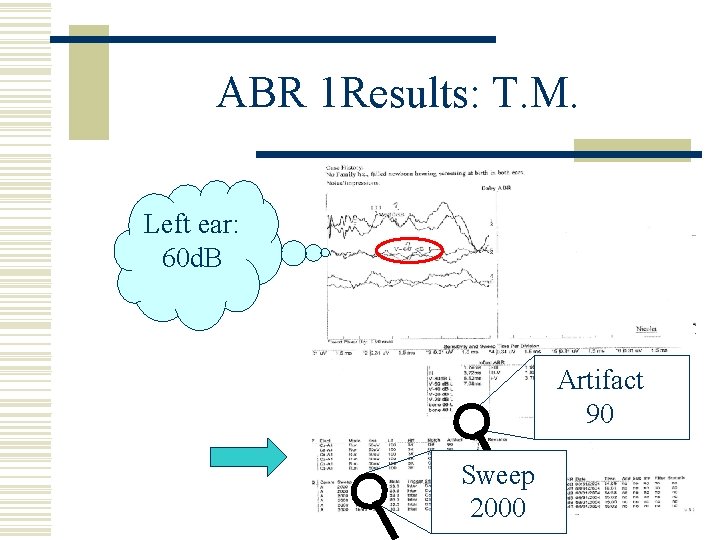
ABR 1 Results: T. M. Left ear: 60 d. B Artifact 90 Sweep 2000
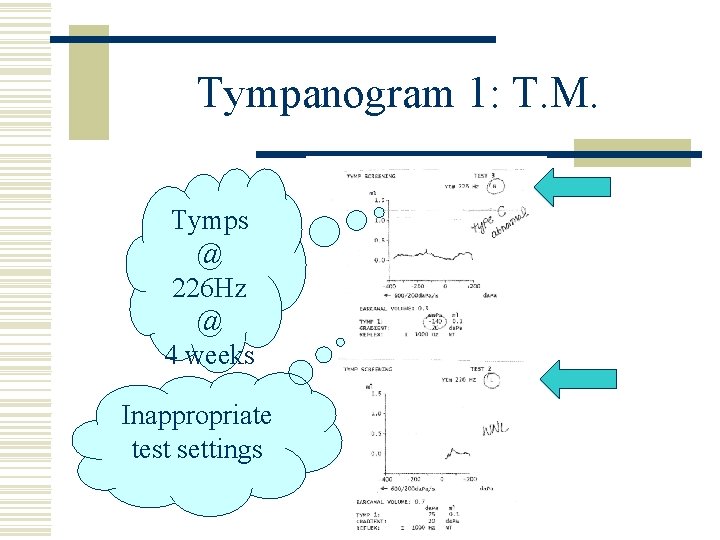
Tympanogram 1: T. M. Tymps @ 226 Hz @ 4 weeks Inappropriate test settings
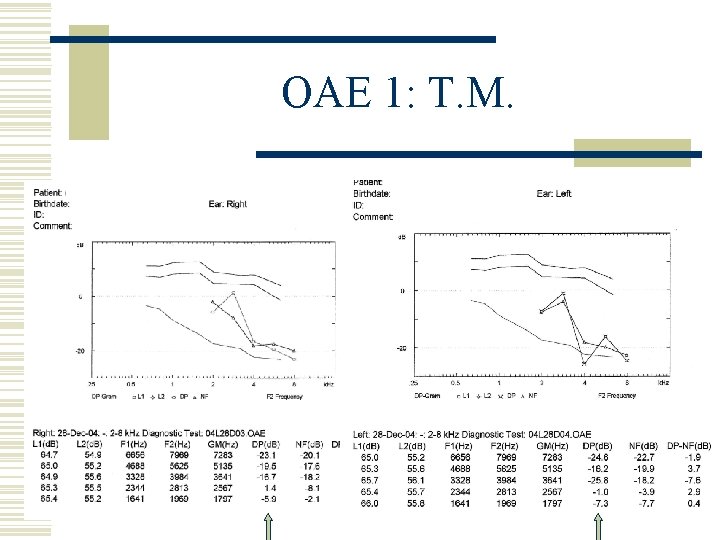
OAE 1: T. M.
Interpretation of 1 st ABR w Actual hearing could not be determined due to child’s awake state w Middle ear dysfunction right ear, normal left w Audiologist not confident in findings n n Attributed hearing loss results to high artifact Scheduled retest at 2 months of age
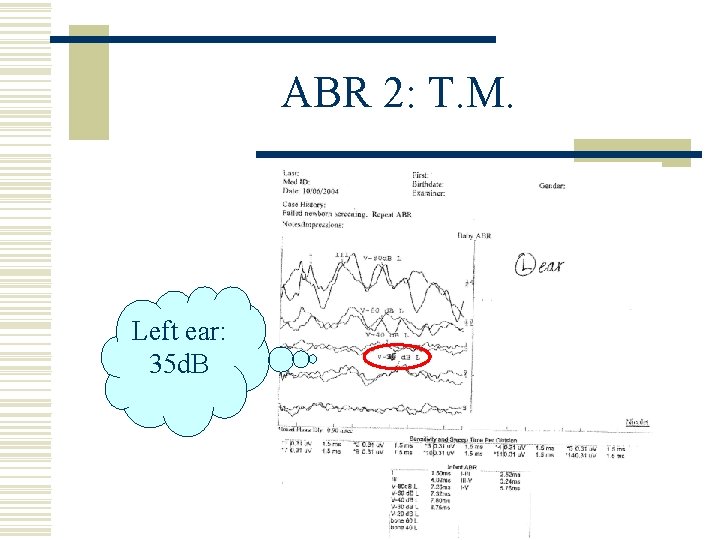
ABR 2: T. M. Left ear: 35 d. B
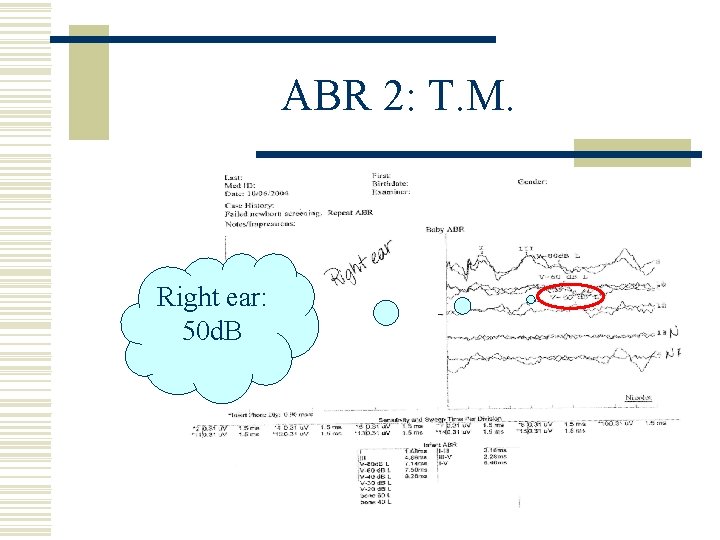
ABR 2: T. M. Right ear: 50 d. B
ABR 2: Results w Borderline normal hearing left w Possible mild hearing loss right w Again, awake state interfered with tests w Recommendation: Sedated ABR due to high artifact and for second opinion**
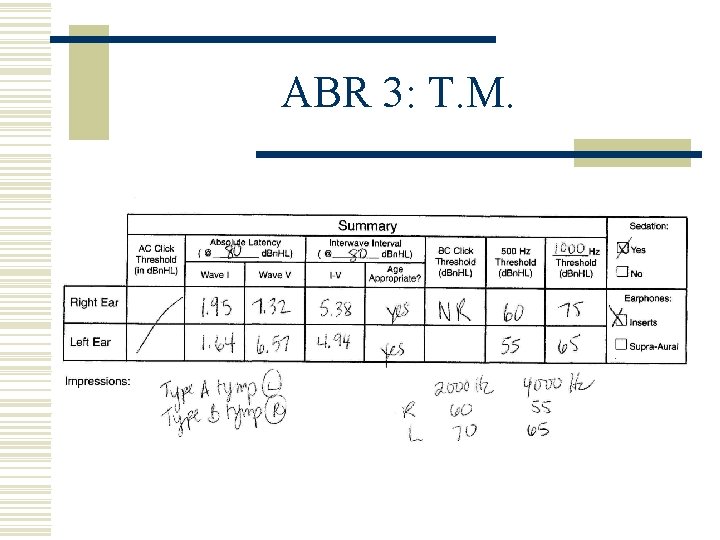
ABR 3: T. M. w Different facility w Under sedation w December 2004 w Child is 5 months old
ABR 3: T. M.
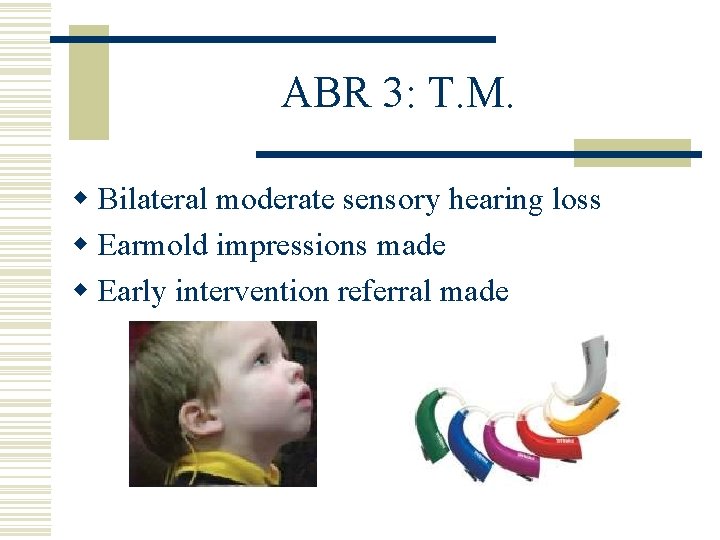
ABR 3: T. M. w Bilateral moderate sensory hearing loss w Earmold impressions made w Early intervention referral made
Problems: T. M. w 3 ABRs performed, 4 months for diagnosis w High Artifact? < 10% w 3 rd ABR with sedation: unnecessary? w 2 1/2 hour trip to other facility w Parents now travel for hearing aid appts.
Possible Remedies w Correct tests were performed according to JCIH w More education in modifications for neonates w More experienced mentor to lend support w Additional pediatric testing training (locally and nationally available)
Not everything that is faced can be changed, but nothing can be changed until it is faced -James Baldwin
- Slides: 55