
AUC and DLS probes for protein aggregation The

AUC and DLS probes for protein aggregation The National Physical Laboratory, Teddington 9 th December 2008 Steve Harding & Arthur Rowe National Centre for Macromolecular Hydrodynamics

Questions • Aggregation state in response to bioprocessing n-mers present and relative amounts • Conformation of the monomer species before and after bioprocessing
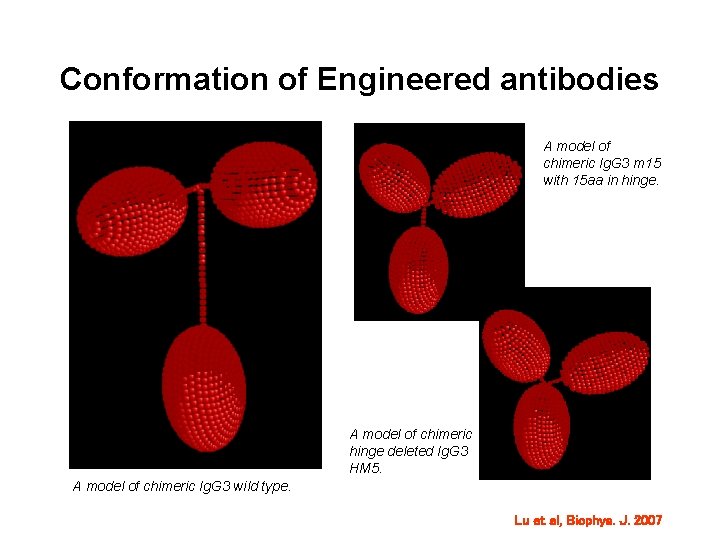
Conformation of Engineered antibodies A model of chimeric Ig. G 3 m 15 with 15 aa in hinge. A model of chimeric hinge deleted Ig. G 3 HM 5. A model of chimeric Ig. G 3 wild type. Lu et al, Biophys. J. 2007
Stability Problems • Aggregation or bits falling off during purification, sterilisation, shipping and storage processes. • Temperature of storage and cycles of freeze thaw
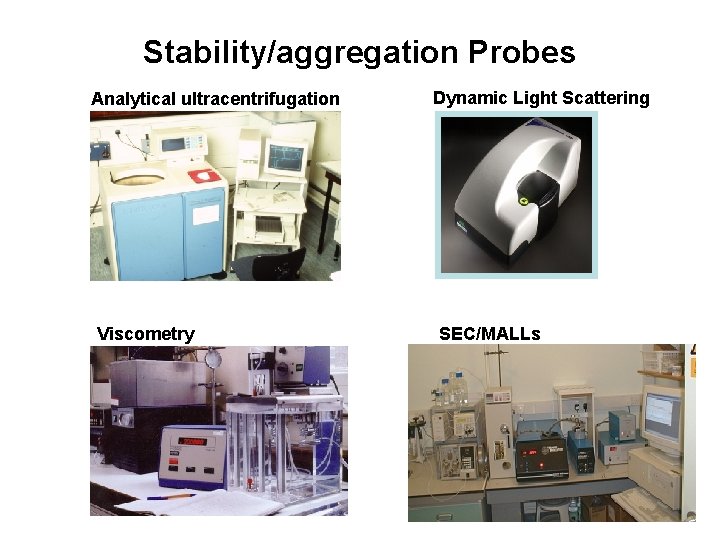
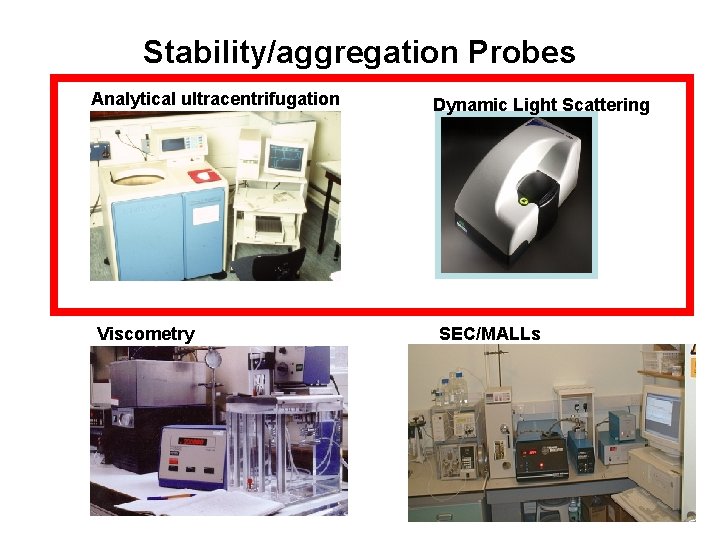
Stability/aggregation Probes Analytical ultracentrifugation Viscometry Dynamic Light Scattering SEC/MALLs
Stability/aggregation Probes Analytical ultracentrifugation Viscometry Dynamic Light Scattering SEC/MALLs
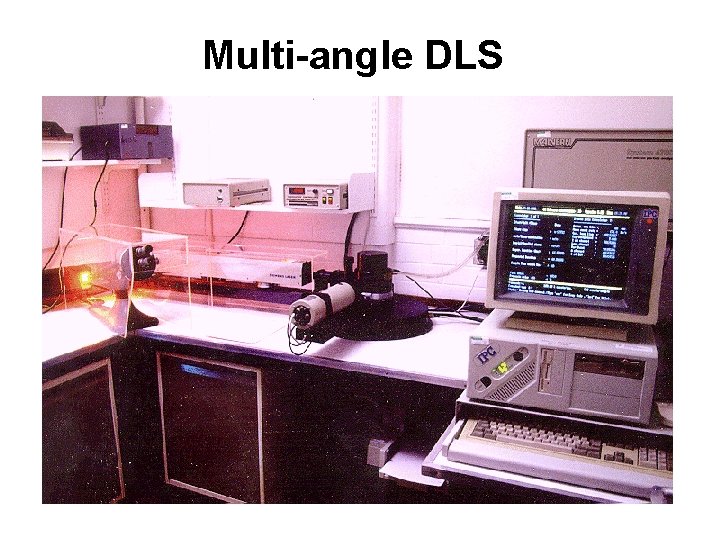
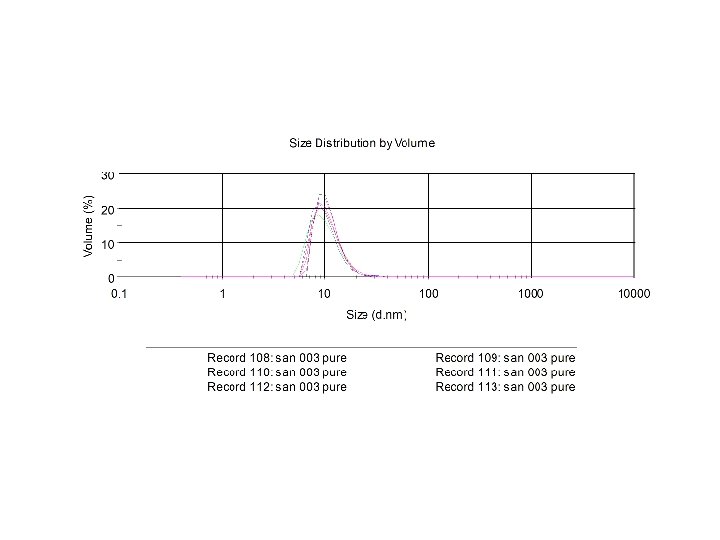
Multi-angle DLS
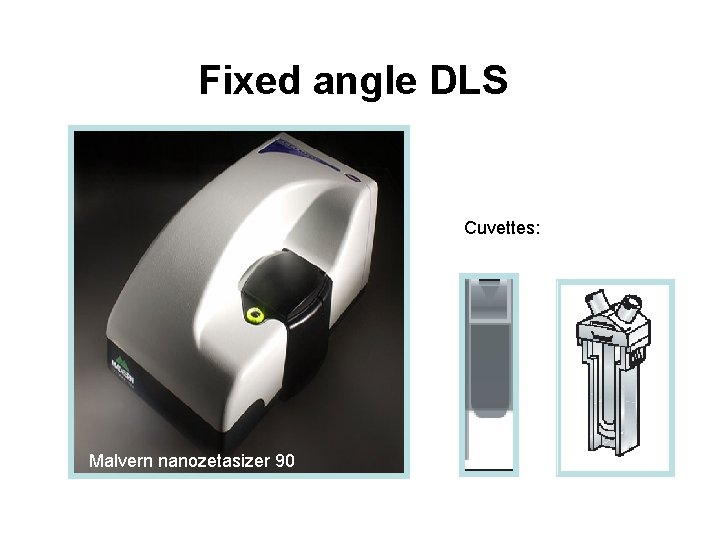
Fixed angle DLS Cuvettes: Malvern nanozetasizer 90
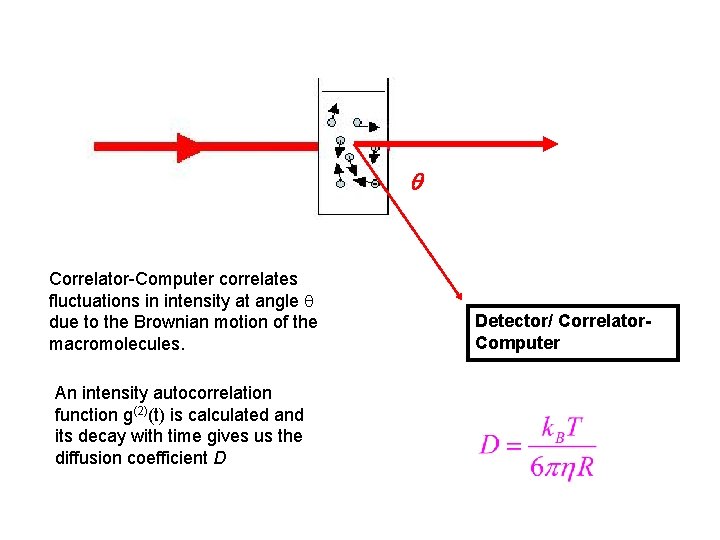
q Correlator-Computer correlates fluctuations in intensity at angle q due to the Brownian motion of the macromolecules. An intensity autocorrelation function g(2)(t) is calculated and its decay with time gives us the diffusion coefficient D Detector/ Correlator. Computer
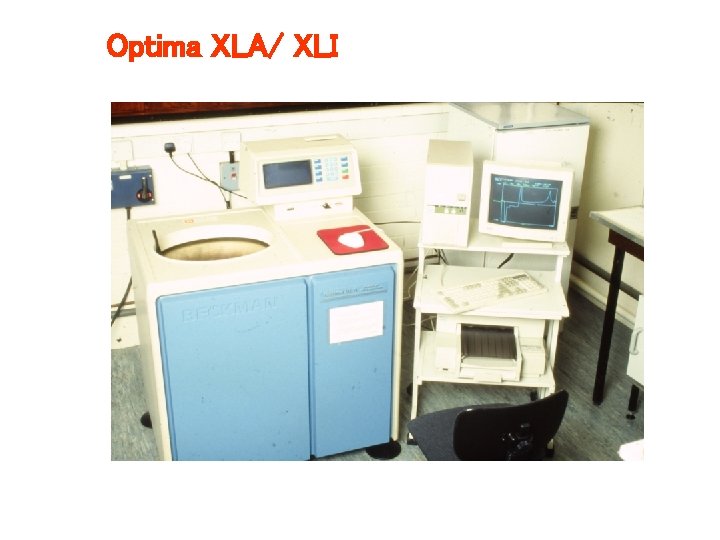
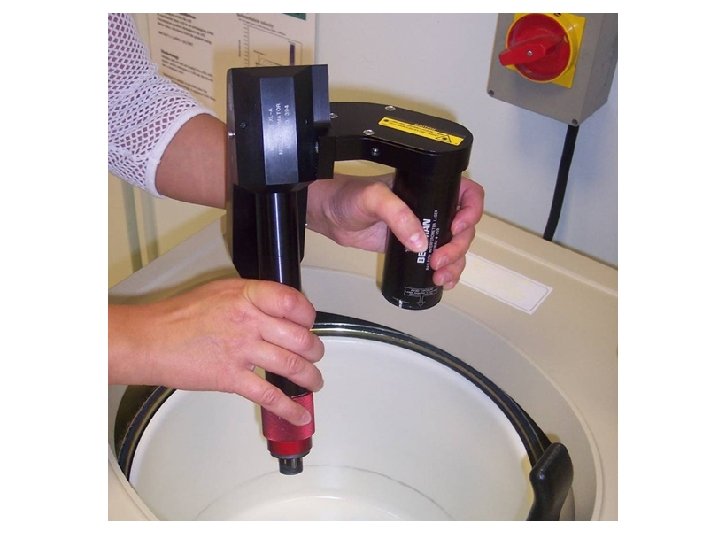
Optima XLA/ XLI
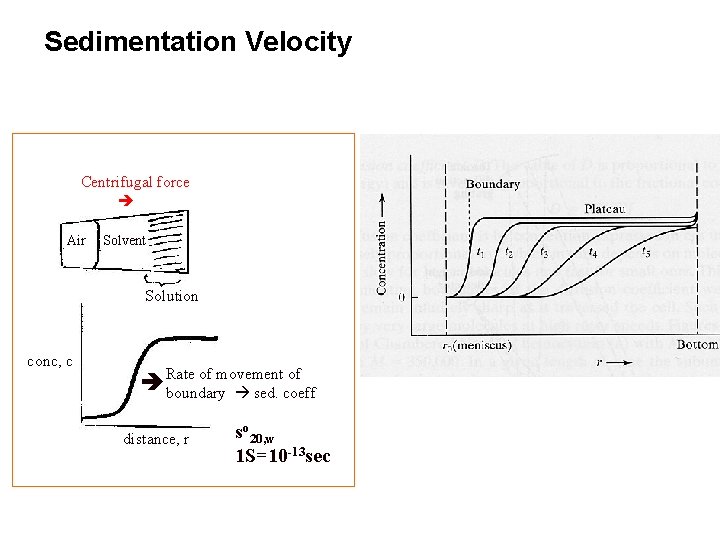
Sedimentation Velocity Sedimentation Equilibrium Centrifugal force Air Centrifugal force Diffusion Solvent Solution conc, c of movement of Rate boundary sed. coeff distance, r so 20, w 1 S=10 -13 sec STATE STEADY PATTERN distance, r FUNCTION ONLY OF MOL. WEIGHT PARAMETERS
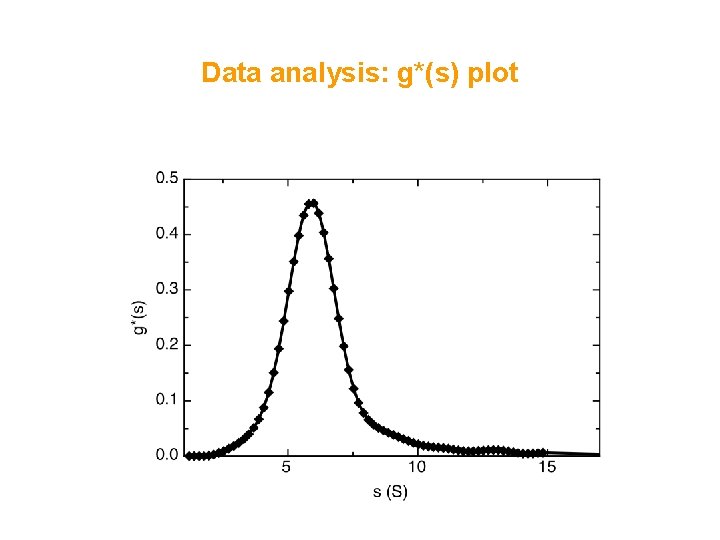
Data analysis: g*(s) plot
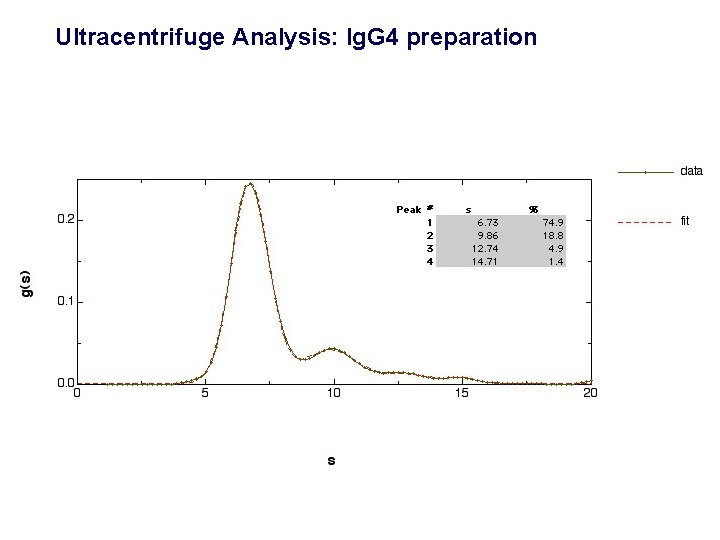
Ultracentrifuge Analysis: Ig. G 4 preparation
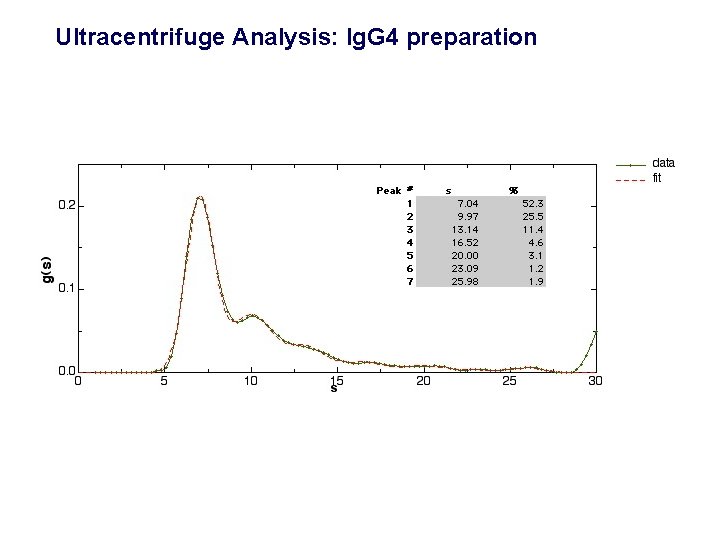
Ultracentrifuge Analysis: Ig. G 4 preparation
- Slides: 17