
Atypical Behaviour Psychology of Individual Differences Task Define
Atypical Behaviour Psychology of Individual Differences
Task �Define �As what you think ‘normal’ is. a result, what is abnormal?
Categorise the following as either normal or abnormal: �Watching a washing machine wash clothes. �Adults playing with train sets �Trainspotting/planespotting �Tidying and organising clothes. �Treating your pet like a person �Having lucky charms �Wearing certain socks on certain days.
Definitions �Statistical Infrequency �Deviating from Social Norms �Distress/Mental health �Maladaptive Behaviour
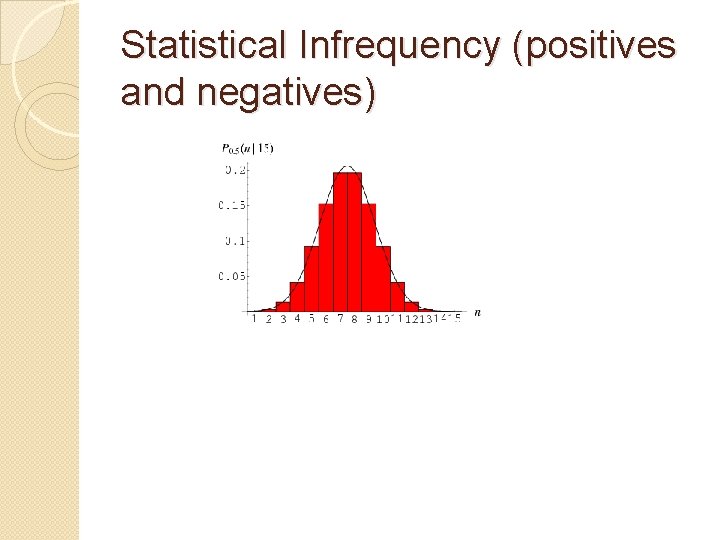
Statistical Infrequency (positives and negatives)
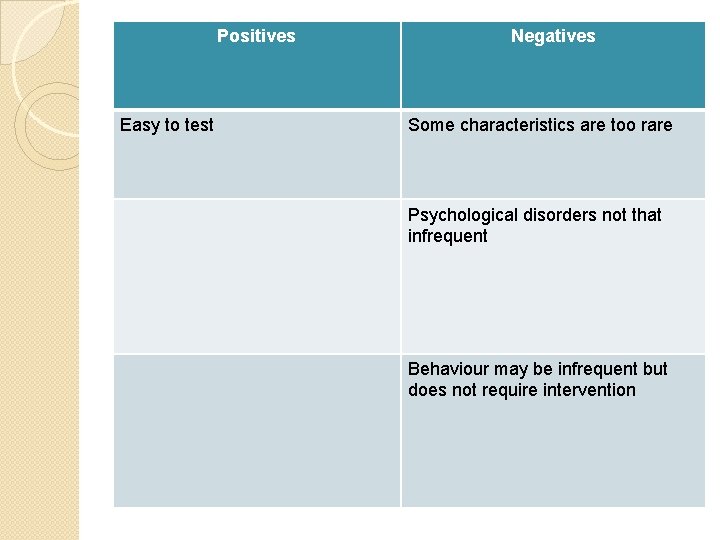
Positives Easy to test Negatives Some characteristics are too rare Psychological disorders not that infrequent Behaviour may be infrequent but does not require intervention
Social Norms �Behaviour which goes against the norms of their society. �Which the majority would think was ‘weird’. �List all of the positives and negatives you can think of for defining atypical behaviour in this way.
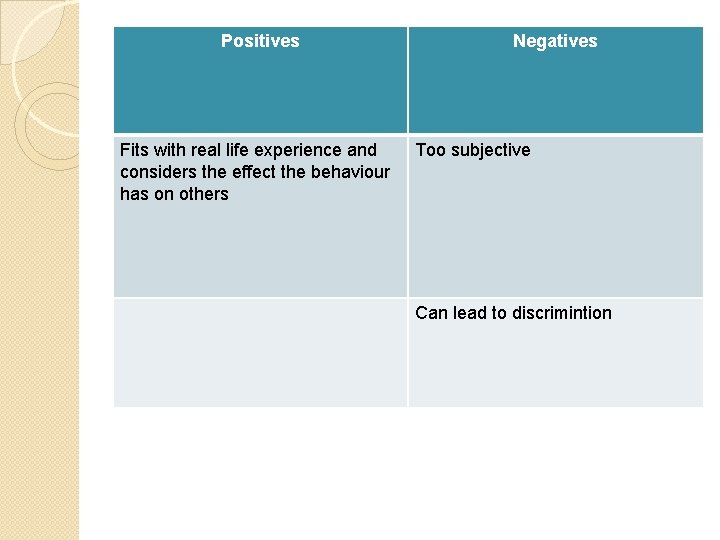
Positives Fits with real life experience and considers the effect the behaviour has on others Negatives Too subjective Can lead to discrimintion
Distress/Mental Health �When people deviate from ideal mental health �List the positives and negatives of this definition
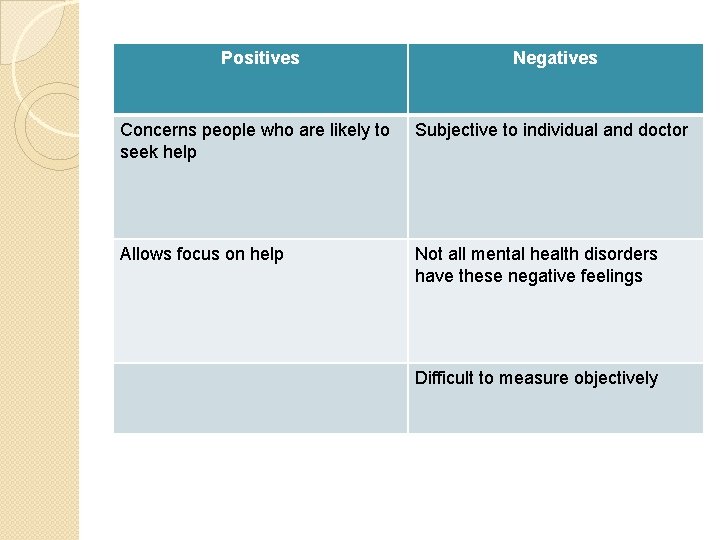
Positives Negatives Concerns people who are likely to seek help Subjective to individual and doctor Allows focus on help Not all mental health disorders have these negative feelings Difficult to measure objectively
Maladaptive Behaviour �Failure to function within society �When diagnosed with disorder Clinical Psychologists rate the individual’s ability to function on a scale from 0100. �Job, finances, relationships, day to day responsibilities: shopping, paying bills, getting up in the morning. �List the positives and negatives of this definition.
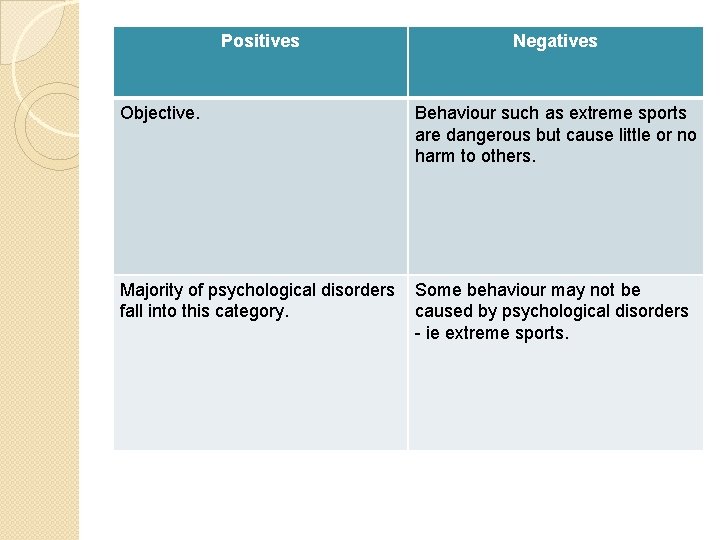
Positives Negatives Objective. Behaviour such as extreme sports are dangerous but cause little or no harm to others. Majority of psychological disorders fall into this category. Some behaviour may not be caused by psychological disorders - ie extreme sports.
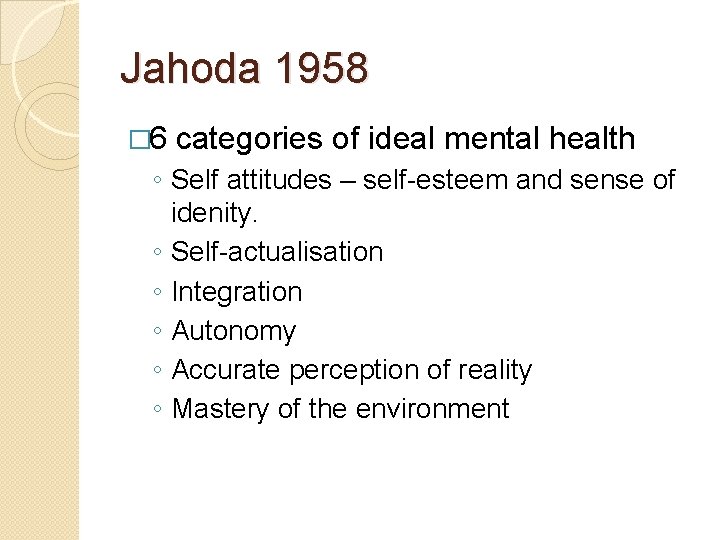
Jahoda 1958 � 6 categories of ideal mental health ◦ Self attitudes – self-esteem and sense of idenity. ◦ Self-actualisation ◦ Integration ◦ Autonomy ◦ Accurate perception of reality ◦ Mastery of the environment
Mini Essay �Explain and evaluate 2 definitions of atypical behaviour. �(KU 6 / AE 4).
- Slides: 14