
Attribute Release and Consent Ken Klingenstein Internet 2
Attribute Release and Consent Ken Klingenstein, Internet 2
Topics • Internal and federated use cases for consent – – • • Alternatives to consent Moving forward despite the EU Recent activities by Google and Facebook Do end-entity categories help – users? Institutions? Good practices in consent Privacy Lens as a paradigm Consent Management infrastructure Takeaways
The internal and federated use cases • Federated use cases classic: – And difficult because of their often international aspects – In the US, a significant number of “deciders” are outside of central IT • Internal use cases: the student app marketplace at Duke and the departmental app marketplace at U Washington and. . . - student consent for release of enterprise data needed because of independence of app – https: //wiki. cac. washington. edu/display/infra/Guide+to+Attributes +Available+from+the+UW+Id. P – https: //wiki. cac. washington. edu/display/infra/Request+Attributes+f rom+the+UW+Id. P
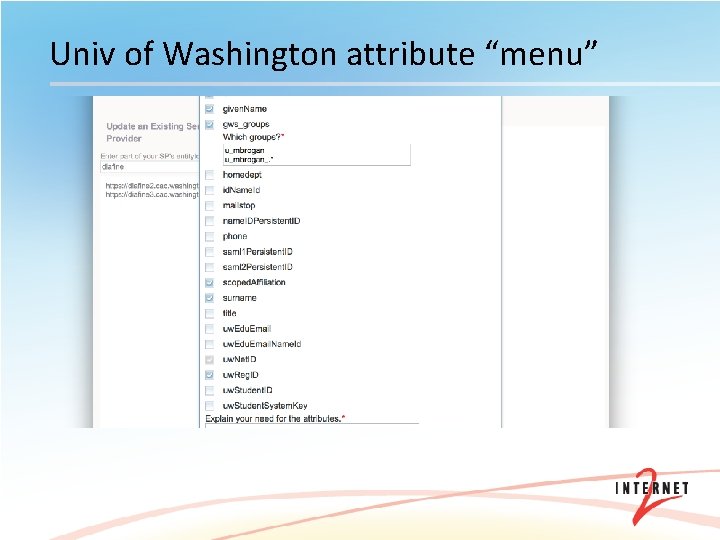
Univ of Washington attribute “menu”
Some federations provide services to support end-user consent • https: //www. switch. ch/aai/support/tools/resource-registry/ • http: //jagger. heanet. ie/ • https: //manager. aaf. edu. au/federationregistry/ • Hub-and-spoke federations do consent management at the hub, though that can be pushed out to the end-user.
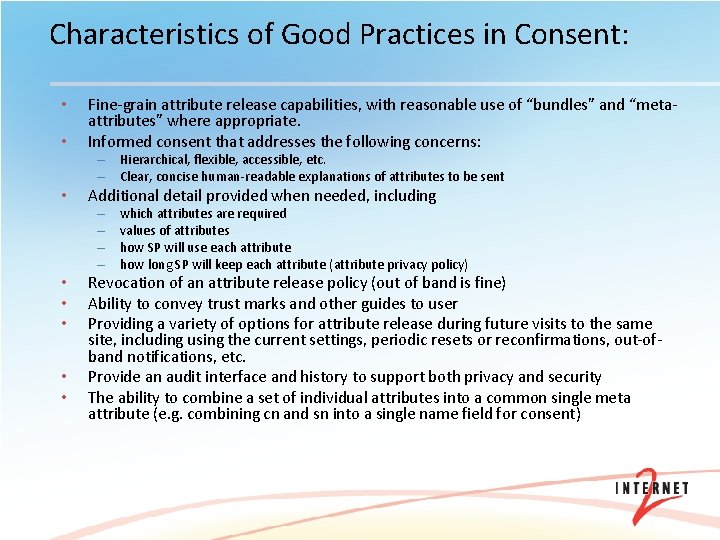
Characteristics of Good Practices in Consent: • • Fine-grain attribute release capabilities, with reasonable use of “bundles” and “metaattributes” where appropriate. Informed consent that addresses the following concerns: – Hierarchical, flexible, accessible, etc. – Clear, concise human-readable explanations of attributes to be sent • Additional detail provided when needed, including – – • • • which attributes are required values of attributes how SP will use each attribute how long SP will keep each attribute (attribute privacy policy) Revocation of an attribute release policy (out of band is fine) Ability to convey trust marks and other guides to user Providing a variety of options for attribute release during future visits to the same site, including using the current settings, periodic resets or reconfirmations, out-ofband notifications, etc. Provide an audit interface and history to support both privacy and security The ability to combine a set of individual attributes into a common single meta attribute (e. g. combining cn and sn into a single name field for consent)
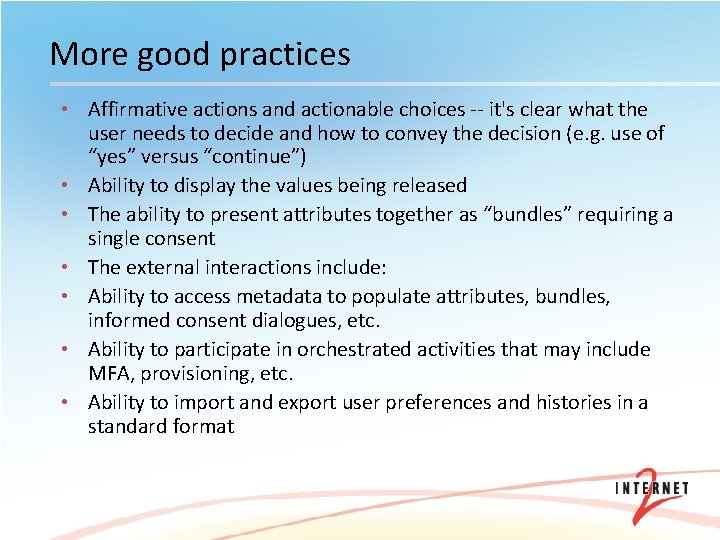
More good practices • Affirmative actions and actionable choices -- it's clear what the user needs to decide and how to convey the decision (e. g. use of “yes” versus “continue”) • Ability to display the values being released • The ability to present attributes together as “bundles” requiring a single consent • The external interactions include: • Ability to access metadata to populate attributes, bundles, informed consent dialogues, etc. • Ability to participate in orchestrated activities that may include MFA, provisioning, etc. • Ability to import and export user preferences and histories in a standard format
Some other Noble Principles • Identity portability – Being able to move one’s consent preferences from one Id. P to another – Not necessarily portability of identifiers, attributes or authorizations • Unobservability not part of this model, but non-correlating opaque identifiers are • Auditability for legal or regulatory requirements • Adding Privacy to Accessibility
Privacy. Lens as a paradigm • Enabling effective and informed end-user consent • Embraces a set of capabilities – Hierarchical information, fine grain control, bundling, revocation of consent, flexible notifications, etc. • Embraces a style of presentation – Clear screens and slides – Optional display of values being sent – Affirmative user actions • Embraces a variety of platforms and management approaches – Protocol-agnostic – Enterprise management consoles and management – Audit and security logs • Built on an open consent management infrastructure
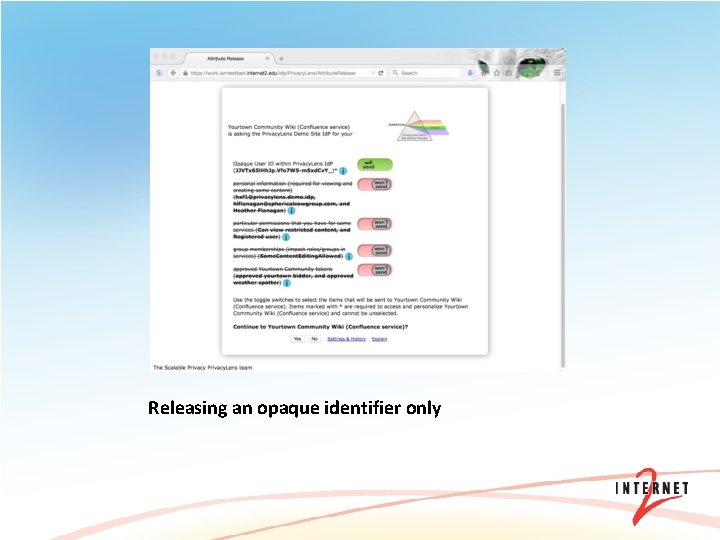
Releasing an opaque identifier only
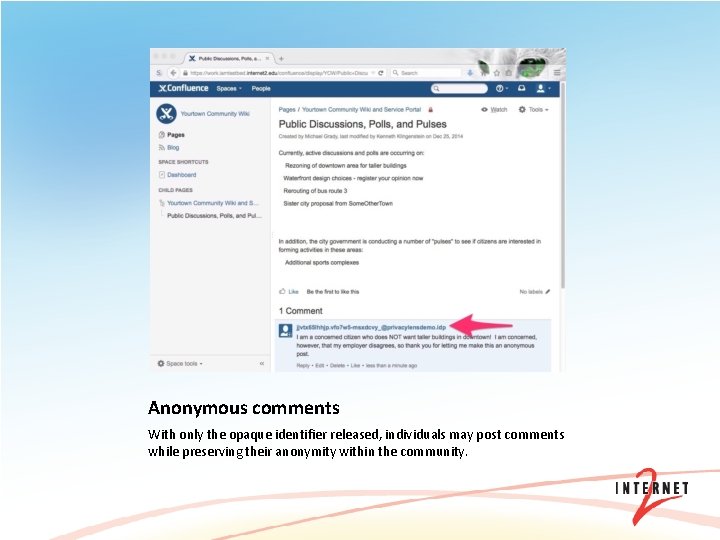
Anonymous comments With only the opaque identifier released, individuals may post comments while preserving their anonymity within the community.
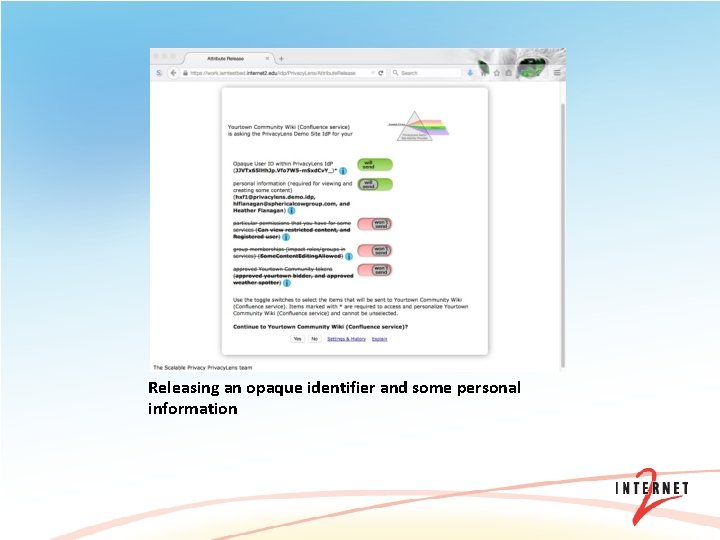
Releasing an opaque identifier and some personal information
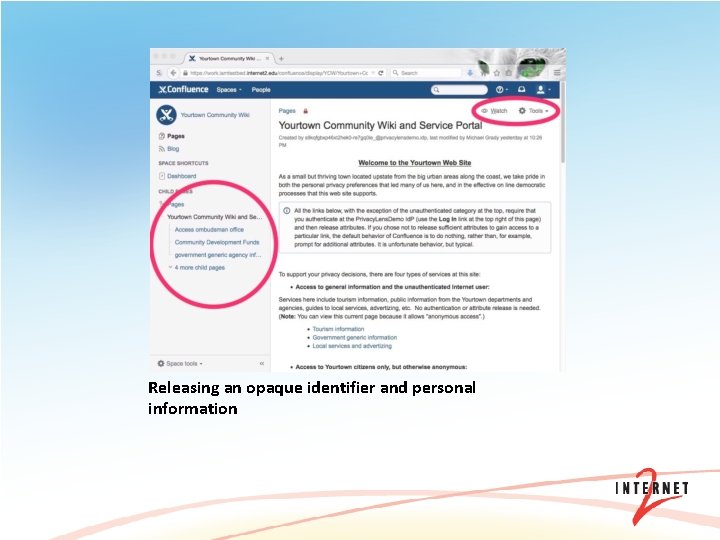
Releasing an opaque identifier and personal information
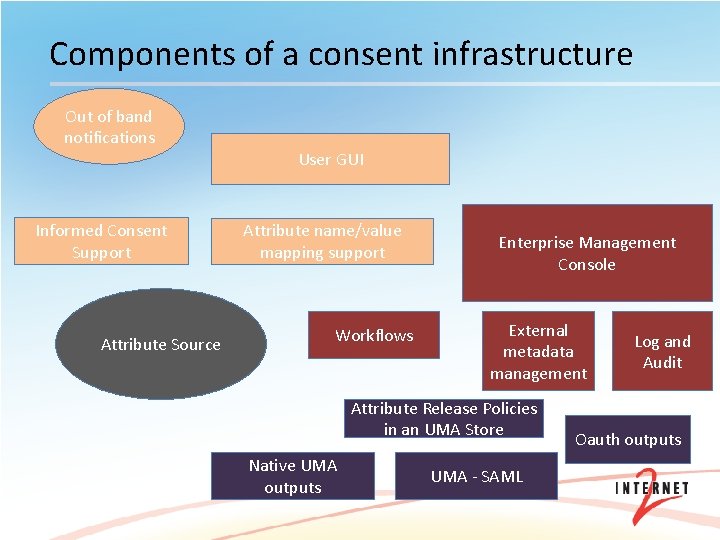
Components of a consent infrastructure Out of band notifications User GUI Informed Consent Support Attribute Source Attribute name/value mapping support Workflows Enterprise Management Console External metadata management Attribute Release Policies in an UMA Store Native UMA outputs UMA - SAML Log and Audit Oauth outputs
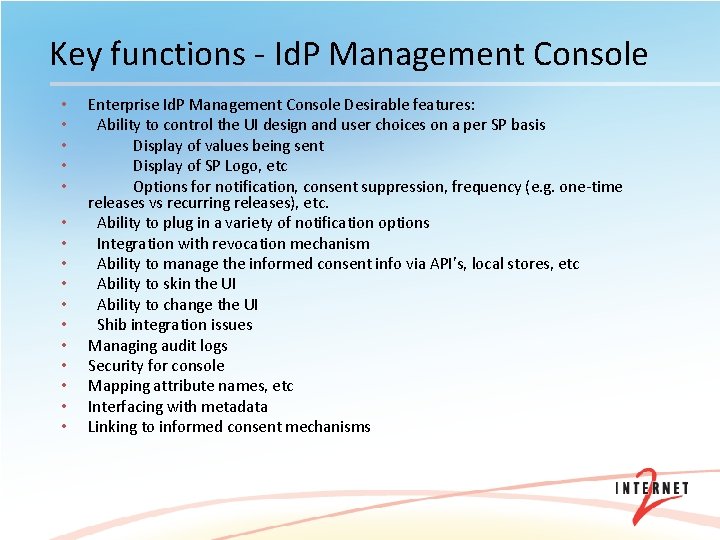
Key functions - Id. P Management Console • • • • Enterprise Id. P Management Console Desirable features: Ability to control the UI design and user choices on a per SP basis Display of values being sent Display of SP Logo, etc Options for notification, consent suppression, frequency (e. g. one-time releases vs recurring releases), etc. Ability to plug in a variety of notification options Integration with revocation mechanism Ability to manage the informed consent info via API’s, local stores, etc Ability to skin the UI Ability to change the UI Shib integration issues Managing audit logs Security for console Mapping attribute names, etc Interfacing with metadata Linking to informed consent mechanisms
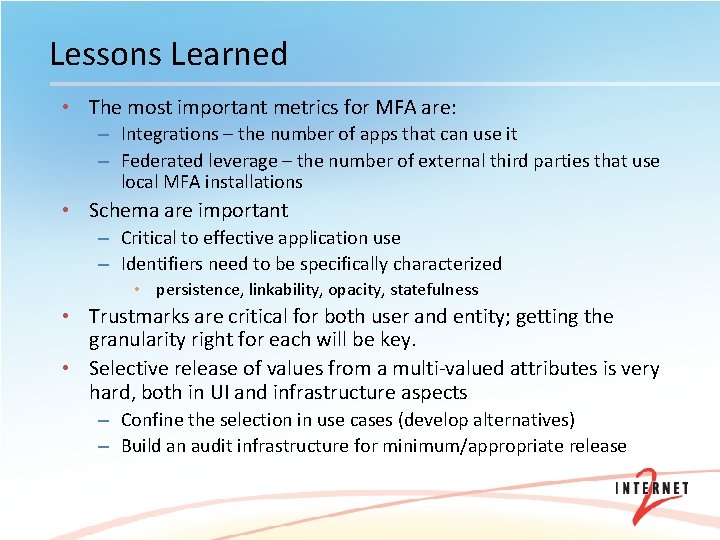
Lessons Learned • The most important metrics for MFA are: – Integrations – the number of apps that can use it – Federated leverage – the number of external third parties that use local MFA installations • Schema are important – Critical to effective application use – Identifiers need to be specifically characterized • persistence, linkability, opacity, statefulness • Trustmarks are critical for both user and entity; getting the granularity right for each will be key. • Selective release of values from a multi-valued attributes is very hard, both in UI and infrastructure aspects – Confine the selection in use cases (develop alternatives) – Build an audit infrastructure for minimum/appropriate release
Lessons Learned – Consent Management • Consent management at scale seems viable, but needs infrastructure • Applications don’t know how to do data minimization – Very few are privacy-preserving; most lead with a request for identity when, at that point, only statefulness is needed – “You are what you release” functionality not leveraged • Need to guard against habituation, oppressiveness; need to permit rubber squeeze toys • There are multiple approaches to informing consent
For more information: • https: //spaces. internet 2. edu/display/scalepriv/Scalable+Privacy – Scalable Privacy Overview • https: //work. iamtestbed. internet 2. edu/drupal/ – Privacy. Lens and Consent Management infrastructure • https: //work. iamtestbed. internet 2. edu/confluence/display/YCW/ Yourtown+Community+Wiki+and+Service+Portal – Privacy-responsive and attribute aware applications
Discussion topics • What benefits from consent? • What roles for the federated operator? • Group memberships and selective release of values from a multivalued attribute? • Internal use cases for consent?
- Slides: 19