
Attraction Answer the following questions 1 Why are




- Slides: 37
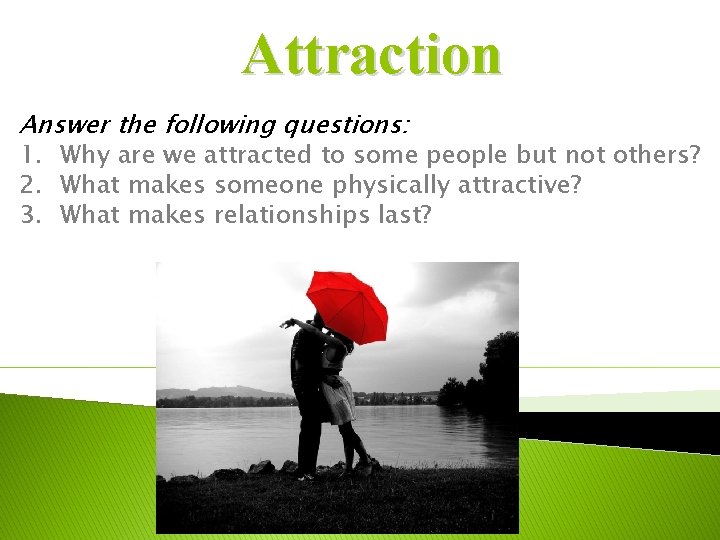
Attraction Answer the following questions: 1. Why are we attracted to some people but not others? 2. What makes someone physically attractive? 3. What makes relationships last?
Social Psychology
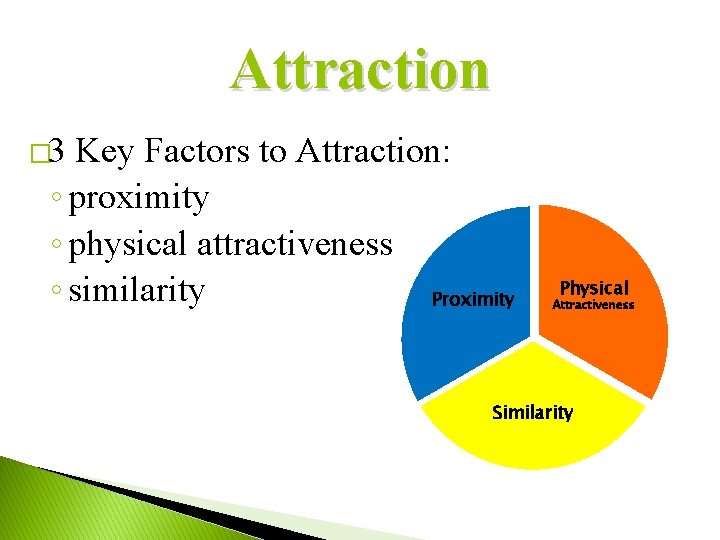
Attraction � 3 Key Factors to Attraction: ◦ proximity ◦ physical attractiveness ◦ similarity Proximity Physical Attractiveness Similarity
Proximity: Mere Exposure Effect �the more familiar we are with something, the more we like it
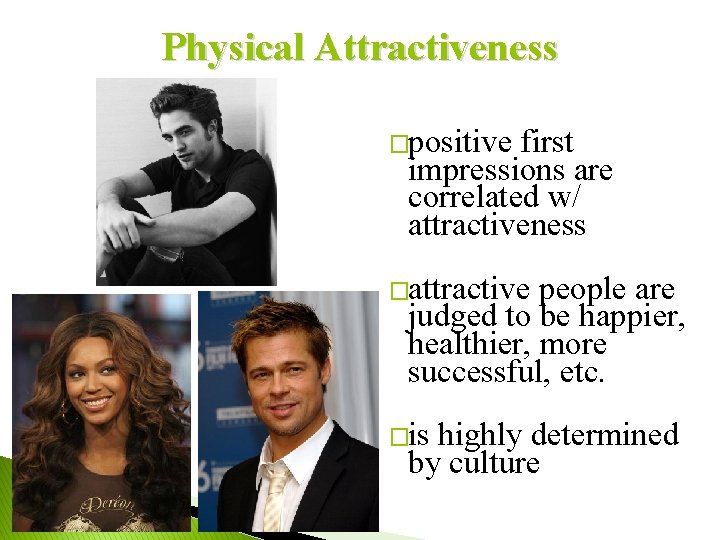
Physical Attractiveness �positive first impressions are correlated w/ attractiveness �attractive people are judged to be happier, healthier, more successful, etc. �is highly determined by culture
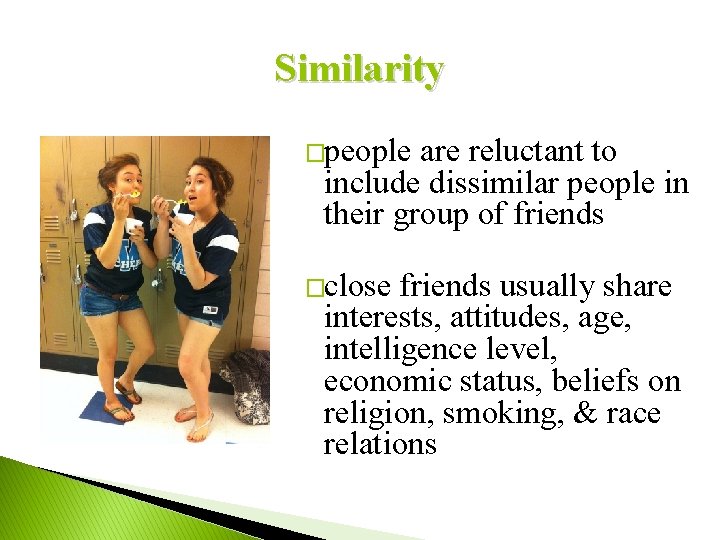
Similarity �people are reluctant to include dissimilar people in their group of friends �close friends usually share interests, attitudes, age, intelligence level, economic status, beliefs on religion, smoking, & race relations
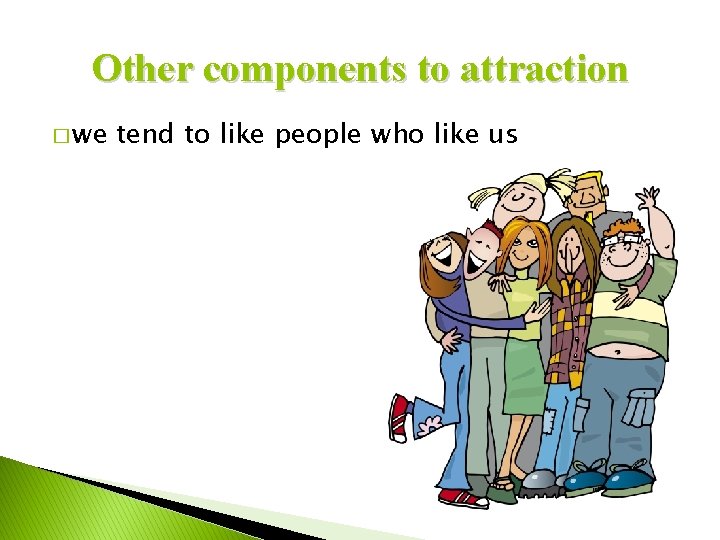
Other components to attraction � we tend to like people who like us
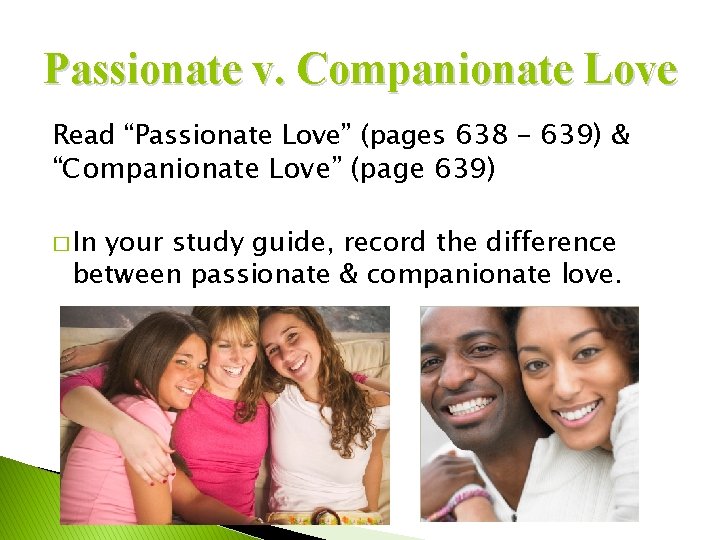
Passionate v. Companionate Love Read “Passionate Love” (pages 638 – 639) & “Companionate Love” (page 639) � In your study guide, record the difference between passionate & companionate love.
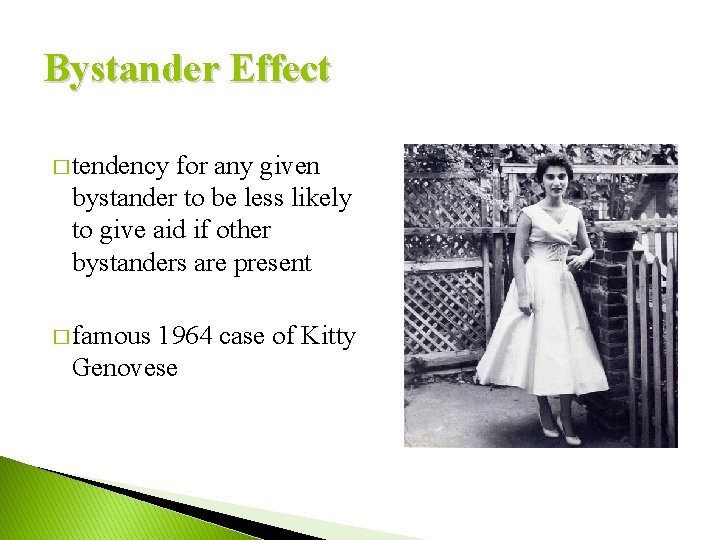
Bystander Effect � tendency for any given bystander to be less likely to give aid if other bystanders are present � famous 1964 case of Kitty Genovese
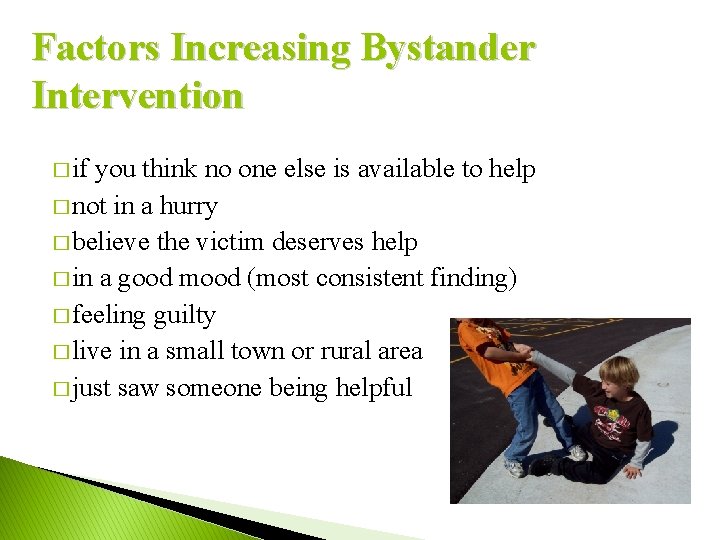
Factors Increasing Bystander Intervention � if you think no one else is available to help � not in a hurry � believe the victim deserves help � in a good mood (most consistent finding) � feeling guilty � live in a small town or rural area � just saw someone being helpful
Role Playing �playing a role can influence or change one’s attitude �Zimbardo’s Prison Study ◦ college students played the role of guard or prisoner in a simulated prison ◦ study was ended early when the guards became too aggressive & cruel
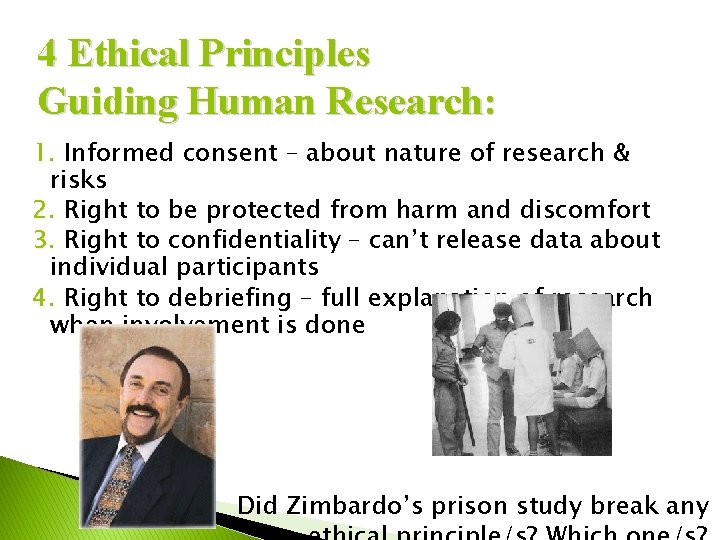
4 Ethical Principles Guiding Human Research: 1. Informed consent – about nature of research & risks 2. Right to be protected from harm and discomfort 3. Right to confidentiality – can’t release data about individual participants 4. Right to debriefing – full explanation of research when involvement is done Did Zimbardo’s prison study break any
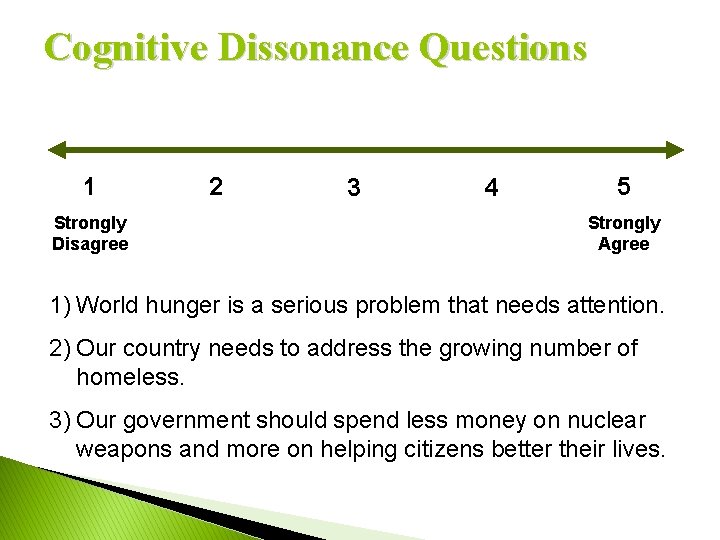
Cognitive Dissonance Questions 1 Strongly Disagree 2 3 4 5 Strongly Agree 1) World hunger is a serious problem that needs attention. 2) Our country needs to address the growing number of homeless. 3) Our government should spend less money on nuclear weapons and more on helping citizens better their lives.
Turn your paper over and answer the next series of questions by responding “yes” or “no” according to whether you perform the behavior on a REGULAR basis. 1. Do you personally do anything to lessen world hunger (e. g. donate money or food or write your representative)? 2. Do you personally do anything to help the homeless (e. g. volunteer at a homeless shelter or donate money)? 3. Do you personally convey your feelings to the government (e. g. by writing your representative or by participating in protests/marches)?
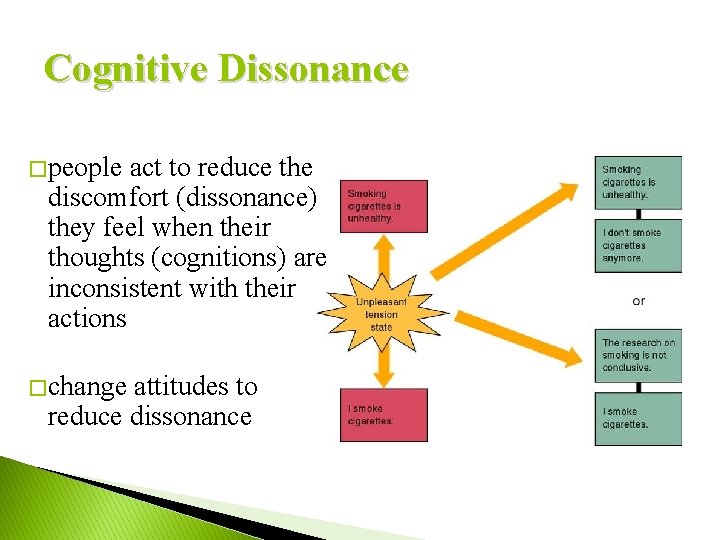
Cognitive Dissonance � people act to reduce the discomfort (dissonance) they feel when their thoughts (cognitions) are inconsistent with their actions � change attitudes to reduce dissonance
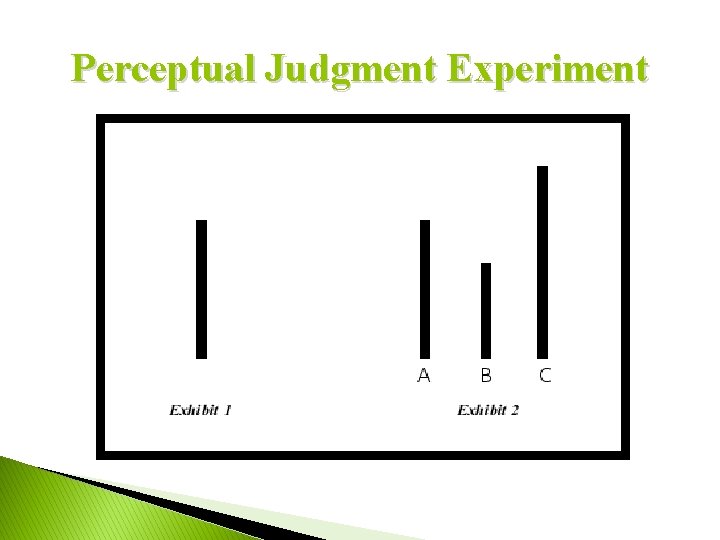
Perceptual Judgment Experiment
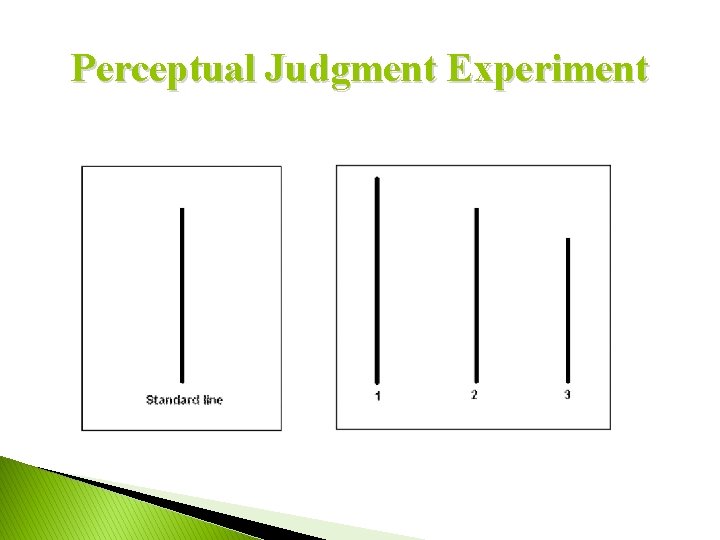
Perceptual Judgment Experiment
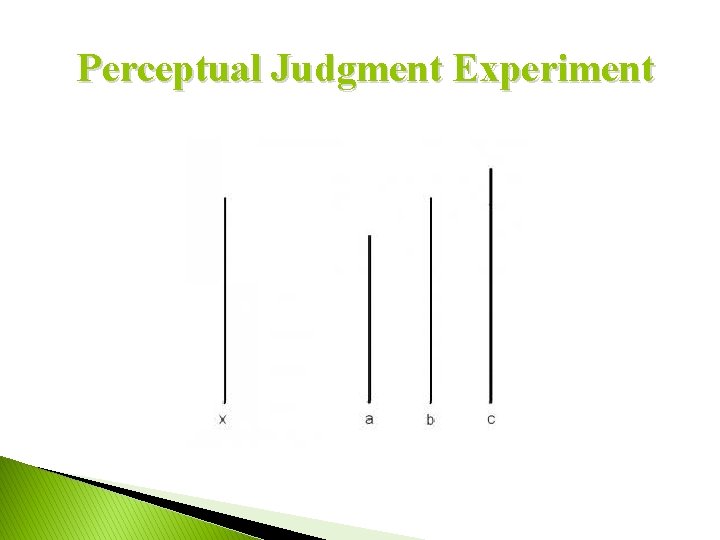
Perceptual Judgment Experiment
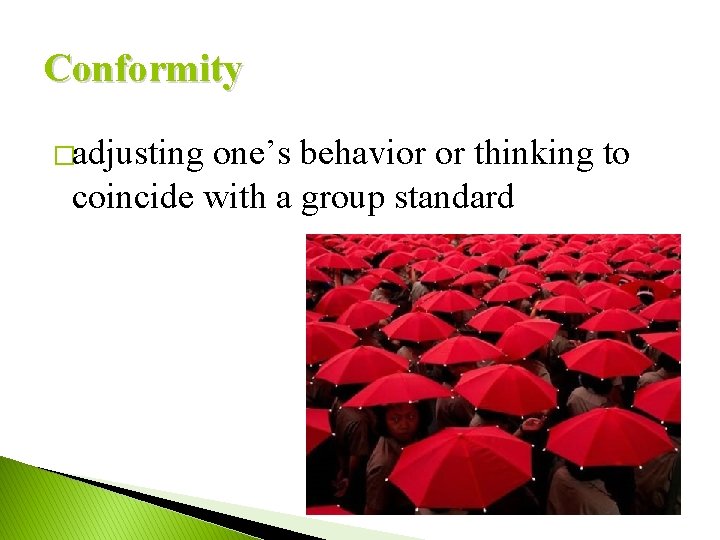
Conformity �adjusting one’s behavior or thinking to coincide with a group standard
Solomon Asch (1907 -1996) �social psychologist �researched circumstances under which people conform
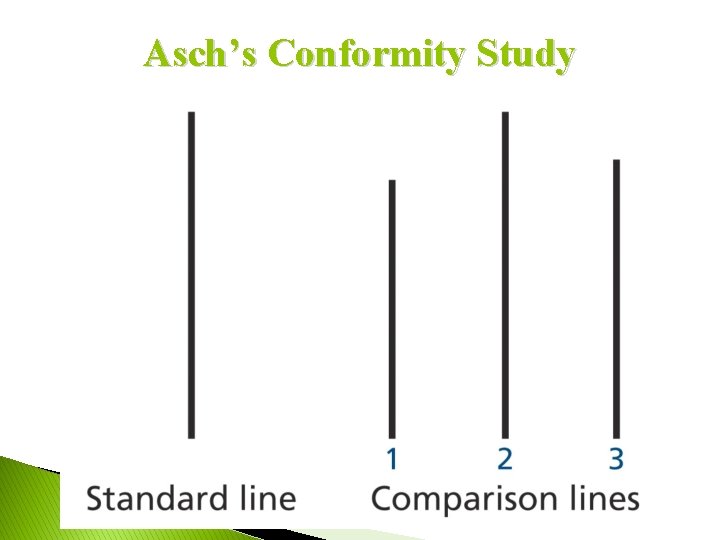
Asch’s Conformity Study
Asch’s Conformity Study
Factors Increasing Conformity �The person feels incompetent or insecure. �The group has three or more people. �The rest of the group is unanimous. �The person is impressed by the status of the group. �No prior commitments were made. �The group is observing the person respond. �One’s culture encourages conformity.
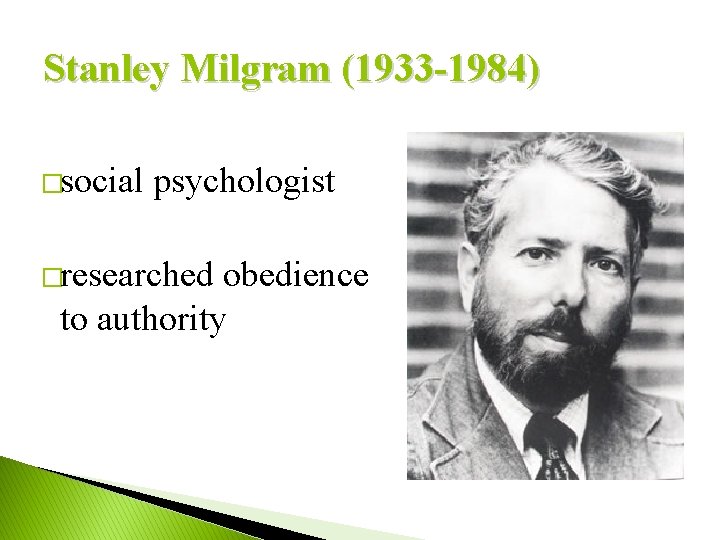
Stanley Milgram (1933 -1984) �social psychologist �researched obedience to authority
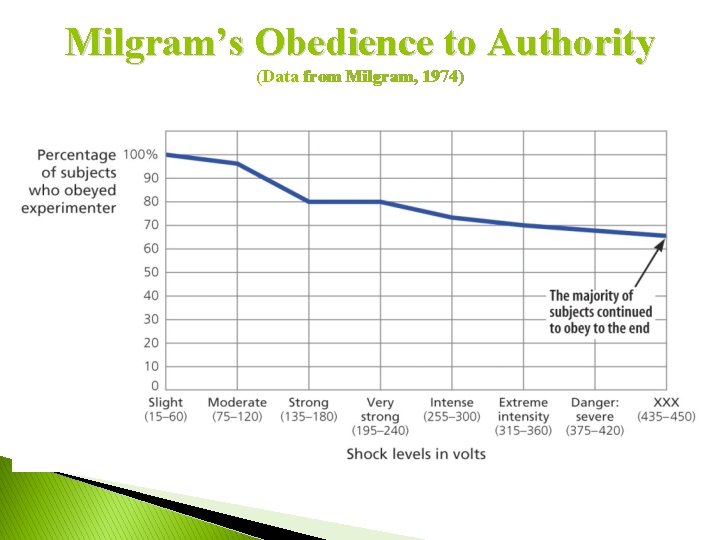
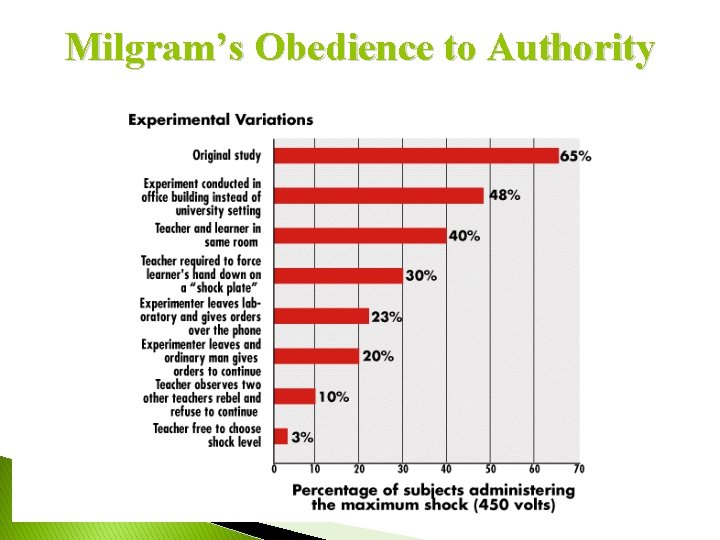
Obedience �tendency to comply with orders, implied or real, from someone perceived as an authority
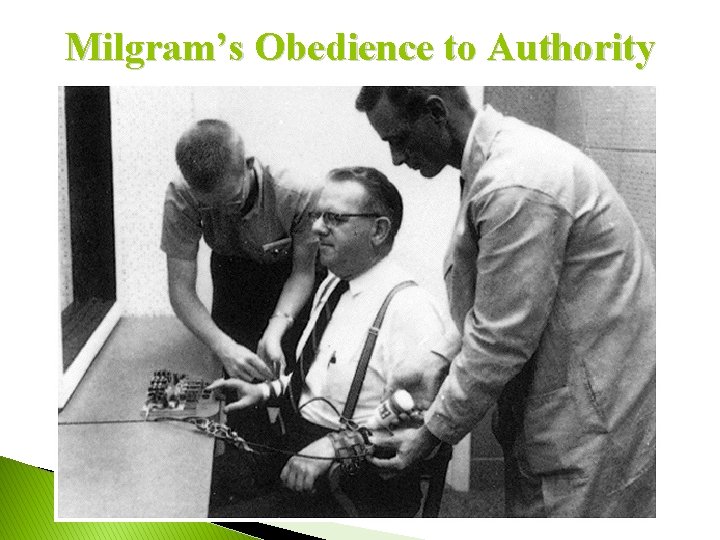
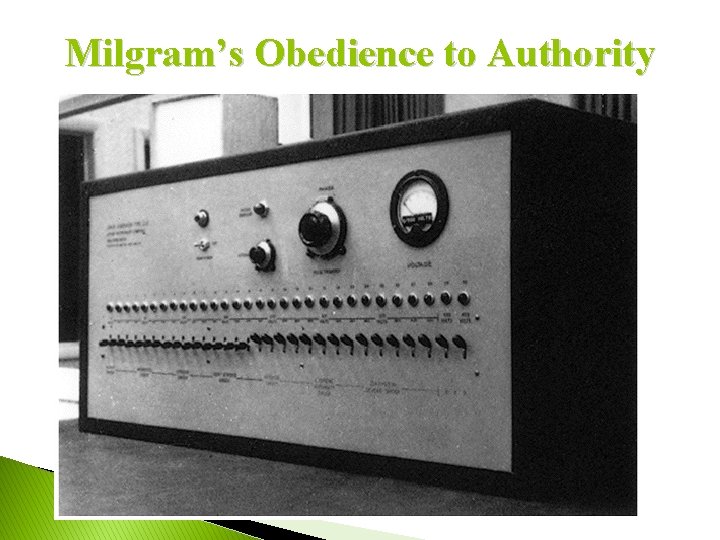
Milgram’s Obedience to Authority
Milgram’s Obedience to Authority
Milgram’s Obedience to Authority (Data from Milgram, 1974)
Milgram’s Obedience to Authority
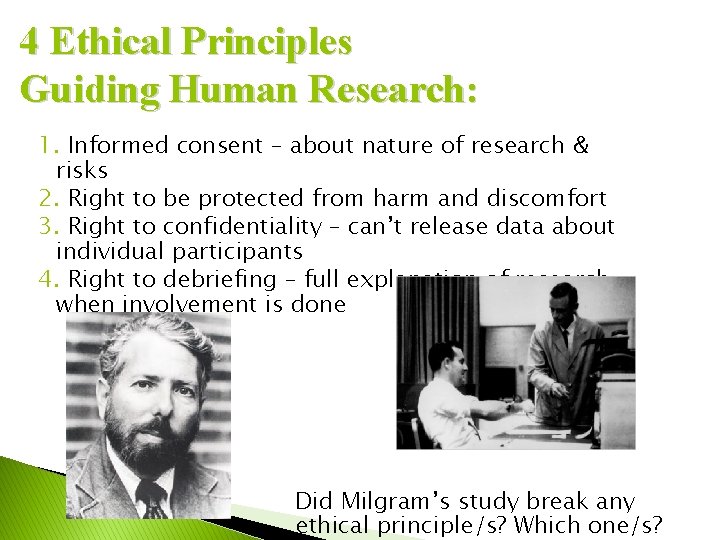
4 Ethical Principles Guiding Human Research: 1. Informed consent – about nature of research & risks 2. Right to be protected from harm and discomfort 3. Right to confidentiality – can’t release data about individual participants 4. Right to debriefing – full explanation of research when involvement is done Did Milgram’s study break any ethical principle/s? Which one/s?
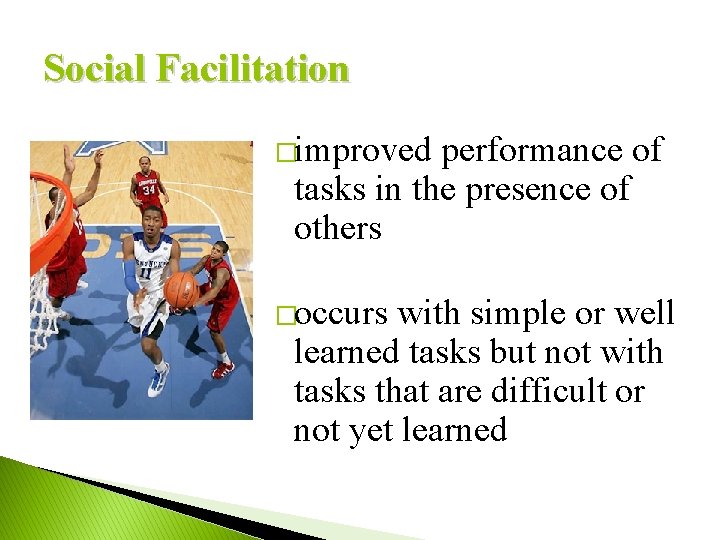
Social Facilitation �improved performance of tasks in the presence of others �occurs with simple or well learned tasks but not with tasks that are difficult or not yet learned
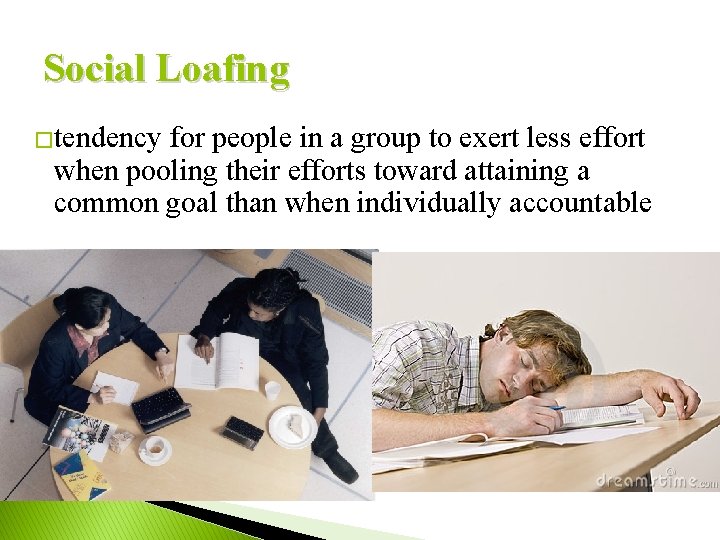
Social Loafing �tendency for people in a group to exert less effort when pooling their efforts toward attaining a common goal than when individually accountable
Think about this… Answer this question on a blank sheet of paper: If you could be totally invisible for 24 hours and were completely assured that you would not be detected or held responsible for your actions, what would you do? DO NOT write your name on your paper. Print your answers neatly. When you are finished, fold your paper in half
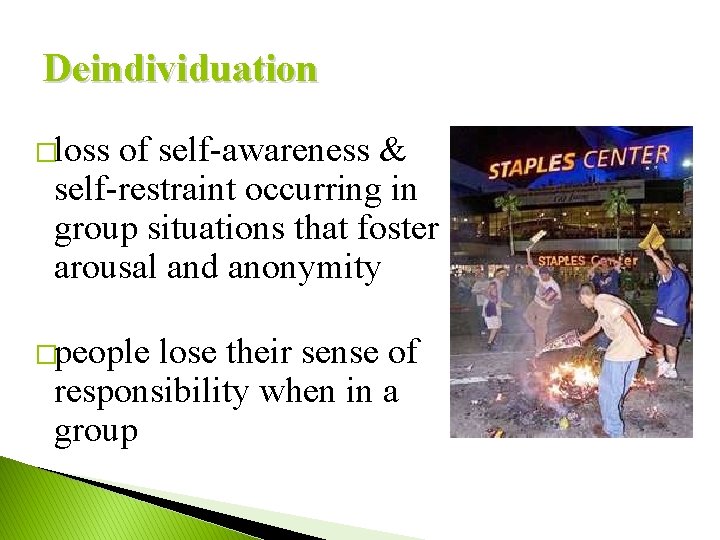
Deindividuation �loss of self-awareness & self-restraint occurring in group situations that foster arousal and anonymity �people lose their sense of responsibility when in a group
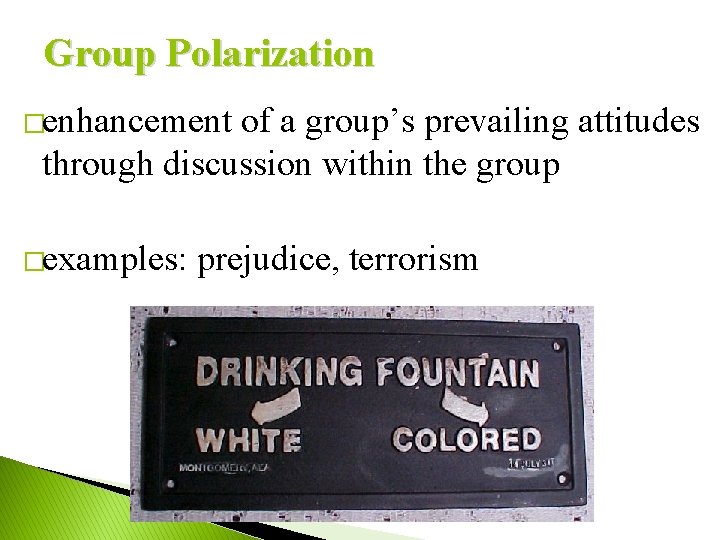
Group Polarization �enhancement of a group’s prevailing attitudes through discussion within the group �examples: prejudice, terrorism
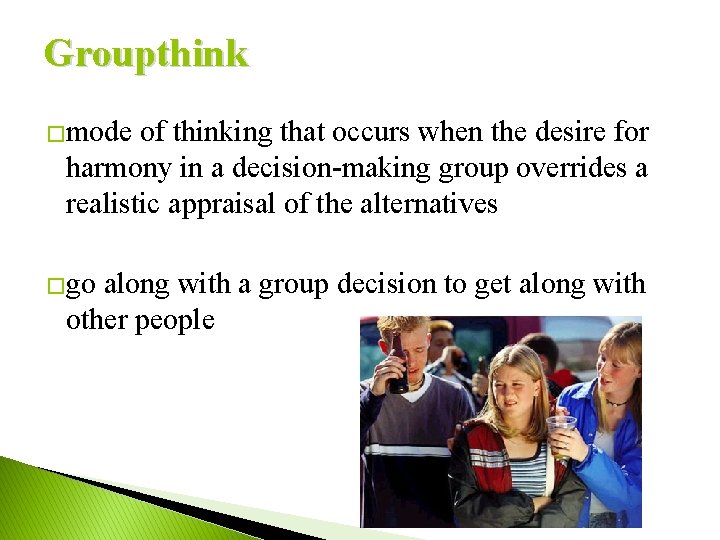
Groupthink �mode of thinking that occurs when the desire for harmony in a decision-making group overrides a realistic appraisal of the alternatives �go along with a group decision to get along with other people
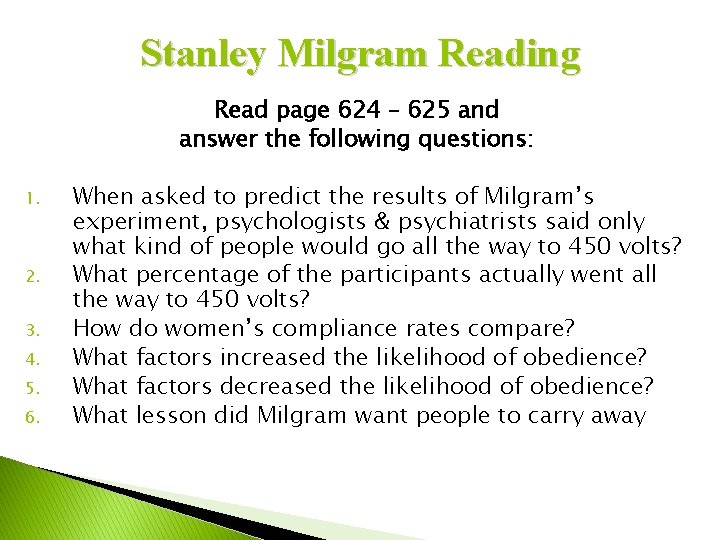
Stanley Milgram Reading Read page 624 – 625 and answer the following questions: 1. 2. 3. 4. 5. 6. When asked to predict the results of Milgram’s experiment, psychologists & psychiatrists said only what kind of people would go all the way to 450 volts? What percentage of the participants actually went all the way to 450 volts? How do women’s compliance rates compare? What factors increased the likelihood of obedience? What factors decreased the likelihood of obedience? What lesson did Milgram want people to carry away from his experiment?