
attitudes definition a affect feelings emotions b behavior
attitudes

definition • a - affect (feelings, emotions) • b - behavior, tendency to act • c - cognitions (beliefs, knowledge, experience) • Not just tastes
Not the same as schemas • • • Attitudes must have affect, feeling Schema about a chair – not an attitude Attitude even with little content – so Both more and less than schema
How they form • Often quickly with little information • Especially about people • But sometimes slowly and carefully
Based on what? • Cognitive approach – Sum of positive and negative features • Just add them up • Or average them • But…
Some are more equal • Some features count for much more • One may overwhelm the rest • So not a simple formula
Affective – feelings • Mere exposure The more we see it, the more we like it • Limitations – Boredom – Too negative
Association, conditioning • • Paired with reinforcement Positive association So Positive feelings
Maintaining attitudes • Selective attention to supporting • Selective perception – see as supporting • Selective memory – remember supporting
persuasion • • The core of social psychology How we influence and Are influenced by others And by information and experience
TWO ROUTES TO PERSUASION • CENTRAL ROUTE • ALSO CALLED SYSTEMATIC • PERIPHERAL ROUTE • ALSO CALLED HEURISTIC Copyright © 1999 by The Mc. Graw-Hill Companies, Inc. 2 of 16
CENTRAL ROUTE • MOTIVATED AUDIENCE • SYSTEMATIC, HIGH EFFORT • LOGICAL, REASONING • GOOD ARGUMENTS PRODUCE CHANGE
PERIPHERAL ROUTE • NOT HIGHLY MOTIVATED • LOW EFFORT, HEURISTICS, SHORT CUTS, NOT SYSTEMATIC • OFTEN EMOTIONAL • CUES, EMOTIONS PRODUCE CHANGE
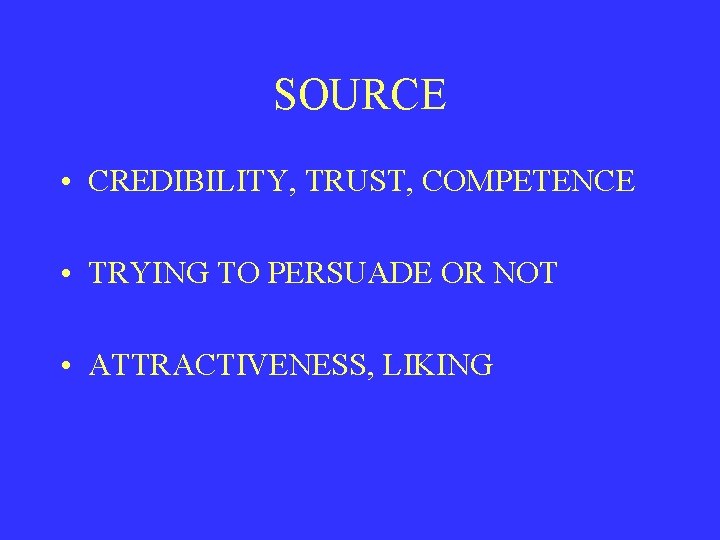
SOURCE • CREDIBILITY, TRUST, COMPETENCE • TRYING TO PERSUADE OR NOT • ATTRACTIVENESS, LIKING
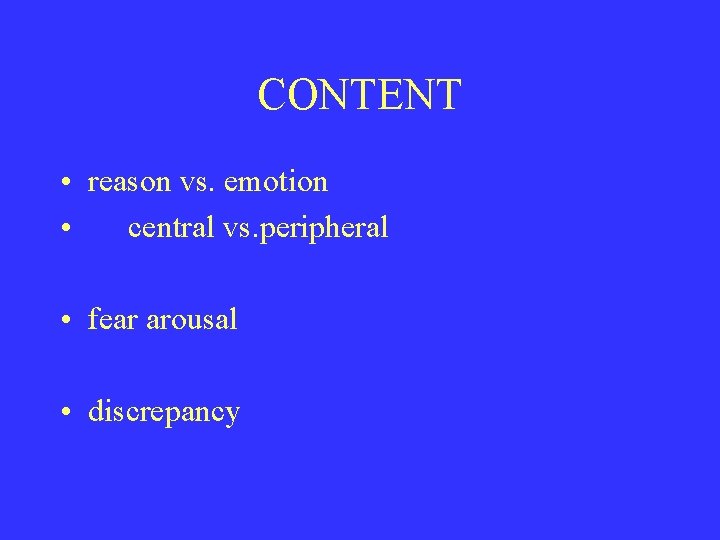
CONTENT • reason vs. emotion • central vs. peripheral • fear arousal • discrepancy
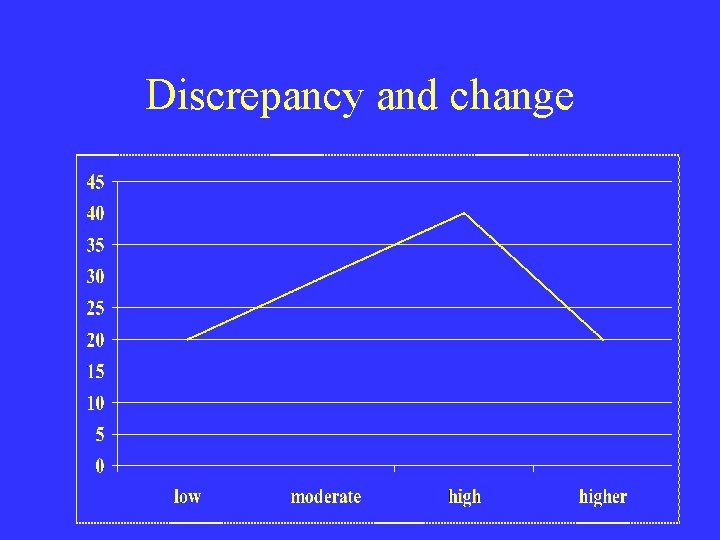
Discrepancy and change
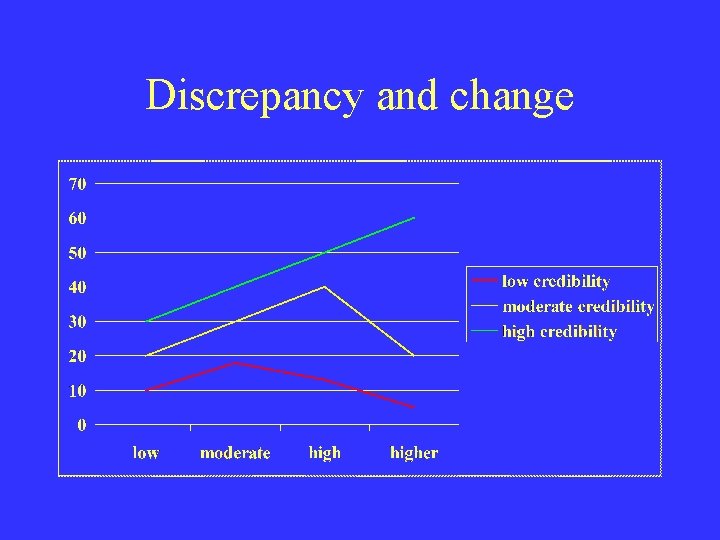
Discrepancy and change
RESISTING PERSUASION • Practice - inoculation • Commitment • central more resistant
Do attitudes affect behavior? • Obviously they do • But not perfectly
Why Not? • • BECAUSE other factors also affect behavior how close the connection how specific the attitude and the behavior
Theory of planned behaviour • • • Attitude toward an action Subjective norms about action Control over action All lead to intention And behavioural intention And intention predicts action
Behaviour affects attitudes • Cognitive dissonance theory • Attitudes change to be consistent with actions • Attitudes change to be consistent with decisions • So behaviour and decisions affect attitudes
reactance • Assert free choice when it’s threatened • So do opposite of what’s asked • Especially if asked too forcefully
So …from • • Dissonance theory and Reactance Use as little justification or force as you can This maximizes the effect on action and attitudes
- Slides: 24