
Attention Switching The Magic Middle erin buchanan What
Attention Switching: The Magic Middle erin buchanan
What? l Attention switching: l l Moving your attention around Not really your eyes
What? l Attention switching: l l Moving your attention around Not really your eyes
How? l l l Posner’s Beam Theory (1980) Zoom Lens/Gradient Theories Open/Close Theory
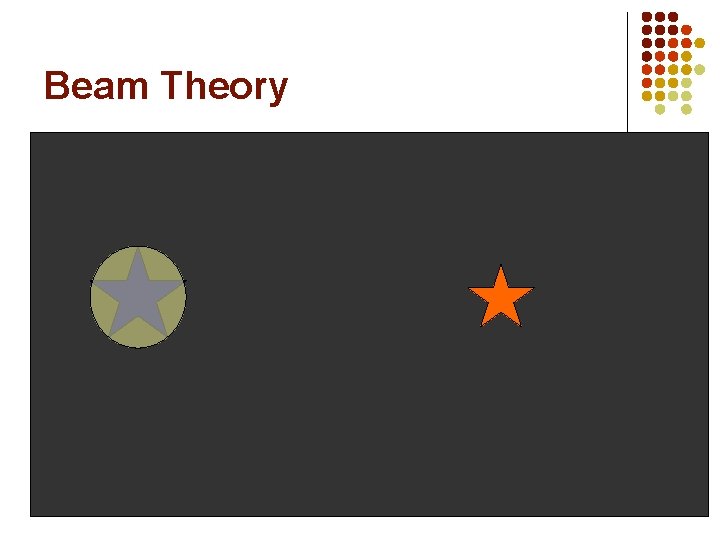
Beam Theory
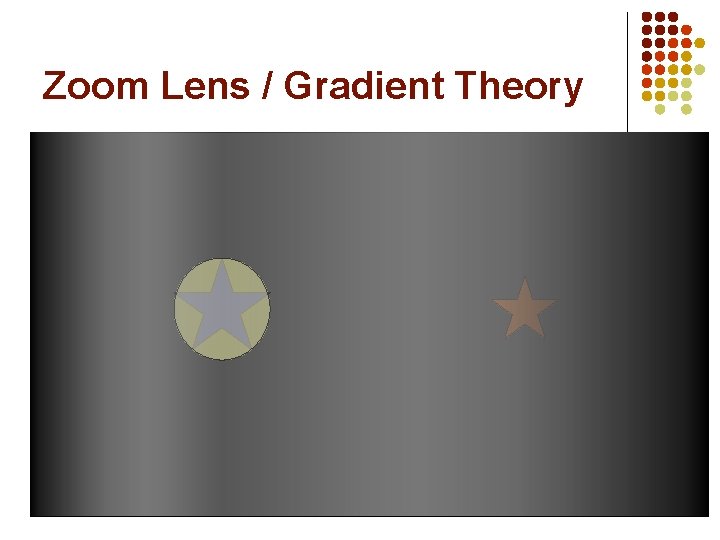
Zoom Lens / Gradient Theory

Open / Close Theory
Experiment 1 l Based on an experiment by Kwak et al (1991) l l Tested time independent shifts of attention Against Posner (same velocity)
Hypotheses l l Time independent shifts of attention. Performance will be affected by objects that appear between target and distractor.
Experiment 1 l l Same – different matching task Targets l l Distractors l l T, L O, T, L All rotated 0, 90, 180, 270
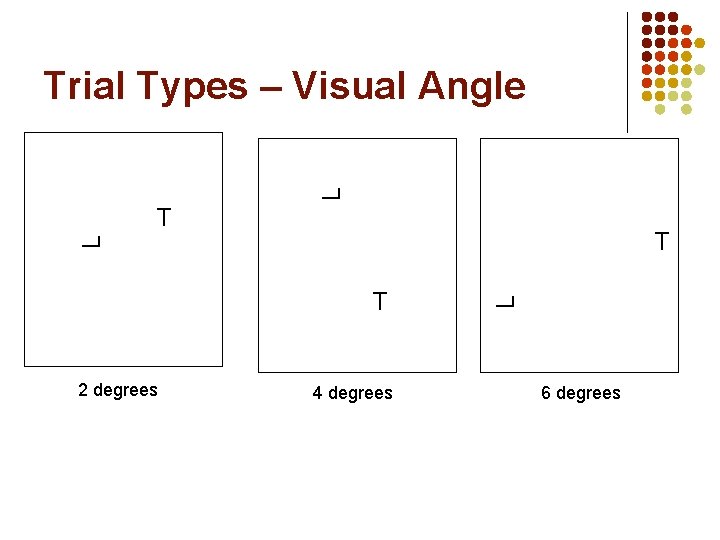
L Trial Types – Visual Angle T T 2 degrees 4 degrees L L T 6 degrees
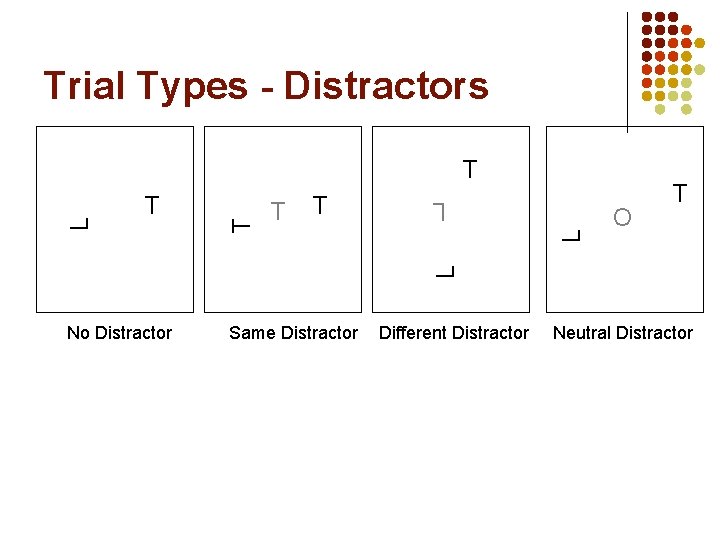
Trial Types - Distractors L T T O T L T T L L T No Distractor Same Distractor Different Distractor Neutral Distractor
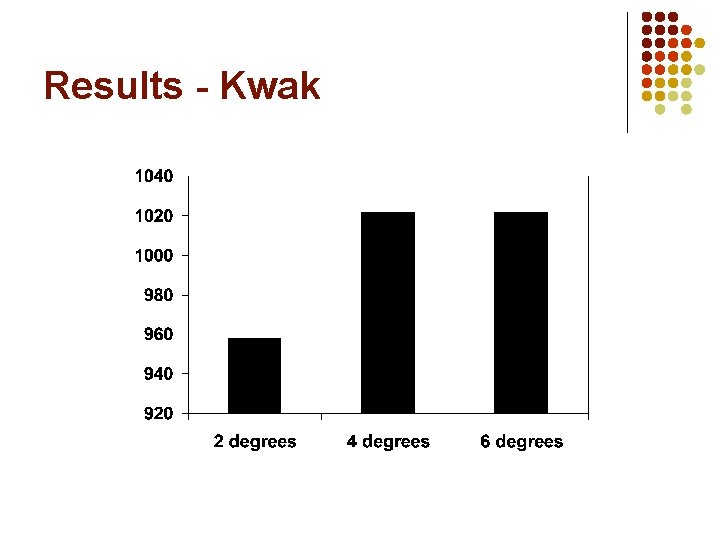
Results - Kwak
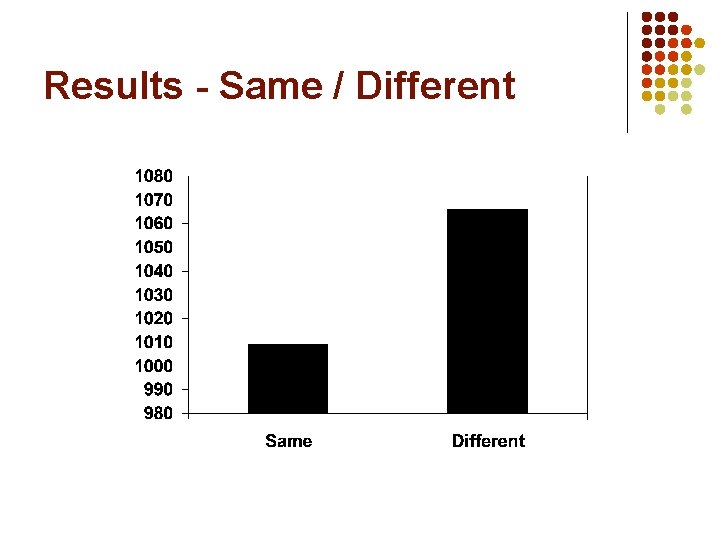
Results - Same / Different
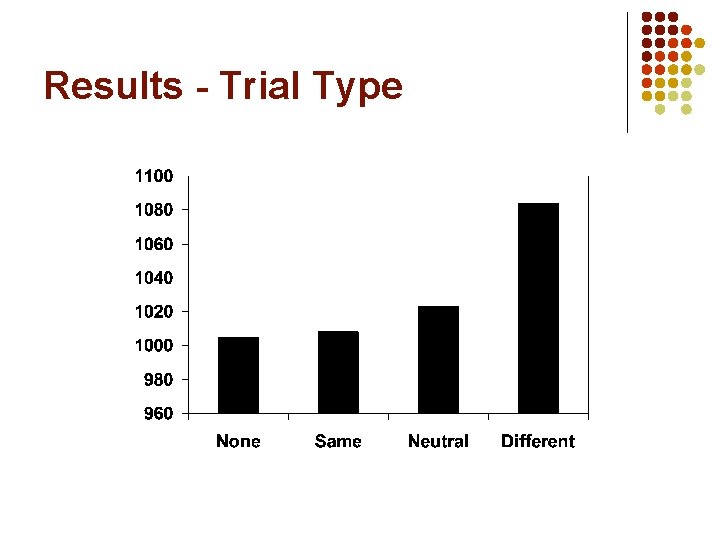
Results - Trial Type
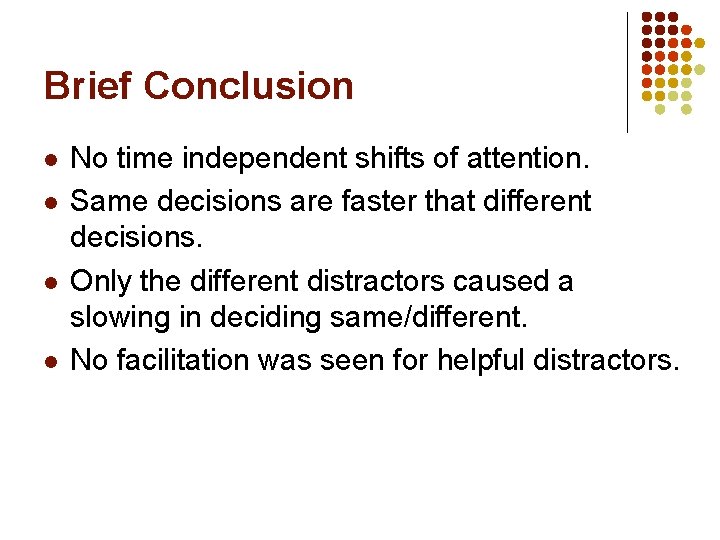
Brief Conclusion l l No time independent shifts of attention. Same decisions are faster that different decisions. Only the different distractors caused a slowing in deciding same/different. No facilitation was seen for helpful distractors.
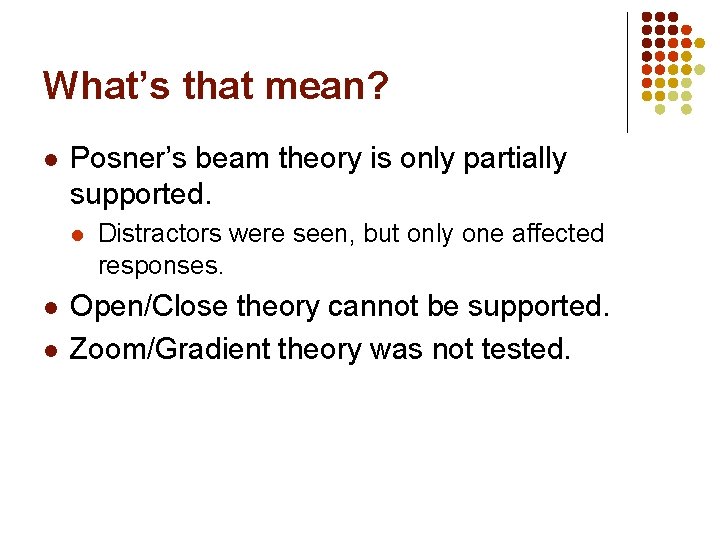
What’s that mean? l Posner’s beam theory is only partially supported. l l l Distractors were seen, but only one affected responses. Open/Close theory cannot be supported. Zoom/Gradient theory was not tested.
Experiment 2 l La. Berge and Brown (1989) replication l With the same distractor types added
Hypotheses l Performance will be affected by objects that appear between target and distractor.
Experiment 2 l Original study l l l Signal Detection Gradient of attention New Experiment l l Cued Location Distractors
Experiment 2 - Distractors l l Look for an “S” then an “O” Distractor Types l l l None Same – #O# Neutral – #F# Different – #C#, #0# Reverse
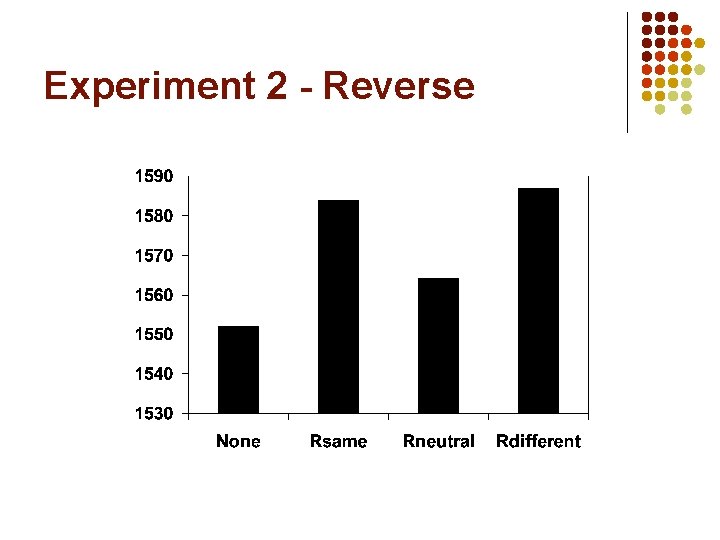
Experiment 2 - Reverse
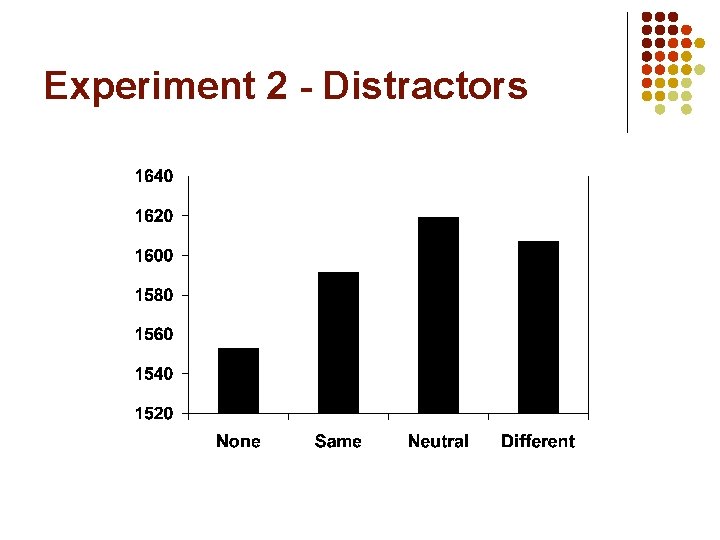
Experiment 2 - Distractors
Problems l l Yes/No instead of just Yes? Analyze hit/miss rates for each distractor?
Brief Conclusions l l This experiment may need to be redesigned. Gradient/Zoom theory may be supported: l l That bad information is in there, but degraded. They are ignoring it anyway.
- Slides: 25