
Attention Deficit Hyperactivity Disorder Larry Gray MD Developmental
- Slides: 38
Attention Deficit Hyperactivity Disorder Larry Gray, MD Developmental and Behavioral Pediatrics Department of Pediatrics University of Chicago Pritzker School of Medicine Copyright Alcohol Medical Scholars Program
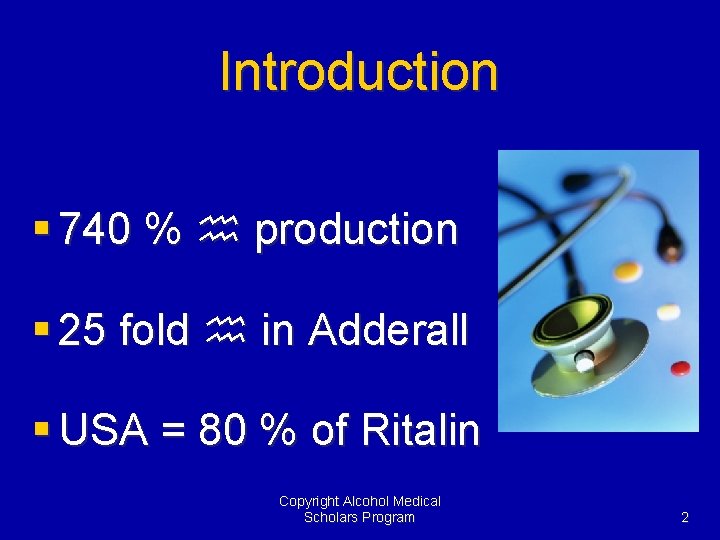
Introduction § 740 % h production § 25 fold h in Adderall § USA = 80 % of Ritalin Copyright Alcohol Medical Scholars Program 2
Lecture Aims § Epidemiology + course § Diagnosis § Etiology § Treatment § Relationship to substance use Copyright Alcohol Medical Scholars Program 3
Key Points § Very common: 10 % of boys § Poor attention + impulsivity § Pharmacotherapy improves sxs § Treatment protects from later SUD Copyright Alcohol Medical Scholars Program 4
Evolving Nomenclature § Moral deficit § Minimal brain disorder – Autopsy studies and crude x-rays § Attention Deficit Disorder (ADD) § Attention Deficit/Hyperactivity D/O Copyright Alcohol Medical Scholars Program 5
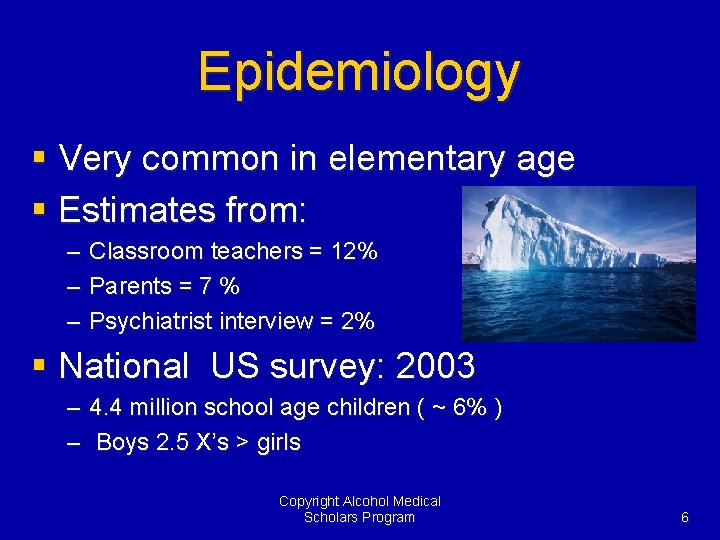
Epidemiology § Very common in elementary age § Estimates from: – – – Classroom teachers = 12% Parents = 7 % Psychiatrist interview = 2% § National US survey: 2003 – 4. 4 million school age children ( ~ 6% ) – Boys 2. 5 X’s > girls Copyright Alcohol Medical Scholars Program 6
Natural History § Symptoms identified in school § Peak prevalence: 9 -12 yrs of age § Symptoms lessen with age § Symptoms persist > 25 yrs in 2/3 Copyright Alcohol Medical Scholars Program 7
Lecture Aims üEpidemiology + course § Diagnosis § Etiology § Treatment § Relationship to substance use Copyright Alcohol Medical Scholars Program 8
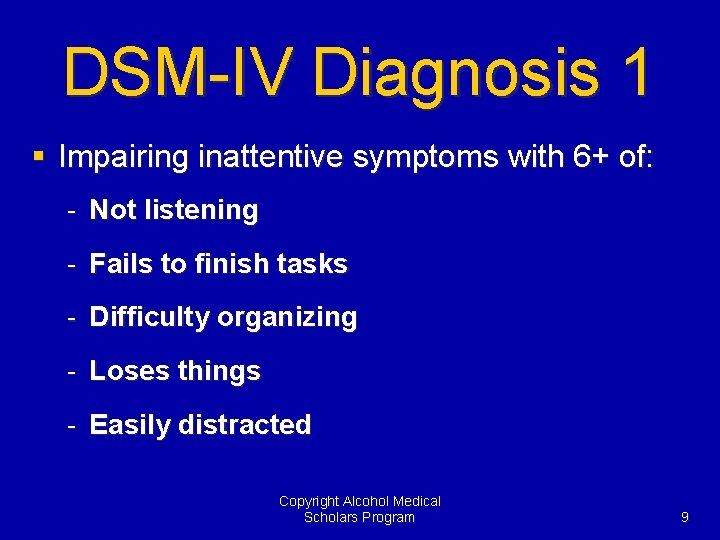
DSM-IV Diagnosis 1 § Impairing inattentive symptoms with 6+ of: - Not listening - Fails to finish tasks - Difficulty organizing - Loses things - Easily distracted Copyright Alcohol Medical Scholars Program 9
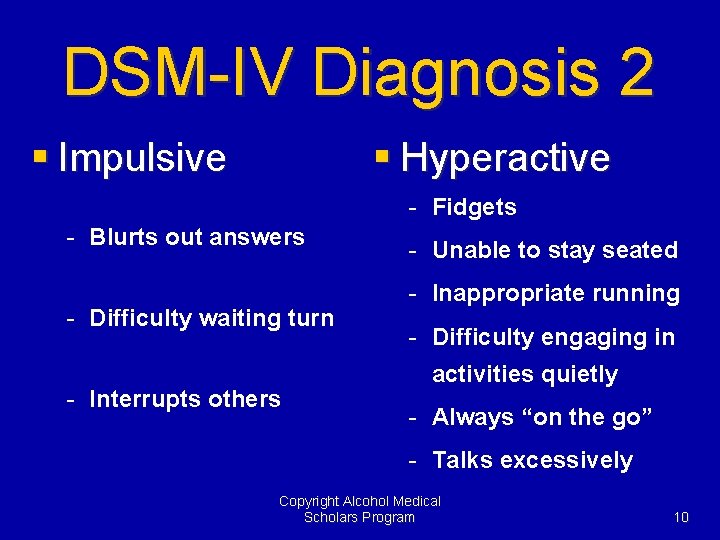
DSM-IV Diagnosis 2 § Impulsive § Hyperactive - Fidgets - Blurts out answers - Difficulty waiting turn - Interrupts others - Unable to stay seated - Inappropriate running - Difficulty engaging in activities quietly - Always “on the go” - Talks excessively Copyright Alcohol Medical Scholars Program 10
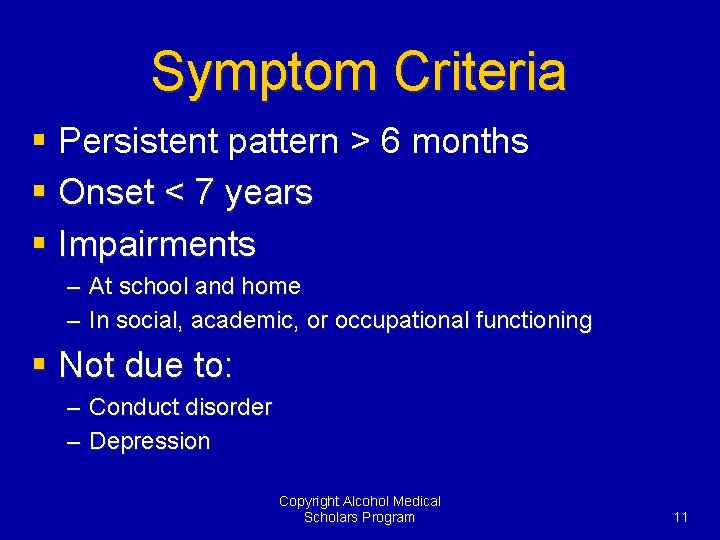
Symptom Criteria § Persistent pattern > 6 months § Onset < 7 years § Impairments – At school and home – In social, academic, or occupational functioning § Not due to: – Conduct disorder – Depression Copyright Alcohol Medical Scholars Program 11
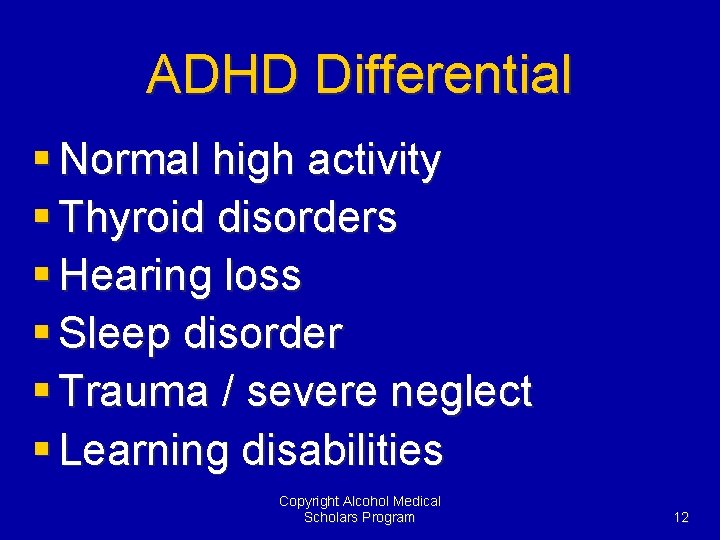
ADHD Differential § Normal high activity § Thyroid disorders § Hearing loss § Sleep disorder § Trauma / severe neglect § Learning disabilities Copyright Alcohol Medical Scholars Program 12
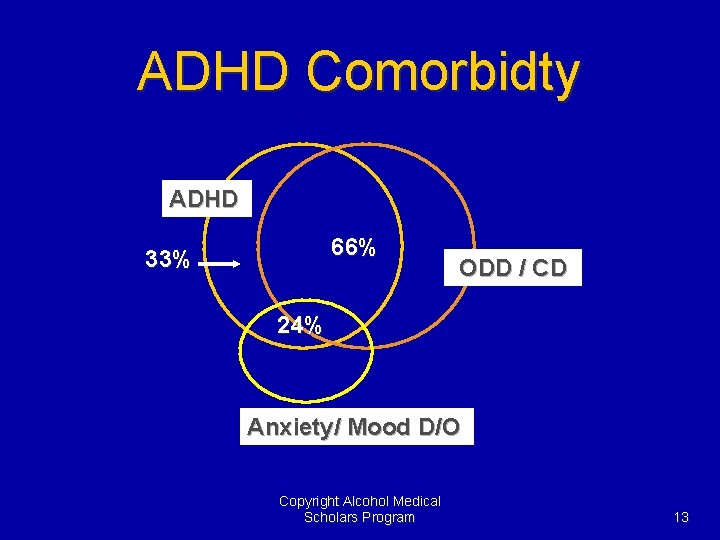
ADHD Comorbidty ADHD 66% 33% ODD / CD 24% Anxiety/ Mood D/O Copyright Alcohol Medical Scholars Program 13
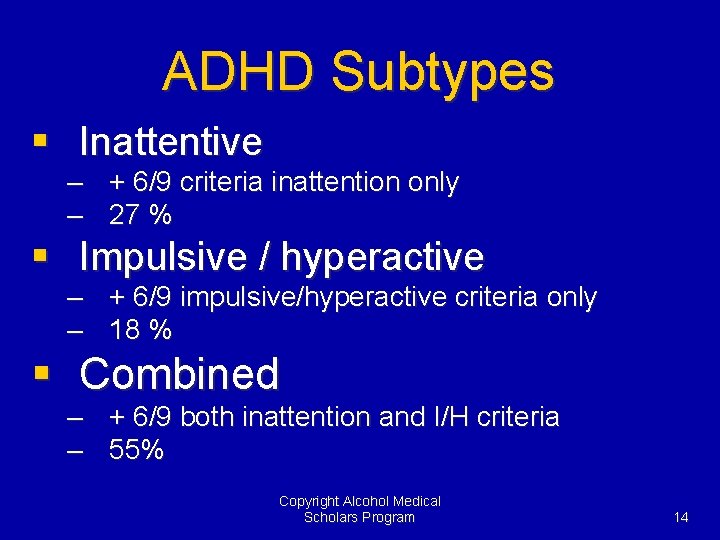
ADHD Subtypes § Inattentive – + 6/9 criteria inattention only – 27 % § Impulsive / hyperactive – + 6/9 impulsive/hyperactive criteria only – 18 % § Combined – + 6/9 both inattention and I/H criteria – 55% Copyright Alcohol Medical Scholars Program 14
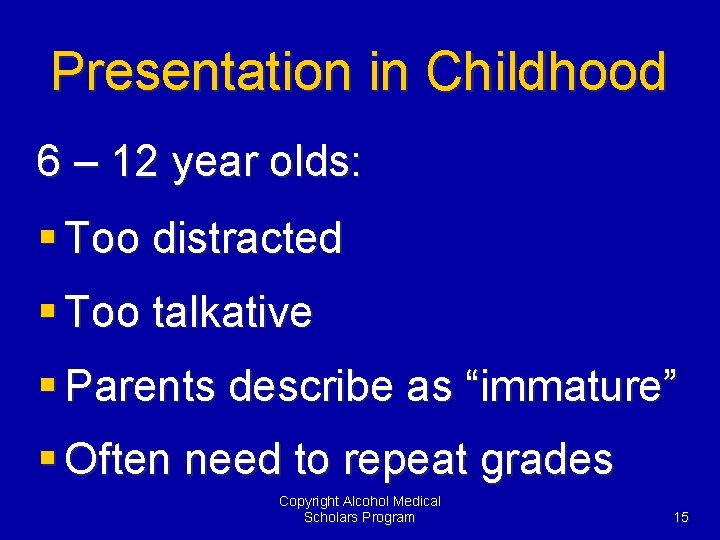
Presentation in Childhood 6 – 12 year olds: § Too distracted § Too talkative § Parents describe as “immature” § Often need to repeat grades Copyright Alcohol Medical Scholars Program 15
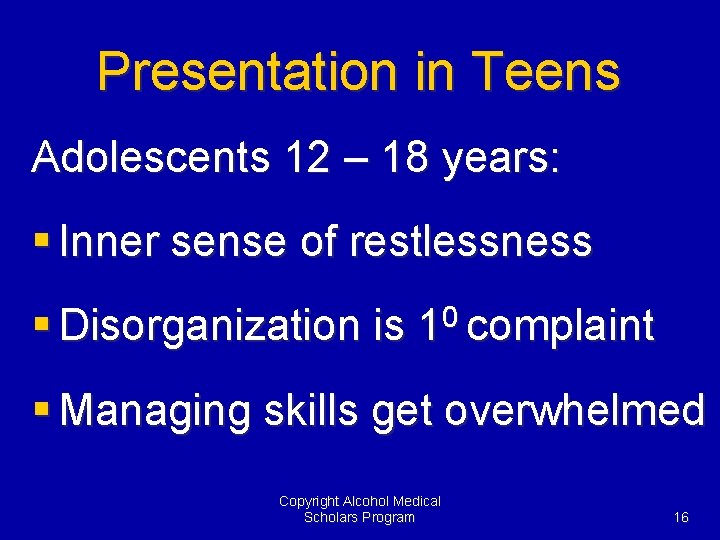
Presentation in Teens Adolescents 12 – 18 years: § Inner sense of restlessness § Disorganization is 0 1 complaint § Managing skills get overwhelmed Copyright Alcohol Medical Scholars Program 16
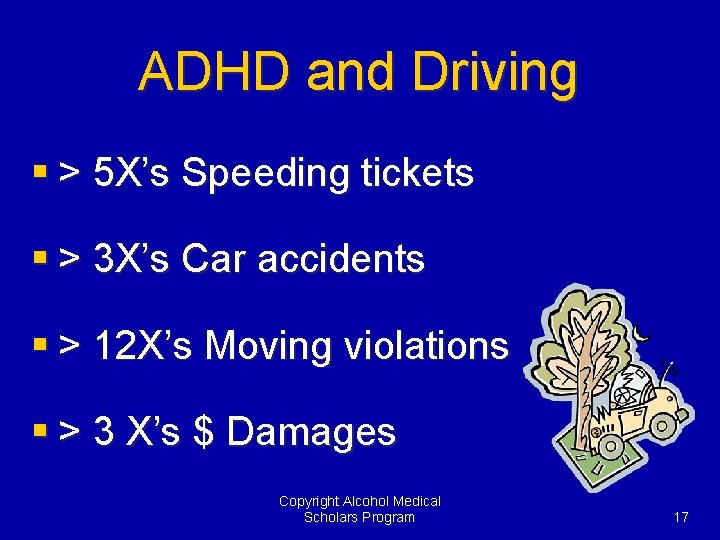
ADHD and Driving § > 5 X’s Speeding tickets § > 3 X’s Car accidents § > 12 X’s Moving violations § > 3 X’s $ Damages Copyright Alcohol Medical Scholars Program 17
Lecture Aims üEpidemiology + course üDiagnosis § Etiology § Treatment § Relationship to substance use Copyright Alcohol Medical Scholars Program 18
Pathophysiology § Different etiologies at work § No one brain mechanism § → Behavioral syndrome of: – Brain anatomical differences – Genetic / Molecular differences – Environmental risk factors Copyright Alcohol Medical Scholars Program 19
Environmental Influences § Prenatal factors (i. e. low birth wt) § Neurotoxin exposure § Prenatal (i. e. alcohol) § Postnatal (i. e. lead) § CNS infections - encephalitis Copyright Alcohol Medical Scholars Program 20
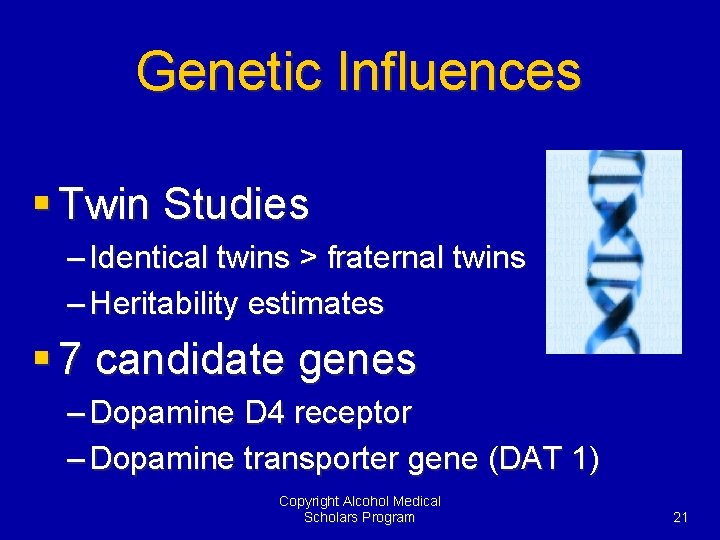
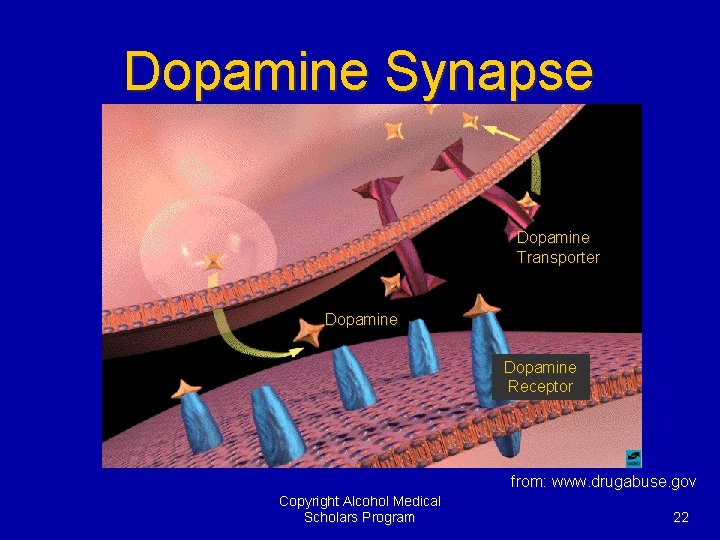
Genetic Influences § Twin Studies – Identical twins > fraternal twins – Heritability estimates § 7 candidate genes – Dopamine D 4 receptor – Dopamine transporter gene (DAT 1) Copyright Alcohol Medical Scholars Program 21
Dopamine Synapse Dopamine Transporter Dopamine Receptor from: www. drugabuse. gov Copyright Alcohol Medical Scholars Program 22
Lecture Aims üEpidemiology + course üDiagnosis üEtiology § Treatment § Relationship to substance use Copyright Alcohol Medical Scholars Program 23
Treatment of ADHD § Effective: – Behavioral Therapy – Pharmacotherapy – Combination of both § Ineffective: – Family, individual, or cognitive therapy Copyright Alcohol Medical Scholars Program 24
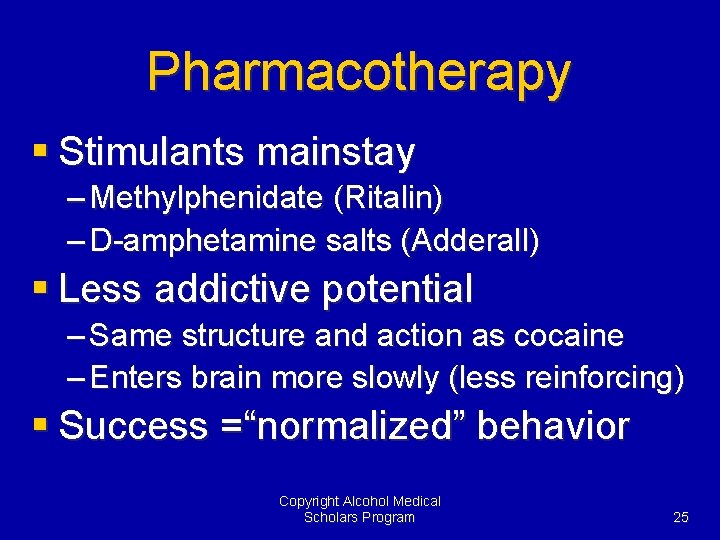
Pharmacotherapy § Stimulants mainstay – Methylphenidate (Ritalin) – D-amphetamine salts (Adderall) § Less addictive potential – Same structure and action as cocaine – Enters brain more slowly (less reinforcing) § Success =“normalized” behavior Copyright Alcohol Medical Scholars Program 25
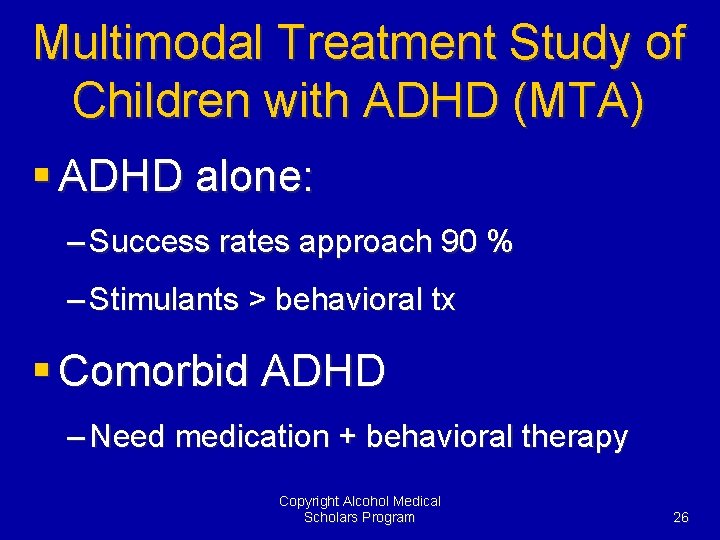
Multimodal Treatment Study of Children with ADHD (MTA) § ADHD alone: – Success rates approach 90 % – Stimulants > behavioral tx § Comorbid ADHD – Need medication + behavioral therapy Copyright Alcohol Medical Scholars Program 26
3 Year MTA Follow-Up § All kids improve § Stimulants lose advantage § Can meds be stopped? Copyright Alcohol Medical Scholars Program 27
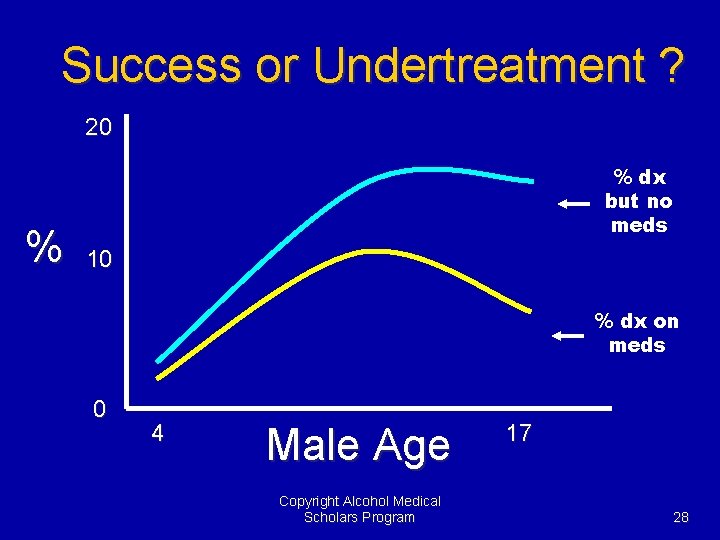
Success or Undertreatment ? 20 % % dx but no meds 10 % dx on meds 0 4 Male Age Copyright Alcohol Medical Scholars Program 17 28
Lecture Aims üEpidemiology + course üDiagnosis üEtiology üTreatment § Relationship to substance use Copyright Alcohol Medical Scholars Program 29
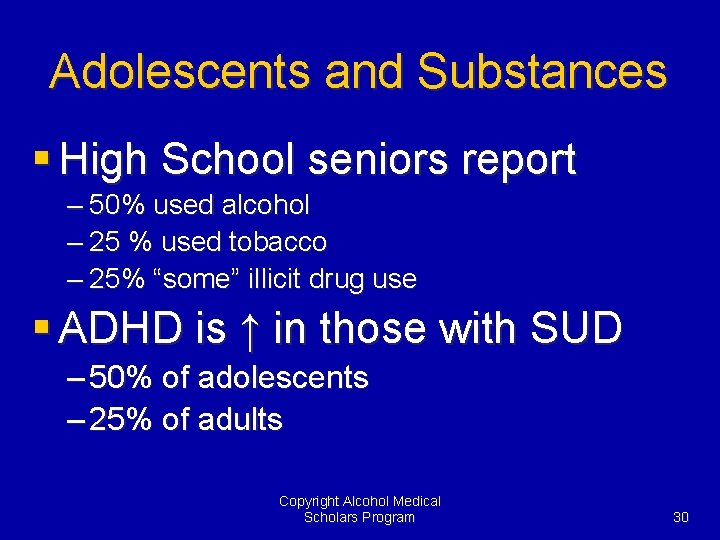
Adolescents and Substances § High School seniors report – 50% used alcohol – 25 % used tobacco – 25% “some” illicit drug use § ADHD is ↑ in those with SUD – 50% of adolescents – 25% of adults Copyright Alcohol Medical Scholars Program 30
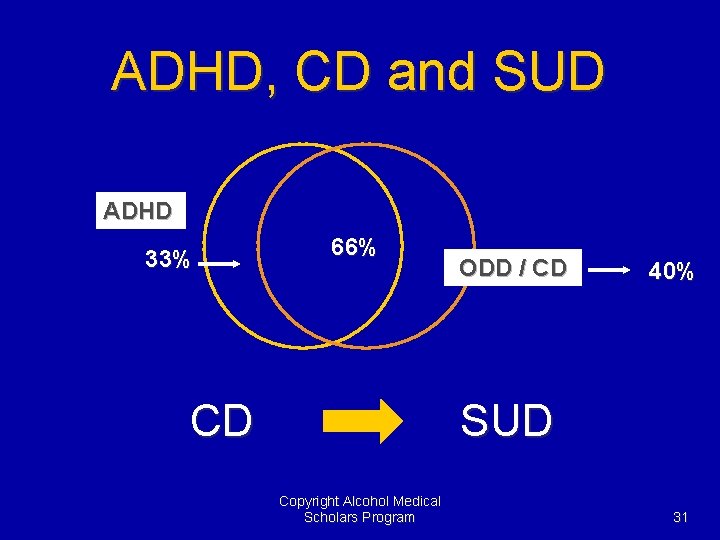
ADHD, CD and SUD ADHD 33% 66% CD ODD / CD 40% SUD Copyright Alcohol Medical Scholars Program 31
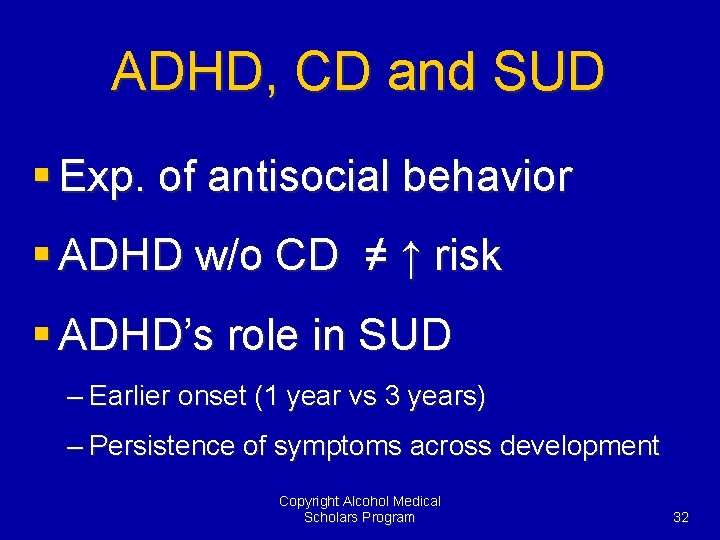
ADHD, CD and SUD § Exp. of antisocial behavior § ADHD w/o CD ≠ ↑ risk § ADHD’s role in SUD – Earlier onset (1 year vs 3 years) – Persistence of symptoms across development Copyright Alcohol Medical Scholars Program 32
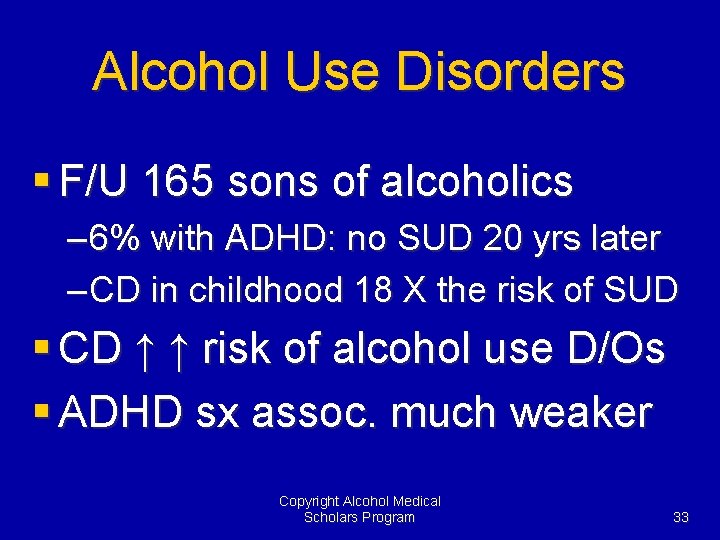
Alcohol Use Disorders § F/U 165 sons of alcoholics – 6% with ADHD: no SUD 20 yrs later – CD in childhood 18 X the risk of SUD § CD ↑ ↑ risk of alcohol use D/Os § ADHD sx assoc. much weaker Copyright Alcohol Medical Scholars Program 33
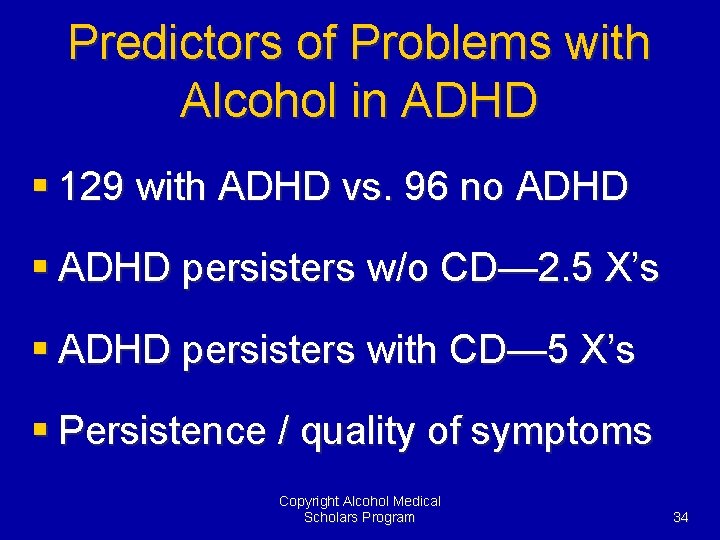
Predictors of Problems with Alcohol in ADHD § 129 with ADHD vs. 96 no ADHD § ADHD persisters w/o CD— 2. 5 X’s § ADHD persisters with CD— 5 X’s § Persistence / quality of symptoms Copyright Alcohol Medical Scholars Program 34
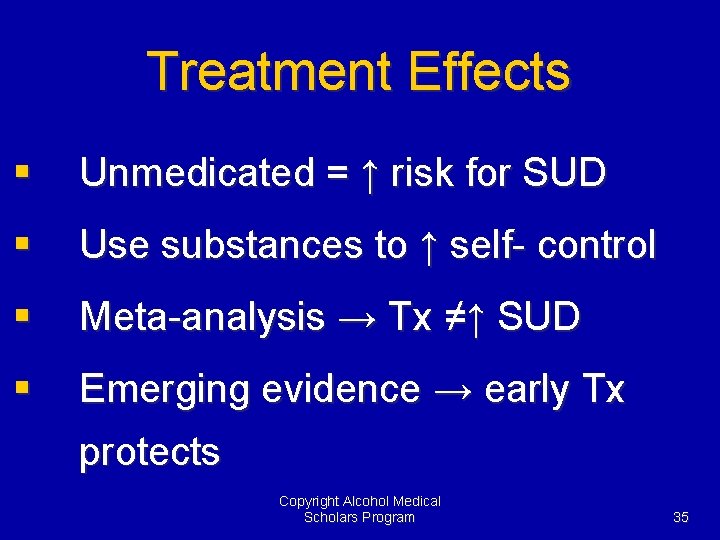
Treatment Effects § Unmedicated = ↑ risk for SUD § Use substances to ↑ self- control § Meta-analysis → Tx ≠↑ SUD § Emerging evidence → early Tx protects Copyright Alcohol Medical Scholars Program 35
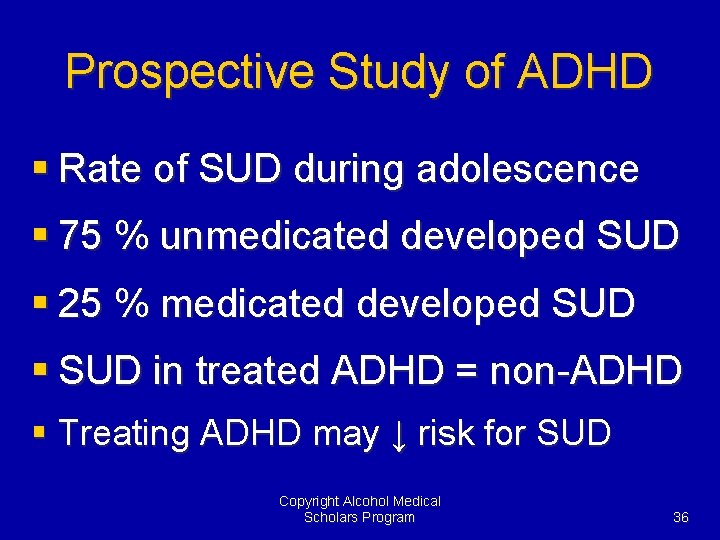
Prospective Study of ADHD § Rate of SUD during adolescence § 75 % unmedicated developed SUD § 25 % medicated developed SUD § SUD in treated ADHD = non-ADHD § Treating ADHD may ↓ risk for SUD Copyright Alcohol Medical Scholars Program 36
Lecture Aims üEpidemiology + course üDiagnosis üEtiology üTreatment üRelationship to substance use Copyright Alcohol Medical Scholars Program 37
Summary § Very common: boys > girls § Poor attention + impulsivity § Pharmacotherapy improves sxs § Treatment protects from SUD Copyright Alcohol Medical Scholars Program 38