
Attending to Misconceptions in Science Class with Concept
- Slides: 21
Attending to Misconceptions in Science Class with Concept Maps
Some Common Misconceptions �Heat is a substance �Heavier objects fall faster than lighter objects. �Seasons are caused by the earth’s changing distance from the sun. �Positively charged atoms have gained protons �Dinosaurs and cavemen lived at the same time.
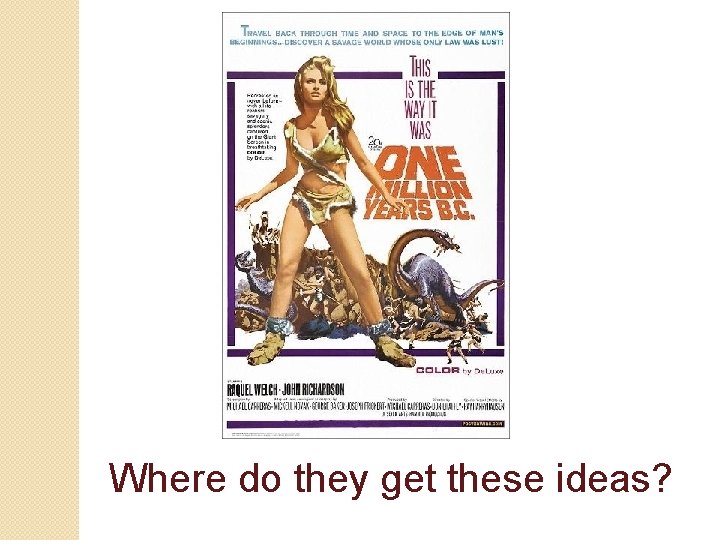
Where do they get these ideas?
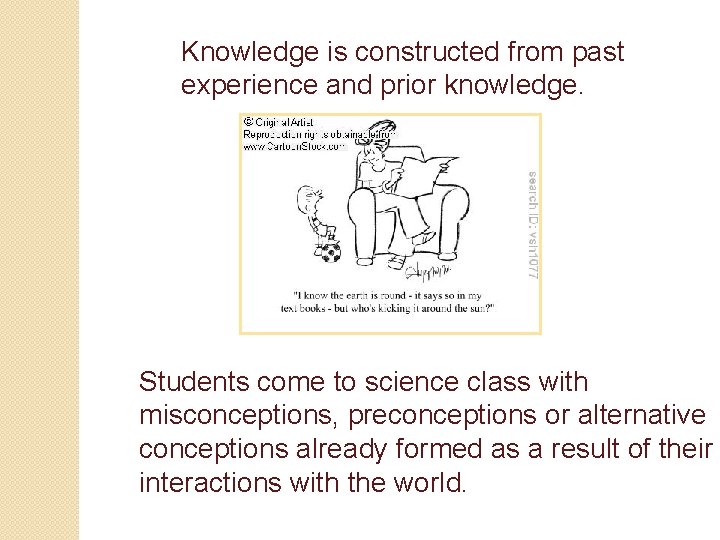
Knowledge is constructed from past experience and prior knowledge. Students come to science class with misconceptions, preconceptions or alternative conceptions already formed as a result of their interactions with the world.
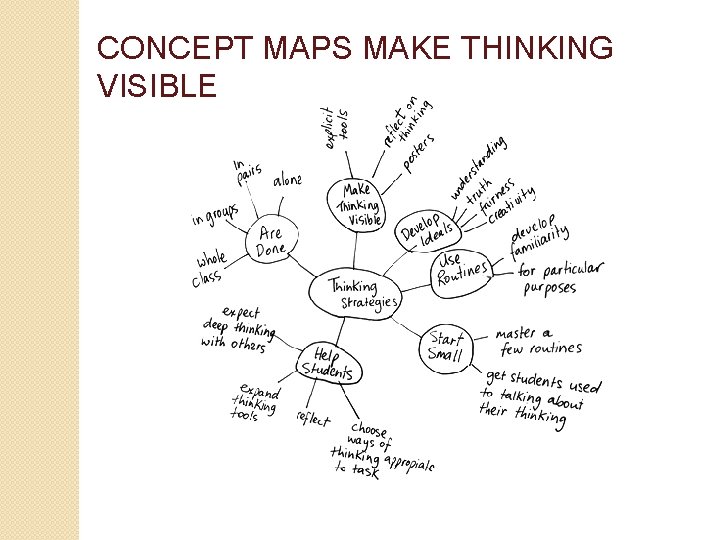
CONCEPT MAPS MAKE THINKING VISIBLE
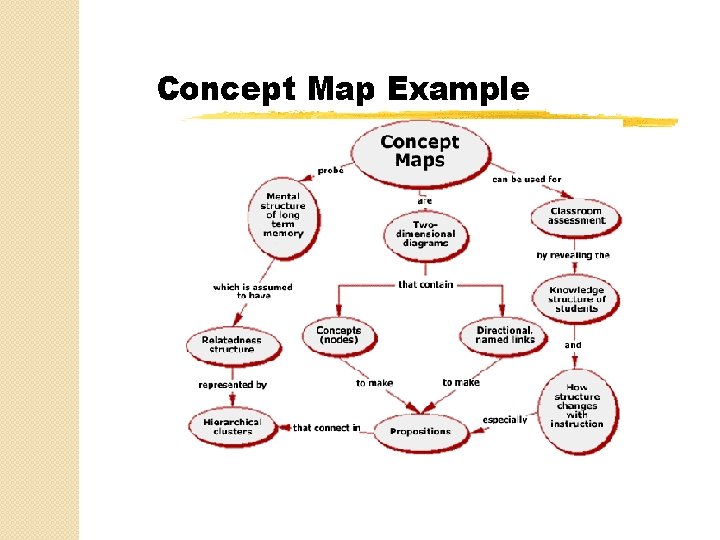
WHAT ARE CONCEPT MAPS? Concept maps are graphical tools for organizing and representing knowledge. �They include concepts, usually enclosed in circles or boxes of some type, and relationships between concepts indicated by a connecting line linking two concepts. �The concepts are represented in a hierarchical fashion. •
Concept mapping can provide: �The big picture �A graphic for the knowledge to be learned �A tool to link new knowledge to prior knowledge and experience �An assessment tool �A gauge of student understanding �A method to identify misconceptions
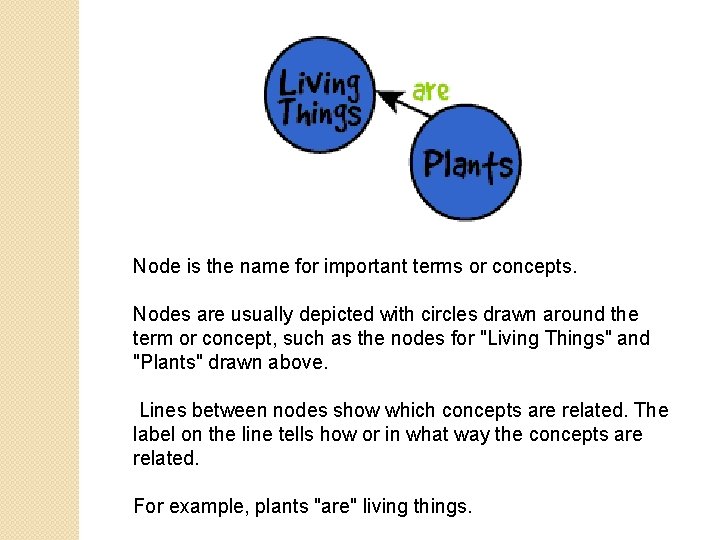
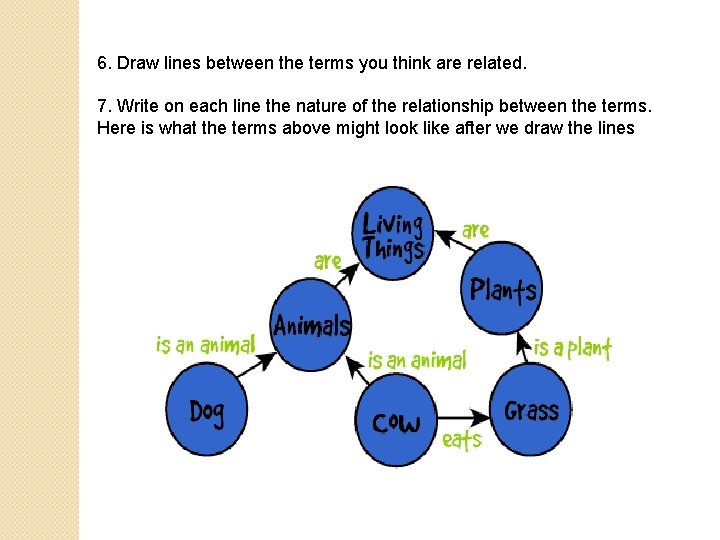
Node is the name for important terms or concepts. Nodes are usually depicted with circles drawn around the term or concept, such as the nodes for "Living Things" and "Plants" drawn above. Lines between nodes show which concepts are related. The label on the line tells how or in what way the concepts are related. For example, plants "are" living things.
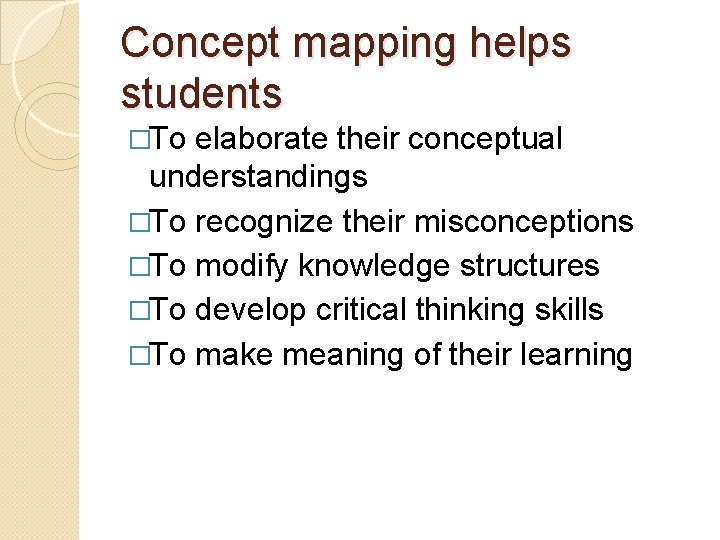
Concept mapping helps students �To elaborate their conceptual understandings �To recognize their misconceptions �To modify knowledge structures �To develop critical thinking skills �To make meaning of their learning
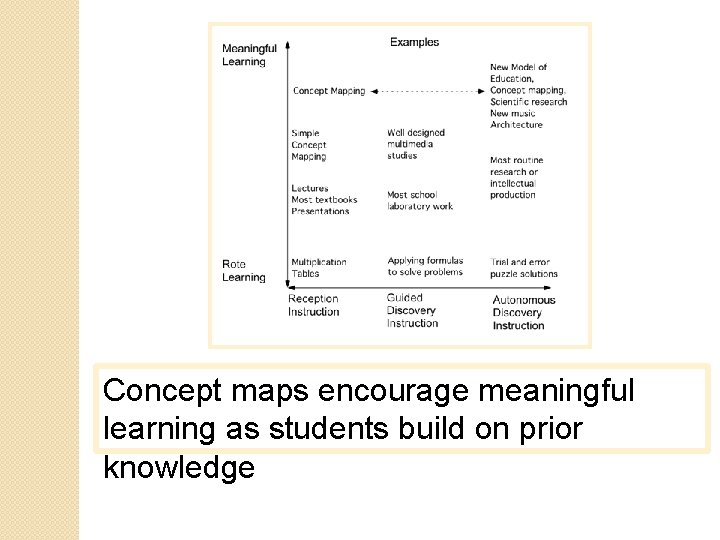
Concept maps encourage meaningful learning as students build on prior knowledge
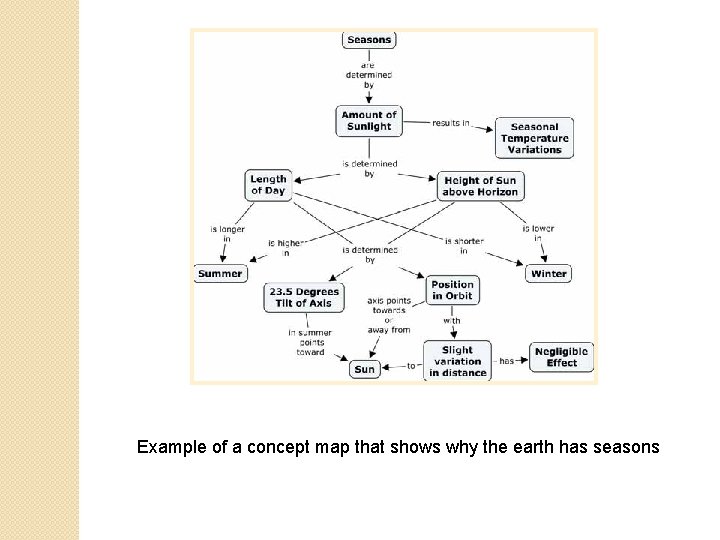
Example of a concept map that shows why the earth has seasons
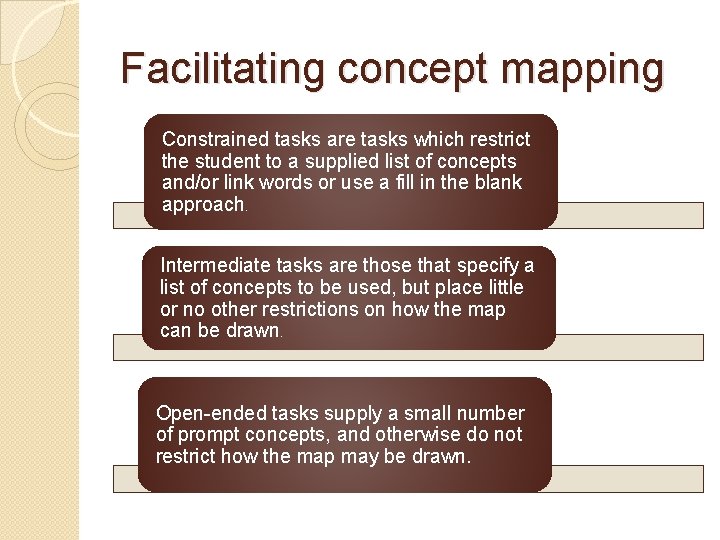
Facilitating concept mapping Constrained tasks are tasks which restrict the student to a supplied list of concepts and/or link words or use a fill in the blank approach. Intermediate tasks are those that specify a list of concepts to be used, but place little or no other restrictions on how the map can be drawn. Open-ended tasks supply a small number of prompt concepts, and otherwise do not restrict how the map may be drawn.
Facilitating concept mapping Provide a focus questions to provide a context for the map
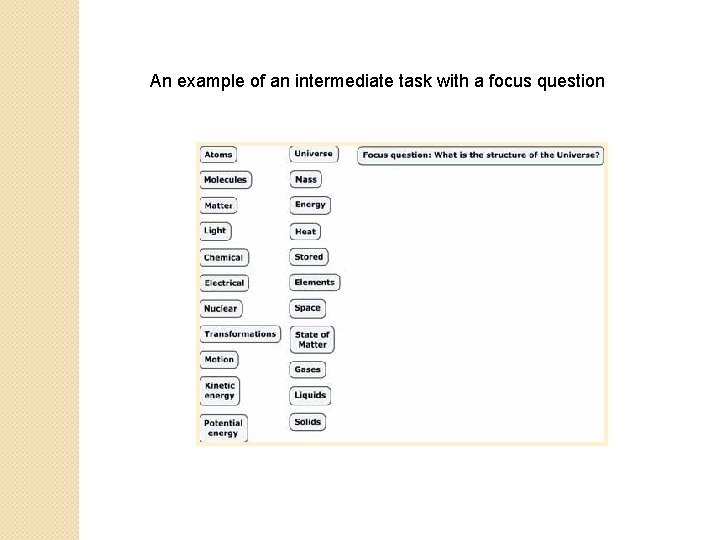
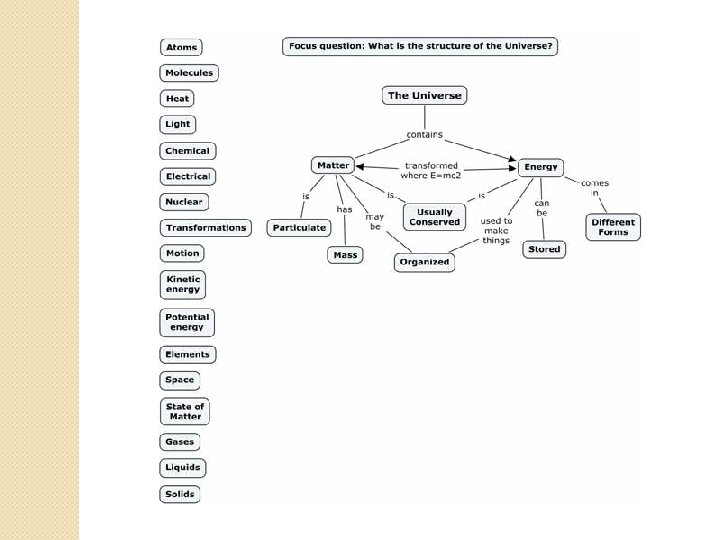
An example of an intermediate task with a focus question
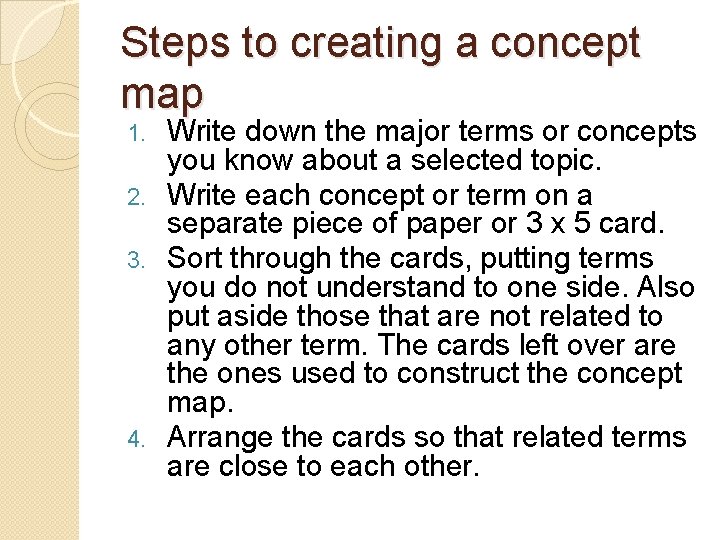
Steps to creating a concept map Write down the major terms or concepts you know about a selected topic. 2. Write each concept or term on a separate piece of paper or 3 x 5 card. 3. Sort through the cards, putting terms you do not understand to one side. Also put aside those that are not related to any other term. The cards left over are the ones used to construct the concept map. 4. Arrange the cards so that related terms are close to each other. 1.
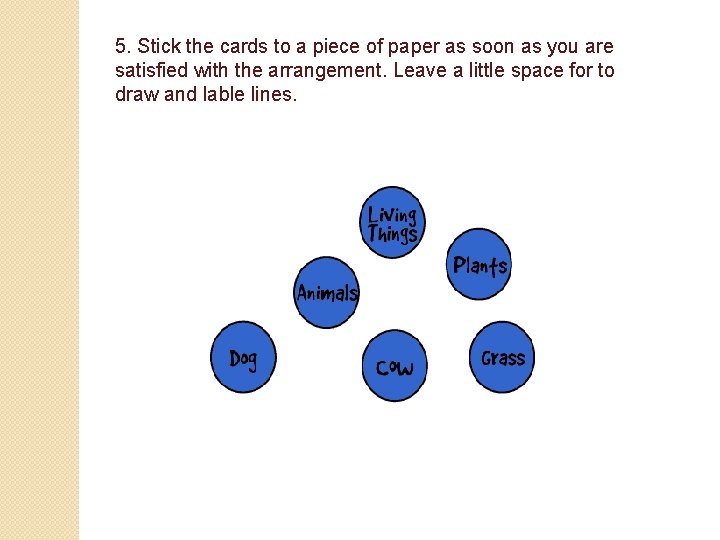
5. Stick the cards to a piece of paper as soon as you are satisfied with the arrangement. Leave a little space for to draw and lable lines.
6. Draw lines between the terms you think are related. 7. Write on each line the nature of the relationship between the terms. Here is what the terms above might look like after we draw the lines
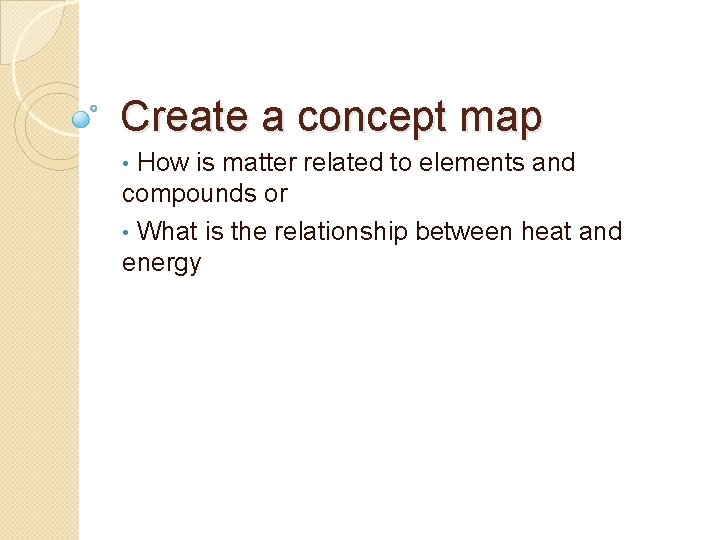
Create a concept map How is matter related to elements and compounds or • What is the relationship between heat and energy •
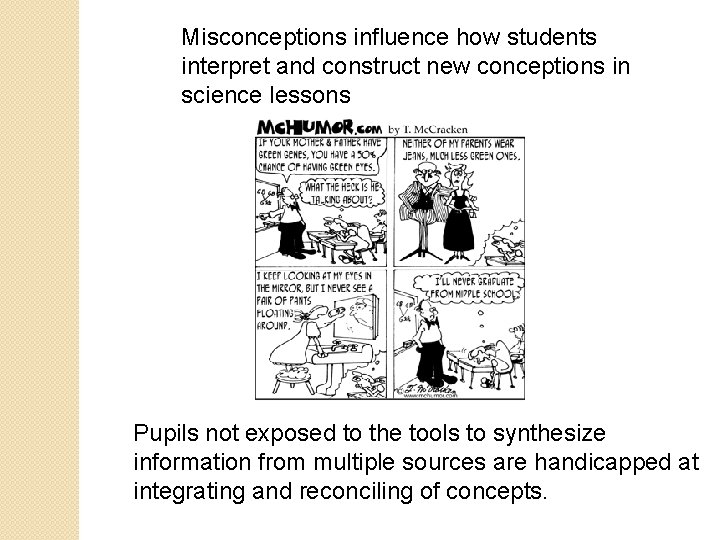
Misconceptions influence how students interpret and construct new conceptions in science lessons Pupils not exposed to the tools to synthesize information from multiple sources are handicapped at integrating and reconciling of concepts.