
Attachment Theory and Psychopathology What is Attachment Enduring

- Slides: 25
Attachment Theory and Psychopathology
What is Attachment? • • Enduring emotional tie Internal working model Secure base for exploration Foundation for future relationships
Assessment of Attachment in Infancy • Strange Situation as standard setting for observing infant attachment • Variety of mildly stressful events including separations and reunions with mother – focus is on reunion behaviour
Categories of Infant Attachment • Organized Attachment – Secure, Avoidant, & Ambivalent • Disorganized Attachment
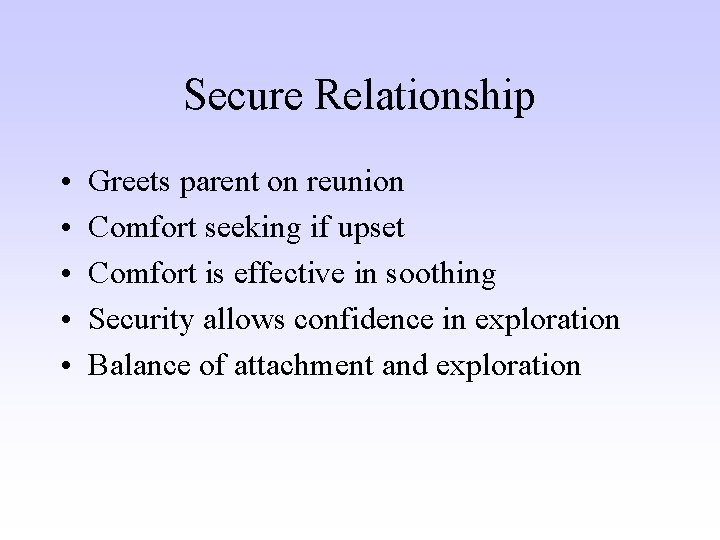
Secure Relationship • • • Greets parent on reunion Comfort seeking if upset Comfort is effective in soothing Security allows confidence in exploration Balance of attachment and exploration
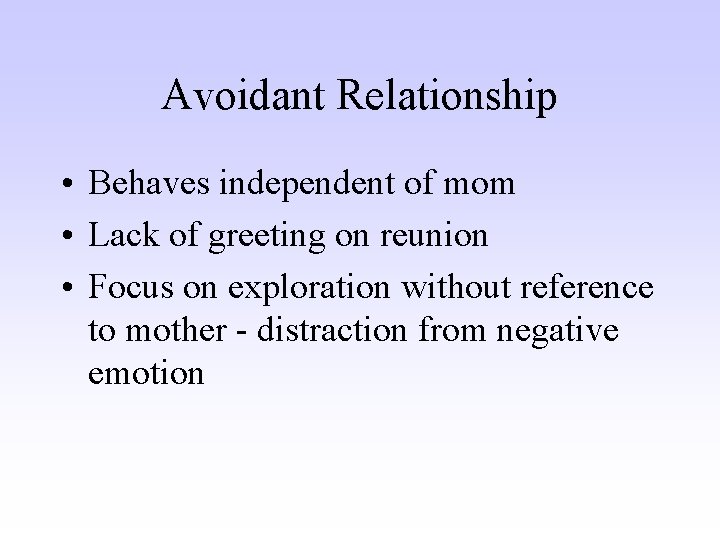
Avoidant Relationship • Behaves independent of mom • Lack of greeting on reunion • Focus on exploration without reference to mother - distraction from negative emotion
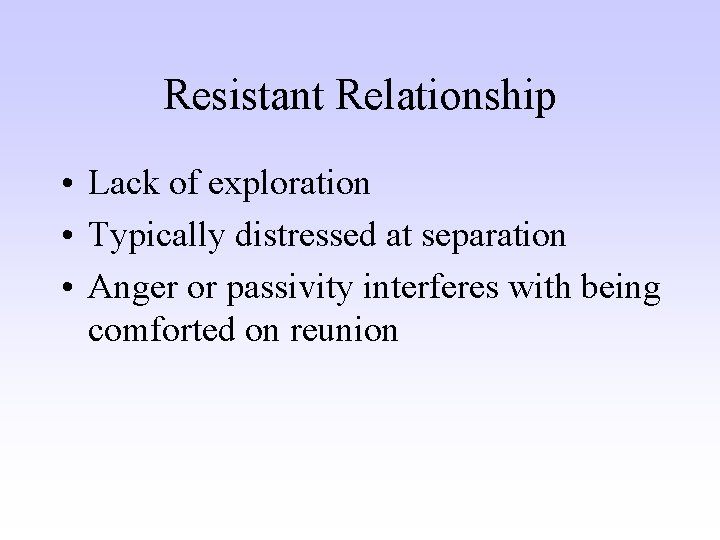
Resistant Relationship • Lack of exploration • Typically distressed at separation • Anger or passivity interferes with being comforted on reunion
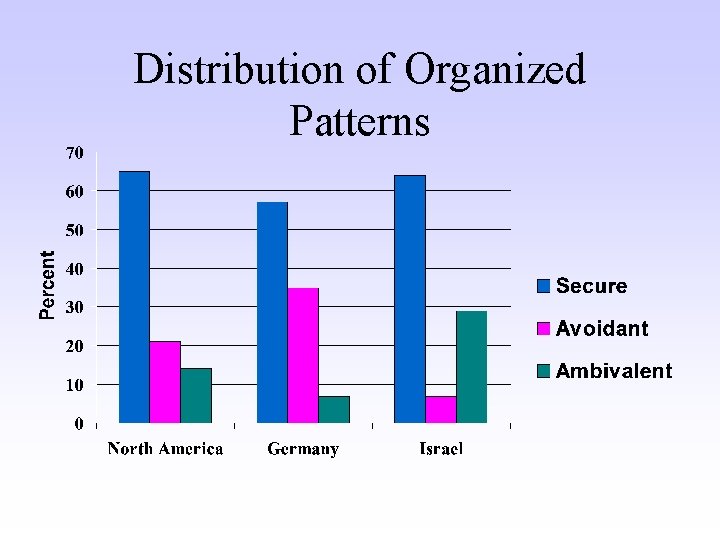
Distribution of Organized Patterns
Clinical Implications • Securely Attachment Infants: – more competent with peers – more competent problem solvers – less vulnerable to behaviour problems – more self confident
Clinical Implications • Avoidant and Resistant attachment: – More hostile with peers – Peer victimization – More behaviour problems Resistant - linked to anxiety disorder in adolescence
Disorganized Relationship • First noticed in infants with a history of maltreatment • Breakdown in the organization of the attachment system • Theorized to relate to fear of the parent “fright without solution” • 15% in non-clinical samples; as high as 80% in at-risk samples
Signs of Disorganization • Approach parent in odd ways • Move away from parent when upset or frightened • Freeze • Show fear of parent
Clinical Implications • • Poor regulation of negative emotions Oppositional defiant behaviour Hostile-aggressive behaviour Coercive and punitive styles of interacting with peers and family members • Dissociative Disorders
Attachment and Family Drawings See overheads
Adult Attachment and Psychopathology
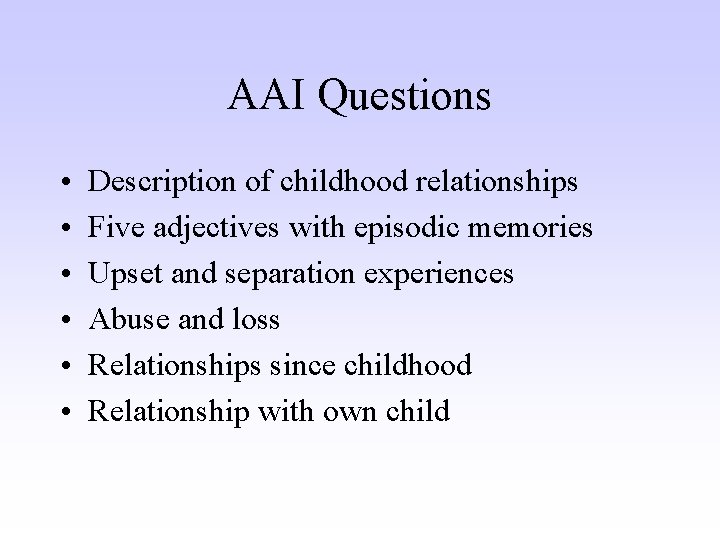
AAI Questions • • • Description of childhood relationships Five adjectives with episodic memories Upset and separation experiences Abuse and loss Relationships since childhood Relationship with own child
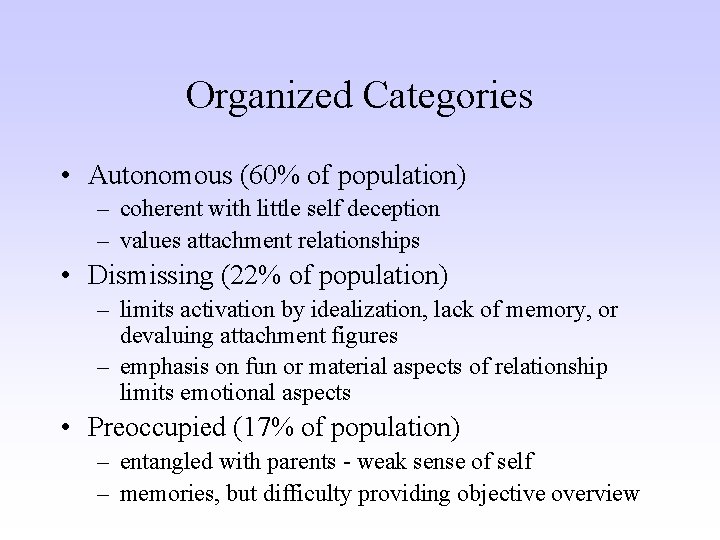
Organized Categories • Autonomous (60% of population) – coherent with little self deception – values attachment relationships • Dismissing (22% of population) – limits activation by idealization, lack of memory, or devaluing attachment figures – emphasis on fun or material aspects of relationship limits emotional aspects • Preoccupied (17% of population) – entangled with parents - weak sense of self – memories, but difficulty providing objective overview
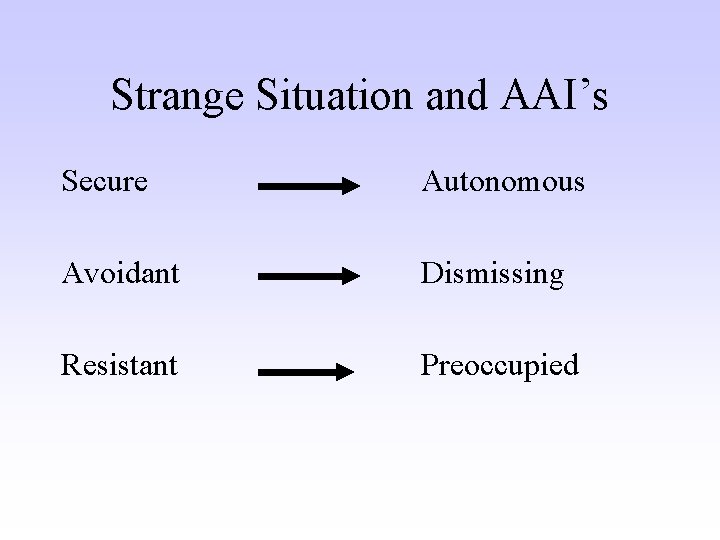
Strange Situation and AAI’s Secure Autonomous Avoidant Dismissing Resistant Preoccupied
Clinical Implications Depressive Disorders Anxiety Disorders Borderline Personality Disorder
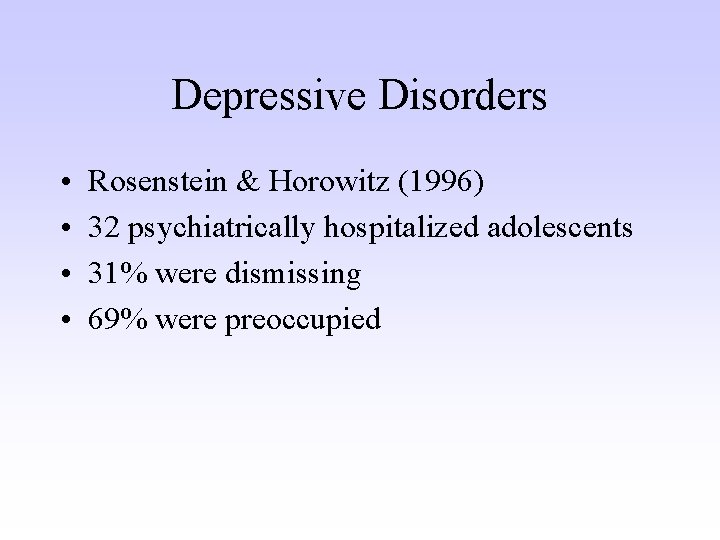
Depressive Disorders • • Rosenstein & Horowitz (1996) 32 psychiatrically hospitalized adolescents 31% were dismissing 69% were preoccupied
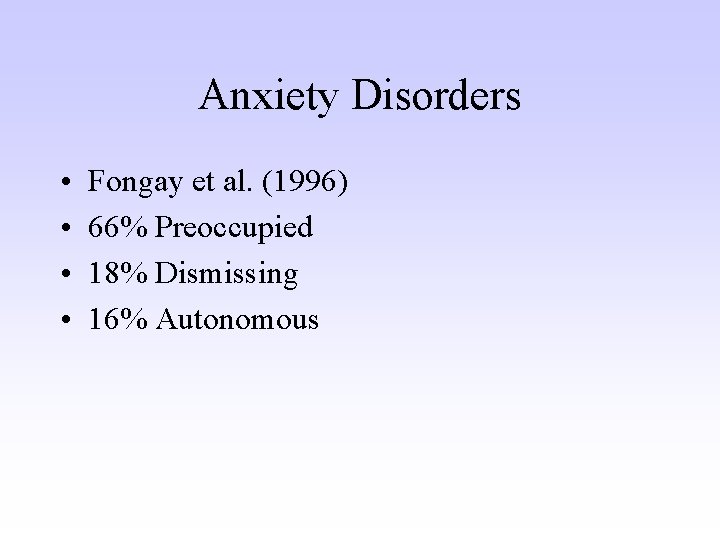
Anxiety Disorders • • Fongay et al. (1996) 66% Preoccupied 18% Dismissing 16% Autonomous
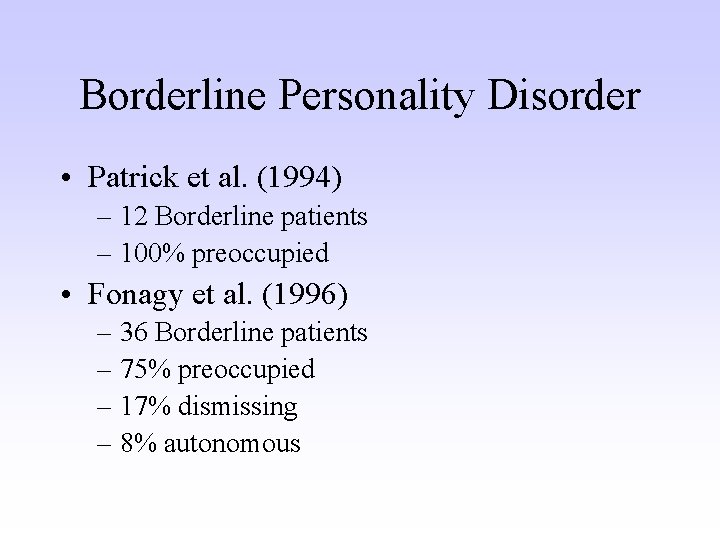
Borderline Personality Disorder • Patrick et al. (1994) – 12 Borderline patients – 100% preoccupied • Fonagy et al. (1996) – 36 Borderline patients – 75% preoccupied – 17% dismissing – 8% autonomous
Attachment Interventions Van den Boom (1994)
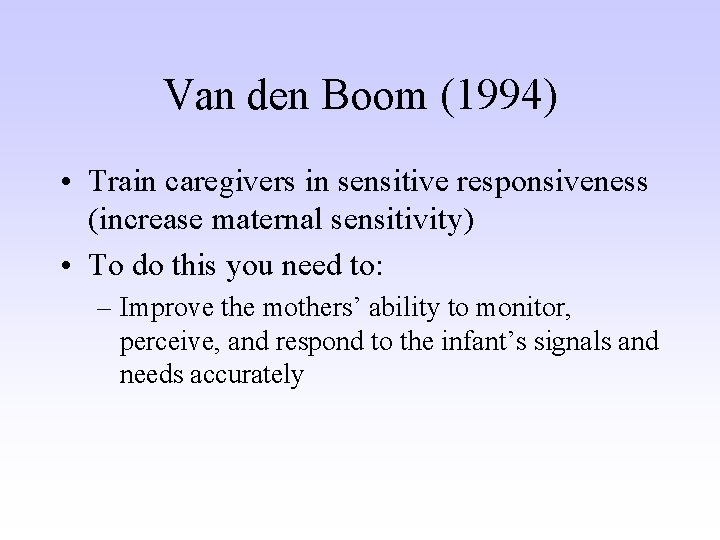
Van den Boom (1994) • Train caregivers in sensitive responsiveness (increase maternal sensitivity) • To do this you need to: – Improve the mothers’ ability to monitor, perceive, and respond to the infant’s signals and needs accurately
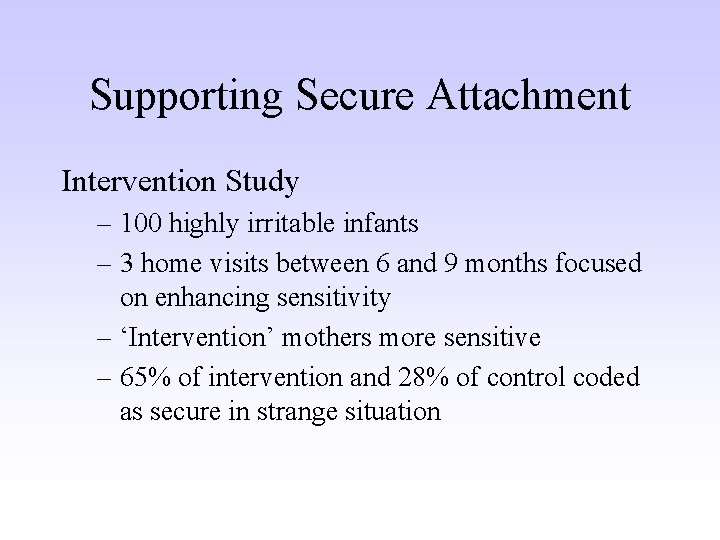
Supporting Secure Attachment Intervention Study – 100 highly irritable infants – 3 home visits between 6 and 9 months focused on enhancing sensitivity – ‘Intervention’ mothers more sensitive – 65% of intervention and 28% of control coded as secure in strange situation