
Attachment AN EMOTIONAL BOND BETWEEN A CHILD AND
Attachment AN EMOTIONAL BOND BETWEEN A CHILD AND THEIR PARENT OR GUARDIAN.
Attachment Theory Belief that the ability to become attached to another person in early childhood is genetic and that all human beings possess said ability. It is also believed that the need to become attached is natural. Isn't always reciprocal. Children display behaviours such as seeking proximity with their parent when they feel upset of threatened. Explains parent-child relationship and how it influences a child's development.
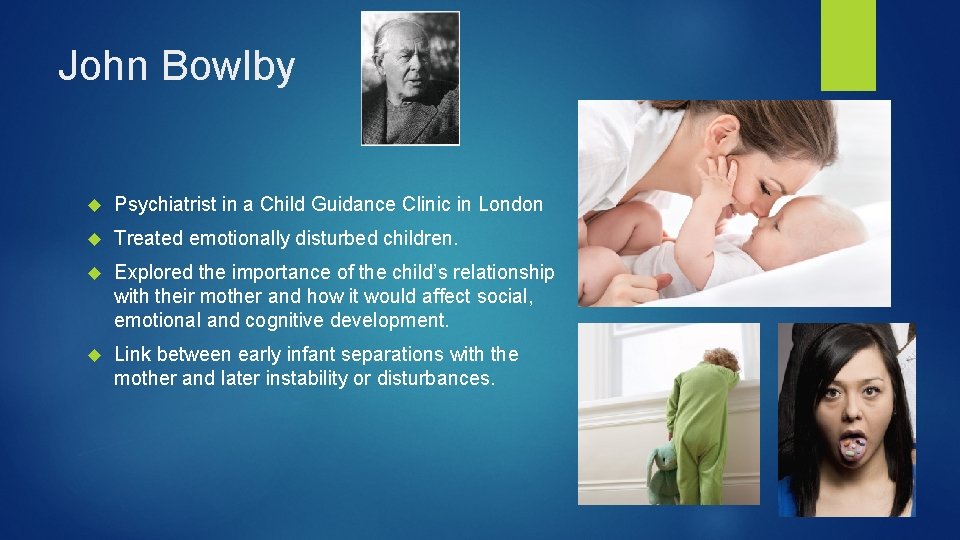
John Bowlby Psychiatrist in a Child Guidance Clinic in London Treated emotionally disturbed children. Explored the importance of the child’s relationship with their mother and how it would affect social, emotional and cognitive development. Link between early infant separations with the mother and later instability or disturbances.

Stages of Attachment Up to 3 Months- Newborns respond equally to any caregiver. After 4 months- Infants begin to show preference. After 7 months- Infants form an emotional attachment to one primary caregiver. After 9 months- Forms multiple attachments. Begins to show increasing independence.

Types or Patterns of Attachment Secure Ambivalent Avoidant Disorganized/ Disoriented Synchrony
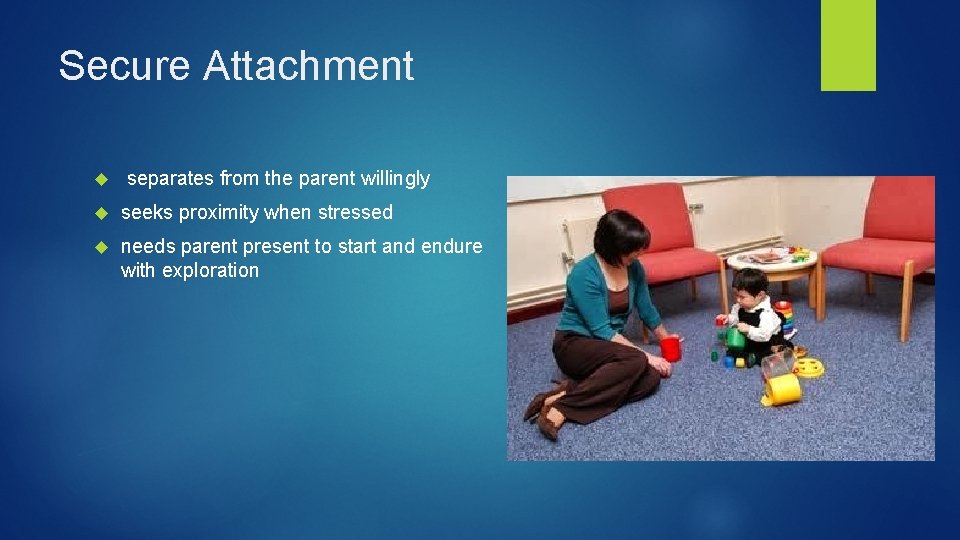
Secure Attachment separates from the parent willingly seeks proximity when stressed needs parent present to start and endure with exploration
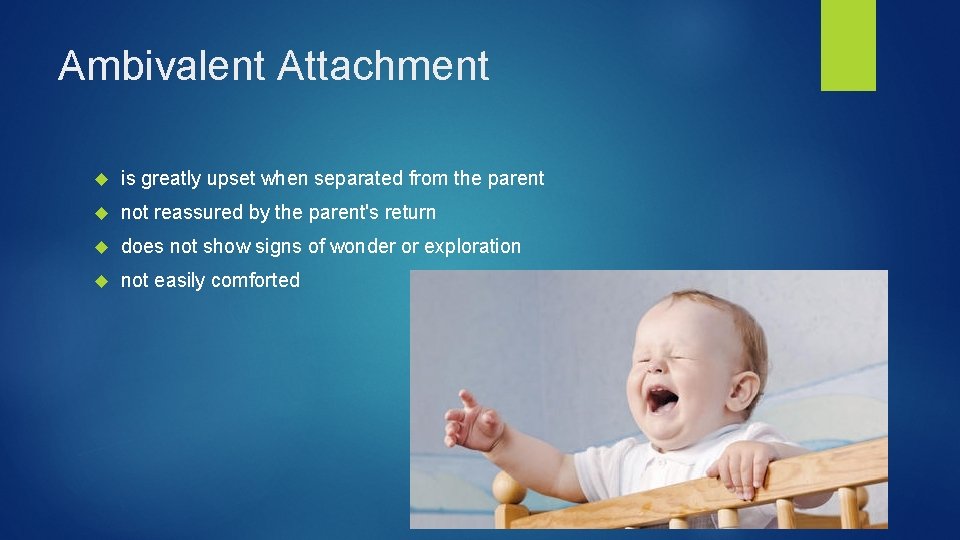
Ambivalent Attachment is greatly upset when separated from the parent not reassured by the parent's return does not show signs of wonder or exploration not easily comforted
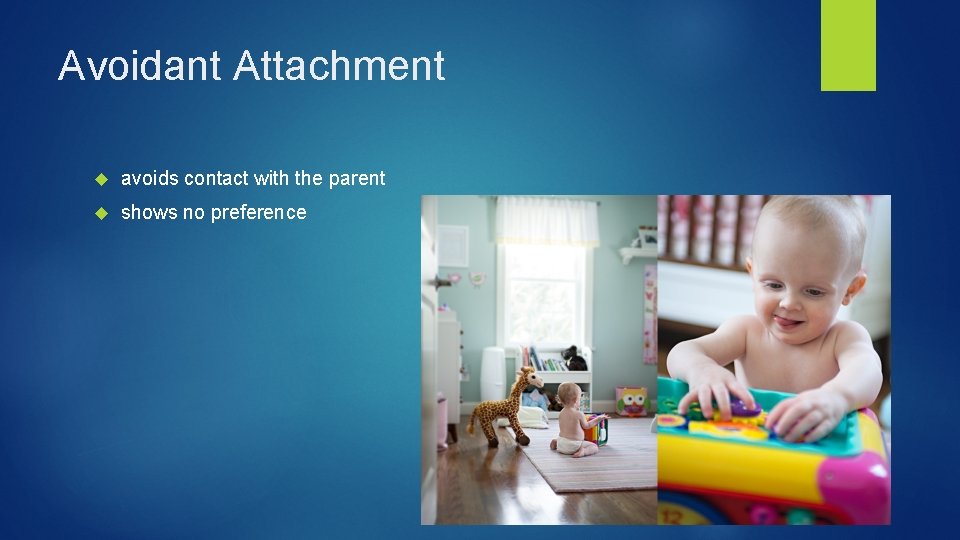
Avoidant Attachment avoids contact with the parent shows no preference
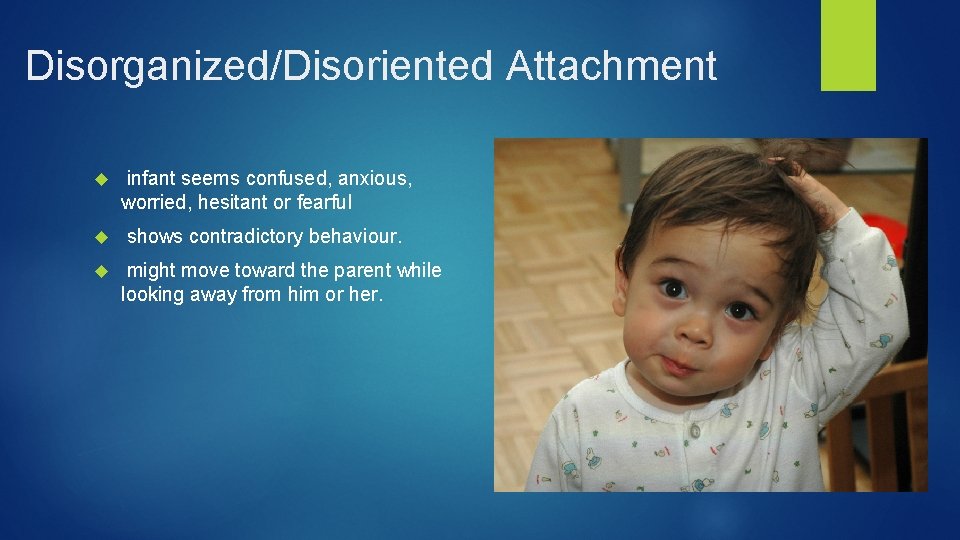
Disorganized/Disoriented Attachment infant seems confused, anxious, worried, hesitant or fearful shows contradictory behaviour. might move toward the parent while looking away from him or her.
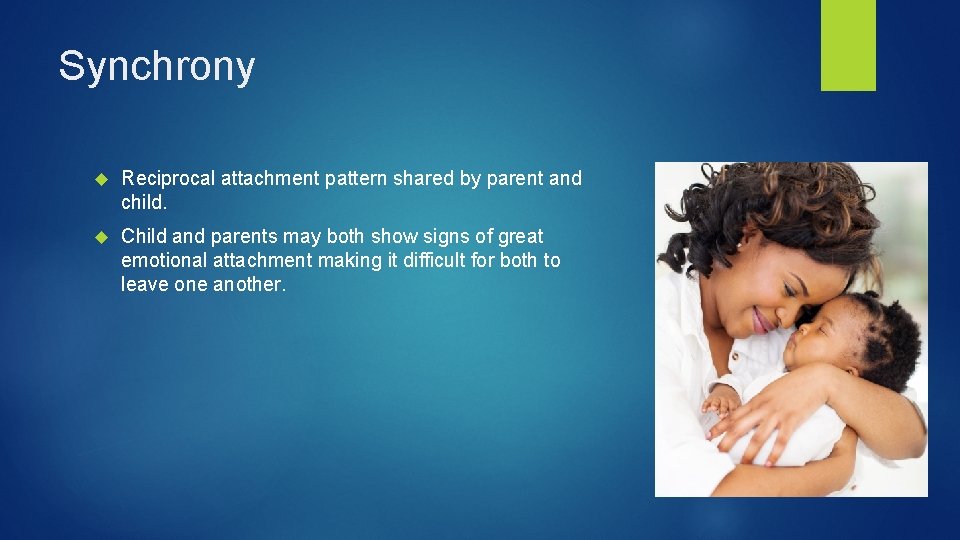
Synchrony Reciprocal attachment pattern shared by parent and child. Child and parents may both show signs of great emotional attachment making it difficult for both to leave one another.
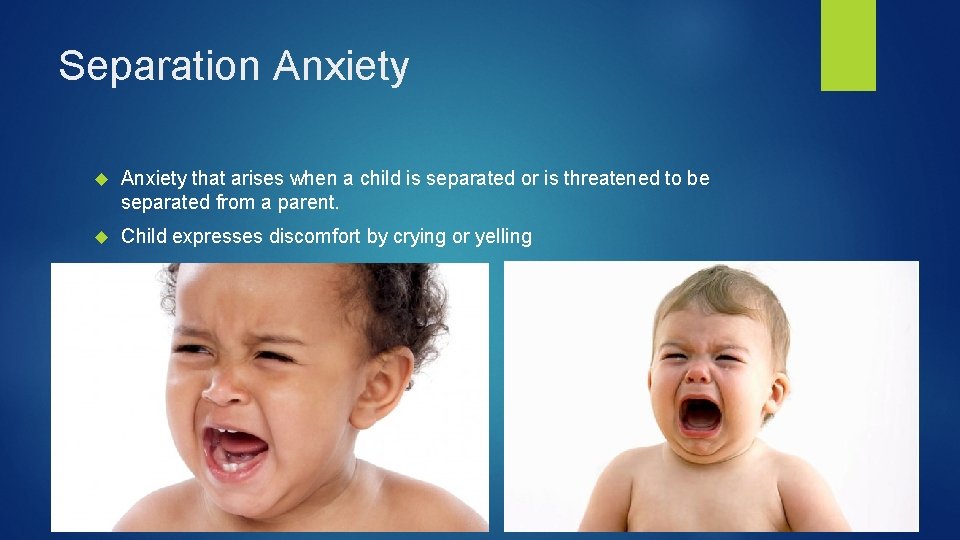
Separation Anxiety that arises when a child is separated or is threatened to be separated from a parent. Child expresses discomfort by crying or yelling
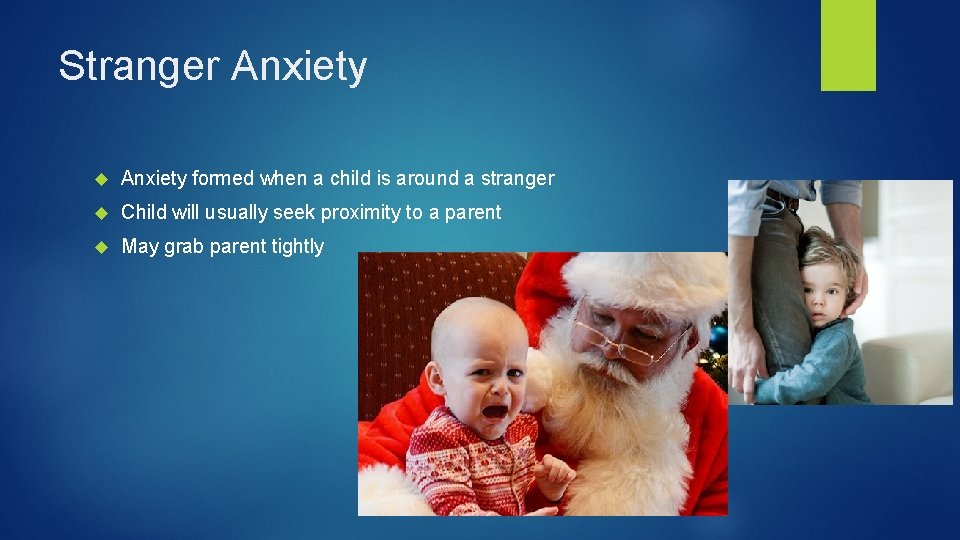
Stranger Anxiety formed when a child is around a stranger Child will usually seek proximity to a parent May grab parent tightly
How is Attachment relevant to me personally? I myself plan to have children one day and it is very good to know that attachment…. is important to a Childs development. can form at different times or in stages may or may not be reciprocal can result in discomfort is natural has different types and behavioural associations or characteristics.
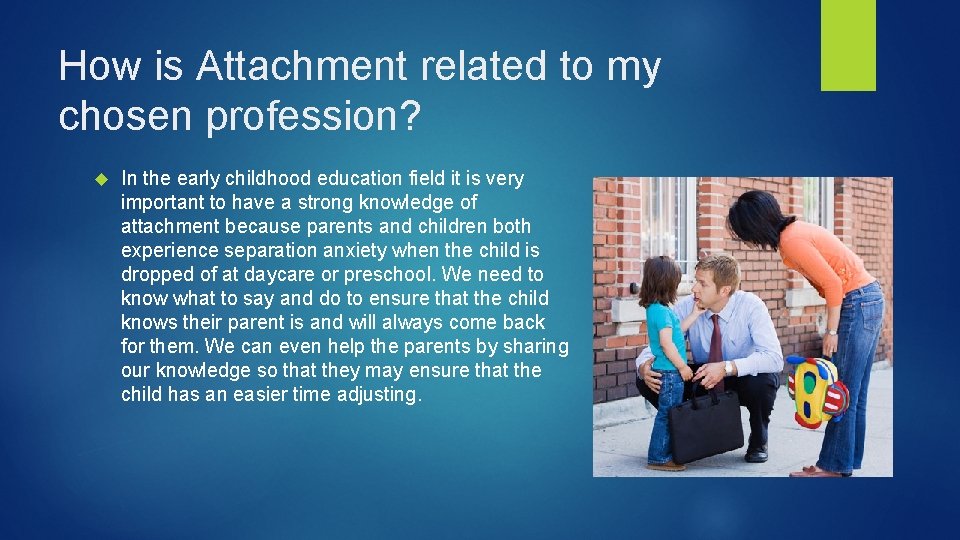
How is Attachment related to my chosen profession? In the early childhood education field it is very important to have a strong knowledge of attachment because parents and children both experience separation anxiety when the child is dropped of at daycare or preschool. We need to know what to say and do to ensure that the child knows their parent is and will always come back for them. We can even help the parents by sharing our knowledge so that they may ensure that the child has an easier time adjusting.
References 15 FL PSY-1170 -C 05 class notes, files etc on canvas (not sure how to reference these documents to if anyone knows how that information would be greatly appreciated) Lifespan Development Text
- Slides: 15