
Atrophy of thyroid Hashimoto thyroiditis Hashimoto is more
- Slides: 17
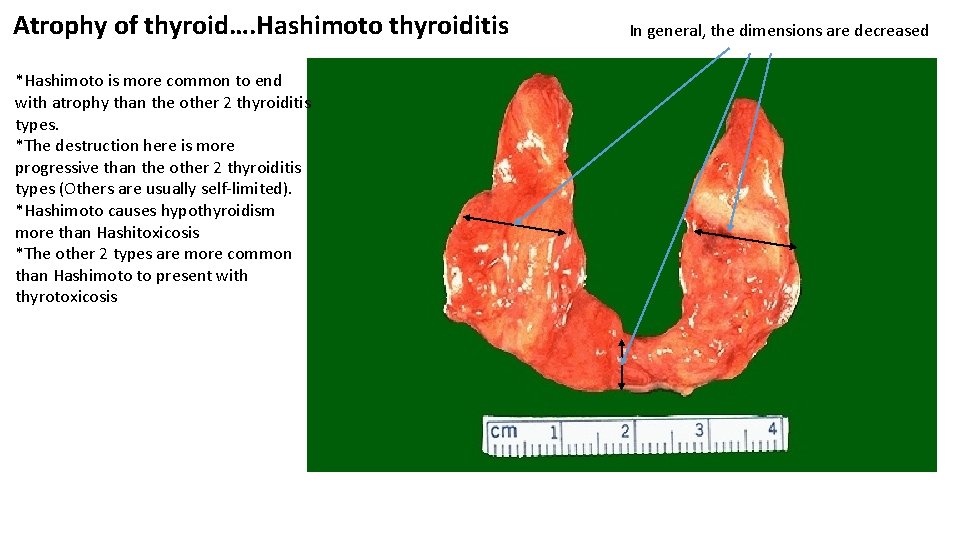
Atrophy of thyroid…. Hashimoto thyroiditis *Hashimoto is more common to end with atrophy than the other 2 thyroiditis types. *The destruction here is more progressive than the other 2 thyroiditis types (Others are usually self-limited). *Hashimoto causes hypothyroidism more than Hashitoxicosis *The other 2 types are more common than Hashimoto to present with thyrotoxicosis In general, the dimensions are decreased
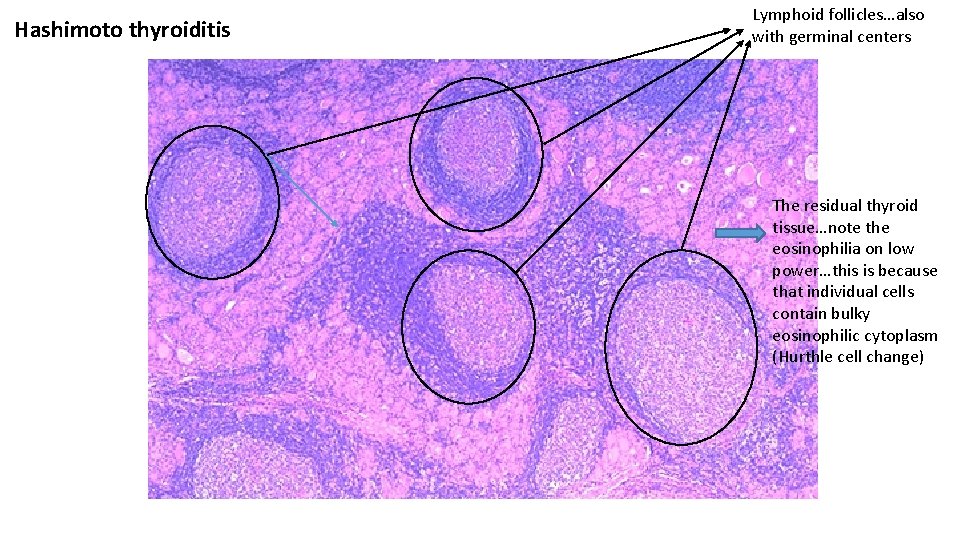
Hashimoto thyroiditis Lymphoid follicles…also with germinal centers The residual thyroid tissue…note the eosinophilia on low power…this is because that individual cells contain bulky eosinophilic cytoplasm (Hurthle cell change)
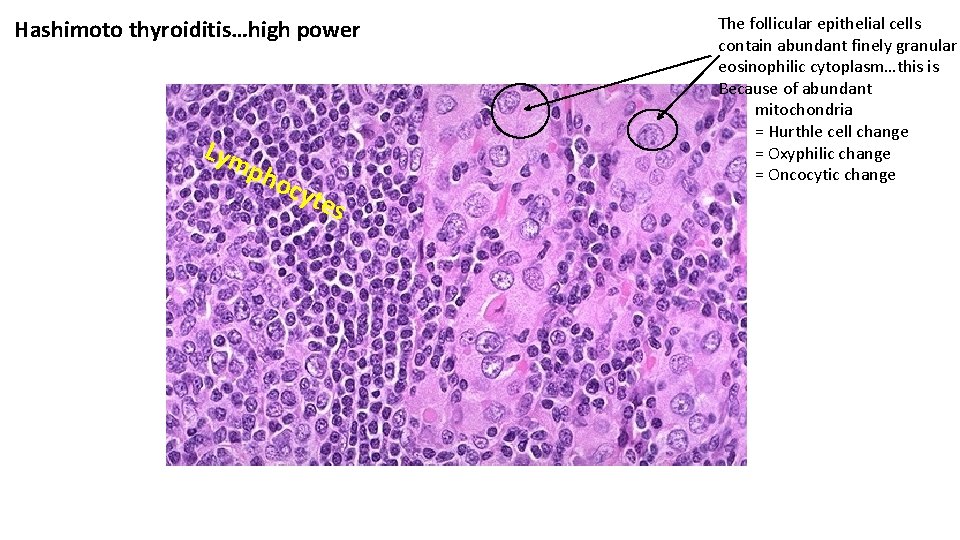
Hashimoto thyroiditis…high power Lym pho cyt es The follicular epithelial cells contain abundant finely granular eosinophilic cytoplasm…this is Because of abundant mitochondria = Hurthle cell change = Oxyphilic change = Oncocytic change
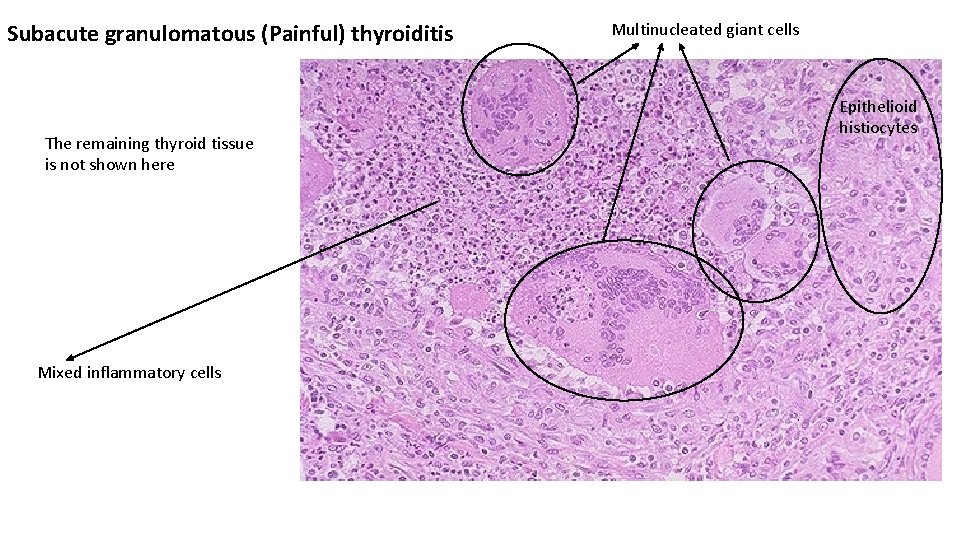
Subacute granulomatous (Painful) thyroiditis The remaining thyroid tissue is not shown here Mixed inflammatory cells Multinucleated giant cells Epithelioid histiocytes
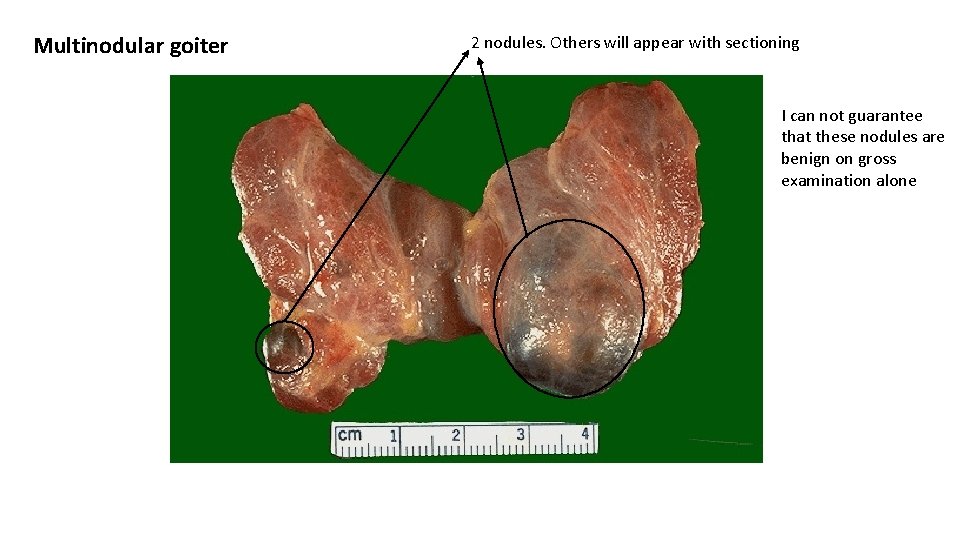
Multinodular goiter 2 nodules. Others will appear with sectioning I can not guarantee that these nodules are benign on gross examination alone
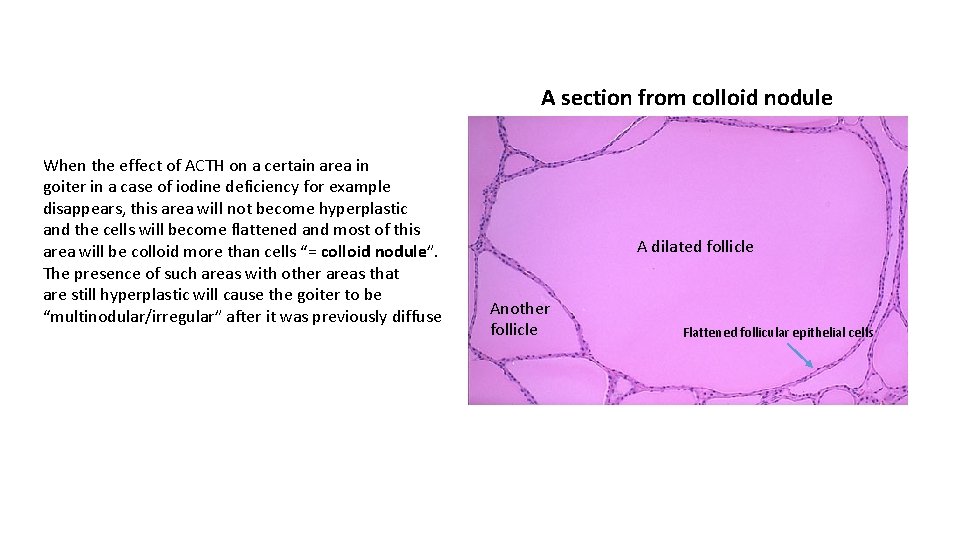
A section from colloid nodule When the effect of ACTH on a certain area in goiter in a case of iodine deficiency for example disappears, this area will not become hyperplastic and the cells will become flattened and most of this area will be colloid more than cells “= colloid nodule”. The presence of such areas with other areas that are still hyperplastic will cause the goiter to be “multinodular/irregular” after it was previously diffuse A dilated follicle Another follicle Flattened follicular epithelial cells
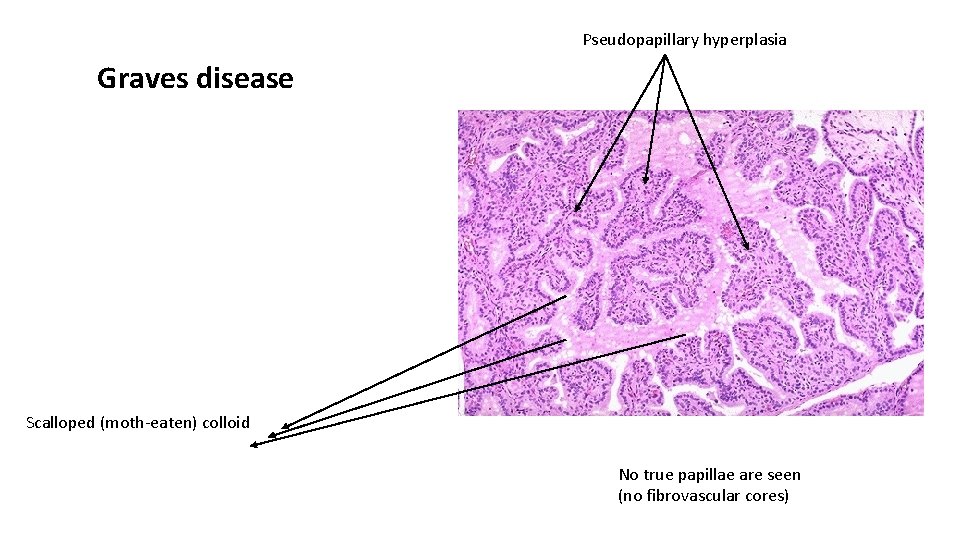
Pseudopapillary hyperplasia Graves disease Scalloped (moth-eaten) colloid No true papillae are seen (no fibrovascular cores)
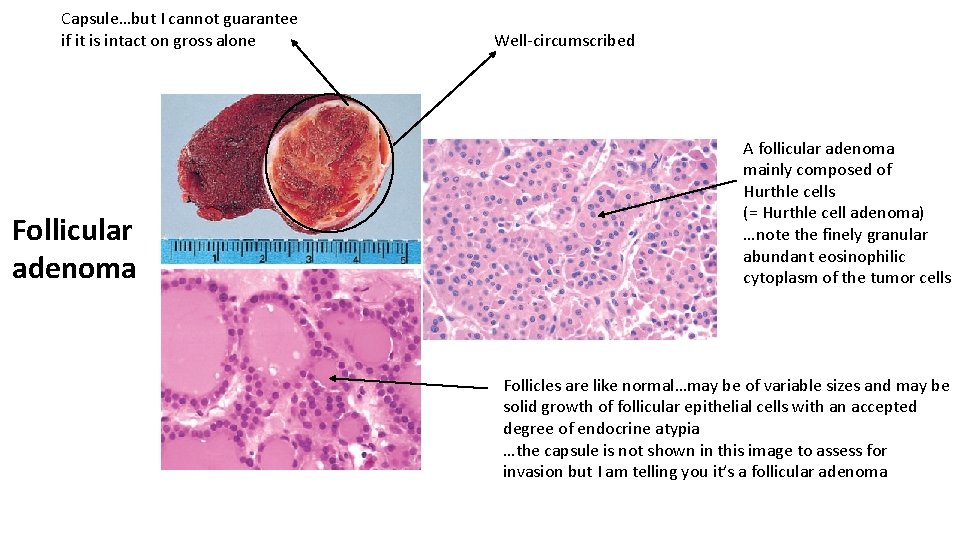
Capsule…but I cannot guarantee if it is intact on gross alone Follicular adenoma Well-circumscribed A follicular adenoma mainly composed of Hurthle cells (= Hurthle cell adenoma) …note the finely granular abundant eosinophilic cytoplasm of the tumor cells Follicles are like normal…may be of variable sizes and may be solid growth of follicular epithelial cells with an accepted degree of endocrine atypia …the capsule is not shown in this image to assess for invasion but I am telling you it’s a follicular adenoma
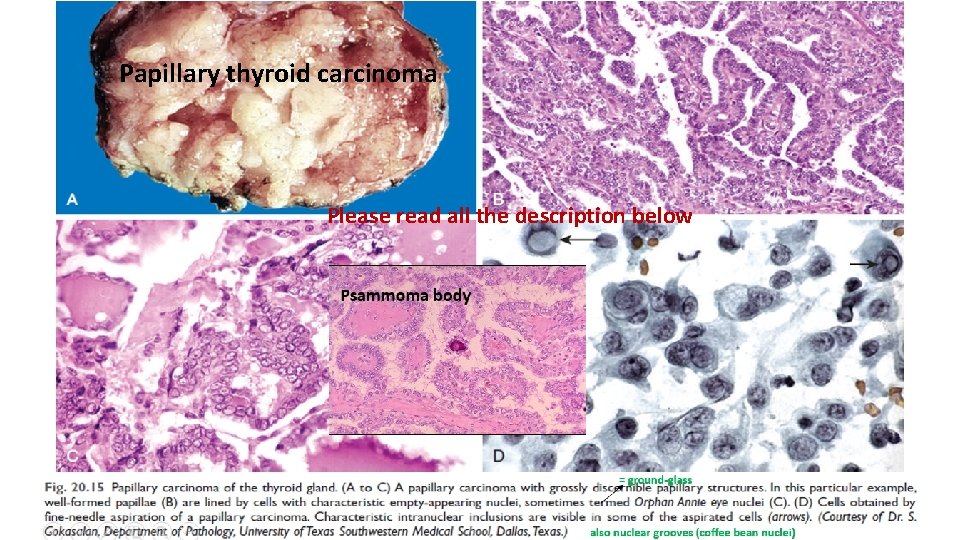
Papillary thyroid carcinoma Please read all the description below
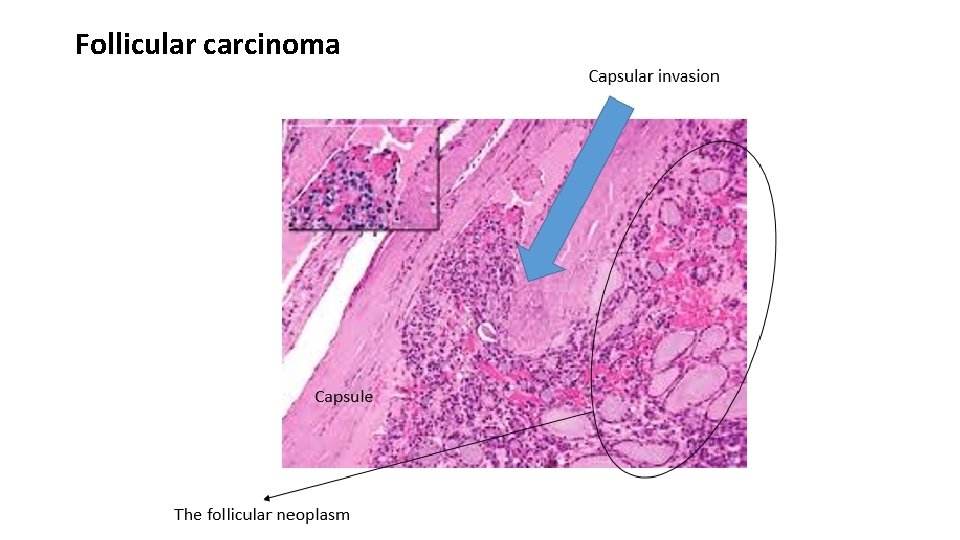
Follicular carcinoma
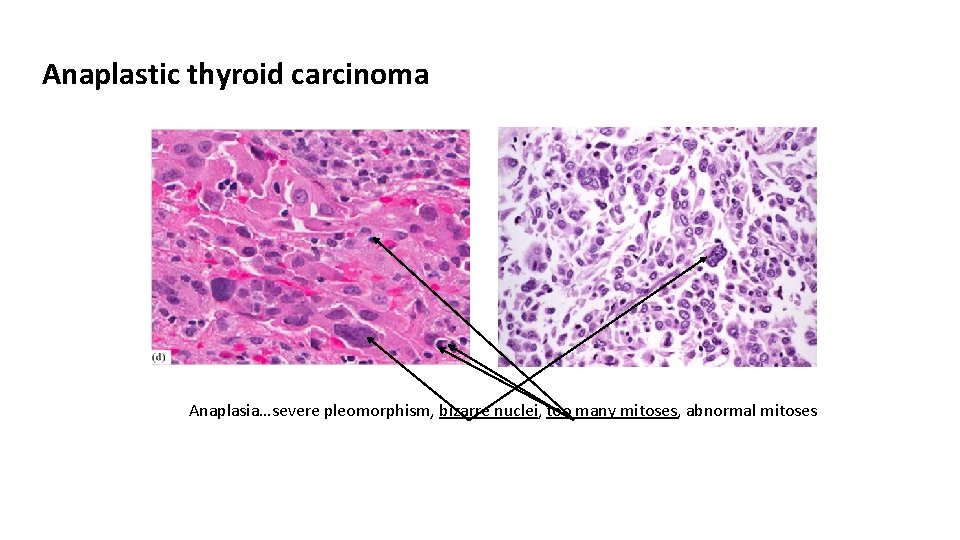
Anaplastic thyroid carcinoma Anaplasia…severe pleomorphism, bizarre nuclei, too many mitoses, abnormal mitoses
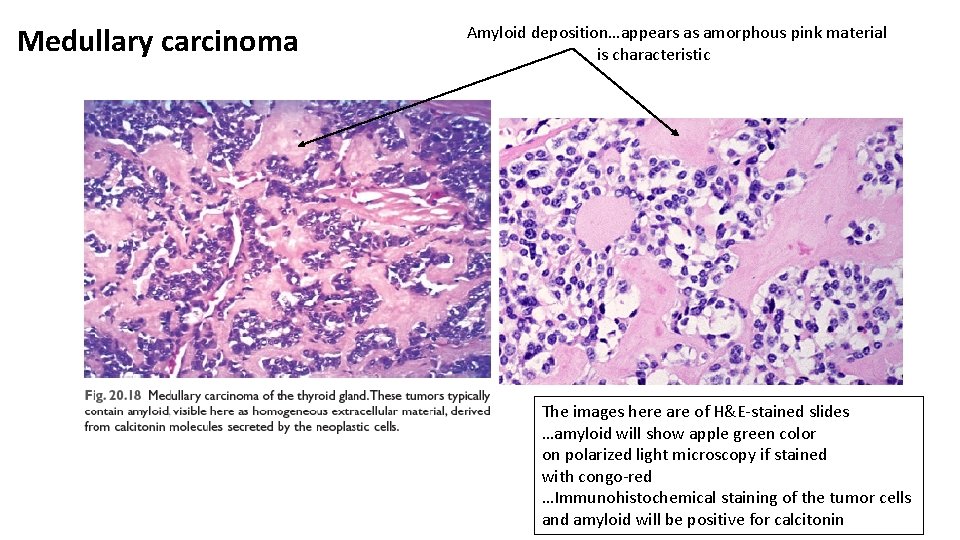
Medullary carcinoma Amyloid deposition…appears as amorphous pink material is characteristic The images here are of H&E-stained slides …amyloid will show apple green color on polarized light microscopy if stained with congo-red …Immunohistochemical staining of the tumor cells and amyloid will be positive for calcitonin
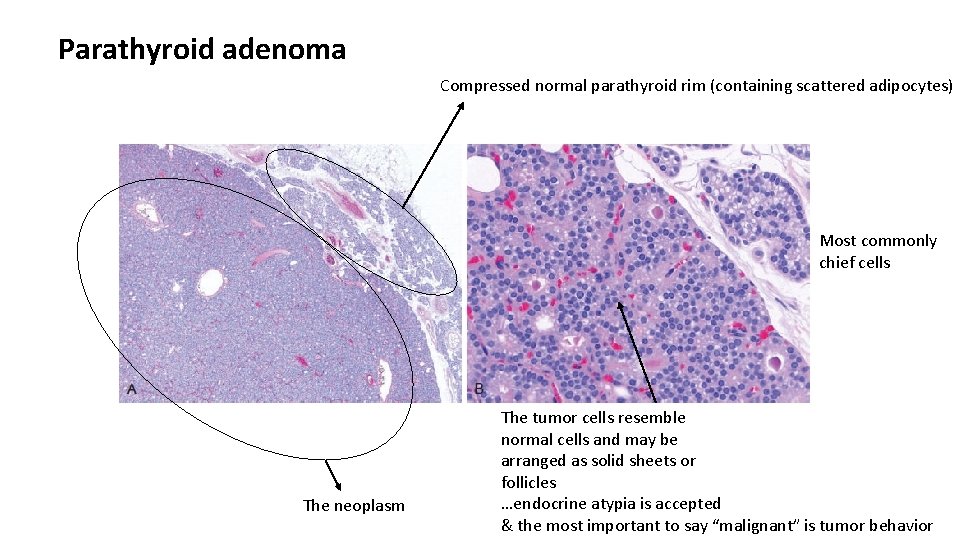
Parathyroid adenoma Compressed normal parathyroid rim (containing scattered adipocytes) Most commonly chief cells The neoplasm The tumor cells resemble normal cells and may be arranged as solid sheets or follicles …endocrine atypia is accepted & the most important to say “malignant” is tumor behavior
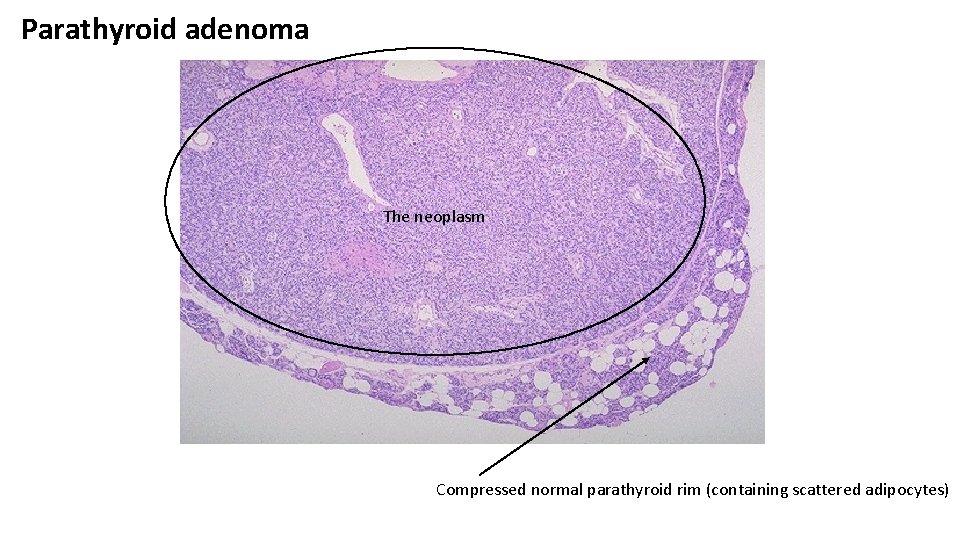
Parathyroid adenoma The neoplasm Compressed normal parathyroid rim (containing scattered adipocytes)
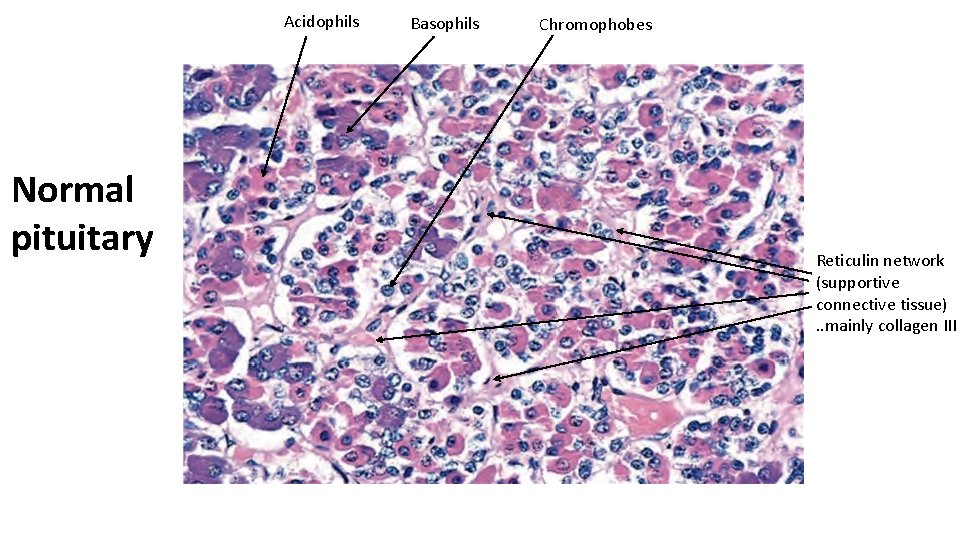
Acidophils Normal pituitary Basophils Chromophobes Reticulin network (supportive connective tissue). . mainly collagen III
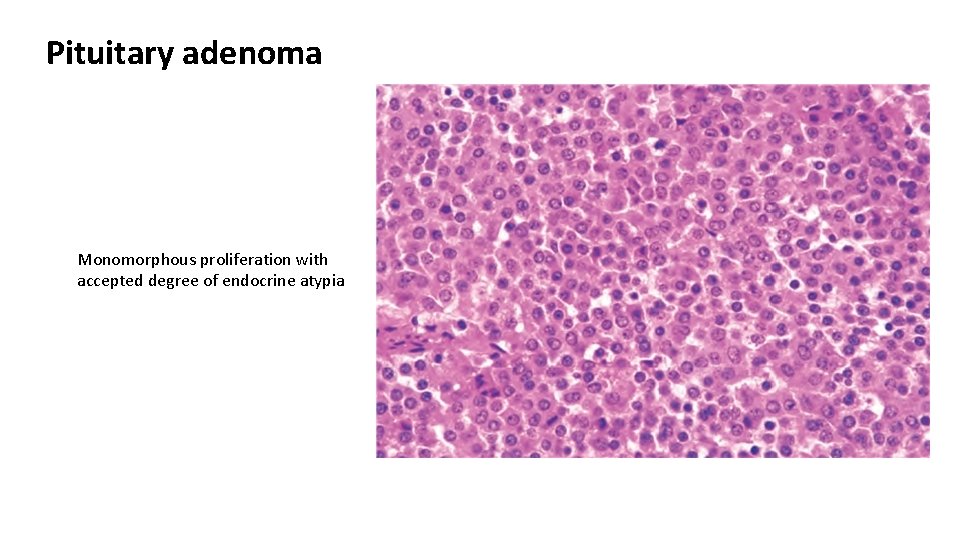
Pituitary adenoma Monomorphous proliferation with accepted degree of endocrine atypia
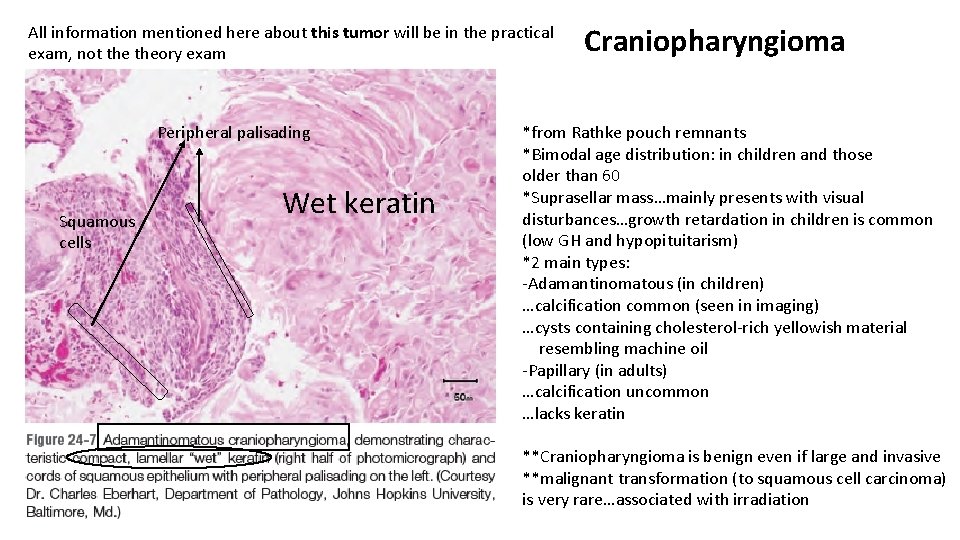
All information mentioned here about this tumor will be in the practical exam, not theory exam Peripheral palisading Squamous cells Wet keratin Craniopharyngioma *from Rathke pouch remnants *Bimodal age distribution: in children and those older than 60 *Suprasellar mass…mainly presents with visual disturbances…growth retardation in children is common (low GH and hypopituitarism) *2 main types: -Adamantinomatous (in children) …calcification common (seen in imaging) …cysts containing cholesterol-rich yellowish material resembling machine oil -Papillary (in adults) …calcification uncommon …lacks keratin **Craniopharyngioma is benign even if large and invasive **malignant transformation (to squamous cell carcinoma) is very rare…associated with irradiation