
Atrial Fibrillation Stroke Prevention Jodie Williams Clinical Nurse
Atrial Fibrillation & Stroke Prevention Jodie Williams Clinical Nurse Specialist BA Hons in Specialist Nursing Practice NMP Secretary for Clinical Leaders of Thrombosis (CLOT)

Aims �A Introduction to Atrial Fibrillation (AF) � Signs and symptoms of AF � Conditions associated with AF � Diagnosing and detecting AF � Prevalence of AF � AF – Morbidity and mortality � Complications of AF
� Stroke risk with NVAF � Bleeding risk with NVAF � Stroke Prevention and AF � Anticoagulation Therapy � Warfarin and NOACS � NICE Recommendations 2014
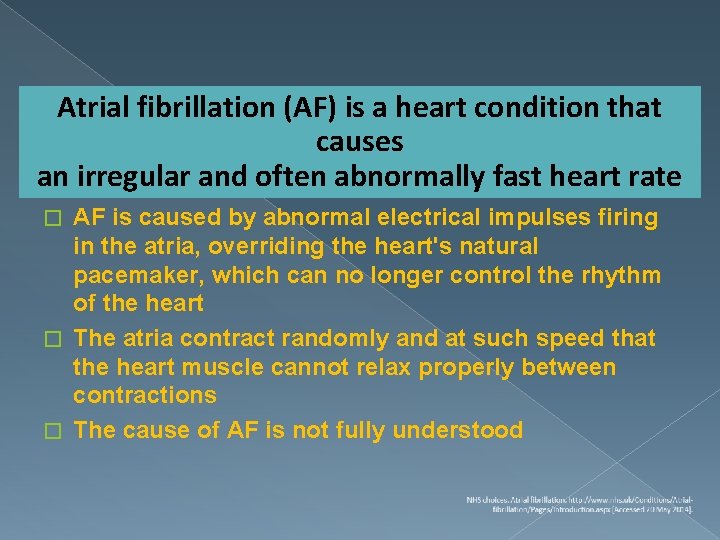
Atrial fibrillation (AF) is a heart condition that causes an irregular and often abnormally fast heart rate AF is caused by abnormal electrical impulses firing in the atria, overriding the heart's natural pacemaker, which can no longer control the rhythm of the heart � The atria contract randomly and at such speed that the heart muscle cannot relax properly between contractions � The cause of AF is not fully understood �

Types of atrial fibrillation – NVAF and VAF 2012 focused update of the ESC Guidelines for the management of atrial fibrillation ESC, European Society of Cardiology
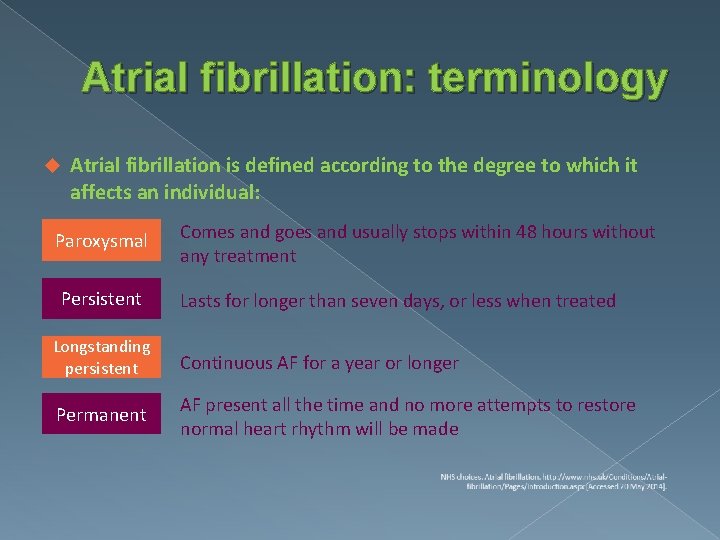
Atrial fibrillation: terminology u Atrial fibrillation is defined according to the degree to which it affects an individual: Paroxysmal Comes and goes and usually stops within 48 hours without any treatment Persistent Lasts for longer than seven days, or less when treated Longstanding persistent Continuous AF for a year or longer Permanent AF present all the time and no more attempts to restore normal heart rhythm will be made

►The most obvious symptom of AF is a fast and irregular heartbeat (palpitations) – usually over 100 beats a minute ►Other symptoms: – Tiredness – Breathlessness – Dizziness – Angina u. The way the heart beats in AF reduces the heart's efficiency and performance – this can result in low blood pressure and heart failure
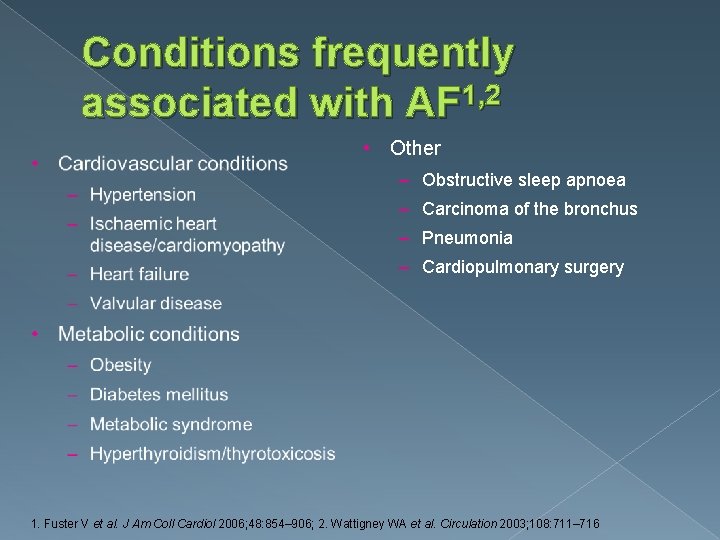
Conditions frequently associated with AF 1, 2 • Other – Obstructive sleep apnoea – Carcinoma of the bronchus – Pneumonia – Cardiopulmonary surgery 1. Fuster V et al. J Am Coll Cardiol 2006; 48: 854– 906; 2. Wattigney WA et al. Circulation 2003; 108: 711– 716
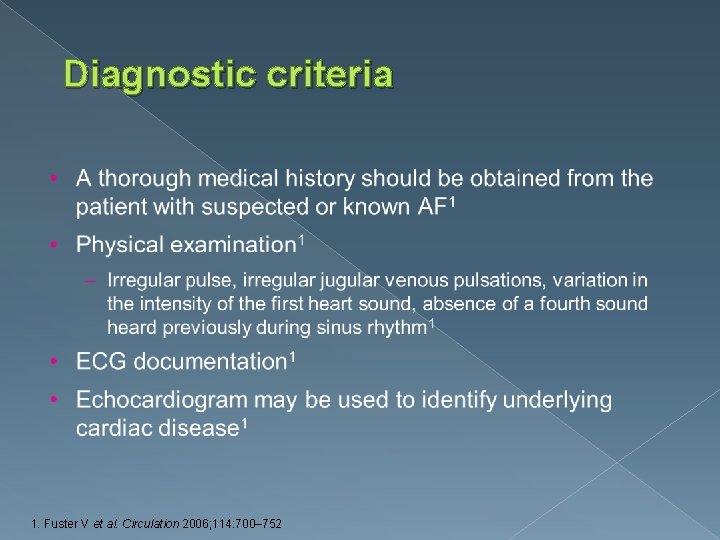
Diagnostic criteria 1. Fuster V et al. Circulation 2006; 114: 700– 752
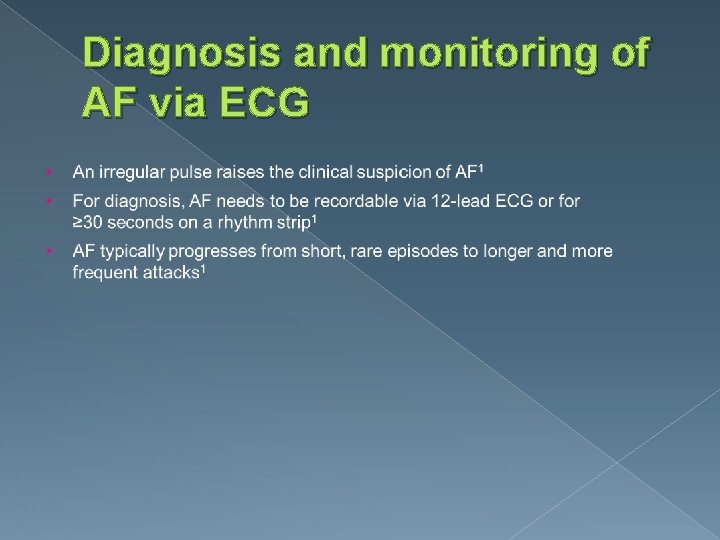
Diagnosis and monitoring of AF via ECG

AF is the most common sustained cardiac arrhythmia 1 35% of nv. AF patients on treatment are poorly controlled*5 1. Stewart S, Heart 2001, 2. Gallagher AM, J Thromb Haemosta 2008, 3. NICE AF costing template CG 36, 4. NHS improvement programme, 2009, 5. White et al, V. Arch Intern Med 2007
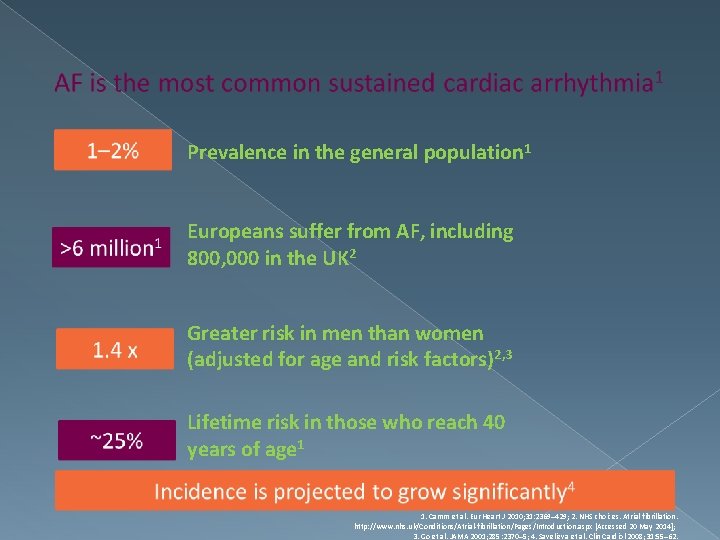
Prevalence in the general population 1 Europeans suffer from AF, including 800, 000 in the UK 2 Greater risk in men than women (adjusted for age and risk factors)2, 3 Lifetime risk in those who reach 40 years of age 1 1. Camm et al. Eur Heart J 2010; 31: 2369– 429; 2. NHS choices. Atrial fibrillation. http: //www. nhs. uk/Conditions/Atrial-fibrillation/Pages/Introduction. aspx [Accessed 20 May 2014]; 3. Go et al. JAMA 2001; 285: 2370– 5; 4. Savelieva et al. Clin Cardiol 2008; 31: 55– 62.
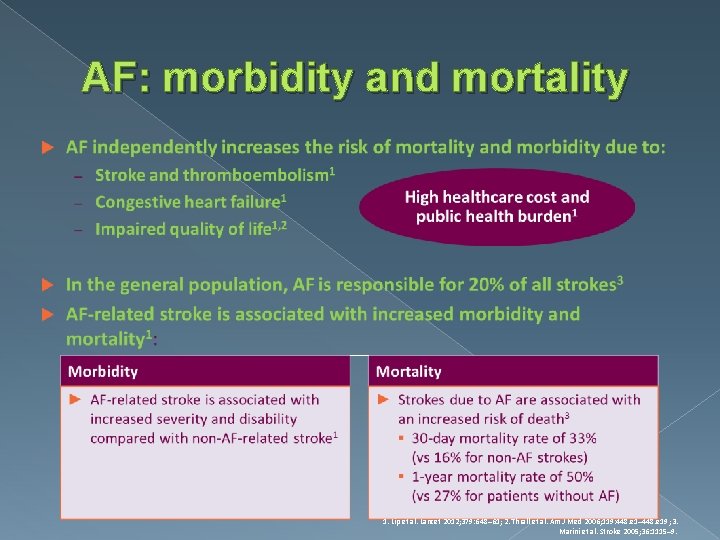
AF: morbidity and mortality 1. Lip et al. Lancet 2012; 379: 648– 61; 2. Thrall et al. Am J Med 2006; 119: 448. e 1– 448. e 19; 3. Marini et al. Stroke 2005; 36: 1115– 9.
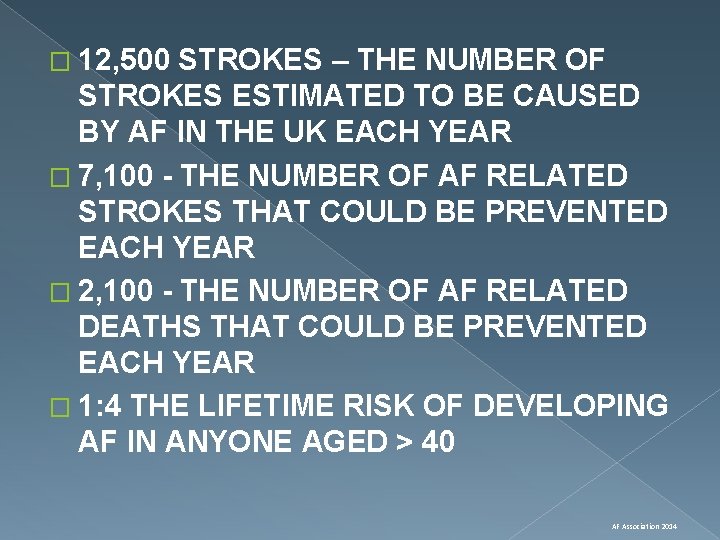
� 12, 500 STROKES – THE NUMBER OF STROKES ESTIMATED TO BE CAUSED BY AF IN THE UK EACH YEAR � 7, 100 - THE NUMBER OF AF RELATED STROKES THAT COULD BE PREVENTED EACH YEAR � 2, 100 - THE NUMBER OF AF RELATED DEATHS THAT COULD BE PREVENTED EACH YEAR � 1: 4 THE LIFETIME RISK OF DEVELOPING AF IN ANYONE AGED > 40 AF Association 2014
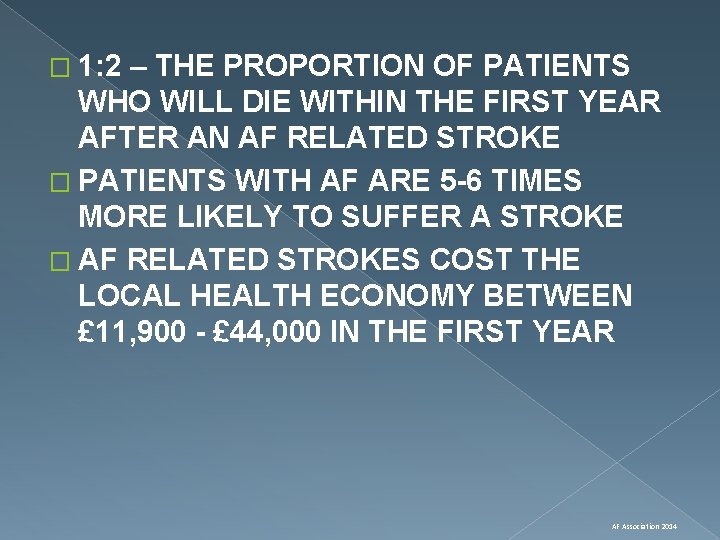
� 1: 2 – THE PROPORTION OF PATIENTS WHO WILL DIE WITHIN THE FIRST YEAR AFTER AN AF RELATED STROKE � PATIENTS WITH AF ARE 5 -6 TIMES MORE LIKELY TO SUFFER A STROKE � AF RELATED STROKES COST THE LOCAL HEALTH ECONOMY BETWEEN £ 11, 900 - £ 44, 000 IN THE FIRST YEAR AF Association 2014

Risk factors for AF: overview 1. Go AS et al. JAMA 2001; 285: 2370– 2375; 2. Heeringa J et al. Eur Heart J 2006; 27: 949– 953; 3. Benjamin EJ et al. JAMA 1994; 271: 840– 844; 4. Gowd BM and Thompson BD, Cardiol Rev. 2012; 297 -303; 5. Borzecki AM et al. J Natl Med Assoc 2008; 100: 237– 245

AF and stroke • Stroke is the most serious ongoing risk associated with AF 1 • In patients with AF, blood clots tend to form in the atria, particularly within the left atrial appendage, due to abnormal blood flow and pooling 2 • These clots may travel to the brain, causing an ischaemic stroke 2 • Around 20% of ischaemic strokes are caused by blood clots originating in the heart (cardioembolic); of these, AF is the most common cause 3 1. Wolf PA et al. Stroke 1991; 22: 983– 988; 2. Fuster V et al. Circulation 2006; 114: 700– 752; 3. Paciaroni M et al. Stroke 2007; 38: 423– 430
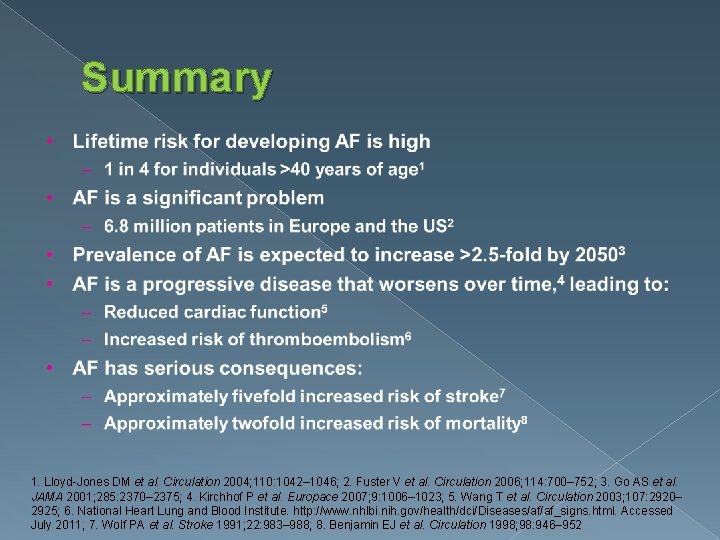
Summary 1. Lloyd-Jones DM et al. Circulation 2004; 110: 1042– 1046; 2. Fuster V et al. Circulation 2006; 114: 700– 752; 3. Go AS et al. JAMA 2001; 285: 2370– 2375; 4. Kirchhof P et al. Europace 2007; 9: 1006– 1023; 5. Wang T et al. Circulation 2003; 107: 2920– 2925; 6. National Heart Lung and Blood Institute. http: //www. nhlbi. nih. gov/health/dci/Diseases/af/af_signs. html. Accessed July 2011; 7. Wolf PA et al. Stroke 1991; 22: 983– 988; 8. Benjamin EJ et al. Circulation 1998; 98: 946– 952
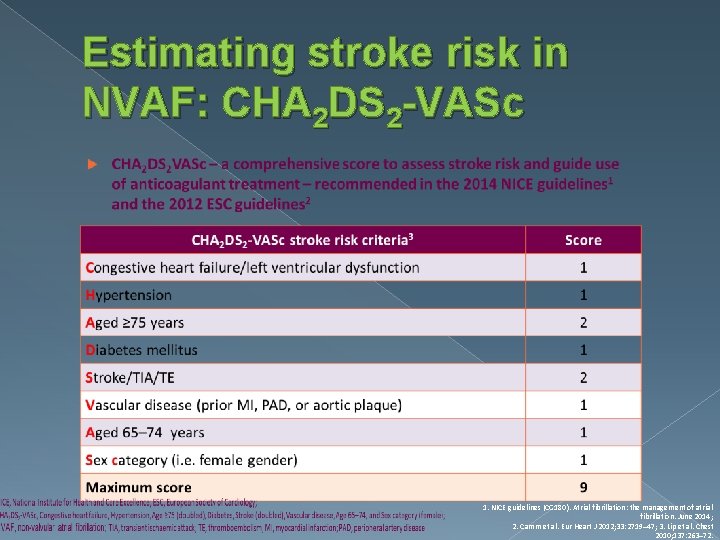
Estimating stroke risk in NVAF: CHA 2 DS 2 -VASc 1. NICE guidelines (CG 180). Atrial fibrillation: the management of atrial fibrillation. June 2014; 2. Camm et al. Eur Heart J 2012; 33: 2719– 47; 3. Lip et al. Chest 2010; 137: 263– 72.
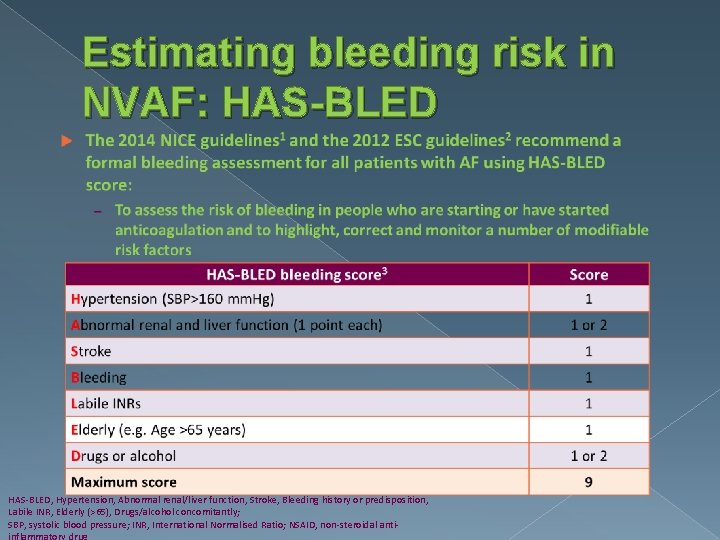
Estimating bleeding risk in NVAF: HAS-BLED, Hypertension, Abnormal renal/liver function, Stroke, Bleeding history or predisposition, Labile INR, Elderly (>65), Drugs/alcohol concomitantly; SBP, systolic blood pressure; INR, International Normalised Ratio; NSAID, non-steroidal anti-
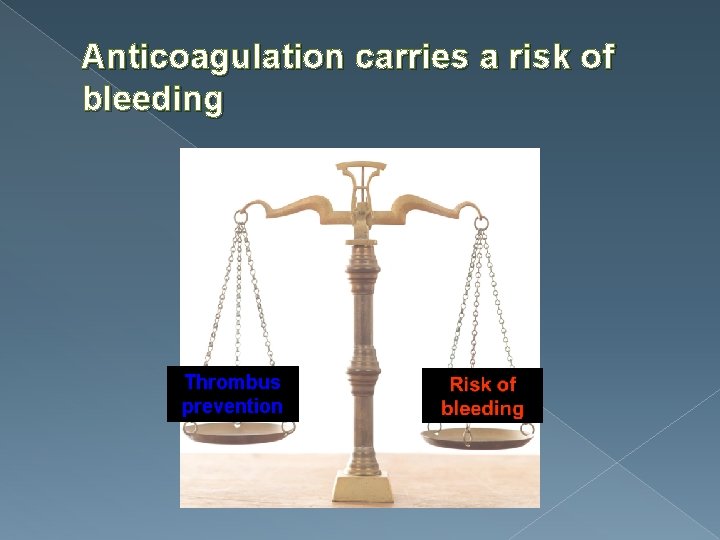
Anticoagulation carries a risk of bleeding Thrombus prevention

1. NICE guidelines (CG 180). Atrial fibrillation: the management of atrial fibrillation. June 2014; 2. Camm et al. Eur Heart J 2012; 33: 2719– 471
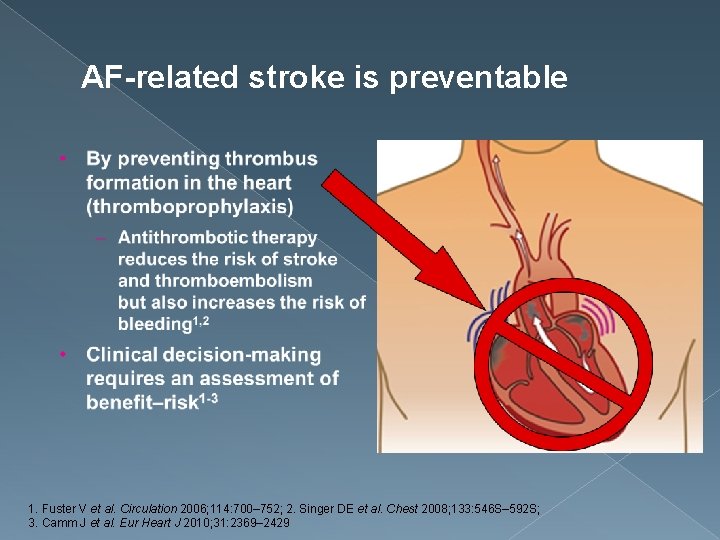
AF-related stroke is preventable 1. Fuster V et al. Circulation 2006; 114: 700– 752; 2. Singer DE et al. Chest 2008; 133: 546 S– 592 S; 3. Camm J et al. Eur Heart J 2010; 31: 2369– 2429
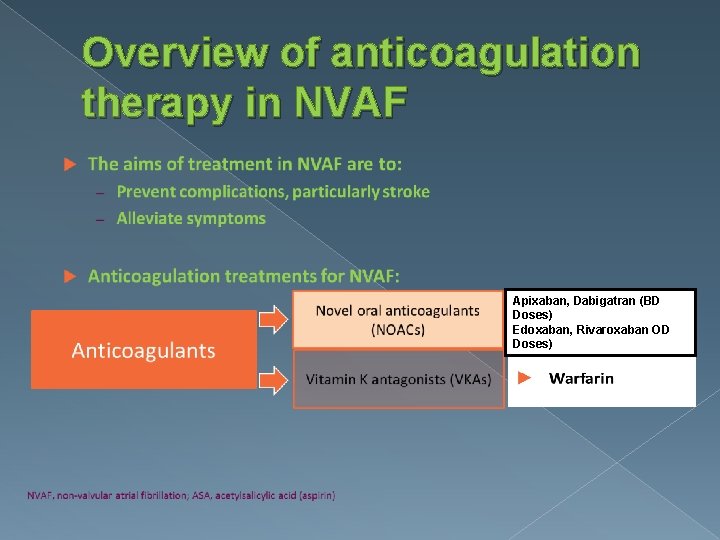
Overview of anticoagulation therapy in NVAF Apixaban, Dabigatran (BD Doses) Edoxaban, Rivaroxaban OD Doses)
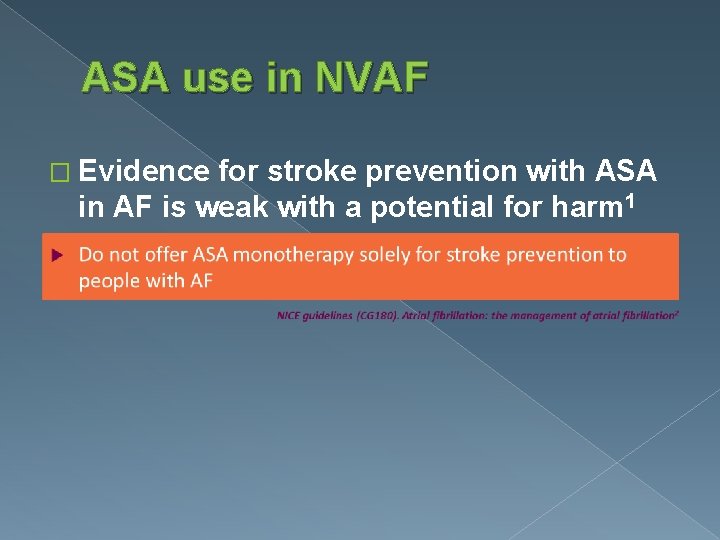
ASA use in NVAF � Evidence for stroke prevention with ASA in AF is weak with a potential for harm 1
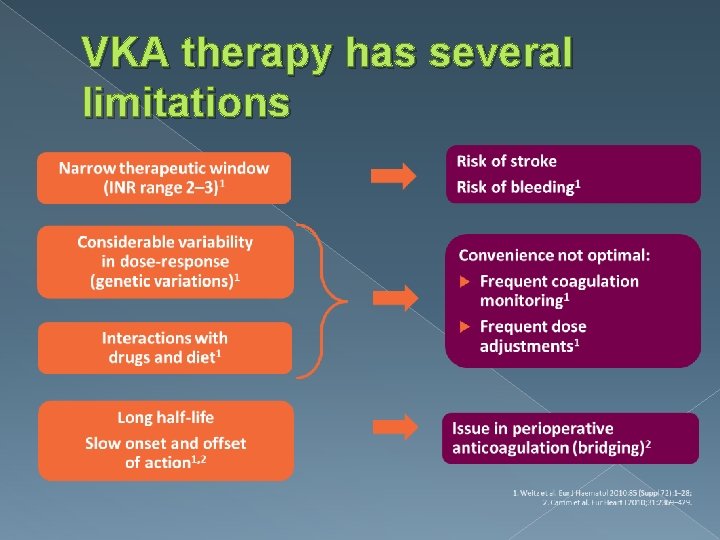
VKA therapy has several limitations
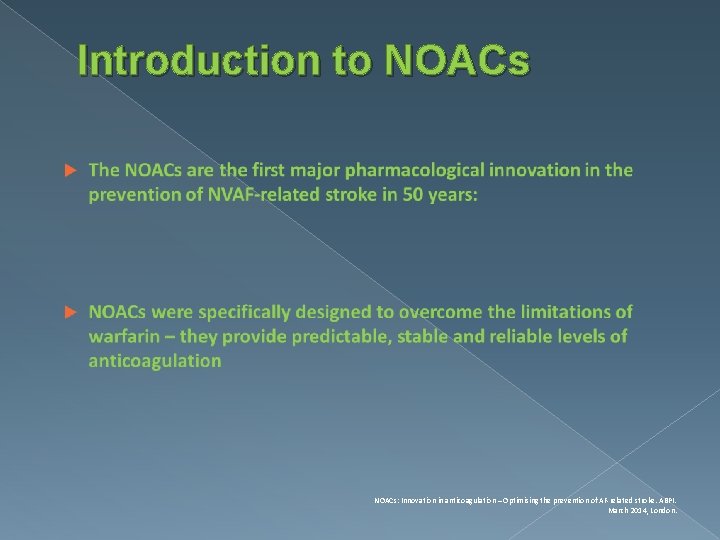
Introduction to NOACs: Innovation in anticoagulation – Optimising the prevention of AF-related stroke. ABPI. March 2014, London.
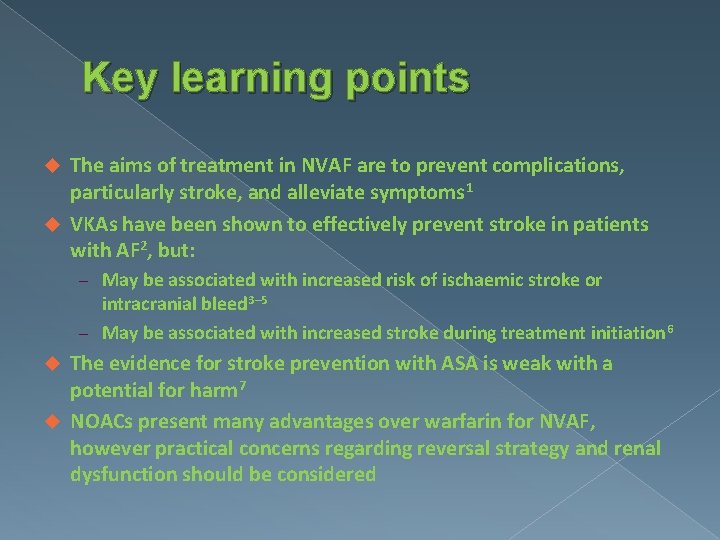
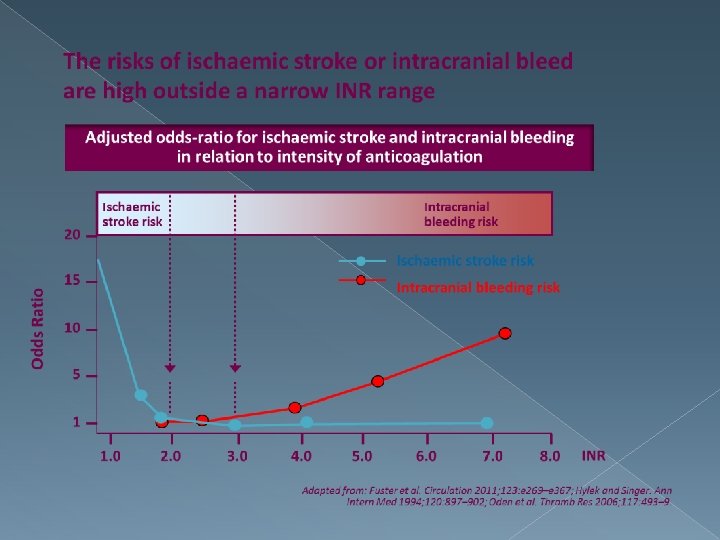
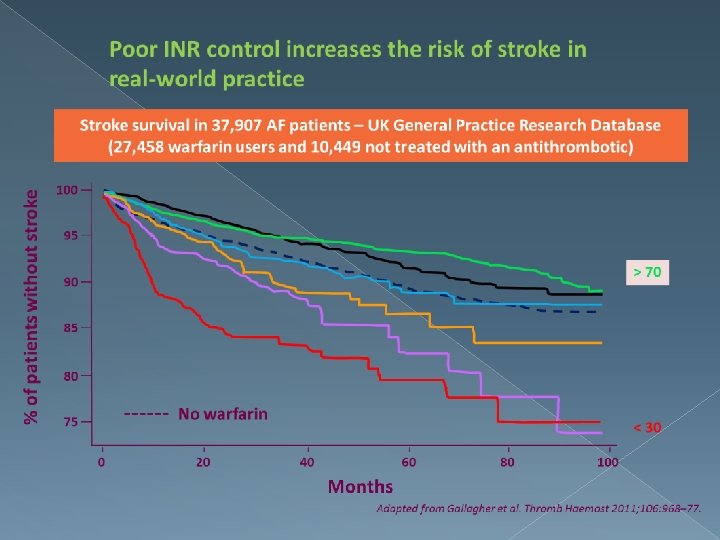
Key learning points The aims of treatment in NVAF are to prevent complications, particularly stroke, and alleviate symptoms 1 u VKAs have been shown to effectively prevent stroke in patients with AF 2, but: u May be associated with increased risk of ischaemic stroke or intracranial bleed 3– 5 – May be associated with increased stroke during treatment initiation 6 – The evidence for stroke prevention with ASA is weak with a potential for harm 7 u NOACs present many advantages over warfarin for NVAF, however practical concerns regarding reversal strategy and renal dysfunction should be considered u
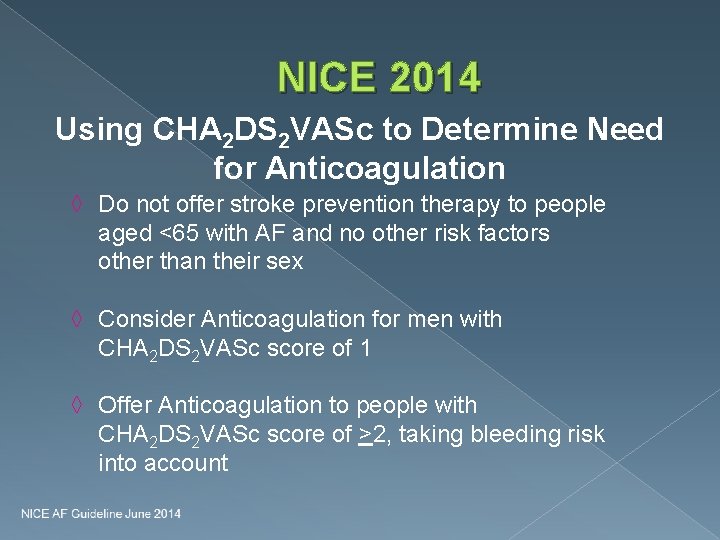
NICE 2014 Using CHA 2 DS 2 VASc to Determine Need for Anticoagulation ◊ Do not offer stroke prevention therapy to people aged <65 with AF and no other risk factors other than their sex ◊ Consider Anticoagulation for men with CHA 2 DS 2 VASc score of 1 ◊ Offer Anticoagulation to people with CHA 2 DS 2 VASc score of >2, taking bleeding risk into account
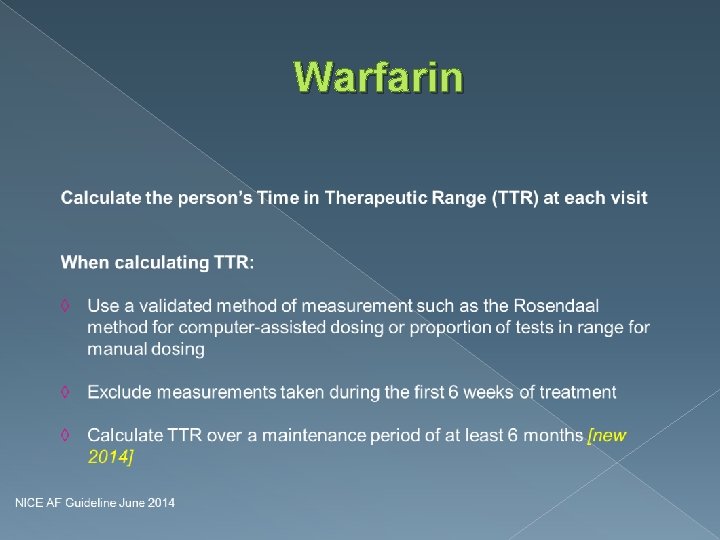
Warfarin
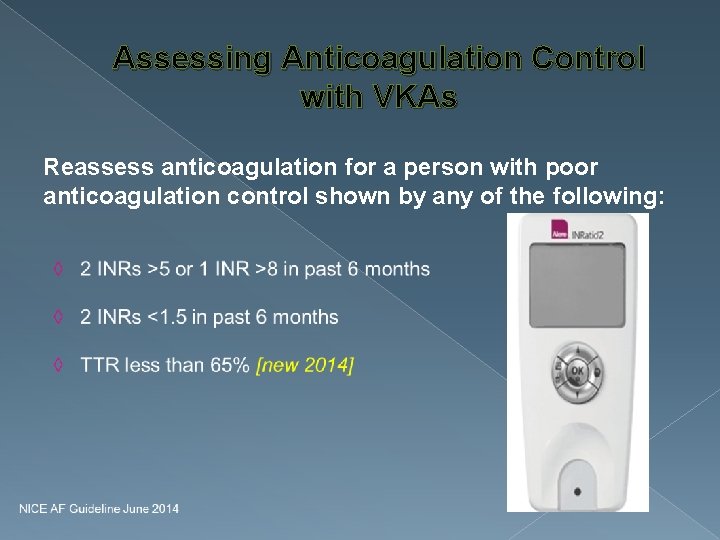
Assessing Anticoagulation Control with VKAs Reassess anticoagulation for a person with poor anticoagulation control shown by any of the following:
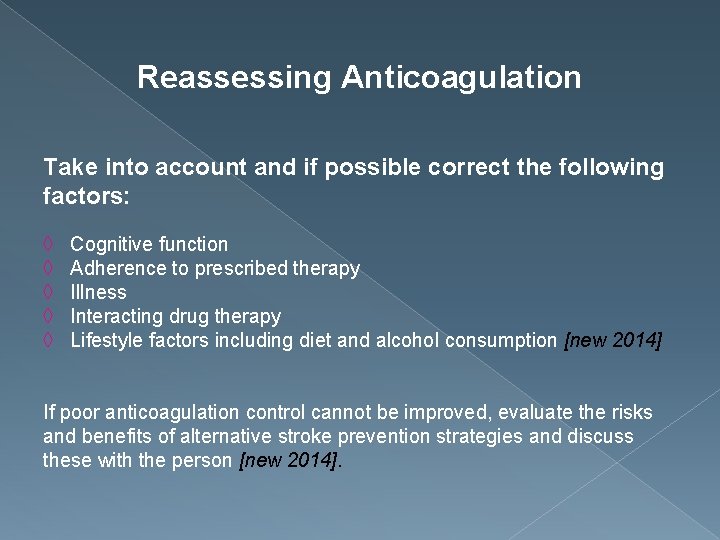
Reassessing Anticoagulation Take into account and if possible correct the following factors: ◊ ◊ ◊ Cognitive function Adherence to prescribed therapy Illness Interacting drug therapy Lifestyle factors including diet and alcohol consumption [new 2014] If poor anticoagulation control cannot be improved, evaluate the risks and benefits of alternative stroke prevention strategies and discuss these with the person [new 2014].
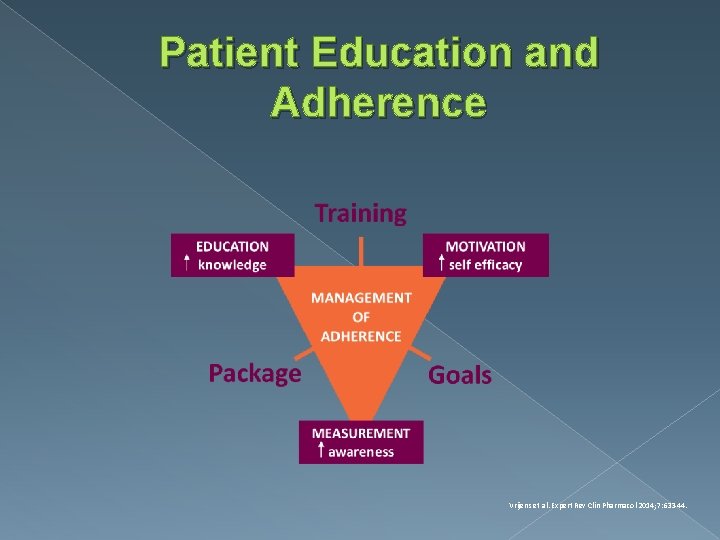
Patient Education and Adherence Vrijens et al. Expert Rev Clin Pharmacol 2014; 7: 633 -44.
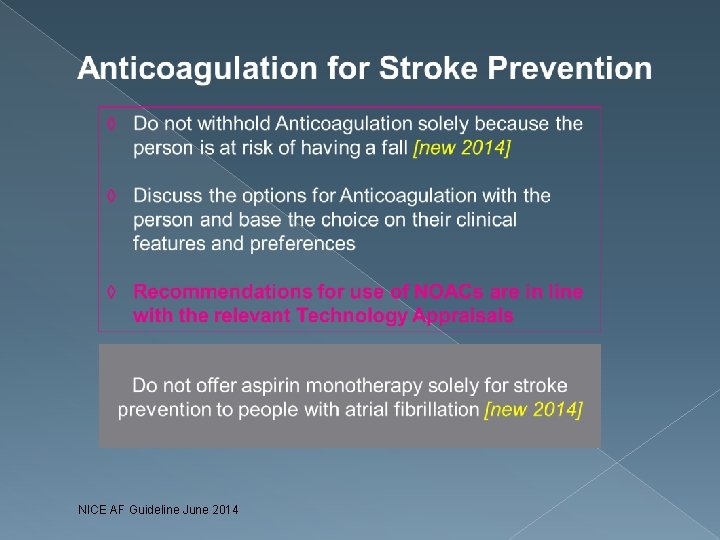
NICE AF Guideline June 2014
- Slides: 38