
Atrial Fibrillation Definition AF is a complex arrhythmia
Atrial Fibrillation

Definition �AF is a complex arrhythmia characterised by both abnormal automatic firing and the presence of multiple interacting re-entry circuits looping around the atria.

Causes � Hypertensive heart disease and coronary artery disease are the most common causes � Rheumatic heart disease ( mitral valve disease) � Pulmonary diseases (PE) � Hyper or hypothyroidism � Systemic illnesses ( DM , sepsis , malignancy ) � Stress � Excessive alcohol intake � Sick sinus syndrome � PHeochromocytoma
Clinical Presentation �Fatigue and exertional dyspnea �Palpitation , dizziness , angina , or syncope An irregular pulse Blood stasis due to ineffective contraction lead to intramural thrombi formation which embolize to the brain

Classification � � � ●Paroxysmal (ie, self-terminating or intermittent) AF – Paroxysmal AF is defined as AF that terminates spontaneously or with intervention within seven days of onset. Episodes may recur with variable frequency. ●Persistent AF – Persistent AF is defined as AF that fails to self-terminate within seven days. Episodes often require pharmacologic or electrical cardioversion to restore sinus rhythm. While a patient who has had persistent AF can have later episodes of paroxysmal AF, AF is generally considered a progressive disease. ●Long-standing persistent AF – AF that has lasted for more than 12 months. ● Permanent AF – "Permanent AF" is a term used to identify individuals with persistent atrial fibrillation where a joint decision by the patient and clinician has been made to no longer pursue a rhythm control strategy. While AF typically progresses from paroxysmal to persistent states, patients can present with both types throughout their lives. Additionally, this classification applies to recurrent episodes of AF that last more than 30 seconds and that are unrelated to a reversible cause. Lone AF — The term "lone AF. Lone AF has generally referred to patients with paroxysmal, persistent, or permanent AF who have no structural heart disease. It has primarily been applied to patients ≤ 60 years of age
Clinical approach: Patient history �history and physical examination — Not all patients with AF are symptomatic. �●A description of the symptoms: onset or date of discovery, the frequency and duration, severity, and qualitative characteristics. � Typical symptoms include palpitations, tachycardia, fatigue, weakness, dizziness, lightheadedness, reduced exercise capacity, increased urination, or mild dyspnea. More severe symptoms include dyspnea at rest, angina, presyncope, or infrequently, syncope. In addition, some patients present with an embolic event or the insidious onset of heart failure (as manifested by pulmonary edema, peripheral edema, weight gain, and ascites �●Precipitating causes: exercise, emotion, or alcohol. �●The presence of the following disease associations: cardiovascular or cerebrovascular disease, diabetes, hypertension, chronic obstructive pulmonary disease, obstructive sleep apnea, or potentially reversible causes (eg, hyperthyroidism, excessive alcohol ingestion).

Thank U
Physical examination and management Haitham Jaradat
Diagnosis
Management Of Atrial Fibrillation
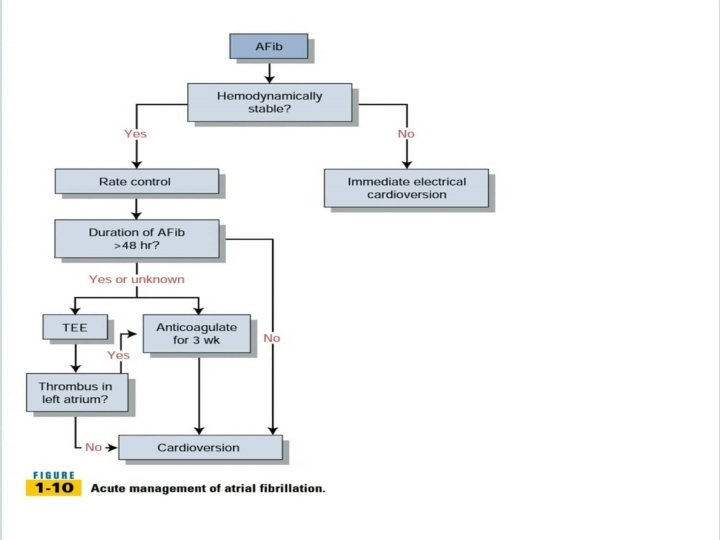
a. Rate control: The target is 60 to 100. HR 110 is acceptable if good EF. b. Use beta blockers. Ca channel blockers or digoxin
Rhythm control : b. Cardioversion to sinus rhythm: Electrical cardioversion is preferred over pharmacologic cordioversion( procianamide, flecainide, sotalol or amiodarone). The rate must be controlled before the cardioversion.
c. Anticoagulation to prevent embolic CVA If >48 hrs or unknown period, risk of embolization during cardioversion is significant. Anticoagulate for 3 wks before and 4 wks after cardioversion. The goal is INR of 2 to 3. To avoid waiting 3 wks for anticoagulation, obtain a transesophageal echocardiogram( ETT) to image LA. If no thrombus start IV heparin and perform cardioversion within 24 hrs.
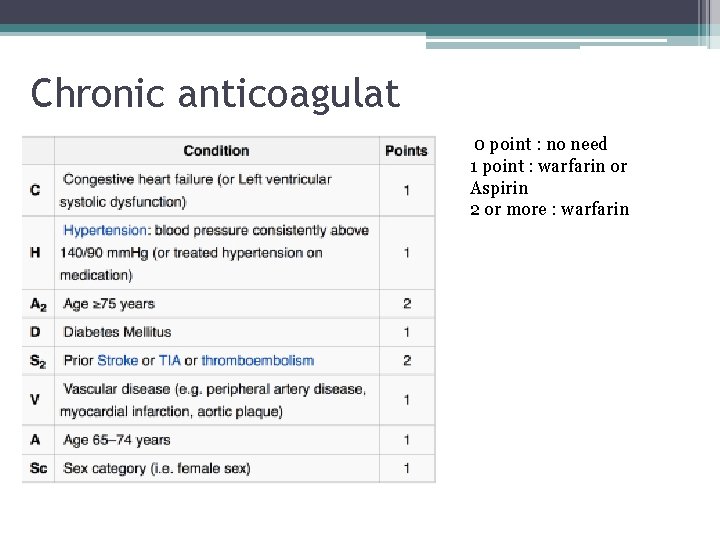
Chronic anticoagulat 0 point : no need 1 point : warfarin or Aspirin 2 or more : warfarin

THANK YOU
- Slides: 17