
ATP AS AN ENERGY CARRIER Reactions or processes
- Slides: 24
ATP AS AN ENERGY CARRIER • Reactions or processes that have a large positive G, such as moving ions against a concentration gradient across a cell membrane, are made possible by coupling the endergonic movement of ions with a second spontaneous process with a large negative ΔG, such as the hydrolysis of adenosine triphosphate (ATP).
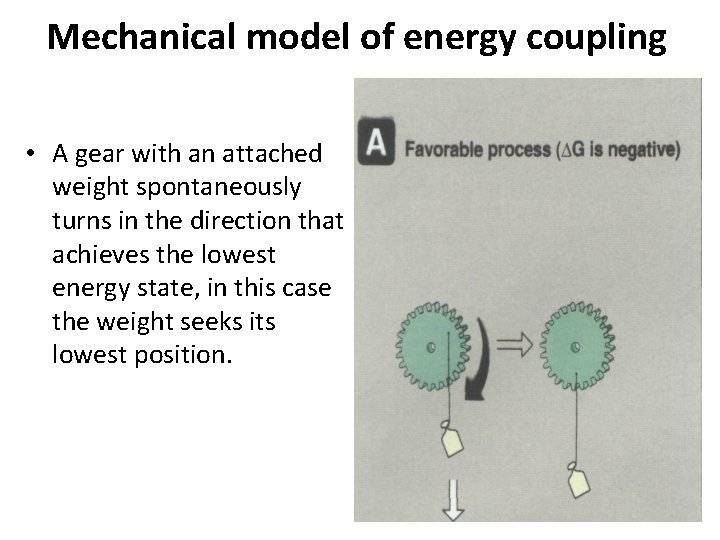
Mechanical model of energy coupling • A gear with an attached weight spontaneously turns in the direction that achieves the lowest energy state, in this case the weight seeks its lowest position.
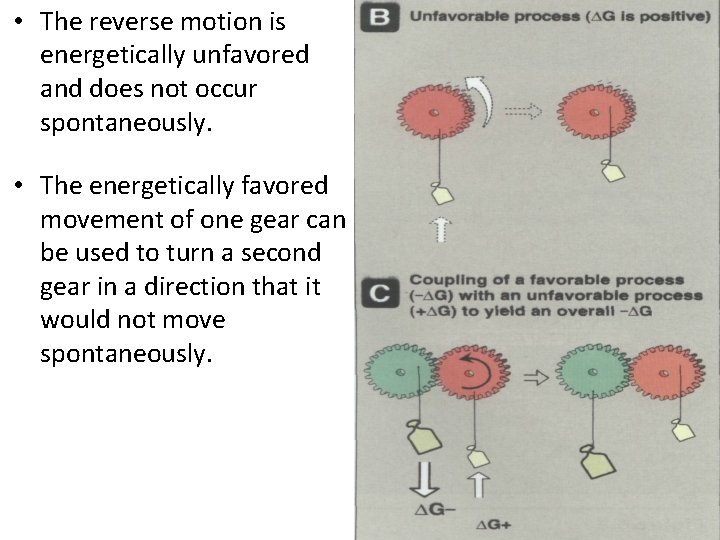
• The reverse motion is energetically unfavored and does not occur spontaneously. • The energetically favored movement of one gear can be used to turn a second gear in a direction that it would not move spontaneously.
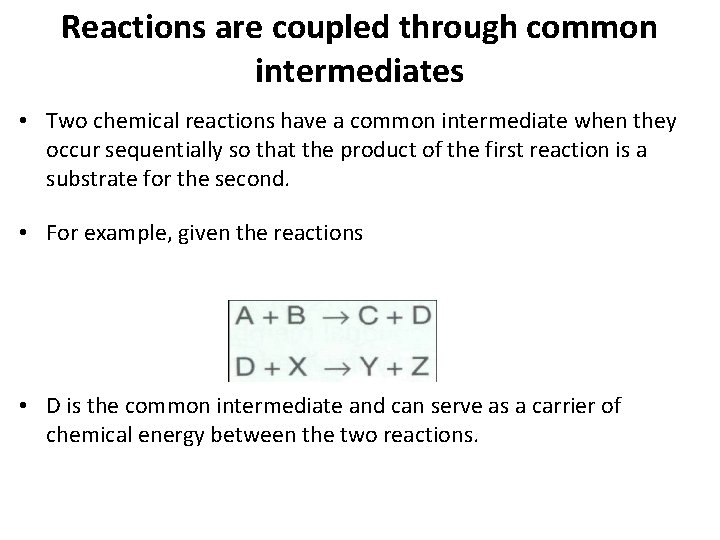
Reactions are coupled through common intermediates • The simplest example of energy coupling in biologic reactions occurs when the energyrequiring and the energy-yielding reactions share a common intermediate.
Reactions are coupled through common intermediates • Two chemical reactions have a common intermediate when they occur sequentially so that the product of the first reaction is a substrate for the second. • For example, given the reactions • D is the common intermediate and can serve as a carrier of chemical energy between the two reactions.
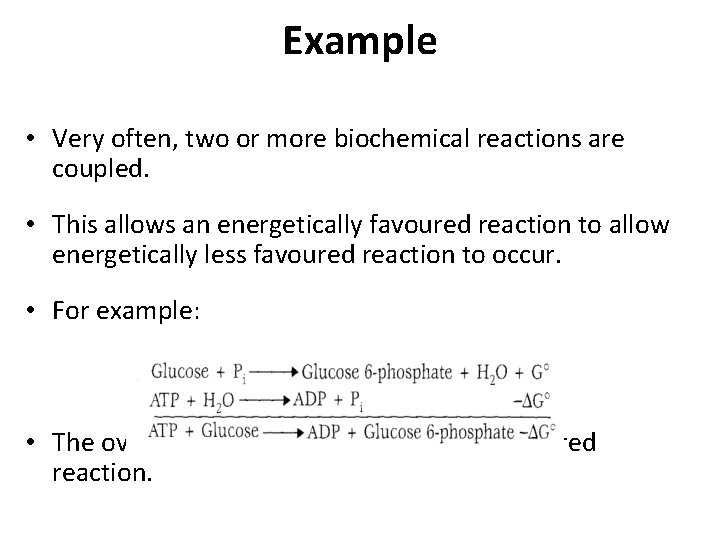
Example • Very often, two or more biochemical reactions are coupled. • This allows an energetically favoured reaction to allow energetically less favoured reaction to occur. • For example: • The overall reaction is exergonic and a favoured reaction.
• Many coupled reactions use ATP to generate a common intermediate. • These reactions may involve ATP cleavage – that is, the transfer of a phosphate group from ATP to another molecule. • Other reactions lead to ATP synthesis by transfer of phosphate from an energy-rich intermediate to ADP, forming ATP.
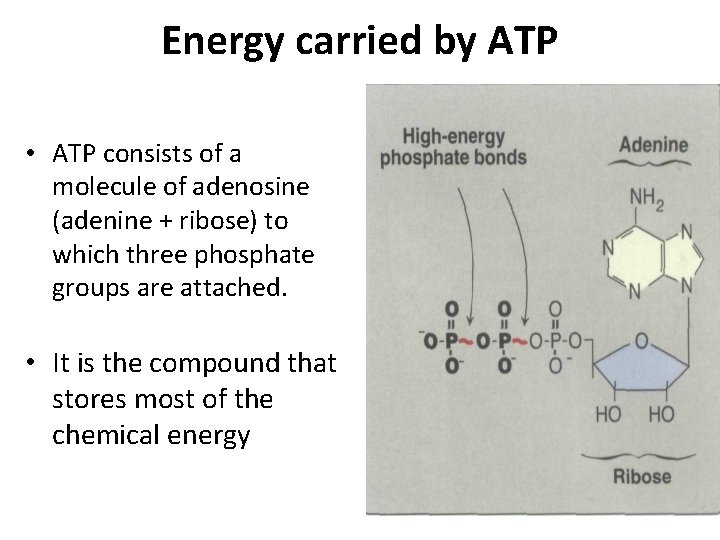
Energy carried by ATP • ATP consists of a molecule of adenosine (adenine + ribose) to which three phosphate groups are attached. • It is the compound that stores most of the chemical energy
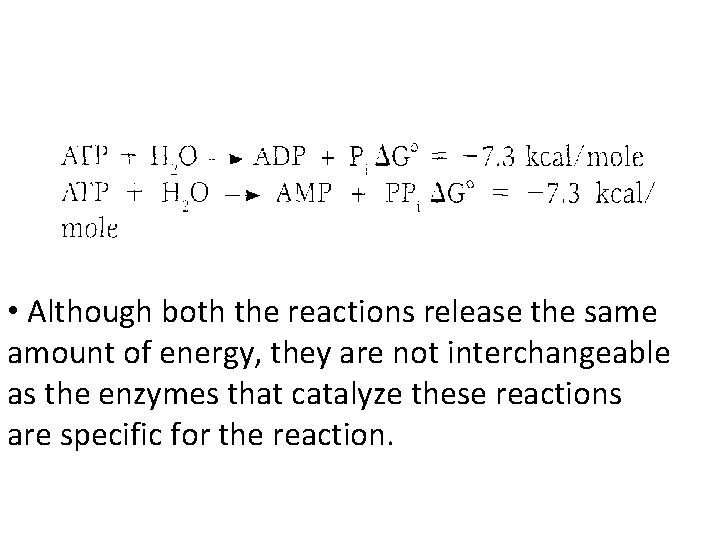
Energy released by ATP • If one phosphate is removed, adenosine diphosphate (ADP) is produced. • If two phosphates are removed, adenosine monophosphate (AMP) results. • The standard free energy of hydrolysis of ATP, ΔG°, is approximately -7300 for each of the two terminal phosphate groups. • Because of this large, negative ΔG°, ATP is called a highenergy phosphate compound.
• Although both the reactions release the same amount of energy, they are not interchangeable as the enzymes that catalyze these reactions are specific for the reaction.
• In most of the enzymatic reactions the ATP binds to Mg 2+. Hence, most reactions involving ATP show Mg 2+ as the cofactor. • The products of hydrolysis of ATP can be used for coupling other chemical reactions • ADP or AMP produced can bind to enzymes and help in the regulation of these enzymes and • ATP does not itself get hydrolyzed but can be hydrolyzed enzymatically.
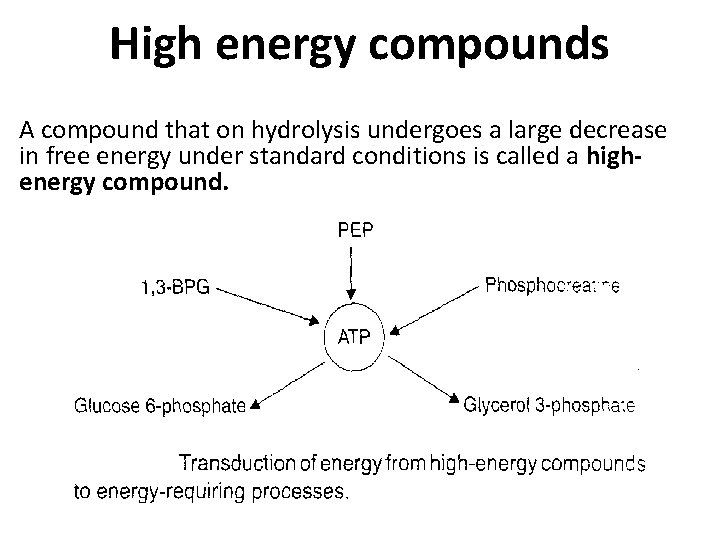
High energy compounds A compound that on hydrolysis undergoes a large decrease in free energy under standard conditions is called a highenergy compound.
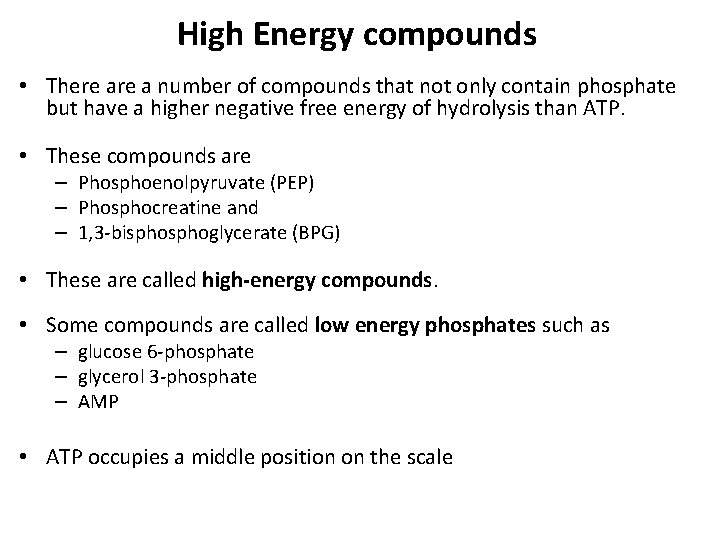
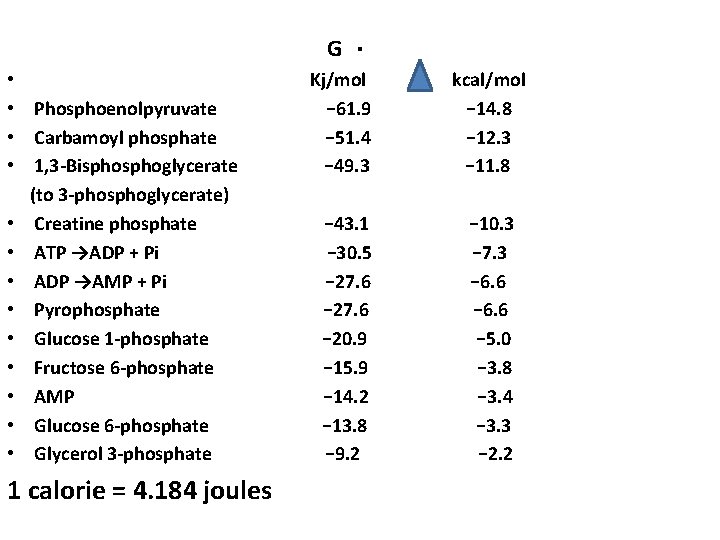
High Energy compounds • There a number of compounds that not only contain phosphate but have a higher negative free energy of hydrolysis than ATP. • These compounds are – Phosphoenolpyruvate (PEP) – Phosphocreatine and – 1, 3 -bisphoglycerate (BPG) • These are called high-energy compounds. • Some compounds are called low energy phosphates such as – glucose 6 -phosphate – glycerol 3 -phosphate – AMP • ATP occupies a middle position on the scale
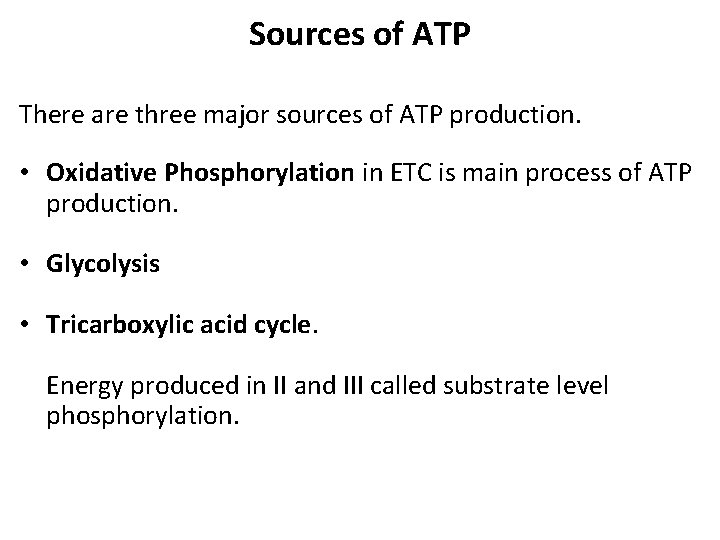
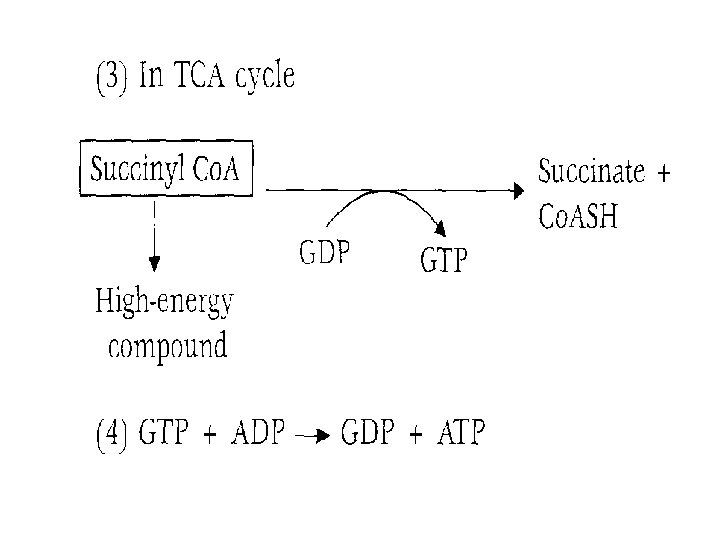
Sources of ATP There are three major sources of ATP production. • Oxidative Phosphorylation in ETC is main process of ATP production. • Glycolysis • Tricarboxylic acid cycle. Energy produced in II and III called substrate level phosphorylation.
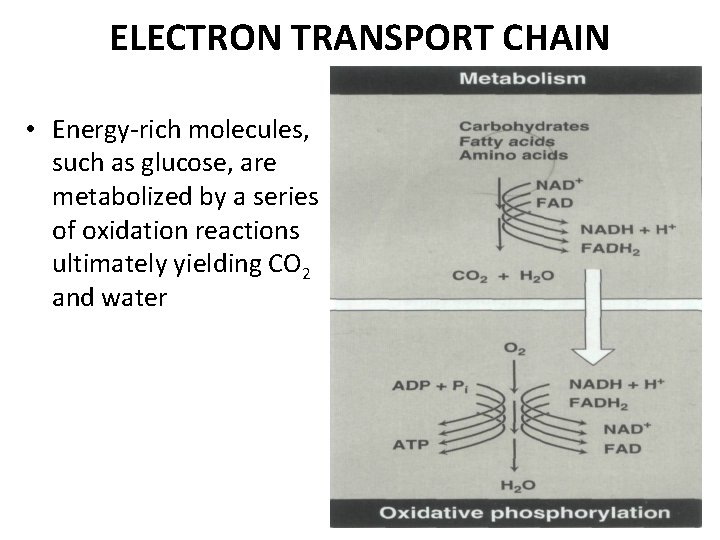
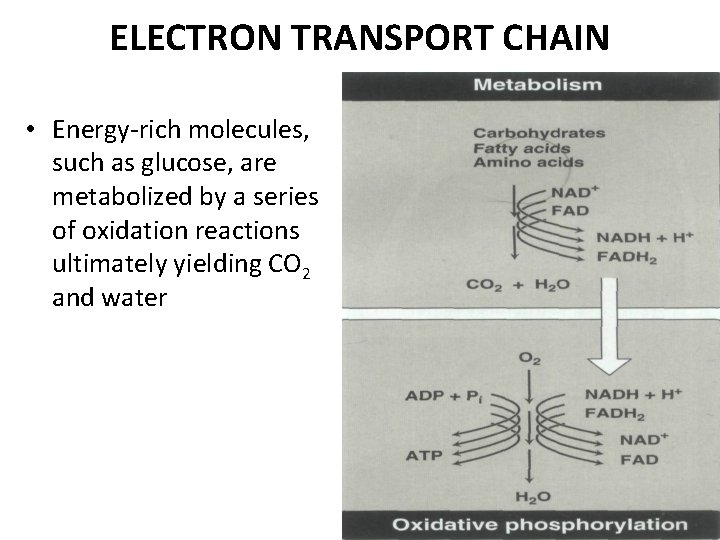
ELECTRON TRANSPORT CHAIN • Energy-rich molecules, such as glucose, are metabolized by a series of oxidation reactions ultimately yielding CO 2 and water
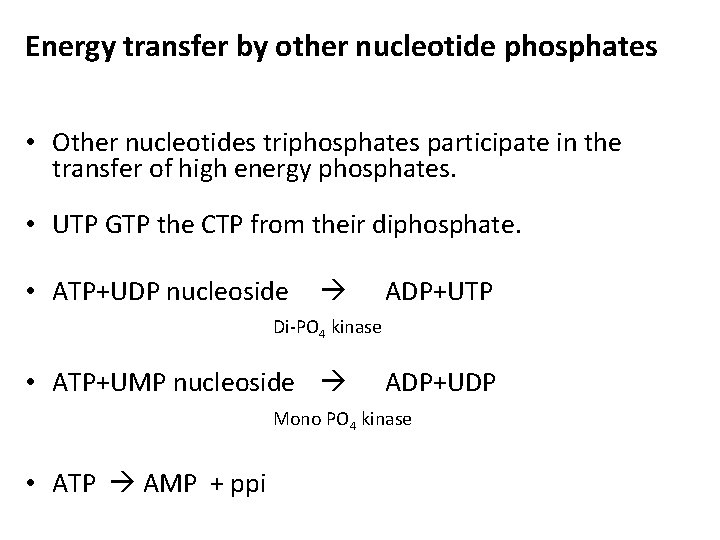
Energy transfer by other nucleotide phosphates • Other nucleotides triphosphates participate in the transfer of high energy phosphates. • UTP GTP the CTP from their diphosphate. • ATP+UDP nucleoside ADP+UTP Di-PO 4 kinase • ATP+UMP nucleoside ADP+UDP Mono PO 4 kinase • ATP AMP + ppi
G • • Phosphoenolpyruvate • Carbamoyl phosphate • 1, 3 -Bisphoglycerate (to 3 -phosphoglycerate) • Creatine phosphate • ATP →ADP + Pi • ADP →AMP + Pi • Pyrophosphate • Glucose 1 -phosphate • Fructose 6 -phosphate • AMP • Glucose 6 -phosphate • Glycerol 3 -phosphate 1 calorie = 4. 184 joules . Kj/mol − 61. 9 − 51. 4 − 49. 3 − 43. 1 − 30. 5 − 27. 6 − 20. 9 − 15. 9 − 14. 2 − 13. 8 − 9. 2 kcal/mol − 14. 8 − 12. 3 − 11. 8 − 10. 3 − 7. 3 − 6. 6 − 5. 0 − 3. 8 − 3. 4 − 3. 3 − 2. 2
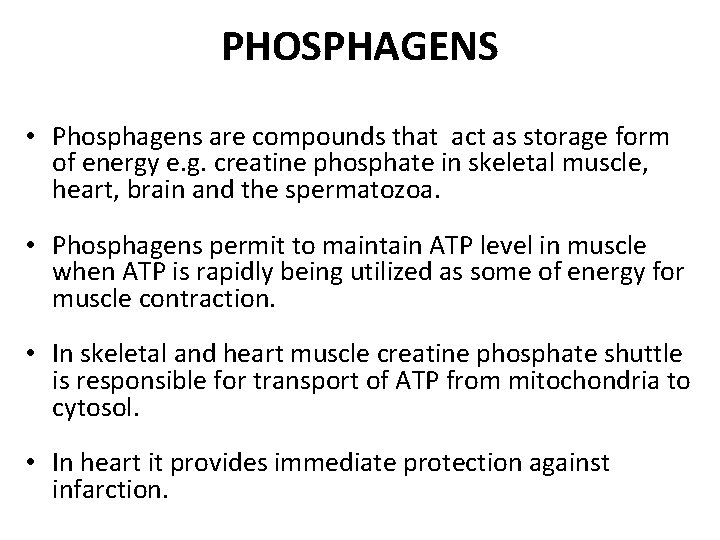
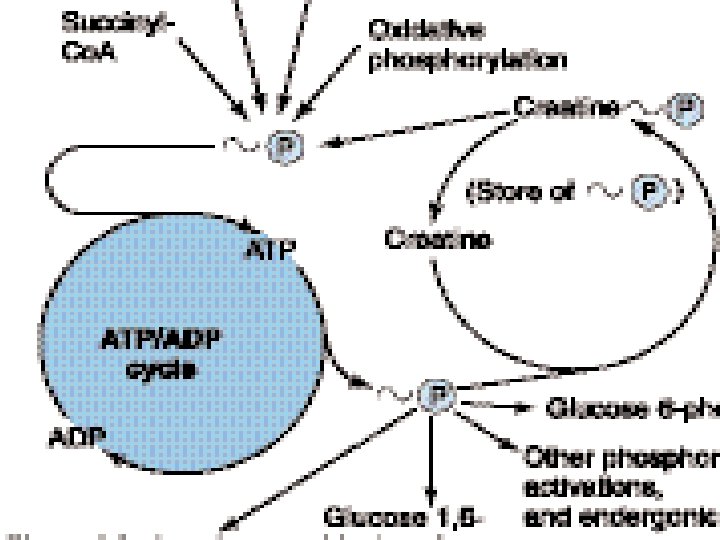
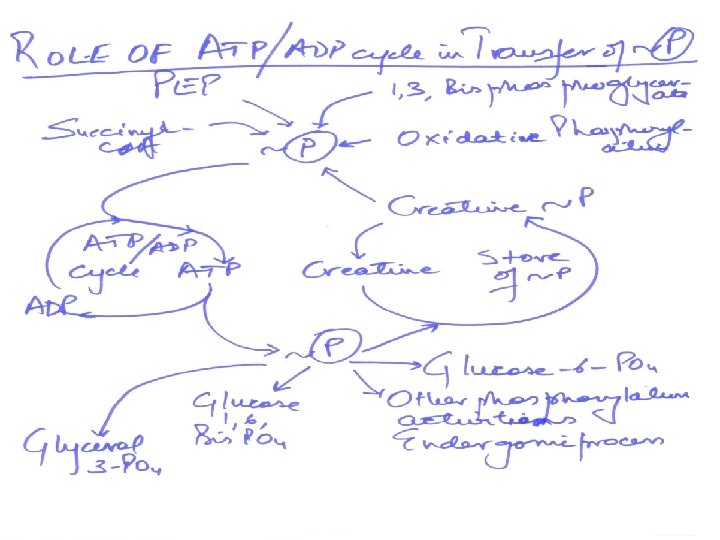
PHOSPHAGENS • Phosphagens are compounds that act as storage form of energy e. g. creatine phosphate in skeletal muscle, heart, brain and the spermatozoa. • Phosphagens permit to maintain ATP level in muscle when ATP is rapidly being utilized as some of energy for muscle contraction. • In skeletal and heart muscle creatine phosphate shuttle is responsible for transport of ATP from mitochondria to cytosol. • In heart it provides immediate protection against infarction.
ELECTRON TRANSPORT CHAIN • Energy-rich molecules, such as glucose, are metabolized by a series of oxidation reactions ultimately yielding CO 2 and water
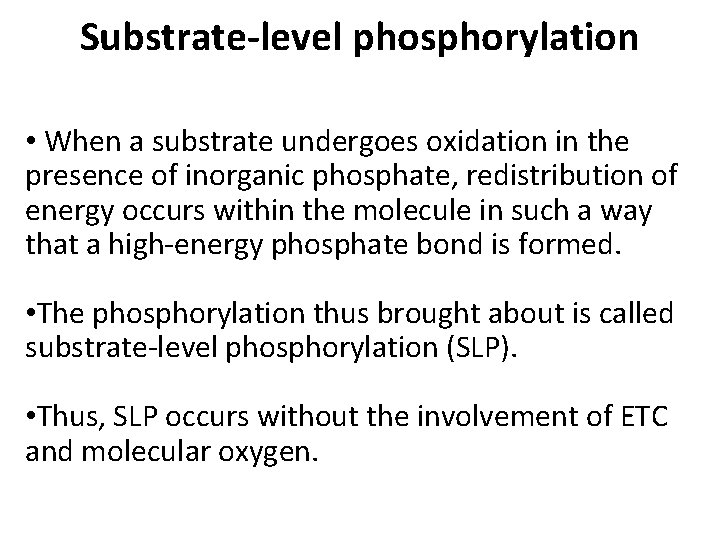
Substrate-level phosphorylation • When a substrate undergoes oxidation in the presence of inorganic phosphate, redistribution of energy occurs within the molecule in such a way that a high-energy phosphate bond is formed. • The phosphorylation thus brought about is called substrate-level phosphorylation (SLP). • Thus, SLP occurs without the involvement of ETC and molecular oxygen.
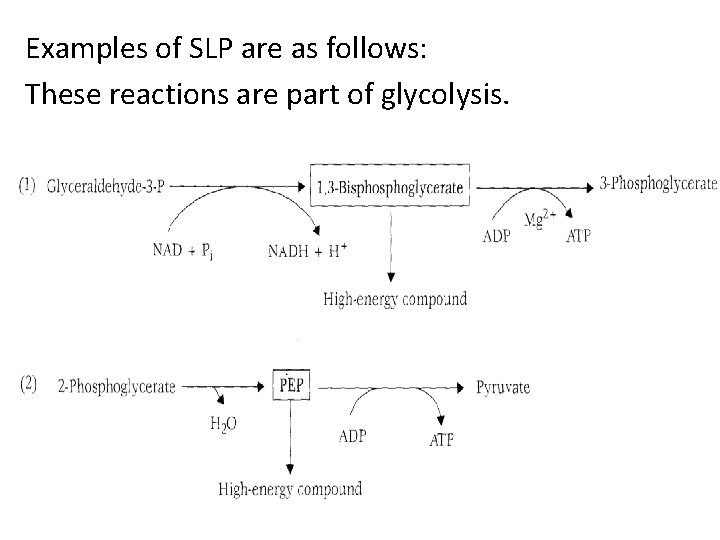
Examples of SLP are as follows: These reactions are part of glycolysis.