
ATP ADENOSINE TRIPHOSPHATE ENERGY Where does energy come

- Slides: 13
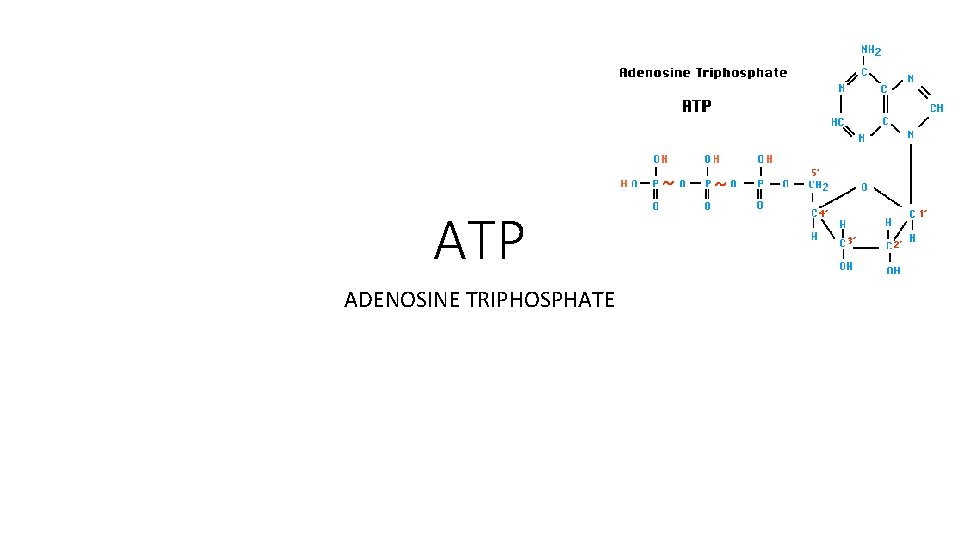
ATP ADENOSINE TRIPHOSPHATE
ENERGY ·Where does energy come from? ·Most would say from food, but…. . Energy comes from the sun! ü Autotroph: organisms which make their own food ·Example: plants use the sun’s energy to make food. ü Heterotroph: organisms that obtain energy from the foods they consume. ·Example: humans, dogs, cats, snakes, insects, etc.
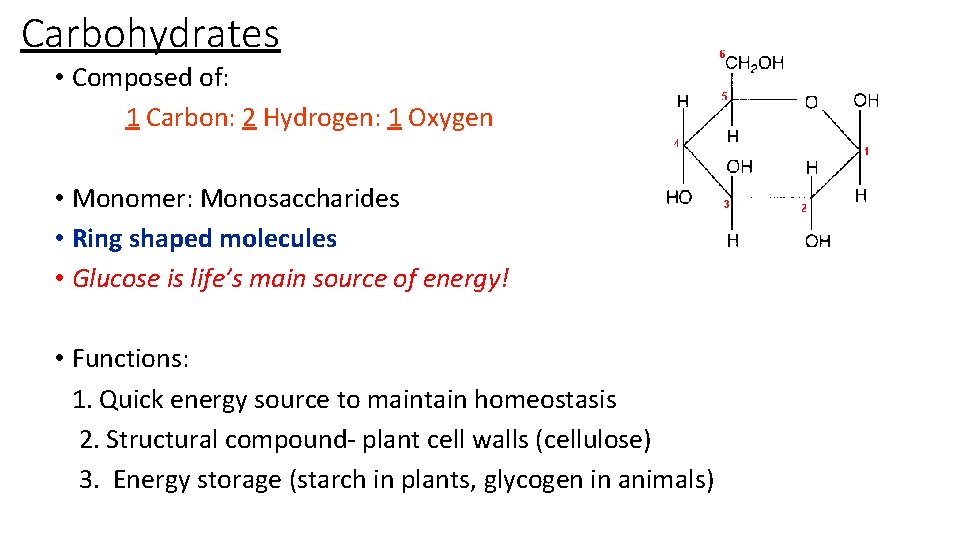
Carbohydrates • Composed of: 1 Carbon: 2 Hydrogen: 1 Oxygen • Monomer: Monosaccharides • Ring shaped molecules • Glucose is life’s main source of energy! • Functions: 1. Quick energy source to maintain homeostasis 2. Structural compound- plant cell walls (cellulose) 3. Energy storage (starch in plants, glycogen in animals)
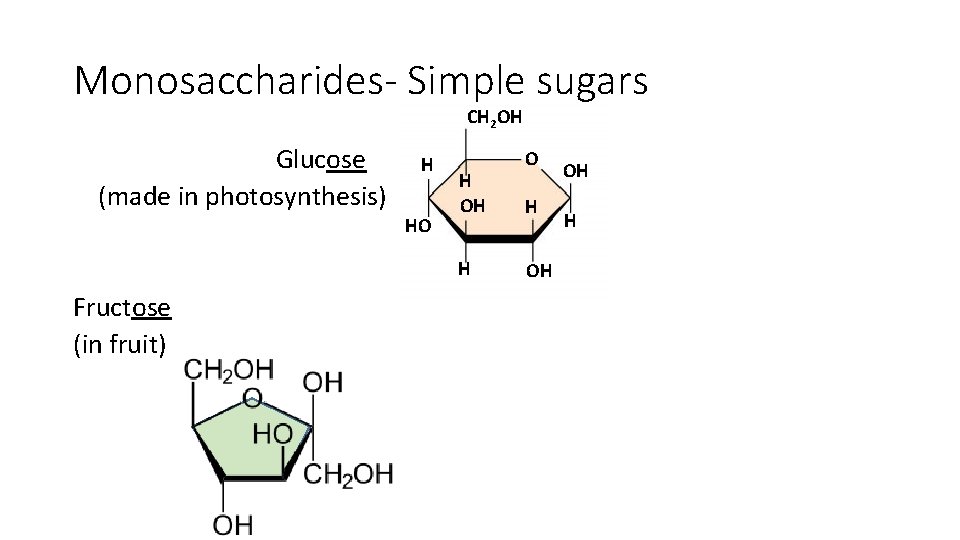
Monosaccharides- Simple sugars CH 2 OH Glucose (made in photosynthesis) H HO H OH H Fructose (in fruit) O H OH OH H
Disaccharides Sucrose (table sugar) glucose + fructose Lactose (in milk) glucose + galactose
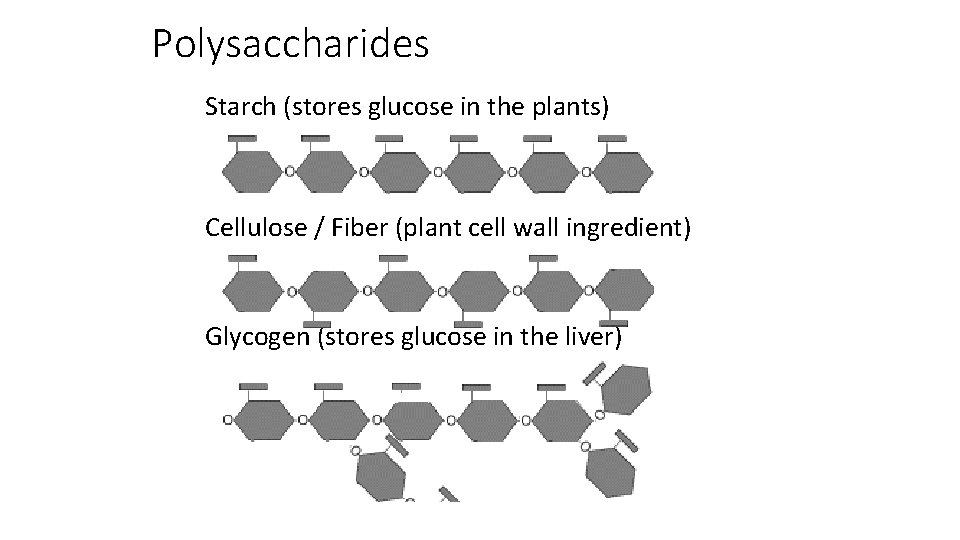
Polysaccharides Starch (stores glucose in the plants) Cellulose / Fiber (plant cell wall ingredient) Glycogen (stores glucose in the liver)
What is ATP? • A chemical compound that cells use to store and release energy. • ATP is released from the break down of your food- carbs, lipids, and proteins. Cells prefer to break down CARBS to get this energy.
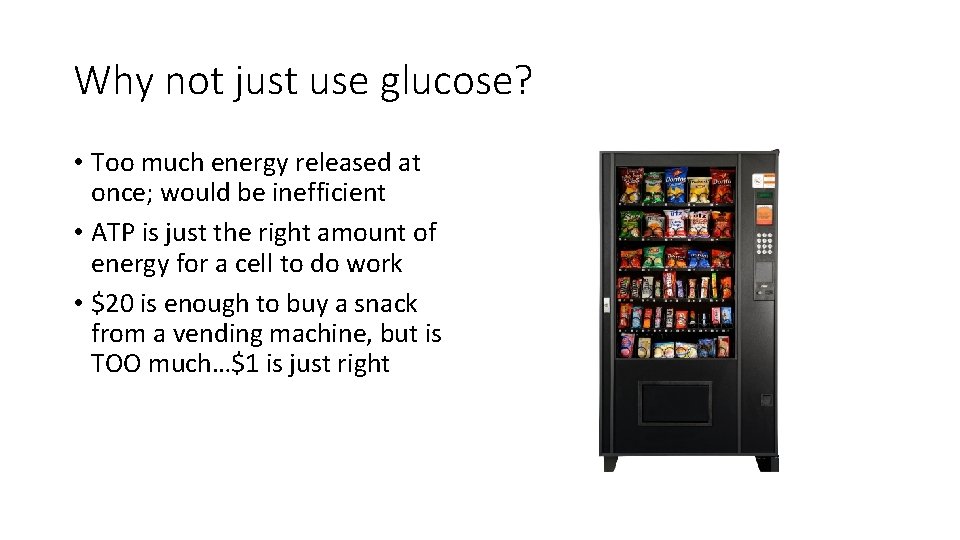
Why not just use glucose? • Too much energy released at once; would be inefficient • ATP is just the right amount of energy for a cell to do work • $20 is enough to buy a snack from a vending machine, but is TOO much…$1 is just right
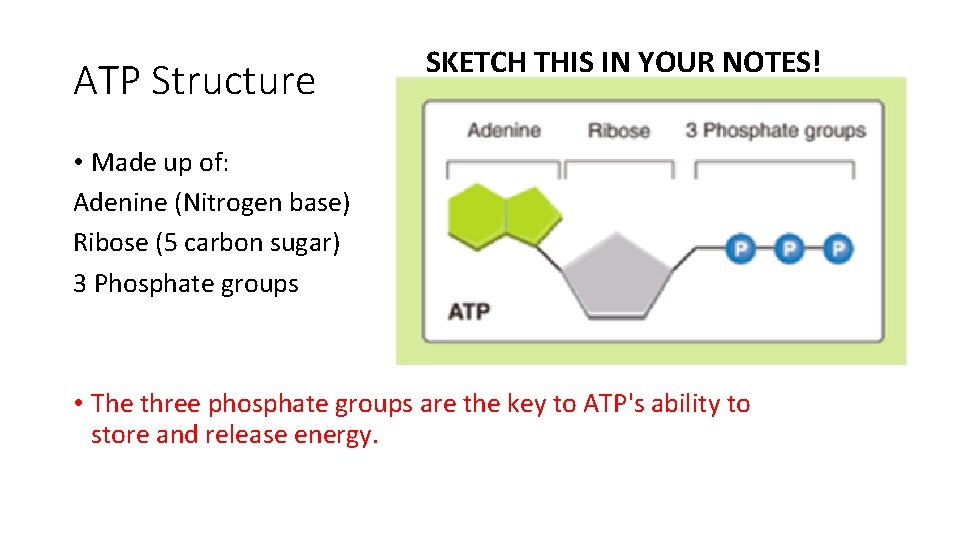
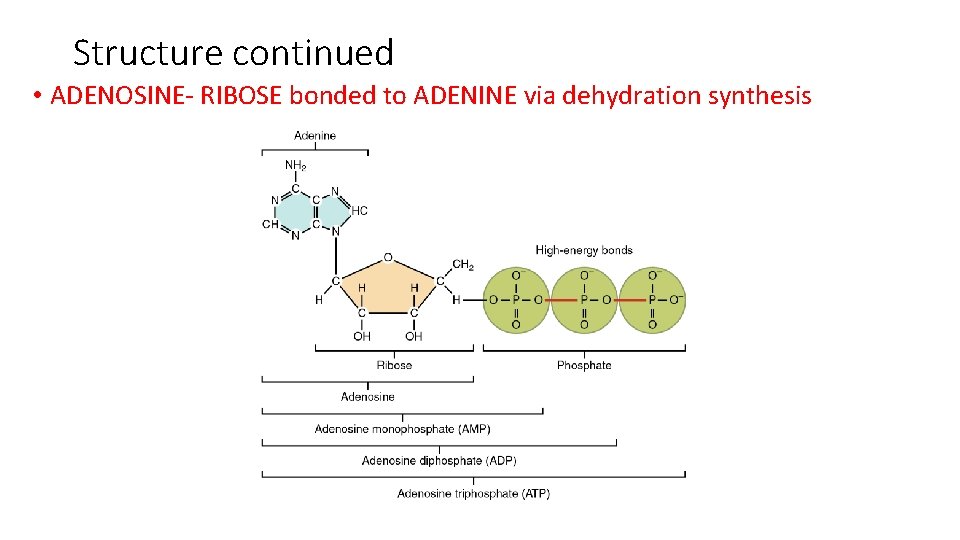
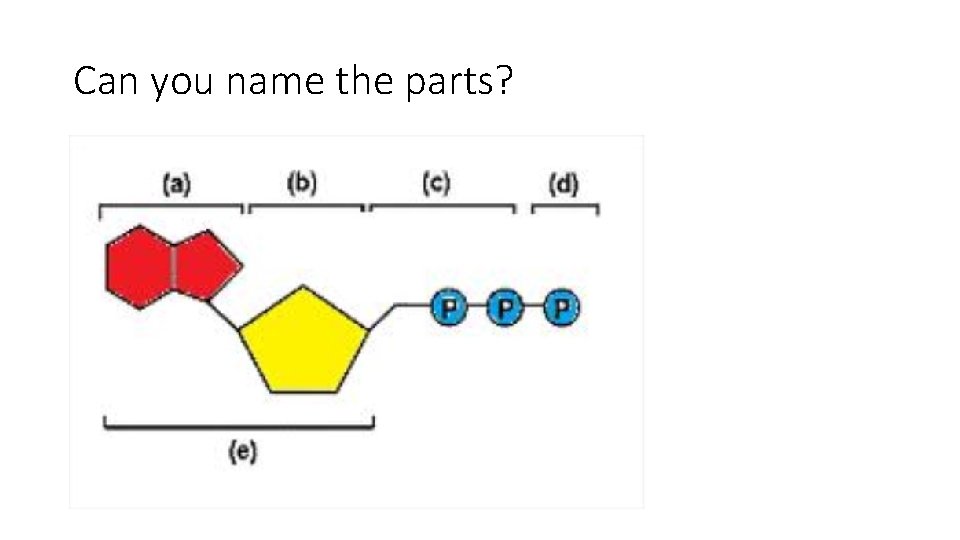
ATP Structure SKETCH THIS IN YOUR NOTES! • Made up of: Adenine (Nitrogen base) Ribose (5 carbon sugar) 3 Phosphate groups • The three phosphate groups are the key to ATP's ability to store and release energy.
Structure continued • ADENOSINE- RIBOSE bonded to ADENINE via dehydration synthesis
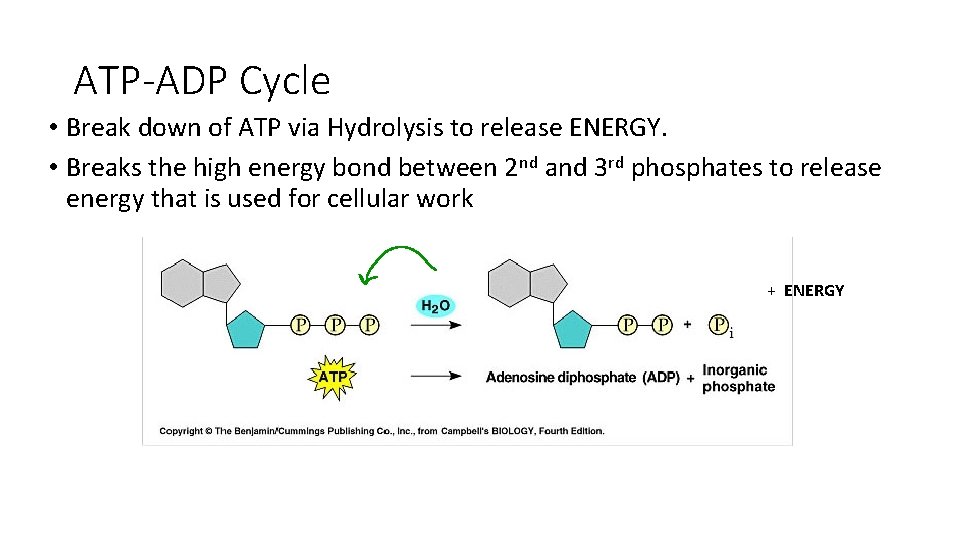
ATP-ADP Cycle • Break down of ATP via Hydrolysis to release ENERGY. • Breaks the high energy bond between 2 nd and 3 rd phosphates to release energy that is used for cellular work + ENERGY
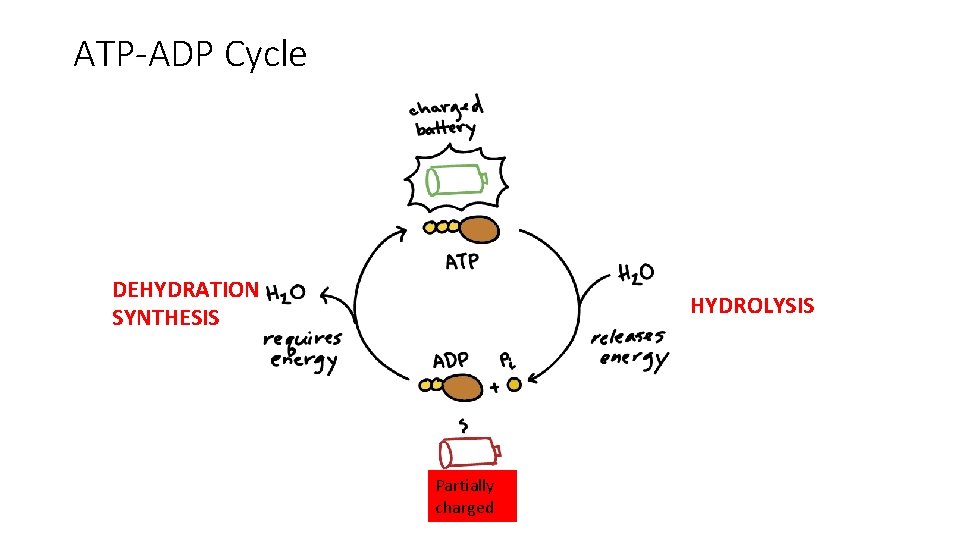
ATP-ADP Cycle DEHYDRATION SYNTHESIS HYDROLYSIS Partially charged
Can you name the parts?