
Atoms Elements Molecules and Compounds Atoms The building
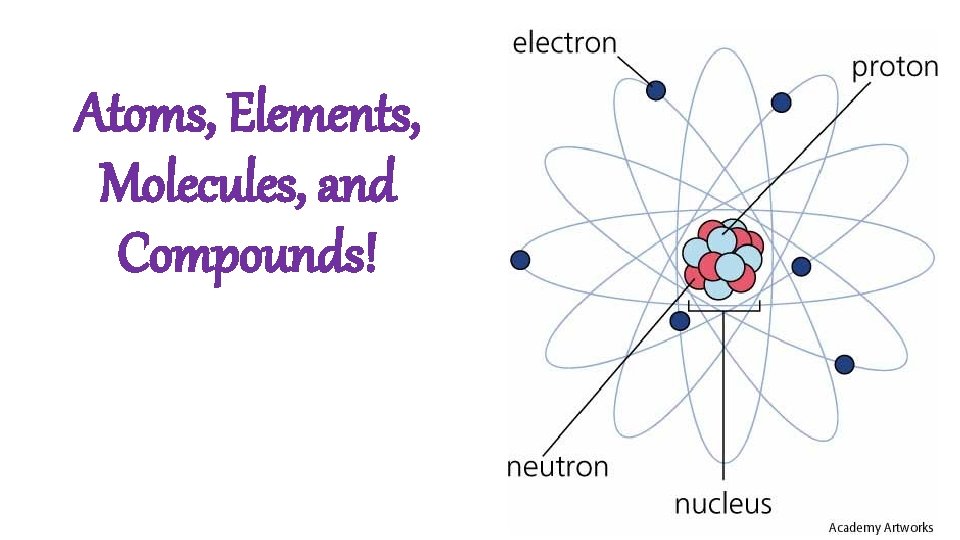
Atoms, Elements, Molecules, and Compounds!
Atoms • The building blocks of matter! • the basic unit of a chemical element • Composed of charged particles called electrons, protons, and neutrons
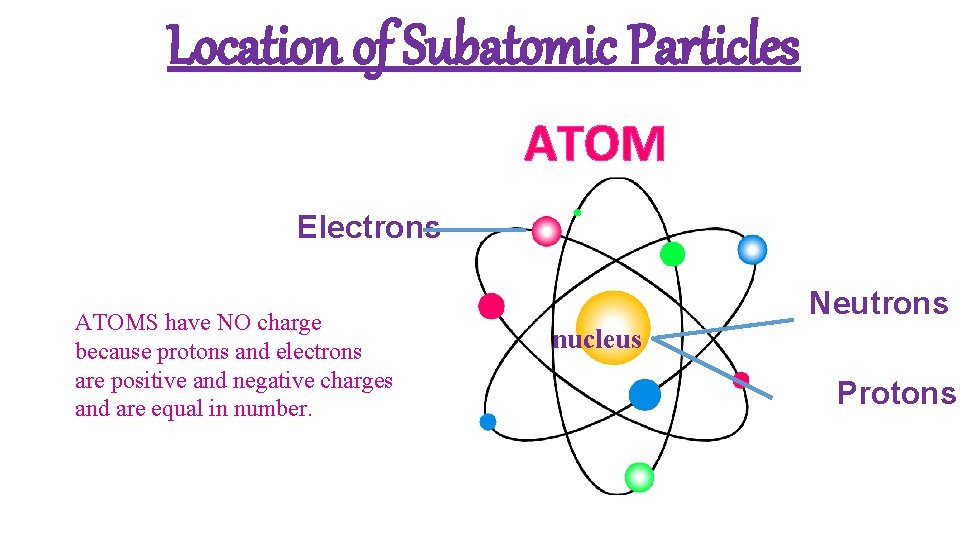
Location of Subatomic Particles ATOM Electrons ATOMS have NO charge because protons and electrons are positive and negative charges and are equal in number. Neutrons nucleus Protons
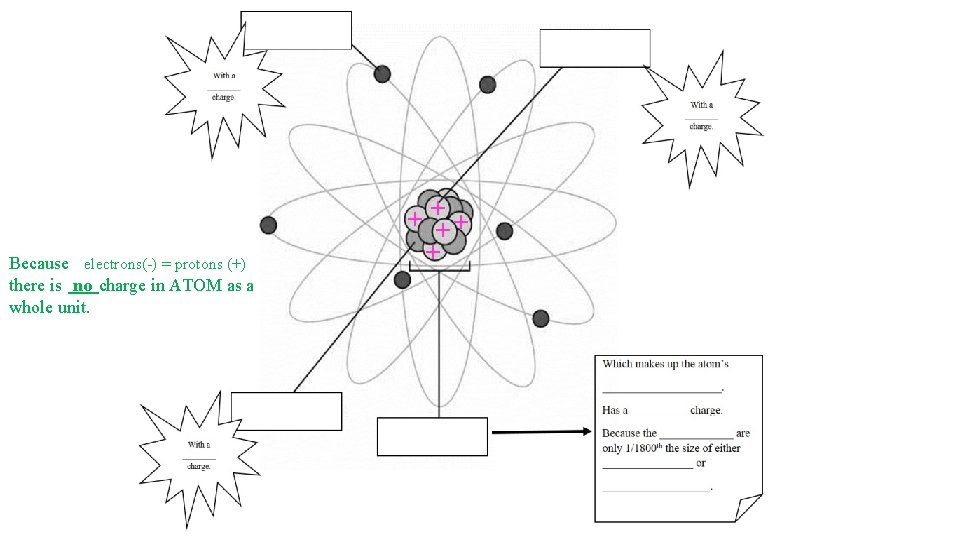
Because electrons(-) = protons (+) there is no charge in ATOM as a whole unit. + ++ + +
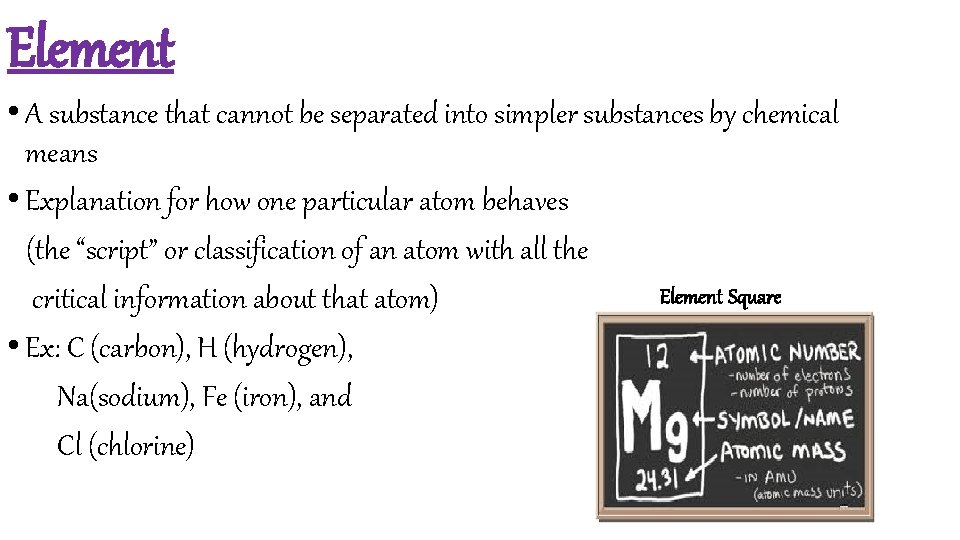
Element • A substance that cannot be separated into simpler substances by chemical means • Explanation for how one particular atom behaves (the “script” or classification of an atom with all the Element Square critical information about that atom) • Ex: C (carbon), H (hydrogen), Na(sodium), Fe (iron), and Cl (chlorine)
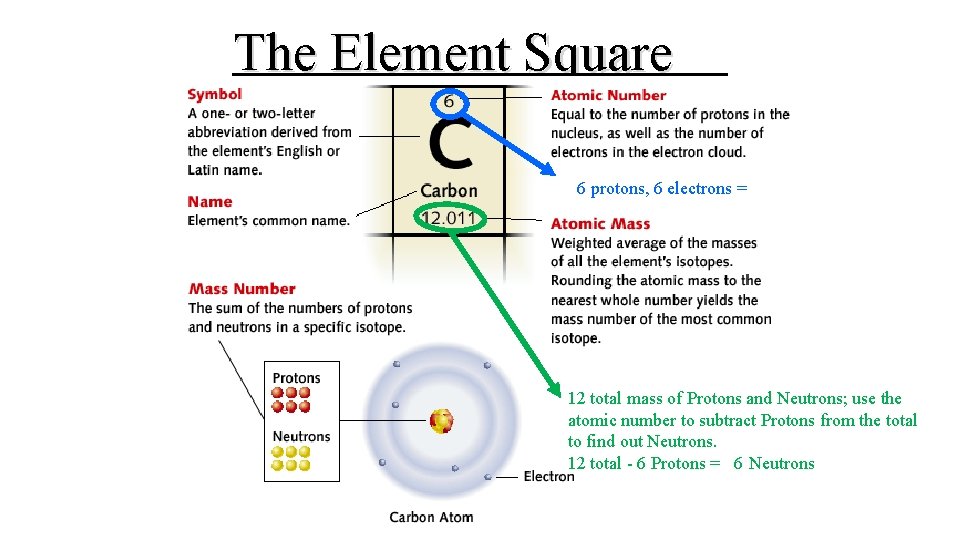
The Element Square 6 protons, 6 electrons = 12 total mass of Protons and Neutrons; use the atomic number to subtract Protons from the total to find out Neutrons. 12 total - 6 Protons = 6 Neutrons
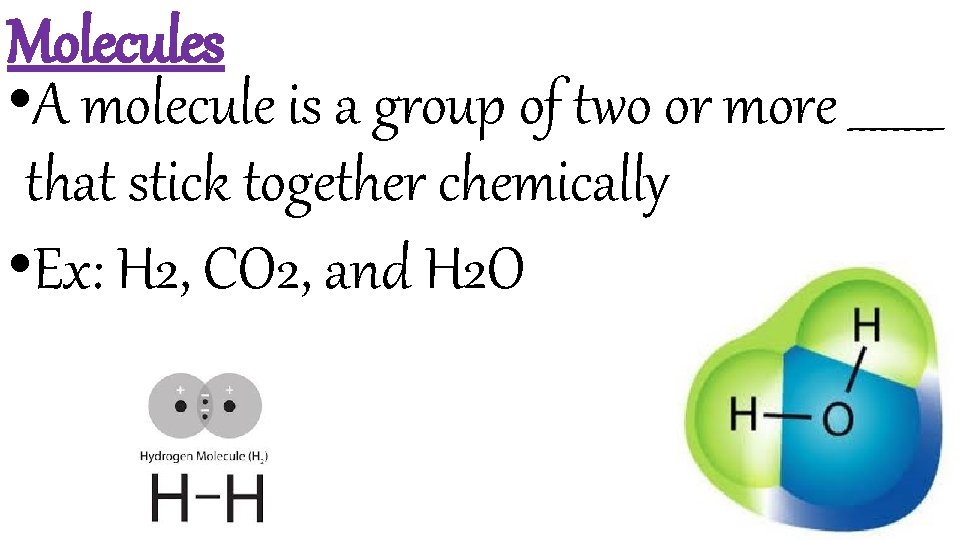
Molecules • A molecule is a group of two or more ____ that stick together chemically • Ex: H 2, CO 2, and H 2 O
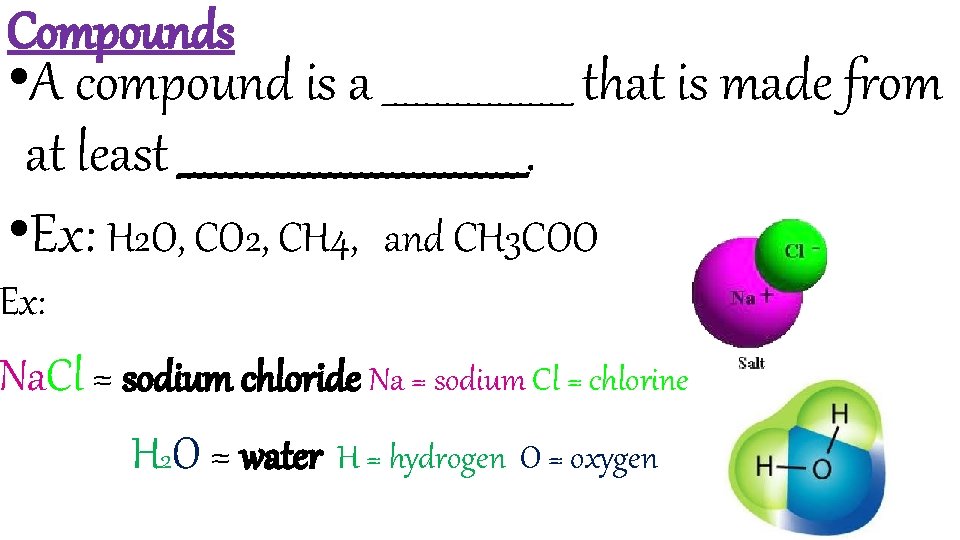
Compounds • A compound is a _________ that is made from at least _________________. • Ex: H 2 O, CO 2, CH 4, and CH 3 COO Ex: Na. Cl = sodium chloride Na = sodium Cl = chlorine H 2 O = water H = hydrogen O = oxygen
Explain the statement: All compounds are molecules but not all molecules are compounds Ex. All girls are students but all students are not girls.
Molecules can consist of two of the same elements. Compounds can not! • Ex: H 2 is a molecule, but not a compound because there is only one kind of element combined
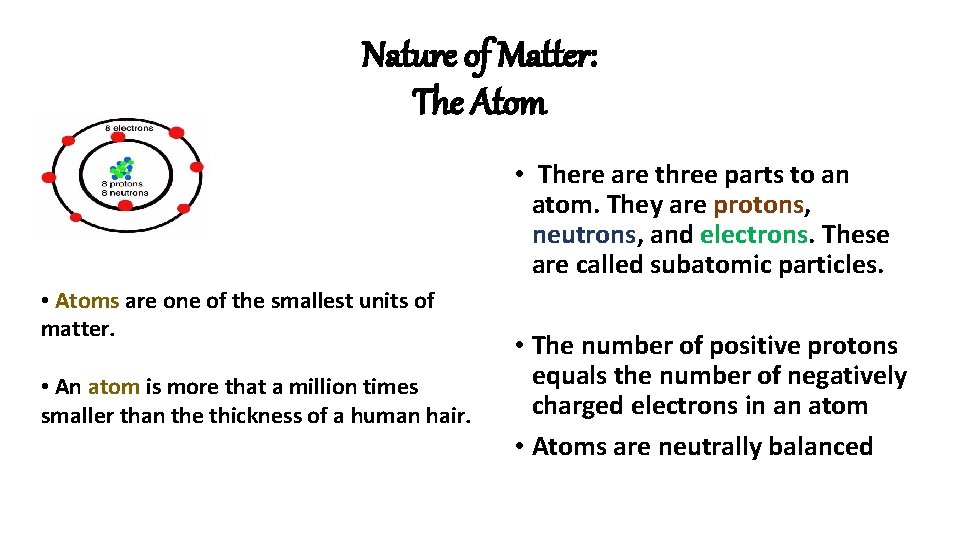
Nature of Matter: The Atom • There are three parts to an atom. They are protons, neutrons, and electrons. These are called subatomic particles. • Atoms are one of the smallest units of matter. • An atom is more that a million times smaller than the thickness of a human hair. • The number of positive protons equals the number of negatively charged electrons in an atom • Atoms are neutrally balanced
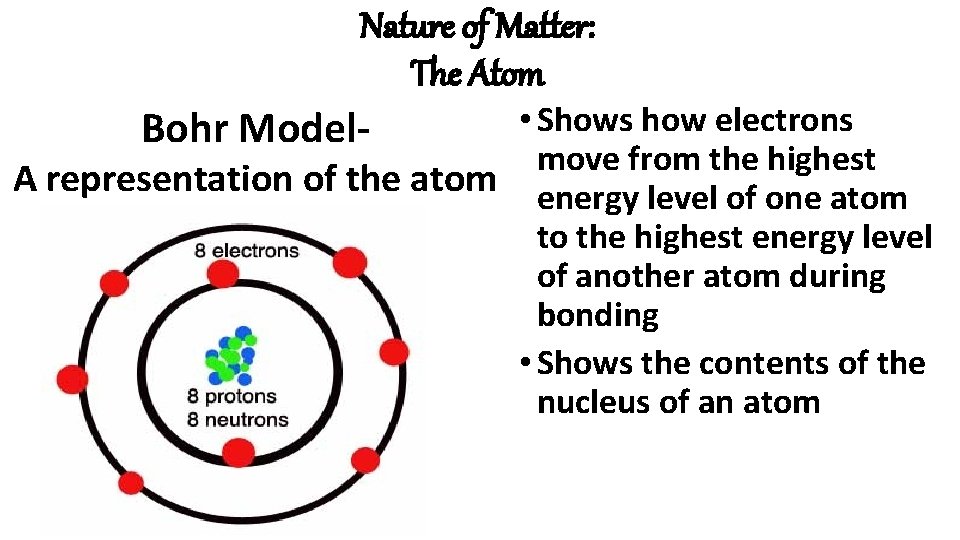
Nature of Matter: The Atom • Shows how electrons Bohr Model- move from the highest A representation of the atom energy level of one atom to the highest energy level of another atom during bonding • Shows the contents of the nucleus of an atom
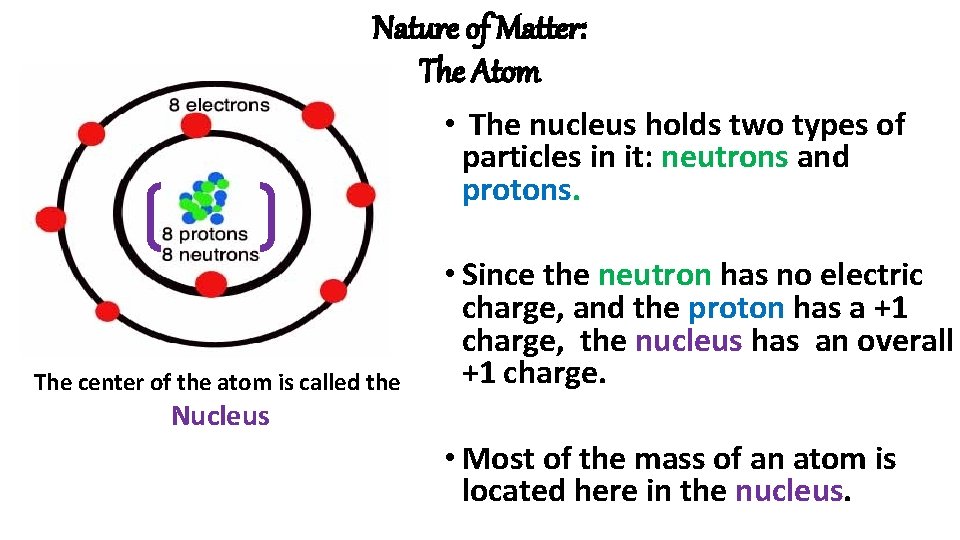
Nature of Matter: The Atom • The nucleus holds two types of particles in it: neutrons and protons. The center of the atom is called the • Since the neutron has no electric charge, and the proton has a +1 charge, the nucleus has an overall +1 charge. Nucleus • Most of the mass of an atom is located here in the nucleus.
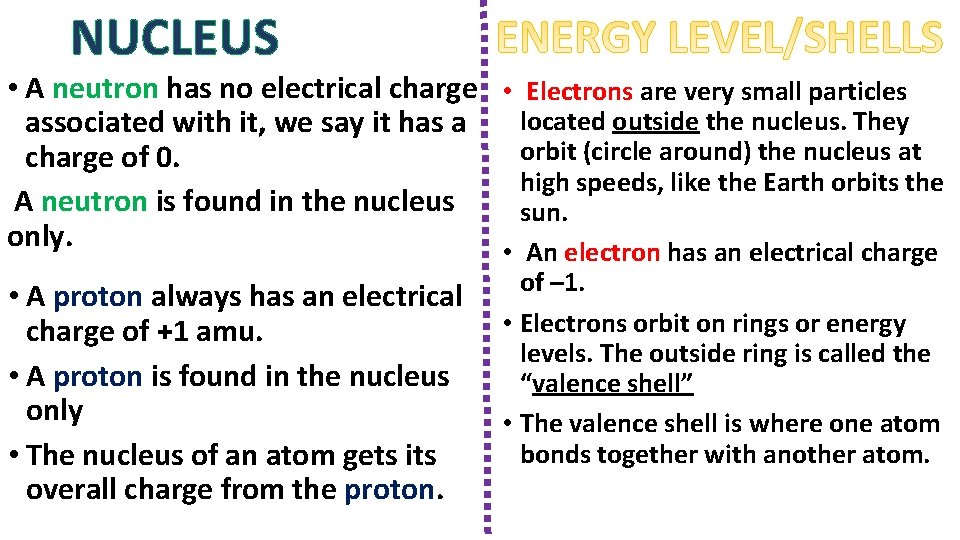
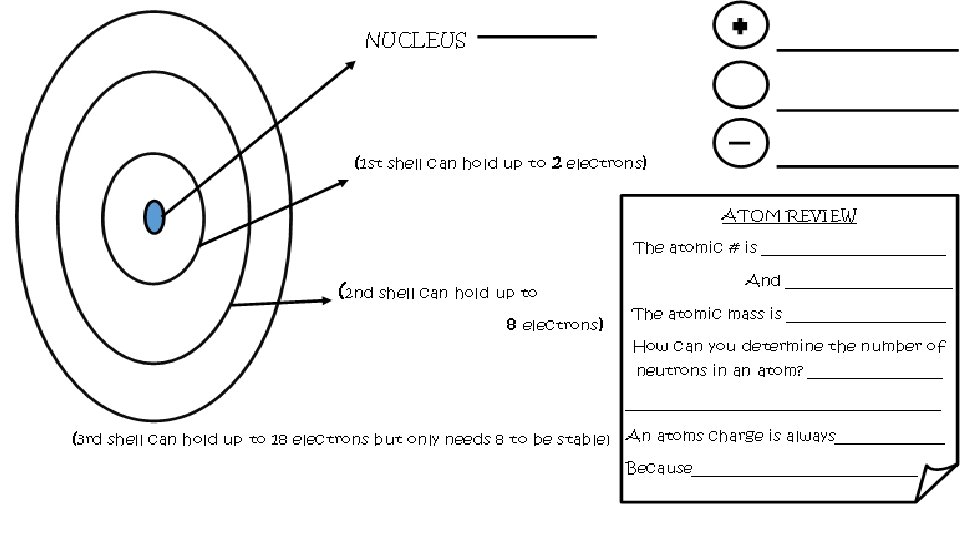
NUCLEUS • A neutron has no electrical charge • Electrons are very small particles located outside the nucleus. They associated with it, we say it has a orbit (circle around) the nucleus at charge of 0. high speeds, like the Earth orbits the A neutron is found in the nucleus sun. only. • An electron has an electrical charge • A proton always has an electrical charge of +1 amu. • A proton is found in the nucleus only • The nucleus of an atom gets its overall charge from the proton. of – 1. • Electrons orbit on rings or energy levels. The outside ring is called the “valence shell” • The valence shell is where one atom bonds together with another atom.
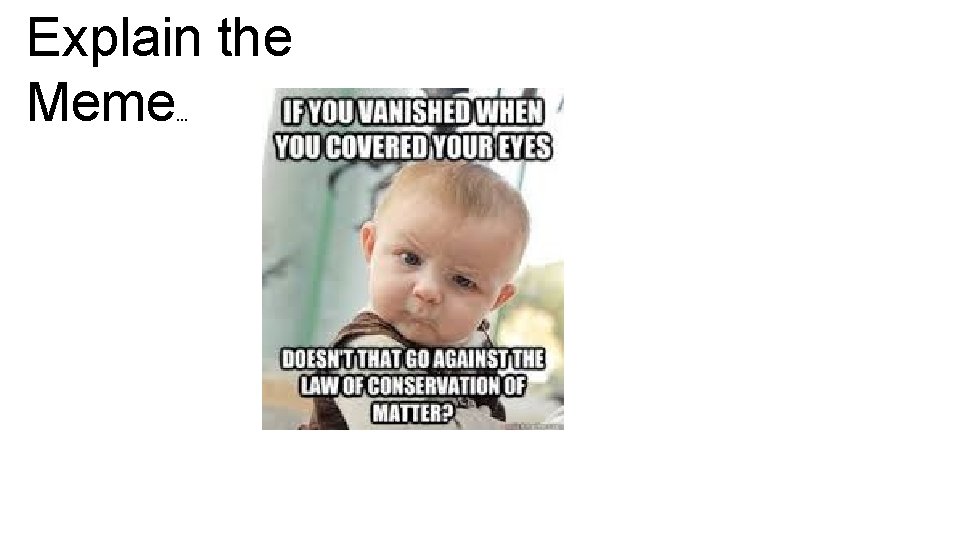
Explain the Meme …
- Slides: 17