
Atoms and Minerals Magnet and Iron and slide
- Slides: 60
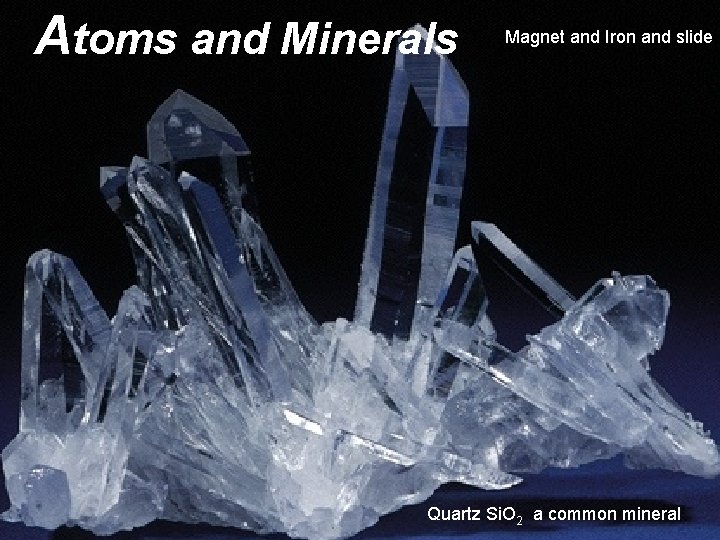
Atoms and Minerals Magnet and Iron and slide Quartz Si. O 2 a common mineral
Minerals: Building blocks of rocks • Definition of a mineral: • Naturally occurring • Inorganic solid • Ordered internal molecular structure • Definite chemical composition • Definition of a rock: • A solid aggregate or mass of minerals
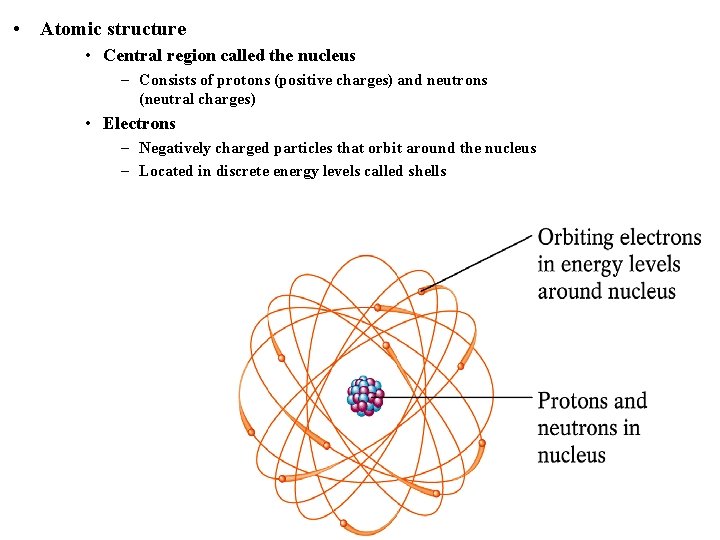
• Atomic structure • Central region called the nucleus – Consists of protons (positive charges) and neutrons (neutral charges) • Electrons – Negatively charged particles that orbit around the nucleus – Located in discrete energy levels called shells
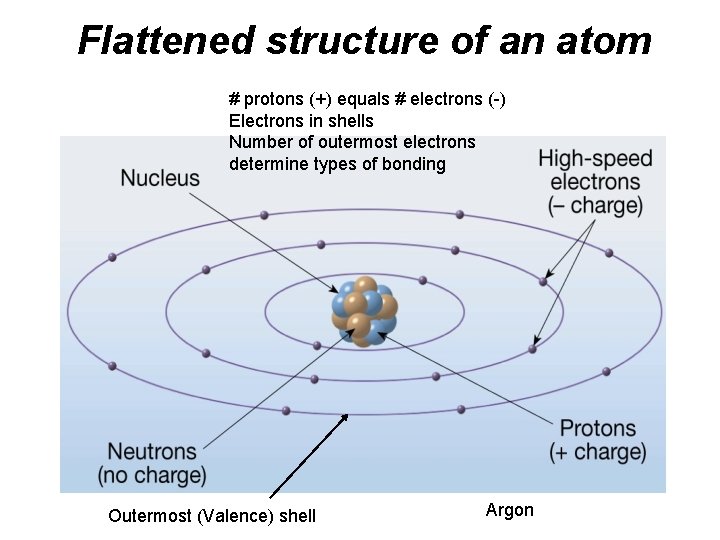
Flattened structure of an atom # protons (+) equals # electrons (-) Electrons in shells Number of outermost electrons determine types of bonding Outermost (Valence) shell Argon
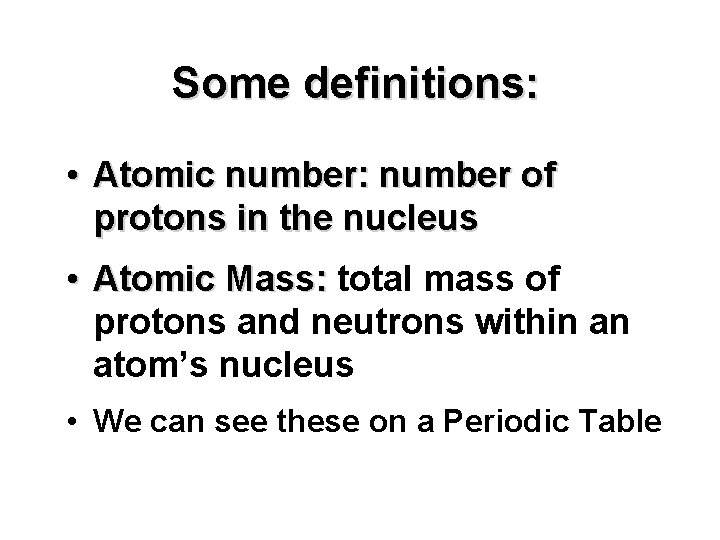
Some definitions: • Atomic number: number of protons in the nucleus • Atomic Mass: total mass of protons and neutrons within an atom’s nucleus • We can see these on a Periodic Table
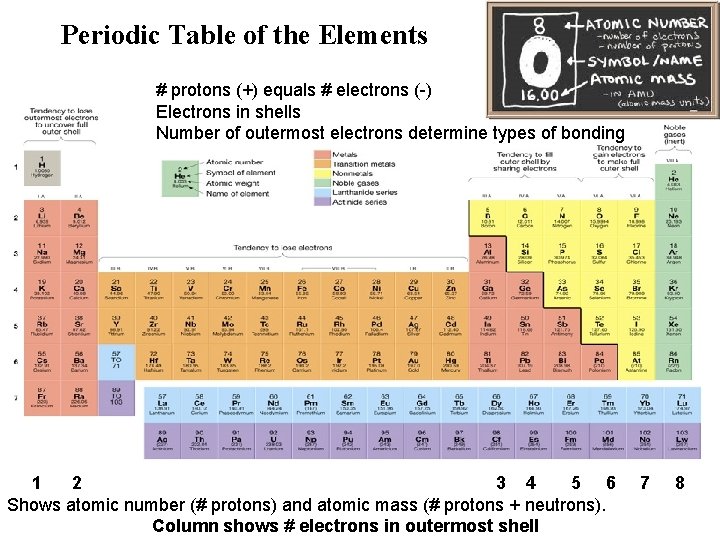
Periodic Table of the Elements # protons (+) equals # electrons (-) Electrons in shells Number of outermost electrons determine types of bonding 1 2 3 4 5 6 Shows atomic number (# protons) and atomic mass (# protons + neutrons). Column shows # electrons in outermost shell 7 8
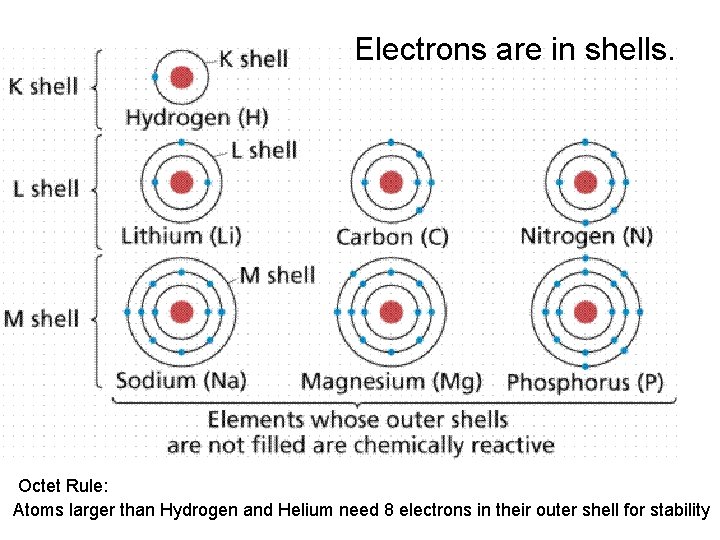
Electrons are in shells. Octet Rule: Atoms larger than Hydrogen and Helium need 8 electrons in their outer shell for stability
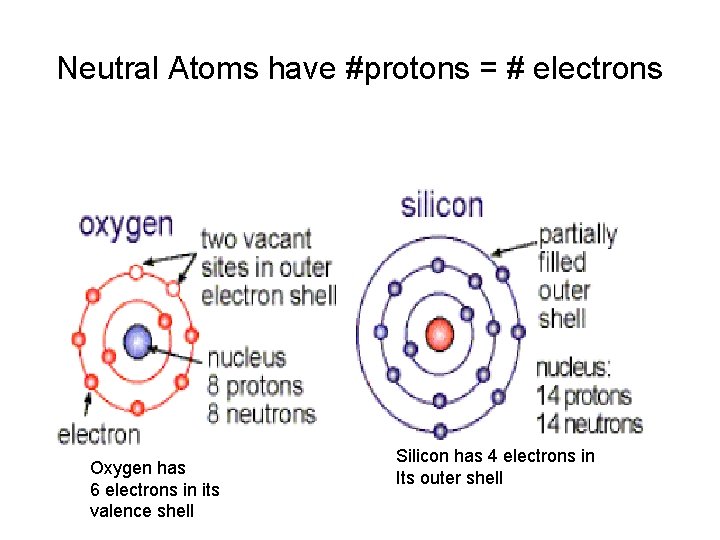
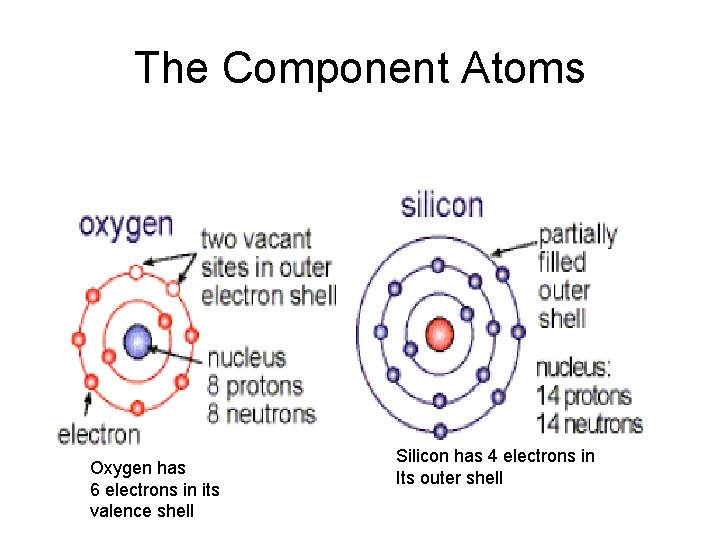
Neutral Atoms have #protons = # electrons Oxygen has 6 electrons in its valence shell Silicon has 4 electrons in Its outer shell
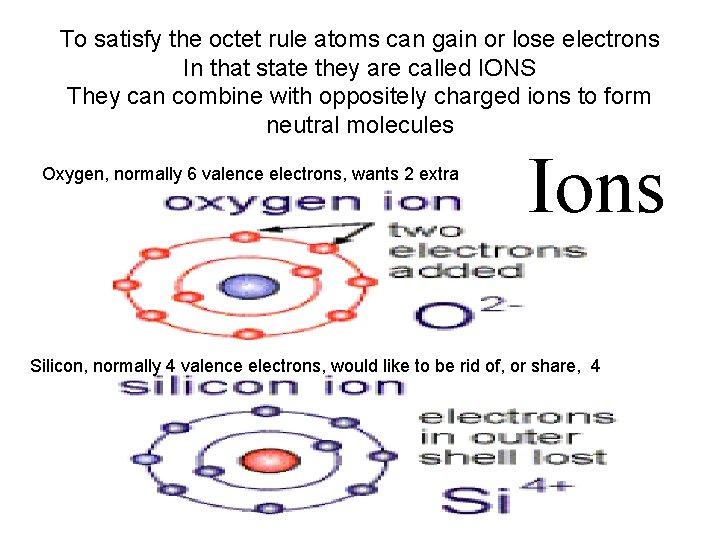
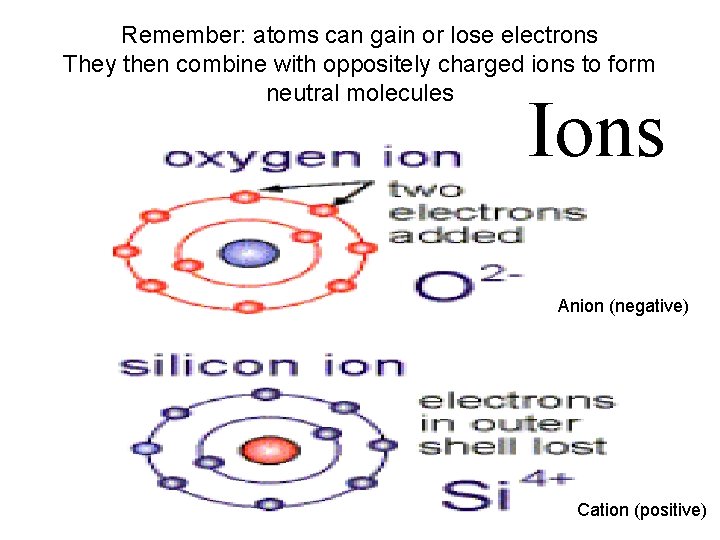
To satisfy the octet rule atoms can gain or lose electrons In that state they are called IONS They can combine with oppositely charged ions to form neutral molecules Oxygen, normally 6 valence electrons, wants 2 extra Ions Silicon, normally 4 valence electrons, would like to be rid of, or share, 4
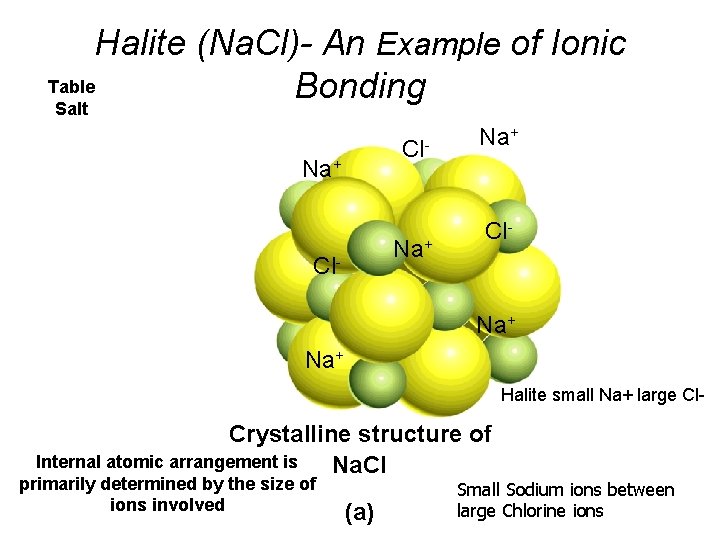
Chemical Bonding 1: Ionic • Chemical bonding • Formation of a compound by combining two or more atoms • Ionic bonding • Atoms gain or lose outermost (valence) electrons to form ions • Ionic compounds consist of an orderly arrangement of oppositely charged ions • Usually Columns I (alkali metals e. g. Na) and VII (halogens e. g. Cl)
Halite (Na. Cl)- An Example of Ionic Table Bonding Salt Cl- Na+ Na+ Halite small Na+ large Cl- Crystalline structure of Internal atomic arrangement is Na. Cl primarily determined by the size of ions involved (a) Small Sodium ions between large Chlorine ions
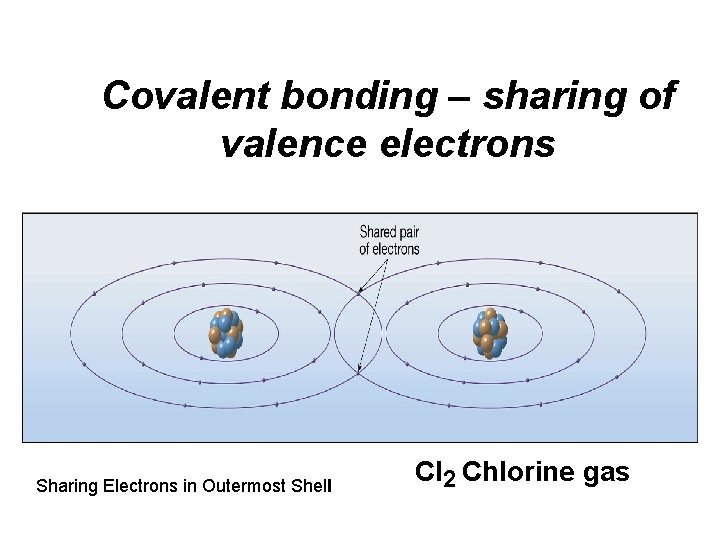
Covalent bonding – sharing of valence electrons Sharing Electrons in Outermost Shell Cl 2 Chlorine gas
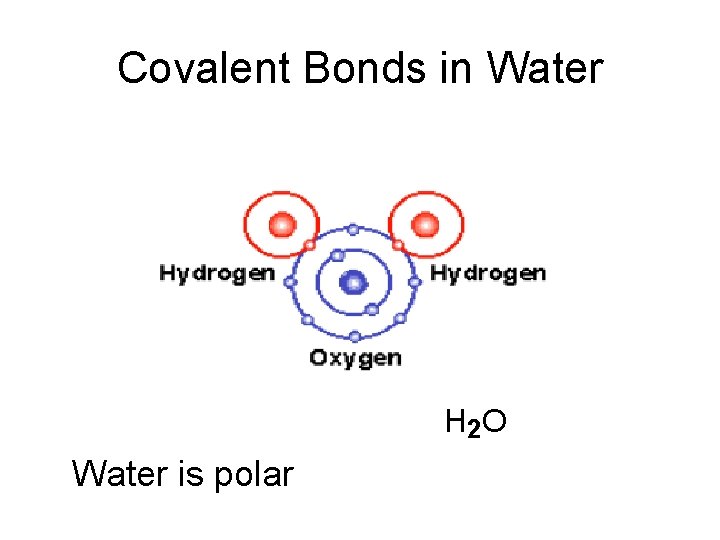
Covalent Bonds in Water H 2 O Water is polar
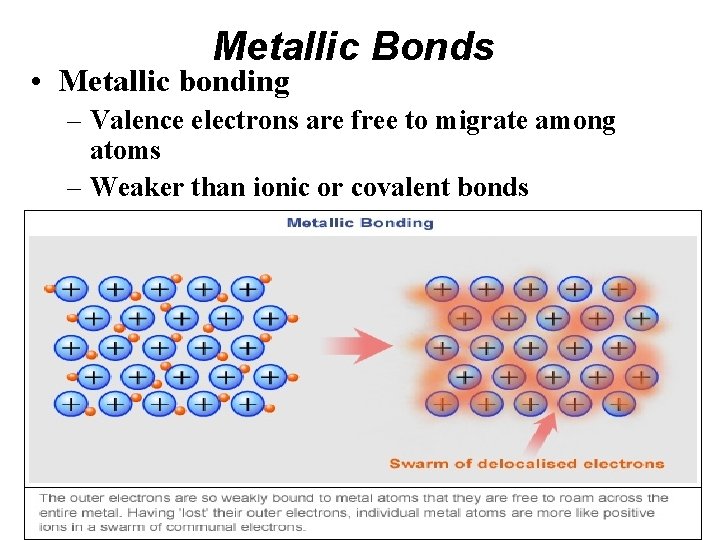
Metallic Bonds • Metallic bonding – Valence electrons are free to migrate among atoms – Weaker than ionic or covalent bonds
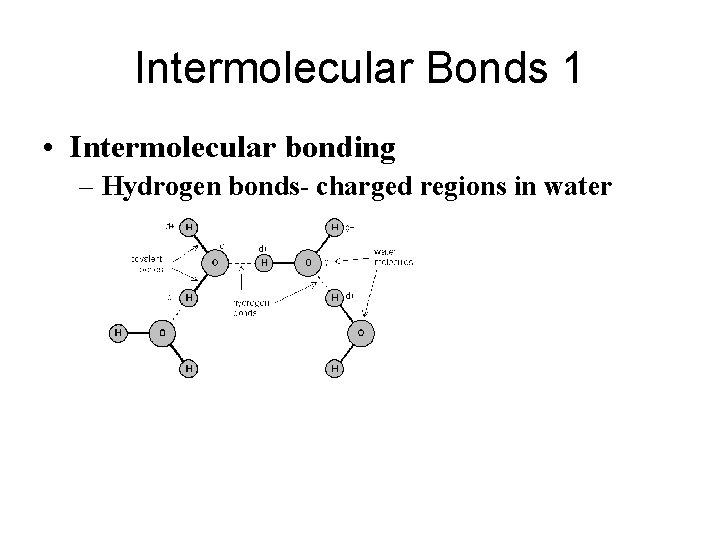
Intermolecular Bonds 1 • Intermolecular bonding – Hydrogen bonds- charged regions in water
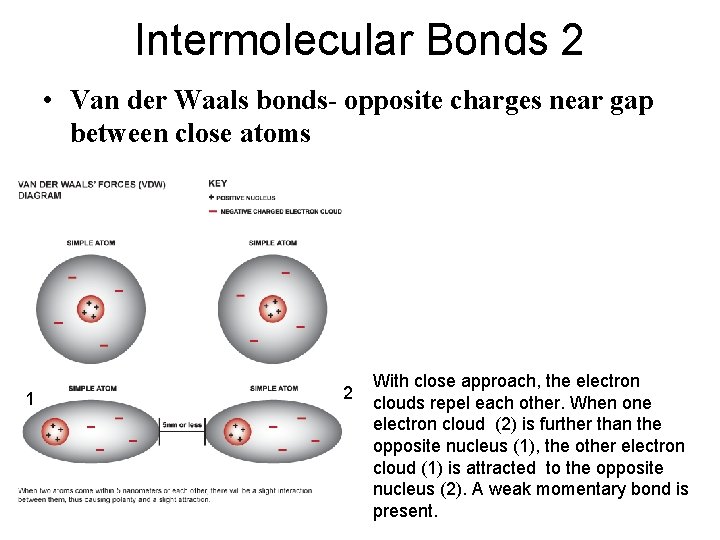
Intermolecular Bonds 2 • Van der Waals bonds- opposite charges near gap between close atoms 1 2 With close approach, the electron clouds repel each other. When one electron cloud (2) is further than the opposite nucleus (1), the other electron cloud (1) is attracted to the opposite nucleus (2). A weak momentary bond is present.
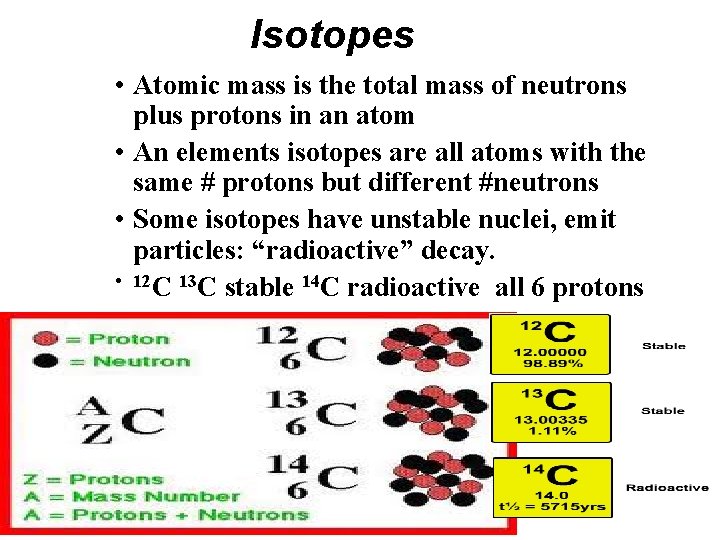
Isotopes • Atomic mass is the total mass of neutrons plus protons in an atom • An elements isotopes are all atoms with the same # protons but different #neutrons • Some isotopes have unstable nuclei, emit particles: “radioactive” decay. • 12 C 13 C stable 14 C radioactive all 6 protons
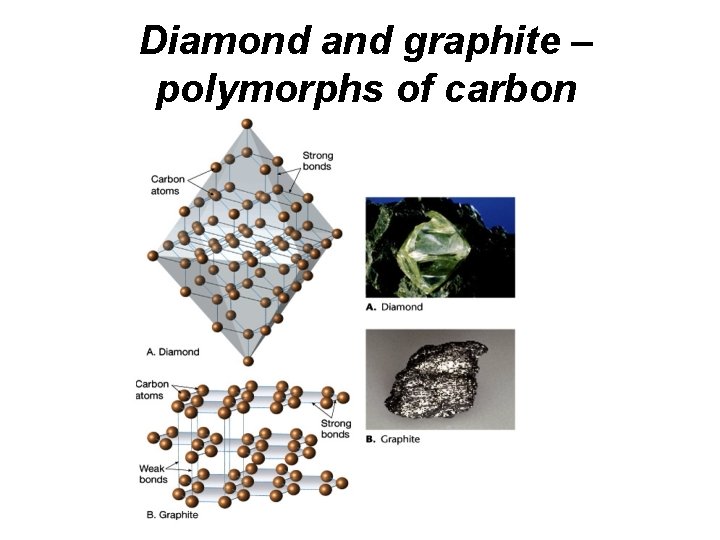
Structure of minerals • Polymorphs • Two or more minerals with the same chemical composition but different crystalline structures • Diamond and graphite (both carbon) are good examples of polymorphs » The transformation of one polymorph to another is called a phase change » Example: Graphite in a High Pressure Cell Makes Diamond • Some polymorphs make good PT* indicators *We can measure the Temperature and Pressure a mineral experienced when it formed in the past
Diamond and graphite – polymorphs of carbon
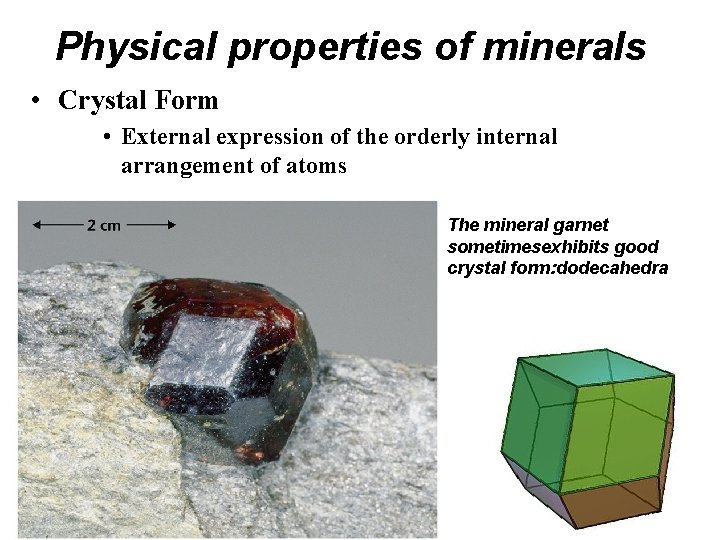
Physical properties of minerals • Crystal Form • External expression of the orderly internal arrangement of atoms The mineral garnet sometimesexhibits good crystal form: dodecahedra
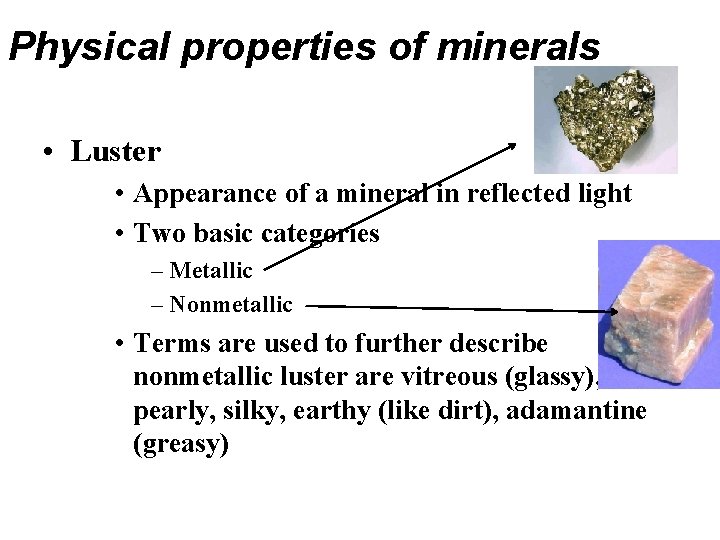
Physical properties of minerals • Luster • Appearance of a mineral in reflected light • Two basic categories – Metallic – Nonmetallic • Terms are used to further describe nonmetallic luster are vitreous (glassy), pearly, silky, earthy (like dirt), adamantine (greasy)
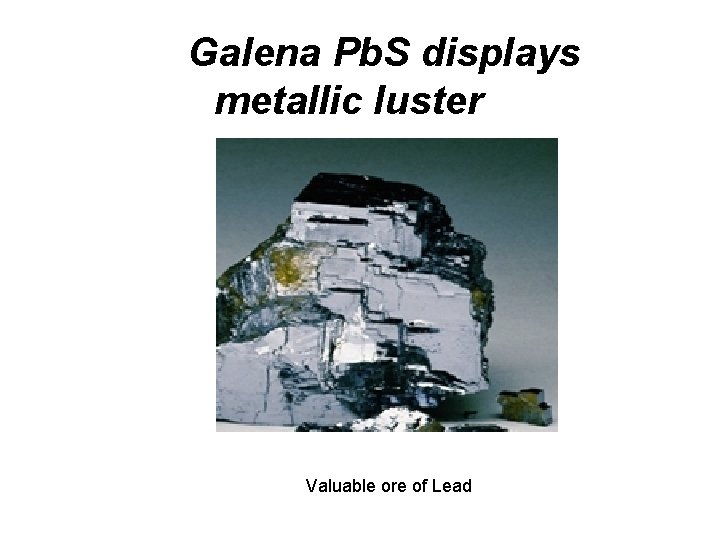
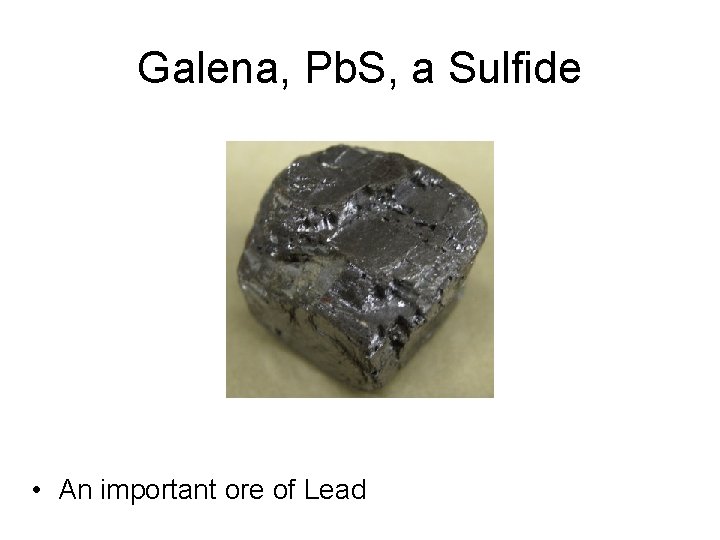
Galena Pb. S displays metallic luster Valuable ore of Lead
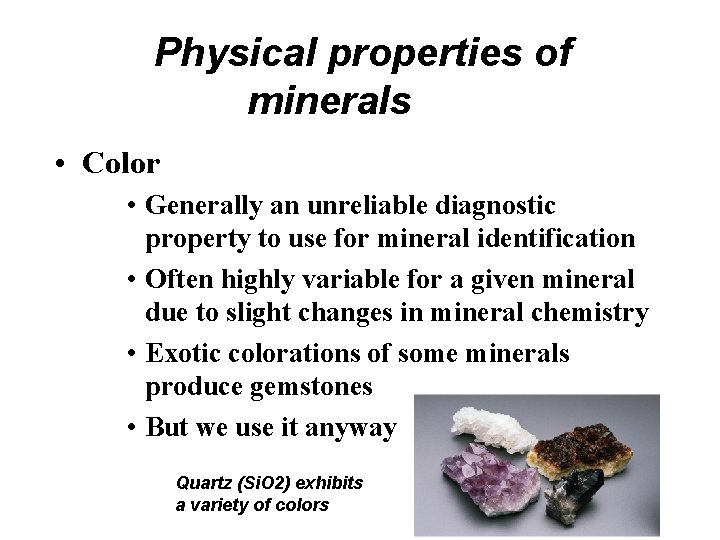
Physical properties of minerals • Color • Generally an unreliable diagnostic property to use for mineral identification • Often highly variable for a given mineral due to slight changes in mineral chemistry • Exotic colorations of some minerals produce gemstones • But we use it anyway Quartz (Si. O 2) exhibits a variety of colors
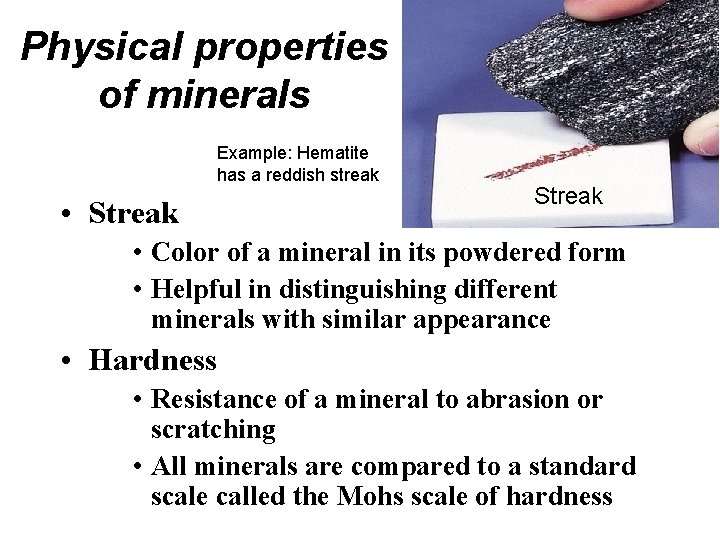
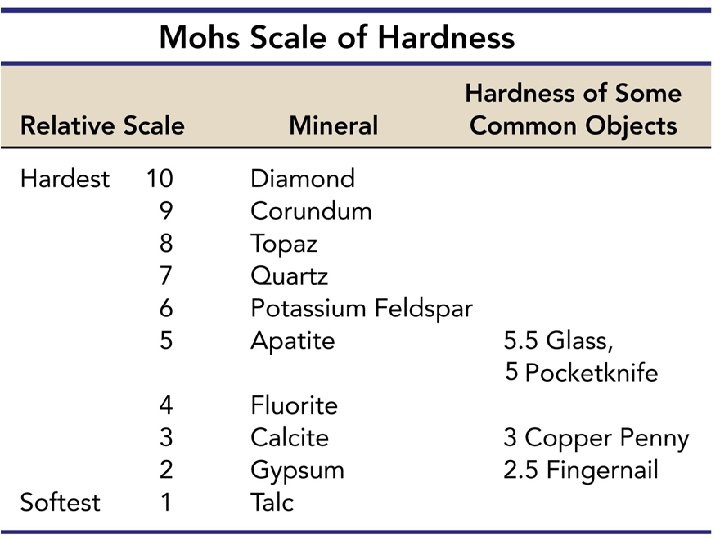
Physical properties of minerals Example: Hematite has a reddish streak • Streak • Color of a mineral in its powdered form • Helpful in distinguishing different minerals with similar appearance • Hardness • Resistance of a mineral to abrasion or scratching • All minerals are compared to a standard scale called the Mohs scale of hardness
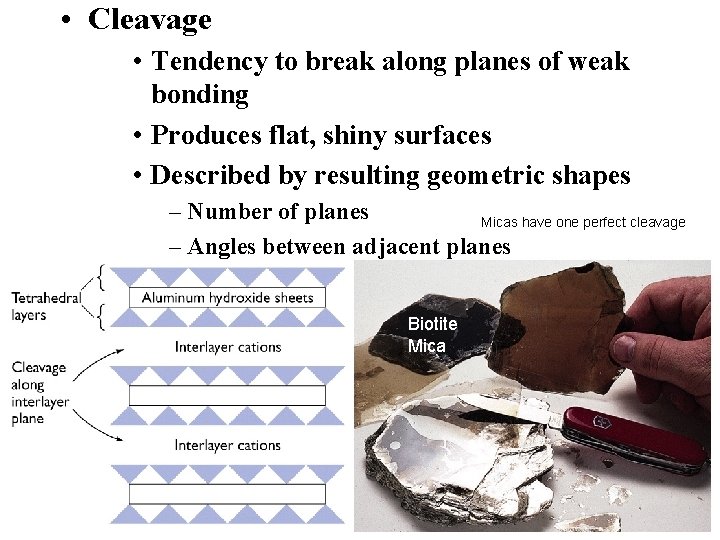
• Cleavage • Tendency to break along planes of weak bonding • Produces flat, shiny surfaces • Described by resulting geometric shapes – Number of planes Micas have one perfect cleavage – Angles between adjacent planes Biotite Mica
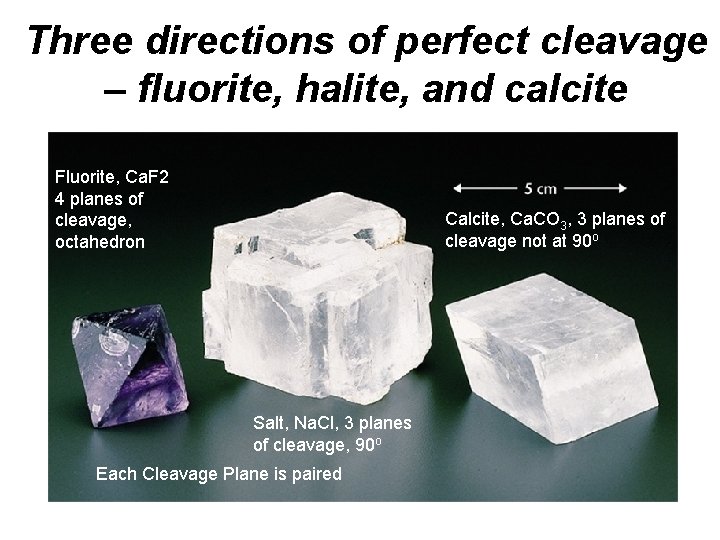
Three directions of perfect cleavage – fluorite, halite, and calcite Fluorite, Ca. F 2 4 planes of cleavage, octahedron Calcite, Ca. CO 3, 3 planes of cleavage not at 90 o Salt, Na. Cl, 3 planes of cleavage, 90 o Each Cleavage Plane is paired
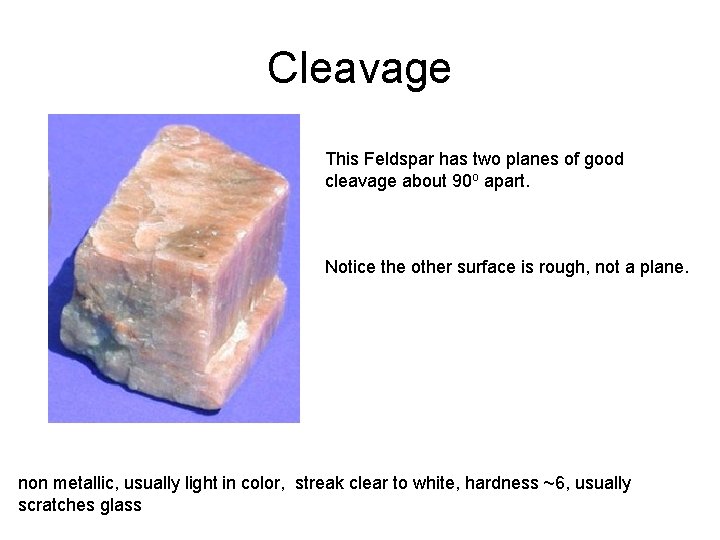
Cleavage This Feldspar has two planes of good cleavage about 90 o apart. Notice the other surface is rough, not a plane. non metallic, usually light in color, streak clear to white, hardness ~6, usually scratches glass
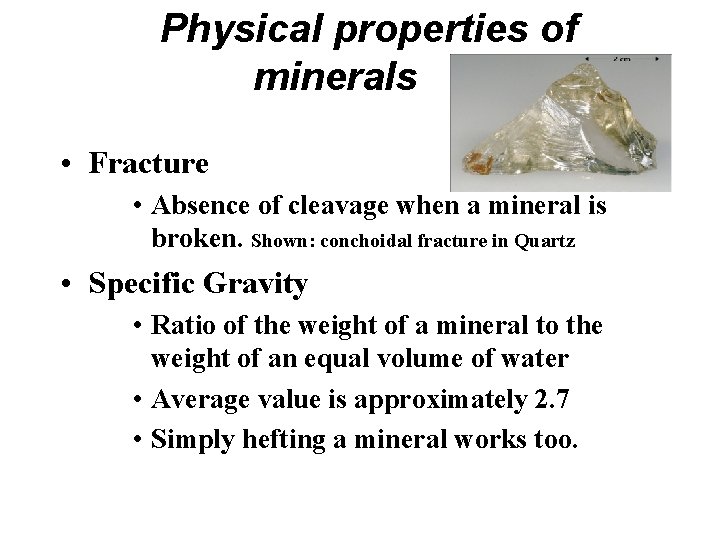
Physical properties of minerals • Fracture • Absence of cleavage when a mineral is broken. Shown: conchoidal fracture in Quartz • Specific Gravity • Ratio of the weight of a mineral to the weight of an equal volume of water • Average value is approximately 2. 7 • Simply hefting a mineral works too.
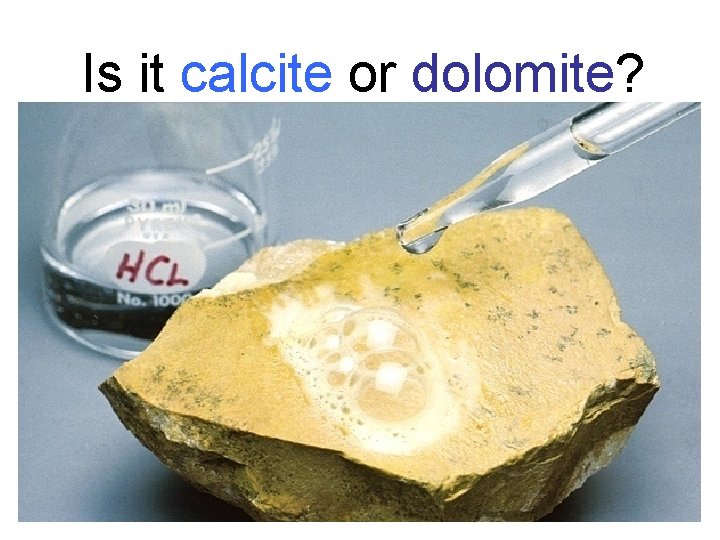
Physical properties of minerals • Other properties • Magnetism • Reaction to hydrochloric acid • Malleability • Double refraction • Taste • Smell • Elasticity
Is it calcite or dolomite?
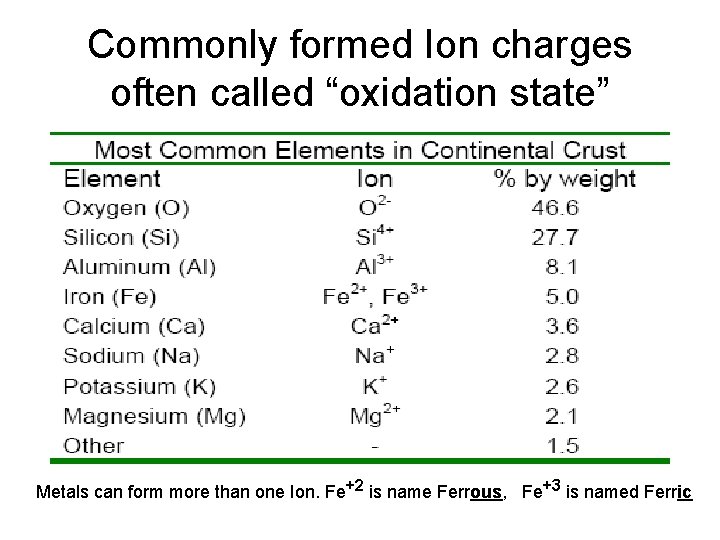
Classification of Minerals • Nearly 4000 minerals have been identified on Earth (We discuss a few) • Rock-forming minerals • Common minerals that make up most of the rocks of Earth’s crust • Only a few dozen members • Composed mainly of the 8 elements that make up 98% of the continental crust
Commonly formed Ion charges often called “oxidation state” Metals can form more than one Ion. Fe+2 is name Ferrous, Fe+3 is named Ferric
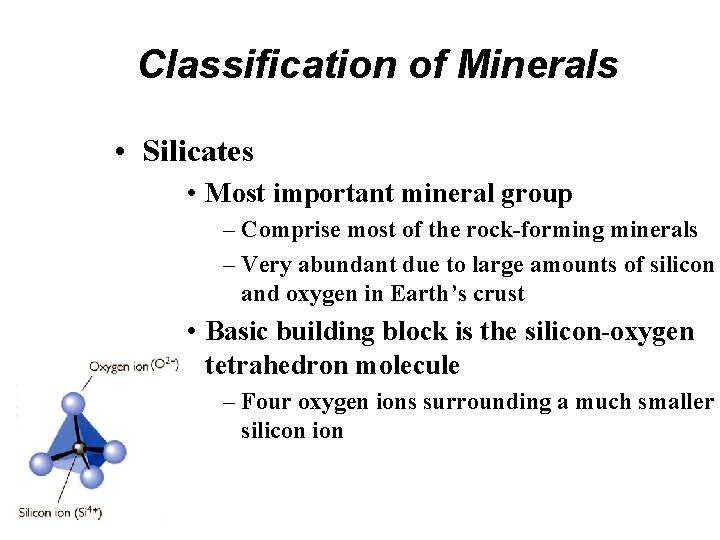
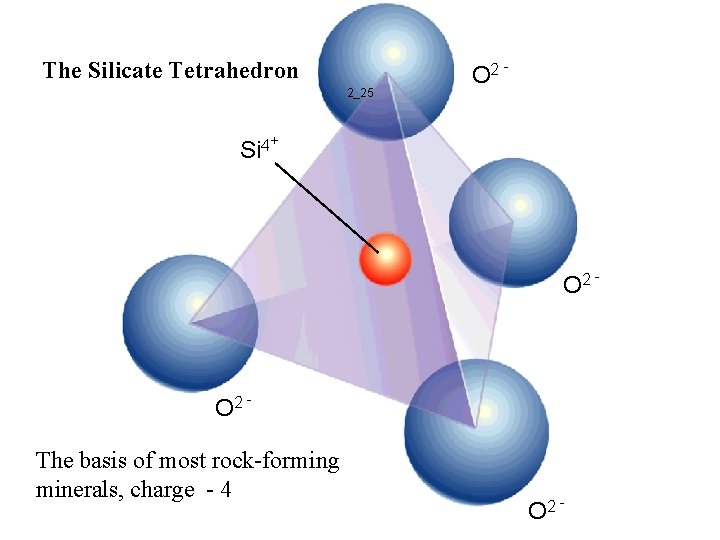
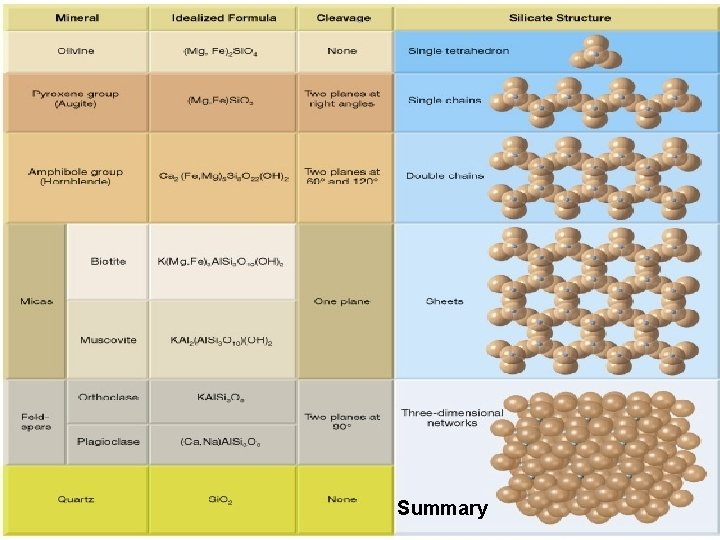
Classification of Minerals • Silicates • Most important mineral group – Comprise most of the rock-forming minerals – Very abundant due to large amounts of silicon and oxygen in Earth’s crust • Basic building block is the silicon-oxygen tetrahedron molecule – Four oxygen ions surrounding a much smaller silicon ion
The Component Atoms Oxygen has 6 electrons in its valence shell Silicon has 4 electrons in Its outer shell
Remember: atoms can gain or lose electrons They then combine with oppositely charged ions to form neutral molecules Ions Anion (negative) Cation (positive)
The Silicate Tetrahedron 2_25 O 2 - Si 4+ O 2 - O 2 The basis of most rock-forming minerals, charge - 4 O 2 -
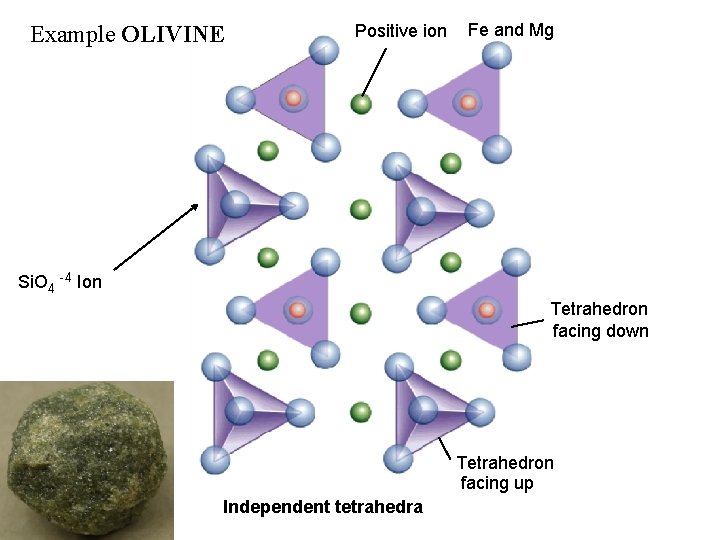
Silicate Bonding I • Oxygen O atoms may obtain electrons from Si atoms, producing the Si. O 4 -4 Ion. • The negative charge is balanced by positive metal ions. • This occurs in Olivine, (Fe, Mg)2 Si. O 4, a high temperature Fe-Mg silicate. Forms of this mineral are stable 100’s of kilometers below Earth’s surface. • Sort of Ionic Bond
Example OLIVINE Positive ion Fe and Mg Si. O 4 -4 Ion Tetrahedron facing down Tetrahedron facing up Independent tetrahedra
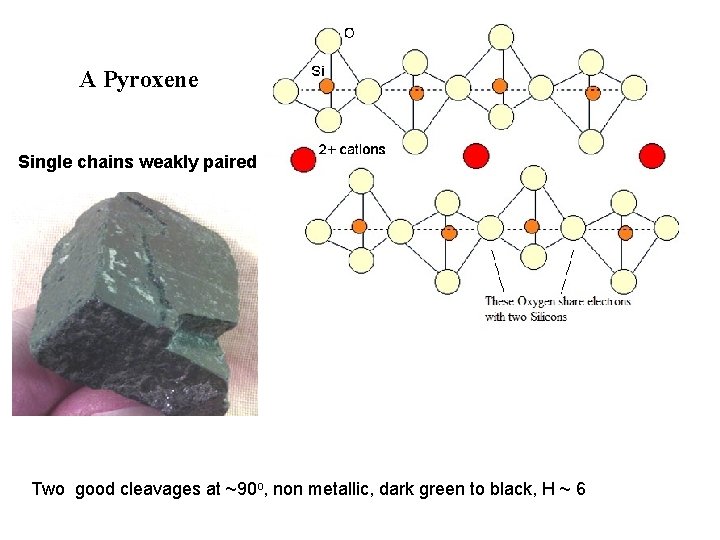
Silicate Bonding II • Alternately, the oxygen atoms may complete their outer electron shells by sharing electrons with two Silicon atoms in nearby silicon tetrahedra. • A sort of covalent bond
A Pyroxene Single chains weakly paired Two good cleavages at ~90 o, non metallic, dark green to black, H ~ 6
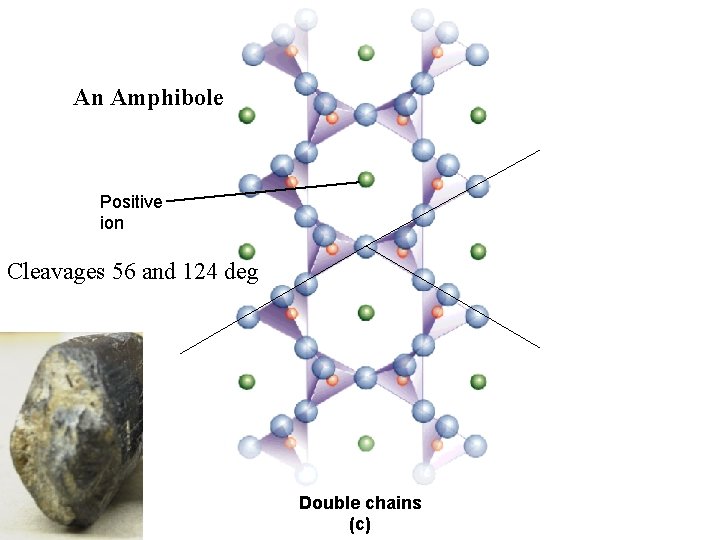
2_26 c An Amphibole Positive ion Cleavages 56 and 124 deg Double chains (c)
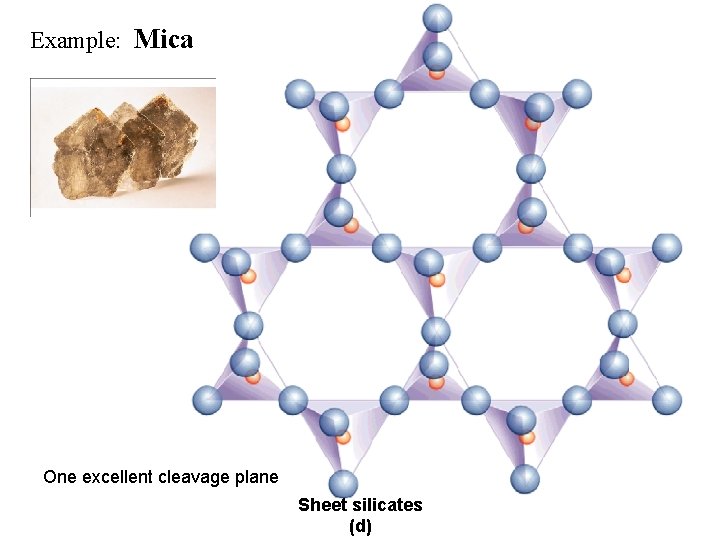
Example: Mica One excellent cleavage plane Sheet silicates (d)
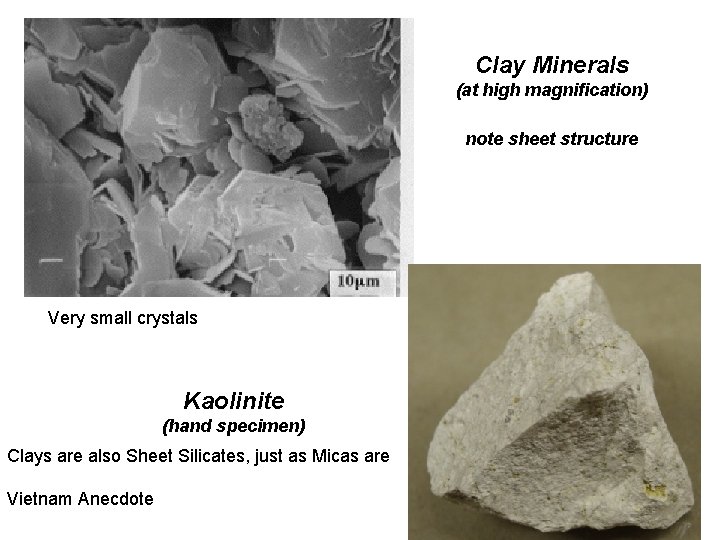
Clay Minerals (at high magnification) note sheet structure Very small crystals Kaolinite (hand specimen) Clays are also Sheet Silicates, just as Micas are Vietnam Anecdote
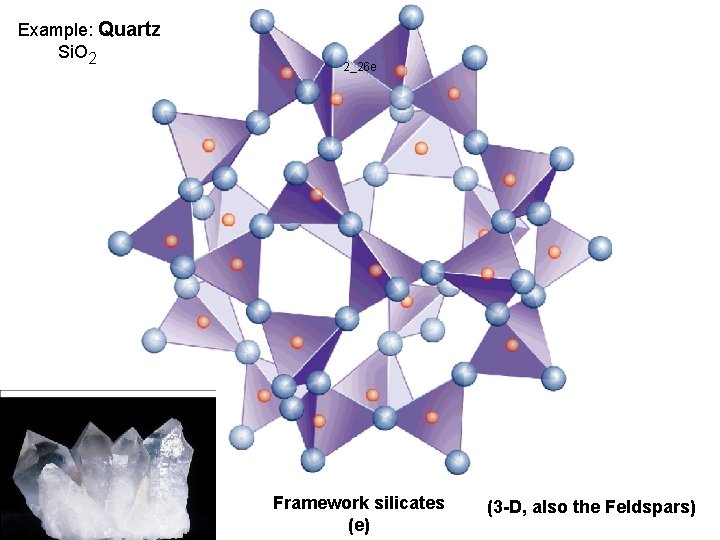
Example: Quartz Si. O 2 2_26 e Framework silicates (e) (3 -D, also the Feldspars)
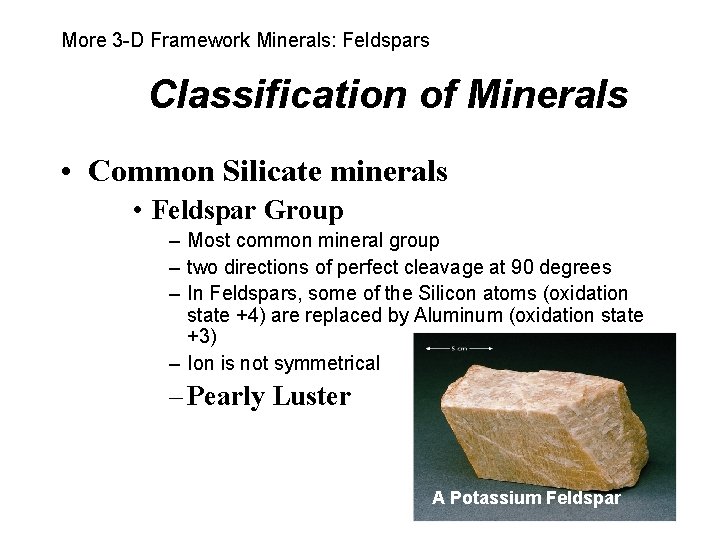
More 3 -D Framework Minerals: Feldspars Classification of Minerals • Common Silicate minerals • Feldspar Group – Most common mineral group – two directions of perfect cleavage at 90 degrees – In Feldspars, some of the Silicon atoms (oxidation state +4) are replaced by Aluminum (oxidation state +3) – Ion is not symmetrical – Pearly Luster A Potassium Feldspar
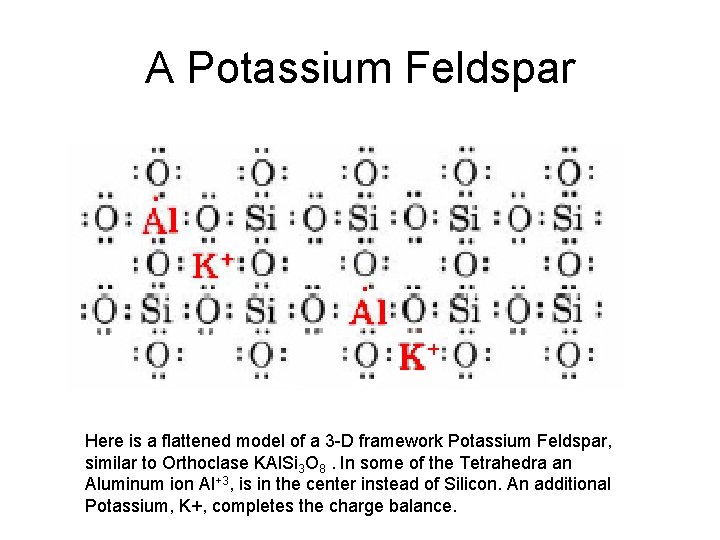
A Potassium Feldspar Here is a flattened model of a 3 -D framework Potassium Feldspar, similar to Orthoclase KAl. Si 3 O 8. In some of the Tetrahedra an Aluminum ion Al+3, is in the center instead of Silicon. An additional Potassium, K+, completes the charge balance.
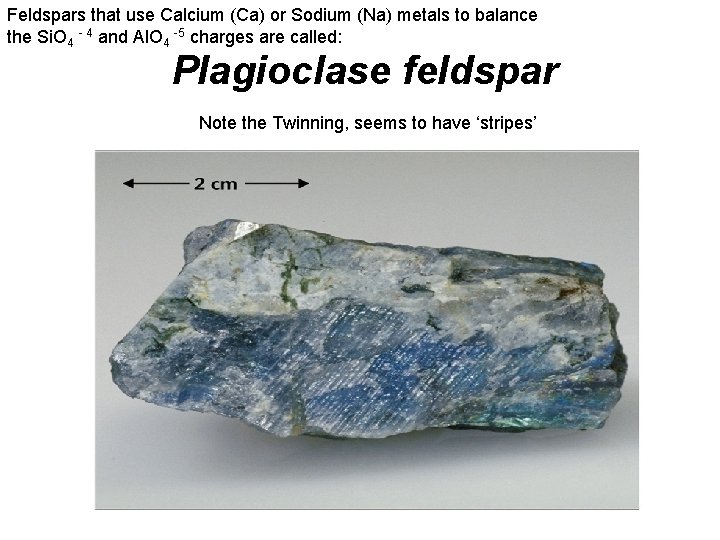
Feldspars that use Calcium (Ca) or Sodium (Na) metals to balance the Si. O 4 - 4 and Al. O 4 -5 charges are called: Plagioclase feldspar Note the Twinning, seems to have ‘stripes’
Summary
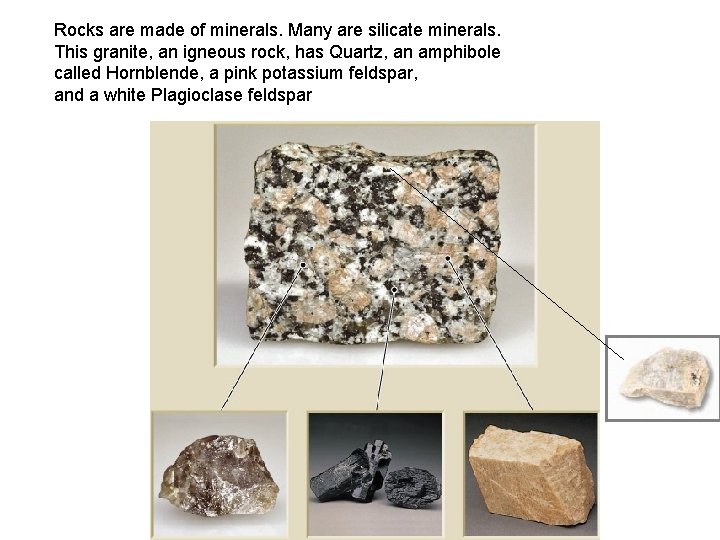
Rocks are made of minerals. Many are silicate minerals. This granite, an igneous rock, has Quartz, an amphibole called Hornblende, a pink potassium feldspar, and a white Plagioclase feldspar
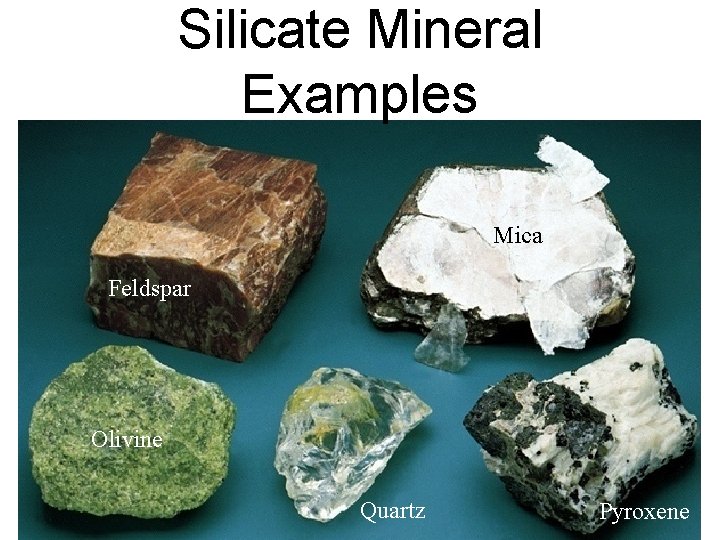
Silicate Mineral Examples Mica Feldspar Olivine Quartz Pyroxene
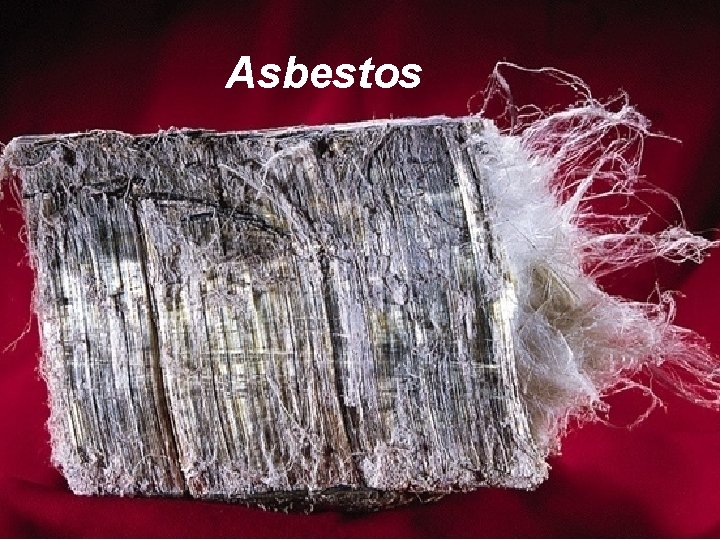
Asbestos
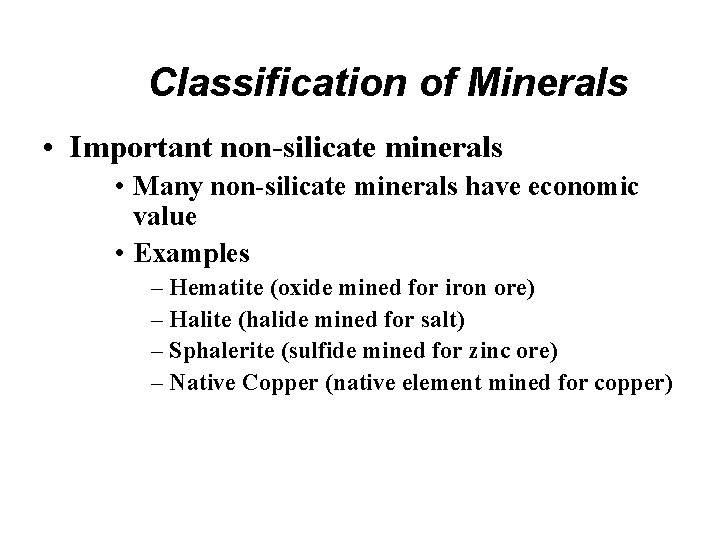
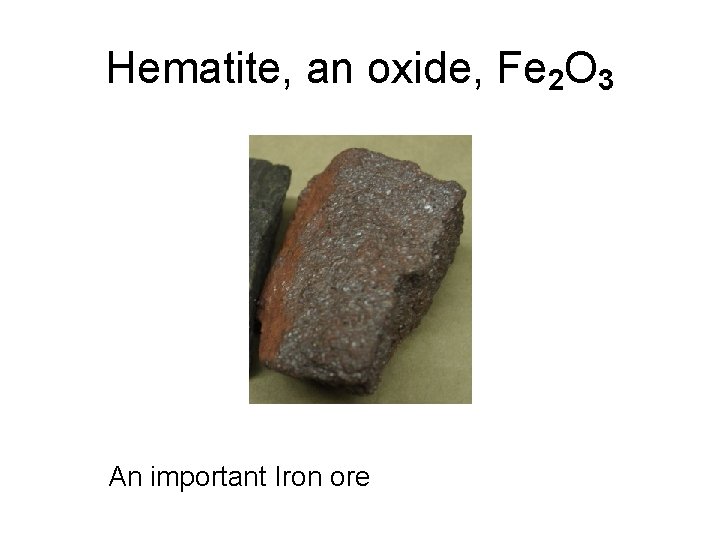
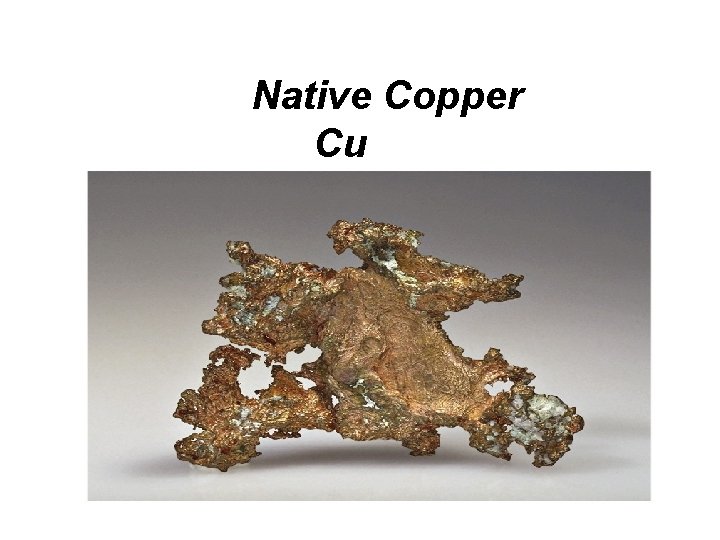
Classification of Minerals • Important non-silicate minerals • Many non-silicate minerals have economic value • Examples – Hematite (oxide mined for iron ore) – Halite (halide mined for salt) – Sphalerite (sulfide mined for zinc ore) – Native Copper (native element mined for copper)
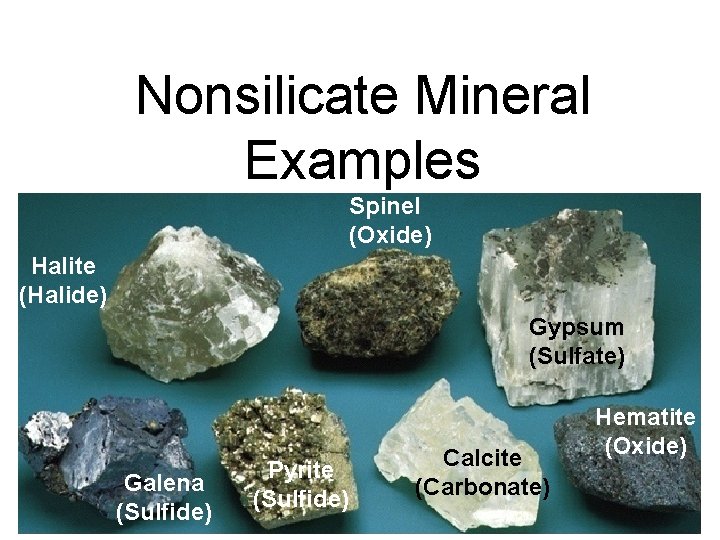
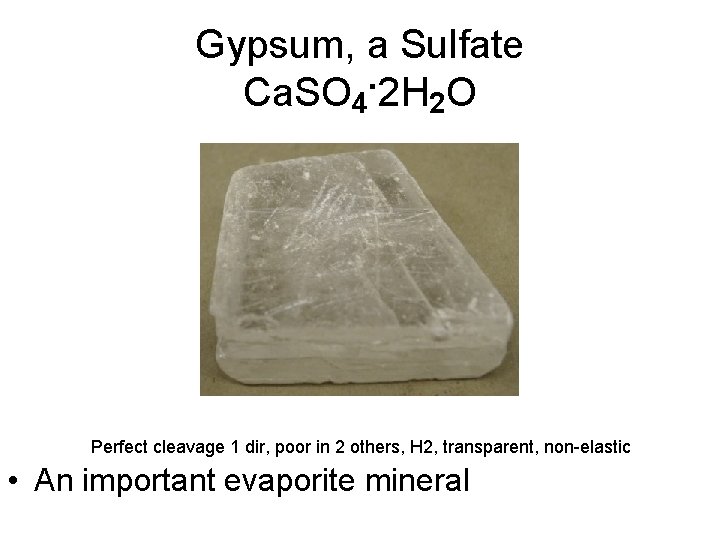
Nonsilicate Mineral Examples Spinel (Oxide) Halite (Halide) Gypsum (Sulfate) Galena (Sulfide) Pyrite (Sulfide) Calcite (Carbonate) Hematite (Oxide)
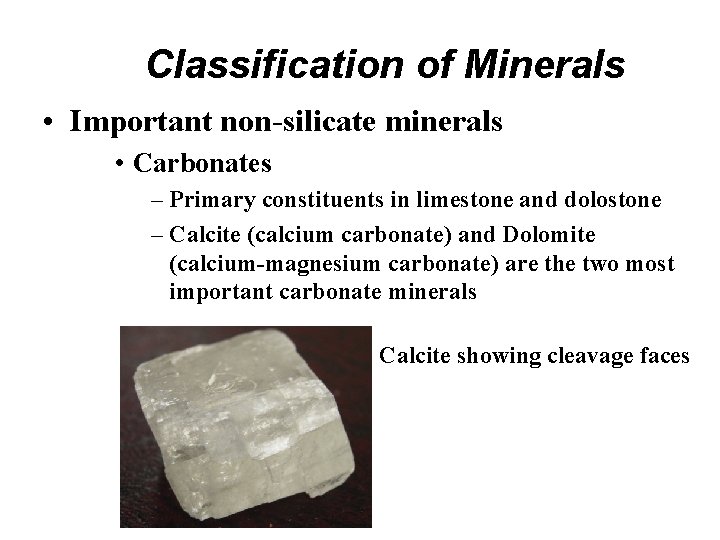
Classification of Minerals • Important non-silicate minerals • Carbonates – Primary constituents in limestone and dolostone – Calcite (calcium carbonate) and Dolomite (calcium-magnesium carbonate) are the two most important carbonate minerals Calcite showing cleavage faces
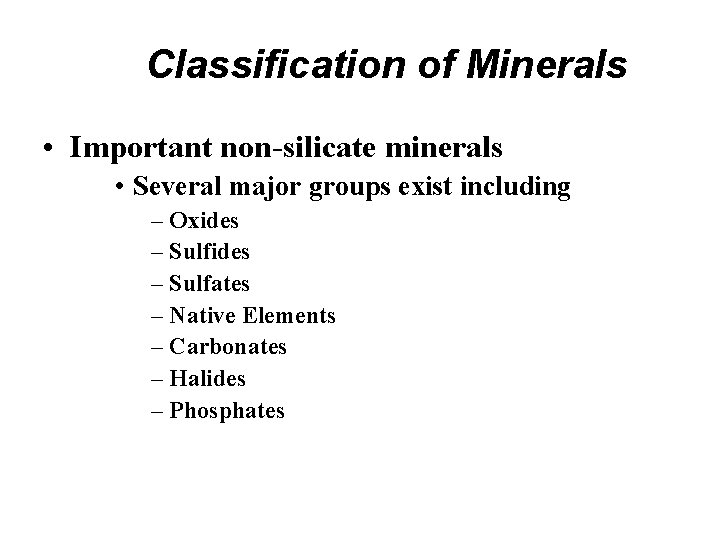
Classification of Minerals • Important non-silicate minerals • Several major groups exist including – Oxides – Sulfates – Native Elements – Carbonates – Halides – Phosphates
Hematite, an oxide, Fe 2 O 3 An important Iron ore
Galena, Pb. S, a Sulfide • An important ore of Lead
Gypsum, a Sulfate. Ca. SO 4 2 H 2 O Perfect cleavage 1 dir, poor in 2 others, H 2, transparent, non-elastic • An important evaporite mineral
Native Copper Cu