
Atomic transitions and electromagnetic waves The interaction of
- Slides: 11
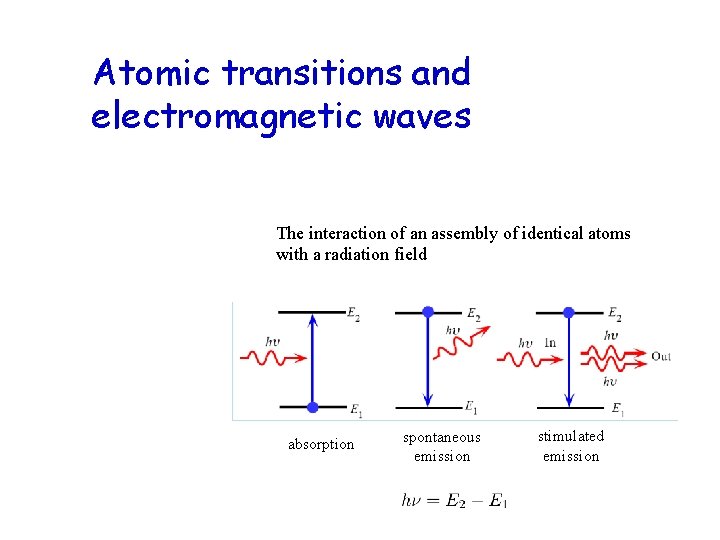
Atomic transitions and electromagnetic waves The interaction of an assembly of identical atoms with a radiation field absorption spontaneous emission stimulated emission
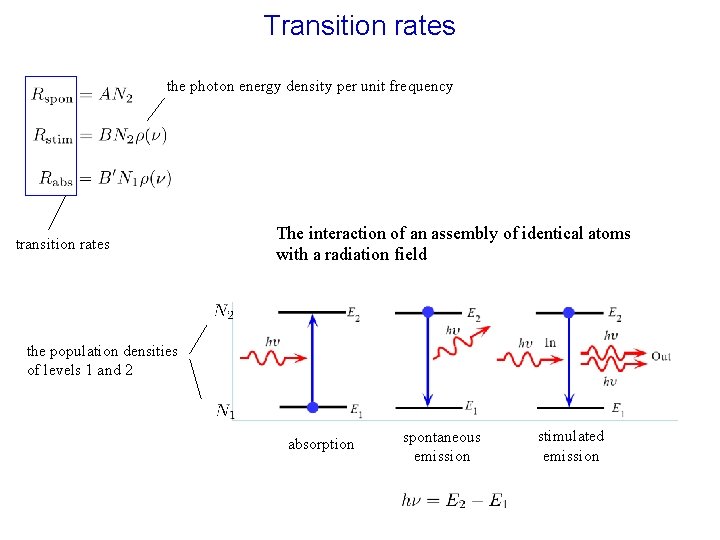
Transition rates the photon energy density per unit frequency transition rates The interaction of an assembly of identical atoms with a radiation field the population densities of levels 1 and 2 absorption spontaneous emission stimulated emission
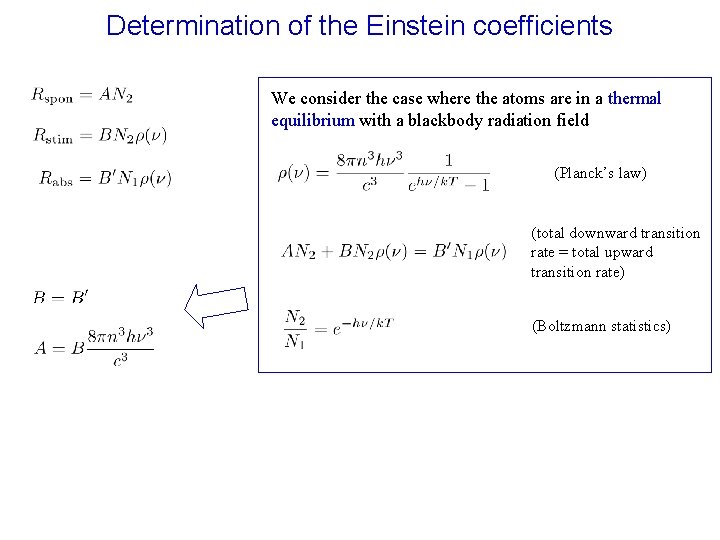
Determination of the Einstein coefficients We consider the case where the atoms are in a thermal equilibrium with a blackbody radiation field (Planck’s law) (total downward transition rate = total upward transition rate) (Boltzmann statistics)
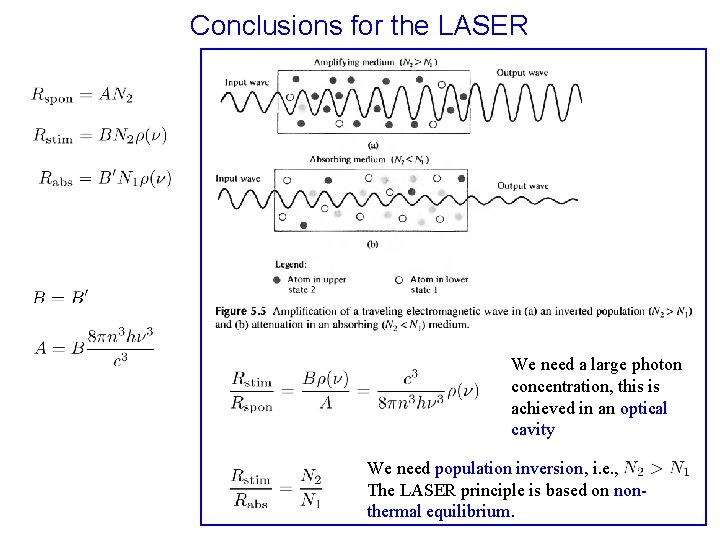
Conclusions for the LASER We need a large photon concentration, this is achieved in an optical cavity We need population inversion, i. e. , The LASER principle is based on nonthermal equilibrium.
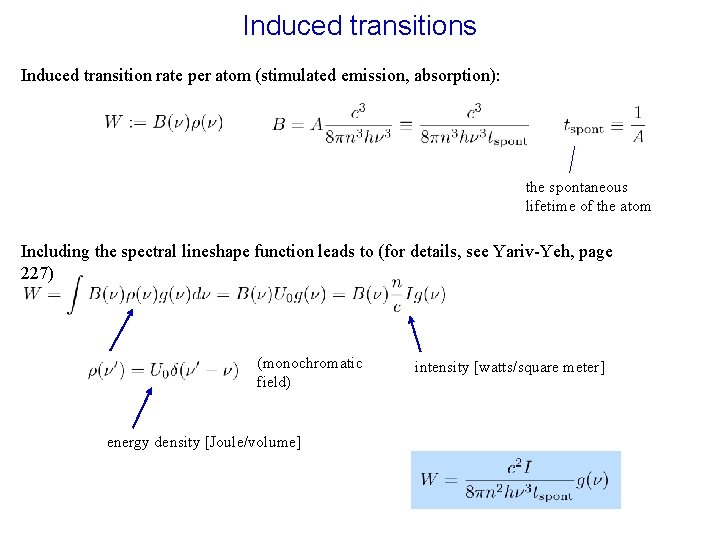
Induced transitions Induced transition rate per atom (stimulated emission, absorption): the spontaneous lifetime of the atom Including the spectral lineshape function leads to (for details, see Yariv-Yeh, page 227) (monochromatic field) energy density [Joule/volume] intensity [watts/square meter]
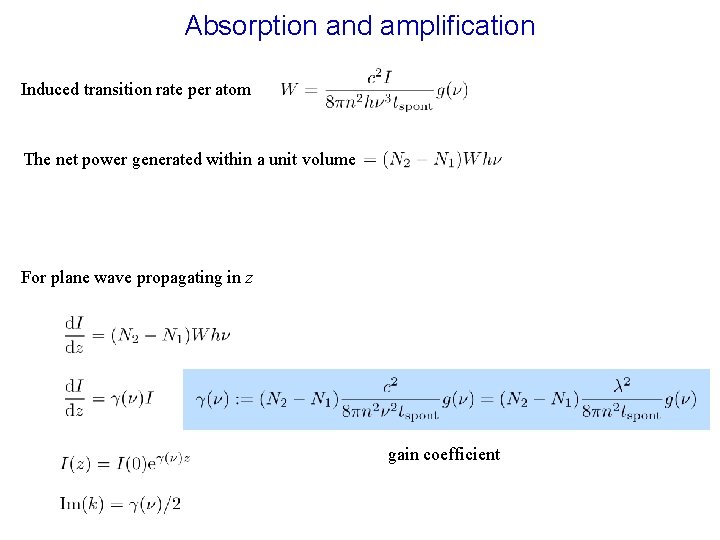
Absorption and amplification Induced transition rate per atom The net power generated within a unit volume For plane wave propagating in z gain coefficient
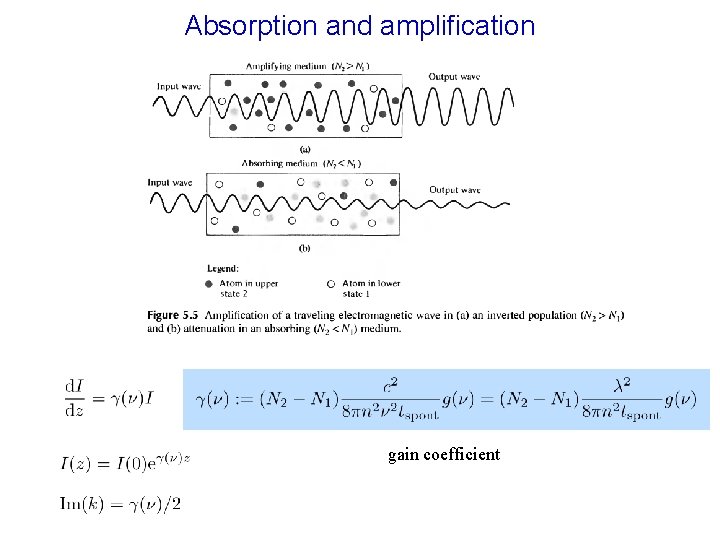
Absorption and amplification gain coefficient
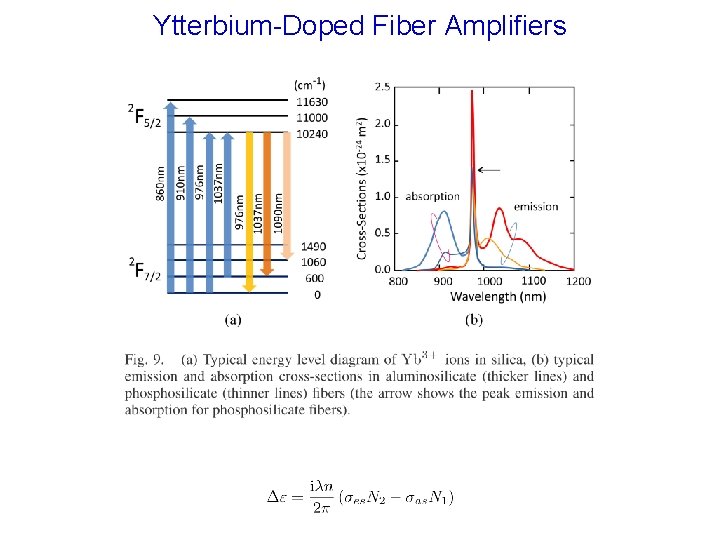
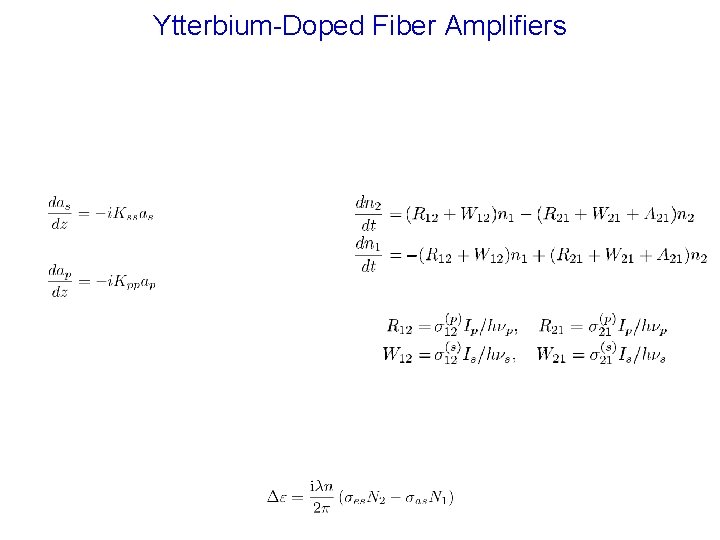
Ytterbium-Doped Fiber Amplifiers
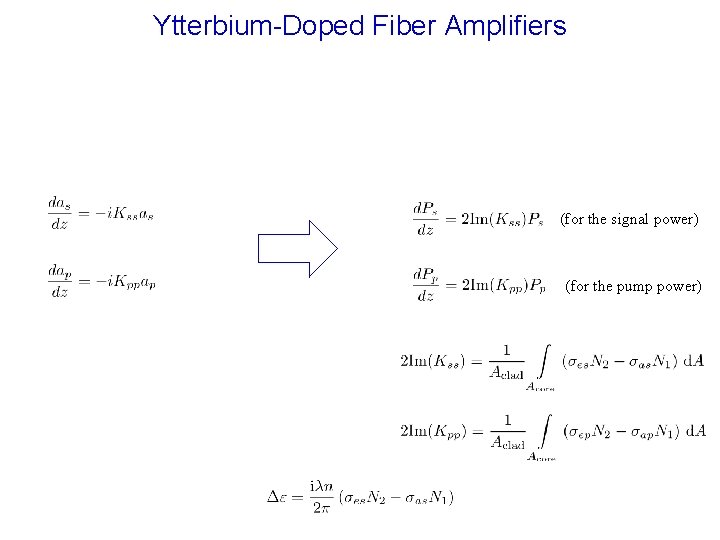
Ytterbium-Doped Fiber Amplifiers
Ytterbium-Doped Fiber Amplifiers (for the signal power) (for the pump power)
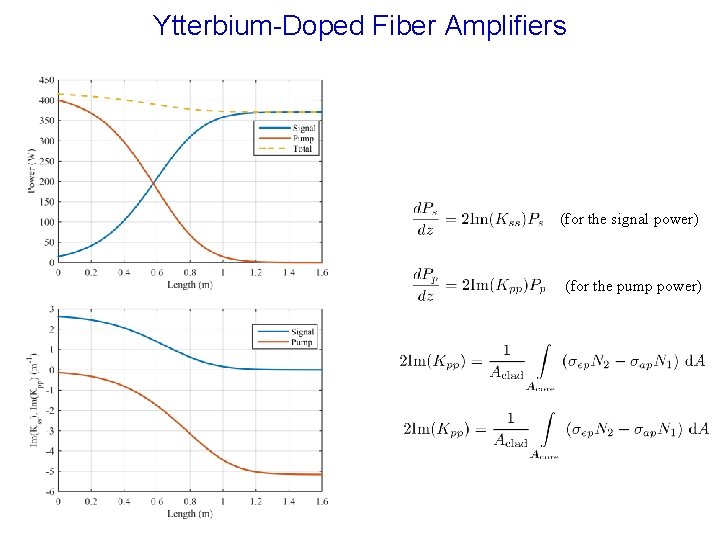
Ytterbium-Doped Fiber Amplifiers (for the signal power) (for the pump power)