
Atomic Structure Timeline I Scientists Contribution to Atomic
Atomic Structure Timeline I. Scientists Contribution to Atomic Structure
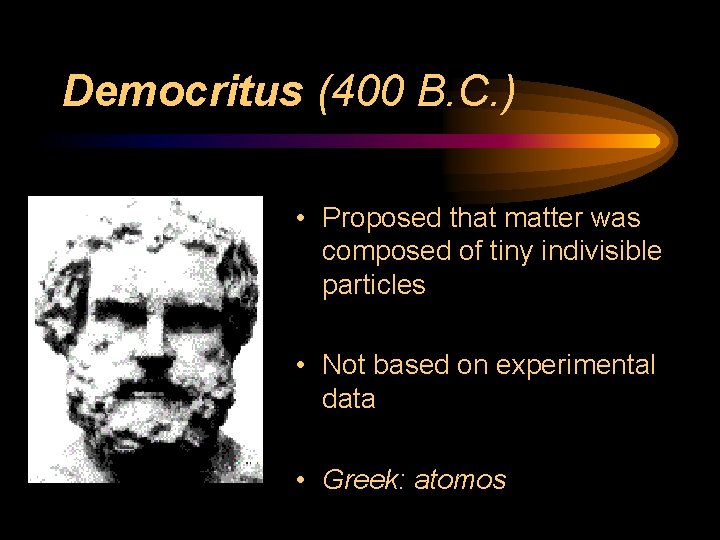
Democritus (400 B. C. ) • Proposed that matter was composed of tiny indivisible particles • Not based on experimental data • Greek: atomos
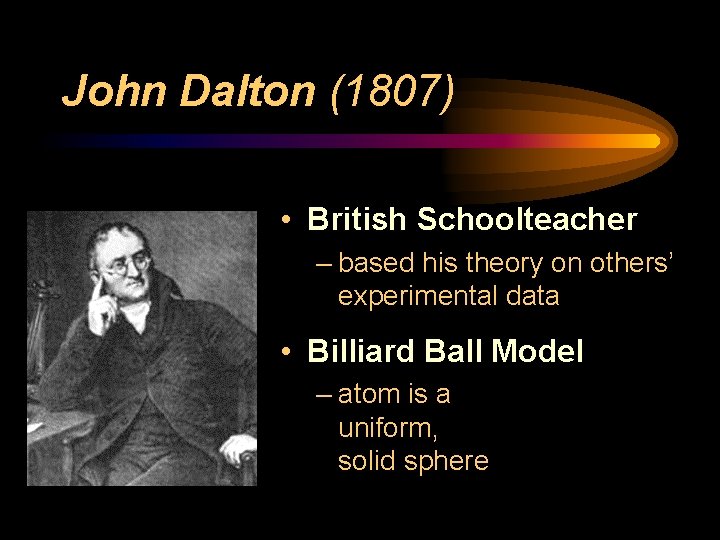
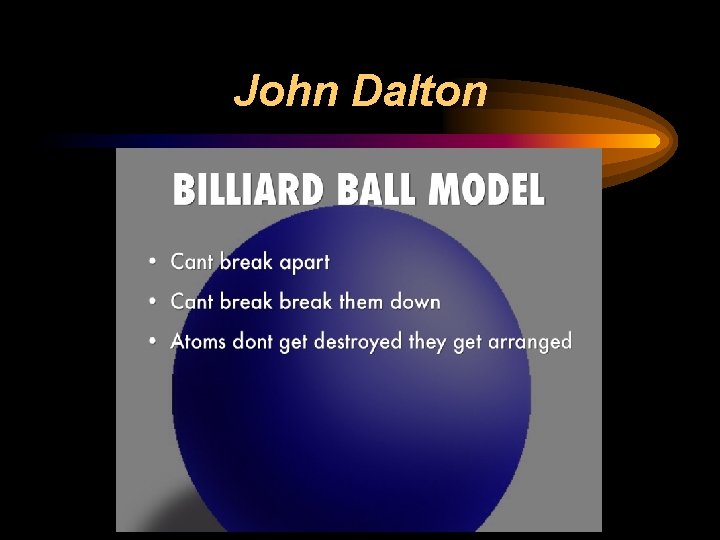
John Dalton (1807) • British Schoolteacher – based his theory on others’ experimental data • Billiard Ball Model – atom is a uniform, solid sphere
John Dalton’s Four Postulates 1. Elements are composed of small indivisible particles called atoms. 2. Atoms of the same element are identical. Atoms of different elements are different. 3. Atoms of different elements combine together in simple proportions to create a compound. 4. In a chemical reaction, atoms are rearranged, but not changed.
John Dalton
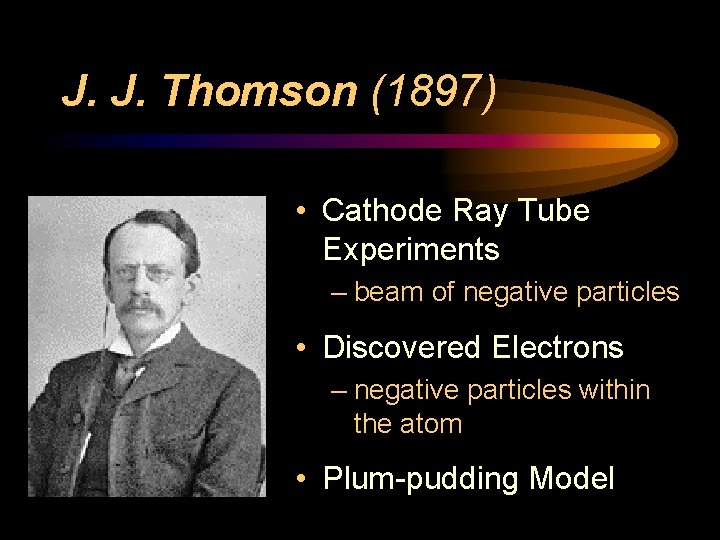
J. J. Thomson (1897) • Cathode Ray Tube Experiments – beam of negative particles • Discovered Electrons – negative particles within the atom • Plum-pudding Model
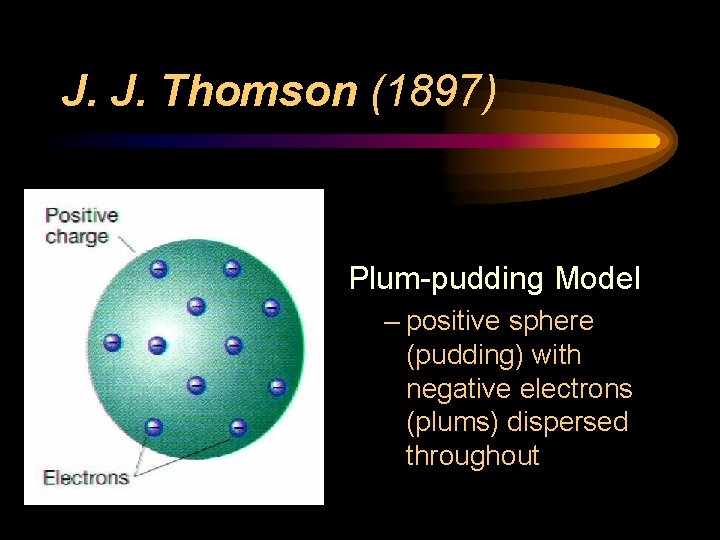
J. J. Thomson (1897) Plum-pudding Model – positive sphere (pudding) with negative electrons (plums) dispersed throughout

J. J. Thomson • Cathode ray tube demonstration
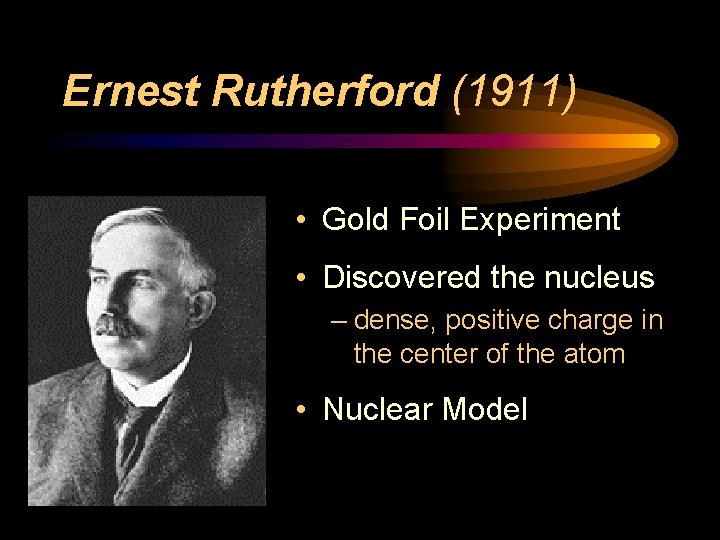
Ernest Rutherford (1911) • Gold Foil Experiment • Discovered the nucleus – dense, positive charge in the center of the atom • Nuclear Model
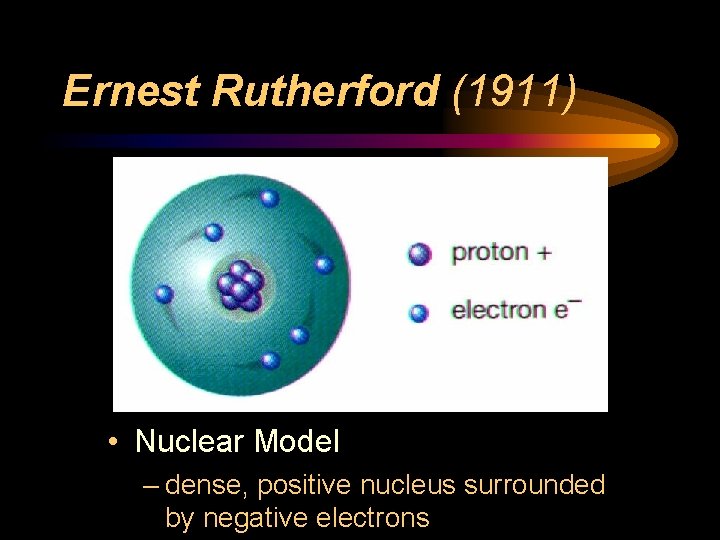
Ernest Rutherford (1911) • Nuclear Model – dense, positive nucleus surrounded by negative electrons
Ernest Rutherford (1911) • Gold Foil Experiment Video – Start at 3: 14. • Gold Foil Experiment Animation
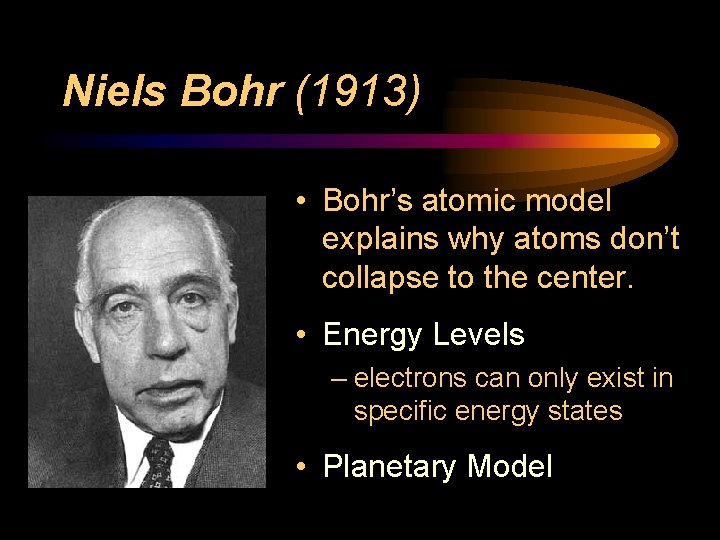
Niels Bohr (1913) • Bohr’s atomic model explains why atoms don’t collapse to the center. • Energy Levels – electrons can only exist in specific energy states • Planetary Model
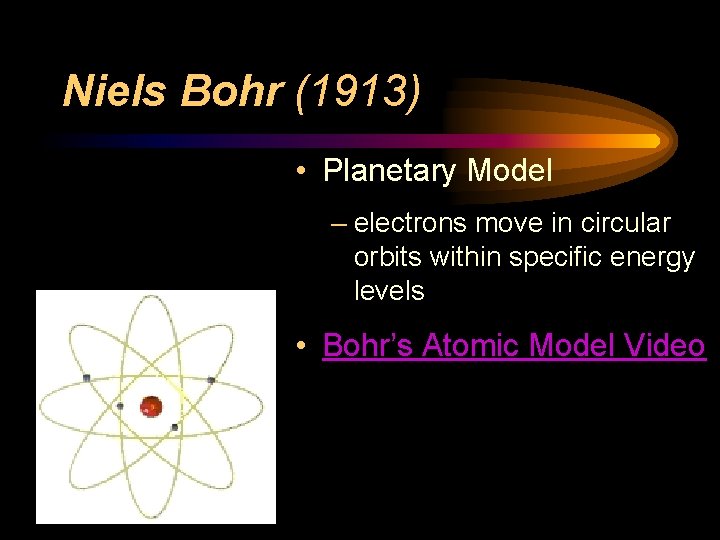
Niels Bohr (1913) • Planetary Model – electrons move in circular orbits within specific energy levels • Bohr’s Atomic Model Video
Erwin Schrödinger (1926) • Quantum mechanics – electrons can only exist in specified energy states • Electron cloud model – orbital: region around the nucleus where e- are likely to be found
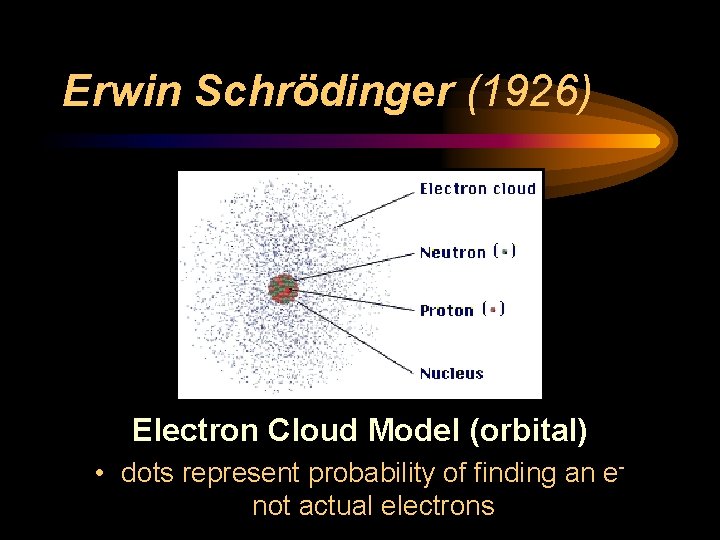
Erwin Schrödinger (1926) Electron Cloud Model (orbital) • dots represent probability of finding an enot actual electrons
James Chadwick (1932) • Discovered neutrons – neutral particles in the nucleus of an atom • Joliot-Curie Experiments – based his theory on their experimental evidence
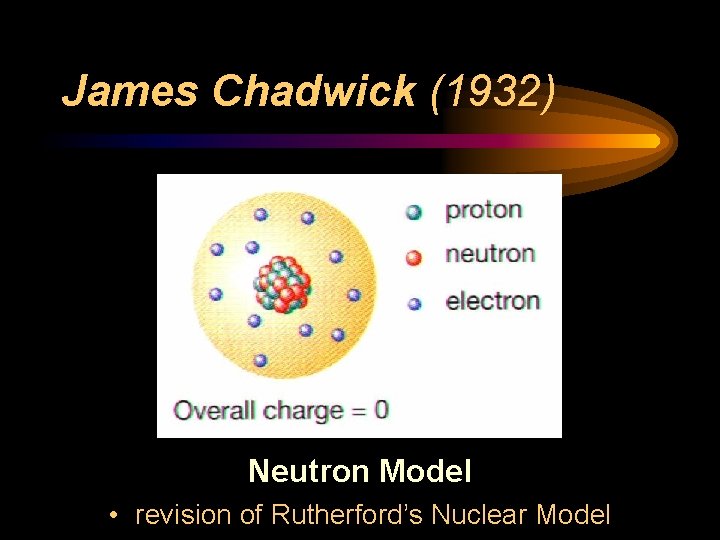
James Chadwick (1932) Neutron Model • revision of Rutherford’s Nuclear Model
James Chadwick (1932) • Discovery of the neutron video
- Slides: 18