
Atomic Structure Subatomic particles Name Symbol Relative Charge
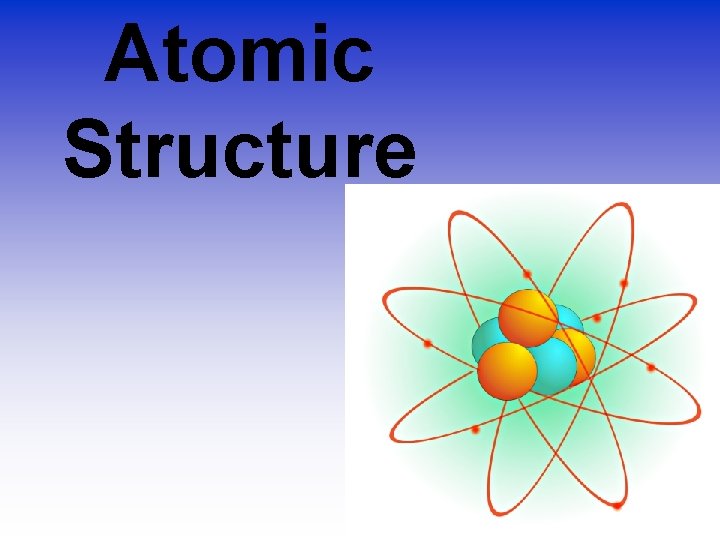
Atomic Structure
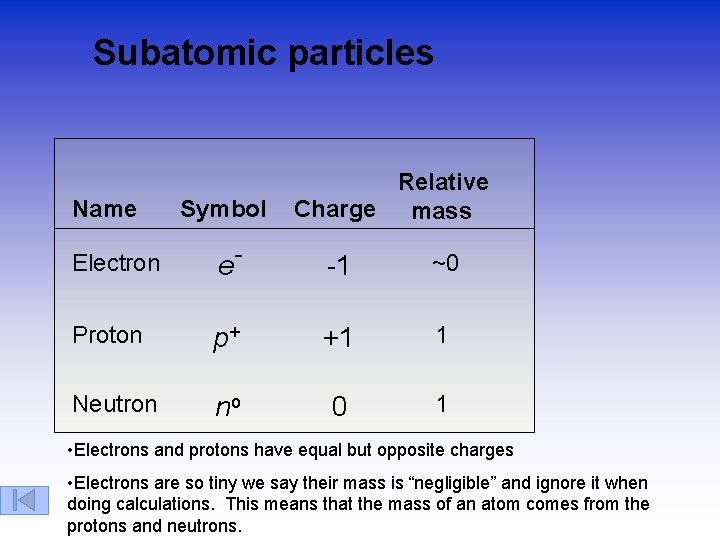
Subatomic particles Name Symbol Relative Charge mass Electron e- -1 ~0 Proton p+ +1 1 Neutron no 0 1 • Electrons and protons have equal but opposite charges • Electrons are so tiny we say their mass is “negligible” and ignore it when doing calculations. This means that the mass of an atom comes from the protons and neutrons.
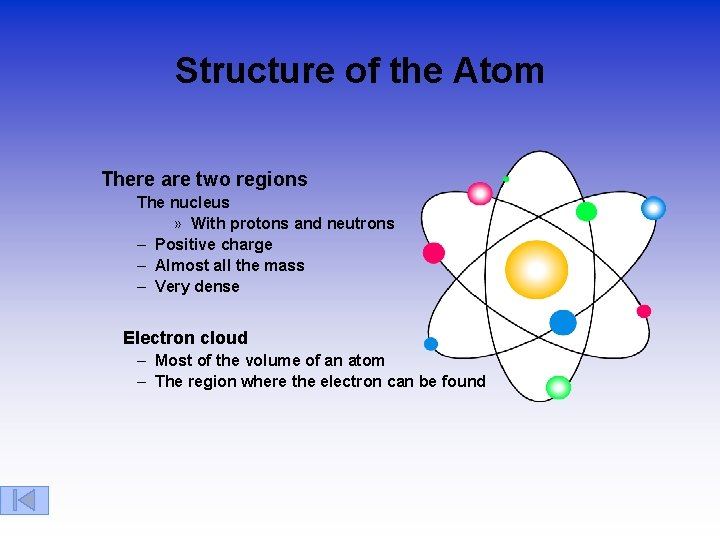
Structure of the Atom There are two regions The nucleus » With protons and neutrons – Positive charge – Almost all the mass – Very dense Electron cloud – Most of the volume of an atom – The region where the electron can be found
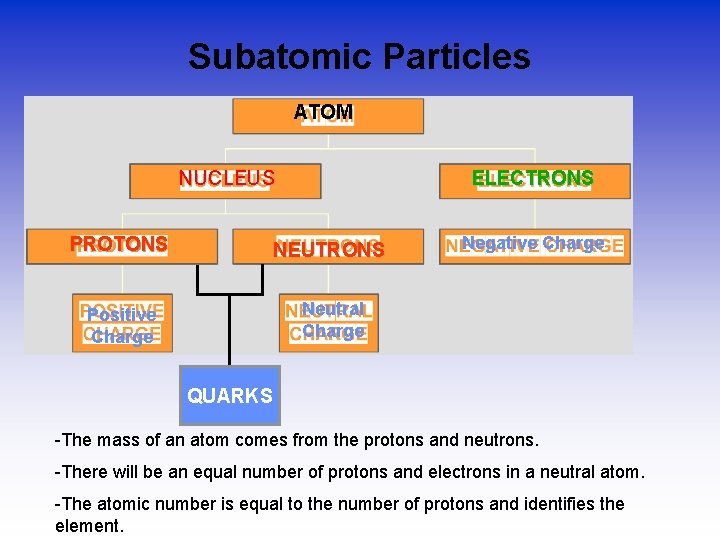
Subatomic Particles ATOM NUCLEUS ELECTRONS PROTONS NEUTRONS Positive Charge Neutral Charge Negative Charge QUARKS -The mass of an atom comes from the protons and neutrons. -There will be an equal number of protons and electrons in a neutral atom. -The atomic number is equal to the number of protons and identifies the element.
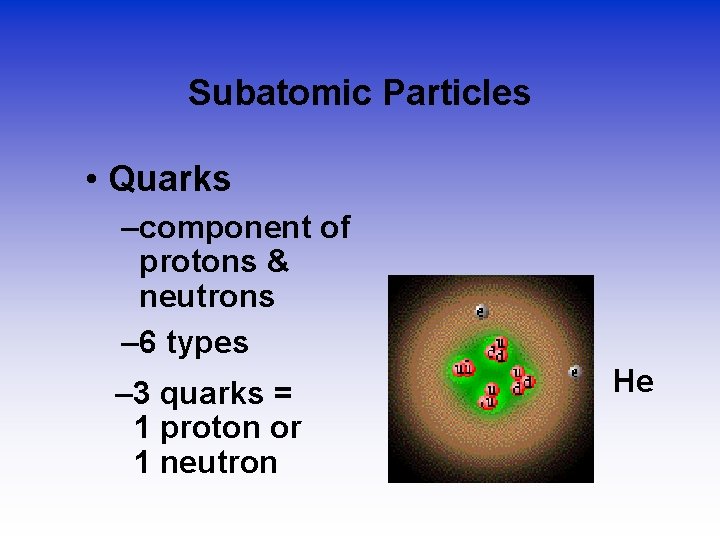
Subatomic Particles • Quarks –component of protons & neutrons – 6 types – 3 quarks = 1 proton or 1 neutron He
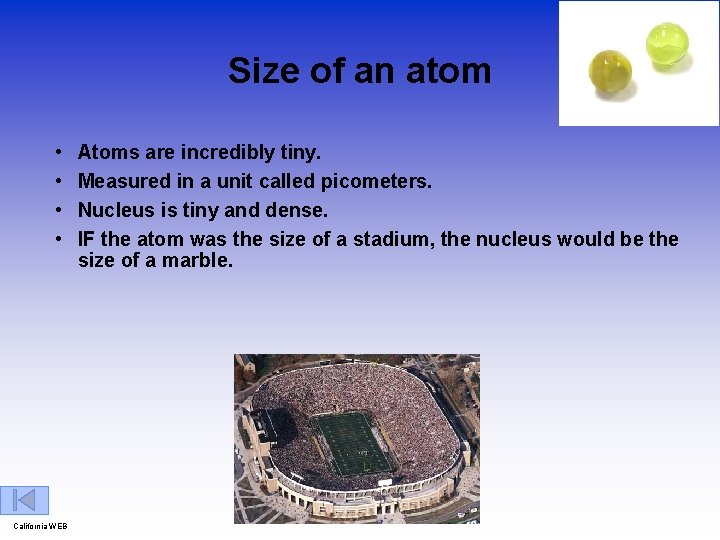
Size of an atom • • California WEB Atoms are incredibly tiny. Measured in a unit called picometers. Nucleus is tiny and dense. IF the atom was the size of a stadium, the nucleus would be the size of a marble.
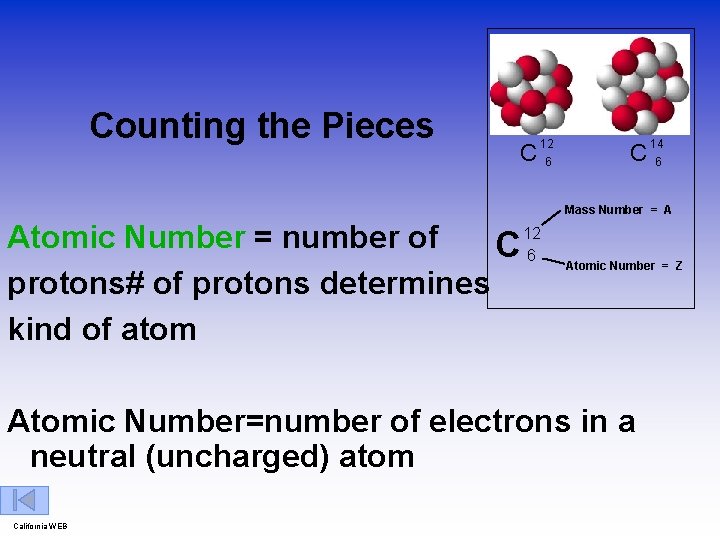
Counting the Pieces C 12 6 C 14 6 Mass Number = A 12 Atomic Number = number of C 6 protons# of protons determines kind of atom Atomic Number = Z Atomic Number=number of electrons in a neutral (uncharged) atom California WEB
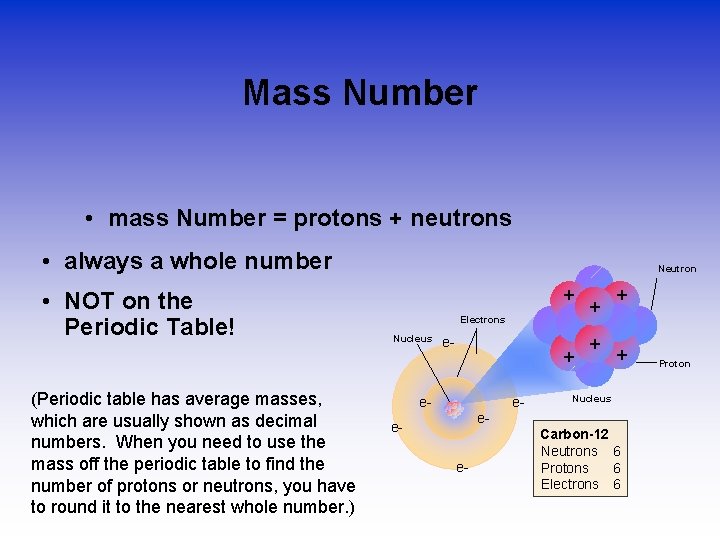
Mass Number • mass Number = protons + neutrons • always a whole number • NOT on the Periodic Table! (Periodic table has average masses, which are usually shown as decimal numbers. When you need to use the mass off the periodic table to find the number of protons or neutrons, you have to round it to the nearest whole number. ) Neutron + Electrons Nucleus e- + e- e- + + Nucleus e- ee- Carbon-12 Neutrons 6 Protons 6 Electrons 6 Proton
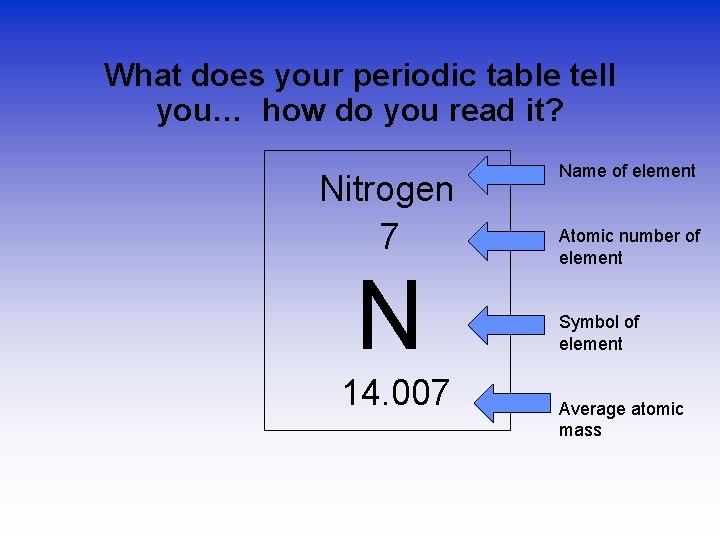
What does your periodic table tell you… how do you read it? Nitrogen 7 N 14. 007 Name of element Atomic number of element Symbol of element Average atomic mass
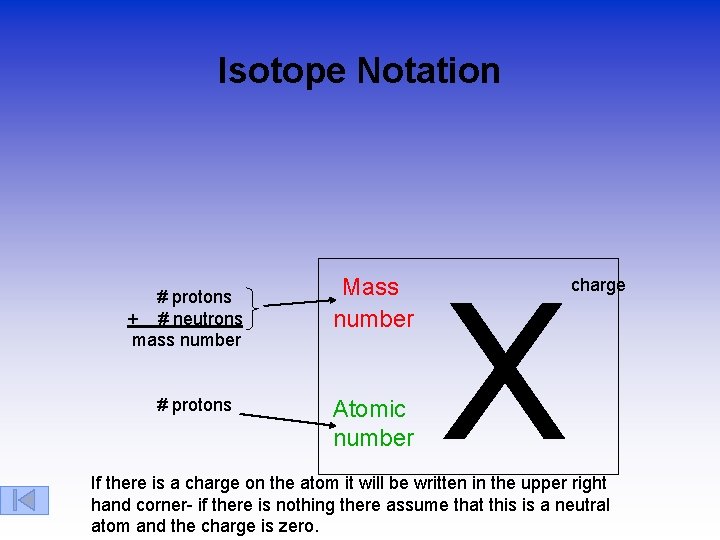
Isotope Notation # protons + # neutrons mass number # protons Mass number Atomic number X charge If there is a charge on the atom it will be written in the upper right hand corner- if there is nothing there assume that this is a neutral atom and the charge is zero.
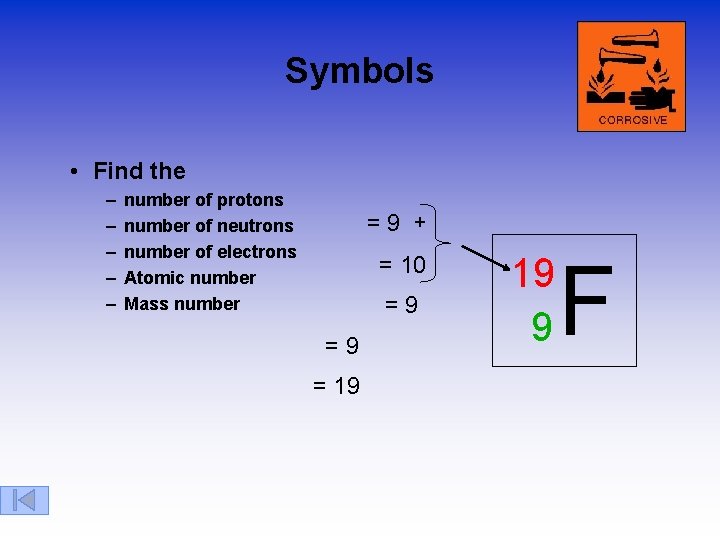
Symbols • Find the – – – number of protons number of neutrons number of electrons Atomic number Mass number =9 + = 10 =9 =9 = 19 19 9 F
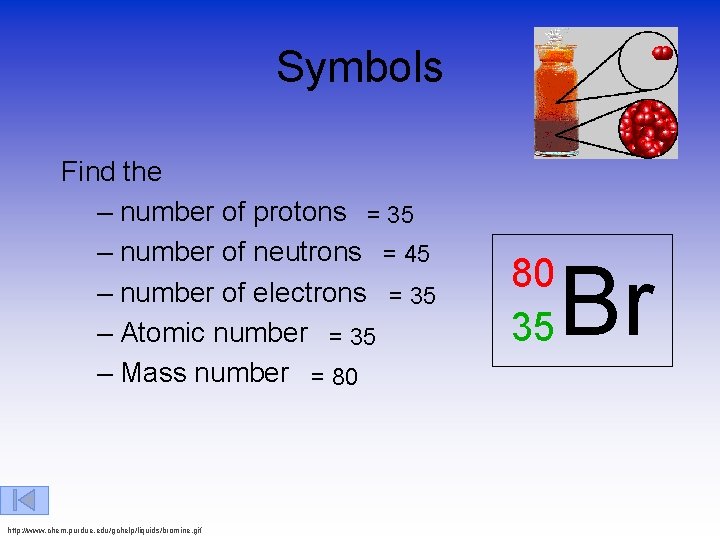
Symbols Find the – number of protons = 35 – number of neutrons = 45 – number of electrons = 35 – Atomic number = 35 – Mass number = 80 http: //www. chem. purdue. edu/gchelp/liquids/bromine. gif 80 35 Br
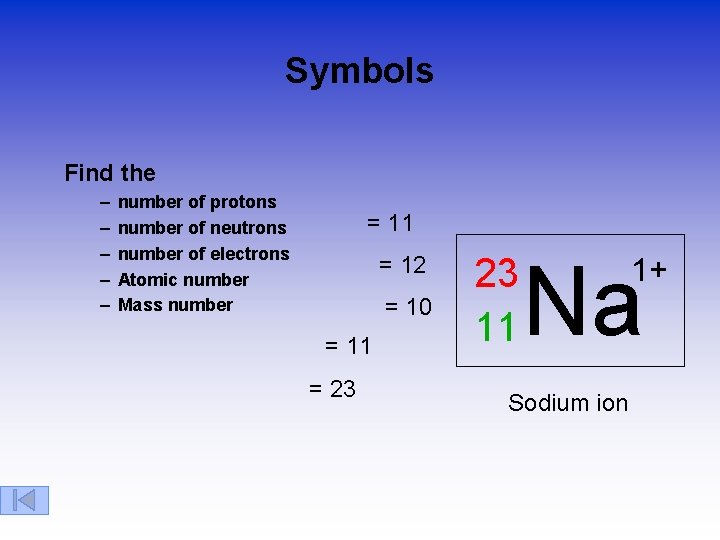
Symbols Find the – – – number of protons number of neutrons number of electrons Atomic number Mass number = 11 = 12 = 10 = 11 = 23 23 11 Na Sodium ion 1+
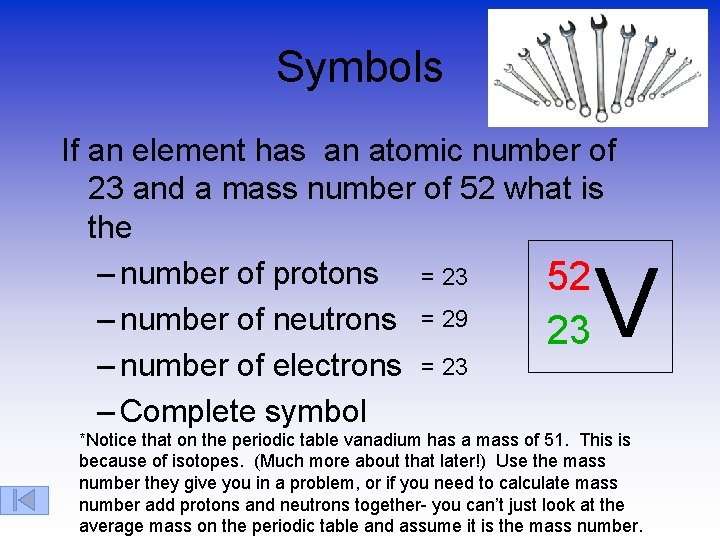
Symbols If an element has an atomic number of 23 and a mass number of 52 what is the – number of protons = 23 52 – number of neutrons = 29 23 – number of electrons = 23 – Complete symbol V *Notice that on the periodic table vanadium has a mass of 51. This is because of isotopes. (Much more about that later!) Use the mass number they give you in a problem, or if you need to calculate mass number add protons and neutrons together- you can’t just look at the average mass on the periodic table and assume it is the mass number.
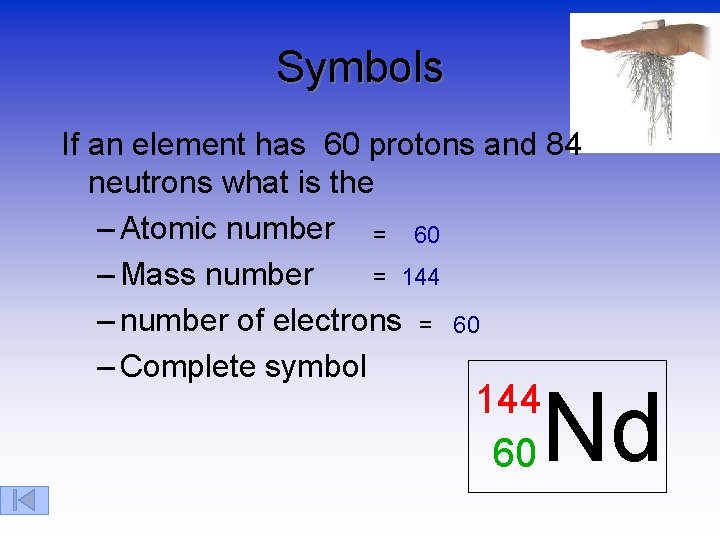
Symbols If an element has 60 protons and 84 neutrons what is the – Atomic number = 60 = 144 – Mass number – number of electrons = 60 – Complete symbol Nd 144 60
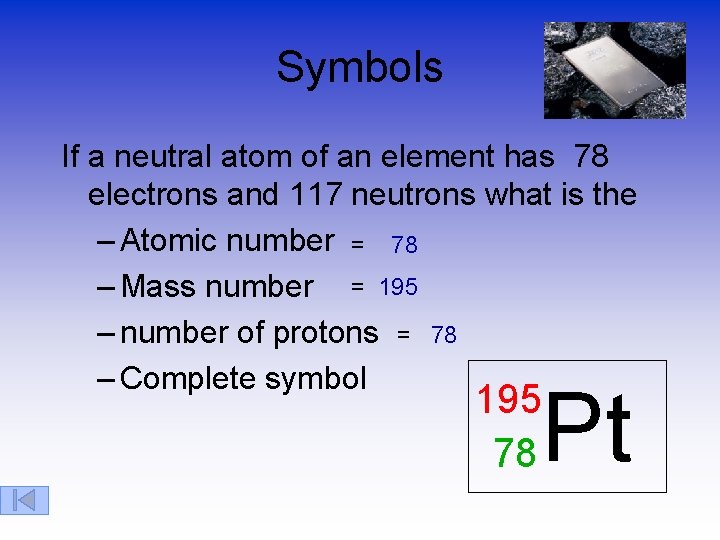
Symbols If a neutral atom of an element has 78 electrons and 117 neutrons what is the – Atomic number = 78 – Mass number = 195 – number of protons = 78 – Complete symbol Pt 195 78
Not all atoms are the same! Remember: The number of protons always identifies the element!
IONS • IONS are atoms or groups of atoms which have lost or gained electrons to become positively or negatively charged => Have unequal numbers of protons and electrons
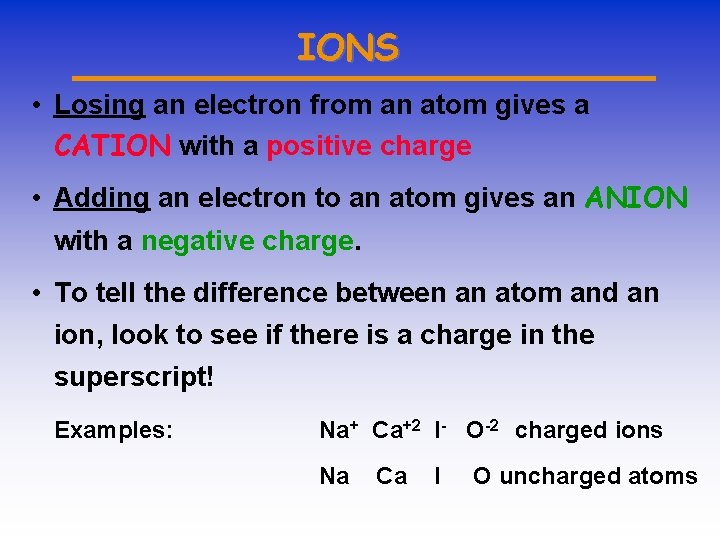
IONS • Losing an electron from an atom gives a CATION with a positive charge • Adding an electron to an atom gives an ANION with a negative charge. • To tell the difference between an atom and an ion, look to see if there is a charge in the superscript! Examples: Na+ Ca+2 I- O-2 charged ions Na Ca I O uncharged atoms
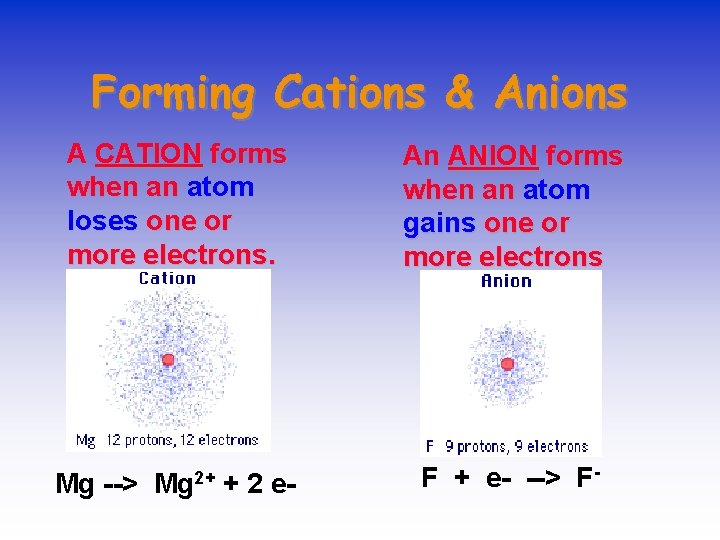
Forming Cations & Anions A CATION forms when an atom loses one or more electrons. An ANION forms when an atom gains one or more electrons Mg 2+ F + e- --> F- Mg --> + 2 e-
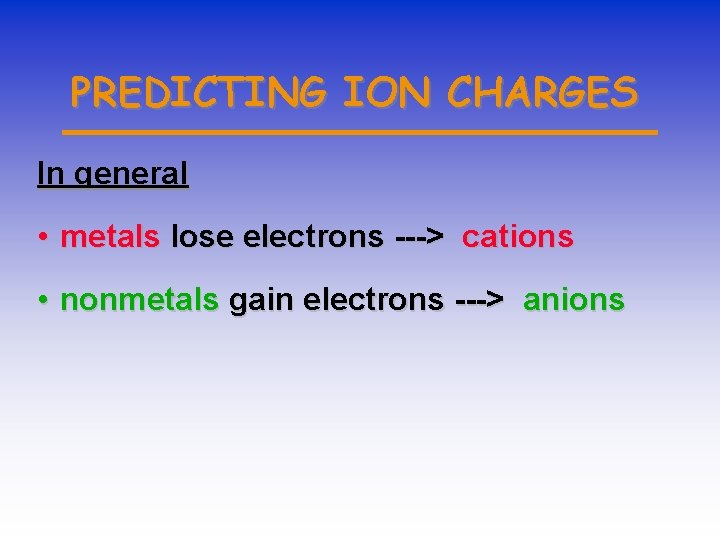
PREDICTING ION CHARGES In general • metals lose electrons ---> cations • nonmetals gain electrons ---> anions
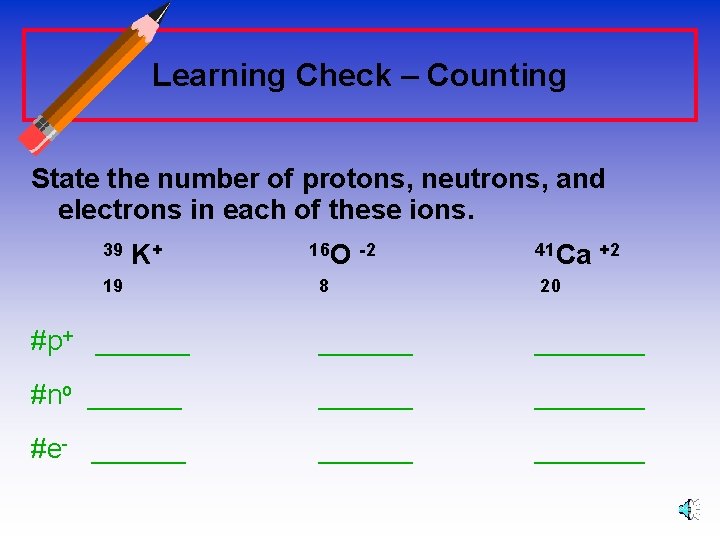
Learning Check – Counting State the number of protons, neutrons, and electrons in each of these ions. 39 K+ 19 16 O -2 41 Ca +2 8 20 #p+ _______ #no _______ #e- _______
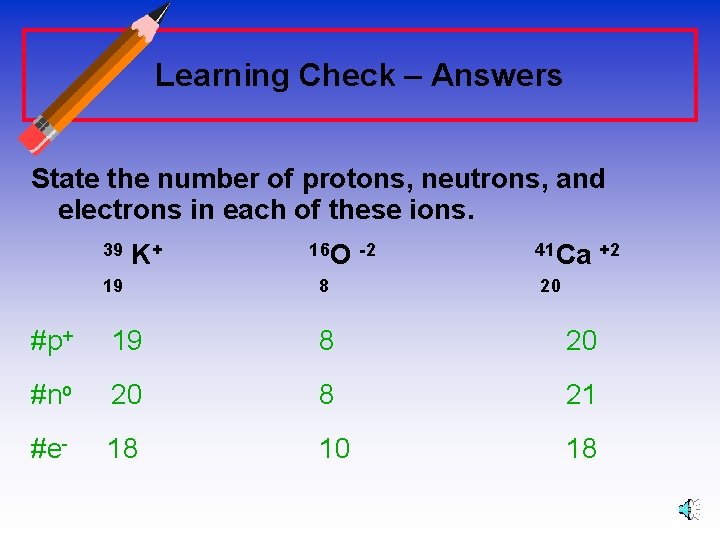
Learning Check – Answers State the number of protons, neutrons, and electrons in each of these ions. 39 K+ 19 16 O -2 8 41 Ca +2 20 #p+ 19 8 20 #no 20 8 21 #e- 18 10 18
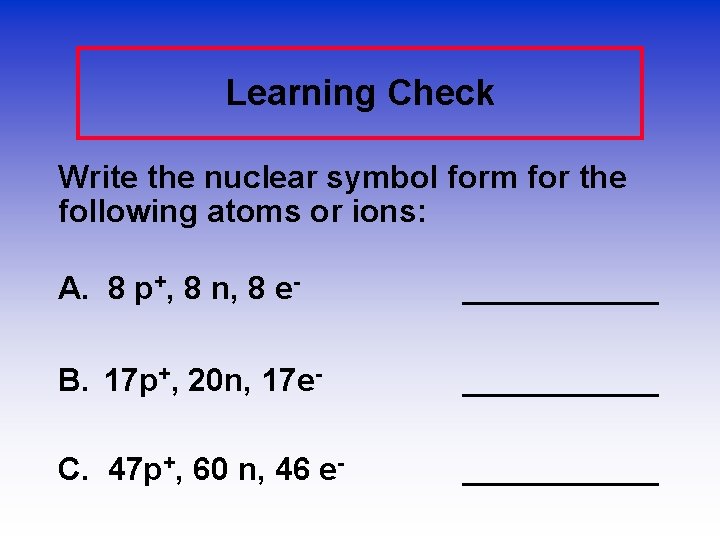
Learning Check Write the nuclear symbol form for the following atoms or ions: A. 8 p+, 8 n, 8 e- ______ B. 17 p+, 20 n, 17 e- ______ C. 47 p+, 60 n, 46 e- ______
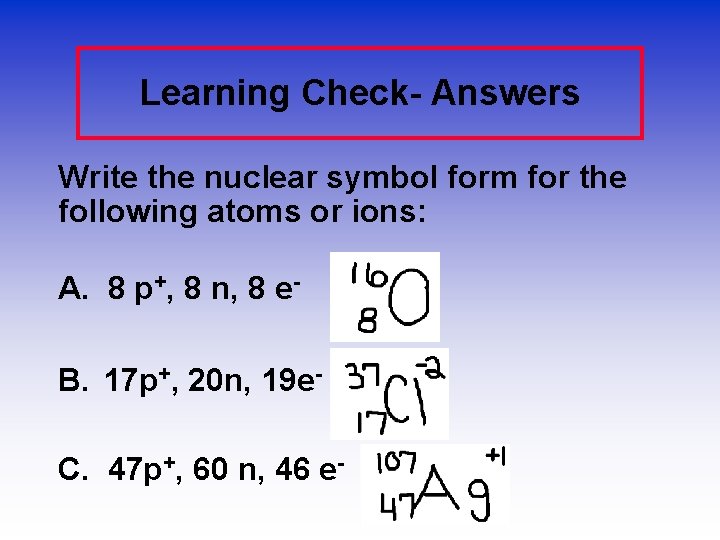
Learning Check- Answers Write the nuclear symbol form for the following atoms or ions: A. 8 p+, 8 n, 8 e. B. 17 p+, 20 n, 19 e. C. 47 p+, 60 n, 46 e-
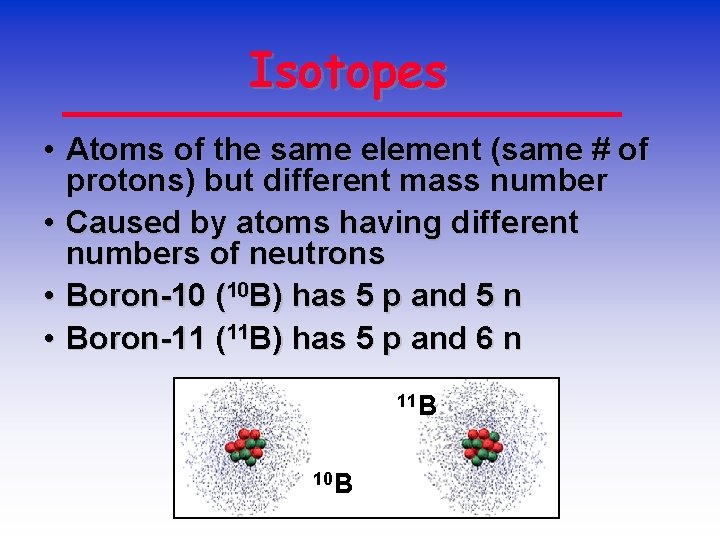
Isotopes • Atoms of the same element (same # of protons) but different mass number • Caused by atoms having different numbers of neutrons • Boron-10 (10 B) has 5 p and 5 n • Boron-11 (11 B) has 5 p and 6 n 11 B 10 B
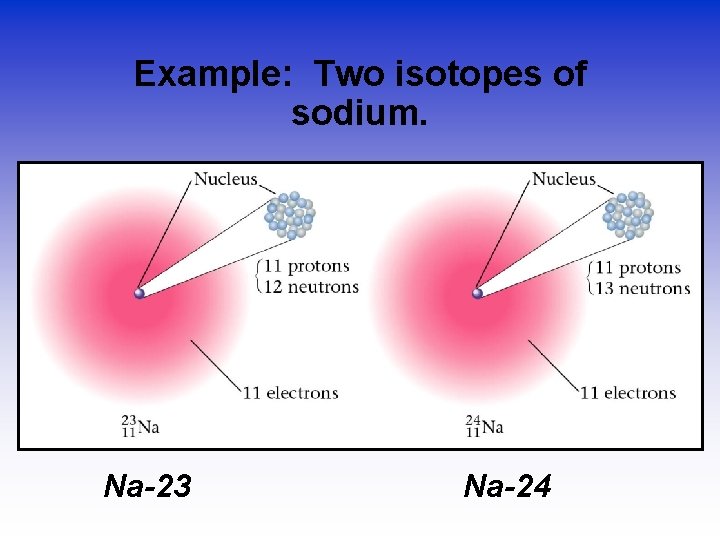
Example: Two isotopes of sodium. Na-23 Na-24
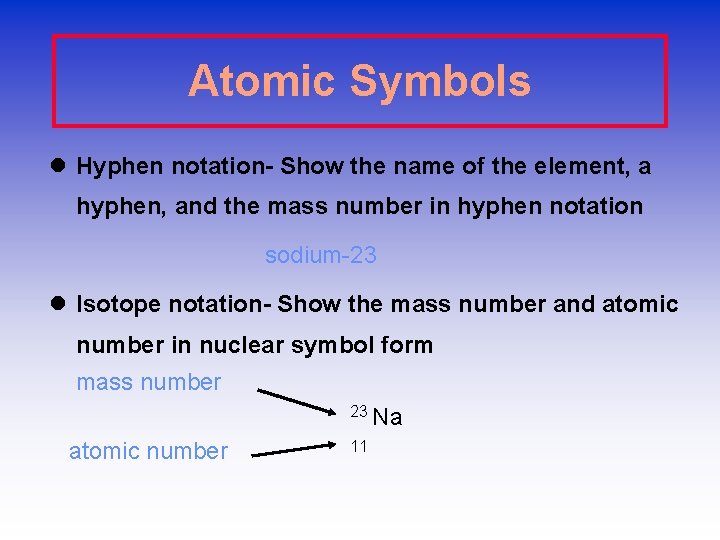
Atomic Symbols l Hyphen notation- Show the name of the element, a hyphen, and the mass number in hyphen notation sodium-23 l Isotope notation- Show the mass number and atomic number in nuclear symbol form mass number 23 Na atomic number 11
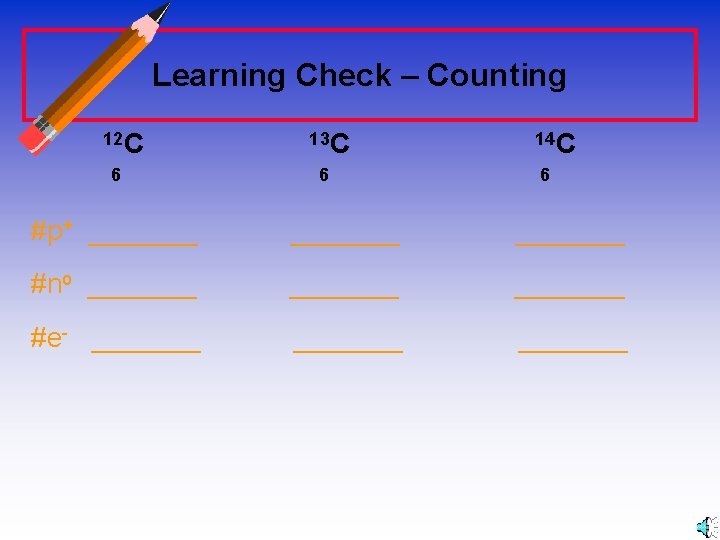
Learning Check – Counting 12 C 6 13 C 6 14 C 6 #p+ _______ #no _______ #e- _______
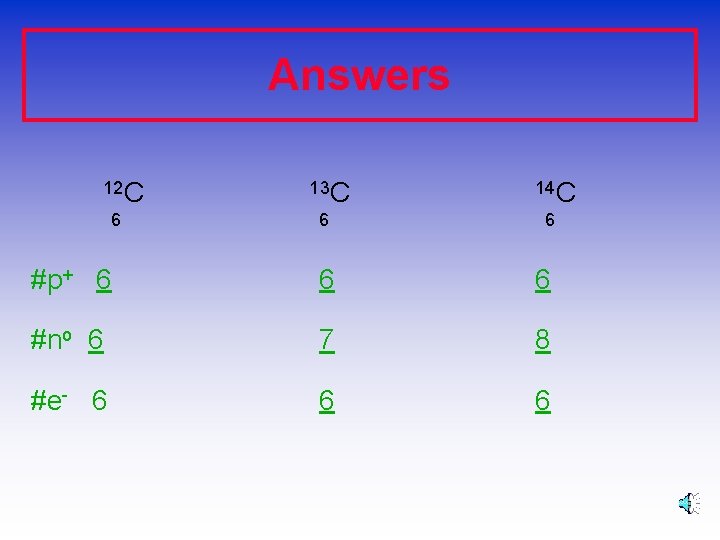
Answers 12 C 6 13 C 6 14 C 6 #p+ 6 6 6 #no 6 7 8 #e- 6 6 6
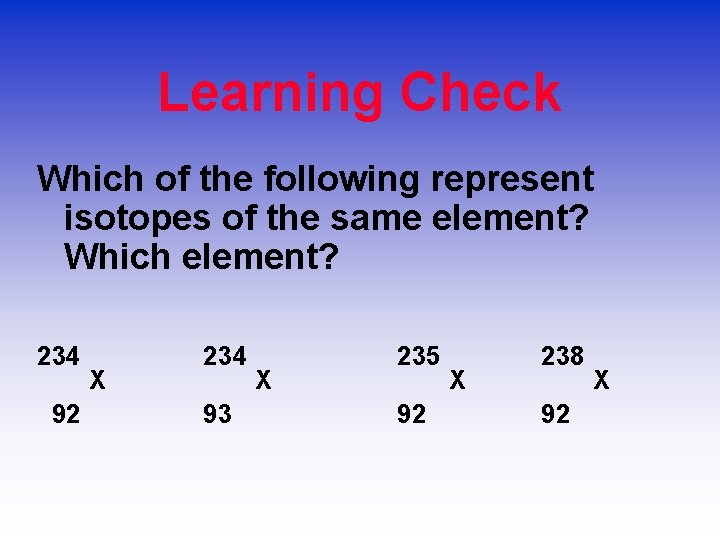
Learning Check Which of the following represent isotopes of the same element? Which element? 234 92 X 234 93 X 235 92 X 238 92 X
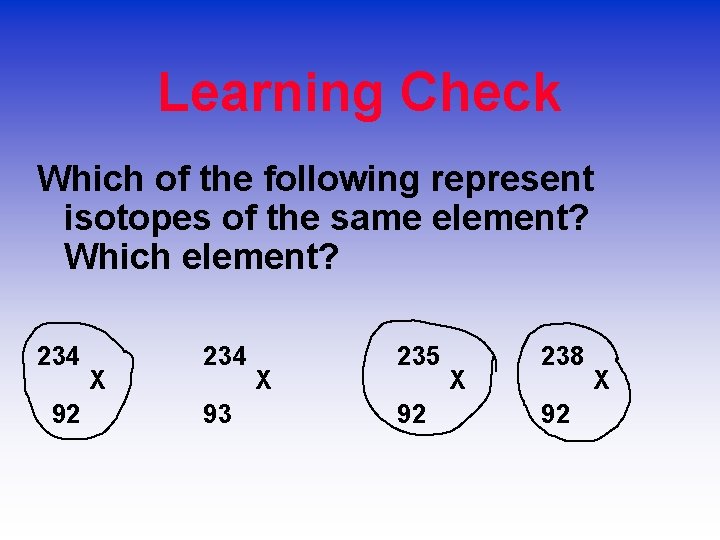
Learning Check Which of the following represent isotopes of the same element? Which element? 234 92 X 234 93 X 235 92 X 238 92 X
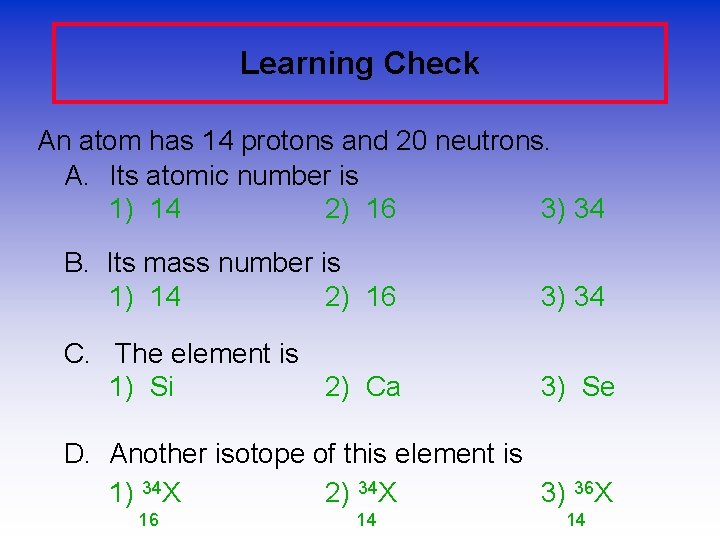
Learning Check An atom has 14 protons and 20 neutrons. A. Its atomic number is 1) 14 2) 16 3) 34 B. Its mass number is 1) 14 2) 16 3) 34 C. The element is 1) Si 2) Ca 3) Se D. Another isotope of this element is 1) 34 X 2) 34 X 3) 36 X 16 14 14
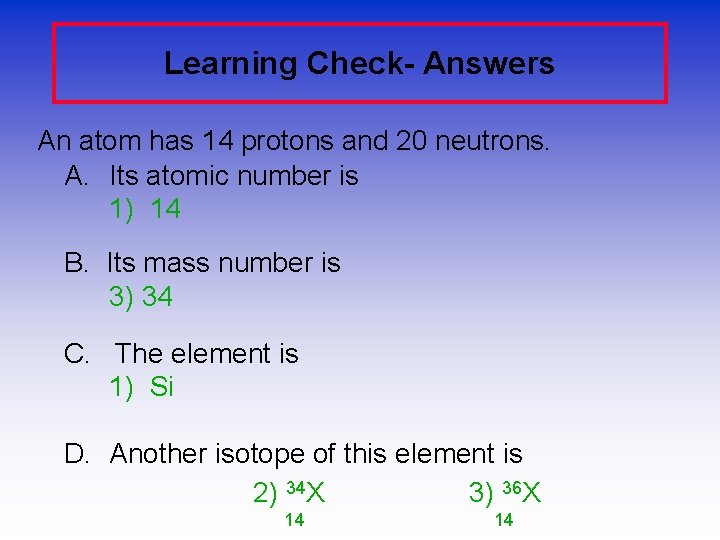
Learning Check- Answers An atom has 14 protons and 20 neutrons. A. Its atomic number is 1) 14 B. Its mass number is 3) 34 C. The element is 1) Si D. Another isotope of this element is 2) 34 X 3) 36 X 14 14
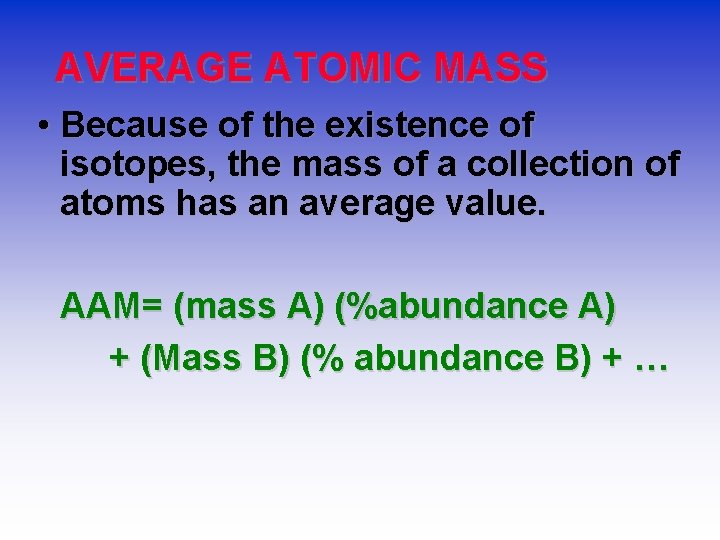
AVERAGE ATOMIC MASS • Because of the existence of isotopes, the mass of a collection of atoms has an average value. AAM= (mass A) (%abundance A) + (Mass B) (% abundance B) + …
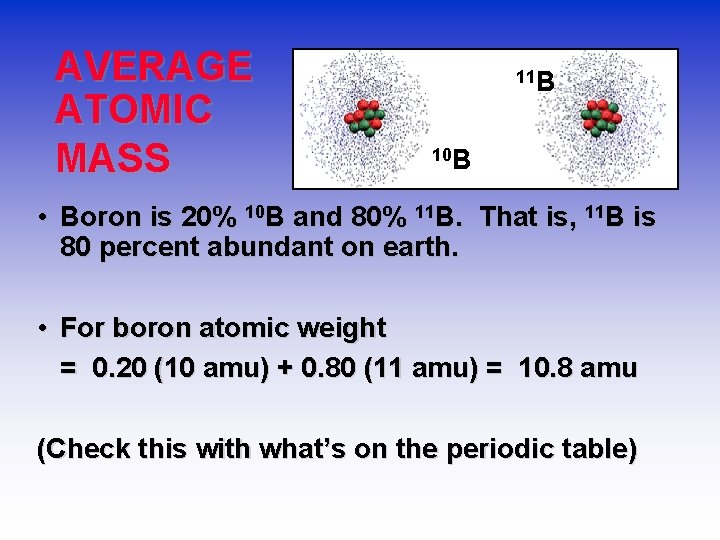
AVERAGE ATOMIC MASS 11 B 10 B • Boron is 20% 10 B and 80% 11 B. That is, 11 B is 80 percent abundant on earth. • For boron atomic weight = 0. 20 (10 amu) + 0. 80 (11 amu) = 10. 8 amu (Check this with what’s on the periodic table)
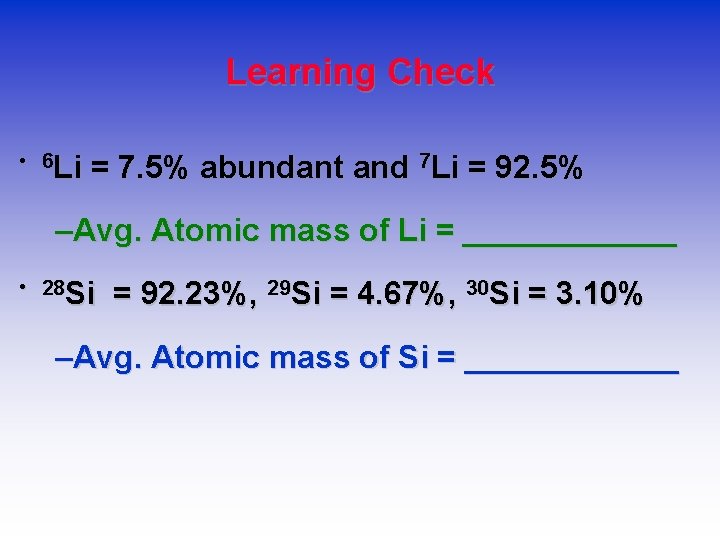
Learning Check • 6 Li = 7. 5% abundant and 7 Li = 92. 5% –Avg. Atomic mass of Li = ______ • 28 Si = 92. 23%, 29 Si = 4. 67%, 30 Si = 3. 10% –Avg. Atomic mass of Si = ______
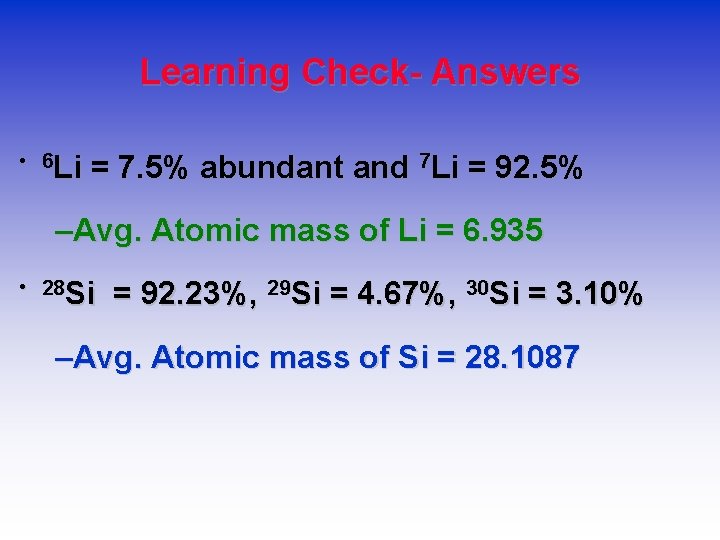
Learning Check- Answers • 6 Li = 7. 5% abundant and 7 Li = 92. 5% –Avg. Atomic mass of Li = 6. 935 • 28 Si = 92. 23%, 29 Si = 4. 67%, 30 Si = 3. 10% –Avg. Atomic mass of Si = 28. 1087
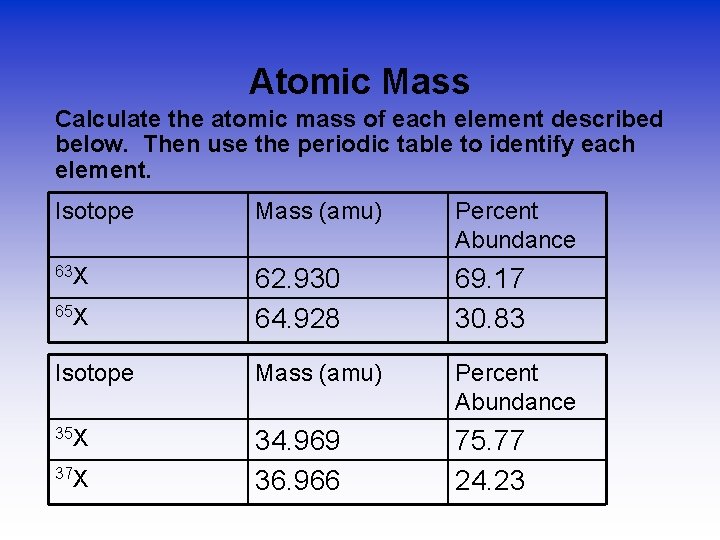
Atomic Mass Calculate the atomic mass of each element described below. Then use the periodic table to identify each element. Isotope Mass (amu) Percent Abundance 63 X 65 X 62. 930 64. 928 69. 17 30. 83 Isotope Mass (amu) Percent Abundance 35 X 34. 969 36. 966 75. 77 24. 23 37 X
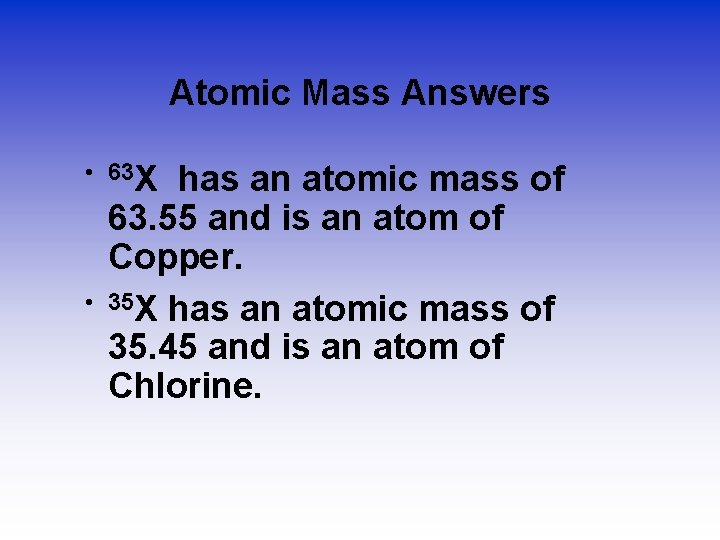
Atomic Mass Answers • 63 X • has an atomic mass of 63. 55 and is an atom of Copper. 35 X has an atomic mass of 35. 45 and is an atom of Chlorine.
- Slides: 40