
Atomic Structure Miha Lee California State University Northridge

![Links for Electronic Configuration Electronic Structures Electron Configuration Atomic electron configurations [end]](https://slidetodoc.com/presentation_image_h2/f8f8698f92ac14c96ba55396228415ca/image-16.jpg "Links for Electronic Configuration Electronic Structures Electron Configuration Atomic electron configurations [end]")
- Slides: 16
Atomic Structure Miha Lee California State University, Northridge
List of Content Particles in a Atom • Nucelus => Neutrons & Protons • Electrons 2. Atomic Structure • Bohr => energy level of electron shell • Shrodinger => orbitals & electron cloud 3. Electron Configuration • Rule of Elctronic Configuration • Atoms’ Electronic Configuration • Links for Self-study 1.
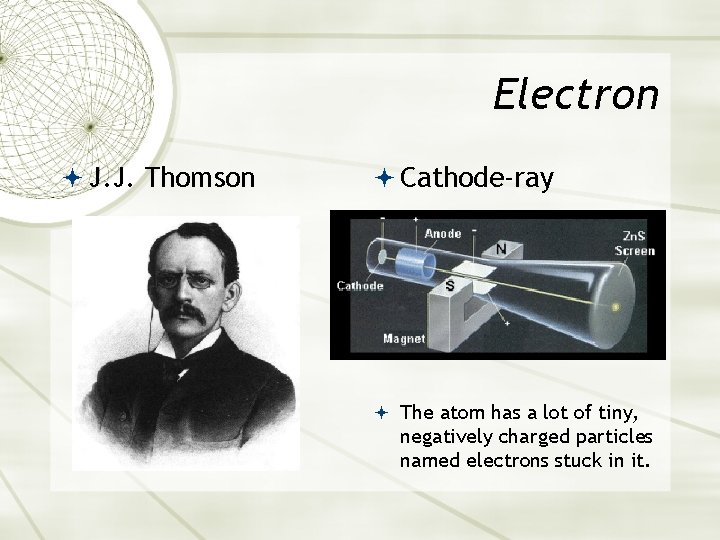
Electron J. J. Thomson Cathode-ray The atom has a lot of tiny, negatively charged particles named electrons stuck in it.
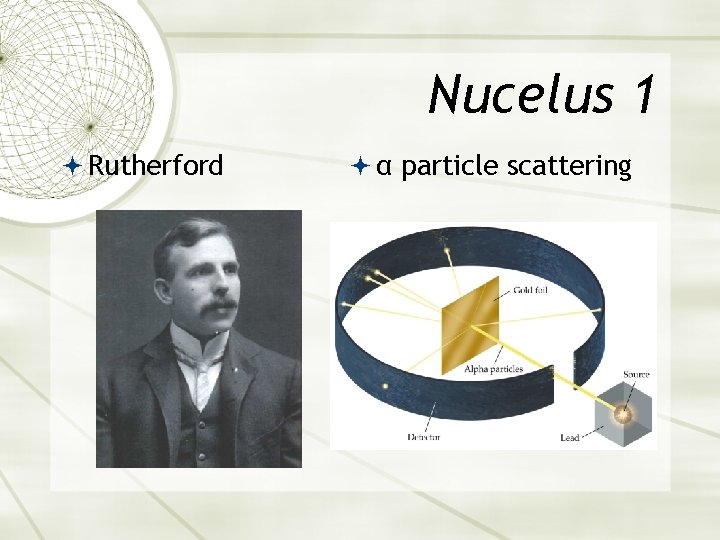
Nucelus 1 Rutherford α particle scattering
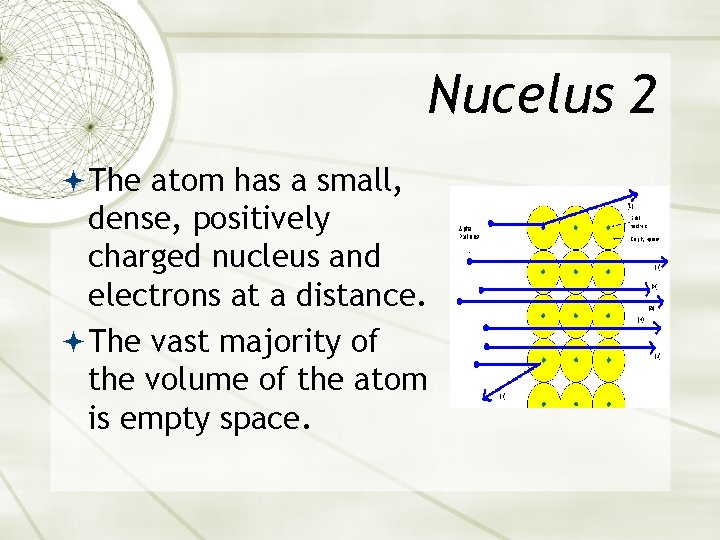
Nucelus 2 The atom has a small, dense, positively charged nucleus and electrons at a distance. The vast majority of the volume of the atom is empty space.
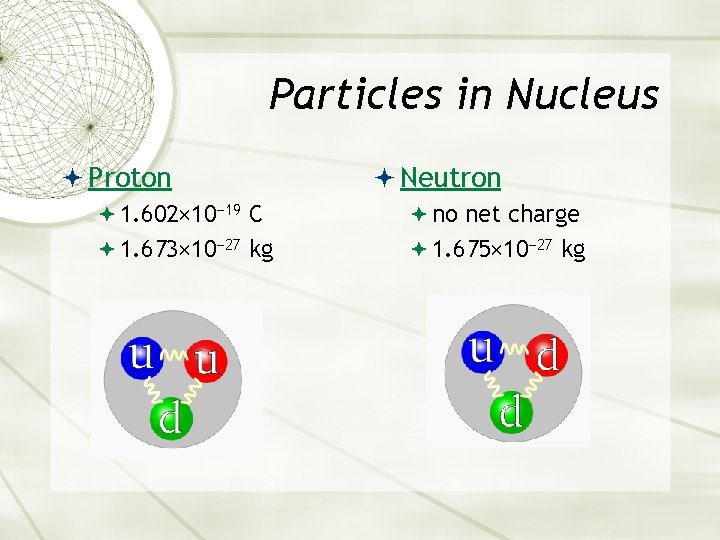
Particles in Nucleus Proton Neutron 1. 602× 10− 19 C no net charge 1. 673× 10− 27 kg 1. 675× 10− 27 kg
Atomic Structure Bohr => elenergy level of electron shells Schrodinger => orbitals & electron cloud
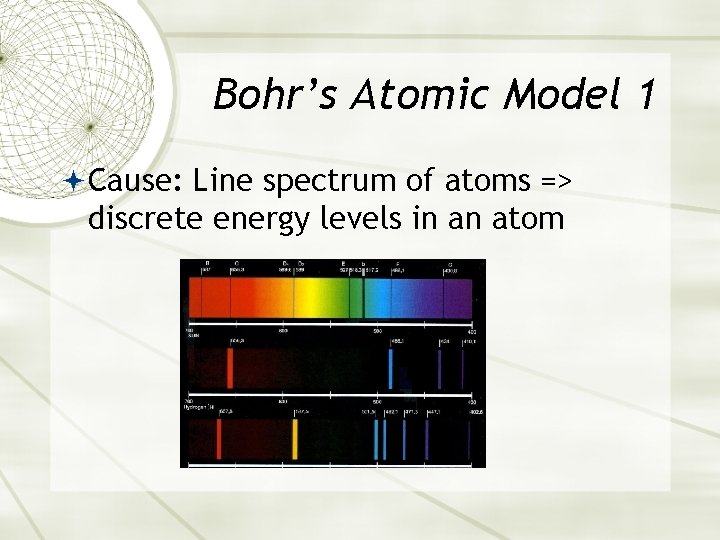
Bohr’s Atomic Model 1 Cause: Line spectrum of atoms => discrete energy levels in an atom
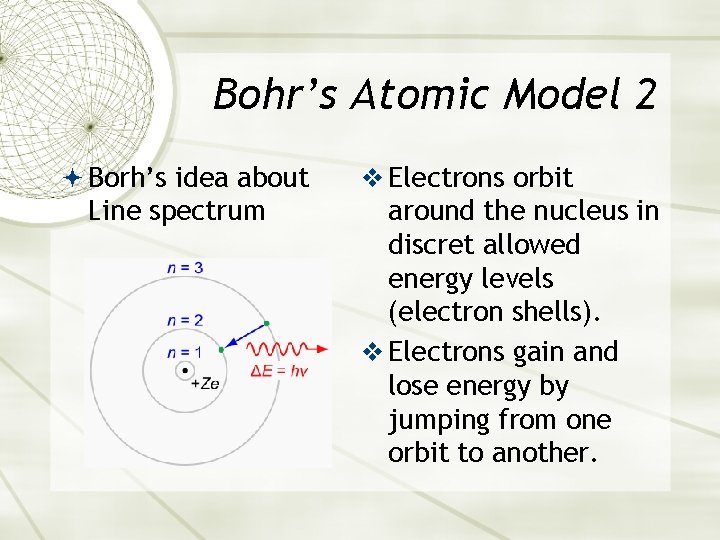
Bohr’s Atomic Model 2 Borh’s idea about Line spectrum v Electrons orbit around the nucleus in discret allowed energy levels (electron shells). v Electrons gain and lose energy by jumping from one orbit to another.
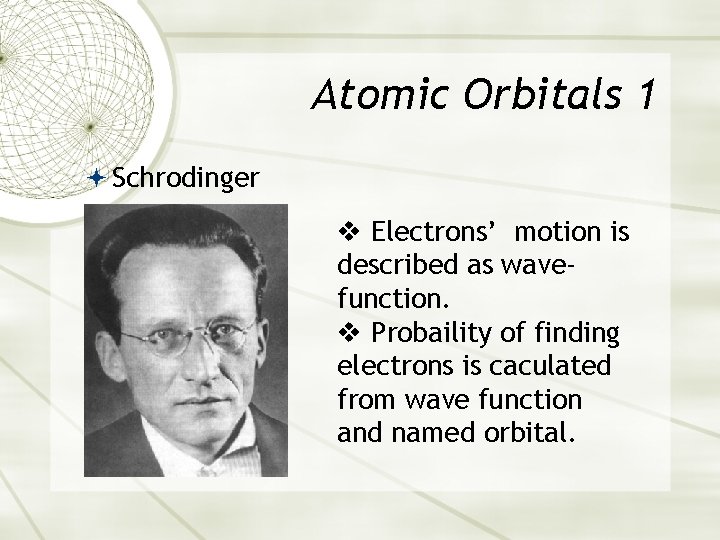
Atomic Orbitals 1 Schrodinger v Electrons’ motion is described as wavefunction. v Probaility of finding electrons is caculated from wave function and named orbital.
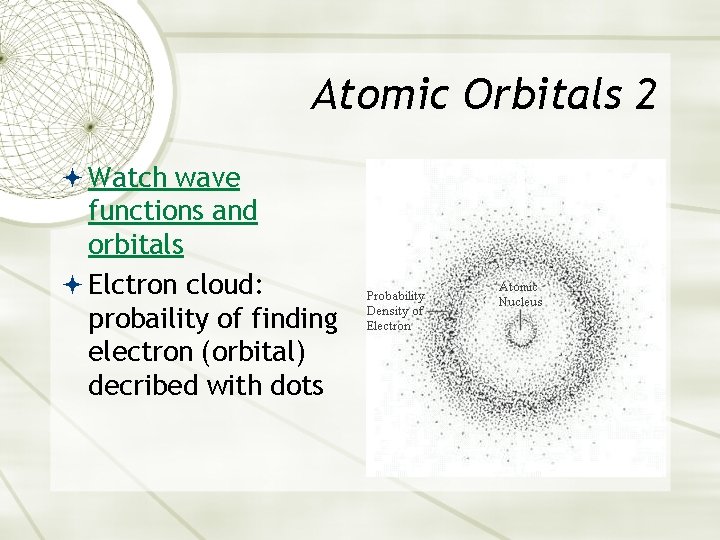
Atomic Orbitals 2 Watch wave functions and orbitals Elctron cloud: probaility of finding electron (orbital) decribed with dots
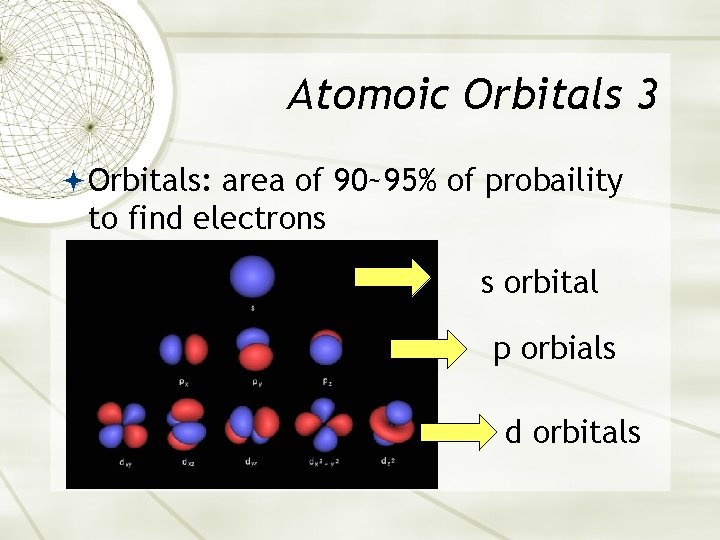
Atomoic Orbitals 3 Orbitals: area of 90~95% of probaility to find electrons s orbital p orbials d orbitals
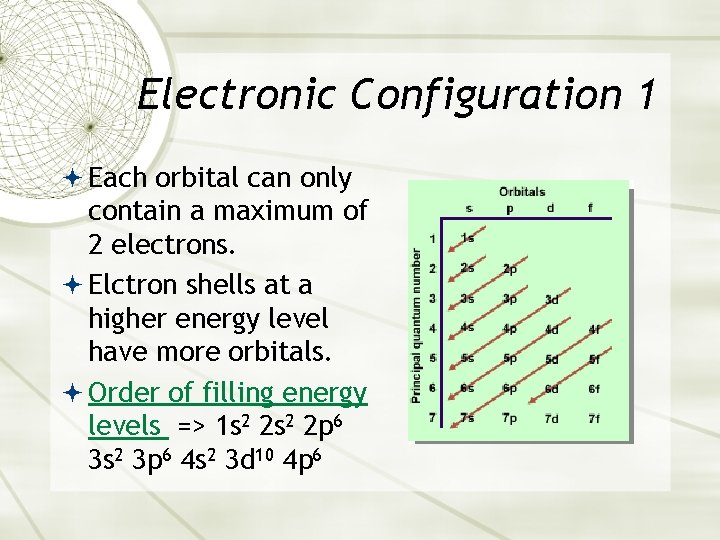
Electronic Configuration 1 Each orbital can only contain a maximum of 2 electrons. Elctron shells at a higher energy level have more orbitals. Order of filling energy levels => 1 s 2 2 p 6 3 s 2 3 p 6 4 s 2 3 d 10 4 p 6
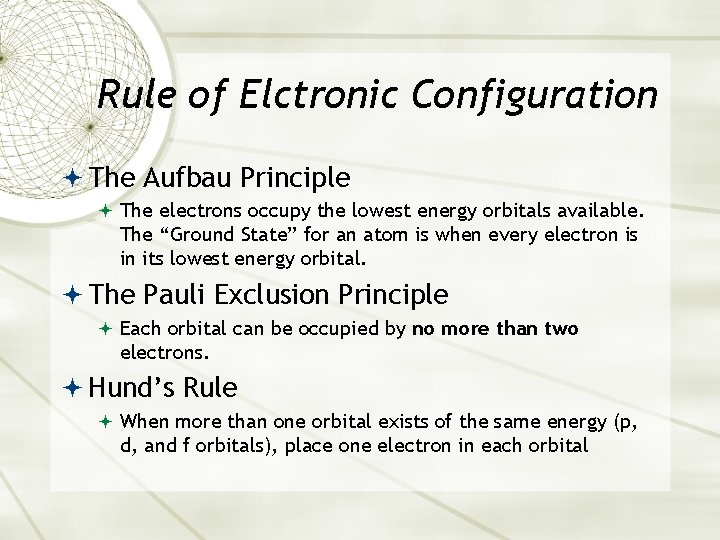
Rule of Elctronic Configuration The Aufbau Principle The electrons occupy the lowest energy orbitals available. The “Ground State” for an atom is when every electron is in its lowest energy orbital. The Pauli Exclusion Principle Each orbital can be occupied by no more than two electrons. Hund’s Rule When more than one orbital exists of the same energy (p, d, and f orbitals), place one electron in each orbital
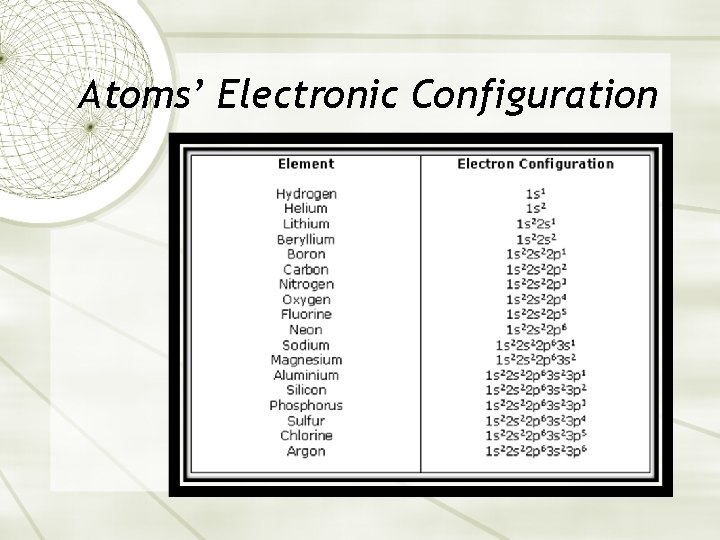
Atoms’ Electronic Configuration
Links for Electronic Configuration Electronic Structures Electron Configuration Atomic electron configurations [end]