
Atomic Structure and the Periodic Table 1 Students
Atomic Structure and the Periodic Table 1. Students can describe the parts of an atom 2. Students can read the element information on the periodic table 3. Students can describe the reactivity of alkali metals 4. Students can describe how various types of bonding in different categories of materials effects their behavior
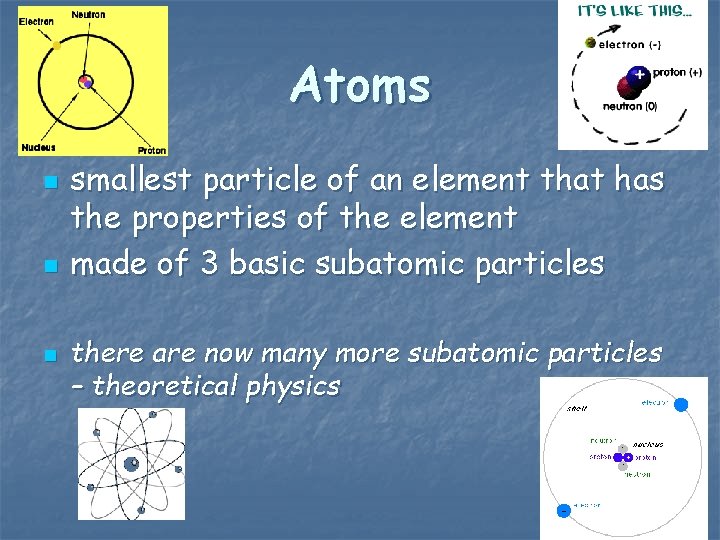
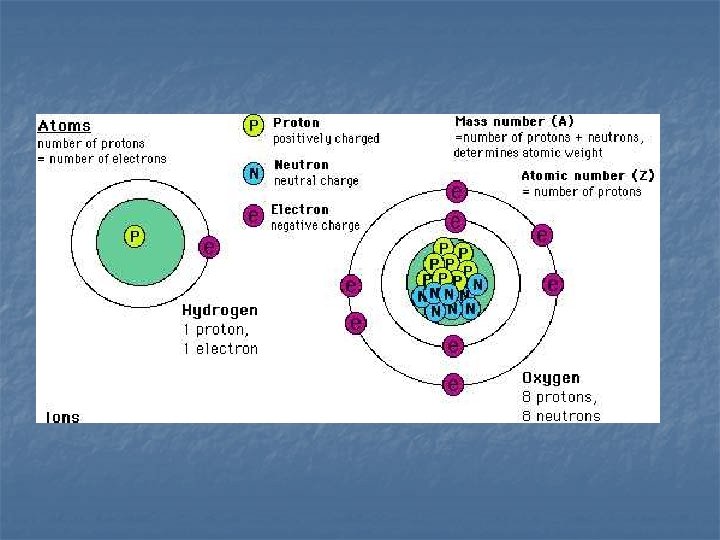
Atoms n n n smallest particle of an element that has the properties of the element made of 3 basic subatomic particles there are now many more subatomic particles – theoretical physics

n nucleus n small, dense center of atom contains almost all the mass of the atom n contains protons and neutrons n
n Atomic Mass Unit (amu) metric unit to measure the mass of VERY small objects (particles) n a unit to measure the mass of atoms n

Subatomic Particles Name Charge Location Mass “Job” Number Protons (p or +) Neutrons (n) Electrons (e-) +1 No charge -1 in nucleus in shells around nucleus ≈ 1 amu ≈ 2000 x smaller Determines identity of element Supplies proper mass to hold nucleus together Determines bonding/ how it reacts
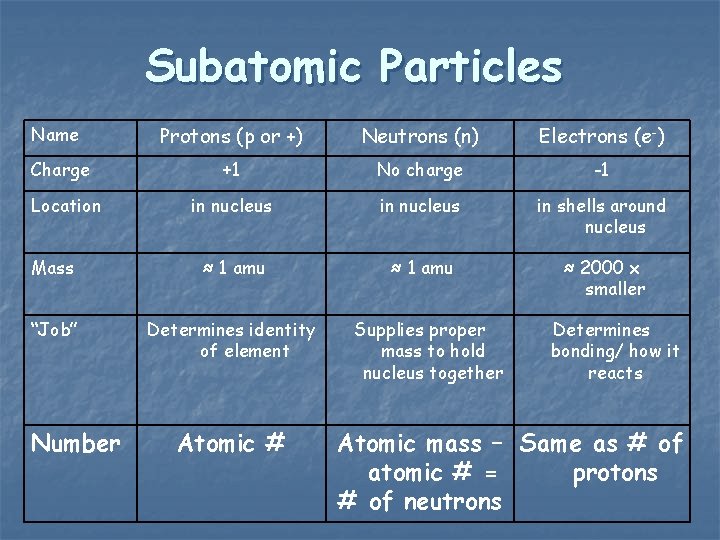
Subatomic Particles Protons (p or +) Neutrons (n) Electrons (e-) +1 No charge -1 in nucleus in shells around nucleus Mass ≈ 1 amu ≈ 2000 x smaller “Job” Determines identity of element Name Charge Location Number Atomic # Supplies proper mass to hold nucleus together Determines bonding/ how it reacts Atomic mass – Same as # of atomic # = protons # of neutrons
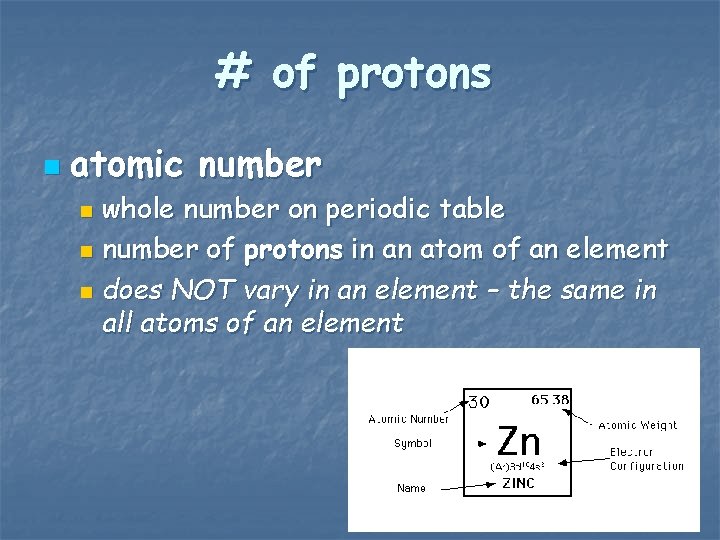
# of protons n atomic number whole number on periodic table n number of protons in an atom of an element n does NOT vary in an element – the same in all atoms of an element n
# of electrons n atoms are neutral n (+) = (-) n # of protons = # of electrons n p = e-
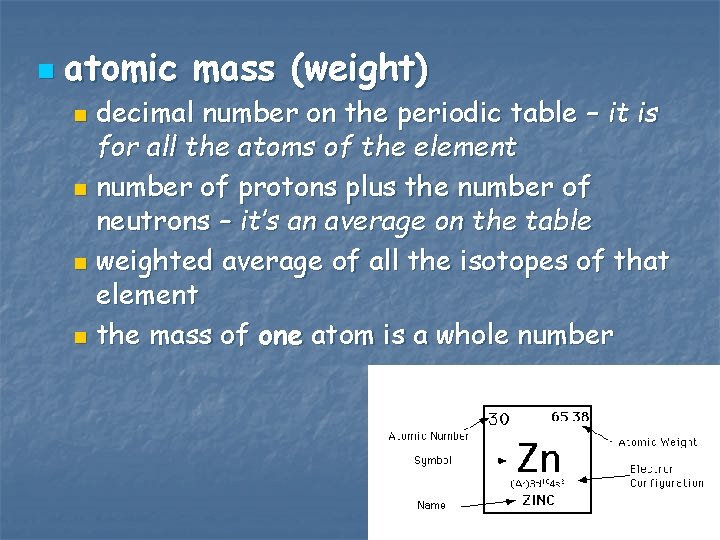
n atomic mass (weight) decimal number on the periodic table – it is for all the atoms of the element n number of protons plus the number of neutrons – it’s an average on the table n weighted average of all the isotopes of that element n the mass of one atom is a whole number n
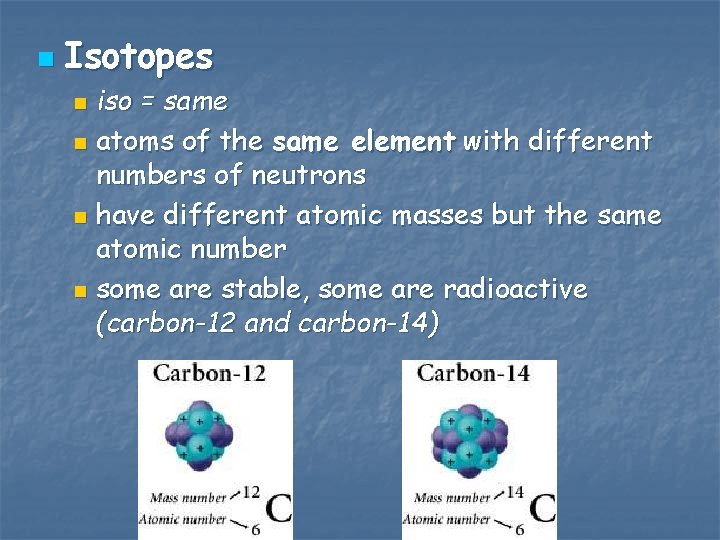
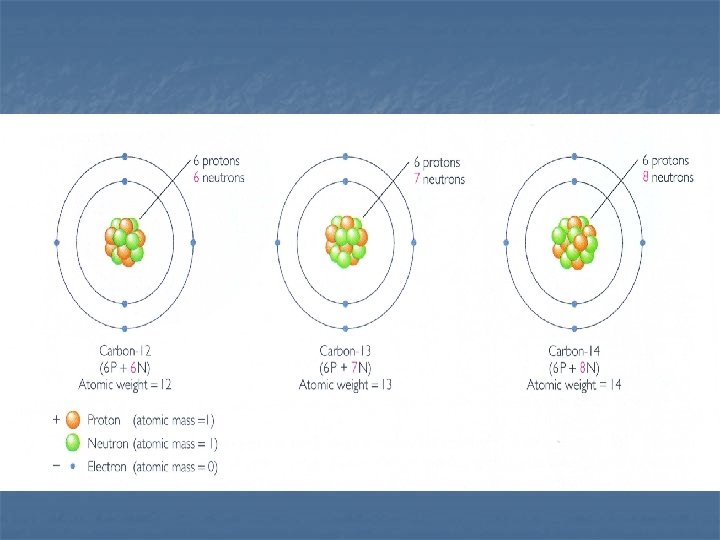
n Isotopes iso = same n atoms of the same element with different numbers of neutrons n have different atomic masses but the same atomic number n some are stable, some are radioactive (carbon-12 and carbon-14) n
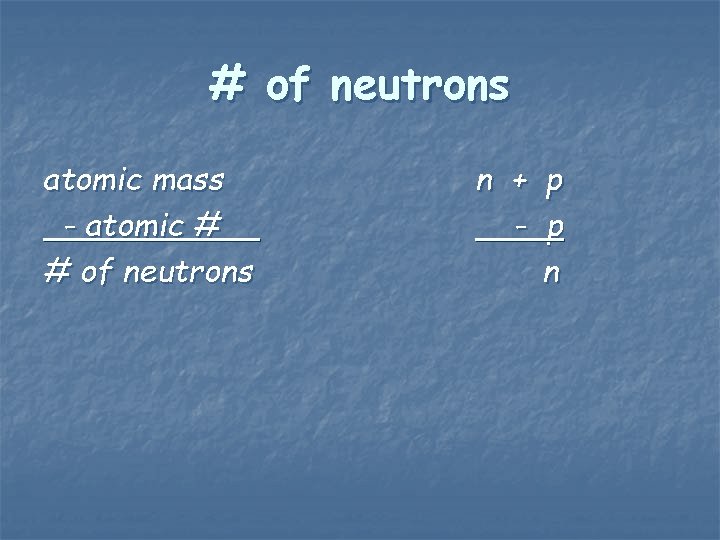
# of neutrons atomic mass - atomic # # of neutrons n + p - p n
Free Write n What do you know about: n atoms n the periodic table
Introduction to the Periodic Table Atomic Number ● Symbol ● Atomic Weight Element ● Compound ● Mixture
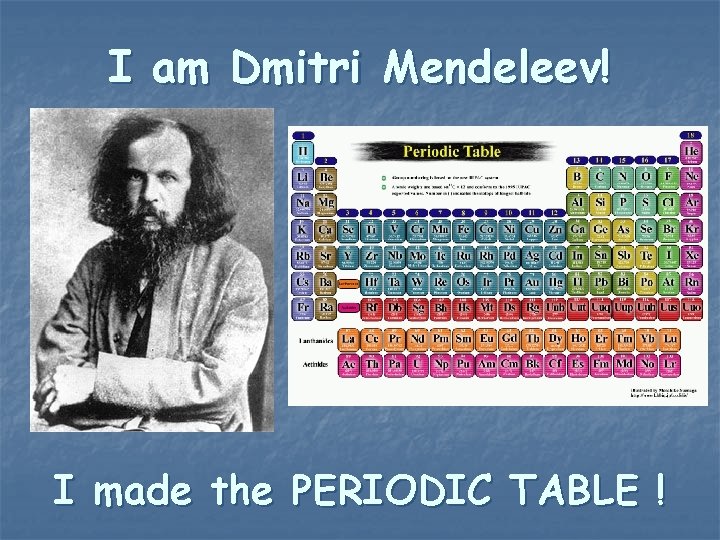
I am Dmitri Mendeleev! I made the PERIODIC TABLE !
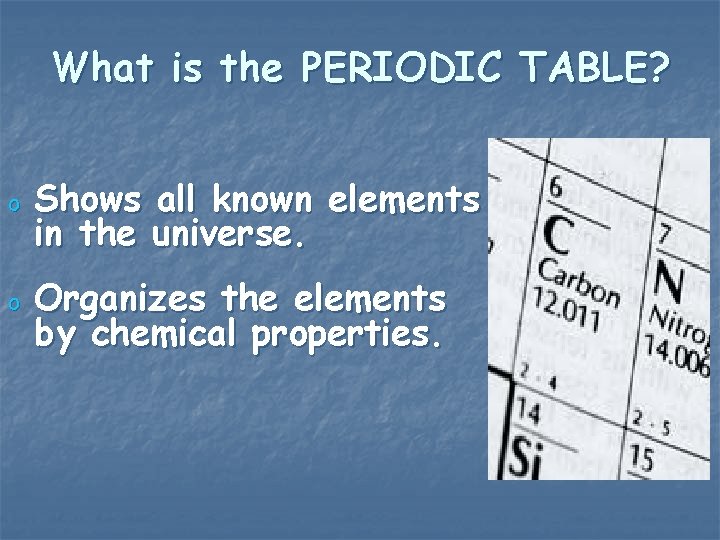
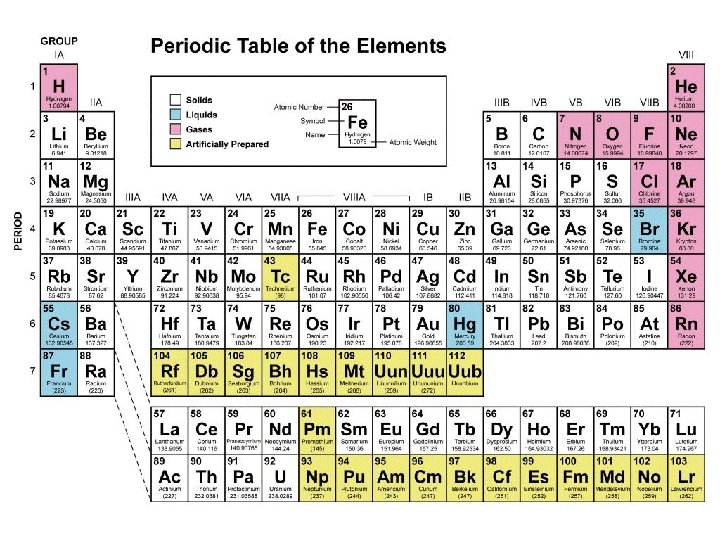
What is the PERIODIC TABLE? o o Shows all known elements in the universe. Organizes the elements by chemical properties.
Periodic Table n How is the periodic table arranged? n n arranged by increasing atomic number rows called periods n tells number of electron shells n number them down the left side of the periodic table – 1 through 7 n
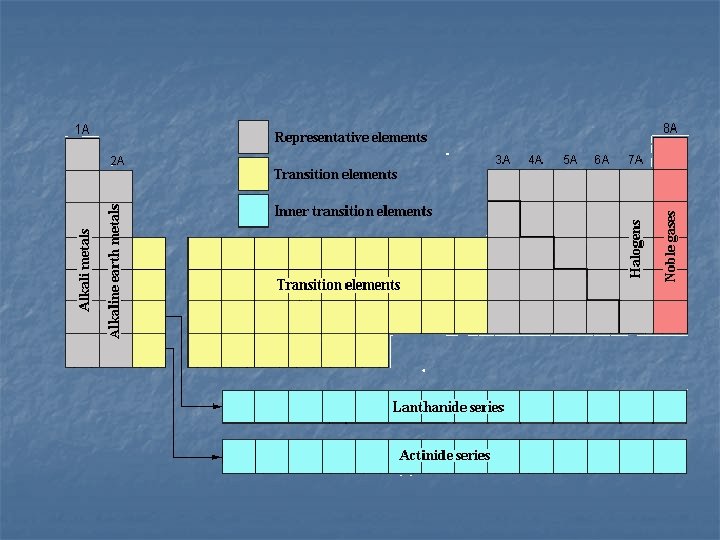
Periodic Table n columns called families or groups n elements in same column have similar chemical properties n same number of valence electrons n
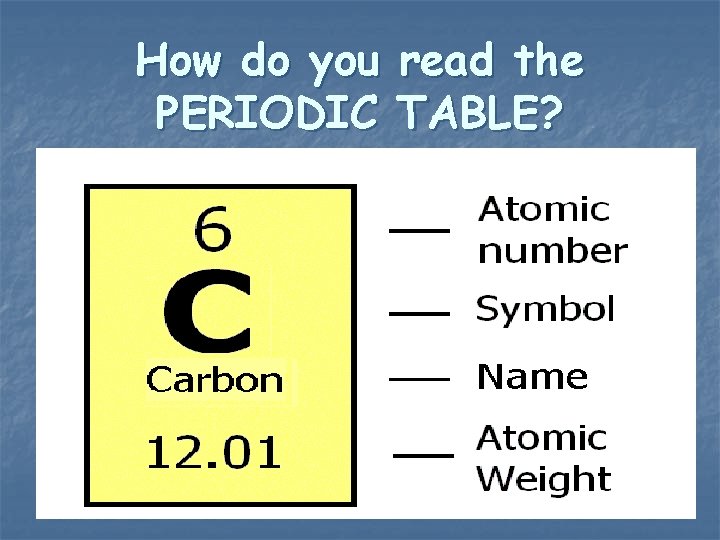
How do you PERIODIC read the TABLE?
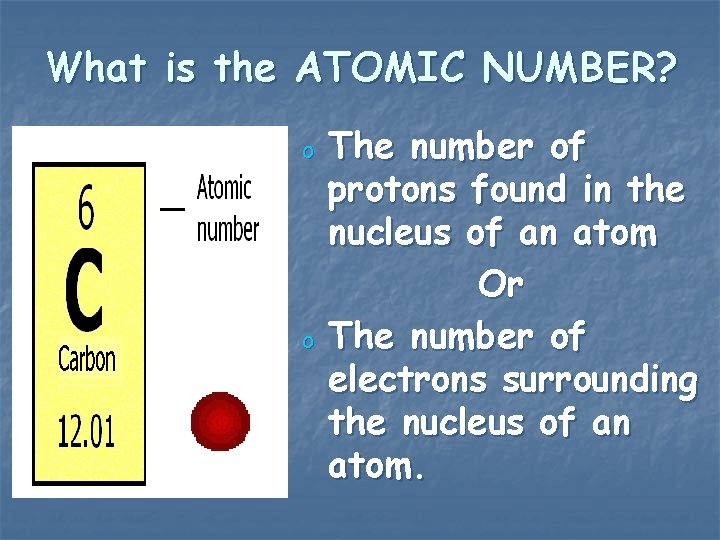
What is the ATOMIC NUMBER? o o The number of protons found in the nucleus of an atom Or The number of electrons surrounding the nucleus of an atom.
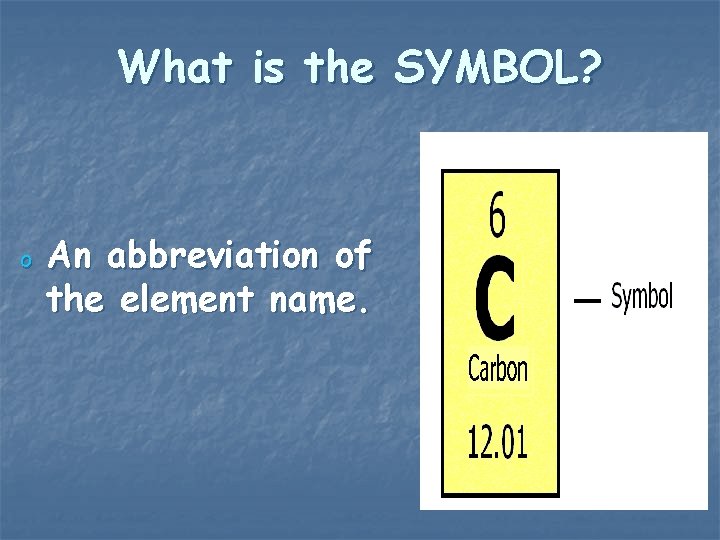
What is the SYMBOL? o An abbreviation of the element name.
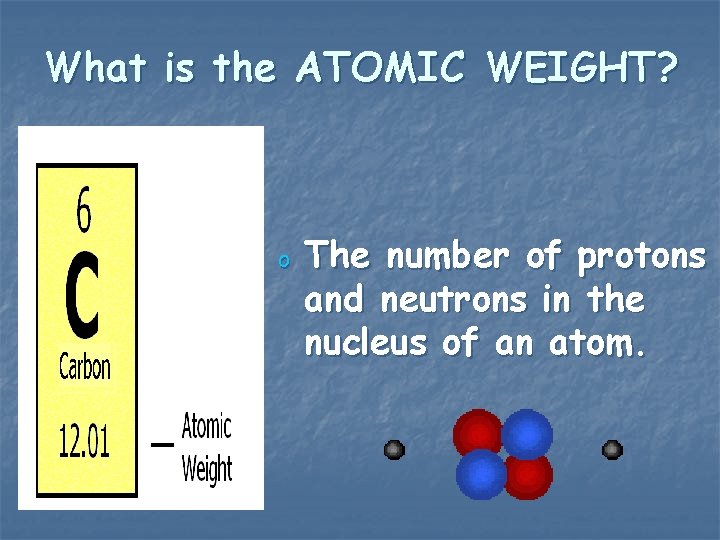
What is the ATOMIC WEIGHT? o The number of protons and neutrons in the nucleus of an atom.
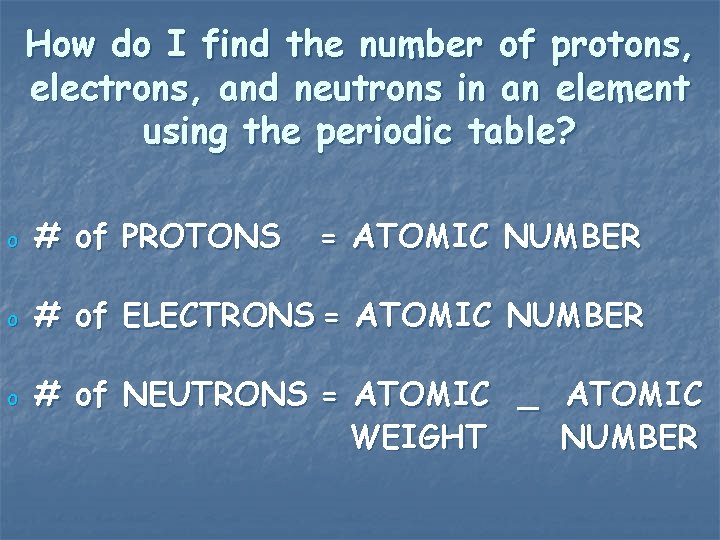
How do I find the number of protons, electrons, and neutrons in an element using the periodic table? o # of PROTONS o # of ELECTRONS = ATOMIC NUMBER o = ATOMIC NUMBER # of NEUTRONS = ATOMIC _ ATOMIC WEIGHT NUMBER

Now you are almost as smart as I am! But not as handsome! Man, I look GOOD!
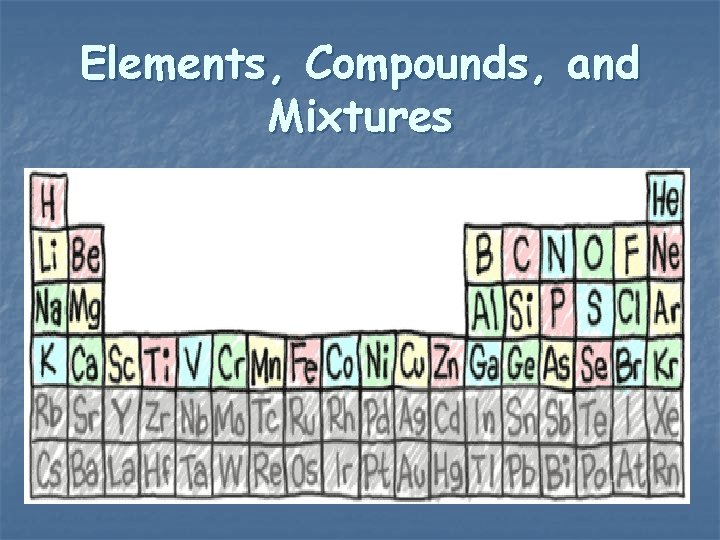
Elements, Compounds, and Mixtures
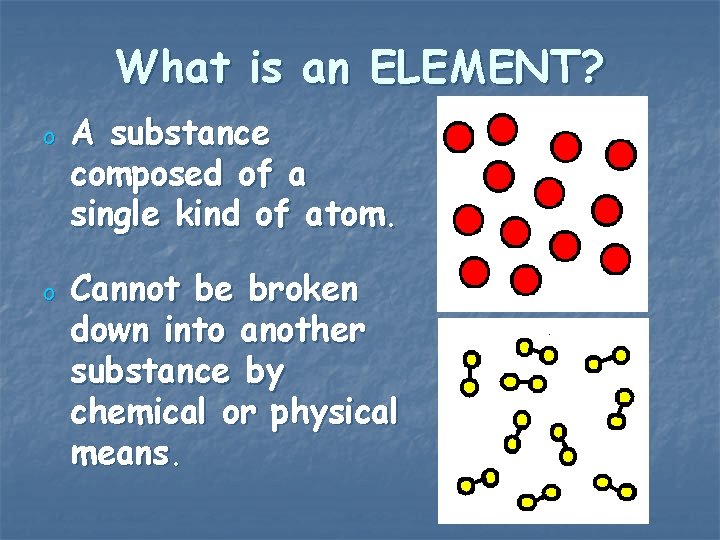
What is an ELEMENT? o o A substance composed of a single kind of atom. Cannot be broken down into another substance by chemical or physical means.
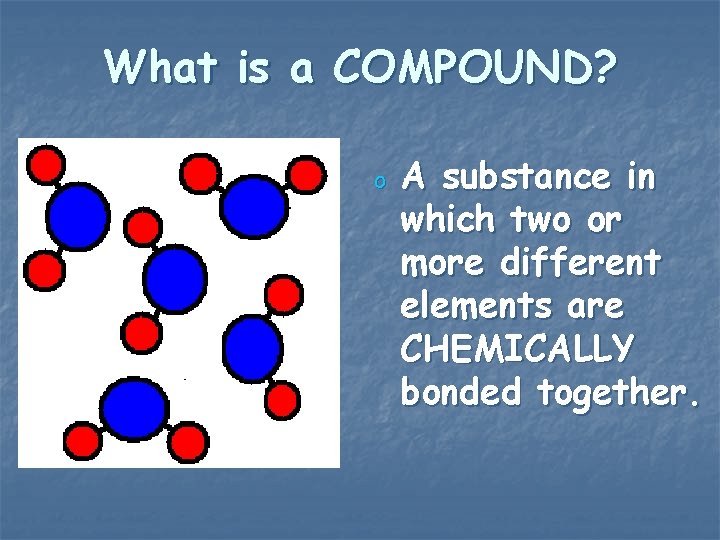
What is a COMPOUND? o A substance in which two or more different elements are CHEMICALLY bonded together.
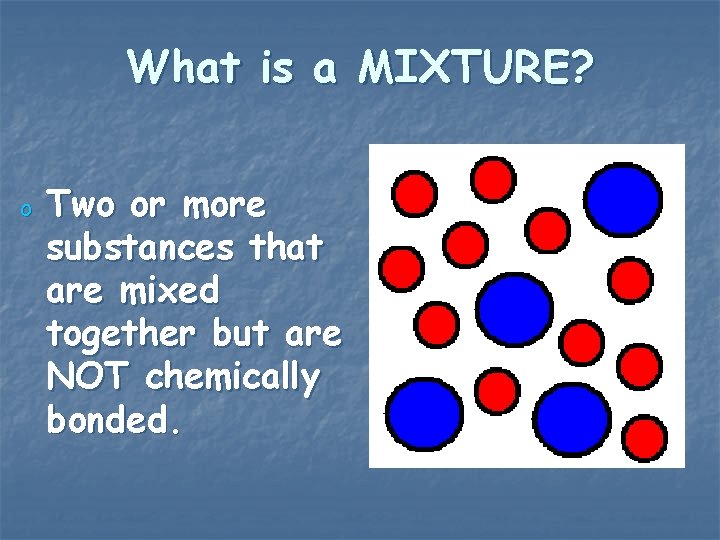
What is a MIXTURE? o Two or more substances that are mixed together but are NOT chemically bonded.
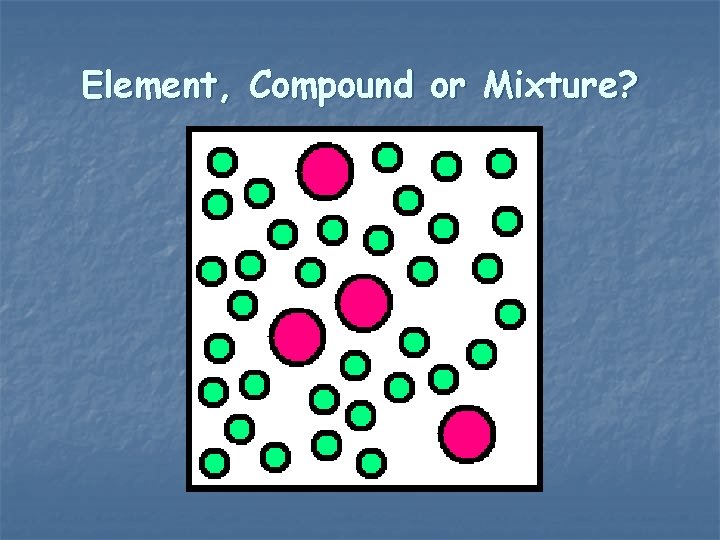
Element, Compound or Mixture?
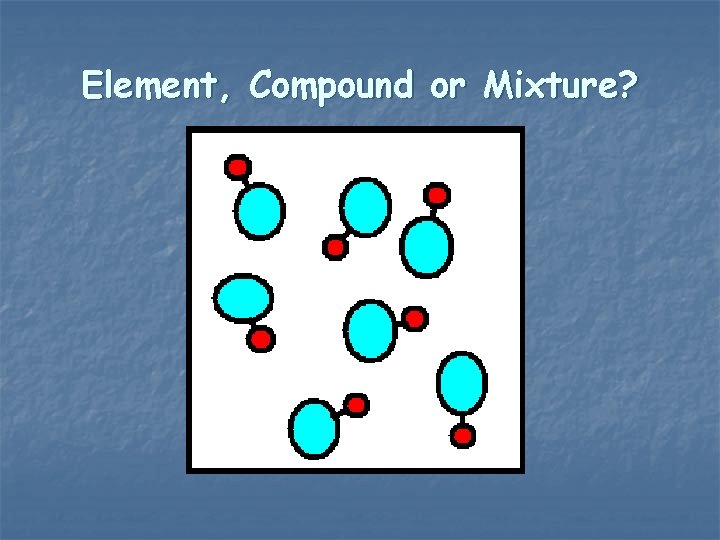
Element, Compound or Mixture?
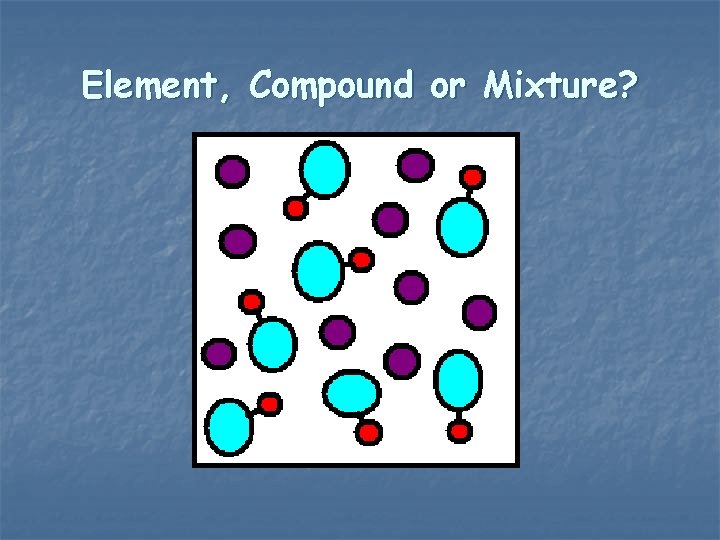
Element, Compound or Mixture?
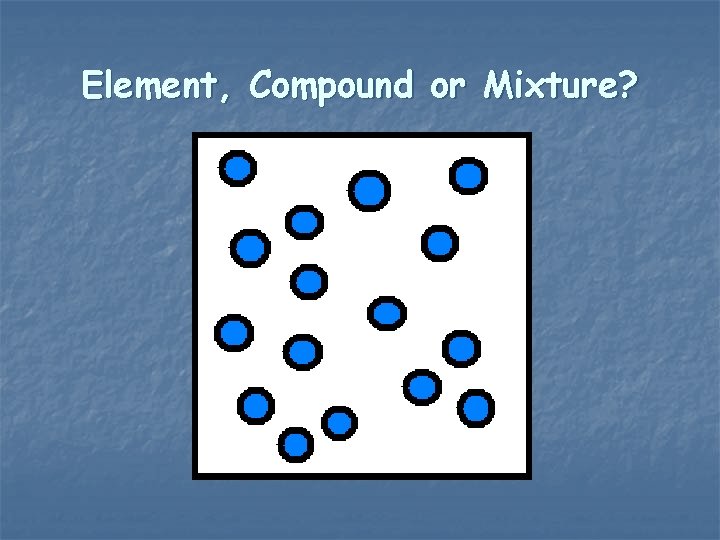
Element, Compound or Mixture?
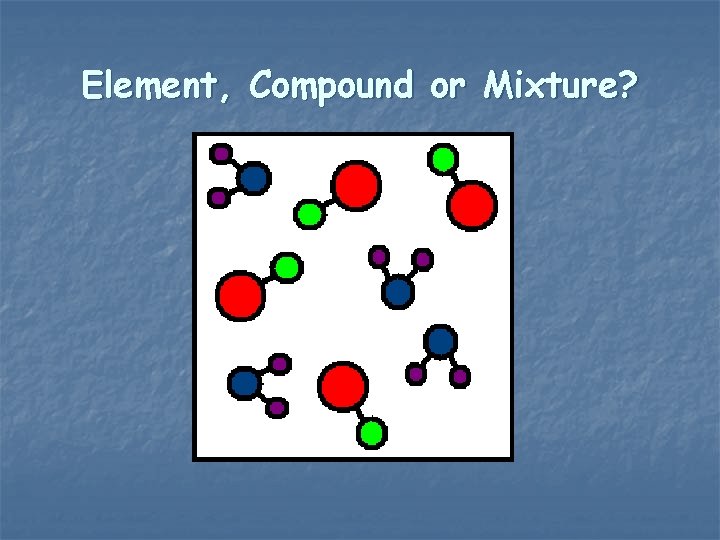
Element, Compound or Mixture?
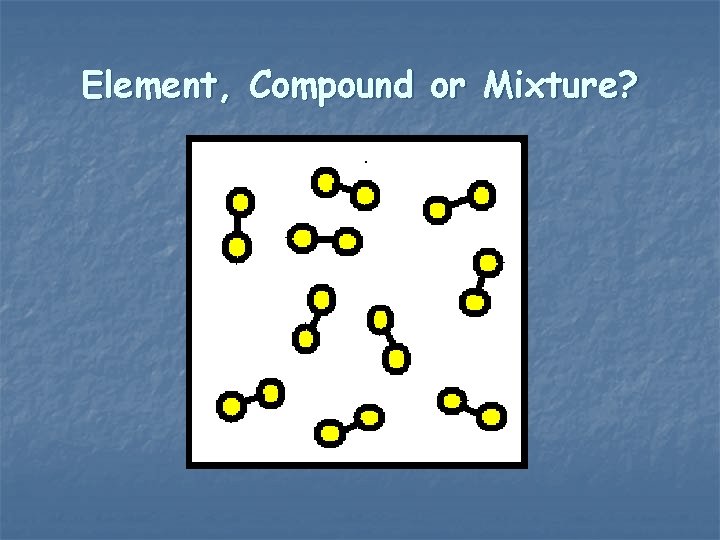
Element, Compound or Mixture?

You are still not as handsome as the great Mendeleev! I am working this beard! Man, I look GOOD!
Periodic Table n valence electrons in outermost shell n involved in bonding n n number the columns on your periodic table with the correct number of valence electrons
Stability n stable number of electrons = 8 in the outermost shell 8 valence en octet rule n n exception – 1 st shell is stable with 2 e-
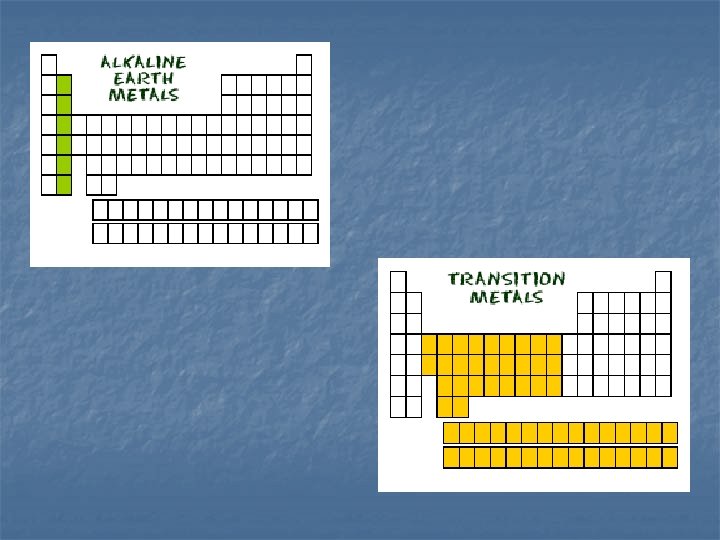
Metals n 1 to 3 valence electrons n givers of electrons n lose electrons n make (+) ions n left side of periodic table
Nonmetals n 5 to 8 valence electrons n takers of electrons n gain electrons n make (-) ions n right side of periodic table
Ion n n n atom with a charge atom has gained or lost electrons gained e- = (-) charge lost e- = (+) charge (+) ion = cation (-) ion = anion
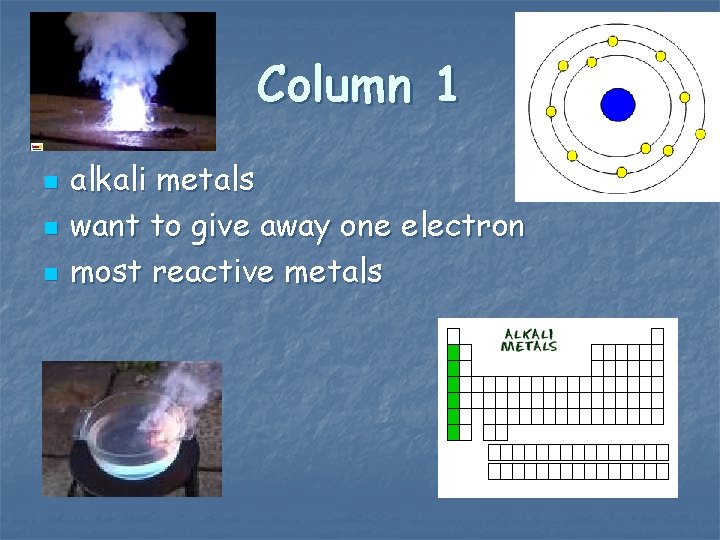
Column 1 n n n alkali metals want to give away one electron most reactive metals
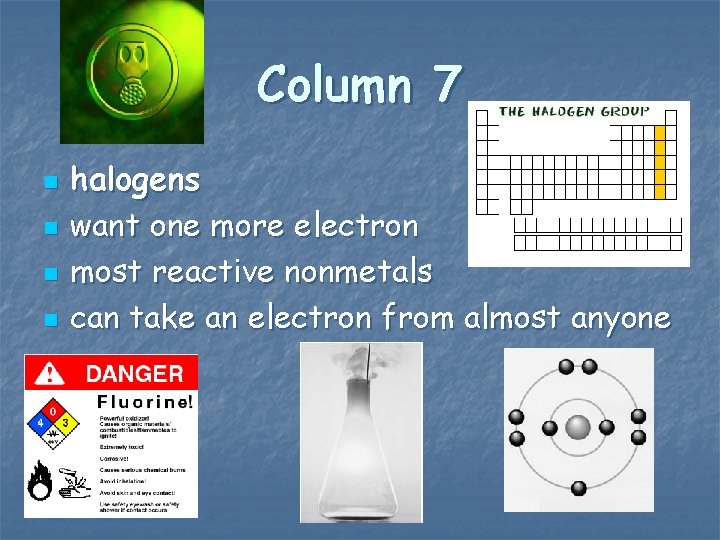
Column 7 n n halogens want one more electron most reactive nonmetals can take an electron from almost anyone
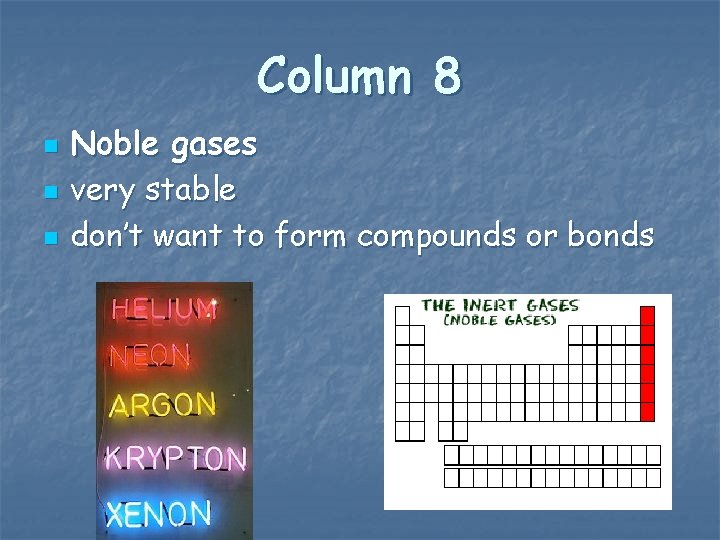
Column 8 n n n Noble gases very stable don’t want to form compounds or bonds
Bonding n atoms achieve a stable number of electrons (ionic and covalent) n involves valence (outer) electrons n make compounds and/or solids
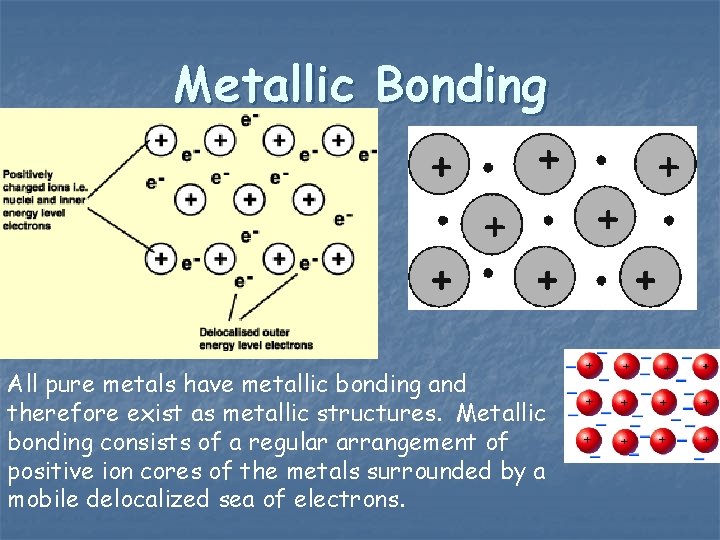
Metallic Bonding All pure metals have metallic bonding and therefore exist as metallic structures. Metallic bonding consists of a regular arrangement of positive ion cores of the metals surrounded by a mobile delocalized sea of electrons.
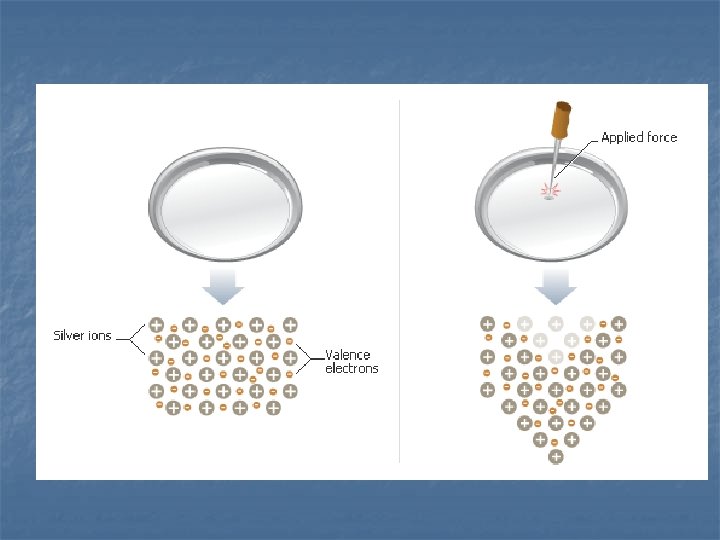
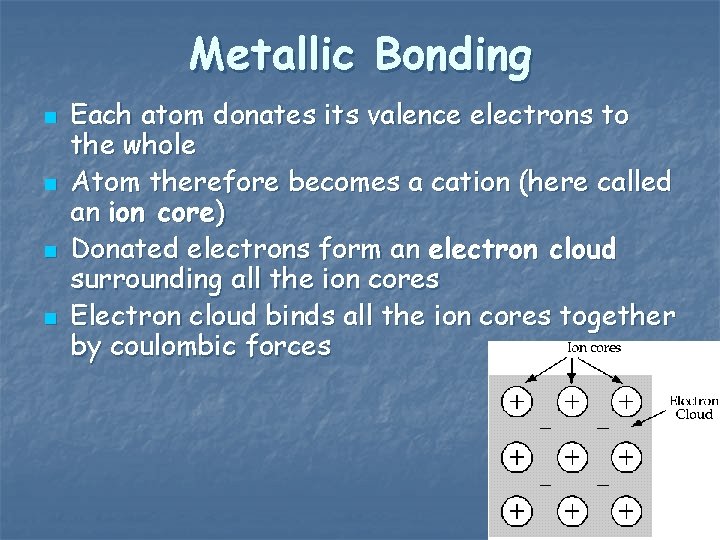
Metallic Bonding n n Each atom donates its valence electrons to the whole Atom therefore becomes a cation (here called an ion core) Donated electrons form an electron cloud surrounding all the ion cores Electron cloud binds all the ion cores together by coulombic forces
Metallic Bonding n n Valence electrons are delocalized: Shared by all atoms in the material Electrons are free to drift throughout the material Provides unique properties only found in metals n n n shiny metallic luster good electrical and thermal conductivity many others. . .
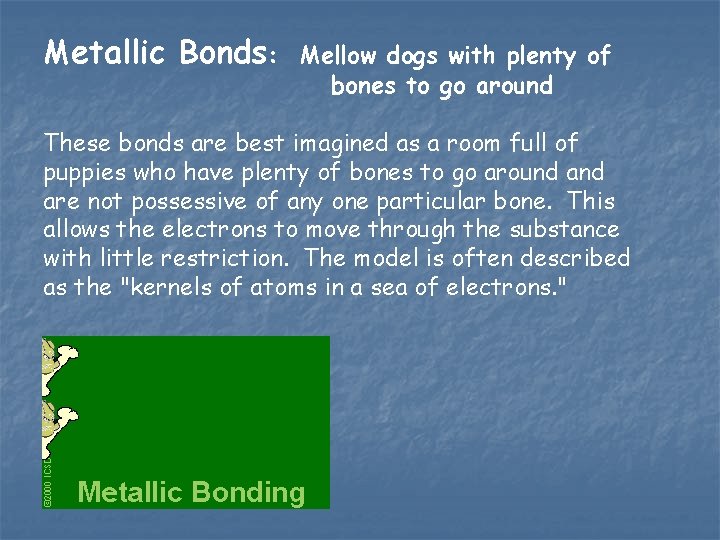
Metallic Bonds: Mellow dogs with plenty of bones to go around These bonds are best imagined as a room full of puppies who have plenty of bones to go around are not possessive of any one particular bone. This allows the electrons to move through the substance with little restriction. The model is often described as the "kernels of atoms in a sea of electrons. "
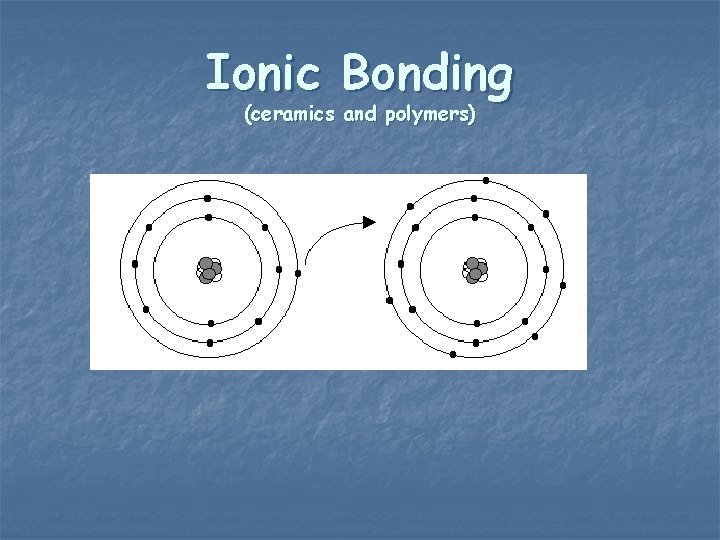
Ionic Bonding (ceramics and polymers)
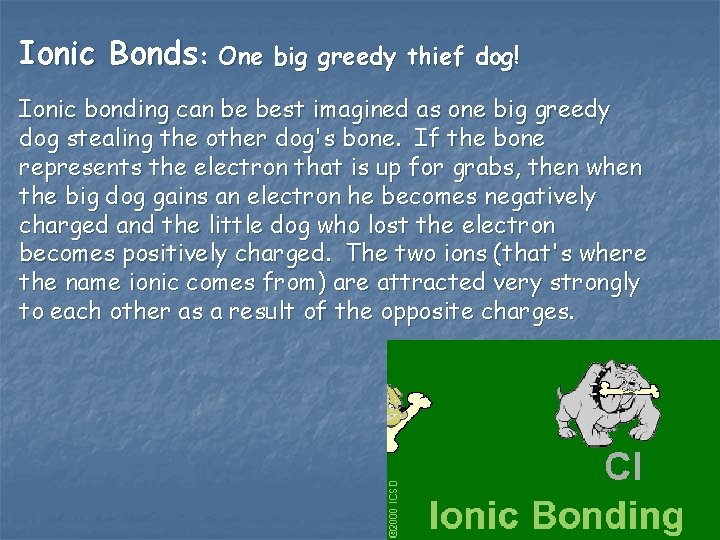
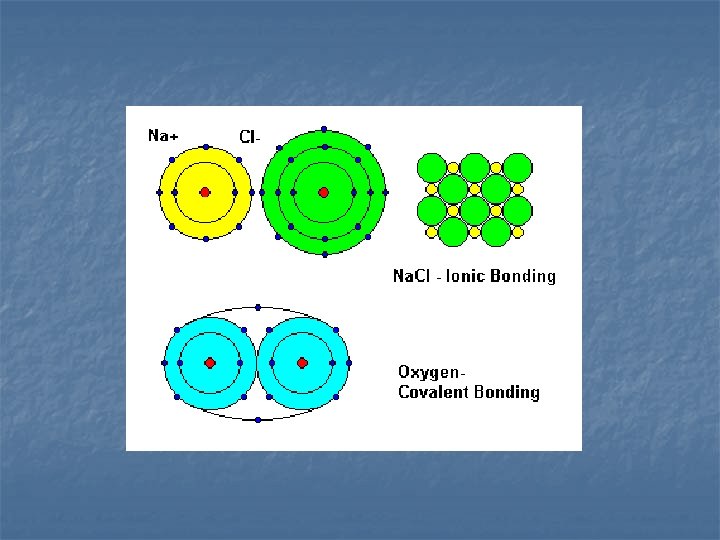
Ionic Bonds: One big greedy thief dog! Ionic bonding can be best imagined as one big greedy dog stealing the other dog's bone. If the bone represents the electron that is up for grabs, then when the big dog gains an electron he becomes negatively charged and the little dog who lost the electron becomes positively charged. The two ions (that's where the name ionic comes from) are attracted very strongly to each other as a result of the opposite charges.
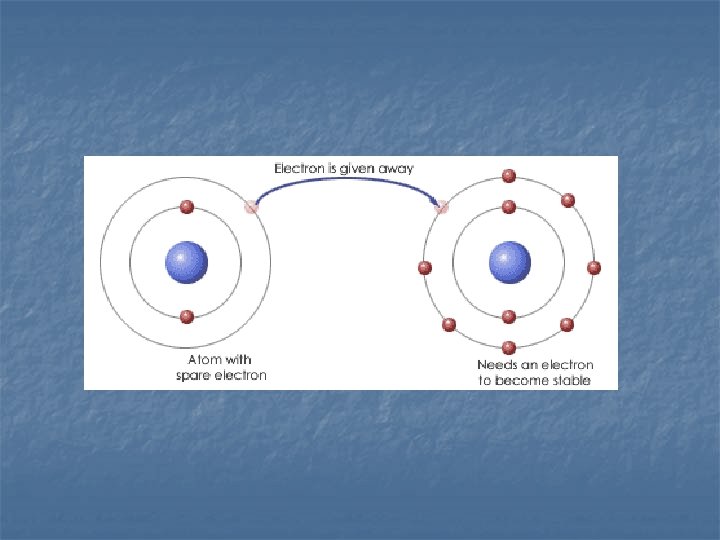
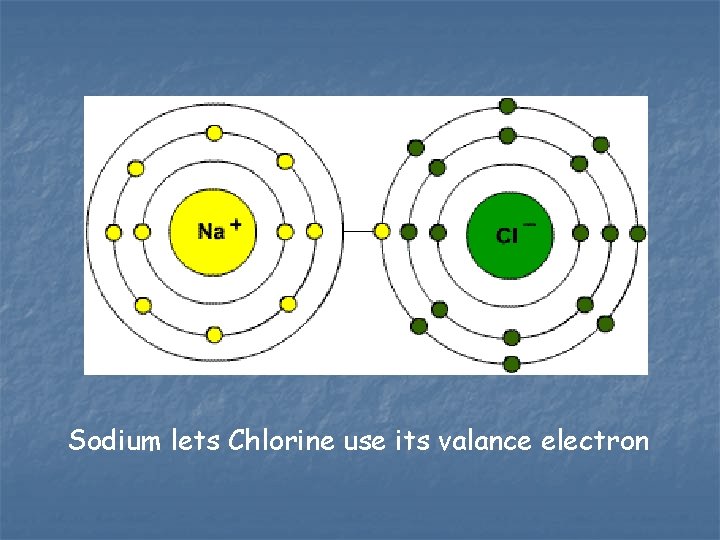
Sodium lets Chlorine use its valance electron
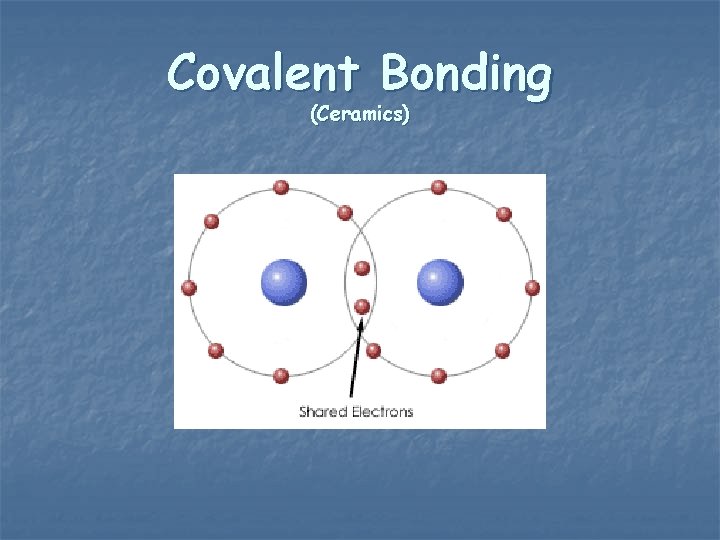
Covalent Bonding (Ceramics)
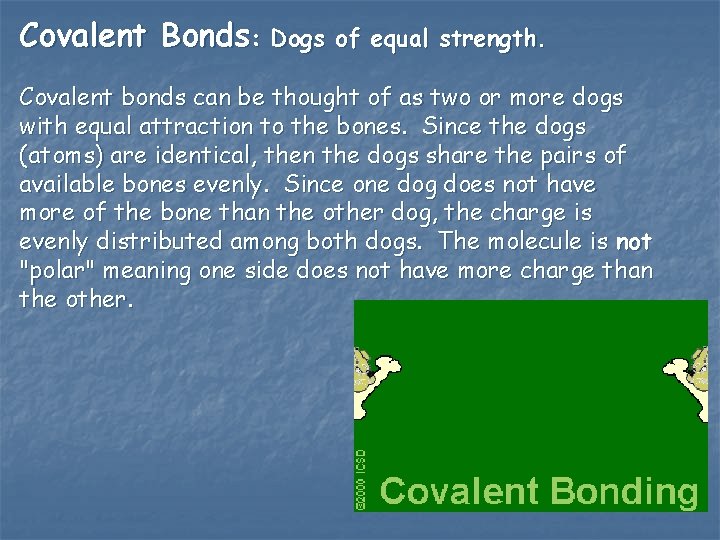
Covalent Bonds: Dogs of equal strength. Covalent bonds can be thought of as two or more dogs with equal attraction to the bones. Since the dogs (atoms) are identical, then the dogs share the pairs of available bones evenly. Since one dog does not have more of the bone than the other dog, the charge is evenly distributed among both dogs. The molecule is not "polar" meaning one side does not have more charge than the other.
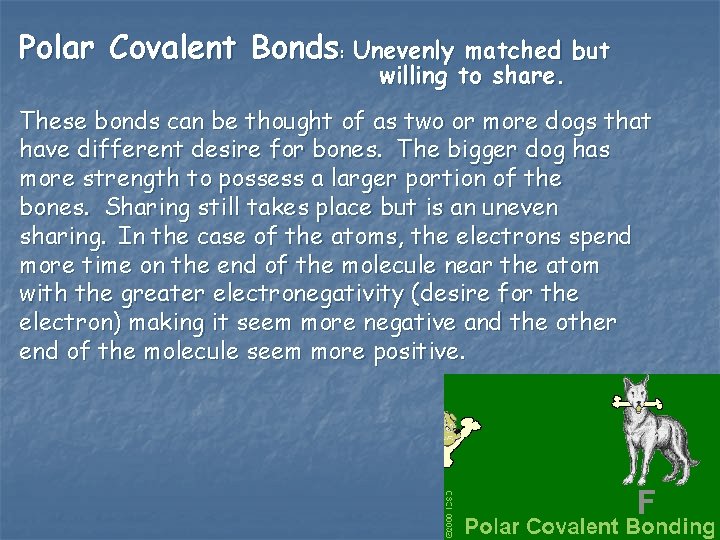
Polar Covalent Bonds: Unevenly matched but willing to share. These bonds can be thought of as two or more dogs that have different desire for bones. The bigger dog has more strength to possess a larger portion of the bones. Sharing still takes place but is an uneven sharing. In the case of the atoms, the electrons spend more time on the end of the molecule near the atom with the greater electronegativity (desire for the electron) making it seem more negative and the other end of the molecule seem more positive.
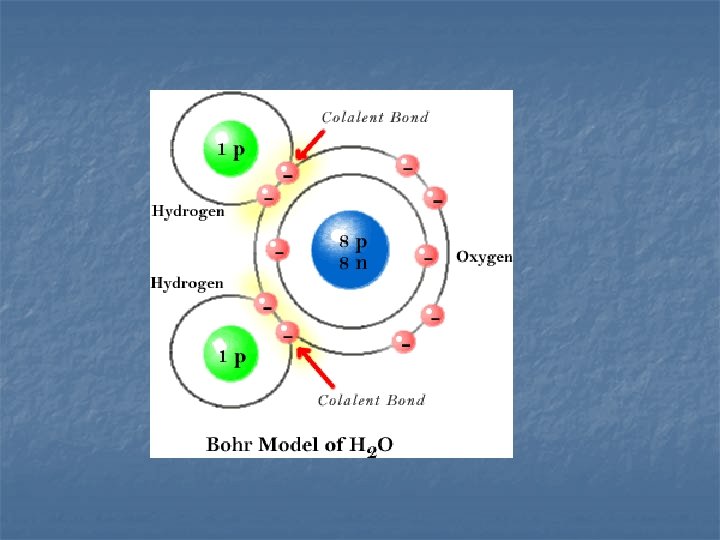
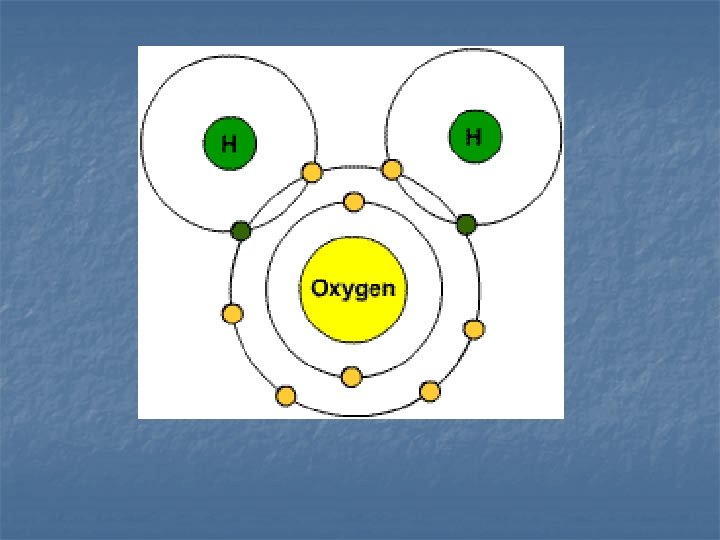
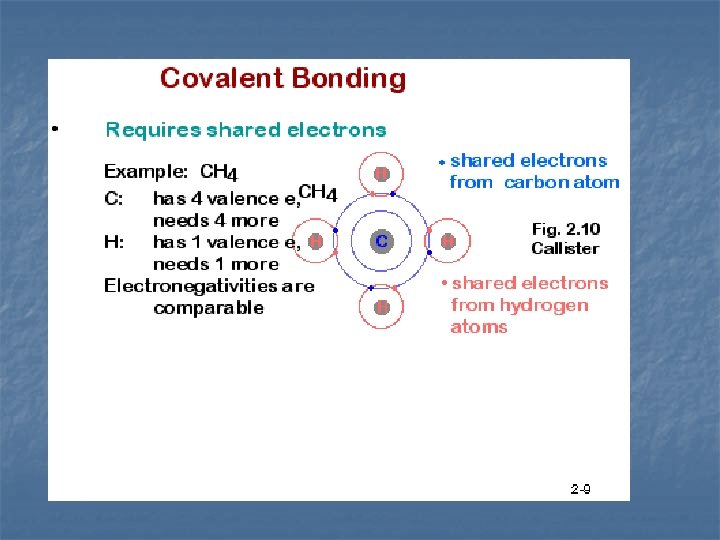
Covalent Network Solid n n n n only covalent bonds extremely large molecules or networks usually have at least one element from carbon family very strong and hard very high melt T° some glass and ceramics, diamond polymers are usually not because they make linear chains instead of networks
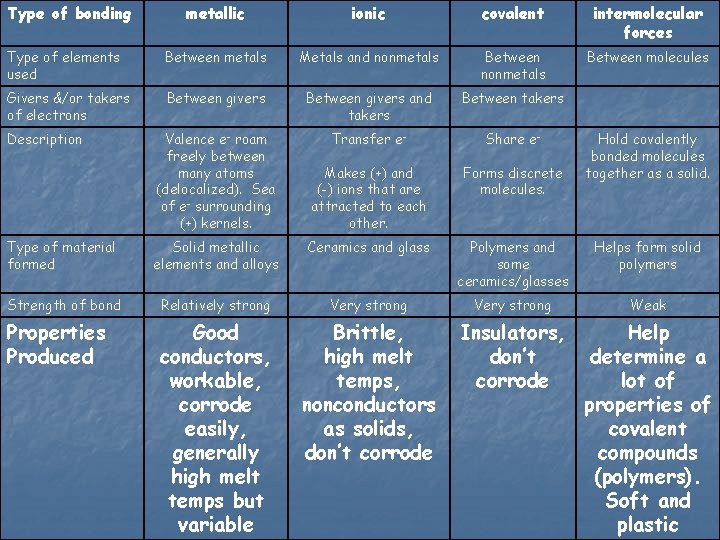
Type of bonding metallic ionic covalent intermolecular forces Type of elements used Between metals Metals and nonmetals Between molecules Givers &/or takers of electrons Between givers and takers Between takers Valence e- roam freely between many atoms (delocalized). Sea of e- surrounding (+) kernels. Transfer e- Share e- Makes (+) and (-) ions that are attracted to each other. Forms discrete molecules. Description Hold covalently bonded molecules together as a solid. Type of material formed Solid metallic elements and alloys Ceramics and glass Polymers and some ceramics/glasses Helps form solid polymers Strength of bond Relatively strong Very strong Weak Properties Produced Good conductors, workable, corrode easily, generally high melt temps but variable Brittle, high melt temps, nonconductors as solids, don’t corrode Insulators, don’t corrode Help determine a lot of properties of covalent compounds (polymers). Soft and plastic
n http: //www. bbc. co. uk/scotland/education/bitesize/higher/ chemistry/energy/bsp 1_rev. shtml n n n http: //www. ewart. org. uk/science/structures/str 13. htm n n Ionic bonding Electron numbers ions and aions http: //www. ewart. org. uk/science/structures/str 14. htm n n Read the 4 slides and take the quiz at the end Patterns in the periodic table Covalent bonding http: //www. ewart. org. uk/science/structures/str 7. htm n Structure of the atom
- Slides: 67