
Atomic Structure and Periodicity Shielding and Such Shielding
- Slides: 13
Atomic Structure and Periodicity Shielding and Such
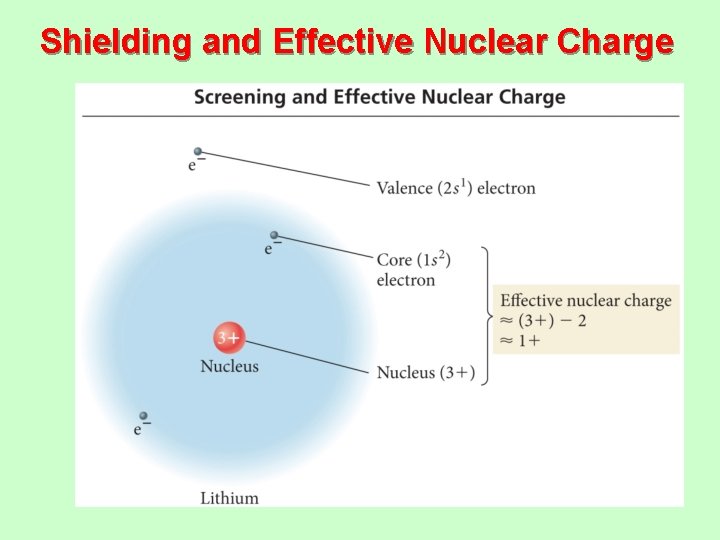
Shielding • In a multielectron system, electrons are • • simultaneously attracted to the nucleus and repelled by each other. Outer electrons are shielded from the nucleus by the core electrons. üShielding effect üOuter electrons do not effectively screen for each other. The shielding causes the outer electrons to not experience the full strength of the nuclear charge.
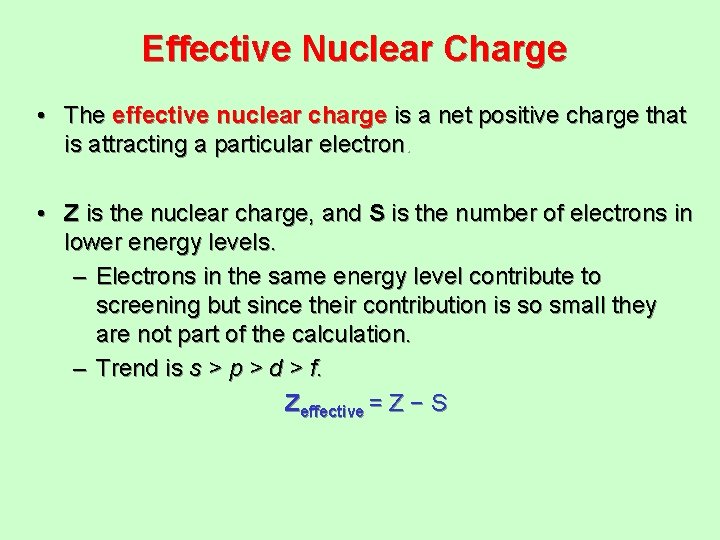
Effective Nuclear Charge • The effective nuclear charge is a net positive charge that is attracting a particular electron. • Z is the nuclear charge, and S is the number of electrons in lower energy levels. – Electrons in the same energy level contribute to screening but since their contribution is so small they are not part of the calculation. – Trend is s > p > d > f. Zeffective = Z − S
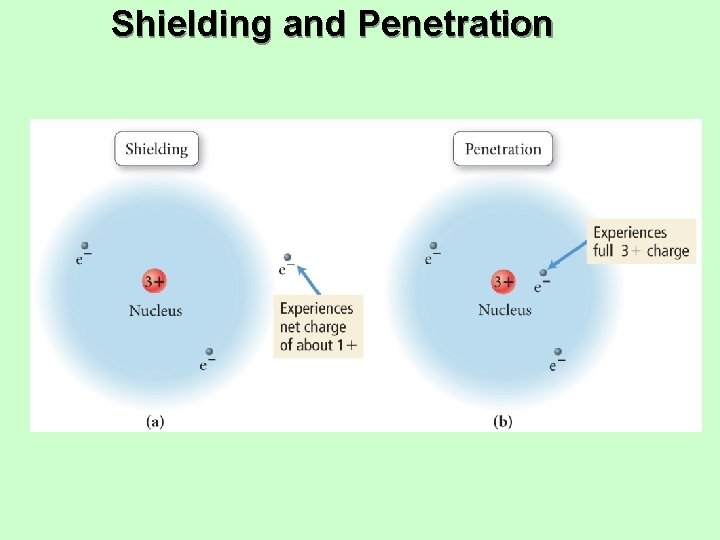
Shielding and Penetration
Shielding and Effective Nuclear Charge
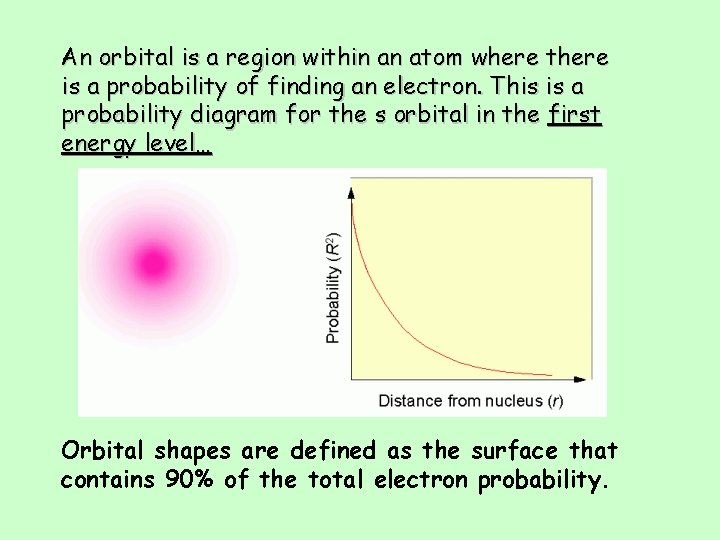
An orbital is a region within an atom where there is a probability of finding an electron. This is a probability diagram for the s orbital in the first energy level… Orbital shapes are defined as the surface that contains 90% of the total electron probability.
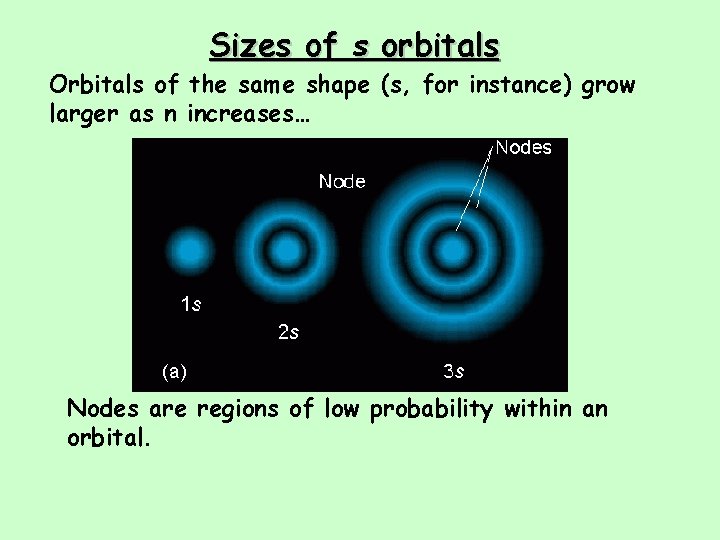
Sizes of s orbitals Orbitals of the same shape (s, for instance) grow larger as n increases… Nodes are regions of low probability within an orbital.
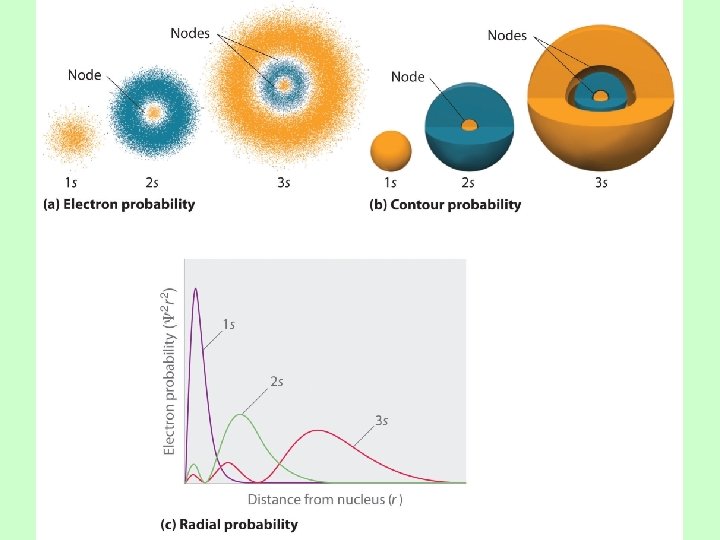
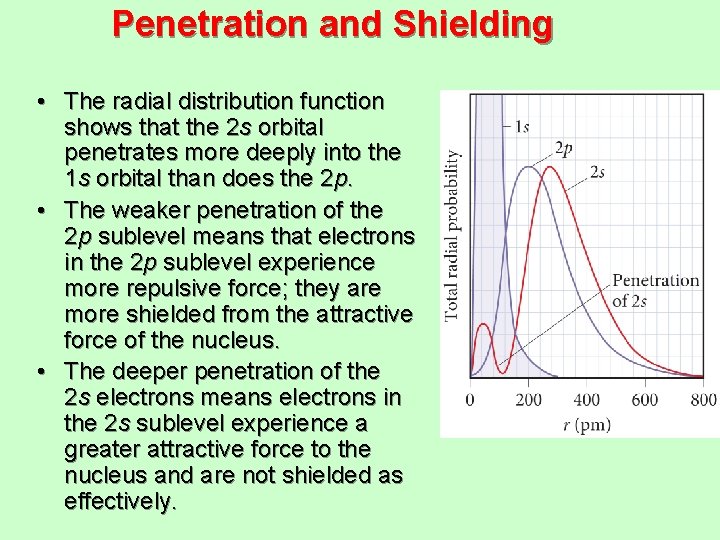
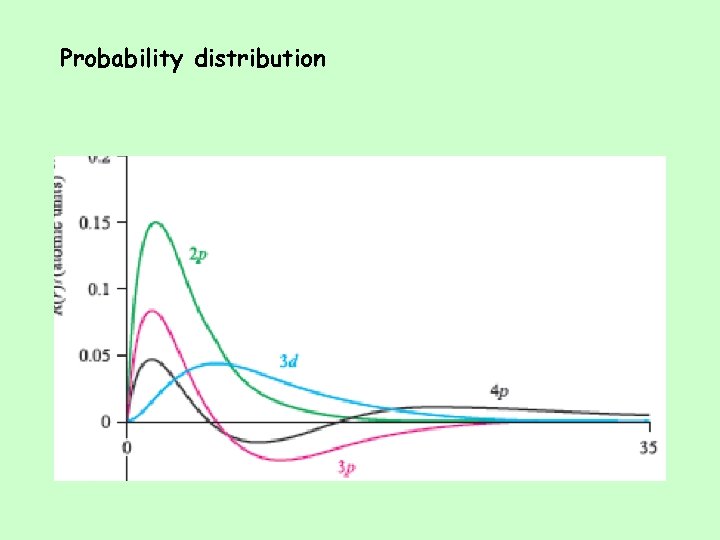
Penetration and Shielding • The radial distribution function shows that the 2 s orbital penetrates more deeply into the 1 s orbital than does the 2 p. • The weaker penetration of the 2 p sublevel means that electrons in the 2 p sublevel experience more repulsive force; they are more shielded from the attractive force of the nucleus. • The deeper penetration of the 2 s electrons means electrons in the 2 s sublevel experience a greater attractive force to the nucleus and are not shielded as effectively.
Penetration • The closer an electron is to the nucleus, the more attraction it experiences. • The better an outer electron is at penetrating through the electron cloud of inner electrons, the more attraction it will have for the nucleus. • The degree of penetration is related to the orbital’s radial distribution function. – In particular, the distance the maxima of the function are from the nucleus
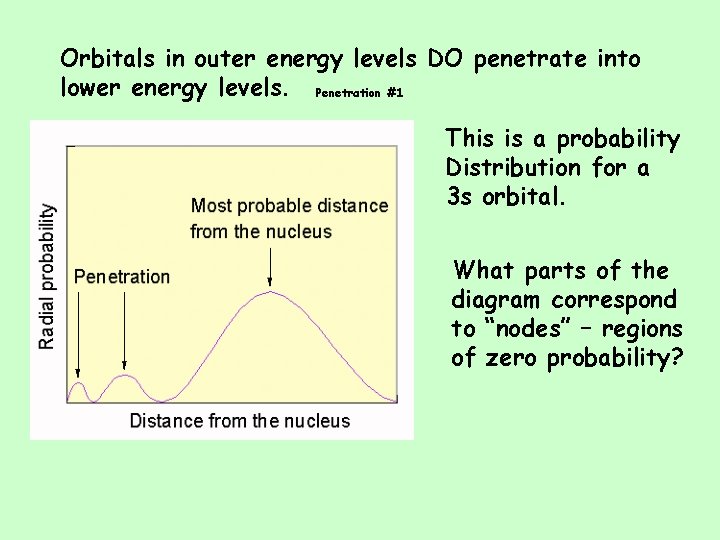
Orbitals in outer energy levels DO penetrate into lower energy levels. Penetration #1 This is a probability Distribution for a 3 s orbital. What parts of the diagram correspond to “nodes” – regions of zero probability?
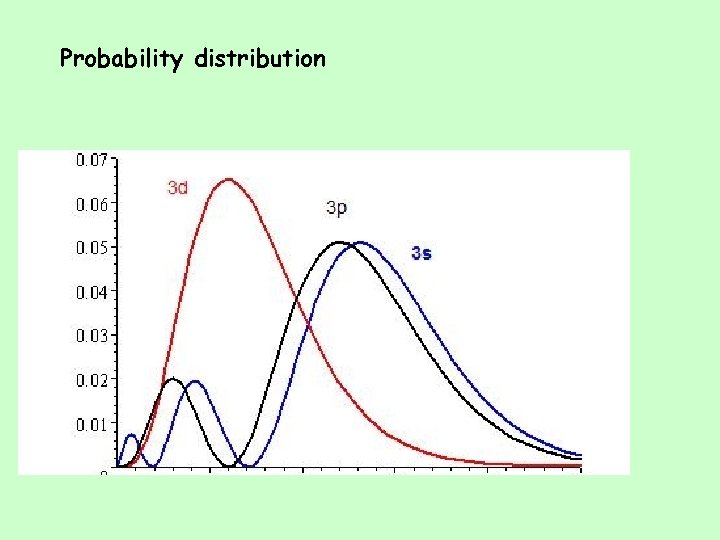
Probability distribution
Probability distribution