
Atomic structure and bonding You must revise The
Atomic structure and bonding You must revise: • • • The structure of the atom Electron arrangement Ionic bonding Covalent bonding Metallic bonding
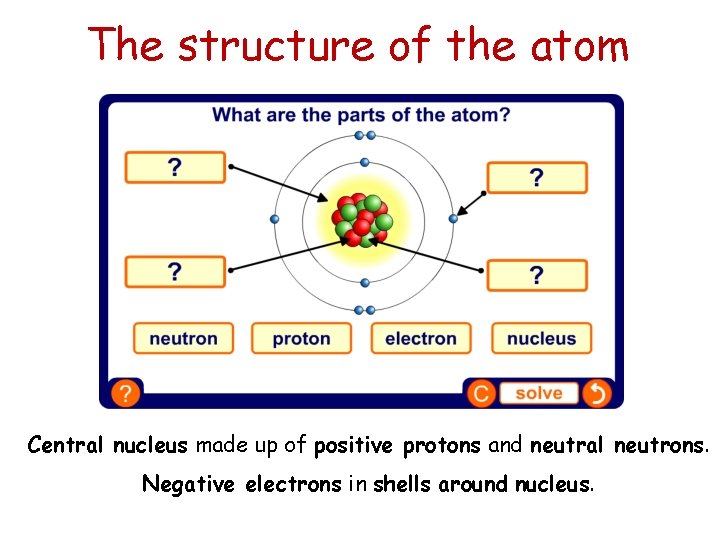
The structure of the atom Central nucleus made up of positive protons and neutral neutrons. Negative electrons in shells around nucleus.
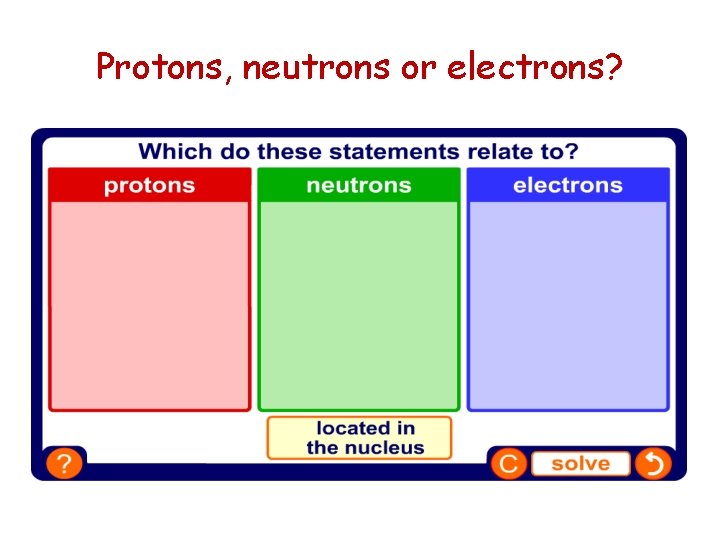
Protons, neutrons or electrons?
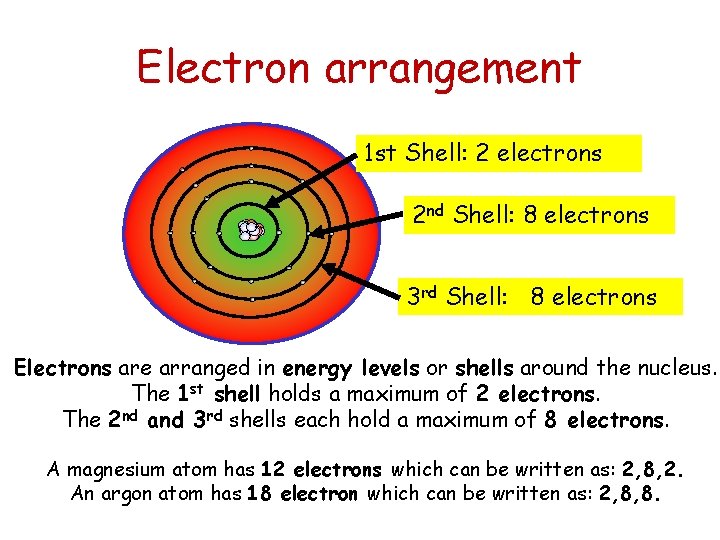
Electron arrangement 1 st Shell: 2 electrons 2 nd Shell: 8 electrons 3 rd Shell: 8 electrons Electrons are arranged in energy levels or shells around the nucleus. The 1 st shell holds a maximum of 2 electrons. The 2 nd and 3 rd shells each hold a maximum of 8 electrons. A magnesium atom has 12 electrons which can be written as: 2, 8, 2. An argon atom has 18 electron which can be written as: 2, 8, 8.
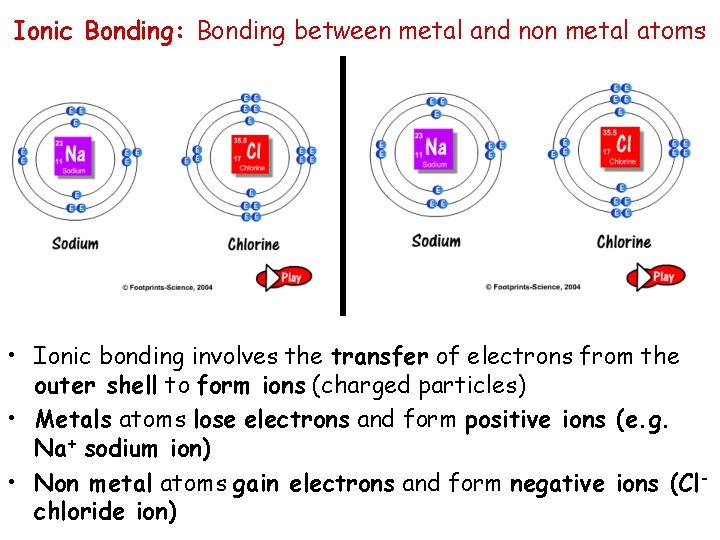
Ionic Bonding: Bonding between metal and non metal atoms • Ionic bonding involves the transfer of electrons from the outer shell to form ions (charged particles) • Metals atoms lose electrons and form positive ions (e. g. Na+ sodium ion) • Non metal atoms gain electrons and form negative ions (Clchloride ion)
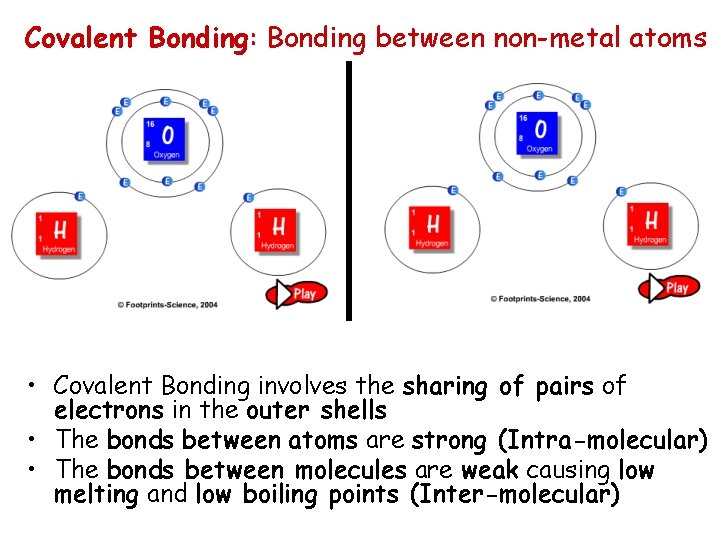
Covalent Bonding: Bonding between non-metal atoms • Covalent Bonding involves the sharing of pairs of electrons in the outer shells • The bonds between atoms are strong (Intra-molecular) • The bonds between molecules are weak causing low melting and low boiling points (Inter-molecular)
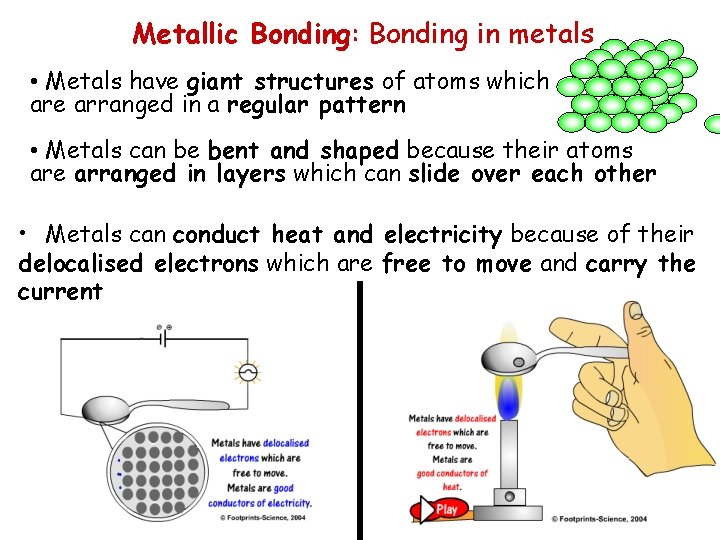
Metallic Bonding: Bonding in metals • Metals have giant structures of atoms which are arranged in a regular pattern • Metals can be bent and shaped because their atoms are arranged in layers which can slide over each other • Metals can conduct heat and electricity because of their delocalised electrons which are free to move and carry the current
- Slides: 7