
Atomic Layer Deposition for Microchannel Plates Jeffrey Elam

- Slides: 11
Atomic Layer Deposition for Microchannel Plates Jeffrey Elam Argonne National Laboratory September 24, 2009
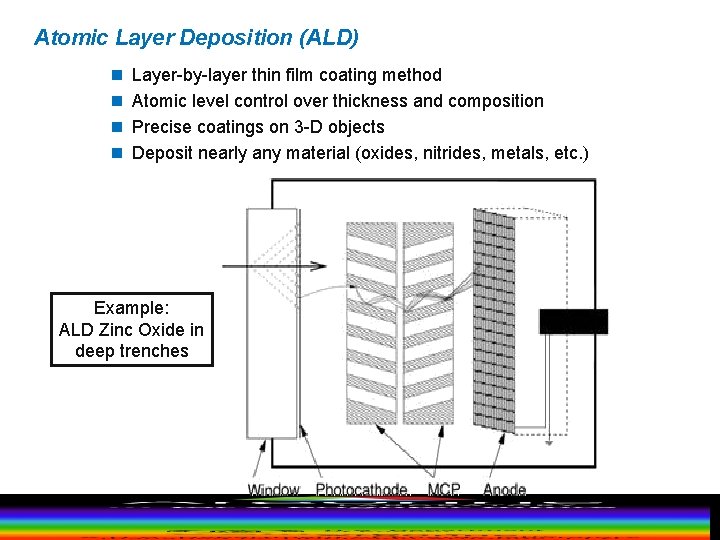
Atomic Layer Deposition (ALD) n n Layer-by-layer thin film coating method Atomic level control over thickness and composition Precise coatings on 3 -D objects Deposit nearly any material (oxides, nitrides, metals, etc. ) Example: ALD Zinc Oxide in deep trenches
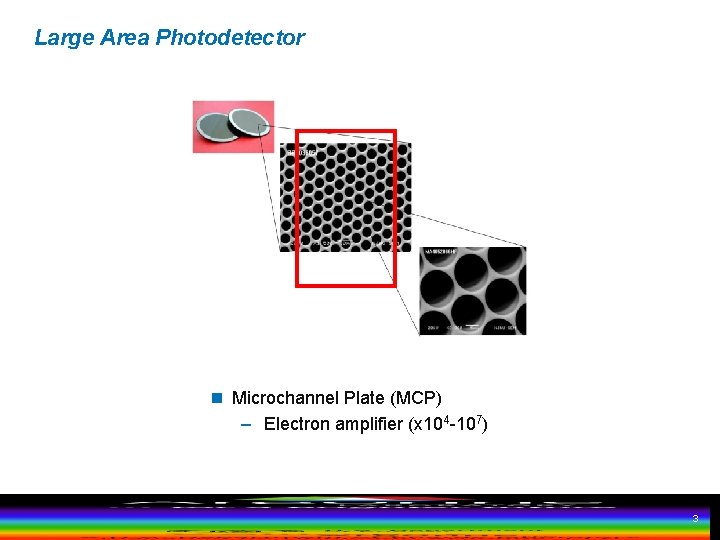
Large Area Photodetector n Microchannel Plate (MCP) – Electron amplifier (x 104 -107) 3
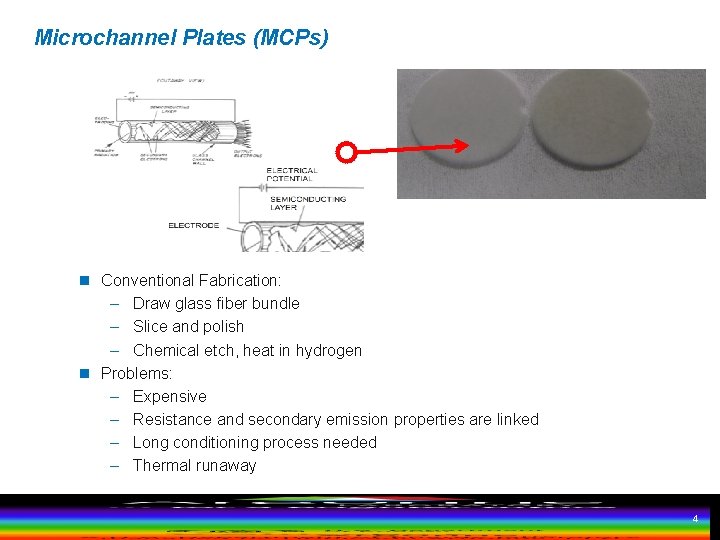
Microchannel Plates (MCPs) n Conventional Fabrication: – Draw glass fiber bundle – Slice and polish – Chemical etch, heat in hydrogen n Problems: – Expensive – Resistance and secondary emission properties are linked – Long conditioning process needed – Thermal runaway 4
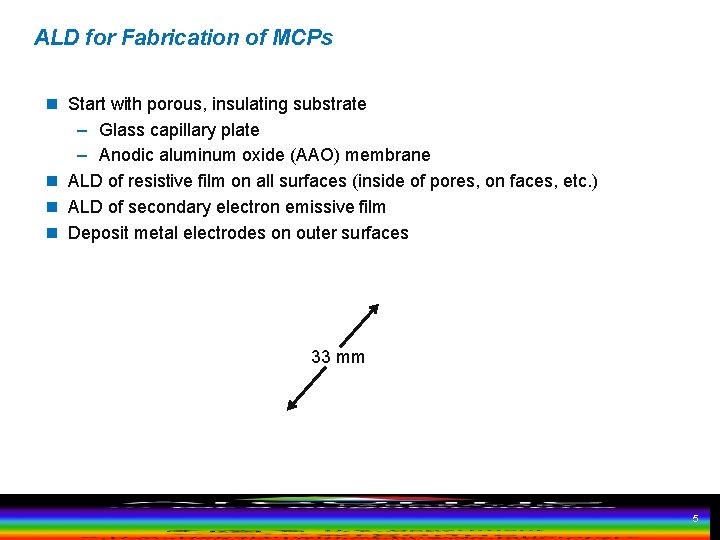
ALD for Fabrication of MCPs n Start with porous, insulating substrate – Glass capillary plate – Anodic aluminum oxide (AAO) membrane n ALD of resistive film on all surfaces (inside of pores, on faces, etc. ) n ALD of secondary electron emissive film n Deposit metal electrodes on outer surfaces 33 mm 5
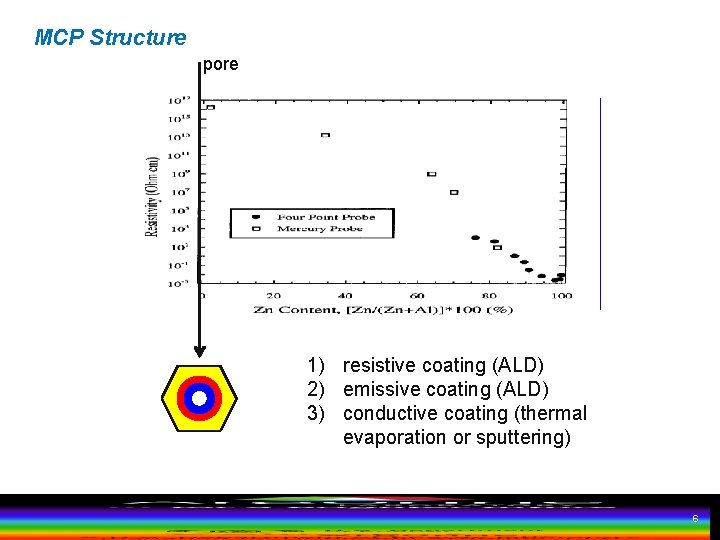
MCP Structure pore 1) resistive coating (ALD) 2) emissive coating (ALD) 3) conductive coating (thermal evaporation or sputtering) 6
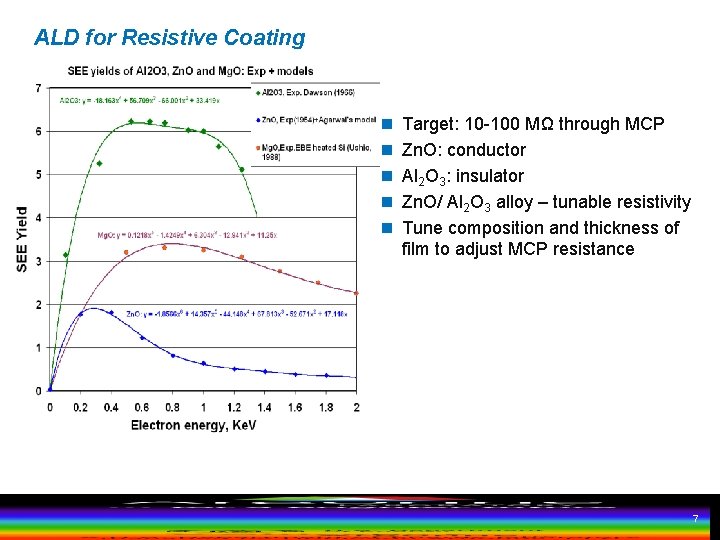
ALD for Resistive Coating n n n Target: 10 -100 MΩ through MCP Zn. O: conductor Al 2 O 3: insulator Zn. O/ Al 2 O 3 alloy – tunable resistivity Tune composition and thickness of film to adjust MCP resistance 7
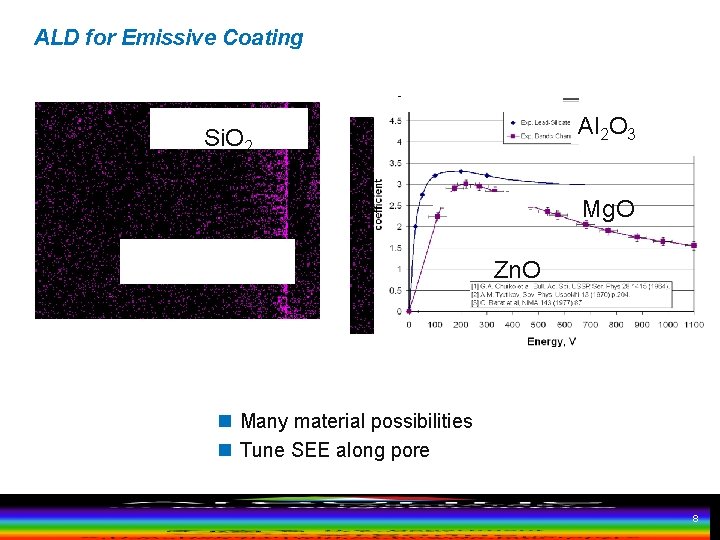
ALD for Emissive Coating Al 2 O 3 Si. O 2 Mg. O Zn. O n Many material possibilities n Tune SEE along pore 8
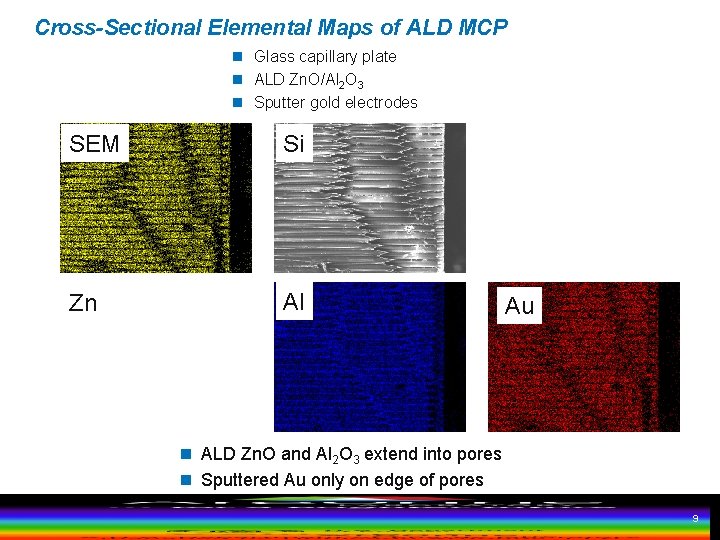
Cross-Sectional Elemental Maps of ALD MCP n Glass capillary plate n ALD Zn. O/Al 2 O 3 n Sputter gold electrodes SEM Si Zn Al Au n ALD Zn. O and Al 2 O 3 extend into pores n Sputtered Au only on edge of pores 9
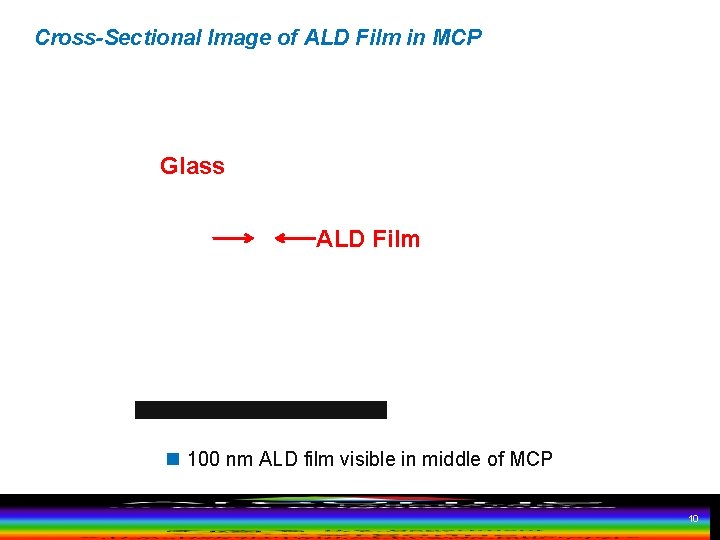
Cross-Sectional Image of ALD Film in MCP Glass ALD Film n 100 nm ALD film visible in middle of MCP 10
Questions? 11