
Atomic Data Needs for Xray Analysis and Atom
![Charge Exchange other Ly(n>3)] / Lya Leutenegger et al 2010](https://slidetodoc.com/presentation_image_h/054aff1f6483b82802a09bd4699ebecb/image-24.jpg "Charge Exchange other Ly(n>3)] / Lya Leutenegger et al 2010")
- Slides: 32
Atomic Data Needs for X-ray Analysis and Atom. DB v 2. 0 Randall Smithsonian Astrophysical Observatory
Collaborators and Thanks • Atom. DB Collaborators: – Adam Foster, Nancy Brickhouse, John Raymond, Li Ji, Tim Kallman, Mike Witthoeft • Thanks to: – ADAS team, CHIANTI team, ITAMP, Kate Kirby, Verne Jacobs, Ulyana Safronova, Guo. Xin Chen, Brendan Mc. Laughlin, Brad Wargelin, and many others…
A Few Words about X-ray Needs Major needs are H-like, He-like, and Fe (and to a lesser extent Ni) L-shell line data. Sutton’s Law: “First consider the obvious. ” http: //en. wikipedia. org/wiki/Sutton’s_law
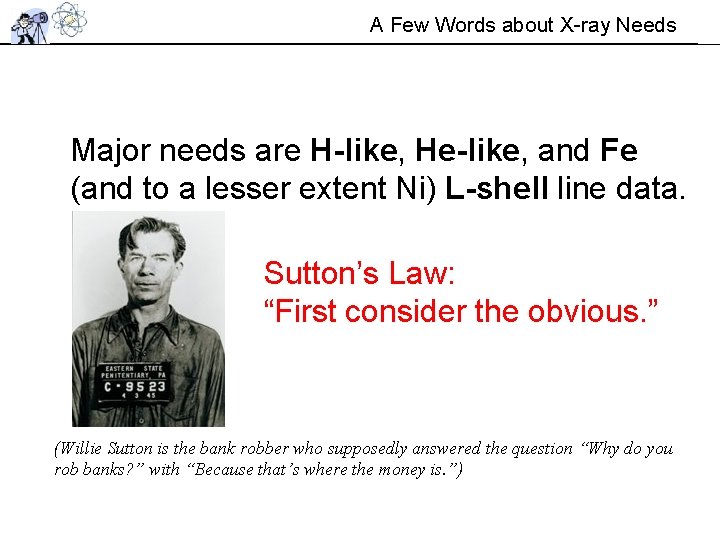
A Few Words about X-ray Needs Major needs are H-like, He-like, and Fe (and to a lesser extent Ni) L-shell line data. Sutton’s Law: “First consider the obvious. ” (Willie Sutton is the bank robber who supposedly answered the question “Why do you rob banks? ” with “Because that’s where the money is. ”)
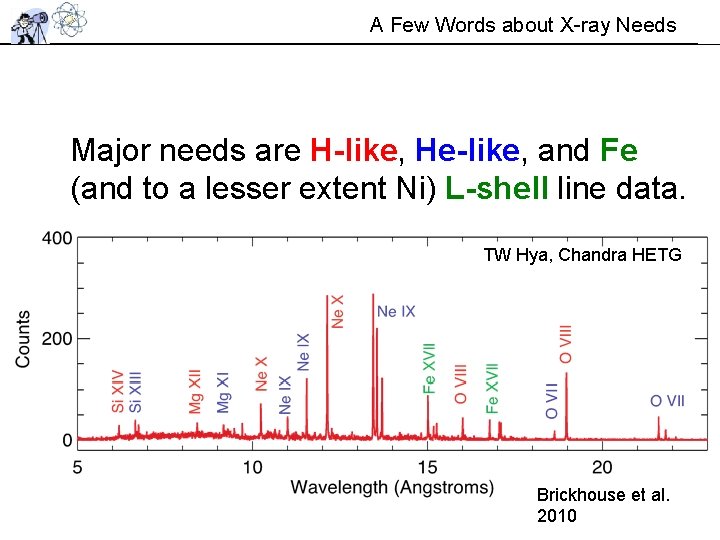
A Few Words about X-ray Needs Major needs are H-like, He-like, and Fe (and to a lesser extent Ni) L-shell line data. TW Hya, Chandra HETG Brickhouse et al. 2010
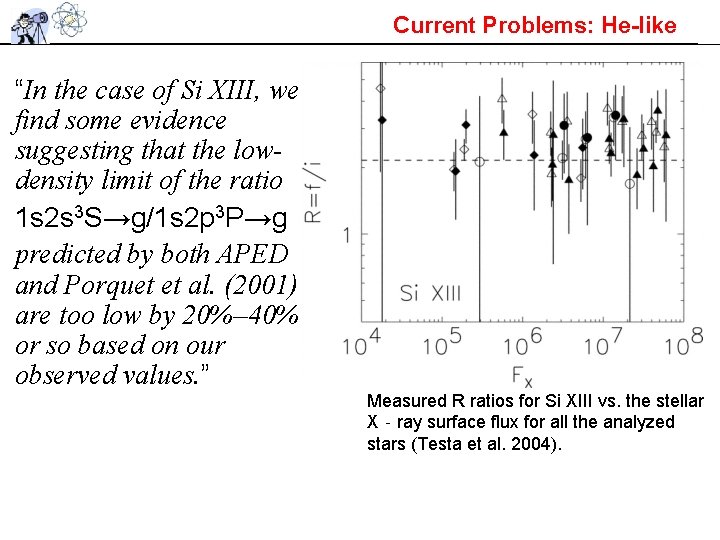
Current Problems: He-like “In the case of Si XIII, we find some evidence suggesting that the lowdensity limit of the ratio 1 s 2 s 3 S→g/1 s 2 p 3 P→g predicted by both APED and Porquet et al. (2001) are too low by 20%– 40% or so based on our observed values. ” Measured R ratios for Si XIII vs. the stellar X‐ray surface flux for all the analyzed stars (Testa et al. 2004).
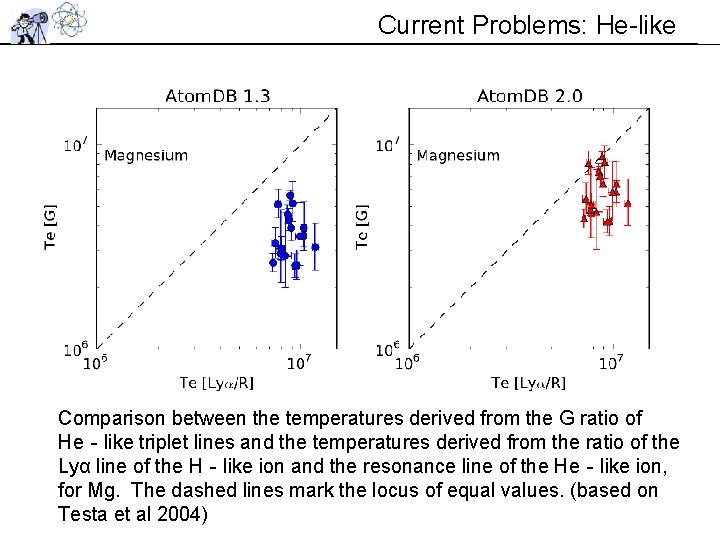
Current Problems: He-like Comparison between the temperatures derived from the G ratio of He‐like triplet lines and the temperatures derived from the ratio of the Lyα line of the H‐like ion and the resonance line of the He‐like ion, for Mg. The dashed lines mark the locus of equal values. (based on Testa et al 2004)
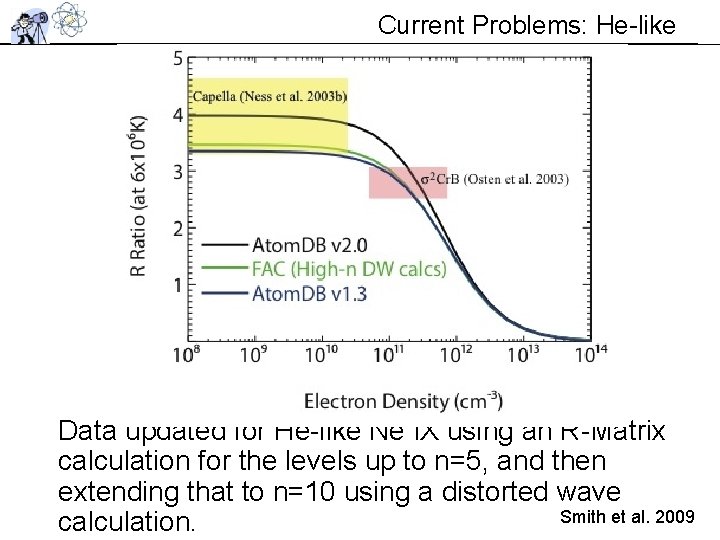
Current Problems: He-like Data updated for He-like Ne IX using an R-Matrix calculation for the levels up to n=5, and then extending that to n=10 using a distorted wave Smith et al. 2009 calculation.
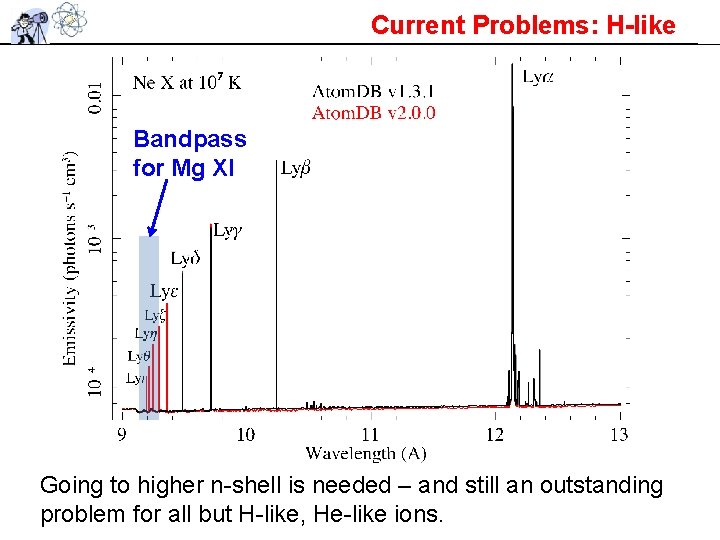
Current Problems: H-like Bandpass for Mg XI Going to higher n-shell is needed – and still an outstanding problem for all but H-like, He-like ions.
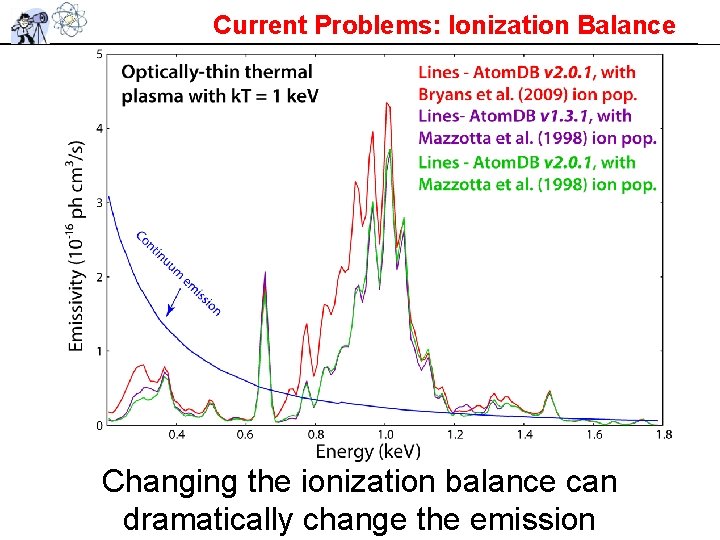
Current Problems: Ionization Balance Changing the ionization balance can dramatically change the emission
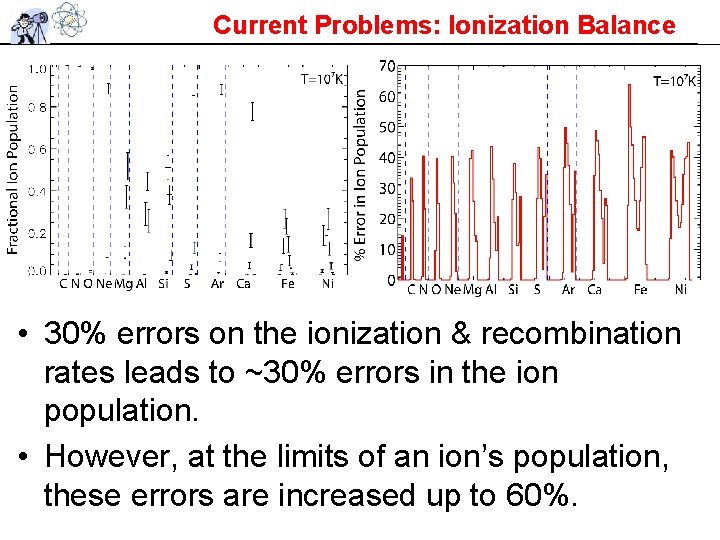
Current Problems: Ionization Balance • 30% errors on the ionization & recombination rates leads to ~30% errors in the ion population. • However, at the limits of an ion’s population, these errors are increased up to 60%.
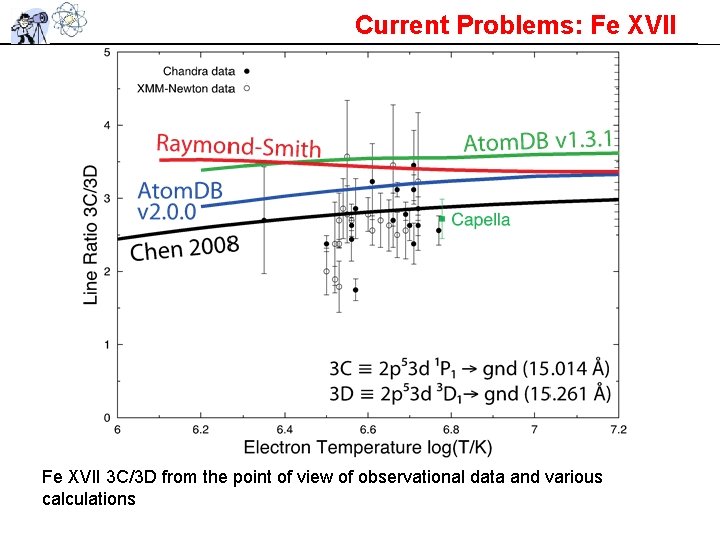
Current Problems: Fe XVII 3 C/3 D from the point of view of observational data and various calculations
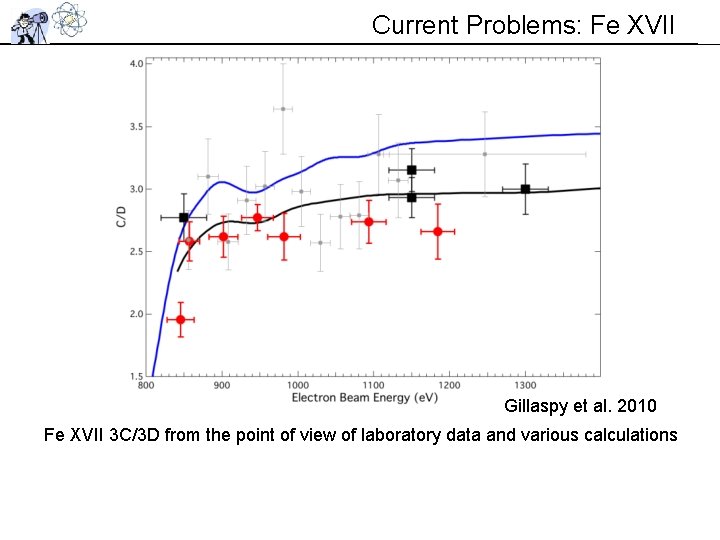
Current Problems: Fe XVII Gillaspy et al. 2010 Fe XVII 3 C/3 D from the point of view of laboratory data and various calculations
Coming Next: �Future Problems INTERMISSION
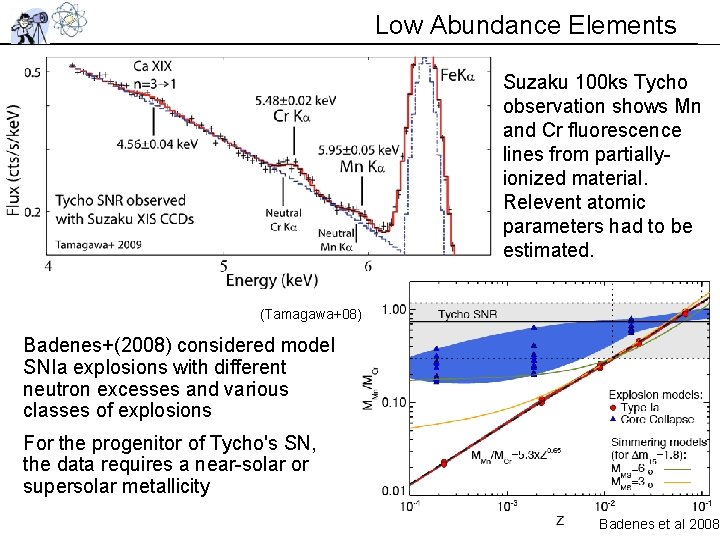
Low Abundance Elements Suzaku 100 ks Tycho observation shows Mn and Cr fluorescence lines from partiallyionized material. Relevent atomic parameters had to be estimated. (Tamagawa+08) Badenes+(2008) considered model SNIa explosions with different neutron excesses and various classes of explosions For the progenitor of Tycho's SN, the data requires a near-solar or supersolar metallicity Badenes et al 2008
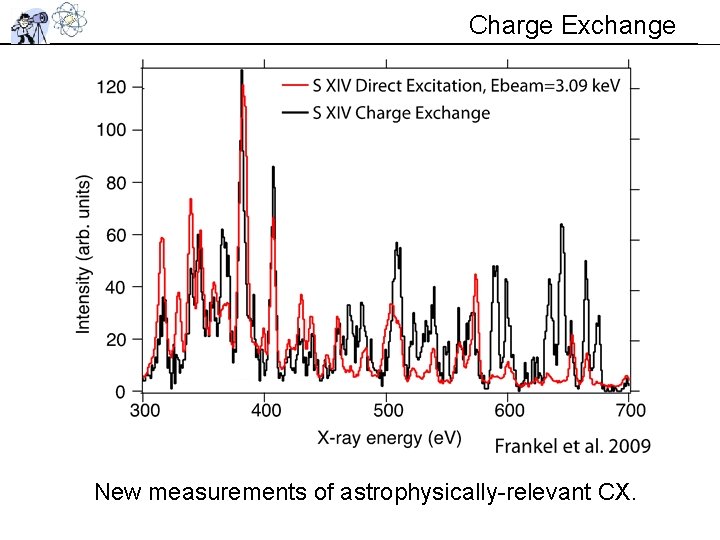
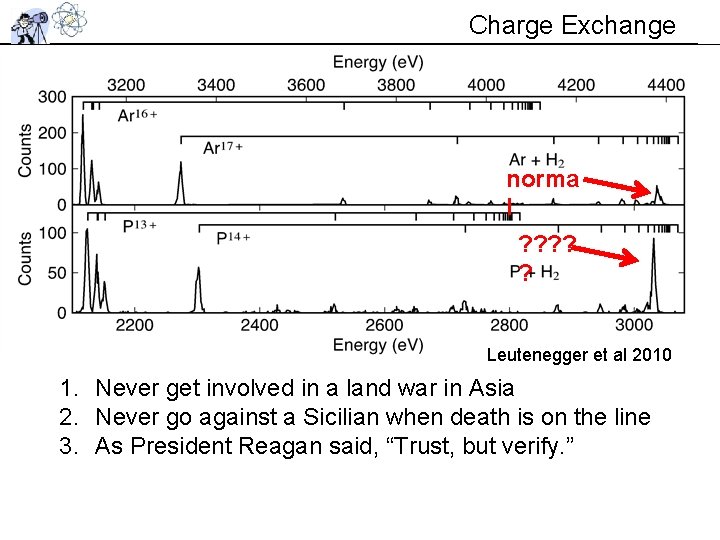
Charge Exchange New measurements of astrophysically-relevant CX.
Charge Exchange norma l ? ? ? Leutenegger et al 2010 1. Never get involved in a land war in Asia 2. Never go against a Sicilian when death is on the line 3. As President Reagan said, “Trust, but verify. ”
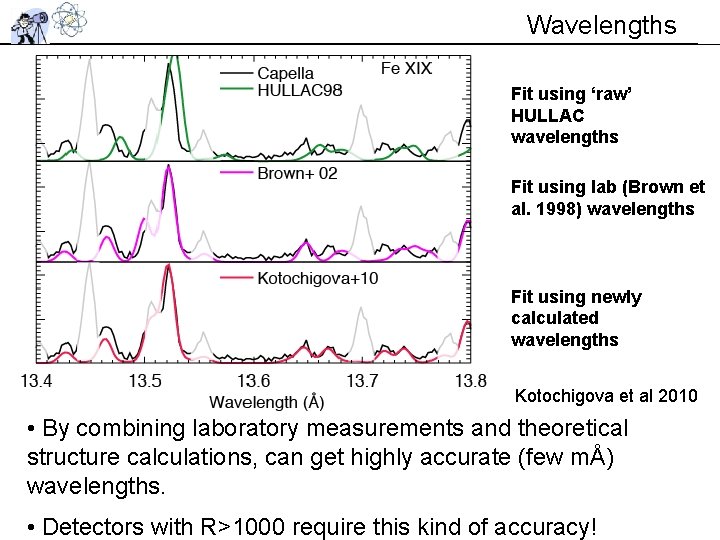
Wavelengths Fit using ‘raw’ HULLAC wavelengths Fit using lab (Brown et al. 1998) wavelengths Fit using newly calculated wavelengths Kotochigova et al 2010 • By combining laboratory measurements and theoretical structure calculations, can get highly accurate (few mÅ) wavelengths. • Detectors with R>1000 require this kind of accuracy!
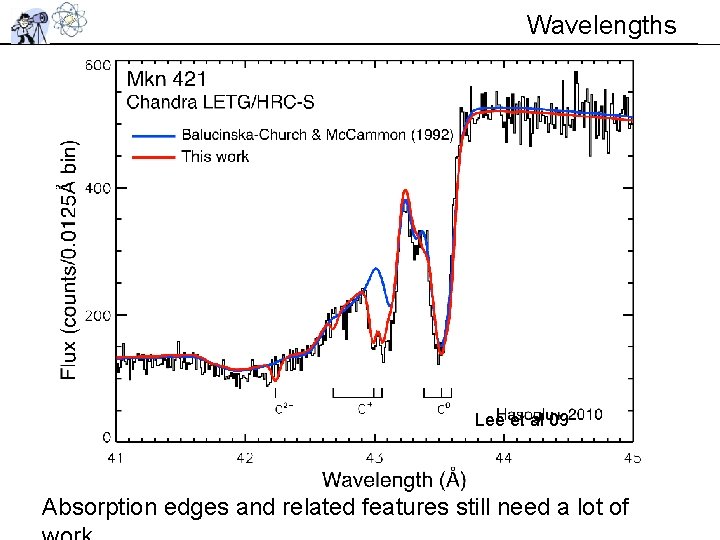
Wavelengths Lee et al 09 Absorption edges and related features still need a lot of
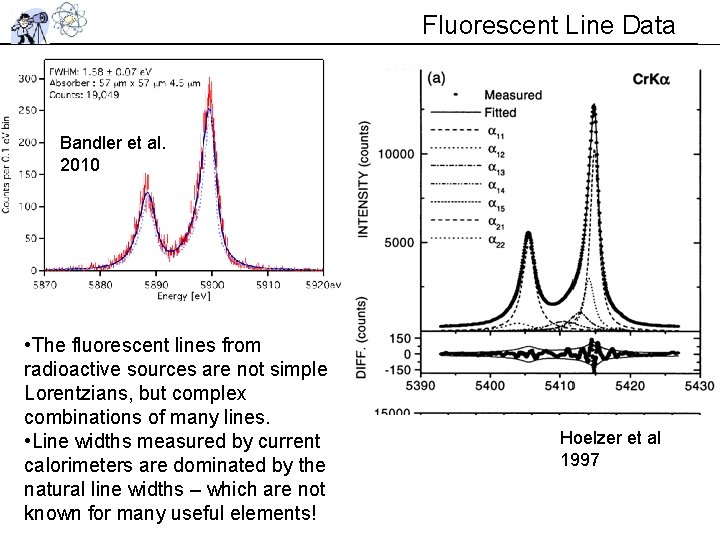
Fluorescent Line Data Bandler et al. 2010 • The fluorescent lines from radioactive sources are not simple Lorentzians, but complex combinations of many lines. • Line widths measured by current calorimeters are dominated by the natural line widths – which are not known for many useful elements! Hoelzer et al 1997
Conclusions • Send lawyers, guns, and money
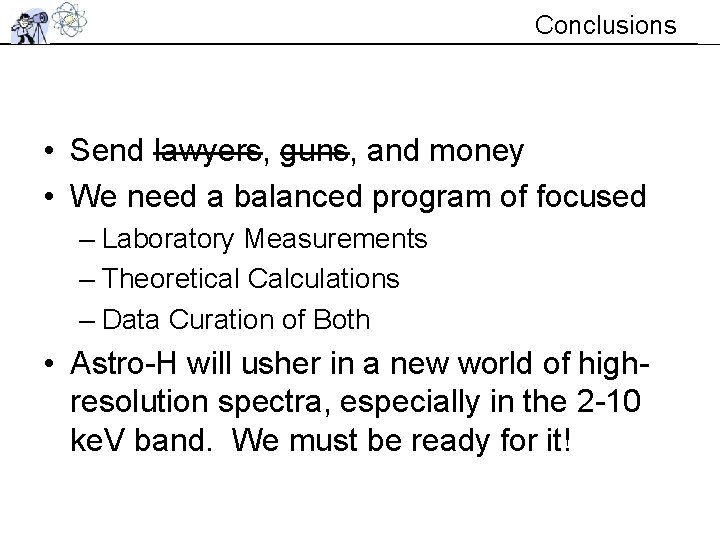
Conclusions • Send lawyers, guns, and money • We need a balanced program of focused – Laboratory Measurements – Theoretical Calculations – Data Curation of Both • Astro-H will usher in a new world of highresolution spectra, especially in the 2 -10 ke. V band. We must be ready for it!
BACKUP
Charge Exchange other Ly(n>3)] / Lya Leutenegger et al 2010
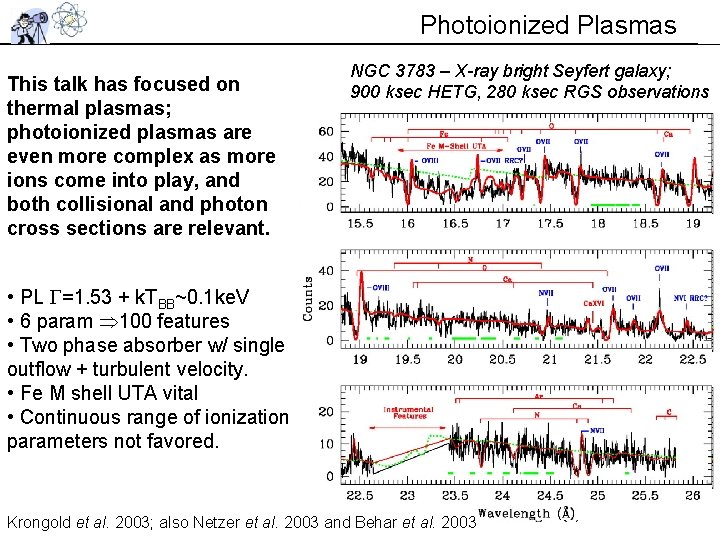
Photoionized Plasmas This talk has focused on thermal plasmas; photoionized plasmas are even more complex as more ions come into play, and both collisional and photon cross sections are relevant. NGC 3783 – X-ray bright Seyfert galaxy; 900 ksec HETG, 280 ksec RGS observations • PL =1. 53 + k. TBB~0. 1 ke. V • 6 param 100 features • Two phase absorber w/ single outflow + turbulent velocity. • Fe M shell UTA vital • Continuous range of ionization parameters not favored. Krongold et al. 2003; also Netzer et al. 2003 and Behar et al. 2003
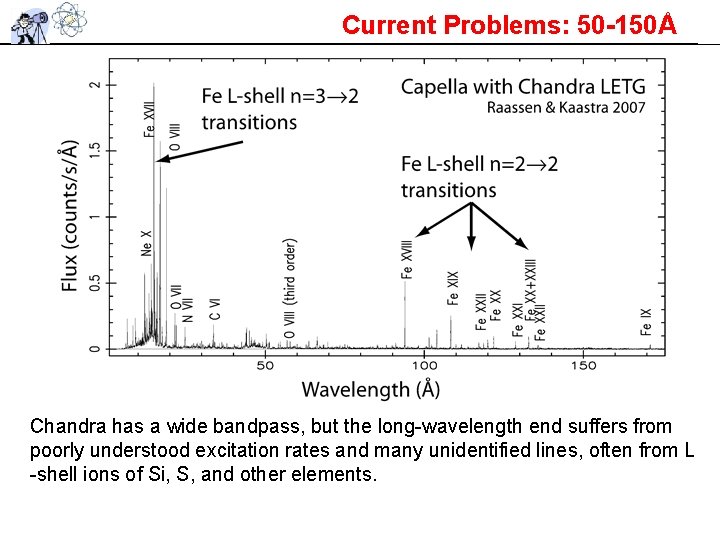
Current Problems: 50 -150Å Chandra has a wide bandpass, but the long-wavelength end suffers from poorly understood excitation rates and many unidentified lines, often from L -shell ions of Si, S, and other elements.
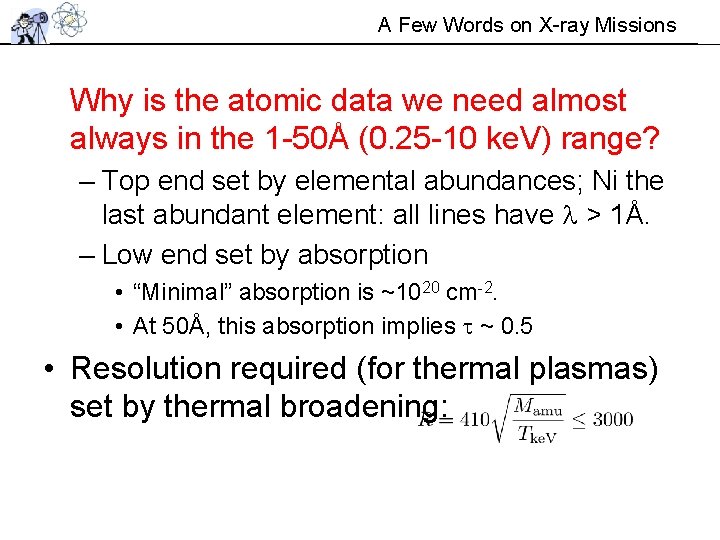
A Few Words on X-ray Missions Why is the atomic data we need almost always in the 1 -50Å (0. 25 -10 ke. V) range? – Top end set by elemental abundances; Ni the last abundant element: all lines have > 1Å. – Low end set by absorption • “Minimal” absorption is ~1020 cm-2. • At 50Å, this absorption implies ~ 0. 5 • Resolution required (for thermal plasmas) set by thermal broadening:
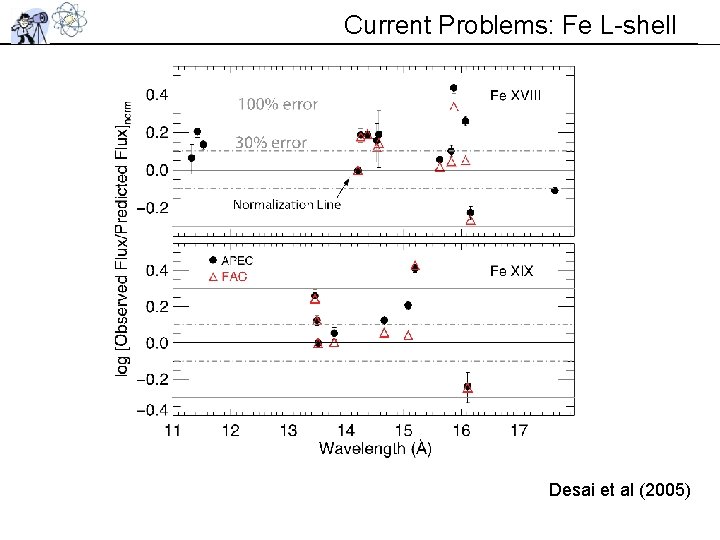
Current Problems: Fe L-shell Desai et al (2005)
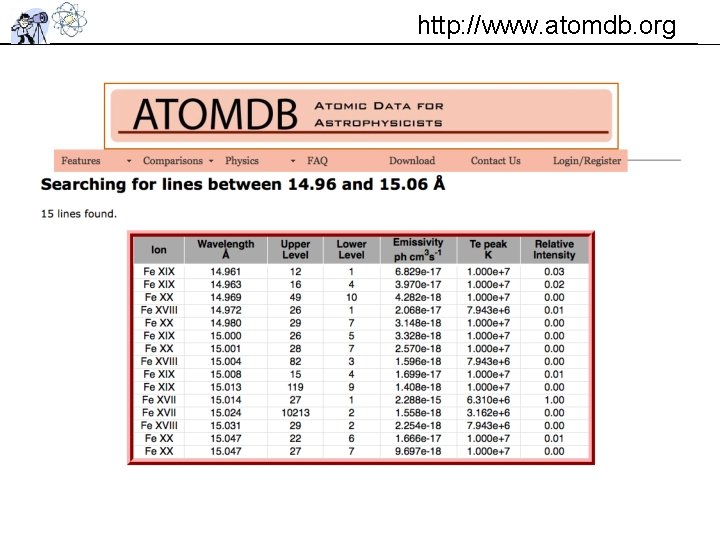
http: //www. atomdb. org
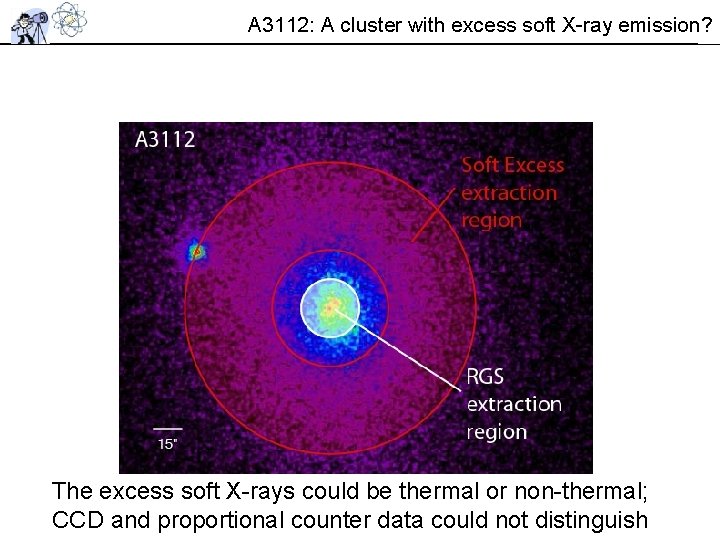
A 3112: A cluster with excess soft X-ray emission? The excess soft X-rays could be thermal or non-thermal; CCD and proportional counter data could not distinguish
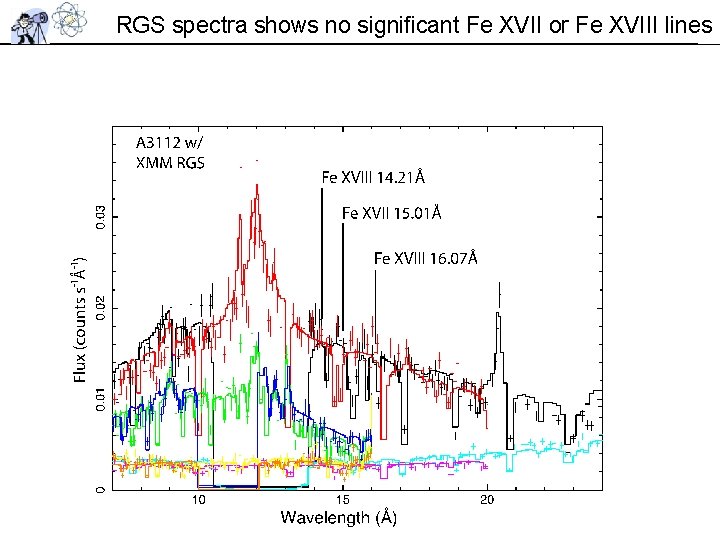
RGS spectra shows no significant Fe XVII or Fe XVIII lines
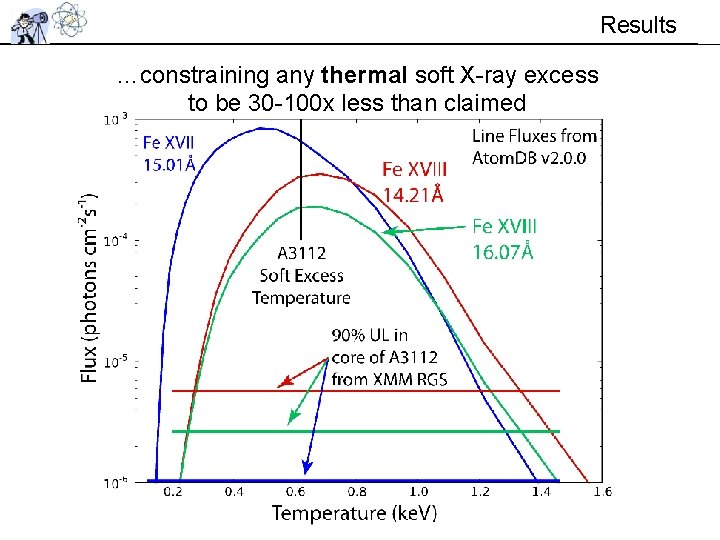
Results …constraining any thermal soft X-ray excess to be 30 -100 x less than claimed