
Atomic Absorption Spectroscopy Care And Maintenance of Equipment
Atomic Absorption Spectroscopy Care And Maintenance of Equipment Food Engineering Department GAUN
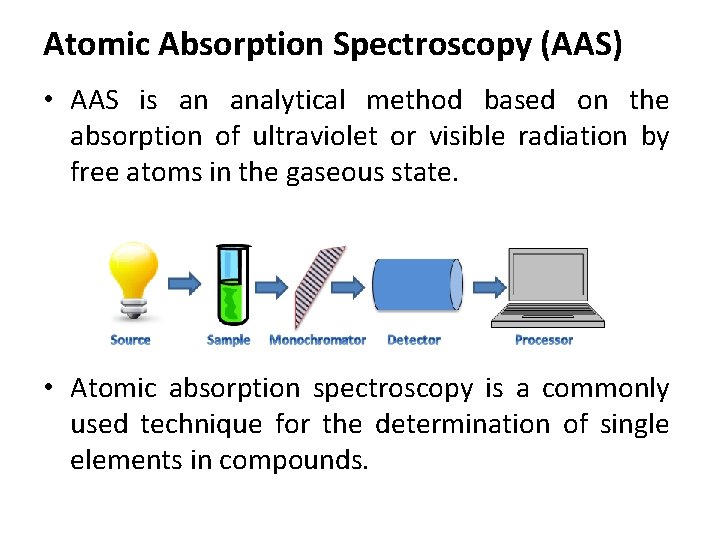
Atomic Absorption Spectroscopy (AAS) • AAS is an analytical method based on the absorption of ultraviolet or visible radiation by free atoms in the gaseous state. • Atomic absorption spectroscopy is a commonly used technique for the determination of single elements in compounds.
Instrumentation for AAS Atomic absorption spectrometers consist of the following components : 1. Radiation source, a hollow cathode lamp (HCL) or an electrode-less discharge lamp (EDL) 2. Atomizer, usually a nebulizer–burner system or an electrothermal furnace 3. Monochromator, usually an ultraviolet-visible (UV-Vis) grating monochromator 4. Detector, a photomultiplier tube (PMT) or a solidstate detector (SSD) 5. Computer
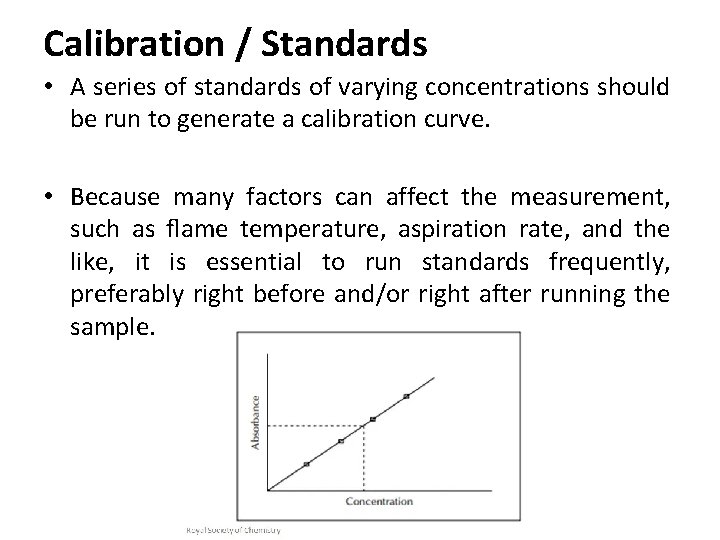
Calibration / Standards • A series of standards of varying concentrations should be run to generate a calibration curve. • Because many factors can affect the measurement, such as flame temperature, aspiration rate, and the like, it is essential to run standards frequently, preferably right before and/or right after running the sample.
• Standard solutions may be purchased from commercial sources, or they may be prepared by the analyst. • Obviously, standards must be prepared with extreme care since the accuracy of the analyte determination depends on the accuracy of the standard. • Perhaps the best way to check the accuracy of a given assay procedure is to analyze a reference material of known composition and similar matrix.
Labware • Vessels used for sample preparation and storage must be clean and free of the elements of interest. • Plastic containers are preferable because glass has a greater tendency to adsorb and later leach metal ions. • All labware should be thoroughly washed with a detergent, carefully rinsed with distilled or deionized water, soaked in an acid solution (1 N HCl is sufficient for most applications), and rinsed again with distilled or deionized water.
EXPERIMENTAL 1. Turn the lamp current control knob to the off position. 2. Install the required lamp in the lamp compartment. 3. Turn on main power and power to lamp. Set lamp current to the current shown on the lamp label. 4. Select required slit width and wavelength and align light beam with the optical system. 5. Ignite flame and adjust oxidant and fuel flow rates. 6. Aspirate distilled water. Aspirate blank and zero instrument. 7. Aspirate standards and sample. 8. Aspirate distilled water. 9. Shut down instrument.
Safety • While an AAS can be very useful for the analysis of many different compounds, it can be potentially dangerous as well. In addition to volatile samples, the fuel and oxygen combinations used in igniting the flame sources can pose a risk to human health and property. • The most commonly used fuel sources are air/acetylene gas or nitrous-oxide/acetylene gas. Proper ventilation must be practiced to avoid the build-up of potentially hazardous toxic fumes.
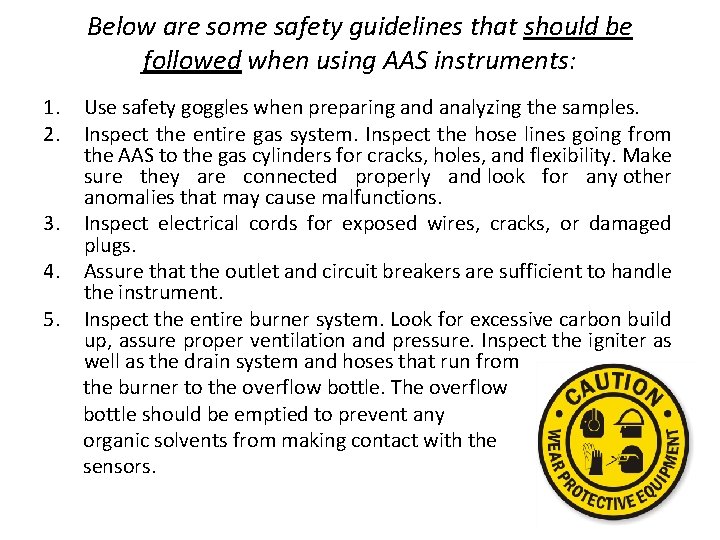
Below are some safety guidelines that should be followed when using AAS instruments: 1. 2. 3. 4. 5. Use safety goggles when preparing and analyzing the samples. Inspect the entire gas system. Inspect the hose lines going from the AAS to the gas cylinders for cracks, holes, and flexibility. Make sure they are connected properly and look for any other anomalies that may cause malfunctions. Inspect electrical cords for exposed wires, cracks, or damaged plugs. Assure that the outlet and circuit breakers are sufficient to handle the instrument. Inspect the entire burner system. Look for excessive carbon build up, assure proper ventilation and pressure. Inspect the igniter as well as the drain system and hoses that run from the burner to the overflow bottle. The overflow bottle should be emptied to prevent any organic solvents from making contact with the sensors.
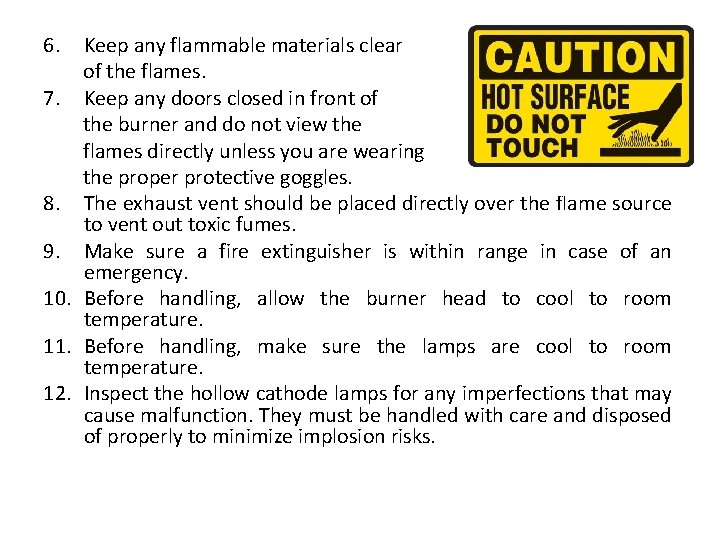
6. Keep any flammable materials clear of the flames. 7. Keep any doors closed in front of the burner and do not view the flames directly unless you are wearing the proper protective goggles. 8. The exhaust vent should be placed directly over the flame source to vent out toxic fumes. 9. Make sure a fire extinguisher is within range in case of an emergency. 10. Before handling, allow the burner head to cool to room temperature. 11. Before handling, make sure the lamps are cool to room temperature. 12. Inspect the hollow cathode lamps for any imperfections that may cause malfunction. They must be handled with care and disposed of properly to minimize implosion risks.
13. Know your samples! Be able to properly clean-up any hazardous liquids that may spill. 14. Be familiar with the location of first aid kits. 15. Make sure to use the proper PPE (Personal Protective Equipment) before using the AAS. 16. NEVER LEAVE AN AAS UNATTENDED while the instrument is running! 17. If there is a malfunction with the instrument, immediately turn it off as well as the fuel source to prevent a build-up of flammable gases.
References: • Atomic Absorption Spectroscopy Learning Module of Maryville University • FE 315 Laboratory Sheets
- Slides: 12