
Atombasic smallest unit of matter Elementpure substance made
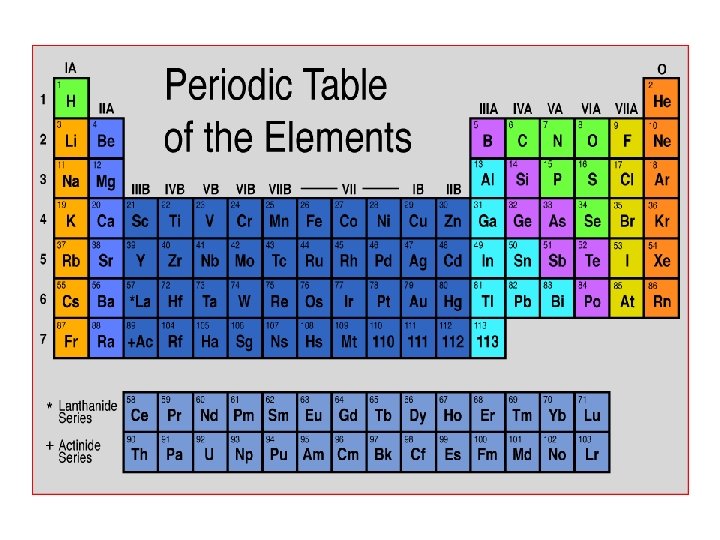
• Atom-basic, smallest unit of matter • Element-pure substance made of only one type of atom C Carbon • Molecule-2 or more atoms H Hydrogen that are combined. O Oxygen – examples: O 2, N 2 N Nitrogen • Compound- type of molecule Ca Calcium with 2 or more different K Potassium atoms that are combined. S Sulfur – examples: H 2 O, CO 2 P Phosphorous Element symbols
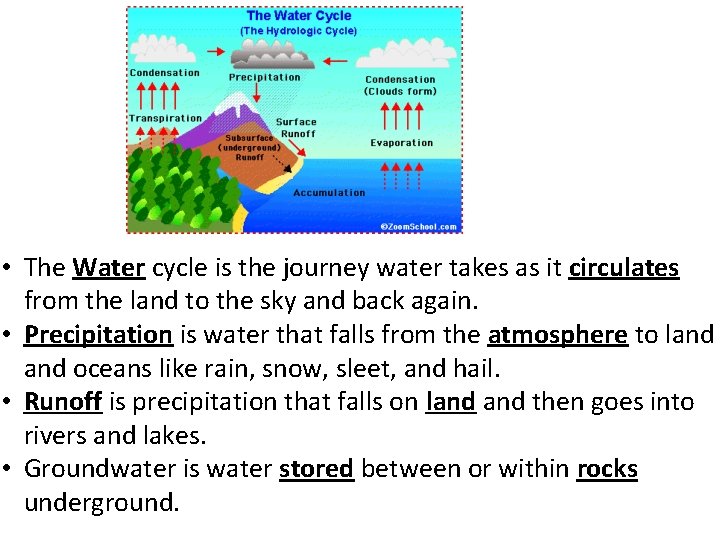
• The Water cycle is the journey water takes as it circulates from the land to the sky and back again. • Precipitation is water that falls from the atmosphere to land oceans like rain, snow, sleet, and hail. • Runoff is precipitation that falls on land then goes into rivers and lakes. • Groundwater is water stored between or within rocks underground.
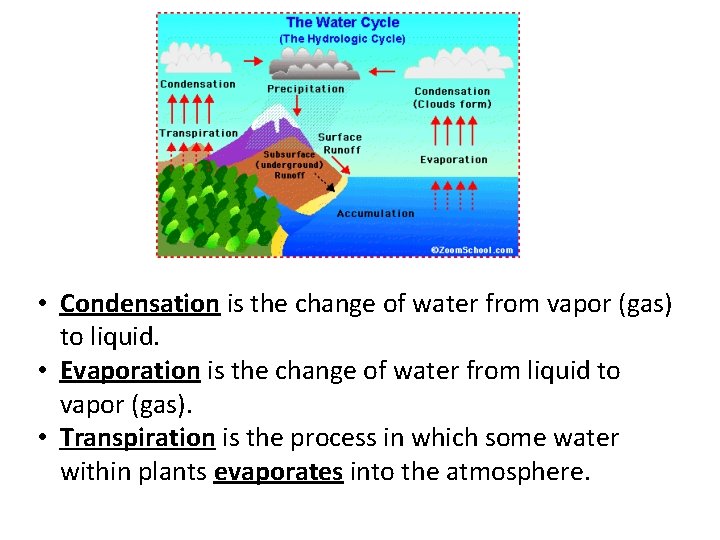
• Condensation is the change of water from vapor (gas) to liquid. • Evaporation is the change of water from liquid to vapor (gas). • Transpiration is the process in which some water within plants evaporates into the atmosphere.
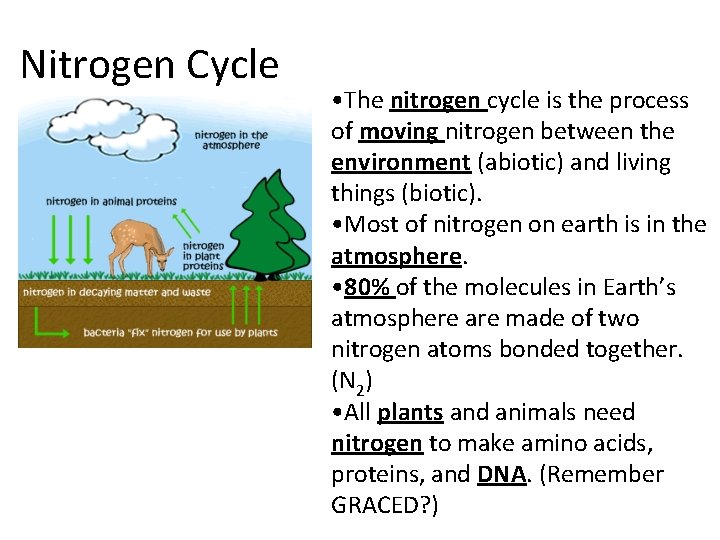
Nitrogen Cycle • The nitrogen cycle is the process of moving nitrogen between the environment (abiotic) and living things (biotic). • Most of nitrogen on earth is in the atmosphere. • 80% of the molecules in Earth’s atmosphere are made of two nitrogen atoms bonded together. (N 2) • All plants and animals need nitrogen to make amino acids, proteins, and DNA. (Remember GRACED? )
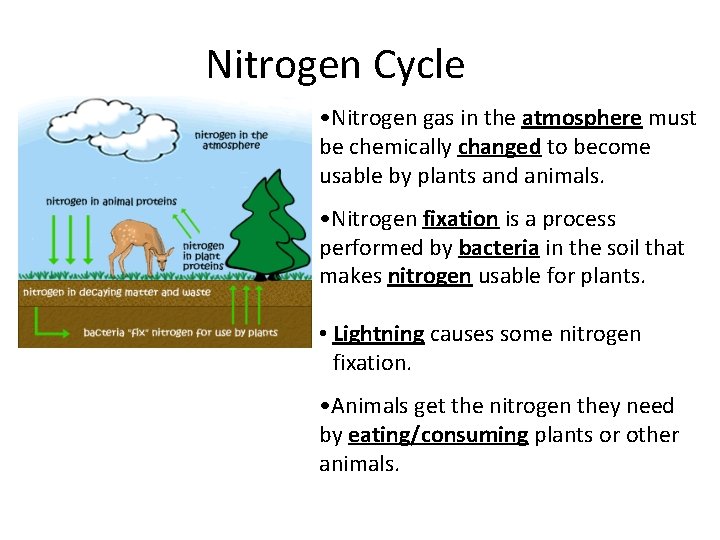
Nitrogen Cycle • Nitrogen gas in the atmosphere must be chemically changed to become usable by plants and animals. • Nitrogen fixation is a process performed by bacteria in the soil that makes nitrogen usable for plants. • Lightning causes some nitrogen fixation. • Animals get the nitrogen they need by eating/consuming plants or other animals.
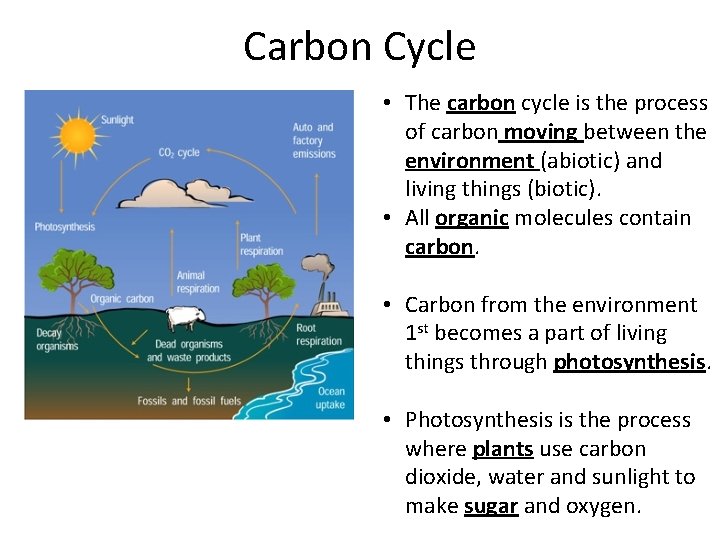
Carbon Cycle • The carbon cycle is the process of carbon moving between the environment (abiotic) and living things (biotic). • All organic molecules contain carbon. • Carbon from the environment 1 st becomes a part of living things through photosynthesis. • Photosynthesis is the process where plants use carbon dioxide, water and sunlight to make sugar and oxygen.
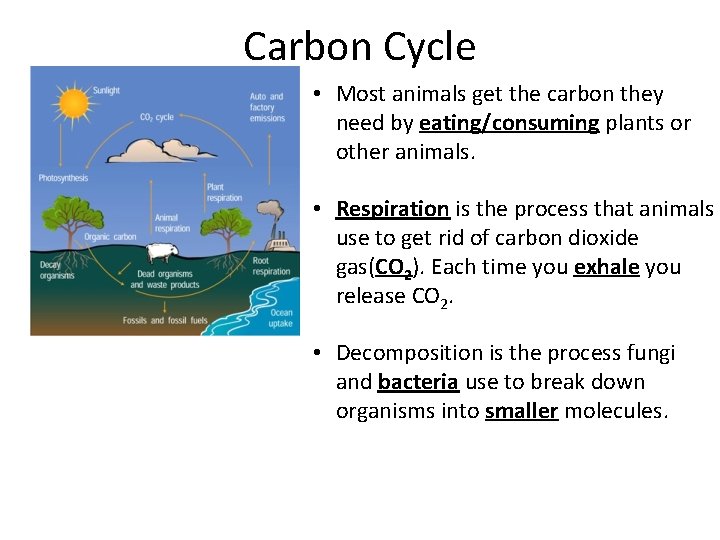
Carbon Cycle • Most animals get the carbon they need by eating/consuming plants or other animals. • Respiration is the process that animals use to get rid of carbon dioxide gas(CO 2). Each time you exhale you release CO 2. • Decomposition is the process fungi and bacteria use to break down organisms into smaller molecules.
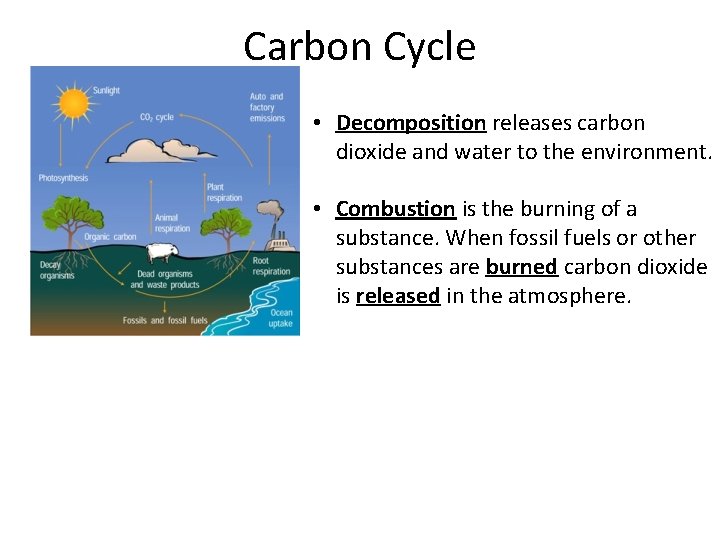
Carbon Cycle • Decomposition releases carbon dioxide and water to the environment. • Combustion is the burning of a substance. When fossil fuels or other substances are burned carbon dioxide is released in the atmosphere.
- Slides: 9